
FEMA Deputy Administrator to visit storm ravaged areas
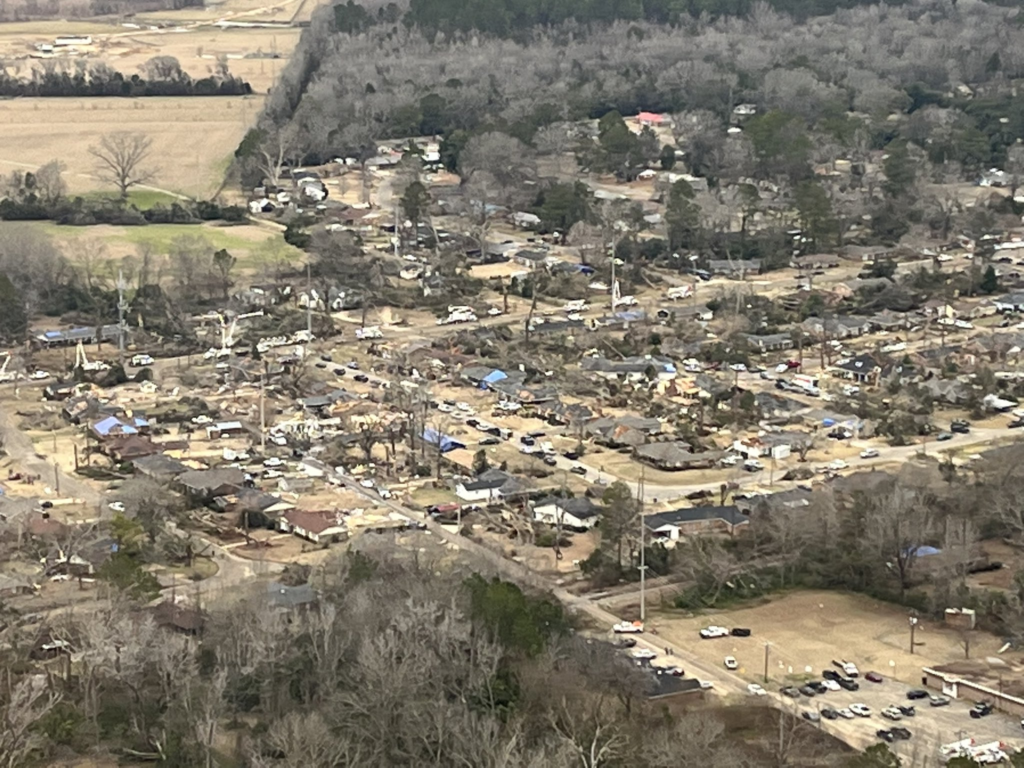
On Tuesday, FEMA Deputy Administrator Erik A. Hooks will be in Alabama to meet with state and local officials about the ongoing response and recovery efforts following the devastating tornadoes that swept across the state last week. Hooks will travel to Autauga and Dallas counties to survey the devastation caused by Thursday’s storms. President Joe Biden declared that a major disaster exists in the State of Alabama and ordered Federal aid to supplement State, tribal, and local recovery efforts in the areas of Dallas and Autauga Counties affected by severe storms, straight-line winds, and tornadoes on January 12, 2023. On Tuesday afternoon Congresswoman Terri Sewell will join the Deputy Administrator for a press conference. They will be joined by Alabama Emergency Management Agency Director Jeff Smitherman, Selma Mayor James Perkins, Jr., Dallas County Emergency Management Director Toya Stiles-Crusoe, Autauga County Emergency Management Director Ernie Baggott, as well as local leaders and officials. “While the destruction impacting Selma and the Black Belt is widespread, our community is nothing if not strong and resilient,” Sewell said in a statement. “I’m confident that with the close coordination of federal, state, and local partners, we will be able to secure the necessary resources to build our community back better and stronger than before.” Individuals in Dallas and Autauga Counties can apply for disaster assistance with FEMA at www.DisasterAssistance.gov or by calling 1-800-621-3362 (TTY: 800-462-7585). Assistance can include grants for temporary housing and home repairs, low-cost loans to cover uninsured property losses, and other programs to help individuals and business owners recover from the effects of the disaster. Federal funding also is available to State, tribal, and eligible local governments and certain private nonprofit organizations on a cost-sharing basis for emergency work in the counties of Autauga and Dallas. Federal funding is available on a cost-sharing basis for hazard mitigation measures statewide. FEMA Administrator Deanne Criswell has named Kevin A. Wallace, Sr. as the Federal Coordinating Officer for Federal recovery operations in the affected areas. To connect with the author of this story, or to comment, email brandonmreporter@gmail.com.
Joe Biden declares storm ravaged central Alabama a disaster area
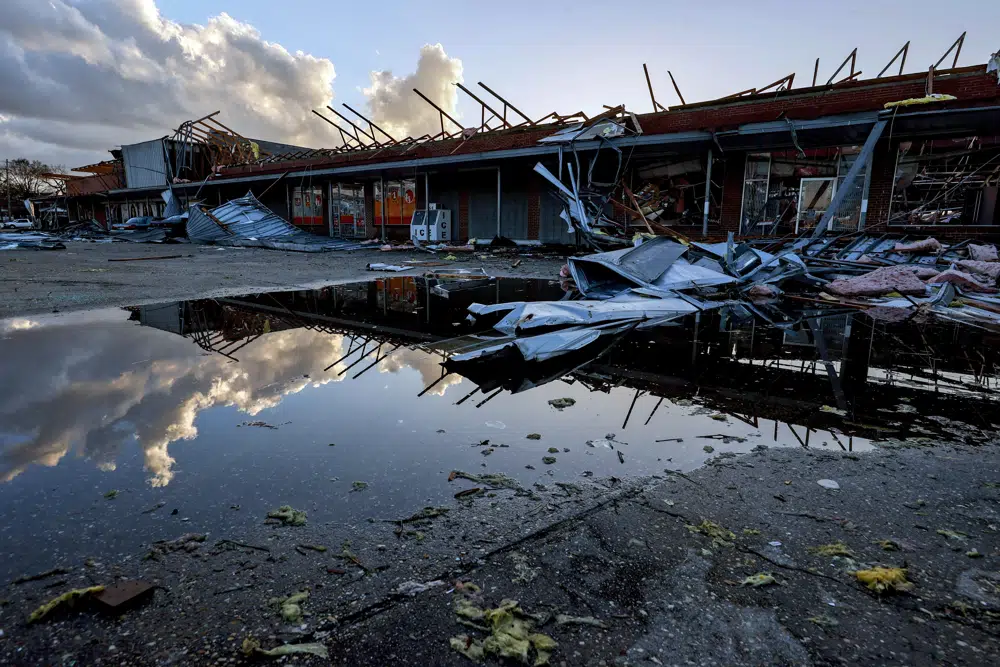
President Joe Biden has declared a major disaster in the State of Alabama and ordered Federal aid to supplement State, tribal, and local recovery efforts in the areas affected by severe storms, straight-line winds, and tornadoes on January 12, 2023. The President’s action makes Federal funding available to affected individuals in Dallas and Autauga Counties. “Alabama has been approved for a major disaster declaration in Dallas & Autauga counties following Thursday’s devastating weather. @POTUS and @FEMA have been good partners in our recovery efforts, and we are thankful. Alabamians are resilient folks, and we will come back stronger,” Alabama Governor Kay Ivey announced on Twitter. “I’m thankful that President Biden has heard our calls and expedited a declaration of major disaster for the State of Alabama following Thursday’s devastating storms,” said Congresswoman Terri Sewell (D-AL07). “This declaration will free up critical federal resources to relieve, recover and rebuild. I look forward to continuing to partner with Governor Ivey, Alabama’s congressional delegation, as well as state, local, and community stakeholders to use these resources as an opportunity to build back Selma and all the affected areas better for the people of Alabama.” A powerful tornado touched down in Selma, Sewell’s hometown, destroying dozens of homes and businesses on Thursday afternoon. Another devastating tornado touchdown followed that tornado in Autauga County, where dozens of homes were destroyed, and six people died. Dozens more were injured. Many families were left homeless. Damage assessments continue in other areas, and additional areas may be designated for assistance after the assessments are fully completed. Federal assistance can include grants for temporary housing and home repairs, low-cost loans to cover uninsured property losses, and other programs to help individuals and business owners recover from the effects of the disaster. Federal funding also is available to State, tribal, and eligible local governments and certain private nonprofit organizations on a cost-sharing basis for emergency work in the counties of Autauga and Dallas. Lastly, Federal funding is available on a cost-sharing basis for hazard mitigation measures statewide. FEMA Administrator Deanne Criswell has named Kevin A. Wallace, Sr. as the Federal Coordinating Officer for Federal recovery operations in the affected areas. Residents and business owners who sustained losses in the designated areas can begin applying for assistance at www.DisasterAssistance.gov or by calling 800-621-FEMA (3362), or by using the FEMA App. Sewell, Ivey, U.S. Senator Katie Boyd Britt, FEMA response experts, and other state officials joined local officials as they surveyed the area on Friday. Cleanup efforts are ongoing. Restoring people’s homes, businesses, and lives will likely take many months. To connect with the author of this story, or to comment, email brandonmreporter@gmail.com.
Running on Empty: Petroleum reserve hits low point, gas prices begin to rise again
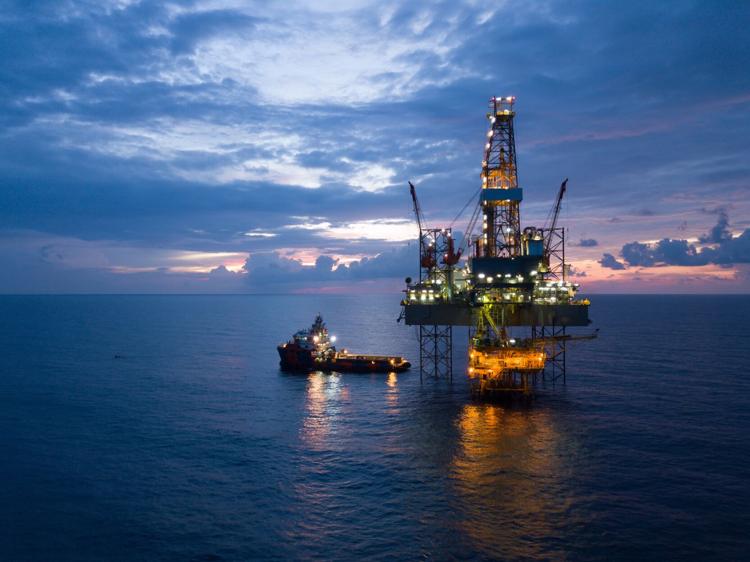
Gas prices are on the rise again just as the Strategic Petroleum Reserve hits a low point that many say is a problem. Gas prices hit record highs in the middle of June, surpassing a national average of $5 per gallon before starting a steady downward trend for several consecutive weeks. That streak ended last week, though, when gas prices began to tick back up. The current national average price for a gallon of regular gasoline is $3.77, up from $3.68 a week ago. The Biden administration also touted the lower gas prices last Tuesday, but the very next day, data showed they had begun to rise again. “Folks, gas prices are now back to levels they were at in early March,” Joe Biden wrote on Twitter. “That means nearly all of the increases since the beginning of Russia’s war in Ukraine have been wiped out.” At the same time, the Strategic Petroleum Reserve is at the lowest level in nearly four decades. Last week, the Office of the Strategic Petroleum Reserve announced the sale of another 10 million barrels of oil, bringing their total to 165 of the 180 million barrels Biden authorized for release. Biden has touted the lower prices and the relief they’ve brought to Americans as prices have dropped. Lawmakers, though, blasted Biden for using the petroleum reserves so extensively for short-term relief, saying he put the U.S. in a difficult position without addressing the root causes by encouraging more domestic oil production. “The Biden Administration can’t continue to tap the Strategic Petroleum Reserve and simultaneously say we don’t have an energy crisis or a need to increase domestic energy production,” said U.S. Rep. Garret Graves, R-La. “Their self-imposed mistakes are weakening our energy security.” Other critics pointed out an emergency could stress the already weakened reserves and put the reserves dangerously low. “Less than two years into his term, [Biden] has released more oil from the nation’s Strategic Petroleum Reserve than all previous presidents combined, causing our supply to fall to a historic low,” U.S. Rep. Michael Burgess, R-Texas, said. “This is a national security threat, and it is unacceptable.” The lower reserve level also spurred questions about whether hurricane Ian, expected to potentially hit the site of several petroleum storage sites, will affect the availability of reserves especially if another emergency arises. “I don’t have any concerns at this point that we’re going to have the ability to handle the fuel needs that we’re going to need in Florida,” FEMA Administrator Deanne Criswell said at a White House press briefing in response to those concerns. “We will continue to assess after the storm passes to see what the impacts are. We’ll make sure that we’re putting measures in place to support … any gaps that we might identify.” The higher gas prices come just ahead of the midterms and could have a major impact on lawmakers seeking reelection. Gas prices had become a political cudgel used against Democrats, especially alongside soaring inflation, but the drop of those prices in recent weeks largely disarmed Republicans. If gas prices continue to rise through election day, Republicans will have another weapon in their arsenal to use against the Biden administration and Democratic candidates. “If you’re wondering why the Biden admin won’t be talking about gas prices today, it’s because they’ve now risen for the 6th day in a row after being artificially lowered by releasing our Strategic Petroleum Reserve,” said Jennifer-Ruth Green, a Republican running for Congress in Indiana. Republished with the permission of The Center Square.
Kay Ivey pledges aid to Florida as Hurricane Ian approaches coast
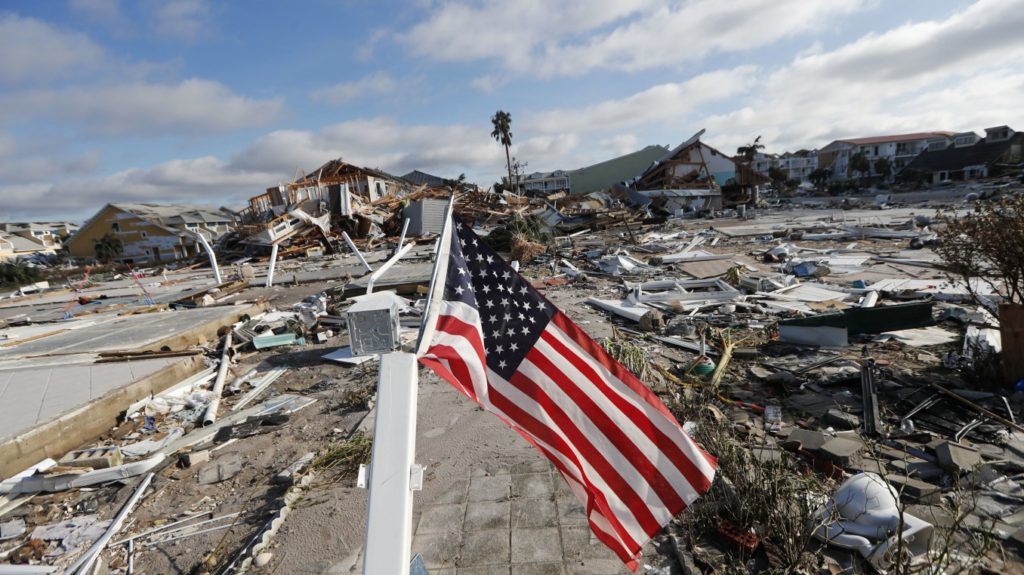
Alabama Governor Kay Ivey phoned Florida Governor Ron DeSantis on Wednesday to promise aid as Hurricane Ian is about to make landfall on the Florida Peninsula as a strong Category 4 Hurricane. Ivey called the storm “unprecedented” and told DeSantis, “that if they need, and we got it, then we’re going to send it.” Earlier in the week, Alabama had been expected to possibly be impacted by Hurricane Ian, so Ivey and the Alabama emergency management team have been monitoring the storm’s progress. Ian took a more easterly track than expected and is now barreling down on Florida’s gulf coast. The storm has also strengthened and is now expected to make landfall as a strong Category 4 hurricane. “Today, I expressed to Governor DeSantis that Alabama is committed to helping our friends in Florida,” Gov Ivey said in a statement. “Us Gulf Coast states are far too familiar with the wrath of Mother Nature, but this storm will, no doubt, be unprecedented. We continue taking steps to ensure we are offering our helping hand however we can. I pray for the people of Florida and anyone in the storm’s path. I told Governor DeSantis today that if they need it and we’ve got it, then we’re going to send it.” Already, Governor Ivey approved emergency response vehicles such as, but not limited to, utility vehicles, bucket trucks and supply trucks responding to Hurricane Ian to have authority to bypass all ALDOT weigh station facilities through October 24, 2022. 17 electric co-ops and Alabama Power teams stand ready to assist. There are also three standby shelters, which would open in a capacity-triggered fashion. Any evacuees in the state are encouraged to dial 2-1-1 for information. Governor Ivey also shared that the Alabama Department of Tourism has established a QR code that evacuees can use to assist in locating available hotel rooms. The White House reports that President Joe Biden has also spoken with Gov. DeSantis on Wednesday and is promising federal aid. The President has also held separate calls on Tuesday with Mayor Jane Castor of Tampa, Mayor Ken Welch of St. Petersburg, and Mayor Frank Hibbard of Clearwater to discuss preparations for the potential impacts from Hurricane Ian. Biden said that he has directed FEMA Administrator Deanne Criswell to ensure that all available federal support is available to prepare in advance and to respond in the aftermath of the storm to augment state and local emergency response efforts, and emphasized the importance of encouraging families to heed evacuation orders. Biden stated on social media, “FEMA Administrator Criswell and I just called Tampa Mayor Jane Castor, St. Petersburg Mayor Ken Welch, and Clearwater Mayor Frank Hibbard to discuss preparations for Hurricane Ian including the efforts we’re taking to encourage evacuations and pre-position resources for Florida. I’ve approved a Federal Emergency Declaration and have instructed Administrator Criswell to ensure that all available federal support is surged to Florida to prepare and respond to the Hurricane. I encourage Florida families to heed evacuation orders.” To connect with the author of this story, or to comment, email brandonmreporter@gmail.com
Alabama’s House delegation calls on FEMA to address supply chain shortages affecting Alabama’s electric cooperatives
U.S. Rep. Jerry Carl issued the following statement regarding a letter he sent to FEMA Administrator Deanne Criswell regarding supply chain shortages affecting Alabama’s electric cooperatives and municipalities. The letter was cosigned by all seven members of Alabama’s House delegation. “Alabama is no stranger to severe weather. In the aftermath of serious storms, our local electric utility providers play a critical role in repairing and replacing damaged parts of the power grid,” Carl commented. “Unfortunately, supply chain issues have slowed down local utility providers’ ability to prepare for potential threats, leaving Alabama’s power grid more open to damage when disaster occurs.” The letter called on FEMA to provide electric providers with the equipment needed for hurricane season. “With the high chance of an above-average 2022 hurricane season, FEMA must do its part to ensure our local electric providers have access to important equipment before the first hurricane, tropical storm, or natural disaster impacts communities in Alabama. I’m grateful to all my Alabama colleagues for joining me on this letter, and I look forward to hearing back from FEMA Director Criswell with a detailed plan,” Carl concluded.
Joe Biden says Ida, wildfires show ‘climate crisis’ has struck
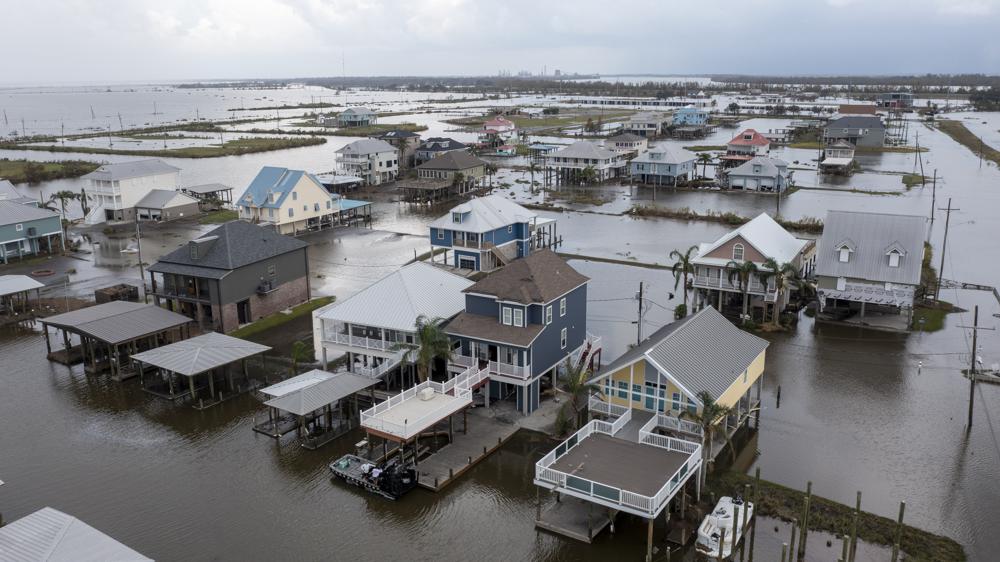
President Joe Biden on Thursday pledged robust federal help for the Northeastern and Gulf states battered by Hurricane Ida and for Western states beset by wildfires — with the catastrophes serving as deadly reminders that the “climate crisis” has arrived. “These extreme storms, and the climate crisis, are here,” Biden said in a White House speech. “We must be better prepared. We need to act.” The president said he will further press Congress to pass his nearly $1 trillion infrastructure bill to improve roads, bridges, the electric grid, and sewer systems. The proposal intends to ensure that the vital networks connecting cities and states and the country as a whole can withstand the flooding, whirlwinds, and damage caused by increasingly dangerous weather. Biden stressed that the challenge transcends the politics of a deeply divided nation because of the threats posed by the storms and fires. “It’s a matter of life and death, and we’re all in this together,” the president said. Scientists say climate change increases the frequency of extreme weather events — such as large tropical storms and the droughts and heatwaves that create conditions for vast wildfires. U.S. weather officials recently reported that July 2021 was the hottest month ever recorded in 142 years of record-keeping. Ida was the fifth-most powerful storm to strike the U.S. when it hit Louisiana on Sunday with maximum winds of 150 mph (240 kph), likely causing tens of billions of dollars in flood, wind, and other damage, including to the electrical grid. The storm’s remnants dropped devastating rainfall across parts of Maryland, Pennsylvania, New York, and New Jersey on Wednesday, causing significant disruption to major population centers. The storm has killed at least 13 in the Gulf Coast region and at least 46 in the Northeastern U.S. More than 1 million homes and businesses in Louisiana and Mississippi remained without power after Ida toppled a major transmission tower and knocked out thousands of miles of lines and hundreds of substations. New Orleans was plunged into total darkness; power began returning to parts of the city Wednesday. Biden is set to visit Louisiana on Friday to survey some of the damage and meet with government officials there. Biden said the flooding in Louisiana was less than the region experienced 16 years ago during Hurricane Katrina, crediting federal investments in the area’s levee system. “We know that there is much to be done in this response on our part,” Biden added. “We need to get power restored. We need to get more food, fuel, and water deployed.” He said he was receiving hourly updates on the disaster response and outlined efforts by the federal government to ease recovery efforts, including by making satellite imagery available to utility companies and waiving some regulatory requirements. At Biden’s request, the Energy Department said it was releasing 1.5 million barrels of oil from the nation’s Strategic Petroleum Reserve to ensure a steady fuel supply in the Gulf region, where sunken vessels are blocking key supply lines along the Mississippi River. The oil will be used by ExxonMobil at its Baton Rouge refinery. The company has agreed to replenish the strategic reserve, which is used as an emergency stockpile, within three months. The president also scolded insurers who are declining to pay for the costs of damage or hotel stays for people who had to evacuate their homes. “Don’t hide behind the fine print and technicalities,” Biden warned the insurers. “Do the right thing and pay your policyholders what you owe them.” Biden said separately that the Pentagon was assisting with ongoing firefighting operations in California against the Caldor fire. Louisiana Gov. John Bel Edwards suggested Biden’s Friday visit would be crucial for the president to understand the destruction by seeing the widespread damage for himself. “There’s nothing quite like visiting in person,” Edwards told reporters Wednesday following a briefing with local elected officials in Jefferson Parish, which took direct blows from Ida. “When you see it for yourself, it is just so much more compelling.” Asked what type of assistance he planned to request from Biden, Edwards said, “Quite frankly, the list is going to be very, very long.” But he said a priority would be for a housing program to help people rebuild. The White House says Biden has held several conference calls with governors and local officials to discuss preparations and needs after the storm and has received briefings from Federal Emergency Management Agency Administrator Deanne Criswell. FEMA had sent tons of supplies, including generators, tarps, and other materials to the region before the storm, and federal response teams are working on search and rescue. Biden’s trip Friday to the Gulf region will cap a difficult stretch for the president, who oversaw the chaotic exit of the U.S. military from Afghanistan after a 20-year engagement. That included the deaths of 13 U.S. service members helping evacuate more than 120,000 Americans, Afghan allies, and others fleeing life under Taliban rule. As Ida bore down on the Gulf Coast on Sunday, Biden was at Dover Air Force Base in Delaware to witness the return of the remains of the 13 U.S. servicemen and women who were killed in a suicide bombing last week at Afghanistan’s airport in Kabul, where the evacuations were taking place. Republished with the permission of the Associated Press.
