
Alabama won’t describe nitrogen execution plans for security
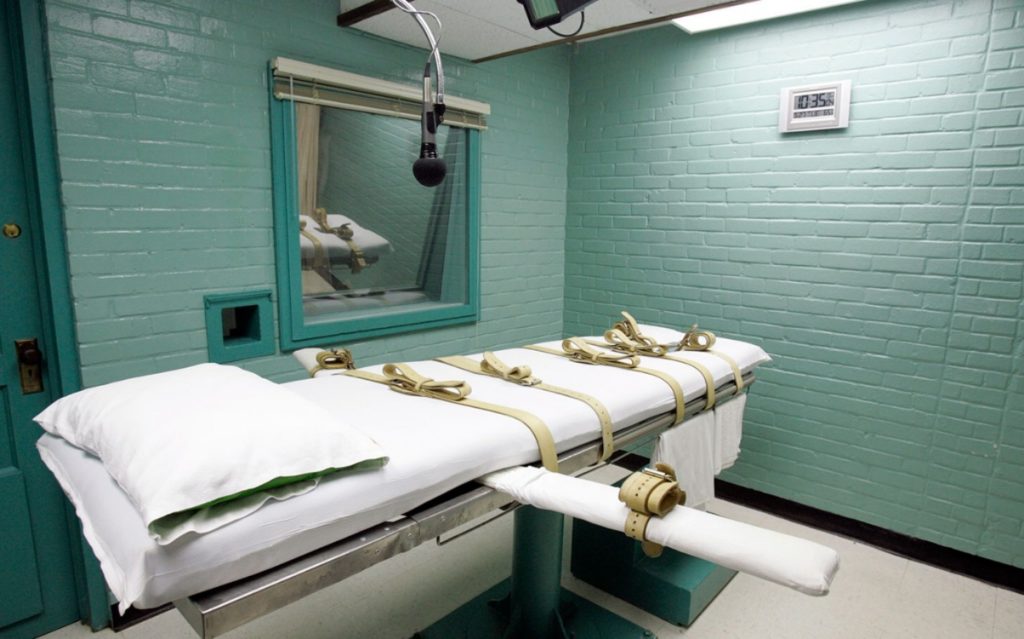
The Alabama prison system, citing security reasons, declined to describe the “system” it has built for nitrogen hypoxia executions and gave no timeframe for its use in carrying out death sentences. An Alabama Department of Corrections spokeswoman on Monday said she could not give an estimate for when the state would develop a protocol for the new execution method. The department also declined to describe even in general terms what it has built. “At this time, the ADOC has not produced a nitrogen hypoxia execution protocol. It would be inappropriate to speculate as to when the aforementioned protocol will be produced. Additionally, due to security concerns, the ADOC cannot provide details on the completion of the initial physical build of the nitrogen hypoxia system,” Kristi Simpson, an interim spokeswoman for the Alabama Department of Corrections, wrote in an email. The statement was a response to questions from The Associated Press, which asked for a broad description of the “physical build” of the system the state said it has completed — including whether it is a room or an apparatus in the existing death chamber — and an estimated timeframe for completing the protocol. Alabama told a federal judge last week that it has finished construction of a “system” to put condemned inmates to death using nitrogen gas, an execution method authorized by state law but never put into use. “The ADOC has completed the initial physical build on the nitrogen hypoxia system. A safety expert has made a site visit to evaluate the system. As a result of the visit, the ADOC is considering additional health and safety measures,” a lawyer for the state attorney general’s office wrote in the court filing. Alabama in 2018 became the third state — along with Oklahoma and Mississippi — to authorize the untested use of nitrogen gas to execute prisoners. Death would be caused by forcing the inmate to breathe only nitrogen, thereby depriving him or her of oxygen. Lawmakers theorized that death by nitrogen hypoxia could be a simpler and more humane execution method. But critics have likened the untested method to human experimentation since it has never been used. No state has used nitrogen hypoxia to carry out an execution, and no state has developed a protocol for its use, according to the Death Penalty Information Center. The information of the construction was disclosed in a court filing involving a lawsuit over the presence of spiritual advisers in the death chamber. Alabama currently carries out executions by lethal injection unless an inmate requests the electric chair. As lethal injection drugs became difficult to obtain, states began looking at alternative ideas for carrying out death sentences including firing squads and gas. Republished with the permission of the Associated Press.
Lethal injection or gas? Alabama’s death row gets to choose
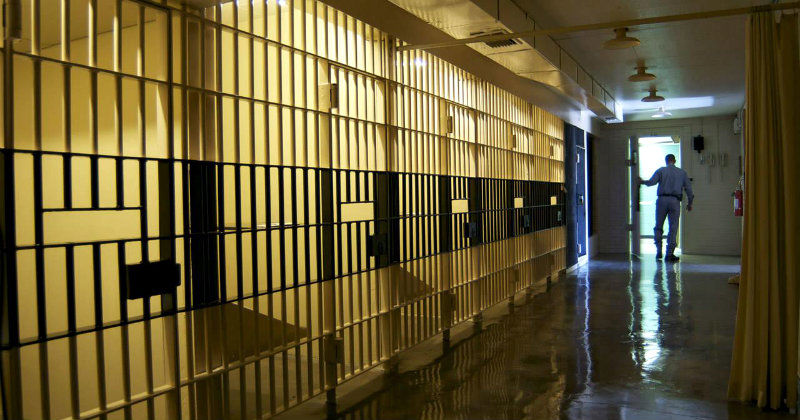
Some say inhaling nitrogen gas would be like dying on a plane that depressurizes in flight, swiftly killing all aboard. Now more than a quarter of Alabama’s death row inmates have signed statements saying they would prefer that gas over lethal injection or the electric chair when facing execution. No inmate in the U.S. has been put to death with nitrogen gas before, and critics suspect at least some inmates are simply hoping to delay a date with the death chamber through the inevitable legal challenges ahead. State corrections officials say 51 of Alabama’s 180 inmates have chosen nitrogen hypoxia, allowed a choice after Alabama lawmakers voted this year to authorize that alternative execution method. With difficulties obtaining execution drugs and litigation arising over claims of botched and horribly painful chemical injections this decade, Alabama is not alone as it joins Oklahoma and Mississippi in exploring that as a potential alternative. John Palombi, an attorney with the Federal Defenders Program, said his group advised inmates to request the uncertainties of nitrogen gas over what he called the known “torture” of Alabama’s three-drug cocktail. They had a June 30 deadline to make a choice. “Our decision to have our clients opt into use of nitrogen hypoxia was based on our belief that a three drug lethal injection protocol … is torturous and has tortured our clients,” Palombi wrote in an email, citing last year’s execution of Torrey McNabb and Ronald Smith Jr.’s the year before. While being sedated in the death chamber for the 1994 killing of a convenience store clerk, Smith coughed and heaved repeatedly for 13 minutes. His attorneys witnessed the execution and said his movements showed he was “not anesthetized at any point during the agonizingly long procedure.” Lawyers for McNabb said his final moments were inhumanely painful as he rolled his head back and forth while being executed for a police officer’s 1997 slaying. State officials disputed that anything went wrong either time. Bob Horton of the Alabama Department of Corrections gave no time estimate for when the alternative method would be ready. But the spokesman assured in an email that the department “will have a protocol in place before the state carries out executions by nitrogen.” Republican state Sen. Trip Pittman, sponsor of Alabama’s legislation, believes nitrogen will prove more humane. He spoke of how aircraft passengers have passed out and died from a sudden plane depressurization. While nitrogen gas isn’t itself poisonous, anyone breathing it without breathing oxygen will lose consciousness and die from lack of oxygen. “The person will pass out and ultimately pass,” said Pittman. Much of what is known about death by nitrogen comes from research, industrial accidents and suicides. It’s not even clear how nitrogen would be delivered, whether via some type of mask or breathing apparatus. “This is entirely experimental,” said Randall Marshall, legal director of the American Civil Liberties Union of Alabama. “It is the epitome of cruel and usual punish because it is experimenting on human beings.” State Sen. Cam Ward said he thinks some inmates signed for nitrogen gas because lengthy challenges are foreseen. “Some of them, not all of them, are probably litigating this to avoid the death penalty,” said Ward, who chairs Alabama’s legislative committee that oversees state prisons. But he added other inmates probably believe inhaling nitrogen gas could be a better way to die: “I think they’ve seen stories of where the three-drug cocktail lethal injection has failed and there’s that fear of it being a botched process as opposed to nitrogen.” In neighboring Mississippi, officials have authorized nitrogen hypoxia for executions in the event lethal injection is held unconstitutional or becomes “unavailable.” No actual plans to begin using gas have been announced, however, and the state hasn’t executed anyone since 2012, partly because a legal challenge to its lethal injection procedure continues. Elsewhere, Oklahoma officials announced in March that the state will develop protocols to use nitrogen gas to execute inmates because of the problems obtaining lethal injection drugs. Oklahoma Attorney General Mike Hunter said at the time that, “we can no longer sit on the sidelines and wait on the drugs.” Litigation over Alabama’s lethal injection method ended as the inmates opted for nitrogen. Alabama last month agreed to dismiss a lawsuit challenging lethal injection as cruel and unusual punishment because the eight inmate plaintiffs in the case had opted for nitrogen gas. The claims challenging the state’s lethal injection process as inhumane are now moot, “because their executions will be carried out at the appropriate time by nitrogen hypoxia,” attorneys wrote in a motion to the court. However, Robert Dunham, executive director of the Death Penalty Information Center, said he expects litigation over the use of nitrogen gas. He said Oklahoma’s execution process is currently subject to a federal court order. He noted that Alabama prisoners who selected nitrogen didn’t relinquish rights to challenge nitrogen gas or any other execution method. “Execution by nitrogen hypoxia has never been tried before and there are different potential dangers … I think it is highly likely that there will be challenges,” Dunham said. Republished with the permission of the Associated Press.
State House Committee approves nitrogen execution for death row inmates
A bill to allow death row inmates to be executed by nitrogen gas passed the Alabama House Judiciary Committee on Wednesday. Under existing law, a capital defendant may choose to be executed by means of lethal injection or electrocution. SB128, sponsored by Montrose-Republican State Sen. Tripp Pittman, would allow the condemned to choose execution by nitrogen hypoxia if lethal injection is unavailable, or if they so elect. The method, which the Death Penalty Information Center says never been used to execute someone, seals the inmate in an airtight chamber pumped full of nitrogen gas, causing death by a lack of oxygen. Many experts believe those who die by nitrogen asphyxiation usually never know what hit them. Pittman says it’s a more humane way to die. He also believes the state needs an alternative method of execution as lethal injection continues to face legal challenges. According to the Death Penalty Information Center two other states — Oklahoma and Mississippi — have also approved to the use of nitrogen gas as a back-up method of execution, but have yet to use it. The Senate voted in favor of the legislation, 29 to 0, in February. It now moves to the full House of consideration.
