
Daniel Sutter: Will student loan debt crush Alabama’s graduates?

Many of Alabama’s 2018 high school graduates will start college this fall. Unfortunately, many recent college graduates report putting off buying cars or homes, saving for retirement, or marriage due to student loan debt. Will Alabama’s new grads face this fate? Student loans now total almost $1.5 trillion, with 2016 graduates averaging $28,000 in debt. With over 10 percent of loans in default, taxpayers may eventually pay much of that $1.5 trillion. A closer look at the numbers, however, offers hope for grads and suggestions for ensuring access to college without excessively burdening students or taxpayers. The $28,000 loan average is only for grads with debt; 30 percent of grads managed to complete college without borrowing. Students burdened with six figure loans, often featured in news stories, inflate this average and have frequently borrowed for graduate or professional degrees, or to attend expensive private or out-of-state universities. Attending a public university and paying in-state tuition allows pursuit of a degree with little debt. High schoolers can also earn college credit through dual enrollment and advanced placement courses. Two-year colleges provide a low cost way to begin studies, particularly for students with marginal test scores and grades. College graduates earn 60 to 70 percent more than high school grads, but students who never earn degrees struggle to pay back loans. Some students will never pay their big loan balances thanks to forgiveness programs. Although student loans are very difficult to discharge in bankruptcy, the Public Service Loan Forgiveness plan cancels remaining balances for government or not-for-profit sector workers after ten years of payments. The plan makes some sense: why collect extra taxes to pay government workers to pay back government loans? The program, however, lets students planning on public service careers take on debt they will almost surely never repay. Georgetown University used this plan to offer free law school for aspiring public interest lawyers. Mortgage-sized debts raise the question of why exactly the Federal government is in the student loan business. An economic argument arises from the nature of lending: unlike cars or homes, college degrees cannot readily be repossessed (and indentured servitude is illegal). Students may be unable to borrow for college if they or their parents lack collateral, despite the value of degrees. A market would exist in the absence of Federal student loans, in all likelihood using test scores, college grades, and choice of major in decisions. I believe that equality of opportunity explains the student loan program, not the economics of lending. The earnings premium shows that for many, college is the gate to the middle class. Americans like everyone to have an opportunity to succeed through hard work. Some nations ration access to college using standardized tests, with a teenager’s poor test performance limiting college options. Americans like people whom experts and bankers think will fail to still have a chance. Markets generally outperform government programs, but I’m okay with government loans for college. Why? Arthur Brooks of the American Enterprise Institute contends that about two thirds of Americans support markets, in principle if not always in the details. Furthermore, this support correlates with the perception that America is a land of opportunity. Maintaining support for markets may require loans to some marginally qualified students. Access to college as part of an opportunity society suggests focusing loans on undergraduate students. The Urban Institute, however, found that 38 percent of loans now go to graduate students. And the Government Accountability Office found that 30 percent of outstanding loans would likely be forgiven under various programs. We should rely on market loans for graduate and professional schools. While this may limit some students’ pursuit of advanced degrees, college graduates already earn 30 percent higher salaries than the national average. Why should taxpayers pay for college-educated Americans to pursue even higher salaries? Alabama’s college-bound 2018 high school graduates need not end up with mortgage-sized student debt. And Federal student loans can provide opportunity for Americans without overly burdening taxpayers. ••• Daniel Sutter is the Charles G. Koch Professor of Economics with the Manuel H. Johnson Center for Political Economy at Troy University and host of Econversations on TrojanVision. The opinions expressed in this column are the author’s and do not necessarily reflect the views of Troy University.
Trump budget chiefs says no bailout for Puerto Rico debt
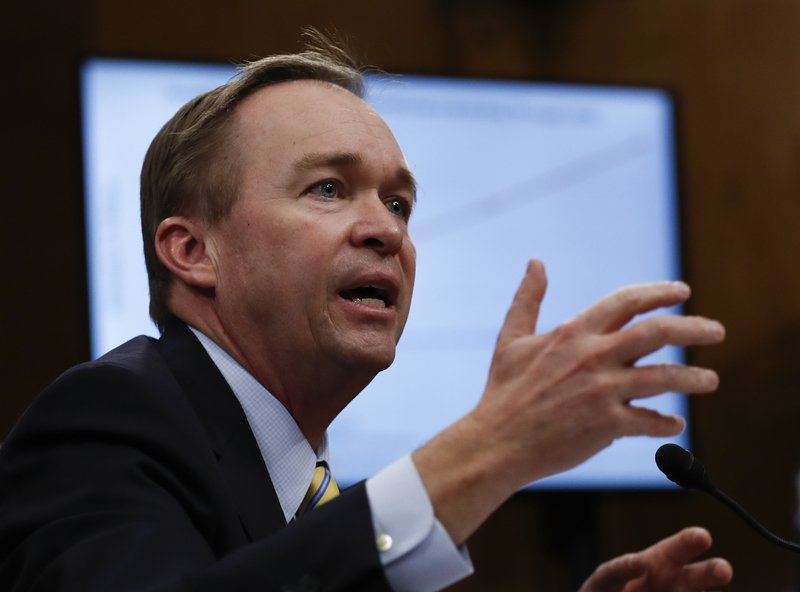
The White House’s budget director says Puerto Rico shouldn’t expect a federal bailout of its debt – even after President Donald Trump spoke of the need to “wipe out” that red ink as part of the island’s recovery after Hurricane Maria. Mick Mulvaney tells reporters that the administration plans to send Congress a disaster aid package that’ll include money for the U.S. territory. But Mulvaney says: “We are not going to be offering a bailout for Puerto Rico or for its current bondholders.” Trump told Fox News on Tuesday that federal officials would have to look at Puerto Rico’s debt structure and “we’re going to have to wipe that out.” Before the hurricane, Puerto Rico’s government was negotiating with creditors to restructure a portion of its $73 billion in debt. Republished with permission from the Associated Press.
Bradley Byrne: How we fund the government
Arguably, Congress’s most important power is the power of the purse. Through funding bills, Congress has an important opportunity to set the direction of the government. Founding Father James Madison called it “the most complete and effectual weapon with which any constitution can arm the immediate representatives of the people”. Unfortunately, in recent years, Congress has failed at this basic constitutional responsibility. For far too long, Congress has operated from manufactured crisis to manufactured crisis, putting off passing government funding bills until the last possible minute. Even worse, Congress has also fallen into a bad habit of just passing short-term spending bills known as Continuing Resolutions (CR) that simply hold federal spending in place. This is exactly what happened just a few weeks ago. I voted against that bill because it’s unacceptable to operate the government in that manner. Fortunately, for the first time since 2009, the House last week passed all twelve of the individual government funding bills before the end of the fiscal year on September 30th. Only in Washington would simply doing your job be considered a major accomplishment, but this was a big breakthrough in the government funding process and it is important to enacting President Trump’s agenda. For example, our funding bills crack down on illegal immigration and fully fund President Donald Trump’s request for the border wall. The bills also roll back burdensome regulations, provide a raise to our troops, defund Planned Parenthood, cut funds to the IRS and EPA, and boost funding for medical research. While I am proud we got the job done, we still have a lot of work to do. For example, Congress has still not even passed a budget for Fiscal Year 2018 yet, and the Senate has yet to consider even a single funding bill. I want to take a minute to clarify the difference between the federal budget and the funding bills. While the terms are often interchanged, they are actually very different. The budget is more of an aspirational document that does not carry the force of law, but it serves as a blueprint for the funding bills. Even more, the budget submitted each year by the President is truly just a recommendation that Congress uses to draft our own budget. Even still, the budget is important because it sets topline spending levels and provides a more long-term budget outlook. The funding bills are where the money is actually spent. These are very specific bills that lay out line item appropriations for most government agencies and programs. The funding bills run on the fiscal year calendar, so from October 1st to September 30th each year. If the funding bills are not passed before September 30th, a government shutdown occurs. When the process works like it is supposed to, the president submits his budget request in February, the House and Senate pass budget resolutions by the middle of the year, and then pass the twelve individual funding bills by September 30th. We must return to this process. When the system is broken, as it currently is, it makes it much harder to set federal priorities and cut down on wasteful or unnecessary government programs. This is why I think it is so important we return to regular order and get our work done on time. I understand it is difficult to make spending decisions in today’s tight budget environment, but the American people elected us to make difficult choices. While I’m glad the House got our work done this year, we must keep pushing to fix the overall process and restore fiscal sanity in Washington. • • • Bradley Byrne is a member of U.S. Congress representing Alabama’s 1st Congressional District.
After Donald Trump deal, Nancy Pelosi predicts greater leverage for Dems
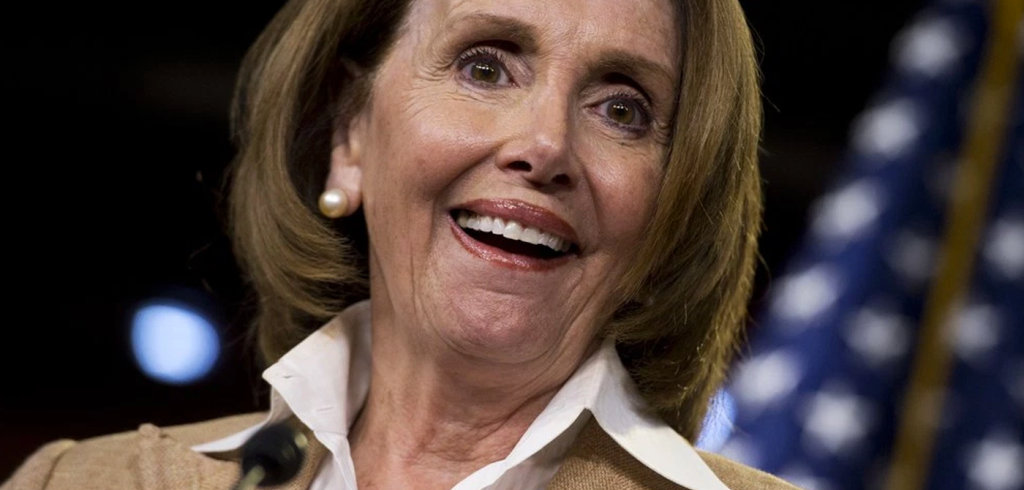
House Minority Leader Nancy Pelosi predicted on Friday that Democrats will have increased leverage on immigration and other issues, after a debt and disaster aid deal they cut with President Donald Trump passed the House on the strength of Democratic votes. Pelosi said she makes “no apology” for working across the aisle with a president disdained in her home state of California, arguing that the president now understands Democrats are committed to compromise, “but also to stand our ground.” The package of Harvey aid money coupled with a short-term increase in the debt ceiling and government spending passed Friday 316-90, with all 90 “no” votes coming from Republicans. Pelosi said that vote suggests Republicans are going to have a hard time passing other upcoming spending bills on their own, and will have to turn to Democrats again. “If it’s depending on Democratic votes, it increases our leverage,” Pelosi said in an interview with a small group of reporters. “It gives us a possibility for passing the DREAM Act” as an amendment to spending legislation. The DREAM Act refers to legislation that would provide legal status to immigrants brought illegally to the country as children. Some 800,000 of these immigrants are currently protected from deportation by temporary work permits granted by an Obama administration program, but Trump has said he will dismantle it. He has given Congress six months to act before the program ends. At Pelosi’s urging, Trump sent a tweet Thursday morning reassuring so-called “Dreamers” that they would not be subject to deportation during that six-month period. Pelosi discussed her conversation with Trump precipitating the tweet. She said that after a discussion with Democratic lawmakers about fears in the immigrant community, she had planned to call White House Chief of Staff John Kelly Thursday morning to talk about it. Trump called her first; aides have previously said one purpose was to boast about positive news coverage of the debt deal struck the day before in the Oval Office over GOP objections. But Pelosi launched into the topic of immigration, telling Trump: “‘I’m so glad you called because this is the challenge that we have. I know you did not mean to instill fear, but that is what is happening.’” “‘Well what can I do?’” the president asked, according to Pelosi. “I said, ‘Well, what you always do,’” Pelosi replied, laughing as she recalled the exchange. “‘Put out a message of assurance to people and we want to hold you accountable to that message of assurance.’” Sure enough, no sooner did Pelosi get off the phone and head into a meeting with fellow Democrats where she began recounting her call with the president, the tweet appeared: “For all of those (DACA) that are concerned about your status during the 6 month period, you have nothing to worry about – No action!” Asked her takeaway from that exchange, Pelosi said: “We have to always assume that people are acting with love in their heart. I’m a big believer in that, until they prove differently to me you have to believe it. And I don’t know if the president fully, I don’t know if he understood how cruel that act was,” she said, referring to the decision to end the immigration program. Pelosi also talked about the now-famous Wednesday meeting at the White House where Trump sided with her and Senate Minority Leader Chuck Schumer on the three-month debt limit extension, dismissing calls for a longer extension from Speaker Paul Ryan, Senate Majority Leader Mitch McConnell, R-Ky., and Treasury Secretary Steven Mnuchin. Pelosi said Democrats had the leverage because Republicans didn’t have the votes to pass the longer extension they wanted on their own. She said Trump quickly grasped that. “The president has been in a business where knowing your numbers has been essential,” Pelosi said. “He saw that they didn’t have the votes; we had a plan.” She said voters expect lawmakers and the president to work together. “We have a responsibility to get something done for the American people,” Pelosi said. “I make no apology for trying to do that with the person who’s going to sign the bill.” Republished with permission from the Associated Press.
House moving swiftly on $7.9B Harvey relief bill
The House on Wednesday moved swiftly toward approving $7.9 billion in Harvey disaster relief as Democratic leaders signaled they would back the measure along with a short-term increase in the nation’s borrowing limit to avoid an economy-rattling default. The announcement by House Minority Leader Nancy Pelosi, D-Calif., and Senate Minority Leader Chuck Schumer of New York is aimed at retaining Democratic influence and trying to ensure the Republican-controlled Congress addresses health care and immigration as the hectic fall agenda kicked off. “Given Republican difficulty in finding the votes for their plan, we believe this proposal offers a bipartisan path forward to ensure prompt delivery of Harvey aid as well as avoiding a default, while both sides work together to address government funding, DREAMERS, and health care,” Pelosi and Schumer wrote. Democratic votes are needed to quickly pass a debt limit increase, even though Republicans control Congress. Many Republicans simply won’t vote to increase the debt limit without cuts elsewhere in government spending. Wednesday’s House vote comes as the government’s response to Harvey is draining existing disaster reserves, with Federal Emergency Management Agency‘s disaster accounts hovering at $1 billion or less. FEMA is warning lawmakers that disaster funds run out on Friday, even as a much more powerful hurricane, Irma, is bearing down on the eastern U.S. This week’s measure is to handle the immediate emergency needs and replenish reserves in advance of Irma. Far more money will be needed once more complete estimates are in this fall, and Harvey could end up exceeding the $110 billion government cost of Hurricane Katrina. The move by Pelosi and Schumer is aimed at winning assurances that minority party Democrats will be treated fairly as Congress advances through its daunting to-do list, which includes extending a popular children’s health program, federal flood insurance, and, perhaps, a budget that would ease tight limits on Pentagon and domestic spending. The statement came out as the House Wednesday took up a $7.9 billion request by President Donald Trump‘s for a $7.9 billion first installment of relief for victims of Harvey. House action on Wednesday would set up a Senate debate that, as of Wednesday, would follow an uncertain path. GOP leaders have signaled that they want to use the urgent Harvey aid bill to solve perhaps the most vexing issue facing Congress this month: Increasing the U.S. debt limit make sure the government can borrow freely again to cover its bills, including Harvey aid. Senate Majority Leader Mitch McConnell, R-Ky., said again Wednesday that increased Harvey costs show the importance of acting swiftly to increase the government’s debt cap to make sure there’s enough borrowed cash to pay out the surge in disaster aid. “I think it’s a terrible idea,” said House Freedom Caucus Chairman Mark Meadows, R-N.C., who conceded that conservatives were getting outmaneuvered. “I think at this point there are bigger issues that we have to focus on,” Meadows said. “I have opposed a debt ceiling increase every time it has come up for a vote,” said Rep. Roger Williams, R-Texas. “I am heavily opposed to lumping these two separate issues together.” Analysts at the Bipartisan Policy Center, a Washington think tank, say Harvey aid wouldn’t cause a cash crunch for weeks. “We’re dealing with all these things at this point in time anyway,” said House Democratic Caucus Chairman Joe Crowley of New York. “Democrats have said we’re for a clean debt ceiling and we’re also for making sure the people from Texas, Louisiana, and elsewhere who’ve been severely damaged by these storms – with one more on the way as well – that their needs need to be addressed as well.” Republished with permission from the Associated Press.
Harvey aid, debt on returning Congress’ daunting to-do list
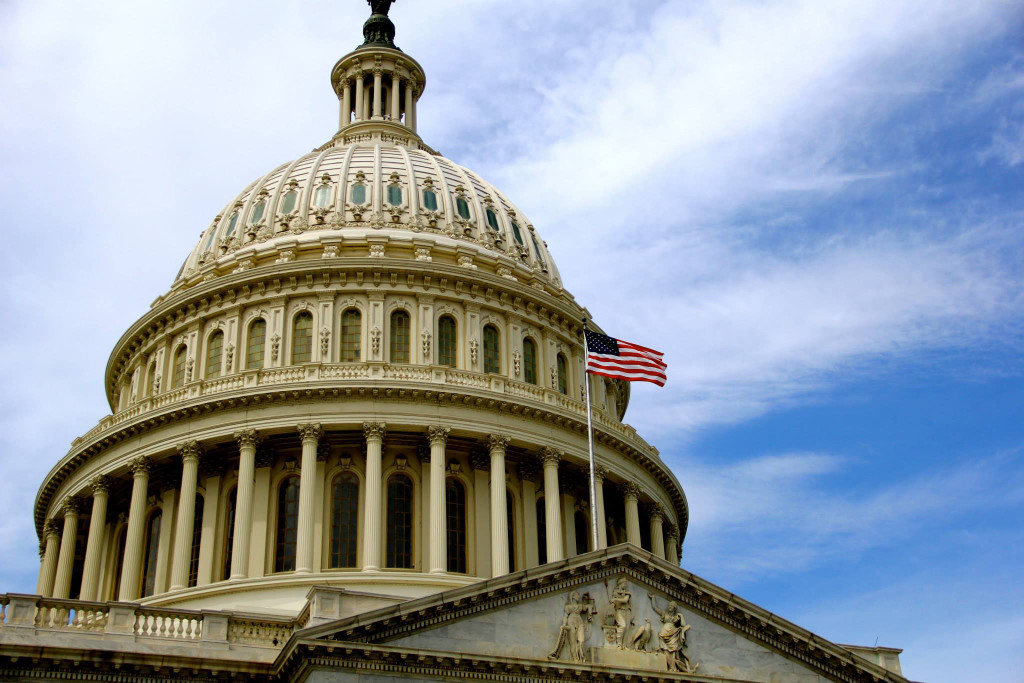
Congress ends its five-week summer recess Tuesday as storm-ravaged states clamor for Harvey aid, the Trump administration demands a swift increase in the nation’s borrowing authority, and President Donald Trump‘s actions on immigration seem certain to upend the fall agenda. Lawmakers face a daunting workload and fast-approaching deadlines, including the need to fund the government and increase the United States’ $19.9 trillion debt ceiling by month’s end. A Republican-led Congress with no major legislative achievement in the first seven months of Trump’s presidency also is intent on overhauling the nation’s tax code, hoping for a political win after the failure of repealing and replacing Barack Obama‘s health care law. The immediate focus will be rushing a $7.9 billion disaster relief package to Harvey victims. Treasury Secretary Steve Mnuchin raised the stakes last weekend by calling on Congress to combine the aid with a contentious increase in the nation’s borrowing limit. Conservatives oppose raising the borrowing limit without getting something in exchange, such as deep cuts elsewhere in federal spending. “The president and I believe that it should be tied to the Harvey funding,” Mnuchin said Sunday. “If Congress appropriates the money, but I don’t have the ability to borrow more money and pay for it, we’re not going to be able to get that money to the state. So, we need to put politics aside.” The House and Senate are expected to vote quickly on the first $7.9 billion aid installment to help with immediate recovery and rebuilding needs in Houston and beyond. Additional billions will be tucked into a catchall spending bill later in the month that will keep the lights on in government past Sept. 30, when the current budget year ends. “Somebody who’s just been pulled off their roof doesn’t want to hear about our internecine squabbles and debates over procedure when they’ve lost their homes and are trying to figure out where they’re going to sleep the next night,” said Rep. Charlie Dent, R-Pa. Swift action on Harvey will give Congress and Trump the chance to look competent and remind voters that government can be a positive force. GOP lawmakers head into the final quarter of the year desperate to notch accomplishments and make headway on a sweeping tax overhaul, and the majority party is eager for the chance to turn around its dreary track record ahead of next year’s midterm elections. Trump may toss another tricky issue Congress’ way. The president was expected to announce that he will end protections for young immigrants who were brought into the country illegally as children, but with a six-month delay. The postponement in the formal dismantling of the Deferred Action for Childhood Arrivals, or DACA, program would be intended to give Congress time to address the issue. But it was unclear whether it could resolve the problem given that it has had several failures in attempts to enact comprehensive immigration reform. Some Republicans, led by House Speaker Paul Ryan, R-Wis., have urged Trump not to end the program and save nearly 800,000 from threat of deportation. Adding to the pile of work, a few important programs are expiring at the end of September and need to be renewed. They include children’s health insurance payments and a national federal flood insurance program that has bipartisan support but continually pays out more than it takes in through premiums. Republished with permission from the Associated Press.
Analysis: Donald Trump proposals would add $5.3 trillion to debt

A new analysis from a nonpartisan group finds that Donald Trump‘s latest tax proposals would increase the federal debt by $5.3 trillion over the next decade, compared with $200 billion if Hillary Clinton‘s ideas were enacted. The Committee for a Responsible Federal Budget looked at Trump’s newly revised tax plan as well as other proposals. However, it says its analysis can’t be certain of the actual size of Trump’s tax plan because his campaign won’t spell out how it will treat certain businesses’ tax liabilities. The committee took a “mid-range guess” between two estimates provided by the nonpartisan Tax Foundation. When Trump introduced his economic plan last week, he vowed that his tax cuts would be paid for partly by triggering record economic growth. The committee was skeptical and presumed they would generate no new growth. Several economists have projected that Trump’s economic agenda — especially his restrictions on immigration and trade — would slow economic growth and possibly cause a recession. Trump has also proposed a sharp increase in spending on the military and veterans. He has proposed some spending cuts, but the committee calculated they wouldn’t come close to balancing the budget. The cost of Clinton’s plan comes largely from her proposals for free college, child care aid and universal pre-K for 4-year-olds. She proposes paying for them with tax hikes on the rich and businesses. Republished with permission of the Associated Press.
Alabama city ranked as 5th most student debt city nationwide

Millennials may be typecast as an entitled, unmotivated and lazy generation that choose to crash in mom’s basement after college because they can’t find a job they like, but even those who fight the narrative and pound the pavement are facing massive post-college debts as they struggle to earn their independence in entry-level jobs. Today, college graduates spend nearly a fifth, or 18 percent, of their salaries just on student-loan payments, according to a recent report from Citizens Bank. And those debts are likely to grow old with them. Three in five graduates, who belong to the Millennial generation, expect to keep paying their college loans into their 40s. With college graduation season upon us, the personal finance website WalletHub on Tuesday released its 2016 report on the Cities with the Most & Least Student Debt where it compared the average student-loan balance against the median income in each of 2,513 U.S. cities to determine where Americans are most overleveraged on their college-related debts. Unfortunately for some Alabama students, the debt burden is devastating. In Selma, students are graduating with an average debt of $28,035. With a median income for ages 25 to 44 at $17,610, that means these graduates have a ratio of student debt to median income of a crippling 159 percent — the fifth worst in the nation. But Selma’s not alone, Talladega’s student debt to median income ratio ranks in the top two percent nationwide at 116 percent, followed close behind by Birmingham with 109 percent. According to Sandy Baum, Professor of Higher Education Administration in the Graduate School of Education & Human Development at George Washington University, and Senior Fellow at the Urban Institute, part of the problem is that college-bound students make the wrong choice about where to go to school and what to study. “Too many people make the wrong choice about where to enroll and what to study,” explained Baum. “That means they may be financing an endeavor in which they are unlikely to succeed, that leads to weak employment prospects even if they do succeed, or that is much more expensive than alternatives of equal or higher quality.” The other issue: some students borrow too much. “They take all the loans for which they are told they are eligible,” continued Baum. “Instead, they should think hard about what their needs will be over the course of the school year. This is particularly an issue for part-time students, who are eligible for the same amounts as full-time students … borrowing moderately is important.” To identify the cities that are most overleveraged on their student-loan debts, WalletHub’s analysts divided the average student-loan balance (based on TransUnion data from September 2015) by the median income of residents aged 25 to 44 in each of 2,513 U.S. cities. According to WalletHub, the most overleveraged cities include Voorhees, N.J.; Opa-locka, Fla.; College Park, Ga.; Bastrop, La.; and Selma, Ala. The least overleveraged cities include Lake Forest, Ill.; Sammamish, Wash.; Severna Park, Md.; Winchester, Mass.; and Scarsdale, N.Y.
Mo Brooks takes to the House floor to ask “Who will bail out America?”
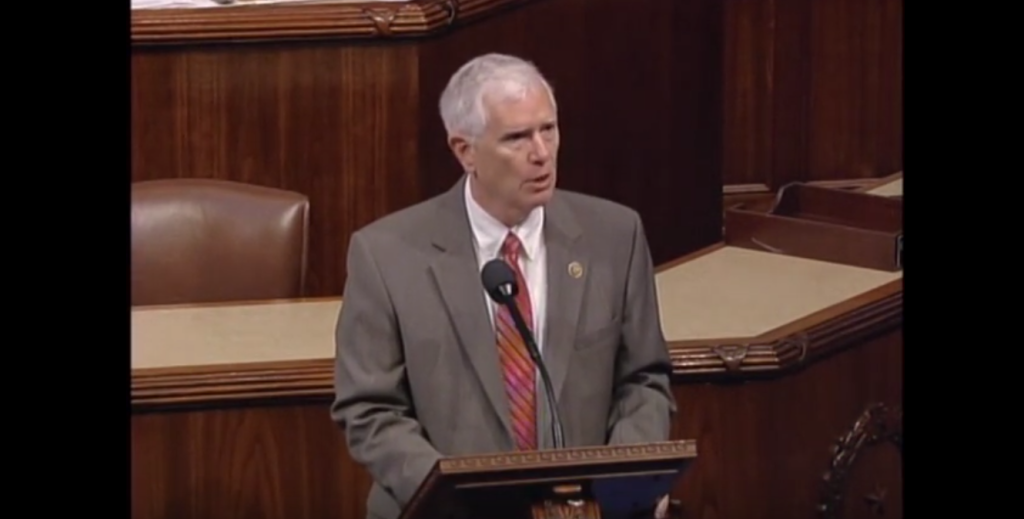
The United States may be following in the footsteps of Puerto Rico — a territory that has had its credit rating cut to “junk bond status” and is defaulting on its $70 billion debt — if it doesn’t balance the budget soon Congressman Mo Brooks (AL-05) warned Wednesday. Brooks took to the House floor to issue his warning as part of a continued series of floor speeches highlighting “bad example” countries who are reaping the consequences of financially irresponsible leadership. “Puerto Rico, like America, suffers from a bloated central government, welfare programs that undermine the work ethic, decades of financial mismanagement by elected leaders, and a resulting anemic economy and shrinking job market that causes roughly 7,000 citizens to flee Puerto Rico each month,” Brooks said on the House floor. Brooks continued, “Puerto Rico’s debt defaults and resulting economic morass have forced Puerto Rico to delay tax refunds, fire public-sector workers, raise sales taxes to a record 11.5%, and close over 100 schools. Unfortunately, these austerity measures, and more, are inadequate because Puerto Rico’s self-serving and financially irresponsible elected officials waited too long. Puerto Rico still cannot pay its bills or creditors.” The Huntsville Congressman explained America is on the same path of fiscal irresponsibility as Puerto Rico, having blown through the $19 trillion debt mark and is rapidly approaching on the $20 trillion debt mark. “Who will bail out America when America defaults on its debt?” Brooks asked on the floor. According to the nonpartisan Congressional Budget Office America faces an unending string of trillion dollar a year deficits beginning a mere six years from now and that America’s debt will blow through the $29 trillion debt mark in a decade. “If voters do not elect financially responsible officials to Washington, America will endure the same debilitating bankruptcy and insolvency that wreaks havoc in Greece and Puerto Rico — with one major difference — unlike Greece, which has been bailed out three times by the European community, and unlike Puerto Rico, which may yet be bailed out by American taxpayers, there is no one who can, or will, bail out America!” Brooks concluded. In his first two speeches in the series, Brooks singled out Greece and Venezuela — both countries with massive, unsustainable debt — and addressed America’s growing annual deficits and accumulated debt, appropriations bills to fund the government, the debt ceiling, and how these issues interplay will significantly impact America’s future. Watch Brooks’ latest speech below:
Here’s how much credit card debt Birmingham residents hold

If you’re already feeling the overwhelming burden of credit card debt in the new year, you’re certainly not alone. Americans have exceeded a staggering $900 billion in credit-card debt as of year-end 2015 — the highest amount recorded since the economic downturn — according to a new report from CardHub. In Birmingham, Alabama shoppers are no stranger to “swipe now, worry later” spending and residents have found themselves further in debt than many other cities across the country. According to CardHub, Birmingham is among the top 8 percent of cities with the most credit card debt in the U.S.. There, individuals there have an average $5,874 of debt and take an average of 70+ months, over 5 1/2 years, to pay it off. Credit Card Debt in Birmingham (99th Percentile=Best) 38th Percentile – Average Credit Card Balance ($5,874) 18th Percentile – Median Earnings for Workers ($22,697) 18th Percentile – Cost of Interest Until Payoff ($2,771) 8th Percentile – Expected Payoff Time Frame (70 months) To determine which American cities had the most-sustainable and least-sustainable credit card debt, CardHub analysts analyzed data from TransUnion, the Federal Reserve, and the U.S. Census Bureau to calculate the number of months required to pay off the average credit card balances and associated finance costs in 2,547 U.S. cities.
