
Harvey aid package likely vehicle for debt ceiling increase

The White House plans to ask Congress Friday for a $5.9 billion down payment for initial Harvey recovery efforts. Republican leaders are already making plans to use the aid package, certain to be overwhelmingly popular, to win speedy approval of a contentious increase in the federal borrowing limit. A senior House Republican, who spoke on condition of anonymity because the deliberations were private, disclosed the approach. It ignores objections from House conservatives who are insisting that disaster money for Harvey should not be paired with the debt limit increase. Other senior GOP aides cautioned that no final decision had been made, and Democrats, whose votes would be needed in the Senate, have not signed off on the approach. For GOP lawmakers who support a straightforward increase in the debt limit, pairing it with Harvey money makes the unpopular vote easier to cast. Congress must act by Sept. 29 to increase the United States’ $19.9 trillion debt limit, in order to permit the government to continue borrowing money to pay bills like Social Security and interest payments. Failing to raise the debt limit would risk a market-shattering first-ever U.S. default. “Look, some members are going to vote against the debt ceiling under any circumstances and they want their ‘no’ vote to be as easy as possible,” said Rep. Charlie Dent, R-Pa. “The issue is not making the debt ceiling vote easier for the ‘no’ votes. The issue is making it easier for the ‘yes’ votes.” The government’s cash reserves are running low since the nation’s debt limit has actually already been reached, and the Treasury Department is using various accounting measures to cover expenses. Billions of dollars in Harvey aid are an unexpected cost that at least raises the potential that Congress would have to act earlier than expected to increase the government’s borrowing authority. And despite threats from President Donald Trump that he would shut down the government if his U.S.-Mexico border wall is not paid for, lawmakers and aides say the White House has eased off that threat and any fight over the border wall will be delayed until later in the year. “I just don’t think a shutdown is in anyone’s interest or needed for anyone’s interests,” House Speaker Paul Ryan, R-Wis., said in an interview Friday with the Milwaukee Journal Sentinel. The initial package of Harvey aid would replenish Federal Emergency Management Agency disaster coffers through Sept. 30. The White House is finalizing the request, which was expected to be sent to Capitol Hill later Friday. A senior congressional aide said Friday the request would include $5.5 billion for the disaster relief fund and $450 million for the Small Business Administration Disaster Loan Program. The aide wasn’t authorized to publicly disclose the information in advance of a formal announcement and spoke on condition of anonymity. The initial aid money would be a down payment for immediate recovery efforts, to be followed by larger packages later. An additional $5 billion to $8 billion for Harvey could be tucked into a catch-all spending bill Congress must pass in the coming weeks to fund the government past Sept. 30, according to the senior House Republican. Ryan said nothing will stop a Harvey aid bill from getting through Congress and he didn’t foresee any problems with it passing, despite opposition to federal aid from some Republicans following Hurricane Sandy. “It’s going to take us time until we know the full scope of it,” Ryan said of Harvey’s toll. He said a storm the size of Harvey is unprecedented, and because of that it “deserves and requires federal response.” Republished with permission from the Associated Press.
Debt ceiling issue tops summer budget agenda for Congress
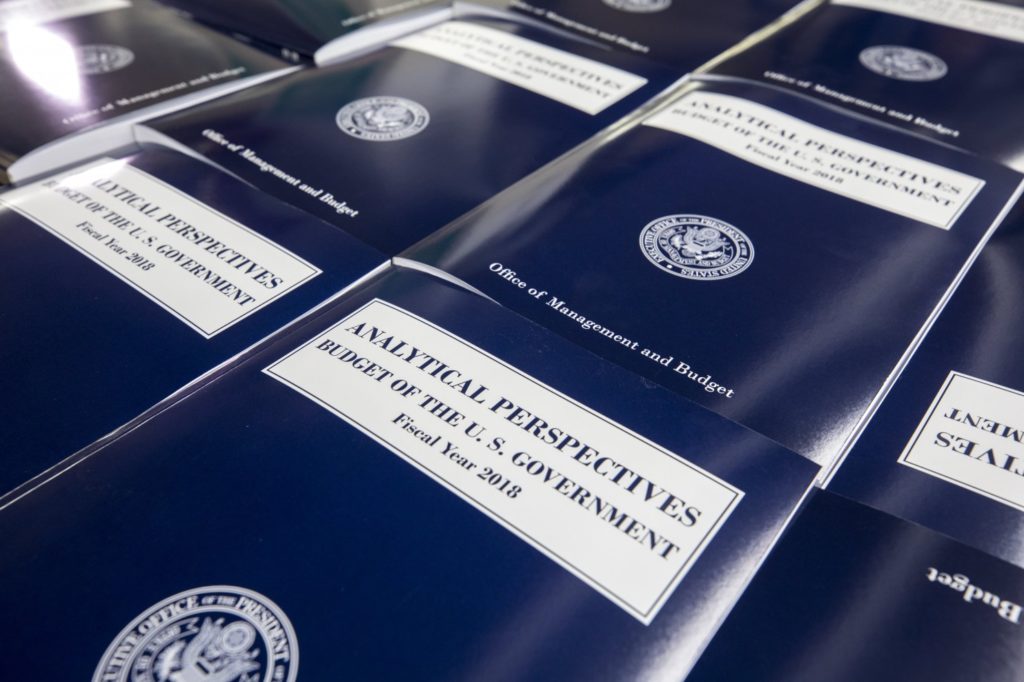
Even members of his own party were quick to declare President Donald Trump‘s budget plan dead on arrival in Congress last month. And in fact, lawmakers are facing a burst of overdue budget-related work this summer. Most of what’s on the budget agenda probably won’t bear much resemblance to Trump’s spending plan, which promised deep spending cuts on domestic programs, rapid economic growth, and a balanced federal ledger in a decade. Instead, they’re confronting an increase in the government’s borrowing cap, serious problems in advancing annual spending bills, and a smaller set of curbs on domestic benefit programs A look at what’s ahead: — DEBT DILEMMA Atop the absolute must-do list is raising the borrowing cap, or debt limit. Doing so would avert a disastrous, first-ever default on U.S. obligations. Treasury Secretary Steven Mnuchin says Congress should vote to raise the debt limit before leaving Washington for its traditional August recess. Lawmakers once thought they had until the fall to act. It would be the first increase of Trump’s presidency, and responsibility for passing it falls chiefly upon the Republicans who control Congress. Some conservatives, including White House budget director Mick Mulvaney and the hard-right House Freedom Caucus, want difficult spending cuts paired with the higher cap. If those efforts fail, it’s commonly assumed that GOP leaders would have to enlist support from Democrats to pass the legislation. Republicans secured sweeping spending cuts as the price for a 2011 debt deal with President Barack Obama. But Obama prevailed in demands for a “clean” debt increase in later rounds, most recently in late 2015. House Democratic leader Nancy Pelosi and other top Democrats say they won’t go along with a debt bill if Republicans press ahead with deficit-financed tax cuts for the wealthy. Mnuchin is using a set of accounting maneuvers to keep the government solvent for now. — SPENDING DEADLOCK Congress is way behind on the 12 annual spending bills covering the Pentagon and other federal agencies for the upcoming 2018 budget year. Work on those measures, totaling more than $1.1 trillion, was supposed to begin last month, but Republicans have yet to even unite behind a plan of attack – much less execute it. GOP leaders and the White House must sort through the demands of numerous competing factions, including defense hawks, defenders of domestic spending, and tea party lawmakers. At the same time, they must deal with Democrats, who retain great leverage because their support is needed to advance the legislation. Trump and his allies generally agree on a big increase for the military, but disagree on corresponding cuts to domestic programs and foreign aid. Democrats are opposed to Trump’s cuts – such as those aimed at the Environmental Protection Agency, foreign aid, grants for first responders, economic development and others – and are pressing for domestic increases. A major battle again looms over money for Trump’s oft-promised wall along the Mexican border. A government shutdown can’t be ruled out when the current budget year end Sept. 30. One option: GOP and Democratic leaders forge the outlines of an overall agreement, then advance the 12 appropriations bills in a bipartisan fashion. It’s a challenging compromise to pull off and would disappoint key factions. So far the result has been drift. Some insiders predict the only solution is yet another bill that covers the entire government in one shot, but it might not pass until late this year and that may put some agencies on autopilot. — BUDGET/TAX IMBROGLIO After health care, the next priority for Republicans is overhauling the tax system. But to do that – at least without turning to Democrats for help – would first require the GOP to pass a blueprint known as a budget resolution. Congress cannot wrap up action on the 2018 plan, however, until efforts to repeal the Obama-era health law are complete. That resolution would allow for follow-up legislation on taxes and spending, including a recommended cap on annual appropriations bills. Republicans are eyeing this course as a way to ease passage of a tax overhaul and cuts to benefit programs such as federal employee pensions and food stamps. But the path ahead is tricky. Some defense stalwarts are demanding Pentagon increases greater than Trump’s, and the White House is pushing lower spending for domestic agency operations. There are accounting tricks used in Trump’s budget, but Republicans cannot resort to using them. That could lead to nonbinding but politically symbolic proposals to cut Medicare, a program Trump says he won’t touch. Republished with permission of The Associated Press.
Congress sends budget and debt deal to Barack Obama
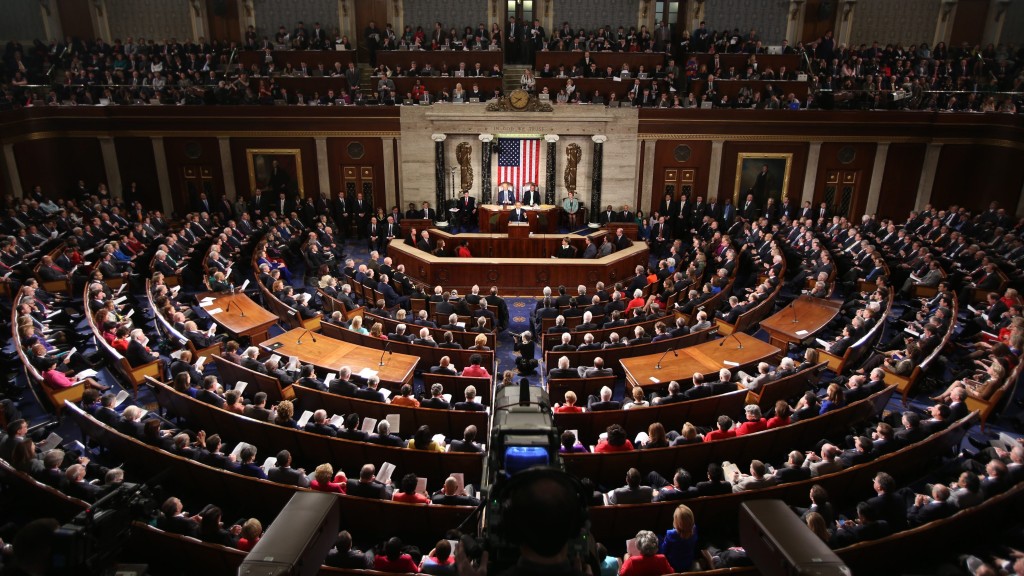
President Barack Obama is applauding the Senate’s pre-dawn approval of a two-year budget deal, saying it shows Congress can “help, not hinder” the nation’s progress. Just after 3 a.m. Washington time, Senators voted 64-35 to approve the measure, which also lifts the debt ceiling. Democrats teamed with Republican defense hawks to overcome opposition from conservatives. They included two GOP senators running for president, Rand Paul of Kentucky and Ted Cruz of Texas. In a written statement, Obama says the deal will strengthen defense, boost needed investments and create jobs. He says it also breaks the cycle of “shutdowns and manufactured crises” that have harmed the U.S. economy. And he urges lawmakers to work speedily to ensure individual agency spending bills are completed before a temporary spending bill runs out. Republished with permission of the Associated Press.
