
Darryl Paulson: It’s now or never for #NeverTrump
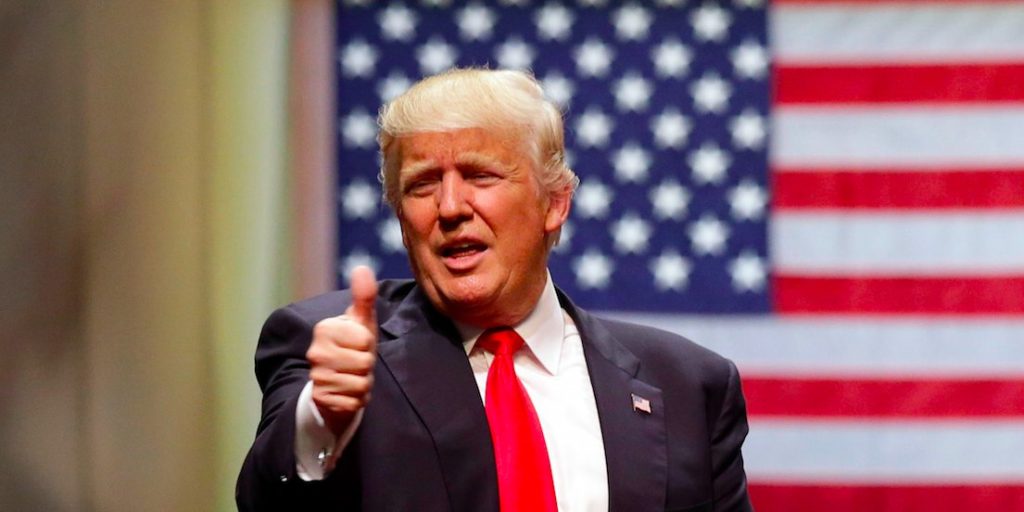
The opposition to Donald Trump has been constant from the start of the 2016 presidential campaign. However, it has been unfocused and essentially leaderless. Many Trump opponents believed he would not enter the race. When he entered, they believed he had no chance of winning. Now that Trump has won the nomination, they believe he can be stopped by an independent or third party campaign. As early as December 2015, before the first caucus or primary, Mike Fernandez, a Coral Gables, Florida health care executive and financial backer of Jeb Bush, took out full-page ads in the Miami Herald and other newspapers stating that he would support Hillary Clinton over Donald Trump. Fernandez described Trump as a narcissistic ”Bullyionaire” with a hunger to be adored. Fernandez was critical of fellow Republicans “blinded by the demagoguery” of Trump. In January 2016, National Review devoted an issue to conservative writers who made the case that Trump was not a conservative, and his nomination would do long-term damage to conservatism and the Republican Party. The issue contributed to the formation of the #NeverTrump movement, but it failed to stop Trump from winning the GOP nomination. With Trump having secured the nomination, many Republicans now look at the race as a binary choice: Donald Trump or Hillary Clinton. Most Republicans, unlike Mike Fernandez, see Trump as the preferred option. Foster Friess, a Wyoming financier and supporter of Republican candidates and causes, said Trump was not his first choice, but “he’s better than Hillary.” During the presidential primaries, even Jeb Bush stated that “Anybody is better than Hilary.” Some of Trump’s strongest critics have now jumped aboard the bandwagon. Texas Governor Rick Perry, who called Trump a “cancer” on the GOP who would lead the party to “Perdition,” has now offered to help Trump win the election. Oh, by the way, he would also be interested in being Trump’s Vice President. Many Republicans believe it is now a question of party loyalty. As Republican strategist Ford O’Connell observes, “political parties are not meant to be ideological vessels, but competing enterprises whose job is to win elections.” Rick Wilson, one of the most vehement anti-Trumpers, described the party loyalty argument as nothing more than “the DC establishment rolling over and becoming the Vichy Republicans we all know they would.” The last hope of the #NeverTrump movement is recruiting an independent or third-party candidate to provide an alternative to Trump and Clinton. RNC Chair Reince Priebus calls such efforts a “suicide mission.” Supporters argue that an independent candidate would not only give discontented voters a choice, but they believe such a candidate could win. At the very least, such a candidate could siphon off enough electoral votes to throw the election into the House, where the Republican majority could select someone other than Trump or Clinton. Supporters of an independent option argue that recent polls show 58 percent of voters are not happy with their choices, and 55 percent say they support an independent candidate. Historically, the idea of an independent candidate is more appealing than the reality. Teddy Roosevelt and his Bull Moose Party is widely regarded the most effective third-party movement. Roosevelt actually came in second and swamped incumbent Republican President William Howard Taft. Roosevelt received 27.4 percent of the vote and 88 electoral votes to only 23.2 percent and 8 electoral votes for Taft. In 1948, Governor Strom Thurmond of South Carolina won only 2.4 percent of the national vote but, because it was concentrated in a few Deep South states where Truman’s name did not appear on the ballot, Thurmond captured the electoral votes of four states. Twenty years later, Governor George Wallace replicated much of Thurmond’s success in winning 13.5 percent of the vote and 46 electoral votes in five southern states. In 1992, Texas businessman Ross Perot and his Reform Party won almost one out of five votes, but failed to capture a single state. At one point, Perot led both George H. W. Bush and Bill Clinton but, as Election Day approached, many of his supporters returned to support their traditional party. To run as an independent or third-party candidate, there is one important requirement: you need a candidate. So far, the #NeverTrump movement has not found a willing person to oppose Trump. Among the possible candidates are Mitt Romney, the 2012 Republican presidential nominee. Romney has name recognition and money, and would likely qualify for the debates. Romney was opposed by many conservatives in his 2012 race which would once again be a problem. In addition, Romney’s enthusiastic acceptance of Trump’s endorsement in that campaign would be another concern. Marine Corps General James Mattis seriously considered running before backing out. Mattis would have commanded support as a military figure and a political outsider. But, Mattis is not an Eisenhower and is an unknown commodity. Marco Rubio‘s name is being tossed about as a possible candidate. Rubio is young, charismatic and has appealed to woman and minority voters. The downside is that Rubio won only in Puerto Rico, Minnesota and the District of Columbia, and badly lost his home state of Florida to Trump. In addition, Rubio signed the pledge to support the Republican nominee “and I intend to keep it.” Ben Sasse, a first-term Republican Senator from Nebraska, has been a leader in the #NeverTrump movement. Sasse is only in his second year as a senator, which will raise questions about his experience. He also is unknown outside of Nebraska. Finally, former House member and Senator Tom Colburn has expressed interest in running and is highly respected by conservatives for his attempts to cut federal spending. Colburn has stated that Trump “needs to be stopped,” but recently said he would not be the candidate. One of the maxims of politics is that it takes something to beat nothing. So far, nothing looks like he has the race all wrapped up. ___ Darryl Paulson is Professor Emeritus of Government at USF St. Petersburg.
Martin Dyckman: As rhetoric descends, up pops evil

John Kasich has taken heat for a web ad that subtly compares Donald Trump to Adolf Hitler. Narrated by a former Vietnam POW, retired Air Force Col. Tom Moe, it paraphrases German pastor Martin Niemoller’s famous statement of regret that he did not speak up for the tyrant’s victims until he became one “and there was no one left to speak for me.” Hitler analogies should be rare and expressed carefully lest comparisons to lesser evils trivialize his monstrosities. Too many events have already been compared to the Holocaust, for example. But let’s see what the ad says: You might not care if Donald Trump says Muslims should register with their government, because you’re not one. And you might not care if Donald Trump says he’s going to round up all the Hispanic immigrants, because you’re not one. And you might not care if Donald Trump says it’s OK to rough up black protesters, because you’re not one. And you might not care if Donald Trump wants to suppress journalists, because you’re not one. But think about this: If he keeps going, and he actually becomes president, he might just get around to you. And you better hope there’s someone left to help you. Although Kasich tried Sunday to disclaim the implication as Moe’s words, not his, the candidate’s super PAC produced it and he deserves the responsibility and the credit. That’s right, credit. It would be just as wrong to ignore Hitler’s examples as to trivialize them. History often repeats itself. Bad history should be taken as warning. It does not necessarily trivialize Hitler to observe that Trump’s strategy and tactics recall some of those favored by the one-time Austrian army corporal. Like Hitler, Trump is a demagogue. He demonizes minority targets. He relishes personal insults. He revels in baseless insinuations, as in persistently questioning President Obama’s citizenship. He invents his own “facts,” such as having personally witnessed crowds of Muslims cheering 9/11. He lies with glee – the bigger the lie the better – and then lies again when he denies saying or implying what millions of people heard and saw him say. His fundamental theme is to inflame the suspicions of people who think their country is failing itself, failing them, and riddled with conspiracies. So was Hitler’s. He sold himself as the avenger for all that was wrong and everyone who felt wronged. So does Trump. As Hitler exploited Germany’s economic crisis and inflamed the belief that Germany’s defeat in World War I owed to the country being sold out from within – by communists and Jews – rather than to exhaustion and failure at arms, Trump wants Americans to believe our country is failing. He promises to “make America great again,” as if it no longer is. It’s a witch’s brew of bigotry, paranoia and scapegoating – and it’s working. The more outrageously he behaves, the more devoted his mob seems to become. None of this is necessarily means that a president Trump would emulate how Hitler misused power. But he has said – and should be taken at his word – that he would try to round up and expel an estimated 11 million people without any care for the staggering consequences to them or to the industries – agriculture, construction, and hospitality in particular – that would collapse in their absence. How this could be done without concentration camps taxes the imagination. When he talks loosely about surveillance of mosques and identity cards for Muslims, the image that comes to mind is of yellow stars on clothing and passports stamped “Jude.” We have already shown a vulnerability to forfeiting our freedoms in the name of “security.” As the columnist Leonard Pitts wrote recently, Sept. 11 not only destroyed lives and buildings: … It also shredded the Constitution and made America unrecognizable to itself. The government tortured. It disappeared people. It snooped through innocent lives. It created a secret ‘no-fly list’ of supposed terrorists that included many people with zero connection to terrorism … it also gave the president unilateral power to execute American citizens suspected of terrorism without trial or even judicial oversight. And here comes Trump, who calls for waterboarding, which is torture. Where would that stop? Establishment, politicians, journalists, and campaign contributors still have some trouble believing that Trump could secure the Republican nomination, let alone win the White House. But it bears remembering that Hitler never won an election either. He used his strong showing in German’s 1932 election, and the unrequited passion of his followers, to blackmail an aging President Paul von Hindenburg into appointing him chancellor. Hindenburg’s death a year later sealed Germany’s doom. When Trump demands “respect,” is it the vice presidency he has in mind? Or some other lever of power? The truly tragic side to this is that Americans have many rightful complaints. The middle class is marginalized and floundering. Young people can’t afford homes and can’t envision a bright future. The government is unable or unwilling to admit and rectify its responsibility for widening income disparity. Wall Street remains much too unaccountable. Health care reform is incomplete and out-of-pocket costs continue to spiral. But there’s an anti-establishment presidential candidate who speaks to all these concerns without the bigotry, bombast, boorishness and bullying that characterize Trump. He is Bernie Sanders, whose additional virtues include the experience and judgment that Trump so boastfully lacks. He’s a reformer but he’s not a demagogue. He’s not a racist. He’s a humane, decent man. He’s everything that Trump is not. And if Trump doesn’t like being compared to Hitler, let him stop sounding like him. Martin Dyckman is a retired associate editor of the St. Petersburg Times. He lives near Asheville, North Carolina.
