
Drug testing for food stamps could soon be a law in Alabama
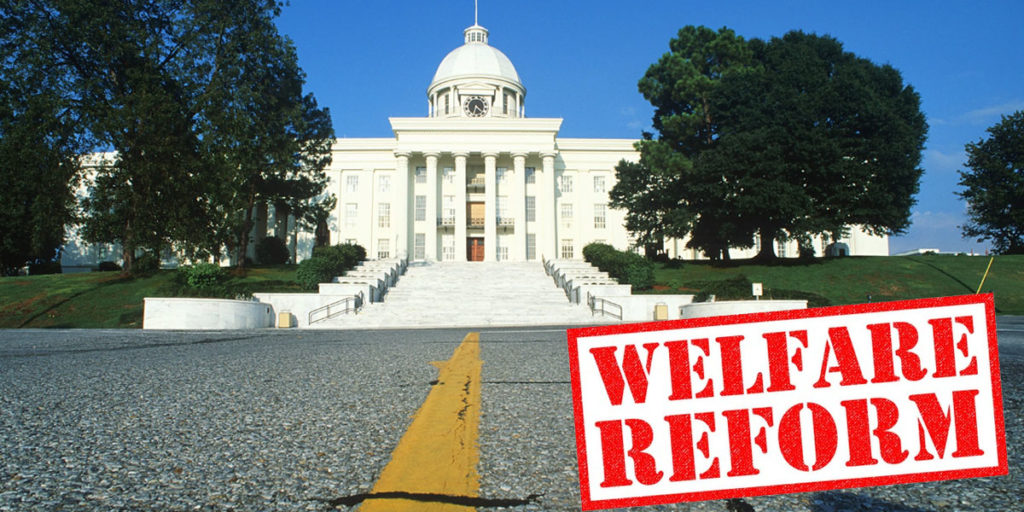
When the 2019 legislative session begins in March, state lawmakers will have the opportunity to consider a plan that would require certain food stamp recipients to undergo drug testing in attempt to combat fraud, reduce dependency and make the SNAP program more efficient. A series of bills have been pre-filed by Bryant-Republican, State Rep. Tommy Hanes that pertain to welfare reform. His legislation calls for drug testing of certain recipients. If the recipient submits a positive sample, SNAP benefits would be taken out of the hands of the individual and given to another family member. Hanes says this is a vital component of the bill as it ensures children of the recipient will continue to receive the benefits. “It’s time to eliminate food stamp fraud,” explained Hanes. “In order to better provide for families who are in need, this issue must be addressed. We owe it to the working-class taxpayers to make this program as efficient and waste free as possible.” The legislation would also prohibit the Department of Human Resources (DHR) from requesting a waiver of federal work requirements for able-bodied adults without dependents who are applicants or recipients of food stamps. The bill would require these recipients to work, provide volunteer service hours or continue their education to receive SNAP benefits. “We must enact welfare reform that reduces dependency on government,” Hanes added “Part of the solution is having able-bodied adults working. When a person earns a living it not only helps strengthen our economy, it restores confidence and self-esteem to individuals who know that they can be independent for themselves.” Substance abuse issues have long been part of public assistance policy discussions. In recent years, nearly all states have proposed some form of drug testing or screening for applicants. Nevertheless, over the weekend, Hanes came under fire from the media for his proposed legislation. He pushed back saying the “liberal news media” is “spreading false information about conservatives who attempt to implement common sense reform.” “The liberal news media is playing a role in spreading false information about conservatives who attempt to implement common sense reform,” said Hanes. Our goal should be helping folks become independent, so they are able to obtain a much higher standard of living. Left-wing media outlets have attacked me and called this reform a vilification of the poor. In attempting to make this program more efficient for those in need, these are the very citizens I am fighting for in this bill. Instead of reporting the truth, some in the press are misleading the public by spreading fake propaganda. I will never be intimidated in my fight for the working-class citizens of this state.”
Prison reform bill faces more opposition in Senate committee
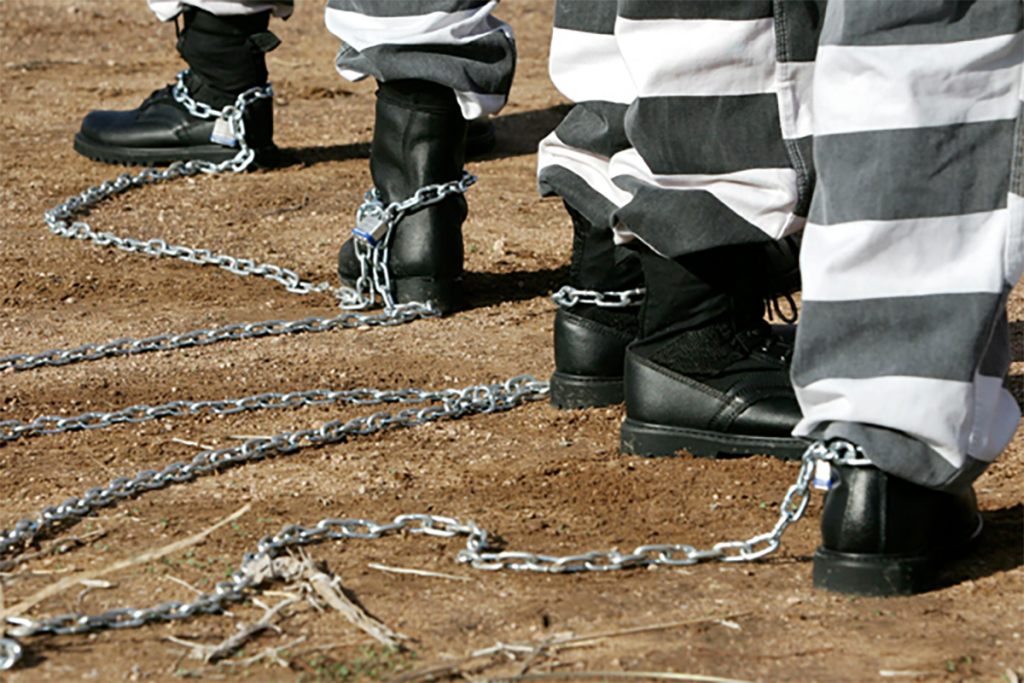
The Senate Committee on General Fund Finance and Taxation took up the Alabama Prison Transformation Initiative Act during a hearing Wednesday when, again, lawmakers were bombarded with opposition from state architects, engineers and contractors in regard to the bill’s design/build mandate. The bill faced much the same outcry when it went before a House committee last week. “It’s a good plan,” said Sen. Trip Pittman (R-Daphne), the Senate bill’s sponsor. “But there are people opposed to it.” As per the ideas laid out in the “State of the State” address by Gov. Robert Bentley, SB287 calls for the demolition of all but two of Alabama’s 16 prisons and provides $800 million in bonds to pay for the construction of four new facilities. Alabama Department of Corrections (ADOC) Commissioner Jefferson Dunn laid out the plan. “Over the last 40 or 50 years, every governor and every member of the legislature has always been faced with the issue of corrections,” Dunn said. “We are bringing forth a plan that we believe will address these longstanding problems.” Dunn noted that the planned move would free up more resources for rehabilitation and reentry, noting that more than 80 percent of prisoners will one day join the citizenry. The four facilities being constructed – one female prison with 1,200 beds and three male prisons with 4,000 beds a piece – will cut overtimes costs for the department, as well as costs related to transportation and healthcare. Along with the four to be constructed, two current facilities will be renovated. While most committee members noted support for the measure, concerns were vast and widespread. Many were interested in which facilities would be demolished and which would remain, as well as how the ADOC would come up with the roughly $50 million required to make the annual bond payments. Sen. William Beasley (D-Clayton) noted that three prisons are in his district and their removal would “devastate” the local economy. But the concerns of lawmakers weren’t the only ones voiced – in all, seven people stood to voice their opposition to the bill. While most were architects and contractors, concerned that the bill upends the traditional design/bid/build model. Clyde Marsh, Commissioner of the Alabama Department of Veterans Affairs (ADVA), voiced concern over the bill’s use of a one-mill tax currently reserved to fund the ADVA and the Department of Human Resources as collateral for the bonds. In the event that the ADOC was unable to make its payments, the tax would be diverted to make up those payments. Lawmakers took no vote on the bill and will appear before the committee again next week.
Felony drug offenders now eligible for SNAP, TANF benefits in Alabama
On Saturday Alabama joined most U.S. states by allowing people with a past felony drug conviction to receive Supplemental Nutrition Assistance Program (SNAP) benefits, as well as Temporary Assistance for Needy Families (TANF) assistance, according to a news release by Alabama Arise. The lifetime ban on SNAP, formerly known as the Food Stamp Program, and TANF benefits for drug offenders grew out of a 1996 federal welfare reform law enacted by former President Bill Clinton, though the law does allow states to request a waiver. Though most other states requested a waiver before, Alabama included reinstating the benefits in a 2015 prison reform law sponsored by Sen. Cam Ward (R-Alabaster) with a floor amendment offered by Sen. Linda Coleman (D-Birmingham). Restrictions still apply to drug offenders seeking benefits, including the completion of their sentence and probation requirements. Further, persons with a drug offense in the past five years may be required to pass a drug test to receive TANF benefits. People previously denied Snap or TANF benefits because of a drug offense can apply at a local Department of Human Resources office after Monday. Further, households already receiving benefits but have a household member not included because of a drug conviction can report the “newly eligible person” to the household’s caseworker. “The end of Alabama’s SNAP and TANF bans is good news for state budget and for families,” the Arise news release said. “The policy change will help cut corrections costs in the cash-strapped General Fund budget by making it easier for released prisoners to reintegrate into the community, which will help reduce recidivism. Importantly, restoring SNAP and TANF benefits also will help prevent hunger and homelessness among some of Alabama’s most vulnerable families.” Officials with Alabama Arise estimate that 30,000 to 80,000 Alabamians would become eligible for SNAP benefits under the change, with TNF benefits being harder to monitor because they are more difficult to secure. Both programs are funded by federal dollars, so the influx of new beneficiaries will add no new costs to the state.
Paul Bussman prefiles 2 bills aimed at protecting children
Among the senate bills prefiled for the upcoming Legislative Session are two from Sen. Paul Bussman of Cullman aimed at protecting children in unhealthy living conditions. According to SB1, current law requires courts to make “reasonable efforts” to preserve the family unit before initiating proceedings in juvenile court to terminate the parental rights of parents whose child has been placed in foster care or the Department of Human Resources (DHR). Bussman’s bill would eliminate that requirement if a child has been “in the presence of a methamphetamine laboratory or a location where illegal drugs are stored, kept, packaged, diluted, or manufactured.” The bill would require courts to regularly document whether “reasonable efforts” were made or required and to establish a “permanency plan” for finding the child a home. In conjunction with the assertion that “reasonable efforts” are not required in places where illicit drugs are stored, the bill also eliminates the need for reasonable effort in the following cases: if parents have subjected a child to “aggravated circumstances,” such as sexual abuse, torture, neglect and more; if parents have allowed the child to use illegal drugs or alcohol; if parents have abused or misused illegal substances; if parents demonstrate “extreme disinterest” in the child, manifested through neglect, abandonment, the presence of an untreatable emotional or mental condition, incarceration or a conviction for committing, attempting or assisting in murder or manslaughter of a child or parent. “We have a tendency to keep children in foster care too long,” Bussman told Alabama Today. “I want to get children out of foster care and into a stable home.” Bussman’s second bill, SB2, takes to task a current law that allows DHR to request a kinship guardian to care for a child under the state’s supervision. The bill would eliminate such requirements for out-of-state relatives who have not contacted the department within six months of the child being placed in its custody. “These children need to be somewhere that they can be loved,” Bussman concluded.
Alabama ABC Board: decision to close stores protects consumers, fiscally sound

The recent decision by the Alabama Alcoholic Beverage Control Board to close or consolidate 15 state-run liquor stores at the end of the year because of budget cuts has generated a great deal of discussion in the media – and commentaries critical of the decision. Unfortunately, some of the opinions expressed are based on misinformation or a lack of understanding of the ABC Board’s operations. As administrator of the ABC Board, I want to help clarify the issue. I will start by pointing out the Alabama ABC Board does not cost Alabama taxpayers one red cent. Through the operation of its liquor stores and warehouse, the ABC Board generates millions of dollars in badly needed revenue to not only pay for its functions, but to help fund other state agencies as well. Only those who purchase spirits pay anything to the state to help it or the ABC Board. Last year, the ABC Board contributed $215 million to the state – after paying for the costs of its operations. This year, that figure should top $225 million. This money supports the General Fund, Department of Human Resources, Department of Mental Health, the Alabama Law Enforcement Agency, public education, cities and counties. To get an idea of the size of the contribution the ABC Board makes to the General Fund, note that the General Fund budget passed by lawmakers in September totaled about $1.75 billion. The $215 million from the ABC Board accounted for nearly 13 percent of that amount. The decision to close or consolidate 15 stores came after the Legislature arbitrarily reduced the ABC Board’s spending authority by transferring $5.5 million from our budget to the General Fund. The Legislature appropriates nothing to the ABC Board, but sets the amount we are allowed to spend from the revenues we generate. The reduction left the ABC Board – similar to other state agencies facing decreases in their budgets – with difficult decisions to make in order to ensure that our costs do not exceed our spending authority. In making those decisions, the ABC Board had to balance the needs of the residents we serve against those cuts. Not every ABC liquor store makes money. Some operate to meet the needs of local residents, even if the operation of the store – say, in a rural community – does not result in a net profit. It would be unfair to rural residents to deny them a service that Alabamians who live in urban areas receive. That is why some stores which have not been profitable will remain open. It is true that some stores which have been profitable will be closed. Some of these stores will be consolidated with other stores or reopened in areas where traffic patterns and population centers have shifted, thereby reducing costs and making them even more profitable. Unfortunately, some writers compared the decision by ALEA to close some driver licenses offices in rural counties to the ABC Board’s decision to close some of its stores and keep some open. They noted that some counties without a driver license office will continue to have a state liquor store. The operation of ABC stores has nothing to do with the operation of driver license offices. The decision by the ABC Board and the decision by ALEA were made independently of each other. The decision about what stores to close and what stores to keep open was based on sound business practices and our responsibility to meet the needs of residents, wherever they live. That decision was made by the ABC Board. In other words, the State of Alabama didn’t “choose liquor over driver licenses.” Each agency made difficult decisions based on its needs and finances. Finally, I want to address the matter of taxes and the price of liquor. Much has been made of the fact that Alabama’s liquor taxes are high compared to those of other states. It is true, Alabama’s liquor tax of $18.23 per gallon is higher than neighboring Georgia’s $3.79 per gallon, Tennessee’s $4.46, Florida’s $6.50 and Mississippi’s $7.41 (Tax Foundation figures). But it is the Alabama Legislature, not the ABC Board that sets tax rates. The Legislature can lower the rates, if it chooses to do so. Of course, that would reduce revenue to the already challenged state General Fund. I realize some of the negative commentaries directed toward the ABC Board are from those who want to see all ABC stores closed. Some have even suggested that the private sector would do a better job with price, quality and selection. Anyone who has shopped at ABC stores and private package stores knows that is simply not the case. ABC stores are well known for providing competitive prices, premier service and greater selection. And, ABC stores’ well-trained employees do an extraordinary job of not selling to underage buyers and those who already have had too much to drink. The Alabama Legislature created the ABC Board in 1937, after the repeal of Prohibition, to regulate the sale of alcoholic beverages, promote temperance and protect public safety and health. It is doing just that, while at the same time generating much needed revenue for the state and helping keep Alabamians’ overall tax burden low. Mac Gipson is administrator of the Alabama Alcoholic Beverage Control Board, which controls the sale of alcoholic beverages in the state through distribution, licensing, compliance enforcement and education.
Child welfare bills waiting in Alabama statehouse
In his recent op-ed for Alabama Today, adoption advocate Sam McClure expressed doubt that lawmakers would have time to pass child welfare legislation this session. Indeed, as the 2015 Legislative Session draws to a close, some measures introduced by lawmakers have not yet had a final vote: Rep. Mac McCutcheon filed a bill to establish an Office of the Ombudsman for Child Welfare. Under House Bill 48, the Ombudsman would conduct independent investigations of complaints on actions taken by the state in child welfare or reunification plans. The Ombudsman would also send the Governor regular reports on the conditions in group homes and other institutions for juveniles. The House committee on public safety gave House Bill 48 a favorable report in April, but so far the measure has not been called to the House floor for a vote. The House health committee has yet to vote on a bill from Rep. Mack Butler that would clarify when and how medical workers report suspicions that a child has been exposed to illegal drugs. House Bill 408 says that those suspicions should be reported orally to law enforcement within two hours, even if medical test results aren’t yet available. Once medical tests confirm that a child has been chemically endangered, the health worker should file a written report with law enforcement, according to HB408. Senate Bill 461, sponsored by Sen. Paul Bussman, says that if a parent has allowed their child to be near a methamphetamine laboratory “or a location where illegal drugs are stored, kept, packaged, diluted, or manufactured”, the Department of Human Resources has no obligation to try to preserve that parent’s custodial rights. The Senate health and human services committee voted unanimously in favor of the bill last week. Under Senate Bill 494 out-of-state relatives to a child in DHR custody have six months to tell the department they would like to be appointed guardian. After that time, DHR staff will not be required to consider those relatives when they makes custody decisions. Sen. Bussman filed SB494 on Thursday and the bill has been referred to the Senate Committee on Education and Youth Affairs. As lawmakers move quickly to enact legislation before Sine Die, Alabama Today will follow these bills and report on their progress.
House passes “austere” budget plan by 66-36 vote
A barebones budget plan to fund government services is on its way to the Senate, having passed the Alabama House Tuesday by a vote of 66 to 36. The plan assumes no new sources of revenue for the state and just $1.64 billion available to spend from the general fund, an 11 percent decrease from 2014. The budget plan includes level funding for Medicaid, the Department of Mental Health, the Department of Human Resources, and the Administrative Office of the Courts. Other agencies that are appropriated through the General Fund would see a 2 percent budget cut. House Ways and Means Chairman Rep. Steve Clouse has said that the budget “isn’t what anyone likes” but that the deep cuts were necessary in the absence of a plan for new revenue. Gov. Robert Bentley has already said he would veto the plan should it arrive on his desk.
