
Poll: Most don’t want young immigrants deported
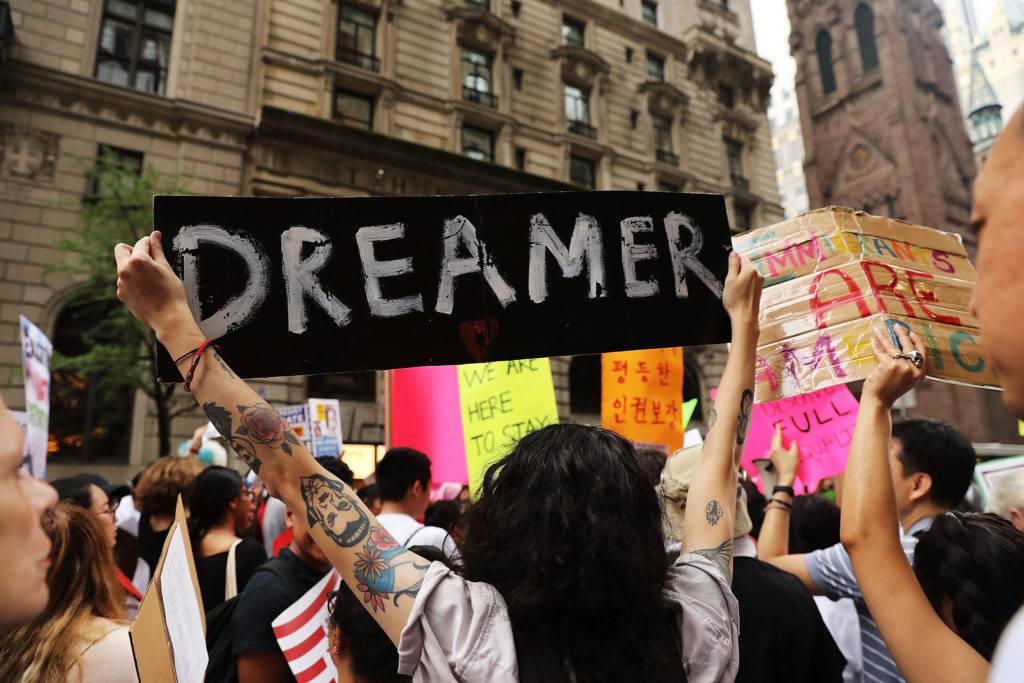
Just 1 in 5 Americans want to deport young immigrants brought to the United States as children and now here illegally, the focus of a politically fraught debate between the White House and Congress. Americans also have largely negative opinions about President Trump’s signature immigration pledge to build a wall along the entire U.S.-Mexico border, according to a new poll by The Associated Press-NORC Center for Public Affairs Research. Just under half – 49 percent – oppose construction while 32 percent support it. On Sunday, Trump told lawmakers his hardline immigration priorities, including the wall, must be approved if he is to go along with protecting the young immigrants from deportation. About 800,000 young immigrants had been given a deportation reprieve under President Barack Obama‘s Deferred Action for Childhood Arrivals, also known as DACA, until Trump ended the program last month. He’s given Congress six months to act. About 60 percent of Americans favor allowing those young immigrants, commonly referred as “Dreamers,” to stay in the U.S. legally, compared to 22 percent who are opposed. Just 19 percent of respondents say all these childhood arrivals should be deported. Sixty-eight percent of Hispanics, 61 percent of blacks and 57 percent of whites favor extending protections. Eight in 10 Democrats favor allowing the young immigrants to stay legally. So do more than 4 in 10 Republicans. “For the ones who are already here, there should be a way for them to stay because it wasn’t their fault,” said Nik Catello, a 57-year-old independent film producer from Orange County, California. “But you have to give them a path to citizenship.” Showing sympathy for the young immigrants does not always translate into softer views on immigration. Catello, for example, favors the construction of a wall along the Mexican border. Among those who favor a border wall, 38 percent also favor allowing “Dreamers” to stay. “What you see is growing support within the voters overall in giving Dreamers a path to citizenship,” said Todd Schulte, president of FWD.us, an immigration advocacy group founded by Facebook CEO Mark Zuckerberg. “Giving Dreamers the ability to earn citizenship is the most popular bipartisan, not just immigration, issue, the single most united issue in the country.” When Trump ordered the phase-out of the DACA program last month, he gave 150,000 young immigrants the chance to quickly renew permits that are to expire before March 5. Officials say that more than 35,000 didn’t make his Oct. 5 deadline. And many others will see their status begin expiring after March 5, unless Congress acts before then. Trump suggested at the time that he was eager for a deal to settle the matter, telling reporters, “I have a love for these people and hopefully now Congress will be able to help them and do it properly.” He also tweeted that if Congress was unwilling to find a fix, he would “revisit this issue!” in six months. Trump had previously said he wanted a DACA deal to include significant money for border security and eventual funding for the wall. But the priorities released by the White House this week went far beyond that. The White House’s demands include limiting green cards to spouses and minor children of U.S. citizens and lawful permanent residents, hiring 10,000 more immigration enforcement officers and making it easier to deport unaccompanied children. The White House says the measures are to soften the impact on the U.S. caused by granting benefits to DACA recipients. Carolyn Kurtz, a 62-year-old retired engineer from Monument City, Colorado, who wants protections for young immigrants, said Trump hasn’t done “the research necessary” on immigration. “Do I believe that immigration should be more carefully monitored and maybe limited? Yes. But the way he wants to go about it is not the way to do it,” Kurtz said. She called the president’s stance “very close-minded.” Two-thirds of Americans – 64 percent – say they disapprove of Trump’s handling of immigration, and a similar percentage – 65 percent – say the same of his handling of foreign policy. Both of those are similar to Trump’s overall approval rating. The poll also revealed more Americans favor than oppose another aspect of Trump’s immigration policy – his latest travel ban. Forty-four percent favor it compared to 37 percent who say they are against the new rules. In September, the administration announced the most recent restrictions which affect citizens of Chad, Iran, Libya, North Korea, Somalia, Syria, and Yemen – and some Venezuelan government officials and their families. They are to go into effect Oct. 18. It was the administration’s third try at limiting travel after a broader ban sparked chaos in January and was challenged in courts across the country. The AP-NORC poll of 1,150 adults was conducted Sept. 28-Oct. 2 using a sample drawn from NORC’s probability-based AmeriSpeak panel, which is designed to be representative of the U.S. population. The margin of sampling error for all respondents is plus or minus 4.1 percentage points. Respondents were first selected randomly using address-based sampling methods, and later interviewed online or by phone. Republished with permission from the Associated Press.
US Supreme Court weighs case on detention of immigrants
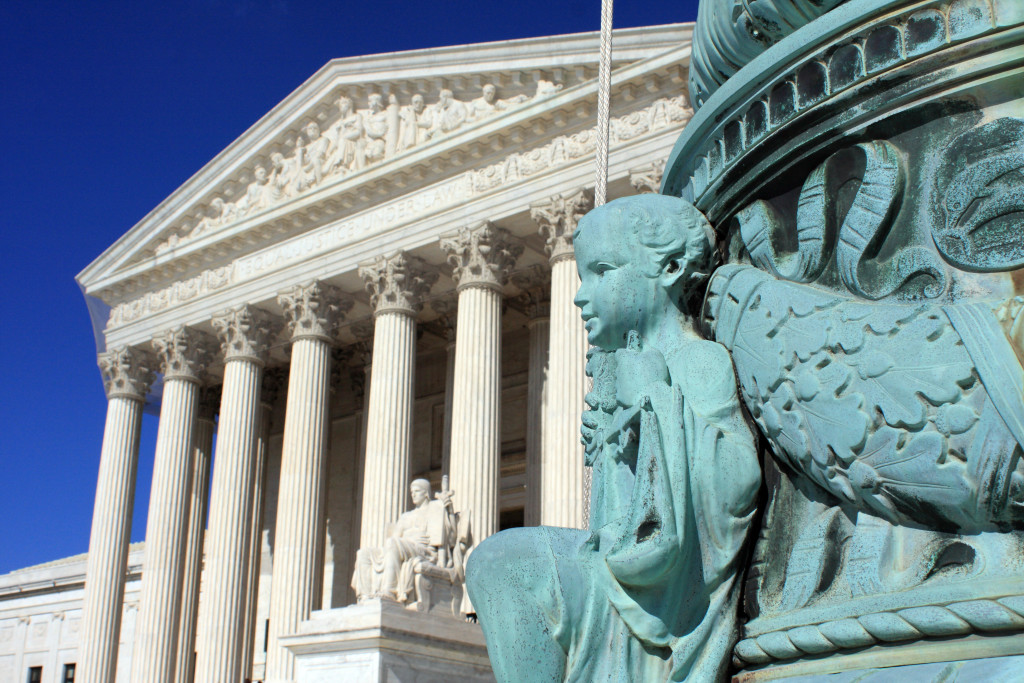
The Supreme Court wrestled for a second time Tuesday with whether the government can indefinitely detain certain immigrants it is considering deporting without providing a hearing. An eight-member court, deadlocked 4-4, didn’t decide the issue last year. Now that Justice Neil Gorsuch has joined the court he will presumably break a tie. But the justices seemed to struggle Tuesday with the issue just as they did when the case was first heard last November. The case the justices were hearing is a class-action lawsuit brought by immigrants who’ve spent long periods in custody. The group includes some people facing deportation because they’ve committed a crime and others who arrived at the border seeking asylum. The San Francisco-based U.S. Court of Appeals for the 9th Circuit ruled for the immigrants, saying they generally should get bond hearings after six months in detention, and then every six months if they continue to be held. The court said the government must show why they should remain locked up. The government disputes that ruling, a position shared by the Obama and Trump administrations. The American Civil Liberties Union, which brought the case on behalf of the immigrants, says about 34,000 immigrants are being detained on any given day in the United States, and 90 percent of immigrants’ cases are resolved within six months. But some cases take much longer. In the case before the justices, Mexican immigrant Alejandro Rodriguez was detained for more than three years without a bond hearing. He was fighting deportation after being convicted of misdemeanor drug possession and joyriding, and was ultimately released and allowed to stay in the United States. The court’s liberal justices suggested sympathy for immigrants like Rodriguez who face lengthy detention. Justice Stephen Breyer said that in most other cases where someone is detained they get a hearing to determine whether they should be freed. “We give triple ax murderers, at least people who are accused of such, bail hearings,” Breyer said. Justice Elena Kagan told the government’s lawyer, Malcolm Stewart, that asylum seekers have some constitutional rights, such as “not to be tortured, not to be placed in hard labor.” She suggested a similar right “not to be placed in arbitrary confinement.” But the appeals court’s decision that a hearing is necessary at six months and every six months thereafter seemed to give other justices pause. Justice Samuel Alito told ACLU lawyer Ahilan Arulanantham that “it’s quite something to find six months in the Constitution.” “Where does it say six months in the Constitution? Why is it six? Why isn’t it seven? Why isn’t it five? Why isn’t it eight?” he asked. A decision in the case, Jennings v. Rodriguez, 15-1204, is expected by June. Republished with permission from the Associated Press.
Immigrant’s bid to avoid deportation comes to Supreme Court
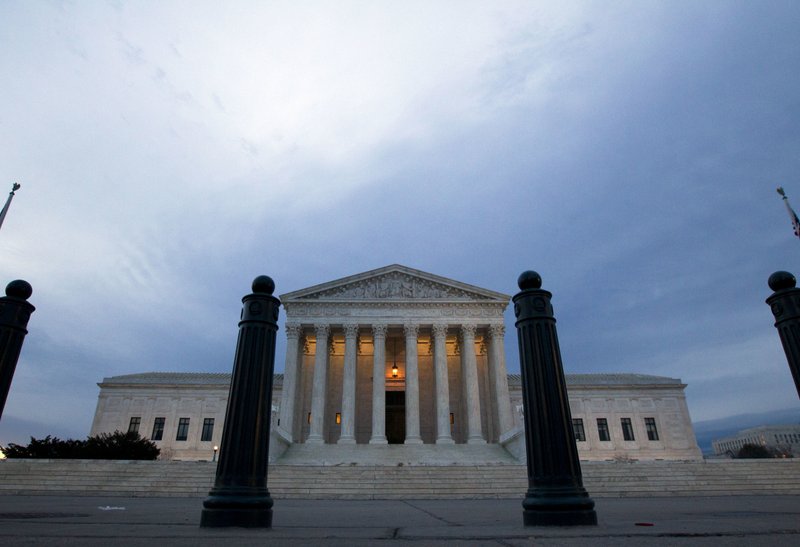
The Supreme Court is taking up the case of a longtime U.S. resident who is facing deportation to South Korea after pleading guilty to a drug crime based on his lawyer’s bad advice. The justices are hearing arguments Tuesday in an appeal by Jae Lee, who had lived in the United States for 35 years and has never been back to South Korea since coming to the United States when he was 13. The case has taken on increased importance because President Donald Trump has promised to step up deportations, with a special focus on immigrants who have been convicted of crimes. The American Bar Association has estimated that one of every 10 criminal defendants is not an American citizen. Lee agreed to plead guilty to possession of ecstasy with intent to distribute after his lawyer, Larry Fitzgerald, assured him that doing so would not make him subject to deportation. The lawyer was wrong. The issue in Lee’s appeal is whether the lawyer’s recommendation to take the deal offered by prosecutors was so bad that it amounts to a violation of Lee’s constitutional right to a lawyer. Both sides agree that Fitzgerald’s performance was deficient in representing Lee. The Supreme Court ruled in 2010 that immigrants have a constitutional right to be told by their lawyers whether pleading guilty to a crime could lead to their deportation. But Lee almost must show that the bad lawyering mattered to the outcome of the criminal case. The federal appeals court in Cincinnati ruled that the evidence against Lee was overwhelming and that he would have been convicted had he rejected the plea offer and taken his chances at trial. Other appeals courts around the country have sided with immigrants in similar circumstances. The Supreme Court is expected to set a national standard. Fitzgerald lacked experience in immigration law, did not consult an immigration lawyer and was unaware that the charge Lee was facing would result in mandatory, automatic deportation, according to a magistrate judge’s finding. Lee argued in court papers that a competent lawyer would have sought a better deal that preserved his options for fighting deportation. Failing a deal, Lee said he would have insisted on a trial. He has been in custody for seven years while trying to avoid being deported. Alabama is leading 19 other states in backing the administration’s argument that the appeals court ruling should be upheld. The Obama administration Justice Department had previously urged the Supreme Court to turn down the appeal and leave the lower court ruling in place. The new administration announced in February that any immigrant in the country illegally who is charged with or convicted of any offense, or even suspected of a crime, will now be an enforcement priority for deportation. Some 11 million immigrants are living illegally in the U.S. Immigrant rights groups and the bar association are among those siding with Lee. Jenny Roberts, a law professor at American University in Washington, said the case calls attention to the harsh consequences immigrants can face, despite their long-standing ties to the country. “This case is about the unexpected people who are marked for deportation, about someone whose parents brought him here,” said Roberts, who helped write a legal brief from immigrant legal advocates in support of Lee. The case is Lee v. U.S., 16-327. Republished with permission of The Associated Press.
U.S. to expand pool of people targeted for deportation
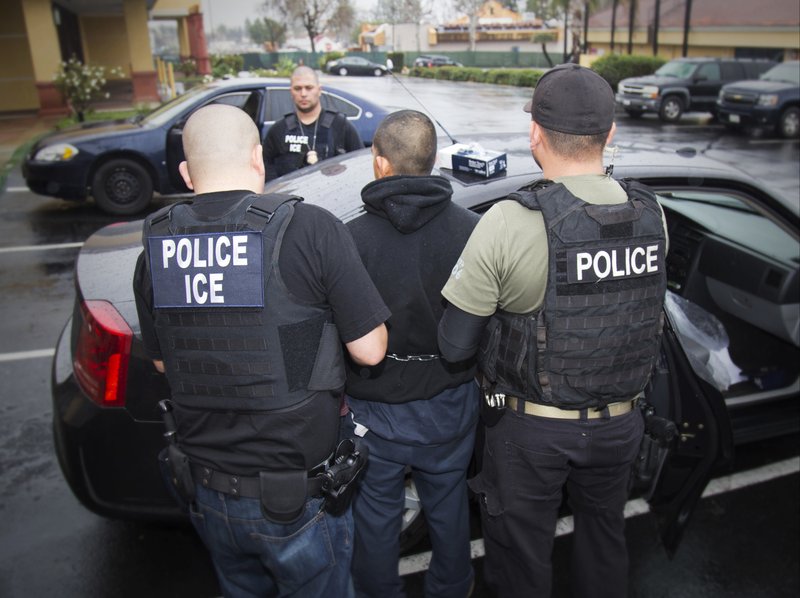
The Trump administration is greatly expanding the number of people living in the U.S. illegally who are considered a priority for deportation, including people arrested for traffic violations, according to agency documents released Tuesday. The documents represent a sweeping rewrite of the nation’s immigration enforcement priorities. The Homeland Security Department memos, signed by Secretary John Kelly, lay out that any immigrant living in the United States illegally who has been charged or convicted of any crime — and even those suspected of a crime — will now be an enforcement priority. That could include people arrested for shop lifting or minor traffic offenses. The memos eliminate far more narrow guidance issued under the Obama administration that resources strictly on immigrants who had been convicted of serious crimes, threats to national security and recent border crossers. Kelly’s memo also describes plans to enforce a long-standing but obscure provision of the U.S. Immigration and Nationality Act that allows the government to send some people caught illegally crossing the Mexican border back to Mexico, regardless of where they are from. One of the memos says that foreigners sent back to Mexico would wait for their U.S. deportation proceedings to be complete. This would be used for people who aren’t considered a threat to cross the border illegally again, the memo said. It’s unclear whether the United States has the authority to force Mexico to accept foreigners. That provision is almost certain to face opposition from civil libertarians and officials in Mexico. Historically, the government has been able to quickly repatriate Mexican nationals caught at the border but would detain and try to formally deport immigrants from other countries, routinely flying them to their home countries. In some cases, those deportations can take years as immigrants ask for asylum or otherwise fight their deportation in court. The memos do not change U.S. immigration laws, but take a far harder line toward enforcement. The pair of directives do not have any impact on President Barack Obama‘s program that has protected more than 750,000 young immigrants from deportation. The Deferred Action for Childhood Arrivals remains in place though immigrants in the program will be still be eligible for deportation if they commit a crime or otherwise are deemed to be a threat to public safety or national security, according to the department. Republished with permission of The Associated Press.
US Supreme Court weighs bond hearings for detained immigrants

A seemingly divided Supreme Court on Wednesday tried to figure out whether the government can detain immigrants indefinitely without providing hearings in which they could argue for their release. The justices heard argument in a class-action lawsuit brought by immigrants who spent long periods behind bars, including many who are legal residents of the United States or are seeking asylum. The issue for the court is whether people the government has detained while it is considering deporting them can make their case to a judge that they should be released. The case pits the Obama administration against immigration advocates, and the court hearing comes as President-elect Donald Trump has said he will step up deportations. The San Francisco-based 9th U.S. Circuit Court of Appeals ruled for the immigrants, including Mexican immigrant Alejandro Rodriguez, who was detained for more than three years without a bond hearing. Rodriguez is a legal U.S. resident who was brought to the country as an infant. The Homeland Security Department detained him when it began deportation proceedings because Rodriguez had been convicted of possession of a controlled substance and driving a stolen vehicle, according to the appeals court. He spent no time in jail for the criminal convictions. In another case, an Ethiopian asylum-seeker was kept in detention partly because a DHS officer wrongly labeled him a Somali, according to the American Civil Liberties Union, which is representing the immigrants. The 9th Circuit ruled that immigrants generally should get bond hearings after six months in detention, and then every six months if they continue to be held. The government must show why they should remain locked up, the court said. Justice Stephen Breyer, voicing a sentiment that appeared to be shared by other liberal justices, expressed astonishment that the provisions of immigration law at issue would allow someone released after a hypothetical four-year prison term to be held the same amount of time by U.S. immigration authorities. “How can they be punished for four more years?” Breyer asked. Acting Solicitor General Ian Gershengorn defended the law, saying Congress clearly gave DHS considerable power to hold people in custody while determining whether to deport them. Ahilan Arulanantham, the ACLU lawyer representing the immigrants, told the justices the ultimate decision about whether to hold or release people was not at issue before the court. “We’re just talking about the need for an inquiry, the need for a hearing,” Arulanantham said. But the court’s conservative justices sounded skeptical of Arulanantham’s and the appeals court’s reading of immigration law. “The problem is, that looks an awful lot like drafting a statute or a regulation. … We can’t just write a different statute,” Chief Justice John Roberts said. Republished with permission of The Associated Press.
Dreamers who signed up for deportation protection now feel exposed

Hundreds of thousands of young immigrants living in the country illegally willingly came out of the shadows and identified themselves to the Obama administration on the promise that they’d be safe from deportation and allowed to work. Some may now regret that decision. President-elect Donald Trump has promised to immediately scrap the program that protected these immigrants. If he does, it’s not clear whether he would take action against the more than 741,000 participants. But if he decides to pursue them, the government now has their addresses, photographs and fingerprints. Twenty-year-old Nancy Villas was among the first to apply for the Deferred Action for Childhood Arrivals program in the summer of 2012, waiting in line hours at a sign-up site at Chicago’s Navy Pier. Since then she’s been working part time at a child care center to pay for college classes. Now she’s worried she may eventually be forced to return to Mexico, a country she left when she was 9. “I knew it was the only way to have better opportunities,” Villas said. “I took the risk without thinking that somebody would want to take it away.” Trump made illegal immigration the cornerstone of his campaign, promising to build a massive wall along the Mexican border and deport millions of people living in the country illegally. Once he takes office, Trump can almost immediately rescind the promised protection and, with it, likely void the accompanying work permits. But there is little to suggest that he would move swiftly to deport program participants. In a post-election interview with CBS’ “60 Minutes,” Trump said he would focus initially on criminal immigrants living illegally in the U.S. He said that could be about 2 million to 3 million people, though that figure is likely inflated. Mark Krikorian, executive director for Center For Immigration Studies, said the fears of program participants may be overblown. “Unless there’s a crime issue or something specific that’s going to draw attention to an individual, I can’t see how they’d be a priority,” said Krikorian, whose think tank describes itself as low-immigration, pro-immigrant. President Barack Obama initiated the program to shield from deportation young immigrants, some of whom don’t even remember their native countries. It didn’t give the immigrants legal status, only “deferred action” – meaning they wouldn’t face deportation while they participated. There was never a guarantee that it would last beyond Obama’s term as president. A former immigration official who helped craft the program, John Sandweg, said the White House and the Homeland Security Department considered the reality that a future president could end it. But at the time, he said, it appeared that revoking already-approved protections would be politically difficult. “These are the kinds of kids you should bring out of the shadows,” said Sandweg, a former acting director of Immigration and Customs Enforcement. “I don’t think anyone envisioned a President Trump when this was created.” Trump wasn’t subtle about his opposition to the program. He called it an “illegal amnesty” and promised to “immediately terminate” the program. And since winning office, Trump has said he will nominate immigration hardliner Sen. Jeff Sessions as attorney general. As he considers other Cabinet vacancies, Trump has met with Kansas Secretary of State Kris Kobach, who led his state’s court fight to prevent an expansion of the deportation protection plan. When the program started, the Obama administration suggested that application files would not generally be used for enforcement efforts. U.S. Citizenship and Immigration Services addressed the concern in its published “frequently asked questions,” saying information would be shared with enforcement officials only if someone “meets the criteria” for deportation proceedings. But revoking the deportation protection would make those young immigrants almost immediately eligible to face deportation. Sandweg said going after participants would be a massive logistical undertaking that would only worsen backlogs in an already overburdened immigration court system where many people wait years for a final decision. Adding about 750,000 to the court system “would do nothing for public safety,” Sandweg said. Nonetheless, the mere prospect of that has prompted some Democratic lawmakers to ask Obama to protect these immigrants with pardons before he leaves office. And advocates for the young immigrants have pledged to keep up their fight to win public and political support for overhauling immigration laws. “We organized across the country, we shared our stories publicly and we came together. We took direct actions and held politicians accountable,” said Cristina Jimenez, executive director and co-founder of United We Dream. Under a Trump administration, Jimenez said, that won’t change. Republished with permission of the Associated Press.
College students around the country protest Donald Trump deportation plans
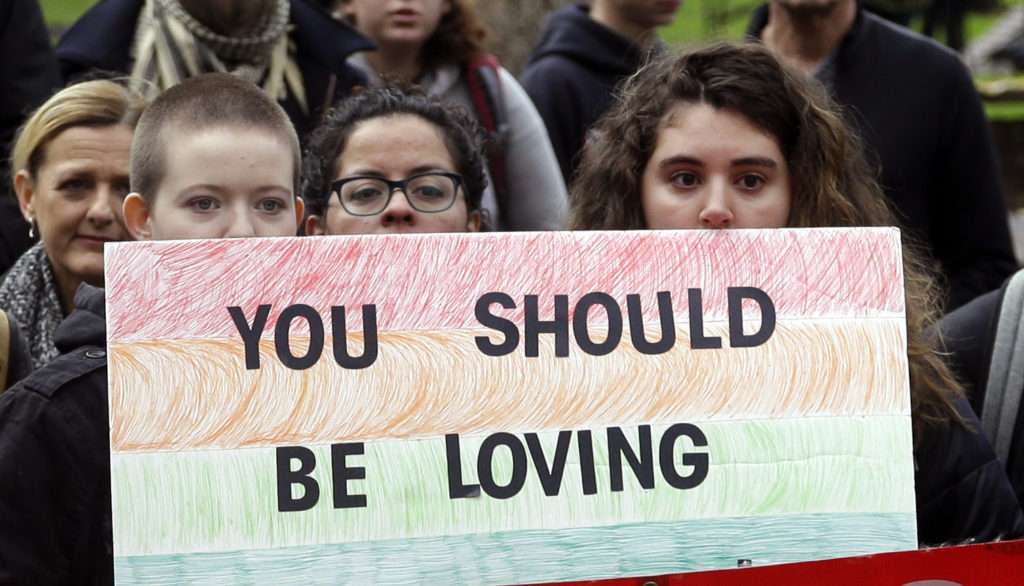
College students at campuses around the United States marched and rallied Wednesday, urging administrators to protect students and employees against immigration action under a Donald Trump presidency. Rallying supporters on social media with the hashtag #SanctuaryCampus, organizers said actions were planned at more than 80 schools, including Vermont’s Middlebury College, where about 400 people gathered, and Yale University, where demonstrators numbered about 600. Students sought assurances that their schools would not share their personal information with immigration officials or allow Immigration and Customs Enforcement agents on campus. “Can you imagine the fear that it would inflict on college campuses if having ICE agents walk into a campus becomes the status quo?” organizer Carlos Rojas of the group Movimiento Cosecha, said by phone from New Jersey. “It would be terrifying.” The actions continued days of demonstrations that have broken out in cities and high school campuses following Trump’s election victory last week. The Republican’s campaign promises included a vow to deport millions of people who are in the U.S. illegally. “I’m very fearful,” Miriam Zamudio, whose parents brought her to the U.S. from Mexico as a child, said by phone as she prepared to join a protest at Rutgers University in New Jersey. She worries that the family information she provided on her application for Deferred Action for Childhood Arrivals status will endanger her parents, who are living in the country without legal permission. “We don’t know what Trump is going to do,” Zamudio said. “We don’t know if he is going to demand this information, and we want our administration and our school to stand with us.” Several hundred people, mainly high school and college students, rallied at the federal building in downtown San Diego to protest Trump’s election. Some held signs or banners saying “we are not criminals” and “make racists afraid again.” An 18-year-old was arrested after he allegedly punched a police officer, police said. In one non-campus protest on Wednesday night, hundreds of people rallied on the steps of Los Angeles City Hall to protest Trump’s appointment of Steve Bannon as a senior adviser. Faculty and staff at several universities have signed petitions in support of making their campuses sanctuaries for people threatened with deportation – or anyone who faces discrimination. “We are alarmed at the vitriol that students and community members are experiencing across the United States in the aftermath of the recent election,” the petition to administrators at the University of Illinois at Urbana-Champaign said. “Reports of gross imitations of disabled youth, threats to aid in the deportation of students and their families, renewed deployments of the ‘N’ word, sexual aggressions against young women, bullying of Muslim and LGBTQ+ youth, reappearances of swastikas, among other acts, point to hostilities that infiltrate our campus.” At the University of Memphis, students chanted “Say it loud, say it clear, refugees are welcome here” and “No racists, no KKK, no fascist USA,” The Commercial Appeal reported. Junior Luke Wilson stood nearby, holding a sign that said “You’re all cry babies.” Similar sentiments appeared on Twitter and other social media platforms, along with messages of support. “We know that there are going to be people on both sides of the issue,” Rojas said. “But I think that what no one could argue with is that a university and a college campus have a moral responsibility to make the students that are paying tuition and just want to get an education feel safe.” Department of Homeland Security Press Secretary Gillian Christensen said existing ICE and Customs and Border Protection policies guide enforcement at “sensitive locations,” which include colleges and universities. “The ICE and CBP sensitive locations policies, which remain in effect, provide that enforcement actions at sensitive locations should generally be avoided, and require either prior approval from an appropriate supervisory official or exigent circumstances necessitating immediate action,” Christensen said by email. “DHS is committed to ensuring that people seeking to participate in activities or utilize services provided at any sensitive location are free to do so without fear or hesitation.” Yale Ph.D. student Ramon Garibaldo told the crowd to remain hopeful. “I fear for my existence every day,” said Garibaldo, whose parents brought him from Mexico. “My mom, my dad they crossed borders for me to be here. So we aren’t going to bow down to the orders of one man.” Republished with permission of the Associated Press.
Deportation fears grip immigrants after Donald Trump’s election
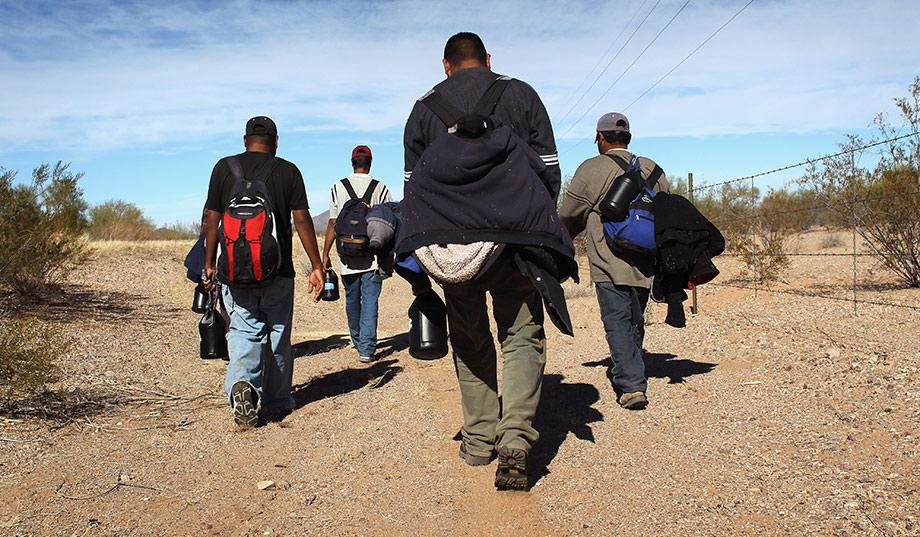
President-elect Donald Trump launched his candidacy on an anti-immigrant sentiment and has vowed to repeal a key Obama administration program that shields hundreds of thousands of people from deportation. Now, many immigrants in the country illegally, or with relatives who are, fear deportation and separation from their families. In immigrant-heavy areas like Los Angeles and Phoenix, activists are scrambling to provide informational meetings for immigrants to help them protect themselves from deportation. Others want legal immigrants to apply for citizenship so they can eventually obtain legal status for relatives. “The more we can naturalize people and stabilize our families and root our communities the better,” said Julio Perez, executive director of California’s Orange County Labor Federation, which is sponsoring naturalization events in response to the election. Here are stories from some immigrants who fear what a Trump presidency could bring: — WORKING NOW BUT FEARING DEPORTATION Karina Ruiz, 32, is one of 741,000 immigrants benefiting from the program launched by President Barack Obama called Deferred Action for Childhood Arrivals, or DACA. It allows young adults to get work permits, Social Security numbers and protects them from deportation. The Phoenix mother of three says deferred action allowed her to work and graduate with a biochemistry degree from Arizona State University in 2015. She hopes to be a pharmacist one day. But Trump has promised to end deferred action, and Ruiz fears she could be sent to Mexico and separated from her U.S.-born children. “I’m not giving up DACA so easily, not going down without a fight,” Ruiz said. — WORRIED PARENTS WILL BE SENT TO MEXICO Michael Nazario, a 27-year-old community activist from Phoenix, is shielded by deferred action and married to an American citizen, which should allow him to get permanent residency soon. He came to the U.S. with his parents illegally when he was 3 and didn’t find out about his legal status until he tried to enlist in the Marine Corps and could not do so without a Social Security card. All four of Nazario’s siblings were born in the U.S., and his parents would probably have been eligible to stay under an expansion of Obama’s program called Deferred Action for Parents of Americans. But the program was challenged in court and never went into effect. Trump also opposes it. Nazario said a grass-roots effort to make sure the program stays in place is now necessary to ensure his parents can stay in Phoenix. “I feel bothered by this election but it only inspires me to just keep going forward because what’s at stake is not only my deferred action but my family as well, my father, my mother and the 11 million immigrants all across the country,” Nazario said. — ASPIRING LAWYER FEARS DEPORTATION TO SOUTH KOREA Matt Lee‘s parents brought him on a tourist visa to Southern California from South Korea when he was 13. Now 25, he has a college biology degree and wants to attend law school so he can become a patent lawyer. He was among the first to apply for the deferred-action program and now works legally, helping other South Koreans fill out immigration forms. But his dreams of becoming a lawyer are clouded by Trump’s vow to get rid of the program. Other young immigrants have told him they fear they will be tracked down for deportation because the federal government has their names and addresses, courtesy of their deferred-action applications. One mother said she is pulling her daughter out of a study abroad program in China to get the daughter back into the U.S. before Trump takes office, Lee said. “People are not sure if Trump will definitely carry out what he said because it is a crazy idea,” he said. “Now the crazy idea of him being elected – that happened. Nothing is certain.” — NO GREEN CARD WITHOUT A RETURN TO MEXICO Dora Rodriguez has lived in the U.S. illegally for 27 years but has still managed to raise her two U.S.-born children and work at a money transfer business in Santa Ana, California. More than 75 percent of the city’s residents are Latino, and nearly half of them were born abroad. Rodriguez said her daughter is now an adult, and could sponsor Rodriguez for permanent residency. But Rodriguez, in her 40s, would have to return to Mexico to apply and risk staying there for years to get her papers, leaving behind her teenage son in the U.S. She remembers anti-immigration sentiment in the 1990s in California but that didn’t get her deported. She said she doubted much would end up changing under a Trump presidency. “When (former California Gov.) Pete Wilson was here, I heard the same … and nothing happened,” she said. — AVOIDING POLICE TO AVOID DEPORTATION Alicia Ramirez, in the U.S. for three decades, doesn’t think Trump will be able to target immigrants like her but says she’s going to start taking extra precautions soon just to make sure she can stay in Santa Ana. Ramirez, who is in the country illegally and hands out restaurant fliers on a street lined with money transfer businesses and tamale vendors, said avoiding run-ins with law enforcement officers will be key. That’s more challenging for her and others handing out fliers on the streets than the immigrants working inside offices lining the strip. “We’re afraid,” Ramirez said of Trump. “We’ve got to be careful because the smallest mistake, he’s going to kick us out.” Republished with permission of the Associated Press.
Donald Trump’s deportation waffle highlights campaign weaknesses
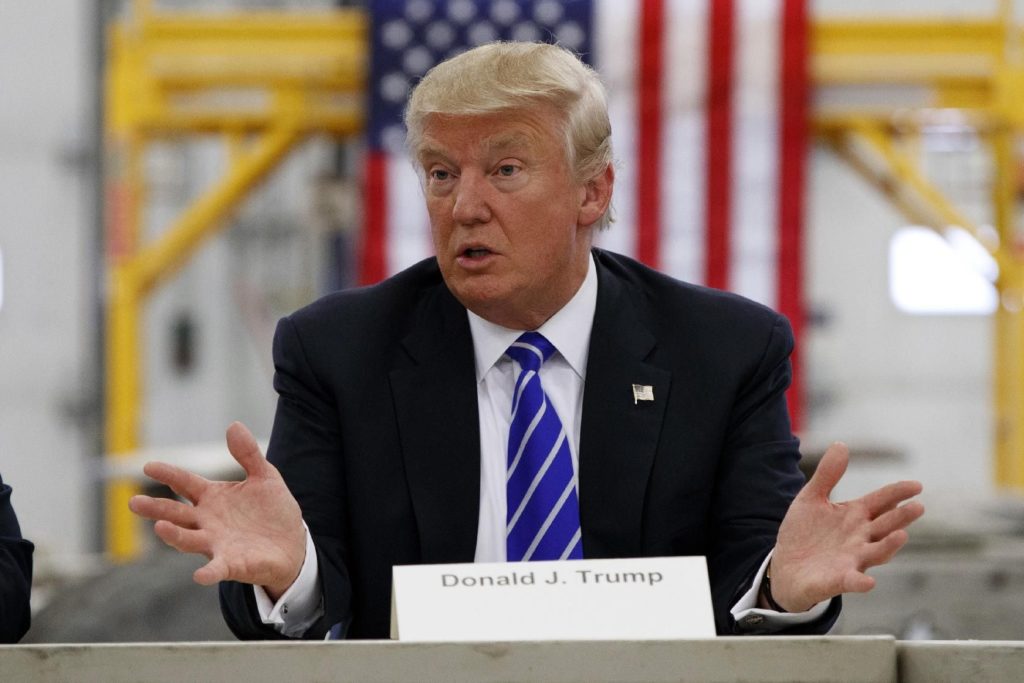
Donald Trump and his aides used to say that voters didn’t care about the nitty-gritty of policy details. But now those details are tripping up his campaign. For more than a week now, as he’s tried to shine the spotlight on his rival, Trump has appeared to wrestle with one of his signature proposals: A pledge to expel everyone living in the U.S. illegally with the help of a “deportation force.” At a Fox News town hall taping last week, in the face of pressing questions, the GOP nominee proceeded to poll the audience at length on the fate of an estimated 11 million people. It was a stunning display of indecision from a candidate who has asked voters to put enormous faith in his gut instincts. Trump is now planning a major speech Wednesday, during which he’s expected to finally clarify his stance. Supporters are hoping for a strong, decisive showing. But the episode underscores how little time his campaign has invested in outlining how he would accomplish his goals as president, especially when compared with the detailed plans of his Democratic rival, Hillary Clinton. And for critics, many already disposed to vote against him, his wavering on what has been his signature issue seems like a warning that he’s unable to handle a central element of any president’s job – making decisions. “It’s just puzzling,” said Lanhee Chen, who has served as a policy adviser to several Republican presidential candidates. “This is the issue on which he rose to prominence in the primary and the issue on which he continues to stake much of his campaign.” From the start, Trump has never been the kind of candidate to pore over thick policy books. Indeed, he has mocked Clinton on the subject. “She’s got people that sit in cubicles writing policy all day. Nothing’s ever going to happen. It’s just a waste of paper,” he told Time Magazine in June. “My voters don’t care and the public doesn’t care. They know you’re going to do a good job once you’re there.” To date, Trump’s campaign has posted just seven policy proposals on his website, totaling just over 9,000 words. There are 38 on Clinton’s “issues” page, ranging from efforts to cure Alzheimer’s disease to Wall Street and criminal justice reform, and her campaign boasts that it has now released 65 policy fact sheets, totaling 112,735 words. “I’ve laid out the best I could, the specific plans and ideas that I want to pursue as your president because I have this old-fashioned idea,” Clinton said during a recent speech in Colorado. “When you run for president, you ought to tell people what you want to do as their president.” Trump’s new campaign manager, Kellyanne Conway, has said she’s pushing her boss to get more specific. Yet his positions on a host of issues remain vague at best. For example, while Trump has slammed the Common Core education standards and touts the benefits of local control of education, he has no formal, detailed plans for improving public schools. He talks about student loan debt and the increasing costs of higher education, but has yet to propose solutions. He has teased plans to make childcare more affordable, but has missed his own deadline for unveiling them. Trump’s supporters say questions about his recent waffling on the deportation question are overblown. His running mate, Mike Pence, describes him as “a CEO at work” as he consults with various stakeholders. “You see someone who is engaging the American people, listening to the American people,” Pence told CNN on Sunday. “He is hearing from all sides.” But Chen, the Republican policy adviser, said a President Trump arriving at the White House without detailed plans could be limited in how much he might achieve, since a new president’s power is at its apex early on. “If you’re not able to hit the ground running, chances are you’re going to run into serious resistance if you sit there studying something for the first 100 days,” he said. Republished with permission of The Associated Press.
Alabama politicians react to U.S. Supreme Court immigration ruling
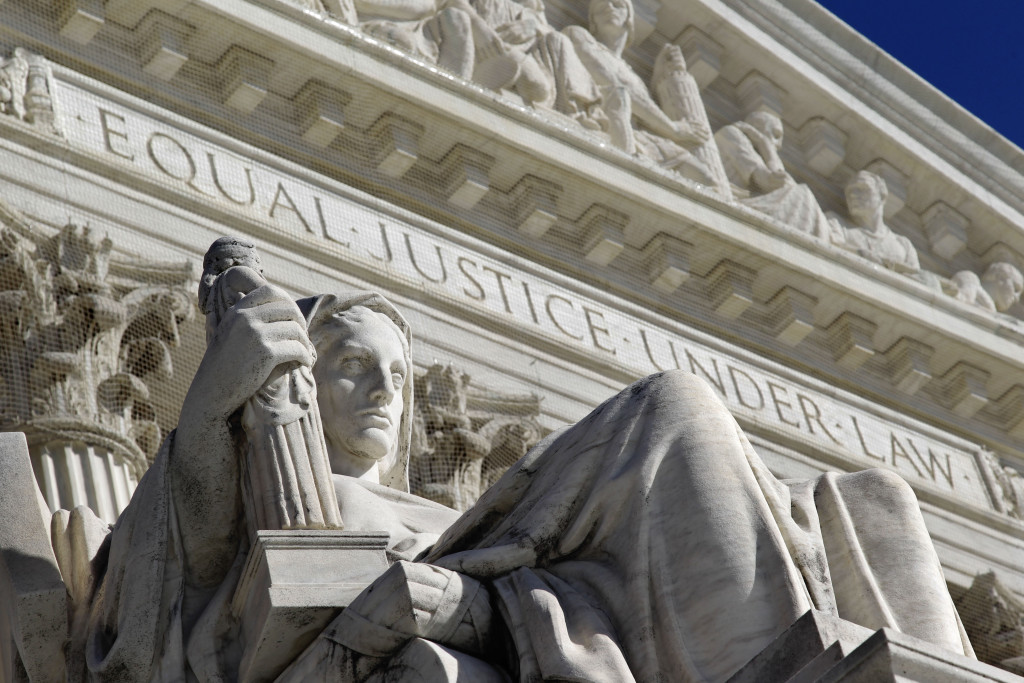
Thursday, the U.S. Supreme Court issued a 4-4 tied ruling in the case of United States v. Texas, which effectively blocks President Barack Obama’s proposed immigration plan that sought to shield millions living in the U.S. illegally from deportation. The single-sentence opinion effectively kills the plan for the duration of Obama’s presidency. Obama expressed disappointment Thursday in the deadlocked ruling, saying the decision “takes us further from the country that we aspire to be.” “For more than two decades now our immigration system, everybody acknowledges, has been broken,” Obama continued. “And the fact that the Supreme Court wasn’t able to issue a decision today doesn’t just set the system back even further, it takes us further from the country that we aspire to be.” Here are reactions from elected officials and political groups in Alabama. We will be updating this post as they come in: U.S. Sen. Richard Shelby: Today’s Supreme Court decision, which effectively blocks President Obama’s immigration executive actions, is a victory for our system of checks and balances. Time and again, the Obama Administration has attempted to circumvent Congress and push its agenda on the American people through executive fiat. While I am pleased that the Supreme Court has halted this unprecedented power grab for now, today’s decision underscores the importance of electing a president in November who will put a conservative on the Court to defend our Constitution. U.S. Sen. Jeff Sessions: Today’s decision in United States v. Texas is not just a victory for Texas, Alabama, and a majority of the States in this great nation who challenged the lawless actions of the Obama Administration, but a victory for the American people and for the rule of law. Read his full statement here. Alabama 1st District U.S. Rep. Bradley Byrne: Once again, the Obama Administration has suffered defeat due to their failure to follow the Constitution and the laws of our country. This decision is a major victory for the rule of law and our opposition to illegal executive amnesty. Instead of continuing to encourage amnesty, the executive branch should enforce the immigration laws already on the books and finally secure our borders. Alabama 2nd District U.S. Rep. Martha Roby: The Supreme Court’s decision affirms the separation of powers, one of the most fundamental governing principles in our Constitution. The president cannot legislate or rule like a king. I believe this decision sends a strong message to President Obama and future presidents that constitutional order and the rule of law must prevail in this country. Our illegal immigration problem is very real. President Obama’s amnesty orders only served to exacerbate the problem by inviting even more illegal immigrants to cross our border and by poisoning any progress Congress could make toward meaningful solutions. Amnesty won’t solve our immigration problems. We have to secure the border and enact better polices that discourage illegal entry, punish lawbreakers and promote America’s economic interests. Alabama 3rd District U.S. Rep. Mike Rogers: Today’s decision to halt President Obama’s executive amnesty is an important victory for the rule of law and Constitutional government. I was proud to sign on to amicus briefs throughout this case and to give the House an official voice in the Supreme Court by voting for H. Res. 639 in March. I firmly believe the President’s unilateral act to grant legal status to millions of illegal immigrants clearly undermines the power of Congress and the Constitution’s system of checks and balances. Congress must move forward with legislation to secure our borders and create real consequences for people who openly flaunt our immigration laws. Alabama 6th District U.S. Rep. Gary Palmer: Today the Supreme Court put the power back in the hands the American people, not President Obama’s,” said Palmer. “Their 4-4 tied decision thwarts the President’s attempt to unconstitutionally overrule current immigration laws. Laws are made by the people through their elected representative, not through executive action. We must work together to enforce our current immigration laws and secure our borders, but today we celebrate this victory for the American people. Alabama Attorney General Luther Strange: This is a strong victory for the Constitution, the rule of law and for the conservative Attorneys General who took this important case all the way to the highest court in the land and prevailed,” said Attorney General Strange. Today’s Supreme Court 4-4 tie vote effectively blocks President Obama’s illegal executive amnesty program, allowing the lower federal court ruling against the immigration program to stand. Alabama was one of more than two dozen states joined in a legal challenge of President Obama’s plan to grant amnesty to millions of illegal aliens. Today’s decision should send a strong signal to the President and his administration that they cannot continue to ignore the Constitution, Congress and the rule of law.
Donald Trump: Deport children of immigrants living illegally in U.S.
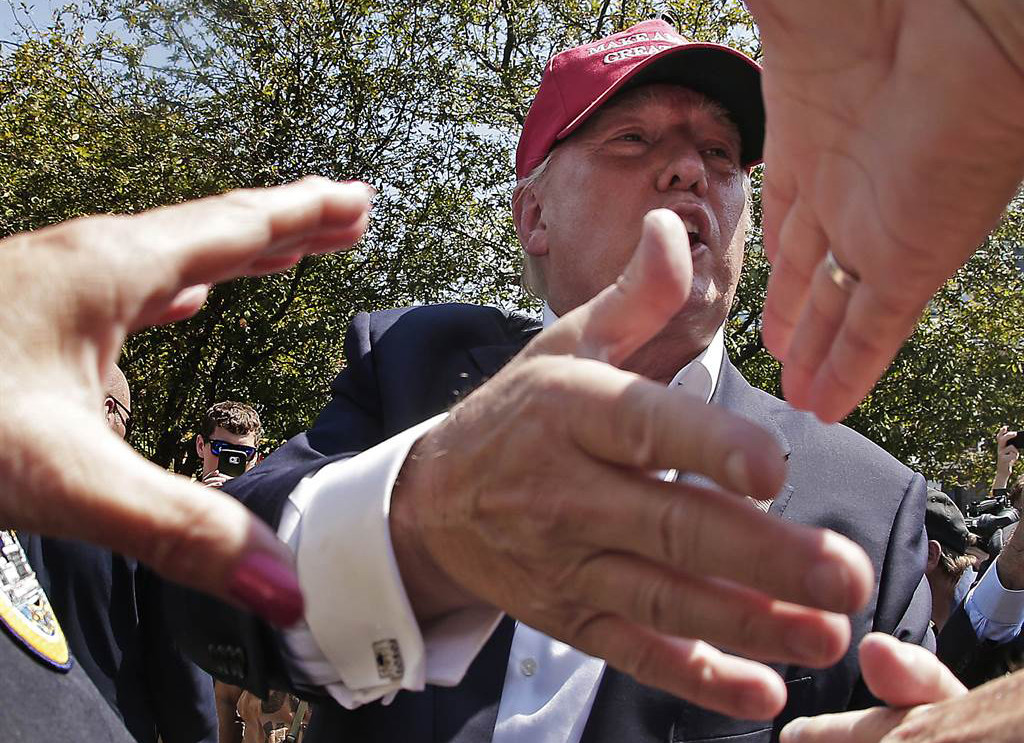
Republican presidential candidate Donald Trump wants more than a wall to keep out immigrants living in the country illegally. He also wants to end “birthright citizenship” for their children, he said Sunday. And he would rescind Obama administration executive orders on immigration and toughen deportation, allowing in only “the good ones.” Trump described his expanded vision of how to secure American borders during a wide-ranging interview Sunday on NBC’s “Meet The Press,” saying that he would push to end the constitutionally protected citizenship rights of children of any family living illegally inside the U.S. “They have to go,” Trump said, adding: “What they’re doing, they’re having a baby. And then all of a sudden, nobody knows…the baby’s here.” Native-born children of immigrants — even those living illegally in the U.S. — have been automatically considered American citizens since the adoption of the 14th amendment of the U.S. Constitution in 1868. The odds of repealing the amendment’s citizenship clause would be steep, requiring the votes of two-thirds of both houses of Congress and support from three-fourths of the nation’s state legislatures. Republicans in Congress have pushed without success to repeal that provision since 2011. “They’re illegal,” Trump said, describing native-born children of people living illegally in the US. “You either have a country or not.” Trump’s remarks came as his campaign website posted his program for “immigration reform.” Among its details: Making Mexico pay for a permanent border wall. Mandatory deportation of all “criminal aliens.” Tripling the force of immigration officers by eliminating tax credit payments to immigrant families residing illegally in the U.S. He said that families with U.S.-born children could return quickly if deemed worthy by the government. “We’re going to try and bring them back rapidly, the good ones,” he said, adding: “We will expedite it so people can come back in. The good people can come back.” Trump did not elaborate on how he would define “good people.” But echoing earlier controversial remarks that Mexico was sending criminals across the border, Trump said a tough deportation policy was needed because “there’s definitely evidence” of crimes linked to immigrants living in the country illegally. The New York businessman also said he would waste little time rescinding President Barack Obama’s executive actions aimed at allowing as many as 3.7 million immigrants living illegally in the U.S. to remain in the country because of their U.S.-born relatives. Obama’s November 2014 actions were halted by temporary injunctions ordered by several federal courts in rulings challenging his executive powers to alter immigration policies without Congressional approval. The cases could lead to the U.S. Supreme Court. “We have to make a whole new set of standards,” Trump said. “And when people come in, they have to come in legally.” On Sunday, Ohio Gov. John Kasich echoed Trump’s call to finish construction of an incomplete system of barriers on the nation’s southern border with Mexico. There are still gaps in the barriers, which have been under construction since 2005. Speaking on CBS’ “Face the Nation,” Kasich said he would “finish the wall” but would then work to legalize 12 million immigrants now estimated to live in the U.S. illegally. Kasich said he would “make sure we don’t have anybody — any of the criminal element here.” He would also revive the guest-worker programs that previously brought in temporary workers to aid in farming and other industries hobbled by labor shortages. Most other GOP candidates also back completing the border wall but differ over how to treat immigrant families already living in the U.S. Former Florida Gov. Jeb Bush recently released his own immigration plan calling for the use of forward bases and drones to guard the border, but also backing an eventual plan to legalize the status of immigrant families. Bush disagrees with Obama’s use of executive actions to unilaterally enforce the policy. Florida Sen. Marco Rubio worked with senators from both parties to develop a comprehensive plan in 2013 that would have legalized the status of many immigrant families. But Congress balked at the idea as tea party Republicans opposed the deal and Rubio has since backed away from his support. Republished with permission of the Associated Press.
