
Derek Chauvin pleads guilty to federal charge in George Floyd’s death

Former Minneapolis police Officer Derek Chauvin pleaded guilty Wednesday to a federal charge of violating George Floyd’s civil rights, admitting for the first time that he kept his knee on Floyd’s neck — even after he became unresponsive — resulting in the Black man’s death. Chauvin, who is white, was convicted this spring of state murder and manslaughter charges in Floyd’s May 25, 2020, death, and was sentenced to 22 1/2 years. In his federal plea Wednesday, Chauvin admitted he willfully deprived Floyd of his right to be free from unreasonable seizure, including unreasonable force by a police officer, by kneeling on Floyd’s neck even though he was handcuffed and not resisting. A second federal count in Floyd’s death was dismissed, but Chauvin pleaded guilty to another count in an unrelated 2017 case. Chauvin appeared in person for the change of plea hearing in an orange short-sleeve prison shirt and was led into and out of the court in handcuffs. He said “Guilty, your honor” to confirm his pleas, and acknowledged that he committed the acts alleged. Chauvin could have faced life in prison on the federal count, one possible incentive for him to avoid trial. Under the plea agreement, both sides agreed Chauvin should face a sentence ranging from 20 to 25 years, with prosecutors saying they would seek 25. The final sentence will be up to U.S. District Judge Paul Magnuson, but Chauvin is likely to face more time behind bars than he would on the state charges alone. With good behavior, Chauvin’s state sentence would have amounted to 15 years behind bars before he became eligible for parole. A federal sentence would run at the same time, and good behavior also can reduce time — but inmates typically serve about 85% of their sentences. That means if Chauvin gets the 25 years prosecutors want, he would likely spend 21 years and three months in prison — or roughly six years longer behind bars than his state sentence alone. Three other former officers — Thomas Lane, J. Kueng, and Tou Thao — were indicted on federal charges alongside Chauvin. Floyd’s arrest and death, which a bystander captured on cellphone video, sparked mass protests nationwide calling for an end to racial inequality and police mistreatment of Black people. Chauvin also pleaded guilty to violating the rights of a 14-year-old boy during a 2017 arrest in which he held the boy by the throat, hit him in the head with a flashlight, and held his knee on the boy’s neck and upper back while he was prone, handcuffed and not resisting. That was one of several cases mentioned in state court filings that prosecutors said showed Chauvin used neck or head and upper body restraints seven times dating back to 2014, including four times state prosecutors said they went beyond the point force was needed. Several members of Floyd’s family were present Wednesday, as was the teenager in the 2017 arrest. As they left the courtroom, Floyd’s brother Philonise said to the teen: “It’s a good day for justice.” Nine people came to support Chauvin, including family members. He waved and smiled at them as he entered and left the courtroom. George Floyd’s nephew, Brandon Williams, afterward called Chauvin a “monster” who should have been arrested in 2017. “Had he been held accountable for what he did in 2017 to that minor, George Floyd would still be here,” Williams said. “Today he had a chance to blow kisses and give air hugs to his family. We can’t do that.” An attorney for Floyd’s family, Jeff Storms, said they planned to head to Minneapolis later Wednesday to support the family of Daunte Wright, a 20-year-old Black man who was fatally shot in a traffic stop during Chauvin’s state trial. The police officer in that case, Kim Potter, is on trial on manslaughter charges. To bring federal charges in deaths involving police, prosecutors must believe an officer acted under the “color of law,” or government authority, and willfully deprived someone of their constitutional rights. It’s a high legal standard, and an accident, bad judgment, or negligence aren’t enough. Prosecutors have to prove the officer knew what he was doing was wrong in that moment but did it anyway. Chauvin admitted that he knew what he did to Floyd was wrong and he had a “callous and wanton disregard” for Floyd’s life, the plea agreement said. It also said Chauvin “was aware that Mr. Floyd not only stopped resisting, but also stopped talking, stopped moving, stopped breathing, and lost consciousness and a pulse.” According to evidence in the state case against Chauvin, Kueng and Lane helped restrain the 46-year-old Floyd as he was on the ground — Kueng knelt on Floyd’s back and Lane held down Floyd’s legs. Thao held back bystanders and kept them from intervening during the 9 1/2-minute restraint. All four former officers were charged broadly in federal court with depriving Floyd of his rights while acting under government authority. The other three former officers are still expected to go to trial on federal charges in January, and they face state trial on aiding and abetting counts in March. Republished with the permission of the Associated Press.
Database will track officer complaints, disciplinary action
Alabama will create a database to track disciplinary actions and excessive force complaints against law enforcement officers, a measure aimed at weeding out “bad apples” in the profession. Alabama Gov. Kay Ivey on Thursday signed the bill to create a state database to track law enforcement officers’ employment history, disciplinary actions, use of force complaints, and reassignments for cause. Nationwide, there have been calls for greater transparency in policing following the high-profile shootings and deaths of unarmed African Americans with states taking a variety of actions. Former Minneapolis police officer Derek Chauvin was convicted Tuesday in the death of George Floyd, whose killing sparked nationwide protests. Democratic Rep. A.J. McCampbell, a former police officer, sponsored the Alabama bill and said it was aimed at preventing bad actors from moving “from one city to the next city.” “We have great officers. But it’s just like any other profession, you have great actors and you have bad actors. This is an opportunity to weed out the bad actors,” McCampbell, D-Demopolis, said. McCampbell said the governor had helped work on the legislation. The House of Representatives approved the bill 95-4 vote. The Senate approved the bill on a 26-0 vote. The database would not be public. It would be for law enforcement use only, including for police agencies to review a job candidate’s background. “It would make it more difficult for someone who has got a checkered past to hop from law enforcement agency to law enforcement agency. It builds a database so we can sort of weed out the bad apples that everyone continues to talk about,” state Rep. Chris England, D-Tuscaloosa, said Wednesday during a news conference of the Alabama House Democratic Caucus. Former President Donald Trump in June signed an executive order to encourage better police practices and establish a database to track officers with excessive use-of-force complaints. While Alabama lawmakers approved the database creation with few dissenting votes, other policing bills have stalled in the GOP-dominated Legislature. A bill that would establish uniform procedures for the release of police body cameras and dash-camera footage has not gotten a committee vote. Bills that would track officer-involved shootings and mandate uniform investigative procedures also stalled in past years. The Alabama Senate has approved a bill that would require police to collect racial data during traffic stops — a measure intended to prevent the targeting of minority motorists — but the bill has not gotten a vote in the Alabama House. “We support law enforcement. However, we strongly believe law enforcement should be held to a higher standard and their actions should be fair and responsible,” England said. Republished with the permission of the Associated Press.
Merrick Garland announces sweeping police probe after George Floyd verdict
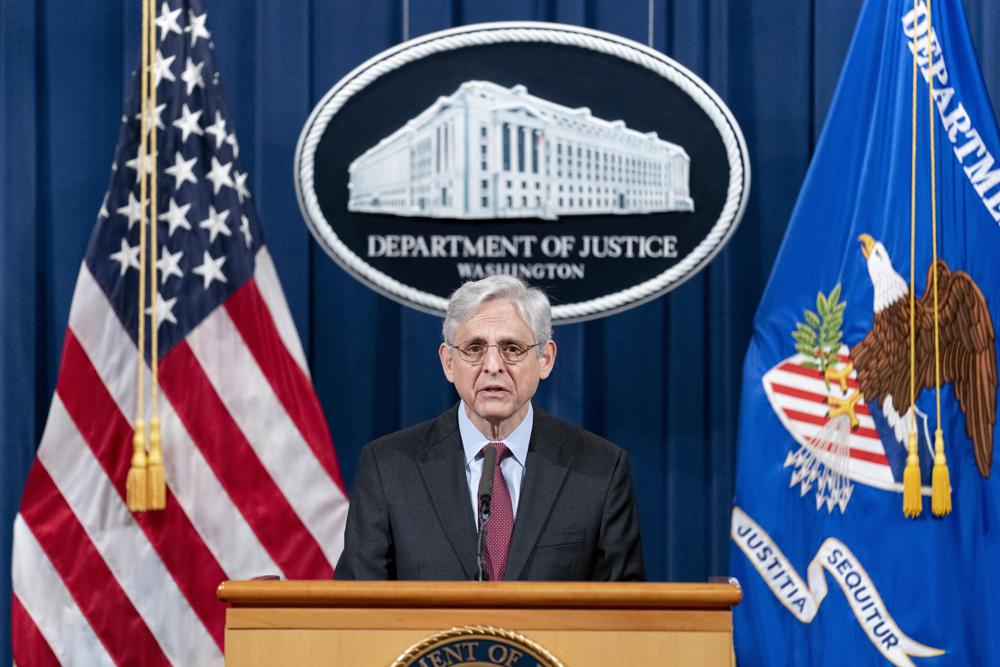
The Justice Department is opening a sweeping investigation into policing practices in Minneapolis after a former officer was convicted in the killing of George Floyd there, Attorney General Merrick Garland announced Wednesday. The decision comes a day after the former officer, Derek Chauvin, was found guilty of murder and manslaughter in Floyd’s death last May, a verdict that set off a wave of relief across the country. Floyd’s death had led to months of mass protests against policing and the treatment of Black people in the United States. The Justice Department was already investigating whether Chauvin and the other officers involved in Floyd’s death violated his civil rights. “Yesterday’s verdict in the state criminal trial does not address potentially systemic policing issues in Minneapolis,” Garland said. The new investigation is known as a “pattern or practice” — examining whether there is a pattern or practice of unconstitutional or unlawful policing — and will be a more sweeping review of the entire police department. It may result in major changes to policing in the Minnesota city. It will examine the use of force by police officers, including force used during protests, and whether the department engages in discriminatory practices. It will also look into the department’s handling of misconduct allegations and its treatment of people with behavioral health issues and will assess the department’s current systems of accountability, Garland said. The Minneapolis police said in a statement that the chief, Medaria Arradondo “welcomes this investigation” and will fully cooperate with federal prosecutors. Arradondo “understands that the intent of this inquiry is to reveal any deficiencies or unwanted conduct within the department and provide adequate resources and direction to correct them,” the statement said. A senior Justice Department official said prosecutors chose to announce the investigation a day after the verdict because they did not want to do anything to interfere with Chauvin’s trial. The official would not discuss details of the investigation publicly and spoke on condition of anonymity. Three other ex-Minneapolis police officers charged in Floyd’s death will be tried together beginning Aug. 23. The official said their trial is far enough off that officials believed it was still appropriate to make the announcement Wednesday, even though the defendants are awaiting trial on state charges. It’s unclear whether the years under investigation will begin when Floyd died or before. Garland said a public report would be issued if the department finds a pattern or practice of unconstitutional policing. The government also could bring a lawsuit against the police department, which in the past have typically ended in settlement agreements or consent decrees to force changes. The Minneapolis Police Department is also being investigated by the Minnesota Department of Human Rights, which is looking into the police department’s policies and practices over the past decade to see if it engaged in systemic discriminatory practices. Minneapolis Mayor Jacob Frey said city officials “welcome the investigation as an opportunity to continue working toward deep change and accountability in the Minneapolis Police Department.” The city council also issued a statement supporting the investigation, saying its work had been constrained by local laws and that it welcomes “new tools to pursue transformational, structural changes to how the City provides for public safety.” The Justice Department official said attorneys from the department’s civil rights division are in Minneapolis, working with the U.S. attorney’s office and speaking with community groups and others. Floyd, 46, was arrested on suspicion of passing a counterfeit $20 bill for a pack of cigarettes at a corner market. He panicked, pleaded that he was claustrophobic, and struggled with police when they tried to put him in a squad car. They put him on the ground instead. The centerpiece of the case was bystander video of Floyd, handcuffed behind his back, gasping repeatedly, “I can’t breathe,” and onlookers yelling at Chauvin to stop as the officer pressed his knee on or close to Floyd’s neck for what authorities say was about 9 1/2 minutes, including several minutes after Floyd’s breathing had stopped and he had no pulse. Floyd’s death May 25 became a flashpoint in the national conversation about the deaths of Black Americans at the hands of law enforcement and sparked worldwide protests. At trial, Chauvin’s defense attorney persistently suggested Chauvin’s knee wasn’t on Floyd’s neck for as long as prosecutors argued, suggesting instead it was across Floyd’s back, shoulder blades, and arm. The Justice Department had previously considered opening a pattern or practice investigation into the police department soon after Floyd’s death, but then-Attorney General Bill Barr was hesitant to do so at the time, fearing that it could cause further divisions in law enforcement amid widespread protests and civil unrest, three people familiar with the matter told the AP. Garland said the challenges being faced “are deeply woven into our history.” “They did not arise today or last year,” Garland said. “Building trust between community and law enforcement will take time and effort by all of us, but we undertake this task with determination and urgency knowing that change cannot wait.” Republished with the permission of the Associated Press.
Dan Sutter: Will things ever change?
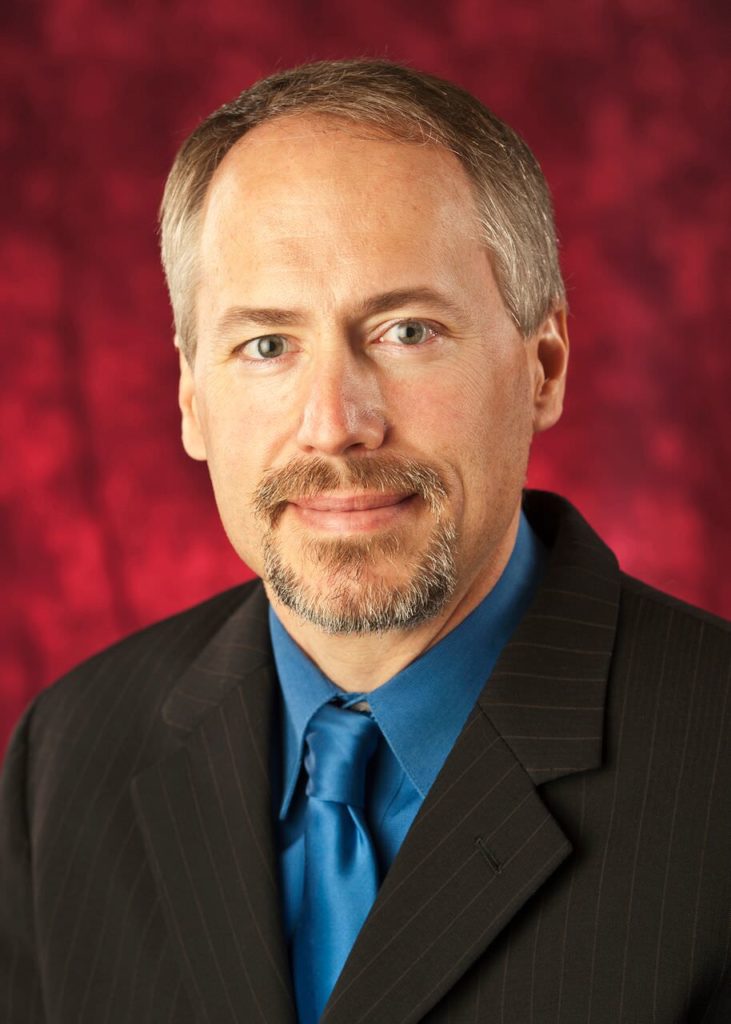
Dan Sutter discusses the recent protests and the economics of certain crimes.
20 arrested during George Floyd death protest in Alabama

No protesters or officers suffered injuries, police said.
