
Kamala Harris endorses Joe Biden; Jesse Jackson backs Bernie Sanders
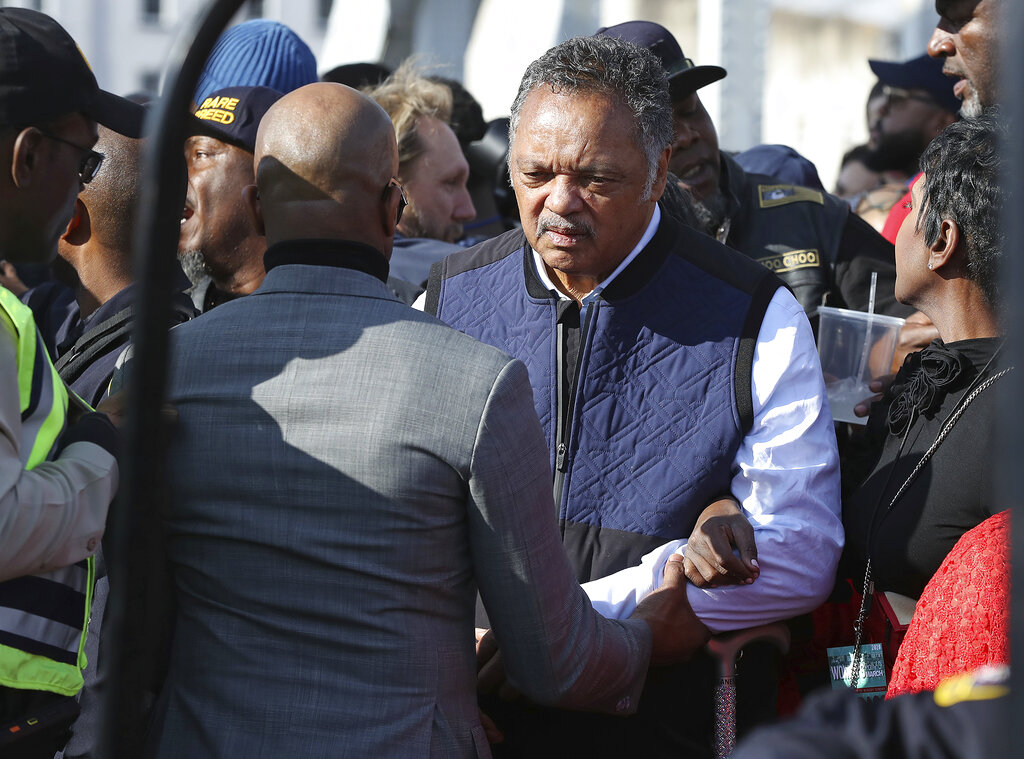
Biden and Sanders have been consolidating their support since Super Tuesday.
Joe Biden boosts Super Tuesday case with Terri Sewell endorsement

Biden landed another high profile Alabama endorsement.
Cory Booker ends presidential bid after polling, money struggles
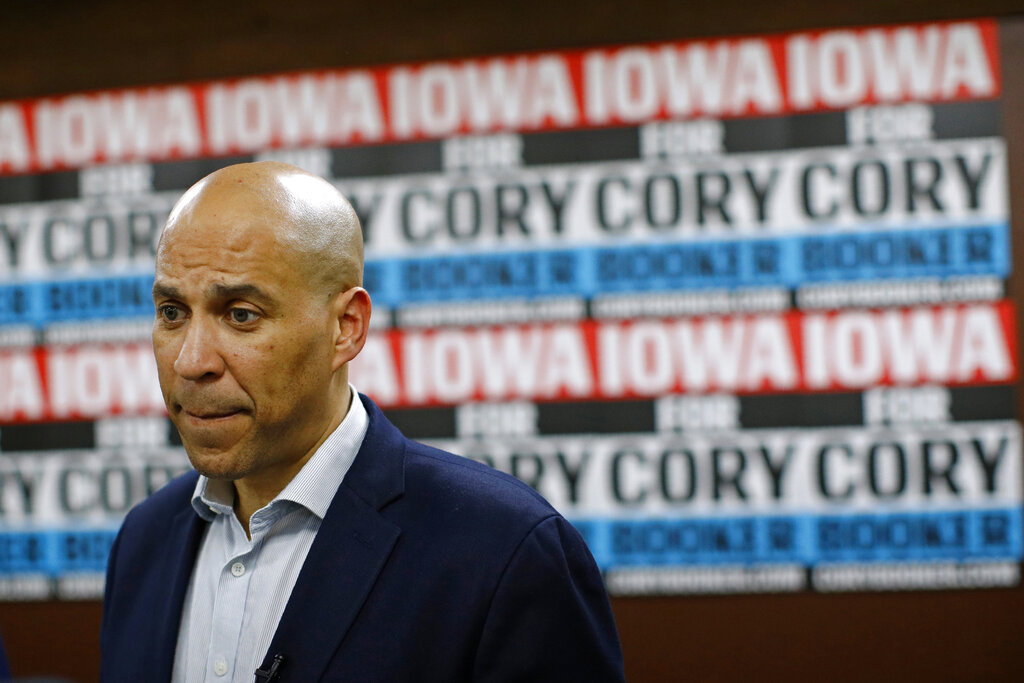
Booker’s campaign struggled from the beginning.
Takeaways from the democratic presidential debate
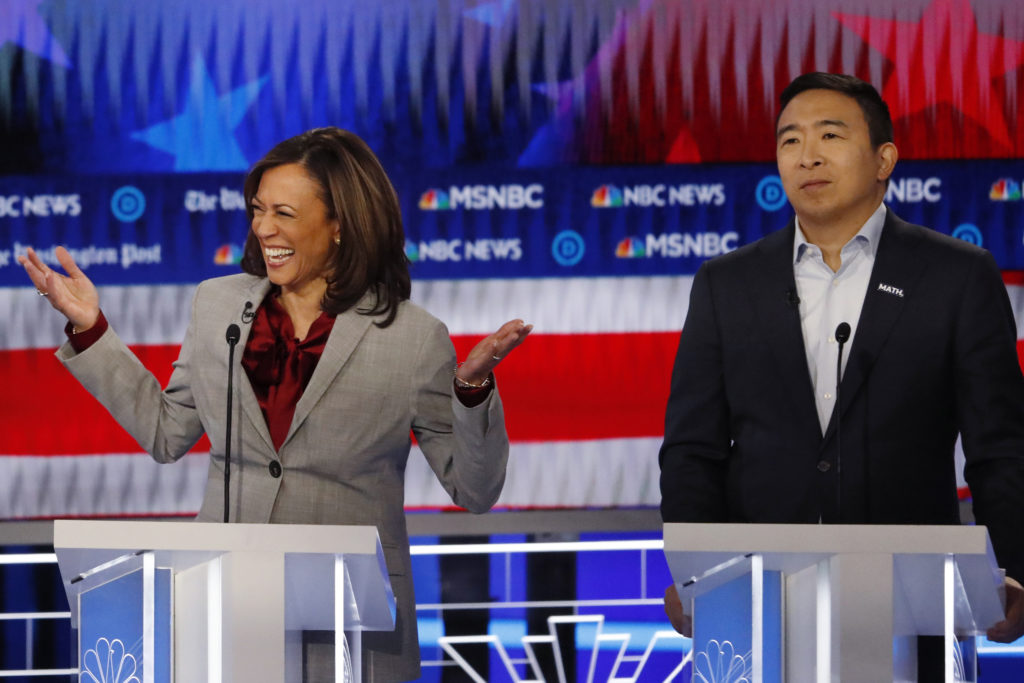
Democrats spent more time making the case for their ability to beat President Donald Trump than trying to defeat each other in their fifth debate Wednesday night. Civil in tone, mostly cautious in approach, the forum did little to reorder the field and may have given encouragement to two new entrants into the race, Mike Bloomberg and Deval Patrick. Here are some key takeaways. IMPEACHMENT CLOUD HOVERS The impeachment inquiry of President Donald Trump took up much of the oxygen early in the debate. The questions about impeachment did little to create much separation in a field that universally condemns the president. The candidates tried mightily to pivot to their agenda. Massachusetts Sen. Elizabeth Warren talked about how a major Trump donor became the ambassador at the heart of the Ukraine scandal, and reiterated her vow to not reward ambassadorships to donors. Former Vice President Joe Biden tried to tout the investigation as a measure of how much Trump fears his candidacy. Impeachment is potentially perilous to the Democratic candidates for two reasons. A Senate trial may trap a good chunk of the field in Washington just as early states vote in February. It also highlights a challenge for Democrats since Trump entered the presidential race in 2015 — shifting the conversation from Trump’s serial controversies to their own agenda. Vermont Sen. Bernie Sanders warned, “We cannot simply be consumed by Donald Trump, because if you are you’re going to lose the election.” OBAMA COALITION Perhaps more than in any debate so far, Democrats explicitly acknowledged the importance of black and other minority voters. California Sen. Kamala Harris said repeatedly that Democrats must reassemble “the Obama coalition” to defeat Trump. Harris, one of three black candidates running for the nomination, highlighted black women especially, arguing that her experiences make her an ideal nominee. Another black candidate, New Jersey Sen. Cory Booker, added: “I’ve had a lot of experience with black voters. … I’ve been one since I was 18.” Neither Booker nor Harris, though, has been able to parlay life experiences into strong support in the primary, in no small part because of Biden’s strong standing in the black community. Biden’s standing is also a barrier to other white candidates, including South Bend, Indiana, Mayor Pete Buttigieg, who is surging in overwhelmingly white Iowa but struggling badly with black voters in Southern states like South Carolina that have proven critical to previous Democratic nominees. Buttigieg acknowledged as much, saying he welcomes “the challenge of connecting with black voters in America who don’t yet know me.” The exchanges show that candidates seemingly accept the proposition that the eventual nominee will have to put together a racially diverse coalition to win, and that those whose bases remain overwhelmingly white (or just too small altogether) aren’t likely to be the nominee. CLIMATE CRISIS GETS AIR The climate crisis, which Democratic voters cite as a top concern, finally gained at least some attention. There were flashes of the debate Wednesday night, as billionaire environmental activist Tom Steyer swiped at Biden by suggesting the former vice president wants an inadequate, piecemeal approach to the crisis. Biden hit right back, reminding Steyer that he sponsored climate legislation as a senator in the 1980s while Steyer built his fortune in part on investments in coal. Buttigieg turned a question about the effects of Trump’s policies on farmers into a call for the U.S. agriculture sector to become a key piece of an emissions-free economy. But those details seem less important than the overall exchange — or lack thereof. Perhaps it’s the complexities of the policies involved. Or perhaps it’s just the politics. Whatever the case, the remaining field simply doesn’t seem comfortable or willing to push climate policy to the forefront, and debate moderators don’t either. HEALTH CARE GROUNDHOG DAY Before every debate, Democratic presidential campaigns aides lay out nuanced, focused arguments their candidates surely will make on the stage. And every debate seems to evolve quickly into an argument over health care. So it was again. Within minutes of the start, Warren found herself on the defensive as she explained she still supports a single-payer government run insurance system — “Medicare for All” — despite her recent modified proposal to get there in phases. Not to be outdone, Sanders reminded people that he’s the original Senate sponsor of the “Medicare for All” bill that animates progressives. “I wrote the damn bill,” he quipped. Again. Biden jumped in to remind his more liberal rivals that their ideas would not pass in Congress. The former vice president touted his commitment to adding a government insurance plan to existing Affordable Care Act exchanges that now sell private insurance policies. The debate highlights a fundamental tension for candidates: Democratic voters identify health care as their top domestic policy concern, but they also tell pollsters their top political priority in the primary campaign is finding a nominee who can defeat Trump. The top contenders did nothing to settle the argument Wednesday, instead offering evidence that the ideological tug-of-war will remain until someone wins enough delegates to claim the nomination. DID YOU HEAR THE ONE … The debate was so genial that some of the most memorable moments were the candidates’ well-rehearsed jokes. Asked what he’d say to Russian President Vladimir Putin if he’s elected to the White House, technology entrepreneur Andrew Yang said his first words would be, “Sorry I beat your guy.” Minnesota Sen. Amy Klobuchar drew laughs for an often-repeated anecdote about how she set a record by raising $17,000 from ex-boyfriends during her first campaign. She also pushed back at fears of a female candidacy by saying, “If you think a woman can’t beat Donald Trump, Nancy Pelosi does it every day.” Booker, criticizing Biden for not agreeing to legalize marijuana, said, “I thought you might have been high when you said it.” And Harris may have issued the zinger of the night at the president when discussing his nuclear negotiations with North Korea: “Donald Trump got
7 questions heading into the 2020 democratic debate
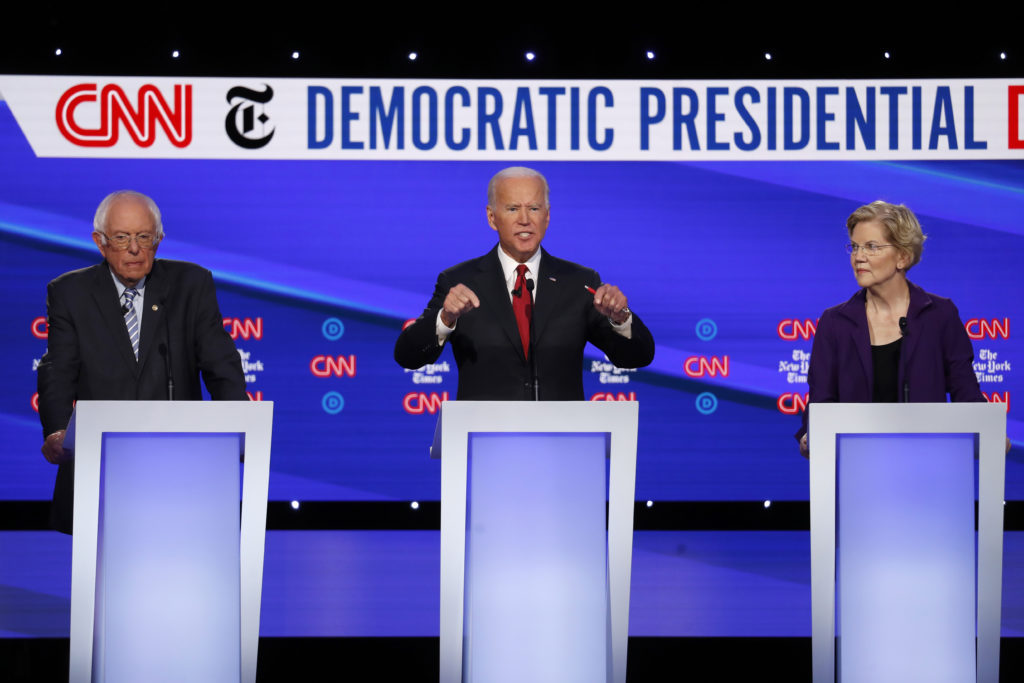
New uncertainty hangs over the Democratic presidential primary as 10 candidates meet on the debate stage once again. No longer is there a clear front-runner. The fight for African American voters is raging. And there are growing concerns that impeachment may become a distraction from the primary. Those issues and more will play out Wednesday night when the Democratic Party’s top 10 face off in Atlanta just 75 days before primary voting begins. Seven big questions heading into the debate, to be carried on MSNBC: WHO IS THE FRONT-RUNNER? Turbulent polling across the early voting states has created a murky picture of the top tier of the 2020 class. As much as Joe Biden is still a front-runner, so are Elizabeth Warren, Pete Buttigieg and Bernie Sanders. The question is who gets the front-runner treatment in Wednesday’s debate. Warren was under near-constant attack last month as a new leader. Will Warren continue to face the heat, or will the ascendant Buttigieg or weakening Biden take more hits? HOW WILL OBAMA PLAY? Former President Barack Obama, the most popular Democrat in America, inserted himself into the 2020 primary in recent days by warning candidates against moving too far to the left. His comments create a challenge for Warren and Sanders and an opening for moderates Buttigieg, Biden and Amy Klobuchar to attack. At the same time, Obama’s involvement offers a powerful reminder of the massive role African Americans will play in the presidential nomination process. As we know, all candidates not named Biden have serious work to do when it comes to winning over the black vote. Race and Obama’s legacy could play a major role in shaping the action. WHAT SAY YOU, IMPEACHMENT JURY? They have all come out in favor of impeachment — some more aggressively than others — but it’s noteworthy that five of the 10 Democrats onstage will serve as jurors in the Senate impeachment trial should the House vote to impeach President Donald Trump. It’s a complicated topic for Democrats. Some senators worry that a prospective impeachment trial will interfere with their ability to court voters early next year. Others fear that impeachment could hurt their party’s more vulnerable candidates in down-ballot elections next year. Either way, what the prospective jurors do or don’t say on the debate stage could be relevant if and when the Senate holds an impeachment trial, which is increasingly likely. WILL THEY BASH THE BILLIONAIRES? Never before has wealth been under such aggressive attack in a presidential primary election. And with one billionaire onstage and another likely to join the field in the coming days, the billionaire bashing could reach new heights. Tom Steyer has largely gone under the radar, but the even wealthier Michael Bloomberg has generated tremendous buzz as he steps toward a run of his own. Of the two, only Steyer will be onstage, but expect Bloomberg’s shadow in particular to generate passionate arguments about wealth and the role of money in politics. WILL SOMEONE STAND UP FOR THE ESTABLISHMENT? Biden continues to be the favorite of many establishment Democrats, but his underwhelming candidacy has created an opening for another pragmatic-minded Democrat to step up. That’s why former Massachusetts Gov. Deval Patrick and Bloomberg are moving into the race. Buttigieg stepped aggressively into the establishment lane in the last debate, but many donors and elected officials remain skeptical of the 37-year-old small-city mayor’s chances. The opportunity is there for lower-tier candidates including Kamala Harris, Klobuchar and Steyer. DOES SHE HAVE A PLAN FOR THAT? No single issue has dominated the initial Democratic primary debates more than health care, and it’s safe to assume that will be the case again Wednesday night. And no one has more riding on that specific debate than Warren, who hurt herself last month by stumbling through questions about the cost of her single-payer health care plan. Given that policy specifics make up the backbone of her candidacy, she can’t afford another underwhelming performance on the defining policy debate of the primary season. Expect the policy-minded senator to have a new strategy this time around. CAN THEY SAVE THEMSELVES? New Jersey Sen. Cory Booker, Hawaii Rep. Tulsi Gabbard, businessman Andrew Yang and Steyer are under enormous pressure to break out given their status as the only candidates onstage who haven’t yet qualified for the December debate. They likely won’t have the same number of opportunities to speak as their higher-polling rivals, but these are dire times for the underdogs. They need to do something if they expect to stay relevant in the 2020 conversation. By Steve Peoples AP National Political Writer. Catch up on the 2020 election campaign with AP experts on our weekly politics podcast, “Ground Game.” Republished with the permission of the Associated Press.
Michael Bloomberg opens door to 2020 Democratic run for president
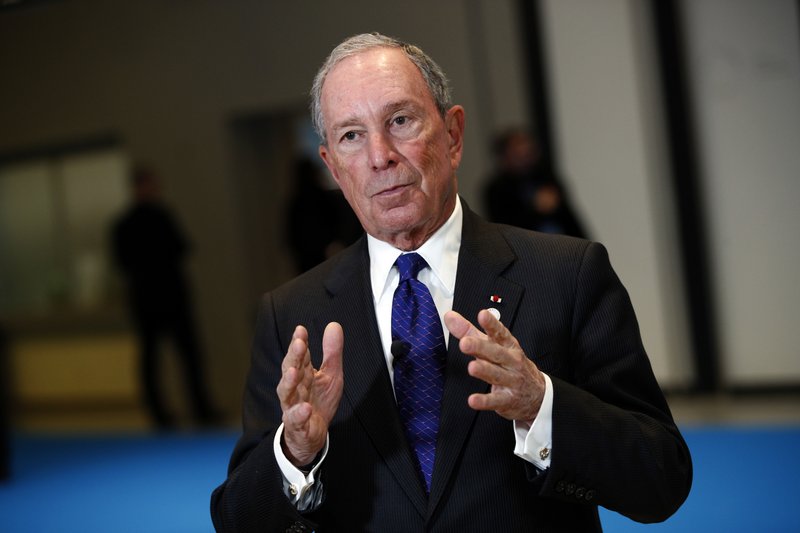
Michael Bloomberg, the billionaire former mayor of New York City, is opening the door to a 2020 Democratic presidential campaign, warning that the current field of candidates is ill equipped to defeat President Donald Trump. Full Coverage: Election 2020 Bloomberg, who initially ruled out a 2020 run, has not made a final decision on whether to jump into the race. If he were to launch a campaign, it could dramatically reshape the Democratic contest less than three months before primary voting begins. The 77-year-old has spent the past few weeks talking with prominent Democrats about the state of the 2020 field, expressing concerns about the steadiness of former Vice President Joe Biden’s campaign and the rise of liberal Massachusetts Sen. Elizabeth Warren, according to people with knowledge of those discussions. In recent days, he took steps to keep his options open, including moving to get on the primary ballot in Alabama ahead of the state’s Friday filing deadline. In a statement on Thursday, Bloomberg adviser Howard Wolfson said the former mayor believes Trump “represents an unprecedented threat to our nation” and must be defeated. “But Mike is increasingly concerned that the current field of candidates is not well positioned to do that,” Wolfson said. Bloomberg’s moves come as the Democratic race enters a crucial phase. Biden’s front-runner status has been vigorously challenged by Warren and Vermont Sen. Bernie Sanders, who are flush with cash from small-dollar donors. But both are viewed by some Democrats as too liberal to win in a general election faceoff with Trump. Despite a historically large field, some Democrats anxious about defeating Trump have been looking for other options. Former Attorney General Eric Holder and former Massachusetts Gov. Deval Patrick have quietly had conversations with supporters urging them to consider a run, but neither appears likely to get in the race. Bloomberg, a Republican-turned-independent who registered as a Democrat last year, has flirted with a presidential run before but ultimately backed down, including in 2016. He endorsed Hillary Clinton in that race and, in a speech at the Democratic Party convention, pummeled Trump as a con who has oversold his business successes. Bloomberg plunged his efforts — and his money — into gun control advocacy and climate change initiatives. He again looked seriously at a presidential bid earlier this year, traveling to early voting states and conducting extensive polling, but decided not to run in part because of Biden’s perceived strength. Biden did not address Bloomberg’s potential candidacy at a fundraiser Thursday night in Boston. With immense personal wealth, Bloomberg could quickly build out a robust campaign operation across the country. Still, his advisers acknowledge that his late entry to the race could make competing in states like Iowa and New Hampshire, which have been blanketed by candidates for nearly a year, difficult. Instead, they previewed a strategy that would focus more heavily on the March 3 “Super Tuesday” contests, including in delegate-rich California. Some Democrats were skeptical there would be a groundswell of interest in the former New York mayor. “There are smart and influential people in the Democratic Party who think a candidate like Bloomberg is needed,” said Jennifer Palmieri, who advised Clinton’s 2016 campaign. “But there is zero evidence that rank-and-file voters in the early states of Iowa and New Hampshire feel the same.” Still, others credited Bloomberg with taking on “some of America’s biggest challenges” and finding success. “While this is not an endorsement, Michael Bloomberg is a friend and I admire his track record as a successful business leader and Mayor who finds practical solutions to some of America’s biggest challenges, from creating good jobs to addressing the opioid crisis and fighting for common-sense gun safety,” said Rhode Island Gov. Gina Raimondo, a Democrat. Bloomberg reached out to several prominent Democrats on Thursday, including Raimondo. One Democrat Bloomberg hasn’t spoken to as he’s reconsidered his run is former President Barack Obama. Bloomberg would pose an immediate ideological challenge to Biden, who is running as a moderate and hopes to appeal to independents and Republicans who have soured on Trump. But the billionaire media mogul with deep Wall Street ties could also energize supporters of Warren and Sanders, who have railed against income inequality and have vowed to ratchet up taxes on the wealthiest Americans. “He’s a literal billionaire entering the race to keep the progressives from winning,” said Rebecca Katz, a New York-based liberal Democratic strategist. “He is the foil.” Warren on Thursday tweeted: “Welcome to the race, @MikeBloomberg!” and linked to her campaign website, saying he would find there “policy plans that will make a huge difference for working people and which are very popular.” Bloomberg would face other challenges as well, particularly scrutiny of his three terms as mayor. He has defended the New York Police Department’s use of the controversial stop-and-frisk policy that has been criticized as targeting African Americans and Hispanics. Black voters in particular are one of the most powerful constituencies in Democratic politics. Bloomberg will have to move quickly in the coming days and weeks to get on the ballot in many of the primary states, including Alabama. New Hampshire’s filing deadline is Nov. 15. In Arkansas, another Super Tuesday state, a Democratic Party spokesman said a person representing a “mystery candidate” reached out Thursday afternoon asking about the requirements to join the ballot. Reed Brewer, communications director for the Arkansas Democrats, said he walked the individual through the process — which simply requires filing documentation with both the state party and secretary of state, as well as paying a $2,500 fee — and was assured that the fee would be “no problem” for the mystery candidate. There is no filing requirement for a candidate to run in the Iowa caucuses, which are a series of Democratic Party meetings, not state-run elections. It means a candidate can enter the race for the Feb. 3 leadoff contest at any time. Associated Press writers Jill Colvin in Washington; Alexandra Jaffe and Thomas Beaumont in Des Moines,
