
House censures Rep. Adam Schiff over Trump-Russia investigations

The House voted Wednesday to censure California Rep. Adam Schiff for comments he made several years ago about investigations into Donald Trump’s ties to Russia, rebuking the Democrat and frequent critic of the former president along party lines. Schiff, who will stand in front of the House while the resolution is read, becomes the 25th House lawmaker to be censured. He was defiant ahead of the vote, saying he will wear the formal disapproval as a “badge of honor” and charged his GOP colleagues of doing the former president’s bidding. “I will not yield,” Schiff, who is running for the Senate in his home state, said during debate over the measure. “Not one inch.” More than 20 Republicans voted with Democrats last week to block the censure resolution, but they changed their votes this week after the measure’s sponsor, Republican Rep. Anna Paulina Luna of Florida, removed a provision that could have fined Schiff $16 million if the House Ethics Committee determined he lied. Several of the Republicans who opposed the resolution last week said they opposed fining a member of Congress in that manner. The final vote was 213-209. The revised resolution says Schiff held positions of power during Trump’s presidency and “abused this trust by saying there was evidence of collusion between Trump’s campaign and Russia.” Schiff was one of the most outspoken critics of the former president as both the Justice Department and the Republican-led House launched investigations into Trump’s ties to Russia in 2017. Both investigations concluded that Russia intervened in the 2016 presidential election but neither found evidence of a criminal conspiracy. “Representative Schiff purposely deceived his Committee, Congress, and the American people,” the resolution said. Schiff, the former Democratic chairman of the House Intelligence Committee and the lead prosecutor in Trump’s first impeachment trial, has long been a top Republican political target. Soon after taking back the majority this year, Republicans blocked him from sitting on the intelligence panel. The House has only censured two other lawmakers in the last 20 years. Republican Rep. Paul Gosar of Arizona was censured in 2021 for tweeting an animated video that depicted him striking Rep. Alexandria Ocasio-Cortez, D-N.Y., with a sword. Former Democratic Rep. Charlie Rangel of New York was censured in 2010 for serious financial and campaign misconduct. The censure itself carries no practical effect, except to provide a historic footnote that marks a lawmaker’s career. But the GOP resolution would also launch an ethics investigation into Schiff’s conduct. While Schiff did not initiate the 2017 congressional investigation into Trump’s Russia ties — then-House Intelligence Committee Chairman Devin Nunes, a Republican who later became one of Trump’s most ardent defenders, started it — Republicans arguing in favor of his censure Wednesday blamed him for what they said was the fallout of that probe, and of the separate investigation started that same year by Trump’s own Justice Department. Luna said that Schiff’s comments that there was evidence against Trump “ripped apart American families across the country” and that he was “permanently destroying family relationships.” Several blamed him for the more than $30 million spent by then-special counsel Robert Mueller, who led the Justice Department probe. Schiff said the censure resolution “would accuse me of omnipotence, the leader of some a vast Deep State conspiracy, and of course, it is nonsense.” Democrats aggressively defended their colleague. Maryland Rep. Jamie Raskin, who led Trump’s second impeachment, called the effort an “embarrassing revenge tour on behalf of Donald Trump.” Mueller, who led the two-year Justice Department investigation, determined that Russia intervened on the campaign’s behalf and that Trump’s campaign welcomed the help. But Mueller’s team did not find that the campaign conspired to sway the election, and the Justice Department did not recommend any criminal charges. The House intelligence committee probe launched by Nunes similarly found that Russia intervened in the election but that there was no evidence of a criminal conspiracy. Schiff was the top Democrat on the panel at the time. Schiff said last week that the censure resolution was “red meat” that Speaker Kevin McCarthy was throwing to his conference amid squabbles over government spending. Republicans are trying to show their fealty to Trump, Schiff said. He said he warned the country during impeachment proceedings three years ago that Trump “would go on to do worse. And, of course, he did worse in the form of a violent attack on the Capitol.” After Democrats won the House majority in 2018, the House impeached Trump for abuse of power after he threatened to withhold military aid to Ukraine and urged the country’s president to investigate then-candidate Joe Biden. Schiff was the lead House prosecutor making the case for conviction to the Senate, arguing repeatedly that “right matters.” The Republican-led chamber ultimately acquitted him. Trump was impeached a second time a year later, after he had left office, for his role in the January 6, 2021, insurrection at the Capitol. The Senate again acquitted Trump. In the censure resolution against Schiff, Luna also cited a report released in May from special counsel John Durham that found that the FBI rushed into its investigation of Trump’s campaign and relied too much on raw and unconfirmed intelligence. Durham said investigators repeatedly relied on “confirmation bias,” ignoring or rationalizing away evidence that undercut their premise of a Trump-Russia conspiracy as they pushed the probe forward. But he did not allege that political bias or partisanship were guiding factors for the FBI’s actions. Trump had claimed that Durham’s report would reveal the “crime of the century” and expose a “deep state conspiracy” by high-ranking government officials to derail his candidacy and later his presidency. But the investigation yielded only one conviction — a guilty plea from a little-known FBI employee — and the only two other cases that were brought both ended in acquittals at trial. On Wednesday, just before the vote, Schiff’s campaign sent out a fundraising email that said Luna had introduced “yet ANOTHER resolution to censure me.” “The vote and debate will happen imminently,” the email read,
Aide who testified against Donald Trump escorted out of White House
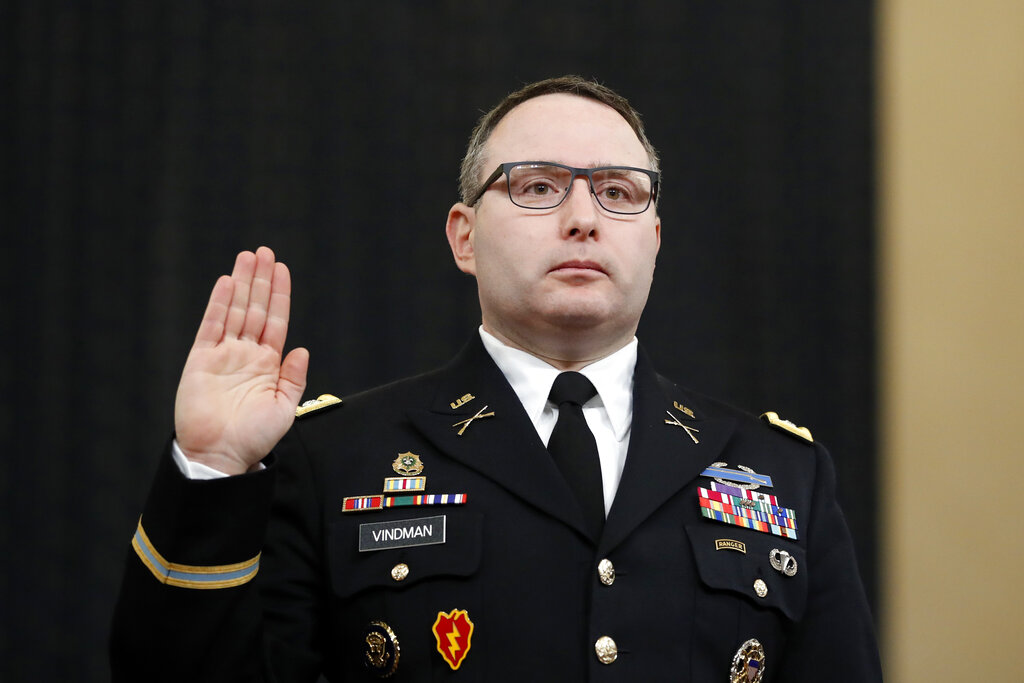
Vindman’s status had been uncertain since he testified in a congressional hearing.
Donald Trump impeached by U.S. House on 2 charges
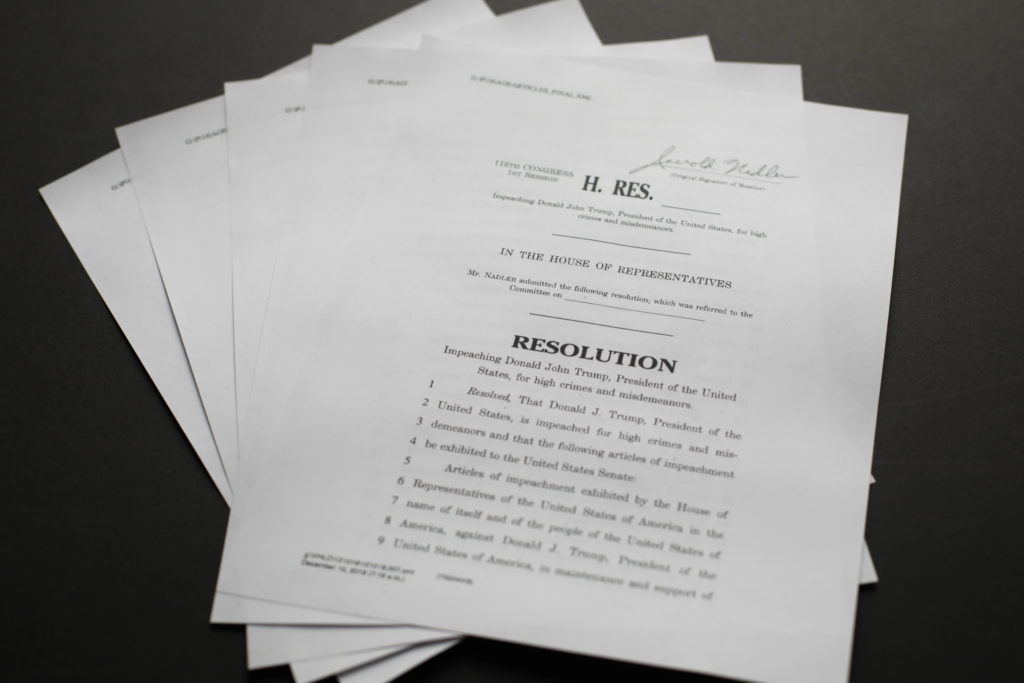
President Donald Trump was impeached by the U.S. House of Representatives Wednesday night, becoming only the third American chief executive to be formally charged under the Constitution’s ultimate remedy for high crimes and misdemeanors. The historic vote split along party lines, much the way it has divided the nation, over a charge that the 45th president abused the power of his office by enlisting a foreign government to investigate a political rival ahead of the 2020 election. The House then approved a second charge, that he obstructed Congress in its investigation. The articles of impeachment, the political equivalent of an indictment, now go to the Senate for trial. If Trump is acquitted by the Republican-led chamber, as expected, he still would have to run for reelection carrying the enduring stain of impeachment on his purposely disruptive presidency. He saw the blame flowing the other direction. He told a political rally in Michigan that “crazy Nancy Pelosi’s House Democrats have branded themselves with an eternal mark of shame.” The votes were 230 for impeachment and 197 against on the first count, 229-198 on the second. Democrats led Wednesday night’s voting, framed in what many said was their duty to protect the Constitution and uphold the nation’s system of checks and balances. Republicans stood by their party’s leader, who has frequently tested the bounds of civic norms. Trump called the whole affair a “witch hunt,” a “hoax” and a “sham,” and sometimes all three. The trial is expected to begin in January in the Senate, where a vote of two-thirds is necessary for conviction. While Democrats had the majority in the House to impeach Trump, Republicans control the Senate and few if any are expected to diverge from plans to acquit the president ahead of early state election-year primary voting. Pelosi, once reluctant to lead Democrats into a partisan impeachment, gaveled both votes closed, risking her majority and speakership to follow the effort to its House conclusion. “Today we are here to defend democracy for the people,” she said earlier during floor debate. Trump, who began Wednesday tweeting his anger at the proceedings, pumped his fist before an evening rally in Battle Creek, Michigan, boasting of “tremendous support” in the Republican Party and saying, “By the way it doesn’t feel like I’m being impeached.” No Republicans voted for impeachment, and Democrats had only slight defections on their side. Voting was conducted manually with ballots, to mark the moment. On the first article, abuse of power, two Democrats, Rep. Jeff Van Drew of New Jersey, who is considering switching parties to become a Republican, and Rep. Collin Peterson of Minnesota voted against impeaching Trump. On the second article, obstruction, those two and freshman Rep. Jared Golden of Maine voted against. Democratic Rep. Tulsi Gabbard of Hawaii, who is running for president, voted “present” on both. What Pelosi called a sad and solemn moment for the country, coming in the first year that Democrats swept control of the House, unfolded in a caustic daylong session that showcased the nation’s divisions — not only along party lines, but also by region, race and culture. The House impeachment resolution laid out in stark terms the two articles of impeachment against Trump stemming from his July phone call when he asked the Ukraine president for a “favor” — to announce it was investigating Democrats ahead of the 2020 election. He also pushed Ukrainian President Volodymyr Zelenskiy to probe unsubstantiated corruption allegations against Joe Biden, the former vice president and 2020 White House contender. At the time, Zelenskiy, a young comedian newly elected to politics, was seeking a coveted White House visit to show backing from the U.S. ally as it confronts a hostile Russia at its border. He was also counting on $391 million in military aid already approved by Congress. The White House delayed the funds, but Trump eventually released the money once Congress intervened. Narrow in scope but broad in its charge, the resolution said the president “betrayed the nation by abusing his high office to enlist a foreign power in corrupting democratic elections,” and then obstructed Congress’ oversight like “no president” in U.S. history. “President Trump, by such conduct, has demonstrated that he will remain a threat to national security and the Constitution if allowed to remain in office,” it said. Republicans argued that Democrats are impeaching Trump because they can’t beat him in 2020. “This vote is about one thing, and one thing only: They hate this president,” said Rep. Chris Stewart, R-Utah. “They want to take away my vote and throw it in the trash.” But Democrats warned the country cannot wait for the next election to decide whether Trump should remain in office because he has shown a pattern of behavior, particularly toward Russia, and will try to corrupt U.S. elections in 2020. “The president and his men plot on,” said Chairman Adam Schiff, Democrat-California, of the Intelligence Committee that led the inquiry. “The danger persists. The risk is real.” The outcome brings the Trump presidency to a milestone moment that has building almost from the time the New York businessman-turned-reality-TV host unexpectedly won the White House in 2016 amid questions about Russian interference in the U.S. election — and the rise of the “resistance.” Democrats drew from history, the founders and their own experiences, as minorities, women and some immigrants to the U.S., seeking to honor their oath of office to uphold the constitution. Rep. Lou Correa, Democrat-California, spoke in Spanish asking God to unite the nation. “In America,” said Rep. Hakeem Jeffries, Democrat-New York, “no one is above the law.” Republicans aired Trump-style grievances about what Arizona Rep. Debbie Lesko called a “rigged” process. “We face this horror because of this map,” said Rep. Clay Higgins, Republican-Alabama, before a poster of red and blue states. “They call this Republican map flyover country, they call us deplorables, they fear our faith, they fear our strength, they fear our unity, they fear our vote, and they fear our president.” The political fallout from the
Congress pushes ahead on Donald Trump impeachment with nation split
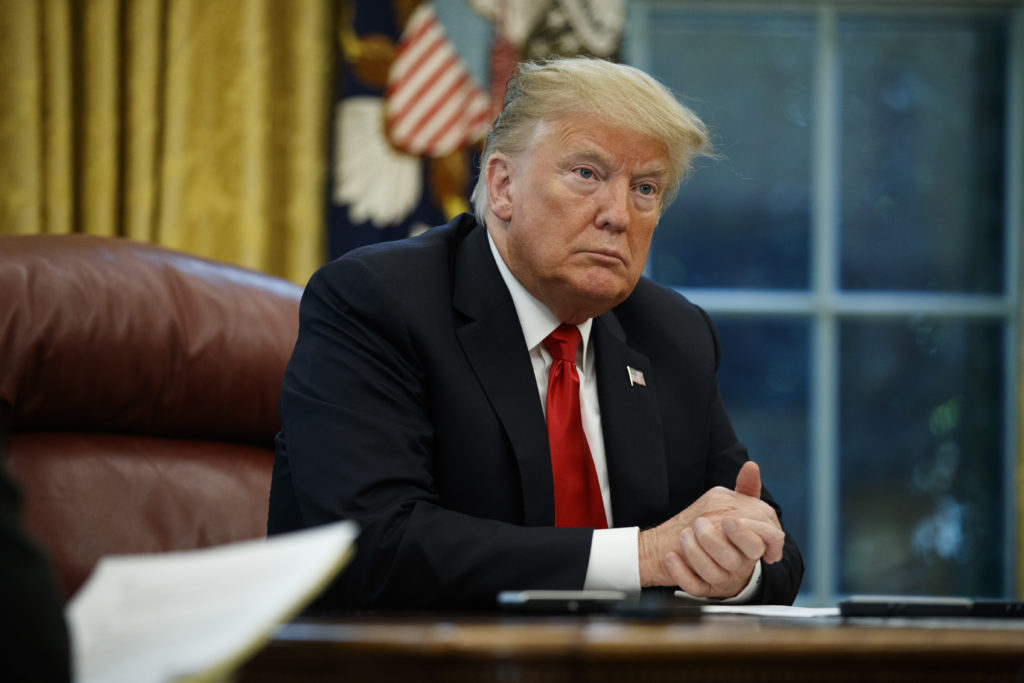
The House is plunging into a landmark impeachment week, with Democrats who once hoped to sway Republicans now facing the prospect of an ever-hardening partisan split over the question of removing President Donald Trump from office. Lawmakers were getting their first look at the House Intelligence Committee’s impeachment report Monday night behind closed doors. The findings are expected to forcefully make the Democrats’ case that Trump engaged in what Chairman Adam Schiff calls impeachable “wrongdoing and misconduct” in pressuring Ukraine to investigate Democrats and Joe Biden while withholding military aid to the ally. For Republicans offering an early rebuttal ahead of the report’s public release, the proceedings are simply a “hoax,” with Donald Trump insisting he did nothing wrong and his GOP allies in line behind him. Trump tweeted his daily complaints about it all and then added a suggestive, if impractical, question: “Can we go to Supreme Court to stop?” With the Judiciary Committee set to launch its first hearing Wednesday, the impeachment proceedings are presenting a historic test of political judgment in a case that is dividing Congress and the country. Departing for a NATO meeting in London, Trump criticized the House for pushing forward Monday with proceedings while he was heading overseas, a breach of political decorum that traditionally leaves partisan differences at the water’s edge. He predicted Republicans would actually benefit from the entire impeachment effort against him, though “it’s a disgrace for our country.” For the Democrats, House Speaker Nancy Pelosi faces a critical moment of her leadership as she steers the process ahead after resisting the impeachment inquiry through the summer, warning it was too divisive for the country and required bipartisan support. Speaking to reporters at the international climate conference in Madrid, Pelosi declined to engage with impeachment questions. “When we travel abroad, we don’t talk about the president in a negative way,” she said. “We save that for home.” Possible grounds for impeachment are focused on whether Trump abused his office as he pressed Ukrainian President Volodymyr Zelenskiy in a July 25 phone call to launch investigations into Trump’s political rivals. At the time, Trump was withholding $400 million in military aid, jeopardizing key support as Ukraine faced an aggressive Russia at its border. The report, which the Intelligence panel will vote on Tuesday and make public, also is expected to include evidence the Democrats say suggests obstruction of Congress, based on Trump’s instructions for his administration to defy subpoenas for documents and testimony. The next step comes when the Judiciary Committee gavels open its own hearing with legal experts to assess the findings and consider potential articles of impeachment ahead of a possible vote by the full House by Christmas. That would presumably send it to the Senate for a trial in January. The Democratic majority on the Intelligence Committee says its report, compiled after weeks of testimony from current and former diplomats and administration officials, will speak for itself in laying out the president’s actions toward Ukraine. Republicans pre-empted the report’s public release with their own 123-page rebuttal. In it, they claim there’s no evidence Trump pressured Zelenskiy. Instead, they say Democrats just want to undo the 2016 election. Republicans dismiss witness testimony of a shadow diplomacy being run by Trump lawyer Rudy Giuliani, and they rely on the president’s insistence that he was merely concerned about “corruption” in Ukraine — though the White House transcript of Trump’s phone call with Zelenskiy never mentions the word. “They are trying to impeach President Trump because some unelected bureaucrats chafed at an elected President’s ‘outside the beltway’ approach to diplomacy,” according to the report from Republican Reps. Devin Nunes of California, Jim Jordan of Ohio and Michael McCaul of Texas. Rep. Jim Jordan, Republican-Ohio, appeared to be the only lawmaker who viewed the Democratic report Monday evening when it became available behind closed doors for members of the intelligence panel. He said it was “long.” Jordan declined to discuss details, but said it’s the same “lame case” Democrats presented throughout impeachment hearings. “The president did nothing wrong,” Jordan said. “The facts are on our side.” Trump on Monday pointed to Zelenskiy’s recent comments as proof he did nothing wrong. The Ukrainian president said in an interview he never talked to Trump “from the position of a quid pro quo,” but he didn’t say Trump did nothing wrong. In fact, he had strong criticism for Trump’s actions in the Time magazine interview. With Ukraine at war with Russia, he said, its partners “can’t go blocking anything for us.” Schiff said the GOP response was intended for an audience of one, Trump, whose actions are “outside the law and constitution.” The finished Intelligence Committee report sets up the week’s cascading actions. Democrats could begin drafting articles of impeachment against the president in a matter of days, with voting in the Judiciary Committee next week. Republicans on the committee, led by Rep. Doug Collins of Georgia, plan to use procedural moves to stall the process and portray the inquiry as unfair to the president. The White House declined an invitation to participate, with Counsel Pat Cipollone denouncing the proceedings as a “baseless and highly partisan inquiry” in a letter to Judiciary Chairman Jerrold Nadler, Democart-New York. Trump had previously suggested that he might be willing to offer written testimony under certain conditions, though aides suggested they did not anticipate Democrats would ever agree to them. Cipollone’s letter of nonparticipation applied only to the Wednesday hearing, and he demanded more information from Democrats on how they intended to conduct further hearings before Trump would decide whether to participate. Nadler said Monday if the president really thought his call with Ukraine was “perfect,” as he repeatedly says, he would “provide exculpatory information that refutes the overwhelming evidence of his abuse of power.” House rules provide the president and his attorneys the right to cross-examine witnesses and review evidence before the committee, but little ability to bring forward witnesses of their own. Asked why not have his lawyers participate, Trump said
The Latest: Representative Devin Nunes reads White House memo at start of hearing
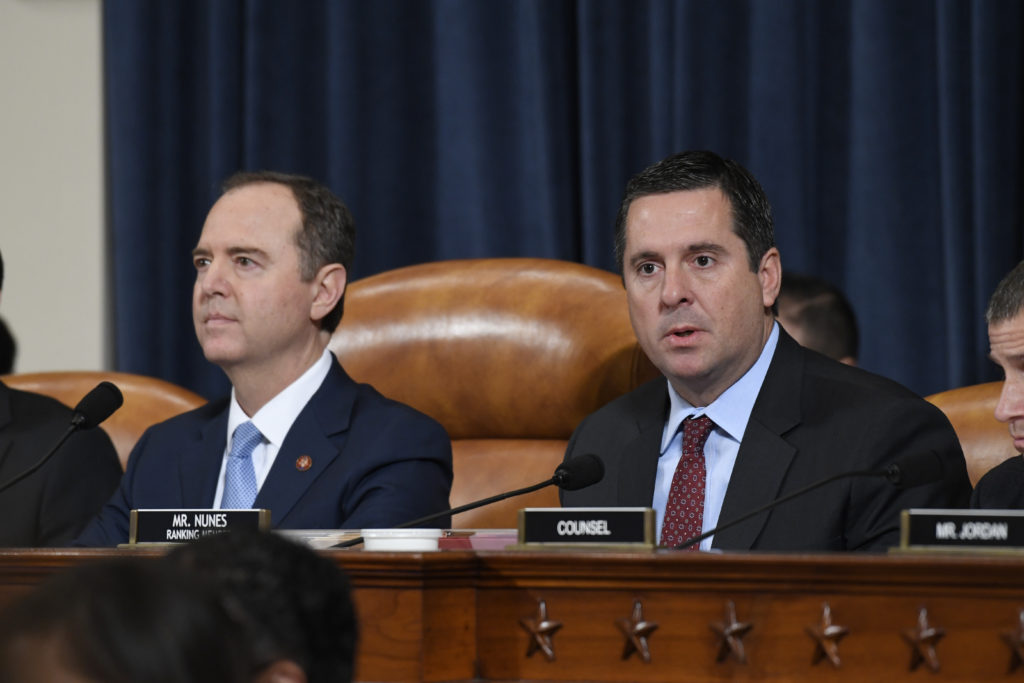
The Latest on President Donald Trump and House impeachment hearings (all times local): 9:35 a.m. The top Republican on the House Intelligence Committee has read aloud a memo circulated by the White House that summarizes the first conversation between President Donald Trump and his newly elected Ukrainian counterpart. The first conversation took place in April after the election of Volodymyr Zelenskiy. It consists largely of pleasantries and words of congratulations. The White House made a record of the conversation public at the start of the House impeachment hearing on Friday. Rep. Devin Nunes, the top Republican on the House Intelligence Committee, read the document aloud to suggest that there was nothing untoward in the conversation. Rep. Adam Schiff, the committee chairman, said Trump should also “release the thousands of other records that he has instructed the State Department not to release.” ___ 9:30 a.m. House Intelligence Committee Chairman Adam Schiff says former Ambassador to Ukraine Marie Yovanovitch was “smeared and cast aside” by President Donald Trump because she was considered an obstacle to his personal and political agenda. Opening the second public House impeachment hearing, Schiff said the question isn’t whether Trump could recall Yovanovitch but “why would he want to?” Yovanovitch testified behind closed doors last month that she was told to “watch her back” before she was ousted in May as Trump lawyer Rudy Giuliani led a shadow foreign policy. Schiff said pushback at the State Department failed when it became clear that Trump wanted her gone. Republican Rep. Devin Nunes said the hearings were “spectacles” for Democrats to “advance their operation to topple a duly elected president.” ___ 9 a.m. The House has opened a second day of Trump impeachment hearings with Marie Yovanovitch, the former U.S. ambassador to Ukraine who was suddenly recalled back to the U.S. by President Donald Trump. Yovanovitch is expected to testify about her ouster, which another diplomat has called a “smear” campaign against her by Trump allies. The live public hearings by the House Intelligence Committee are being held to determine whether Trump should be removed from office over his actions toward Ukraine. The investigation centers on Trump’s July 25 phone call when he asked the new Ukraine president for a favor — to investigate Democrats and potential 2020 rival Joe Biden — as the White House was withholding military aid to the Eastern European nation. Yovanovitch and others have described Rudy Giuliani, Trump’s personal lawyer, as leading what one called an “irregular channel” outside the diplomatic mainstream of U.S.-Ukraine relations. __ 8:35 a.m. The former U.S. Ambassador to Ukraine has arrived on Capitol Hill to testify in the Trump impeachment inquiry. Marie Yovanovitch is the witness for the second day of public hearings. She’s expected to tell lawmakers about her sudden ouster as President Donald Trump recalled the career ambassador back to the United States. Other diplomats testifying in the investigation have defended Yovanovitch, saying she was the target of “smear” campaign by the president’s allies. She has served both Democratic and Republican presidents. The rare impeachment inquiry is focused on Trump’s actions toward Ukraine. Democrats say it amounts to bribery, as the president withheld military aid to Ukraine while he pushed the country to investigate rival Democrats, including Joe Biden. Trump calls the probe a hoax and says he did nothing wrong. __ 12:15 a.m. The House will hear from a singular witness Friday in the Trump impeachment hearings: Marie Yovanovitch, the former U.S. ambassador to Ukraine who was targeted by the president’s allies in a “smear” campaign now central to the probe. The career diplomat, who served both Republican and Democratic presidents, is expected to relay her striking story of being suddenly recalled by Donald Trump and told to “watch my back.” It was all part of a swiftly developing series of events that sounded alarms about the White House’s shadow foreign policy. Friday is the second day of public hearings to consider removing America’s 45th president. Democrats and Republicans are hardening their messages to voters as they try to sway voter opinion amid a deeply polarized public. The House will hear from a singular witness Friday in the Trump impeachment hearings: Marie Yovanovitch, the former U.S. ambassador to Ukraine who was targeted by the president’s allies in a “smear” campaign now central to the inquiry. Republished with the permission of the Associated Press.
DOJ offers new briefing as lawmakers dispute Donald Trump spy claim
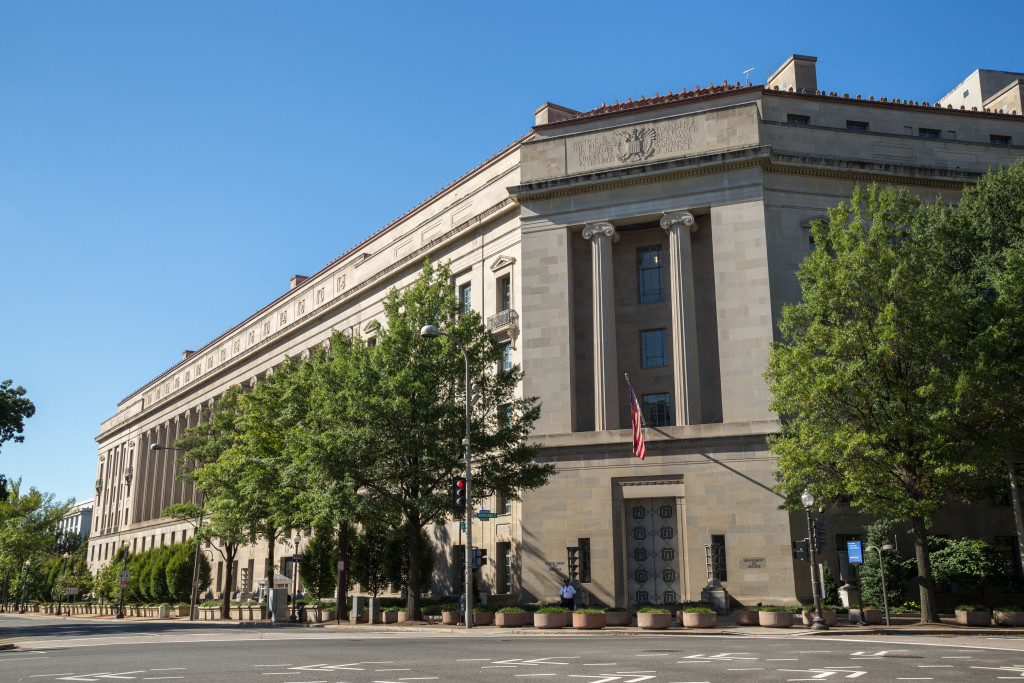
The Justice Department says it will offer a third classified briefing for lawmakers next week as House Republicans push for documents related to the use of an FBI informant who spoke to members of President Donald Trump’s presidential campaign in 2016. The department’s late Wednesday offer comes as three Republicans who attended classified briefings on the subject last month have contradicted President Donald Trump’s claims that there was a “spy” in his campaign. Trump insisted in a series of angry tweets last month that the agency planted a spy “to help Crooked Hillary win,” referring to his Democratic opponent Hillary Clinton. At issue is the FBI’s use of a longtime government informant in its investigation into whether Russia was trying to sway the election. House Intelligence Committee Chairman Devin Nunes, R-Calif., demanded documents on the informant and its contact with Trump campaign officials, while Trump dubbed the matter “spygate” and said it was “starting to look like one of the biggest political scandals in U.S. history.” Under Trump’s orders, the Justice Department held two briefings May 24. But House Speaker Paul Ryan, R-Wis., said Wednesday that he agreed with House Oversight and Reform Chairman Trey Gowdy, R-S.C., that there is no evidence of a planted spy. Senate Intelligence Committee Chairman Richard Burr, R-N.C., also said he has seen no evidence of that. Still, Ryan said Congress has “more digging to do.” Nunes has said the committee is still waiting for documents after the briefings, and Ryan backed him on that Wednesday. “We have some more documents to review. We still have some unanswered questions,” Ryan said. Late Wednesday evening, a senior department official said the Justice Department and the FBI would offer an additional briefing to the so-called “Gang of 8” that includes bipartisan congressional leaders and the top Republicans and Democrats on the House and Senate intelligence committees. The official said they would provide new documents and also “the documents that were available for review but not inspected by the members at the previous briefing.” The official said they are prepared to “brief members on certain questions specifically raised by Ryan and other members.” The official declined to be named because the briefings are classified. The department originally denied Congress access to any of the documents, citing national security concerns. But they eventually relented after pressure from Trump, Nunes and Ryan. The Justice Department and FBI believe they “can provide information that is directly responsive to congressional inquiries in a manner that is consistent with its national security and law enforcement responsibilities, and is pleased to do so,” the official said in a statement. Though senators are invited to the briefing, there has been less interest in that chamber in prolonging the public fight over information concerning the informant. Senate Majority Leader Mitch McConnell said after the briefing that he learned “nothing particularly surprising.” On Wednesday, Burr appeared ready to move on, saying the briefing he attended “sufficiently covered everything to do with this right now.” After the original briefings, Gowdy was the first to disagree with Trump on the matter, saying days later that the FBI was doing its duty. “I am even more convinced that the FBI did exactly what my fellow citizens would want them to do when they got the information they got,” Gowdy said on Fox News last week. “And that it has nothing to do with Donald Trump.” Gowdy added, in a separate interview on “CBS This Morning,” that such informants are used all the time and “the FBI, if they were at the table this morning, they would tell you that Russia was the target and Russia’s intentions toward our country were the target.” Ryan told reporters on Wednesday that he thinks Gowdy’s “initial assessment is accurate,” and he has seen “no evidence to the contrary” of what Gowdy said. Hours after Ryan’s comments, Burr told The Associated Press that he, too, agreed with Gowdy. “I have no disagreement with the description Trey Gowdy gave,” Burr said. Democrats made similar comments immediately after the briefing. In a joint statement, the four Democrats who attended said “there is no evidence to support any allegation that the FBI or any intelligence agency placed a ‘spy’ in the Trump Campaign, or otherwise failed to follow appropriate procedures and protocols.” That statement was issued by Senate Democratic leader Chuck Schumer, House Democratic leader Nancy Pelosi, and the top Democrats on the Senate and House intelligence panels, Sen. Mark Warner of Virginia and Rep. Adam Schiff of California. Republished with the permission of the Associated Press.
Where did Donald Trump’s claim of an FBI mole come from?

President Donald Trump and his supporters are circulating an explosive theory: The FBI, they say, may have planted a mole, or “spy,” inside the 2016 campaign to bring him down. The unverified allegation has lit up conservative media and earned space on Trump’s Twitter feed just as special counsel Robert Mueller enters his second year in the Russia probe. But where did the allegation come from? The AP takes a look at what we know so far and how Trump has used similar claims in the past to try to discredit the Russia investigation. The ‘Wiretap’ Trump and his supporters have long floated the idea of an opposing “deep state” at the Justice Department and the FBI, including allegations that President Barack Obama ordered wiretaps on his phones during the election. The Justice Department denied such a wiretap, and House intelligence committee Chairman Devin Nunes, an ardent Trump supporter, later confirmed that an Obama-ordered wiretap never existed. But like many conspiracy theories, it appeared to grow out of a less sensational truth: U.S. surveillance on foreign officials — a common practice in the world of spycraft — likely picked up what’s called “incidental” communications with Americans in Trump’s orbit. That included former national security adviser Michael Flynn’s discussions with Russia’s ambassador to the U.S. during the presidential transition. The Mole At issue now isn’t a wiretap, but the identity of a top-secret FBI informant who allegedly helped investigators on the Russia probe. Trump and his lawyer, Rudy Giuliani, say they suspect the FBI planted someone inside the campaign as a setup. “Reports are there was indeed at least one FBI representative implanted, for political purposes, into my campaign for president,” Trump tweeted early Friday. “It took place very early on, and long before the phony Russia Hoax became a ‘hot’ Fake News story. If true – all time biggest political scandal!” This claim actually isn’t new for Trump supporters either. But it seemed to find new life after news reports confirmed the existence of a confidential source in the Russia investigation. The conservative National Review suggested the puzzle pieces all point toward a mole, attracting Trump’s attention. “If so, this is bigger than Watergate!” Trump tweeted. What We Know Last August, Glenn Simpson of Fusion GPS, who compiled opposition research on Trump, told a Senate panel that former British spy Christopher Steele relied on an “internal Trump campaign source” to compile his now-famous Trump dossier. A person familiar with Simpson’s testimony told the AP at the time that he did not mean to suggest the FBI had a direct source of information from within the Trump campaign. Then last week, The Washington Post reported on the existence of a U.S. citizen who had provided intelligence to the CIA and FBI in the Russia probe. The source had become of particular interest to Nunes, whose committee was quick to dismiss any allegations of collusion between Trump associates and Russia. According to the Post, the Justice Department clashed with Nunes and refused his request for specific details on the person. On Wednesday, The New York Times seemed to lend credence to the idea by reporting that “at least one government informant” met several times with former Trump campaign advisers George Papadopoulos and Carter Page. On Friday, the Times expanded its description, saying the informant is an American academic who teaches in Britain and was sent by the FBI to talk to Papadopoulos and Page because they were suspected of having “suspicious contacts” linked to Russia. What We Don’t Know A person who provides information to investigators wasn’t necessarily planted by authorities. The person could have been someone already working with Trump’s campaign before they agreed to provide information. Or it could be someone who wasn’t affiliated with the campaign and just interacted with people around it. The FBI and Mueller have been extraordinarily tight-lipped about the investigation, providing few public clues to what sources they are relying on or where the probe is headed. Trump and his lawyer, Giuliani, acknowledge they don’t have the answers either. But that hasn’t stopped them from floating the mole theory as a way of undercutting Mueller’s work as an attempt by liberals to bring down the president. Giuliani said in a Friday interview on CNN’s “New Day” that he doesn’t know for sure what happened — and the president doesn’t either. But “for a long time, we’ve been told that there’s been some kind of infiltration,” he said. Republished with the permission of the Associated Press.
Devin Nunes threatens Jeff Sessions with contempt charges over Russia
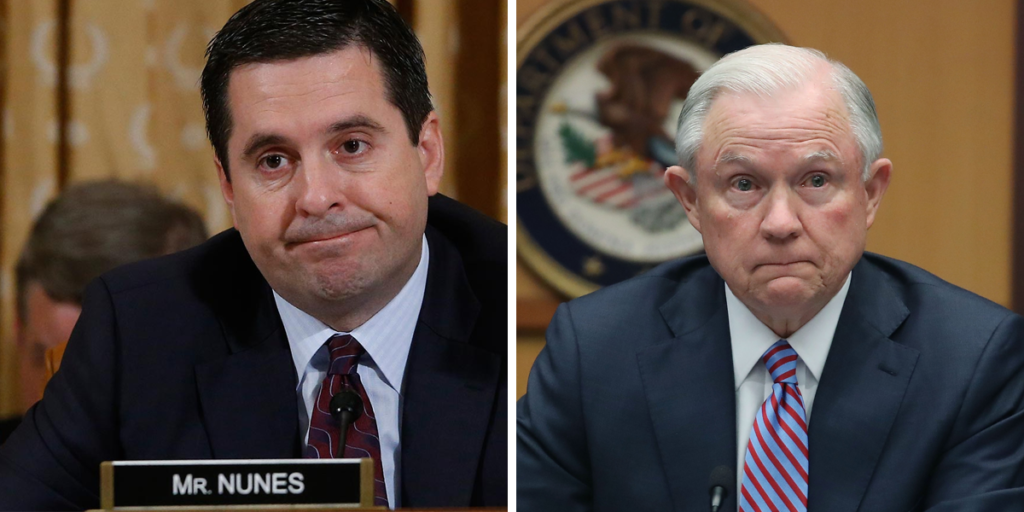
House Intelligence Committee Chairman Devin Nunes is threatening to hold Attorney General Jeff Sessions in contempt of Congress for failing to hand over classified materials related to the Russia investigation. Nunes phoned into Fox & Friends Sunday to explain that two weeks ago, he sent Sessions a classified letter demanding “very important” documents regarding counterintelligence investigations. He claims he was ignored. Then, last week, he sent a subpoena for the information. “On Thursday, we discovered that they are not going to comply with our subpoena on very important information that we need,” Nunes explained, adding, “The only thing left to do is we have to move quickly to hold the attorney general of the United States in contempt and that is what I will press for this week.” The Department of Justice (DOJ) pushed back on Sunday, and released a letter they sent to Nunes on Thursday, May 3, which addressed the classified information Nunes had requested.According to the letter, Nunes had asked for information on a specific individual, that the DOJ considers to be a very valuable person for a counterintelligence operation. “The Department has determined that, consistent with applicable law and longstanding Executive Branch policy, it is not in a position to provide information responsive to your request regarding a specific individual,” Assistant Attorney General Stephen Boyd wrote in a signed letter. “Disclosure of responsive information to such requests can risk severe consequences, including potential loss of human lives, damage to relationships with valued international partners, compromise of ongoing criminal investigations, and interference with intelligence activities.” Boyd continued, “The Department and its intelligence community partners would welcome the opportunity to discuss whether there are other ways to accommodate the House Permanent Select Committee on Intelligence’s oversight inquiry.”
Hillary Clinton lost, but Republicans still want to investigate her
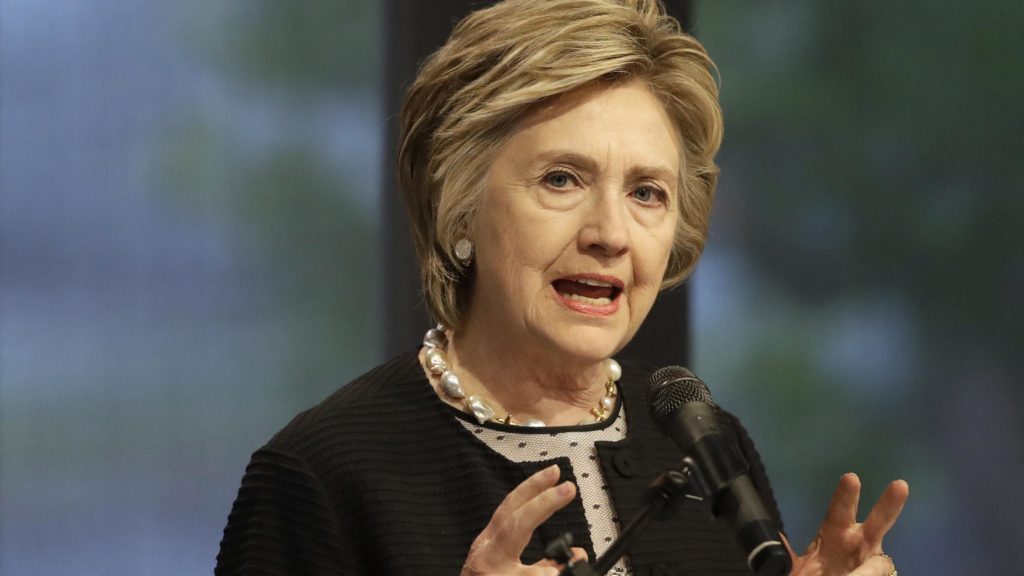
Democrat Hillary Clinton lost the 2016 election to President Donald Trump, but some Republicans in Congress are intensifying their calls to investigate her and other Obama administration officials. As investigations into Russian meddling and possible links to Trump’s campaign have escalated on both sides of the Capitol, some Republicans argue that the investigations should have a greater focus on Democrats. Democrats who have pushed the election probes “have started a war of investigative attrition,” said GOP Rep. Steve King of Iowa, a member of the House Judiciary Committee. Several officials from former President Barack Obama’s administration and Clinton’s campaign have appeared before or been interviewed by the House and Senate Intelligence Committees as part of the Russia investigation, along with Trump campaign officials. The GOP-led committees are investigating whether Trump’s campaign had any links to Russian interference in last year’s election. The chairman of the House Intelligence Committee, Rep. Devin Nunes, R-Calif., has continued a separate investigation into whether Obama administration officials inappropriately made requests to “unmask” identities of Trump campaign officials in intelligence reports. The House Judiciary Committee, which has declined to investigate the Russian meddling, approved a resolution this past week to request documents related to the FBI’s now-closed investigation of Clinton’s emails. In addition, Republican on that committee wrote the Justice Department on Thursday and asked for a second special counsel, in addition to Special Counsel Robert Mueller, to investigate “unaddressed matters, some connected to the 2016 election and others, including many actions taken by Obama administration.” “The American public has a right to know the facts — all of them — surrounding the election and its aftermath,” the lawmakers wrote. Republicans want to investigate the unmasking issue and also Clinton’s email scandal that figured prominently in the campaign. They also frequently bring up former Attorney General Loretta Lynch, and former FBI Director James Comey’s testimony that she told him to call the Clinton email investigation a “matter” instead of an investigation during the campaign. Nunes wrote his own letter to Director of National Intelligence Dan Coats last week, saying that his committee has learned that one Obama administration official had made “hundreds” of the unmasking requests. Even though he remains committee chairman, Nunes stepped back from the Russia investigation earlier this year after he was criticized for being too close to the White House. Rep. Mike Conaway, R-Texas, took over the leading role. The committee has conducted bipartisan interviews of witnesses; Trump son-in-law Jared Kushner appeared on Tuesday, a day after talking to Senate staff. But partisan tensions have been evident. GOP Rep. Pete King of New York, who’s on the House Intelligence Committee, said after the Kushner interview that the committee investigation into Russian meddling is a “sham.” “To me there is nothing to this from the beginning,” he said of his committee’s own probe. “There is no collusion … it’s the phoniest investigation ever.” Both the Senate and House committees have interviewed or expressed interest in interviewing a series of Democratic witnesses, including Obama’s former national security adviser, Susan Rice, and former U.N. Ambassador Samantha Power — both of whom Republicans have said may be linked to the unmasking. Rice met with staff on the Senate Intelligence Committee earlier this month, and Power met with the panel Friday. “Ambassador Power strongly supports any bipartisan effort to address the serious threat to our national security posed by Russia’s interference in our electoral process, and is eager to engage with the Senate and House committees on the timeline they have requested,” Power’s lawyer, David Pressman, said in a statement. Republished with permission of The Associated Press.
Ethics panel to probe complaints against Devin Nunes

The Latest on the congressional inquiry into Russian meddling in the 2016 election (all times local): 10:20 a.m. The House Ethics Committee is investigating allegations that intelligence committee Chairman Devin Nunes may have made unauthorized disclosures of classified information. The full 10-member committee is investigating the allegations, a departure from the usual procedure of having a smaller subcommittee handle a probe, and an indication of the seriousness of the claims. The California Republican congressman says several left-wing activist groups have filed accusations against him with the office of congressional ethics. Nunes says the charges are false and politically motivated. But he says it’s in the best interest of the committee to have Republican Mike Conaway of Texas temporarily take charge of the committee’s investigation. ___ 10:15 a.m. Two ethics watchdog groups filed complaints about the chairman of the House intelligence committee, Republican Devin Nunes of California. Nunes says he’s temporarily stepping aside from the panel’s investigation of Russian meddling in the election because of the complaints. Democracy 21 and Citizens for Responsibility and Ethics in Washington say Nunes disclosed classified information, which violates House ethics rules. The groups say Nunes publicly disclosed information he learned by viewing classified material. Two of the four people who signed the March 28 letter alleging ethics violations served as White House counsels in Republican and Democratic administrations. ___ 10:05 a.m. Speaker Paul Ryan says Texas Republican Mike Conaway will take over the House investigation into Russian meddling in last year’s election. Ryan says an ethics complaint filed against Intelligence Committee Chairman Devin Nunes of California by government watchdog groups would be a “distraction” and that Nunes should no longer lead the probe. Nunes has come under intense criticism for meeting secretly with White House officials to view intelligence regarding Trump associates. Ryan says he is confident that Conaway “will oversee a professional investigation into Russia’s actions and follow the facts wherever they lead.” ___ 9:49 a.m. The chairman of the House intelligence committee says he will temporarily step aside from the panel’s probe into Russian meddling in the election. In a statement on Thursday, Republican congressman Devin Nunes of California says that several left-wing activist groups have filed accusations against him with the office of congressional ethics. Nunes says the charges are false and politically motivated. But he says it’s in the best interest of the committee to have GOP congressman Mike Conaway of Texas temporarily take charge of the committee’s investigation. He says he will continue fulfilling other duties with the committee and wants to talk to the ethics committee as soon as possible to defend himself. Republished with permission of The Associated Press.
Donald Trump steps up effort to dispute and distract on Russia

After weeks on the defensive, President Donald Trump has stepped up his efforts to dispute, downplay and distract from revelations stemming from the investigations into the Kremlin’s interference in last year’s election and possible Russian ties to his campaign associates. The White House says the real story is not about Russia — it’s about how Obama administration officials allegedly leaked and mishandled classified material about Americans. Trump and his aides have accused former officials of inappropriately disclosing — or “unmasking” — the names of Trump associates whose conversations were picked up by U.S. intelligences agencies. “Such amazing reporting on unmasking and the crooked scheme against us by @foxandfriends,” Trump tweeted Monday. ‘Spied on before nomination.’ The real story.” The White House has not pointed to any hard evidence to support such allegations, and instead has relied on media reports from some of the same publications Trump derides as “fake news.” The truth is buried somewhere in classified material that is illegal to disclose. Here’s a look at what the White House believes is the real story. __ THE FLYNN AFFAIR Trump fired national security adviser Michael Flynn following news reports that Flynn misled the White House about his contacts with Russia’s ambassador to the U.S. But the White House says the problem is that Flynn’s conversations were in the news at all. “The real story here is why are there so many illegal leaks coming out of Washington?” Trump tweeted after firing Flynn in February. The White House has called for investigations into the disclosure of multiple intercepted conversations that Flynn had with Ambassador Sergey Kislyak before the inauguration. The government routinely monitors the communications of foreign officials in the U.S. It’s illegal to publicly disclose such classified information. Officially, the White House said Flynn was forced to resign because he had given inaccurate descriptions of the discussions to Vice President Mike Pence and others in the White House. But Trump has continued to defend Flynn, suggesting he was only fired because information about his contacts came out in the media. “Michael Flynn, Gen. Flynn is a wonderful man,” Trump said. “I think he’s been treated very, very unfairly by the media.” ___ THE OBAMA ADMINISTRATION White House officials say some Obama holdovers are part of a so-called deep state out to tear Trump down. Last week, the White House latched onto a month-old television interview from an Obama administration official who said she encouraged congressional aides to gather as much information on Russia as possible before the inauguration. Evelyn Farkas, the former deputy assistant secretary of defense, said she feared that information “would disappear” after President Barack Obama left office. She was no longer in government at the time, having left the Pentagon about a year before the election. White House spokesman Sean Spicer called Farkas’ comments “devastating” and said they “raised serious concerns on whether or not there was an organized and widespread effort by the Obama administration to use and leak highly sensitive intelligence information for political purposes.” On Monday, Spicer suggested there should be more interest in a Bloomberg report in which anonymous U.S. officials said that Susan Rice, Obama’s national security adviser, asked for the identities of people related to Trump’s campaign and transition dozens of times. Spicer remarked that he was “somewhat intrigued by the lack of interest” in the Rice revelations. But he added: “I do think that it’s interesting, the level, or lack thereof, of interest in this subject.” As national security adviser, Rice would have regularly received intelligence reports and been able to request the identities of Americans whose communications were intercepted. ___ THE HILL WEIGHS IN The White House has embraced a top Republican’s assertion that information about Trump associates were improperly spread around the government in the final days of the Obama administration. It appears the White House played a role in helping House intelligence committee Chairman Devin Nunes, R-Calif., acquire some of that information. Nunes announced last week that he had seen intelligence reports showing that Trump aides’ communications were picked up through routine surveillance. But he said their identities may have been improperly revealed. The California congressman later said he viewed the reports at the White House. The White House contends that Nunes’ information — which has not been made public — validates Trump’s explosive claim that his predecessor wiretapped his New York skyscraper. Nunes has disputed that but still says he found the reports “troubling.” The White House’s apparent involvement in helping Nunes access the information has overshadowed what Trump officials contend are real concerns about how much information about Americans is disseminated in intelligence reports. Trump has asked the House and Senate intelligence committees to include the matter in their Russia investigations. ___ CAMPAIGN MODE Trump won the election, but thinks it’s his vanquished opponent whose ties to Russia should be investigated. Some of the White House’s allegations against Clinton stem from her four years as secretary of state, a role that gave her ample reasons to have frequent contacts with Russia. To deflect questions about Trump’s friendly rhetoric toward Russia, the White House points to the fact that Clinton was a central figure in the Obama administration’s attempt to “reset” relations with Moscow — an effort that crumbled after Vladimir Putin took back the presidency. “When you compare the two sides in terms of who’s actually engaging with Russia, trying to strengthen them, trying to act with them, trying to interact with them, it is night and day between our actions and her actions,” Spicer said. Rex Tillerson, Trump’s secretary of state, has deep ties to Russia from his time running ExxonMobil and cutting oil deals with Moscow. The White House has also tried to link Clinton to Russia’s purchase of a controlling stake in a mining company with operations in the U.S., arguing that she was responsible for “selling off one-fifth of our country’s uranium.” The Clinton-led State Department was among nine U.S. government agencies that had to approve the purchase of
Head of Trump-Russia probe under fire, won’t step down
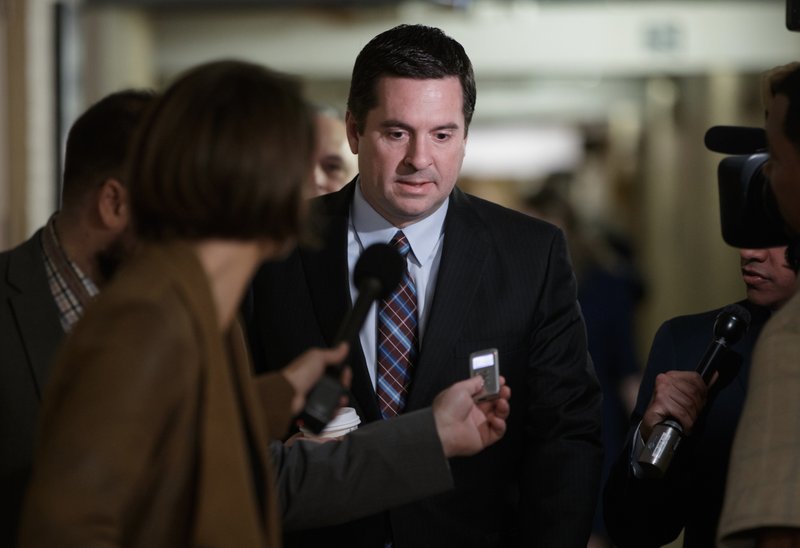
The chairman of the House intelligence committee is refusing to step away from its investigation of Russian meddling in the 2016 election, as fresh political allegations bring new cries of protest from Democrats. Asked Tuesday if he should recuse himself, committee chairman Devin Nunes responded, “Why would I?” Later in the day, the White House vehemently denied a report that it had sought to hobble the testimony of a former acting attorney general before Nunes canceled the hearing where she was to speak. President Donald Trump‘s spokesman, Sean Spicer, lashed out at reporters, claiming they’re seeing conspiracies where none exist. “If the president puts Russian salad dressing on his salad tonight, somehow that’s a Russian connection,” he suggested. The embattled House committee is conducting one of three probes into the election campaign, its aftermath and potential contacts between Trump officials and Russians. The Senate intelligence committee is doing its own investigation, and since late July the FBI has been conducting a counterintelligence investigation into Russia’s meddling and possible coordination with the Trump campaign. Nunes’ decision to cancel Tuesday’s hearing was the latest in a series of actions that Democrats contend demonstrate that his loyalty to Trump is greater than his commitment to leading an independent investigation. The California Republican, who was a member of Trump’s presidential transition team, has said he met with a secret source last week on White House grounds to review classified material that showed Trump associates’ communications had been captured in “incidental” surveillance of foreigners in November, December and January. Nunes would not name the source of the information, and his office said he did not intend to share it with other members of the committee. Nor would he disclose who invited him on the White House grounds for the meeting. He described the source as an intelligence official, not a White House official. In an interview on CNN, he suggested the president’s aides were unaware of the meeting. Trump has used Nunes’ revelations to defend his unproven claim that Barack Obama tapped phones at Trump Tower. Adding to the swirl of questions was the publication of a series of letters dated March 23 and March 24 involving a lawyer for former Acting Attorney General Sally Yates. Yates, along with former CIA Director John Brennan and former director of national intelligence James Clapper, had agreed to testify publicly before the House intelligence committee. The canceled hearing would have been the first opportunity for the public to hear Yates’ account of her role in the firing of Trump’s first national security adviser, Michael Flynn. The letters from lawyer David O’Neil, published by The Washington Post, appeared to be in response to a meeting O’Neil had at the Justice Department on March 23 in advance of the hearing. In them, O’Neil pushes back against what he says is Justice Department guidance on what Yates could say about conversations she had with Trump — conversations the department indicated could be covered by executive privilege. “We believe that the Department’s position in this regard is overbroad, incorrect, and inconsistent with the Department’s historical approach to the congressional testimony of current and former senior officials,” O’Neil wrote in a March 23 letter to Justice Department official Samuel Ramer. He also wrote that Yates’ testimony would cover details that others have publicly recounted. The Justice Department responded to O’Neil saying that the question of what privileged conversations Yates could discuss was ultimately up to the White House. Spicer on Tuesday said the White House never sought to stop her. “We have no problem with her testifying, plain and simple,” he said. O’Neil declined to comment Tuesday, and a Justice Department spokeswoman did not return a message seeking comment. Yates was fired in January as acting attorney general after she refused to defend the Trump administration’s first travel ban. She alerted the White House in January that Flynn had been misleading in his account of a December phone call with the Russian ambassador to the United States in which economic sanctions against Russia were discussed. Flynn was ousted after those discrepancies were made public. Virginia Sen. Mark Warner, the top Democrat on the Senate intelligence committee, said that White House meddling is not helping to “remove the cloud that increasingly is getting darker over the administration.” Democratic members of Nunes’ House committee said his ability to lead a bipartisan probe is compromised. “It’s irregular, to be benign about it, to have a lead investigator kibitzing with the people being investigated,” said Rep. Jim Himes, D-Conn. House Speaker Paul Ryan reiterated his support for Nunes, and Nunes himself said all of the controversy was standard for Washington. “It’s the same thing as always around this place — a lot of politics, people get heated, but I’m not going to involve myself with that,” he said. Republished with permission of The Associated Press.
