
Pentagon misses deadline for barracks privatization report

By Brett Rowland | The Center Square The privatization feasibility report was required as part of the National Defense Authorization Act for Fiscal Year 2023, which provided $838.8 billion in military funding to the Pentagon. It was due in July. But Elizabeth Field, director of Defense Capabilities and Management for the Government Accountability Office, told the House Armed Services Committee panel that the Department of Defense has yet to provide a timetable for completing the report. “We could not get any clear information from the department on when it will be delivered,” she said. Most other military housing in the U.S. was privatized over the past three decades. In the mid-1990s, the Department of Defense worried that inadequate housing was one reason people were leaving the military. Congress passed the Military Housing Privatization Initiative in 1996. That gave the Pentagon the authority to use private-sector financing and management. Since then, the private sector has taken over about 99% of military family housing in the U.S. By contrast, the Army and Navy have seven privatized barracks projects, according to the Government Accountability Office report. The rest of the barracks are owned and operated by the military services. Those living in privatized barracks “consistently told [the GAO] they were satisfied with the condition of their housing,” according to the Government Accountability Office report. Problems with privatized military housing have been reported as well, including poor housing conditions, according to previous Government Accountability Office report. “A few years ago, we saw similar conditions in private family military housing,” U.S. Rep. Don Bacon, R-Neb., said. “Families dealt with long delays in repair and maintenance requests or requests that were not responded to at all, children were getting sick from mold and lead paint, and members feared retribution from private companies if they complained to their command. This situation required extensive Congressional action to make improvements to these conditions.” Previous efforts to evaluate the feasibility of privatizing barracks weren’t comprehensive or “sufficient for decision-making,” according to the most recent Government Accountability Office report. “From 1997 to 2011, the services conducted several assessments of the costs and suitability of privatization as a financing method for their housing needs for unaccompanied personnel,” according to the report. ” … Because the military services used different methods, such as business case and life-cycle cost analyses and different assumptions about how repairs and upkeep for housing would be funded, the services reached different conclusions about the potential for cost savings from using either privatization or the traditional government-funded military construction approach.” The Army concluded that privatization was feasible, but more costly in most cases. The Navy concluded that privatization was feasible in certain locations. The Air Force and Marine Corps concluded that privatization was “not desirable for housing unaccompanied personnel,” according to the report. But privatization hasn’t gone away. Officials from the Office of the Secretary of Defense told the Government Accountability Office “they found the idea of privatizing barracks appealing but also had questions about the feasibility of doing so.” The U.S. Department of Defense missed a deadline to provide Congress with a report on the feasibility of privatizing barracks. A U.S. Government Accountability Office director highlighted the importance of the report and the missed deadline at a House Armed Services Committee panel hearing that detailed health and safety problems at military barracks, including sewage backups, mold, rodent infestations, and inoperable fire safety systems. Conditions were so bad in some places that service members sometimes took “drastic action, such as getting married, just to leave the barracks,” according to the report. Hundreds of thousands of U.S. troops live in barracks, which are for the most junior-ranking unmarried service members without children or other dependents. Republished with the permission of The Center Square.
Bipartisan congressional caucus forms to address fentanyl crisis
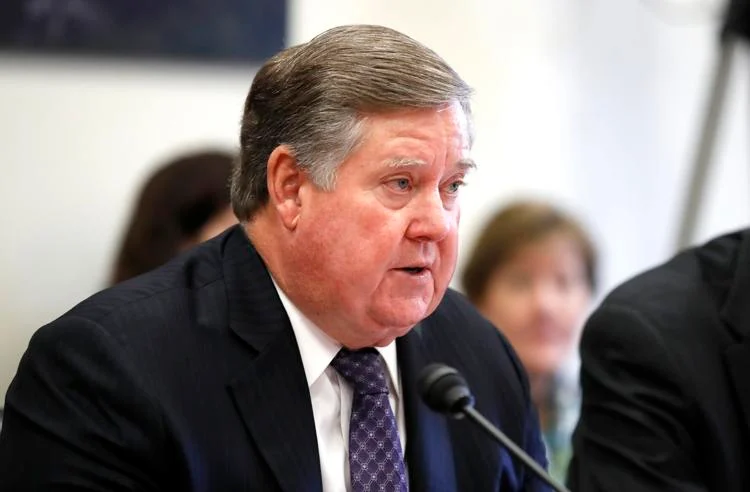
Labeling the smuggling of illicit fentanyl into the U.S. from Mexico “a national crisis,” a group of lawmakers has formed a bipartisan caucus to address the issue. Led by Republican California Reps. Ken Calvert and Darrell Issa and Democratic Reps. Joe Neguse of Colorado and Madeleine Dean of Pennsylvania, the Bipartisan Fentanyl Prevention Caucus was formed to “coordinate with members from both sides of the aisle to combat the nationwide spike in fentanyl-related overdoses and drug poisonings.” The group says it will work with federal and state law enforcement and “to educate the public and the Congress, in cooperation with prevention and awareness groups to better understand the ongoing threat of fentanyl in communities across America.” “Fentanyl is devastating the lives of Americans in every corner of our country. With fentanyl-related deaths climbing every year, we need new solutions to stop this alarming trend,” Calvert said. “This is not a partisan issue – it’s a national crisis.” Rather than pledging to end the fentanyl crisis, Calvert said he hoped the caucus would “educate Americans on the dangers of fentanyl and provide real solutions that will stop the destruction of this deadly drug.” “Fentanyl is not a new danger. But the deadly threat it poses has now reached every corner of our country, and no community is being spared,” Issa said. “The stakes could not be more clear: If we don’t win the fentanyl fight, we’re not going to just lose my community or my neighbor’s. Or any one of my colleagues. We’re going to lose this country. This caucus is needed now as we tell the truth, develop solutions, and save lives.” When announcing its formation, the caucus didn’t call on the president or Secretary of State Antony Blinken to declare Mexican cartels as Foreign Terrorist Organizations, as Texas Gov. Greg Abbott and 21 attorneys general have repeatedly done. Last September, Abbott issued an executive order designating the Sinaloa Cartel, the Jalisco New Generation Cartel, and any similarly situated Mexican drug cartels as foreign terrorist organizations” under Section 219 of the Immigration and Nationality Act. He also requested President Joe Biden do likewise, the second time he’d made the request since April 2021. In his September 21, 2022 letter, Abbott said since then, “There was no action, no response.” He’s still received no response, his office has told The Center Square. Last week, Blinken told Congress he’d consider designating cartels as FTOs. Two weeks prior, the White House said it didn’t have any intention of doing so. Republican U.S. Sens. Rick Scott of Florida and Roger Marshall of Kansas introduced the Drug Cartel Terrorist Designation Act, which Florida Attorney General Ashley Moody said will “do the job Biden refuses to do – protect the American people.” The caucus also hasn’t demanded the president designate fentanyl as a weapon of mass destruction, as 18 attorneys general have done led by Moody. Fentanyl poisoning remains the leading cause of death among adults between the ages of 18 and 45. Two milligrams, the weight of a mosquito, is lethal. In fiscal years 2021 and 2022, CBP agents confiscated enough fentanyl to kill nearly 5 billion people. Since March 2021, Texas Operation Lone Star officers have seized over 373 million lethal doses of fentanyl. Florida law enforcement officers in a few month’s time last year seized enough fentanyl to kill everyone in Florida. The U.S. Drug Enforcement Administration has issued several public alerts warning Americans about the dangers of fentanyl. Most recently it issued another public alert about the “sharp increase in the trafficking of fentanyl mixed with Xylazine,” an animal tranquilizer referred to on the streets as “Tranq.” It did so after the FDA, CDC, and multiple state agencies issued warnings about Xyzaline being detected in an increasing number of illicit drug mixtures and a growing number of overdose deaths nationwide. “Xylazine is making the deadliest drug threat our country has ever faced, fentanyl, even deadlier,” DEA Administrator Anne Milgram said. DEA has so far seized Xylazine and fentanyl mixtures in 48 of 50 states. Caucus members also include Angie Craig (D-MN), Chris Pappas (D-NH), Raja Krishnamoorthi (D-IL), Melanie Stansbury (D-NM), Chrissy Houlahan (D-PA), Ruben Gallego (D-TX), Nikki Budzinski (D-IL), Marc Veasey (D-TX), Sheila Jackson Lee (D-TX), Raúl Grijalva (D-AZ), Doug Lamborn (R-CO), Sharice Davids (D-KS), Don Bacon (R-NE), Claudia Tenney (R-NY), Andre Carson (D-IN), Ralph Norman (R-SC), Chris Smith (R-NJ), Lance Gooden (R-TX), Bob Latta (R-OH), Andy Biggs (R-AZ), Jake LaTurner (R-KS), Barry Moore (R-AL), David Valadao (R-CA), and Robert Aderholt (R-AL). Republished with the permission of The Center Square.
Tommy Tuberville: Dems back reparations for those who ‘do the crime’
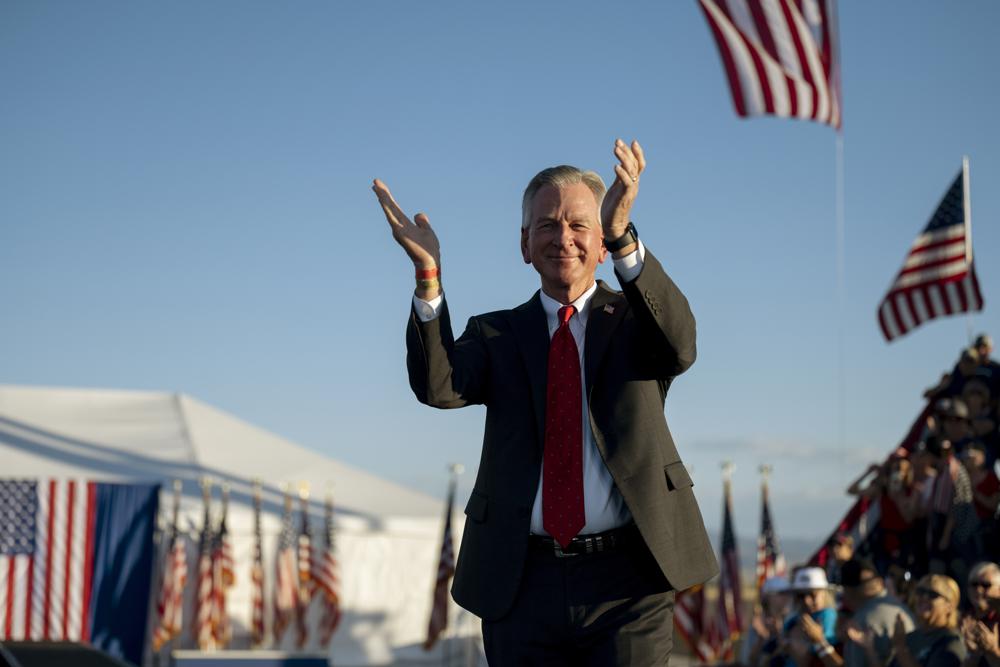
Republican Sen. Tommy Tuberville asserted that Democrats support reparations for the descendants of enslaved people because “they think the people that do the crime are owed that.” The first-term Alabama Republican spoke at a Saturday evening rally in Nevada featuring former President Donald Trump, a political ally. His comments were part of a broader critique in the final weeks before the November 8 election, when control of Congress is at stake, about how Democrats have responded to rising crime rates. But Tuberville’s remarks about reparations played into racist stereotypes about Black people committing crimes. “They’re not soft on crime,” Tuberville said of Democrats. “They’re pro-crime. They want crime. They want crime because they want to take over what you got. They want to control what you have. They want reparation because they think the people that do the crime are owed that.” He ended his appearance with a profanity as the crowd cheered. Tuberville is falsely suggesting that Democrats promote crime and that only Blacks are the perpetrators. In fact, crime has slowed in the last year, and most crimes are committed by whites, according to FBI data. The Democratic Party has not taken a stance on reparations for Black Americans to compensate for years of unpaid slave labor by their ancestors, though some leading Democrats, including President Joe Biden, back the creation of a national commission to study the issue. Some Republicans on Sunday struggled to defend Tuberville’s comments. Rep. Don Bacon, R-Neb., said he “wouldn’t say it the same way,” describing the remarks as impolite. “That’s not the way I present things,” Bacon said on “Meet the Press” on NBC. “But got to be honest that we have a crime problem in our country.” There was no immediate response from Tuberville’s office on Sunday to a request for comment. Republicans have been trying to close out this election year with an emphasis on crime, using rhetoric that has sometimes been alarmist or of questionable veracity, similar to Trump’s late-stage argument during the 2020 campaign that Democratic-led cities were out of control. FBI data released last week showed violent and property crime generally remained consistent between 2020 and 2021, with a slight decrease in the overall violent crime rate and a 4.3% rise in the murder rate. That’s an improvement over 2020, when the murder rate in the U.S. jumped 29%. The report presents an incomplete picture, in part because it doesn’t include some of the nation’s largest police departments. More broadly, rates of violent crime and killings have increased around the U.S. since the pandemic, in some places spiking after hitting historic lows. Nonviolent crime decreased during the pandemic, but the murder rate grew nearly 30% in 2020, rising in cities and rural areas alike, according to an analysis of crime data by The Brennan Center for Justice. The rate of assaults went up 10%, the analysis found. The rise defies easy explanation. Experts have pointed to a number of potential causes, from worries about the economy and historically high inflation rates to intense stress during the pandemic that has killed more than 1 million people in the United States. Republished with the permission of The Associated Press.
Robert Aderholt supports protecting pharmacists’ First Amendment rights regarding prescriptions for elective abortions
Congressman Robert Aderholt announced that he has become a co-sponsor of a bill to protect the First Amendment rights of pharmacists when choosing whether or not to fill prescriptions for elective abortions. The Pharmacist Conscience Protection Act H.R. 8820 was introduced by Rep. Earl L. “Buddy” Carter (R-Georgia), Diana Hashbarger (R-Tennessee), and Blake Moore (R-Utah). Reps. Carter and Harshbarger are both pharmacists. It is co-sponsored by 26 House Republicans. The legislation comes after the Department of Health and Human Services (HHS) issued guidance warning pharmacists that they could be in violation of federal civil rights laws if they do not fill such prescriptions. “Pharmacists should not be forced to surrender their First Amendment rights of religious freedom because of radical policies from the Biden Administration,” said Congressman Aderholt. “It’s unfortunate that we need conscience protections like these, but it’s the only way to keep the overbearing Biden Administration from forcing private citizens to violate strongly held convictions.” “Your first amendment rights don’t go away when you put on a white coat,” said Rep. Carter. “This legislation will ensure that pharmacists are able to make the medical decisions that are best for the health of the mother, the life of the child, and the integrity of their practice without threats from non-medically trained bureaucrats. Medical decisions should be made between doctors, pharmacists, and patients – not the federal government.” “I will not stand by and let the Biden administration use an extremist and unlawful agenda of taxpayer-funded abortions through birth to persecute pharmacists who have religious, moral, or conscience objections to the intentional killing of unborn children through abortion,” stated Rep. Harshbarger. “As a licensed pharmacist for more than 30 years, I have always followed the precept of first doing no harm. I will always stand up for the lives of unborn children and will always defend health practitioners who believe the same. Pharmacists and other health professionals should never be punished for their moral beliefs in protecting life, or be threatened or forced to facilitate abortions against such beliefs. I call on the Biden administration to immediately withdraw this outrageous assault on pharmacists’ conscience rights, and to stop treating the Constitution like its own political chew-toy!” “Conscience protections prevent discrimination and ensure Americans in the healthcare sector are not forced to violate their beliefs,” said Rep. Moore. “As the Biden Administration takes steps to undermine the conscience rights of pharmacists, I am proud to join Congressman Buddy Carter and Congresswoman Diana Harshbarger in introducing the Pharmacist Conscience Protection Act which would ensure pharmacists can refuse to provide abortion drugs without repercussion. Pharmacists, along with other medical and healthcare workers, should never be coerced into participating in abortions, and this bill is an important step in supporting medical professionals who have deep convictions about practicing life-affirming medicine.” The text reads in part, “In General.—Notwithstanding any other provision of law, the Federal Government, and any person or entity that receives Federal grants, contracts, or financial assistance, including any State or local government, may not penalize, treat adversely, retaliate against, or otherwise discriminate against a specified health care provider, or take any action that has such effect, on the basis that the specified health care provider does not or declines to store or fill a prescription, or make a referral, for a drug that is approved by the Food and Drug Administration to cause an abortion or that the specified health care provider in good faith believes may be used to cause an abortion.” Other co-sponsors are Reps. Chris Smith (R-NJ), Tracey Mann (R-KS), Doug Lamborn (R-CO), David McKinley (R-WV), Ken Buck (R-CO), Lance Gooden (R-TX), Jake Ellzey (R-TX), Kat Cammack (R-FL), Mary Miller (R-IL), Ralph Norman (R-SC), Bill Posey (R-FL), Greg Steube (R-FL), Troy Balderson (R-OH), Brian Babin (R-TX), Dan Webster (R-FL), Jeff Duncan (R-SC), Randy Weber (R-TX), Markwayne Mullin (R-OK), Brad Wenstrup (R-OH), Don Bacon (R-NE), Robert E. Latta (R-OH), and Andrew Clyde (R-GA). Aderholt is in his thirteenth term representing Alabama’s Fourth Congressional District. To connect with the author of this story, or to comment, email brandonmreporter@gmail.com.
Donald Trump’s clout factors into U.S. House races in West Virginia, Nebraska
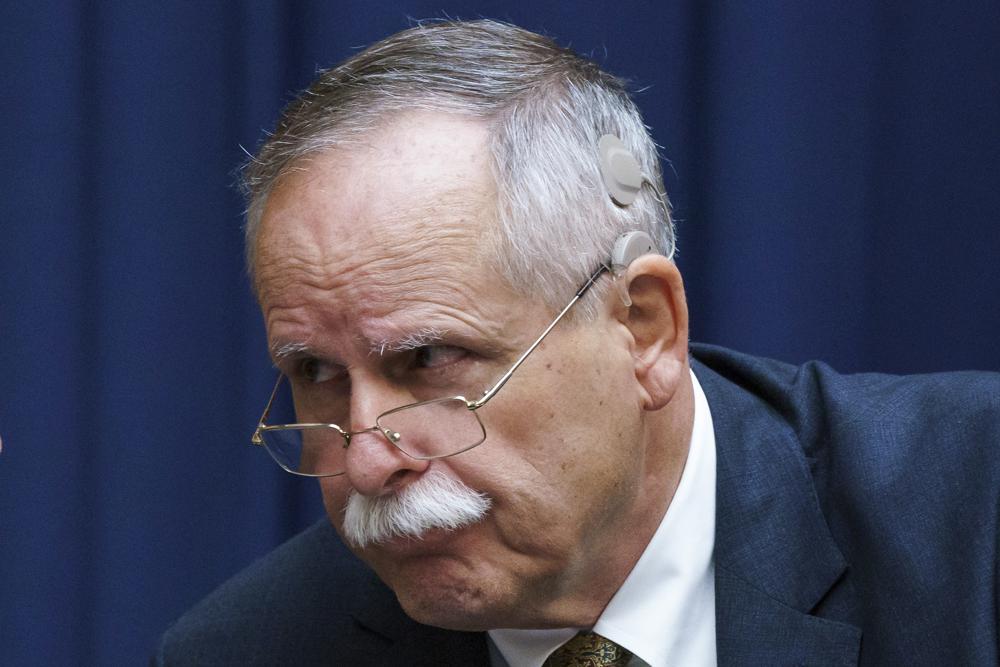
Roads, bridges, and former President Donald Trump are on West Virginia and Nebraska voters’ minds as they choose congressional candidates in Tuesday’s Republican primary elections. Two incumbent GOP congressmen who have taken dramatically different approaches to their time in office are facing off in West Virginia’s 2nd Congressional District, one of the most-watched U.S. House primaries on the day’s ballot. Reps. David McKinley and Trump-backed Alex Mooney were pitted against each other after West Virginia lost a congressional seat based on the results of the 2020 U.S. census. Throughout West Virginia on Tuesday, voters were heading to polling places at schools, churches, and public libraries. Susan Smith, a small business owner in Valley Grove, West Virginia, voted for Mooney at a local elementary school Tuesday morning. She lives in McKinley’s former district and said she always voted for him in the past. But not in this election. “When Mr. McKinley started voting with the Democrats and the current administration, that’s when things changed,” said Smith, who cited McKinley’s vote for President Joe Biden’s infrastructure bill and the January 6 commission. “I’m sorry to be losing a congressman, but we cannot have a Republican congressman voting with the Democrats. West Virginia did not need the money from this un-infrastructure bill.” Lowell Moore, a retired highways worker and county commissioner in rural Tucker County, said the choice was clear to support McKinley. He said he’s already seeing the benefit of federal infrastructure money in work being done to complete Corridor H, the last remaining section of the Appalachian Development Highway System in West Virginia. Moore said completing Corridor H will cut the response time for emergency services in half in Tucker County, which does not have a hospital and where first responders now have to travel on winding mountain roads. “The people he represents needed this so bad,” Moore said. “I’m a Republican, and I commend him for reaching across the aisle. It shouldn’t be about making the political decision — it should be about making the right decision.” West Virginia’s election is the first of five primaries in which two incumbent U.S. House members will face off. It will be followed by similar contests in Georgia and Michigan and in two Illinois districts. The primary comes on the heels of a victory by Trump-endorsed conservative JD Vance, author of the bestselling memoir “Hillbilly Elegy,” who defeated six other candidates to win the Ohio Republican primary for U.S. Senate last week. The West Virginia contest will once again test the former president’s clout when his own name isn’t on the ballot. Nebraska voters will nominate candidates on Tuesday to fill the seat abandoned by U.S. Rep. Jeff Fortenberry, a Republican who resigned from office and ended his reelection bid after he was convicted of lying to federal authorities about an illegal campaign contribution. Fortenberry’s name will still appear on the ballot for the 1st Congressional District because he withdrew after a deadline to certify the ballot, but Sen. Mike Flood, a former speaker of the Nebraska Legislature, appears to have the advantage over five other Republican candidates. Voters will also pick nominees for Nebraska’s 2nd Congressional District in the Omaha area. Three-term Republican Rep. Don Bacon faces a long-shot challenge from Steve Kuehl, an Omaha consultant who got a shoutout from Trump when the former president visited earlier this month. Trump blasted Bacon as a “bad guy” during a recent rally in the state and had criticized him previously for his support of a federal infrastructure bill that most GOP lawmakers opposed. Bacon also has been mildly critical of Trump in the past, saying the former president bore some responsibility for the January 6 riot at the U.S. Capitol. Trump stopped far short of officially endorsing Kuehl, however, saying: “I think Steve will do well. Good luck, Steve, whoever the hell you are.” Democrats in Nebraska will nominate either state Sen. Tony Vargas of Omaha or Alisha Shelton, an Omaha mental health therapist, to challenge Bacon in the 2nd, the state’s only competitive district. In the rural, geographically vast 3rd Congressional District, Republican U.S. Rep. Adrian Smith faces a challenger but is expected to win his party’s nomination. Two Democrats are vying for their party’s nomination within the district, which is overwhelmingly Republican. In West Virginia, incumbent Rep. Carol Miller is expected to hold her seat in the 1st Congressional District against four Republican challengers. In the state’s 2nd Congressional District, where McKinley and Mooney are battling each other for the GOP nomination, openly gay former Morgantown city councilor Barry Wendell is competing against security operations manager Angela Dwyer in the Democratic primary. Mooney has attacked McKinley for voting with 12 other House Republicans in favor of Biden’s $1.2 trillion infrastructure bill. Trump, who won every single county in West Virginia in two presidential elections and said Republicans who voted for the infrastructure bill should be “ashamed of themselves,” endorsed Mooney on the same day Biden signed the infrastructure law. Rep. David McKinley, a civil engineer by trade, received endorsements and praise from Democratic U.S. Sen. Joe Manchin and GOP Gov. Jim Justice over his infrastructure vote. He said it was time to put party politics aside to meet the needs of his constituents. “This wasn’t for Joe Biden — this was to help West Virginia,” he told The Associated Press. Republished with the permission of The Associated Press.
