
Donald Trump says he’d ‘of course’ tell FBI if he gets foreign dirt
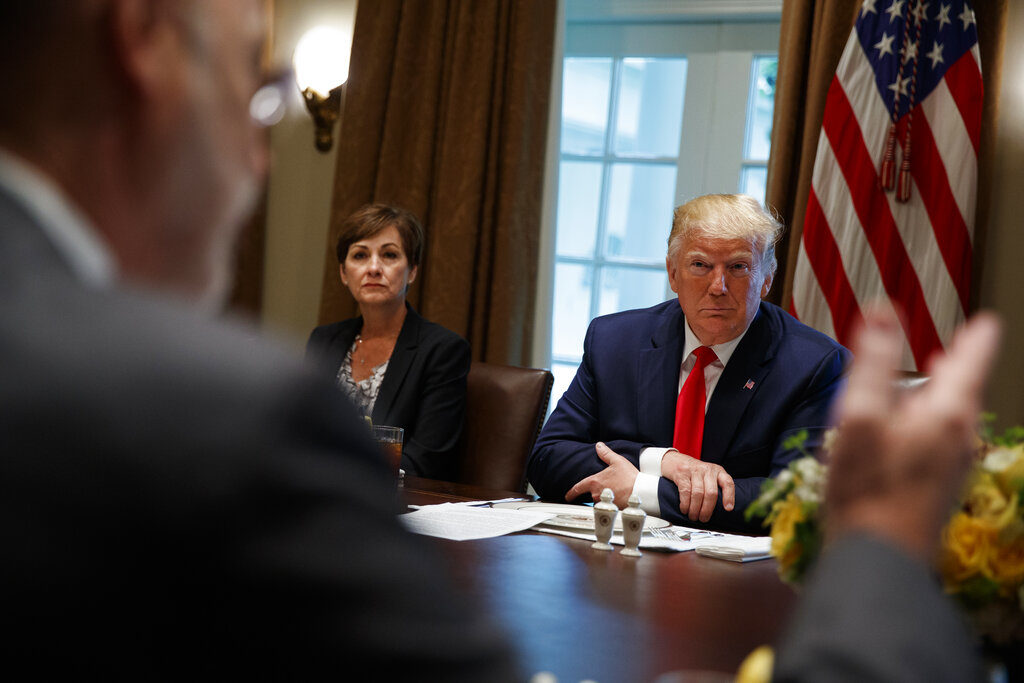
President Donald Trump shifted gears Friday on election interference, saying “of course” he would go to the FBI or the attorney general if a foreign power offered him dirt about an opponent. Trump’s new stance was a walk back — to a degree — after he set off a Washington firestorm earlier in the week by asserting he would not necessarily contact law enforcement if offered damaging material from an overseas source. But in his latest comments, the president still said he would look at the proffered information to see whether it was “incorrect.” “Of course, you have to look at it,” Trump said during a birthday appearance on “Fox and Friends.” He added: “But of course, you give it to the FBI or report it to the attorney general or somebody like that. You couldn’t have that happen with our country, and everybody understands that.” That was a step back from his comments to ABC days earlier. “OK, let’s put yourself in a position: You’re a congressman, somebody comes up and says, ‘Hey I have information on your opponent.’ Do you call the FBI? You don’t,” Trump said in an interview that aired Wednesday. “I’ll tell you what. I’ve seen a lot of things over my life. I don’t think in my whole life I’ve ever called the FBI.” His assertion that he would be open to accepting a foreign power’s help in his 2020 campaign alarmed Democrats, who condemned it as a call for further election interference while Republicans struggled to defend his comments. Asked by ABC News what he would do if Russia or another country offered him dirt on his election opponent, Trump said: “I think I’d want to hear it.” He added that he’d have no obligation to call the FBI. “There’s nothing wrong with listening.” Special counsel Robert Mueller painstakingly documented Russian efforts to boost Trump’s campaign and undermine that of his Democratic rival, Hillary Clinton. In a segment released Friday from the president’s interview earlier this week, Trump told ABC that “it doesn’t matter” what former White House counsel Don McGahn told investigators and that McGahn may have been confused when he told prosecutors he had been instructed to seek Mueller’s removal. McGahn was a crucial witness for Mueller, spending hours with investigators and offering detailed statements about episodes central to the special counsel’s investigation into possible obstruction of justice. McGahn described how Trump directed him to press the Justice Department for Mueller to be fired by insisting that he raise what the president perceived as the special counsel’s conflicts of interest. Trump denied that account, saying, “The story on that very simply, No. 1, I was never going to fire Mueller. I never suggested firing Mueller.” Asked why McGahn would have lied, Trump said, “Because he wanted to make himself look like a good lawyer. Or he believed it because I would constantly tell anybody that would listen — including you, including the media — that Robert Mueller was conflicted. Robert Mueller had a total conflict of interest.” Though Trump tried to cast doubt on McGahn’s credibility, it is clear from the Mueller report that investigators took seriously his statements, which in many instances were accompanied by contemporaneous notes, and relied on his account to paint a portrait of the president’s conduct. It is also doubtful that McGahn, a lawyer, would have had any incentive to make a misstatement given that lying to law enforcement is a crime and Mueller’s team charged multiple Trump aides with making false statements. Though Mueller’s investigation didn’t establish a criminal conspiracy between Russia and the president’s campaign, Trump repeatedly praised WikiLeaks in 2016 and at one point implored hackers to dig up dirt on Hillary Clinton, The role of Trump’s eldest son, Donald Trump Jr., in organizing a 2016 meeting with a Russian lawyer offering negative information on Clinton was a focus of Mueller’s probe of Russian meddling in the last presidential campaign. Trump Jr. spoke with the Senate Intelligence Committee for about three hours Wednesday to clarify an earlier interview with the committee’s staff. By Jonathan Lemire and Zeke Miller Associated Press. Lemire reported from New York. Republished with the permission of the Associated Press.
GOP’s Justin Amash, impeachment supporter, quits conservative group
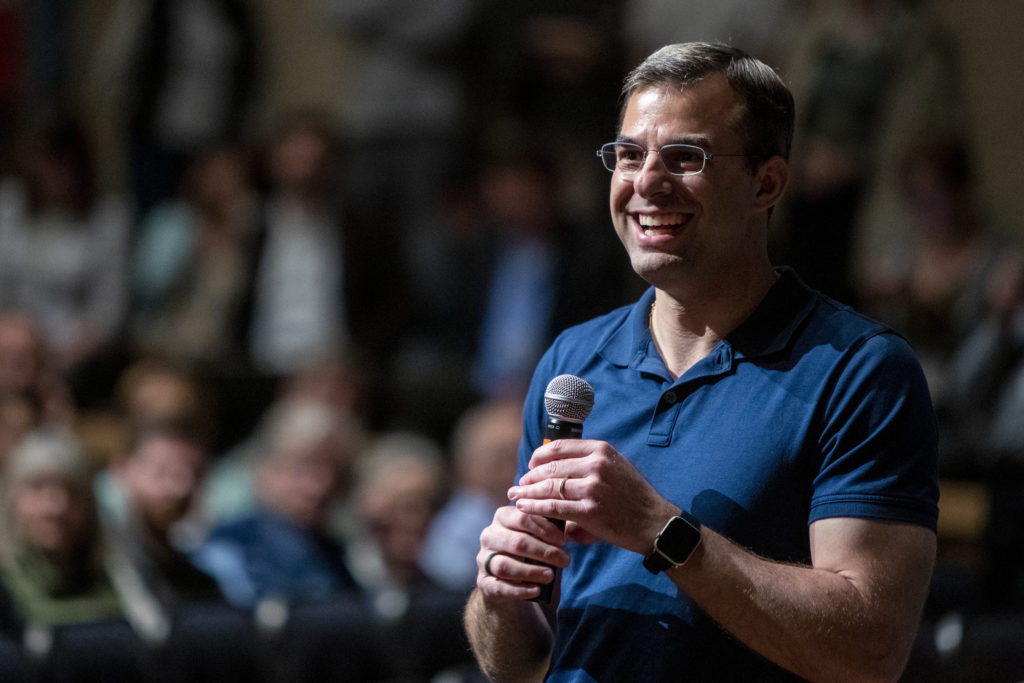
Rep. Justin Amash, the lone Republican calling for President Donald Trump’s impeachment, has quit the Freedom Caucus of House conservatives, his spokeswoman confirmed Tuesday. The split comes a few weeks after Amash called for the House to impeach Trump based on the details of special counsel Robert Mueller’s report. Several members of the Freedom Caucus said they were blindsided by Amash’s move, but he has stood by it, repeating his argument in detail on Twitter. Trump and many of his allies on Capitol Hill say the report and the Democrats’ investigations of Trump are drummed-up partisan exercises. Amash’s departure from the caucus — he was one of the group’s founders — is a reflection of how closely the group is now tied to the president. While Amash’s views on small government have not changed, his break on impeachment has strained ties with his GOP colleagues. Asked about Amash on Tuesday, House Minority Leader Kevin McCarthy, Republican-California, criticized his voting record and said Amash “can determine his own future.” Philosophically, he said, Amash is “probably in a different place than the majority of all of us.” Trump also has said he’s not impressed by Amash. But the Grand Rapids-area Republican hails from a state that Trump swiped from Democrats in 2016 and is driving to win again in 2020. For his part, Amash has not said whether he will run for re-election to his House seat. He has left open the prospect of running for president in 2020 as a Libertarian, which could take away support from Trump. At a town hall in his district May 28, he received standing ovations from many who saluted his “courage.” Amash also sparred with some former supporters who faulted him for embracing a Democratic “smear attack” against Trump. Citing Mueller’s report, Amash said Trump had asked former White House counsel Don McGahn to create a “false record” denying that he had asked for Mueller’s removal as special counsel. “Things like that to me reflect incredible dishonesty and really harm the office of the presidency. I don’t think that you can just let that stuff go,” Amash told his constituents. “I think you have to have proceedings to deter this kind of conduct even if ultimately the person is not convicted.” Amash’s resignation from the Freedom Caucus was confirmed by spokeswoman Poppy Nelson and was first reported by CNN. Republished with the permission of the Associated Press.
