
Donald Trump says Border Patrol ordered to let immigrants illegally cross border to vote in election
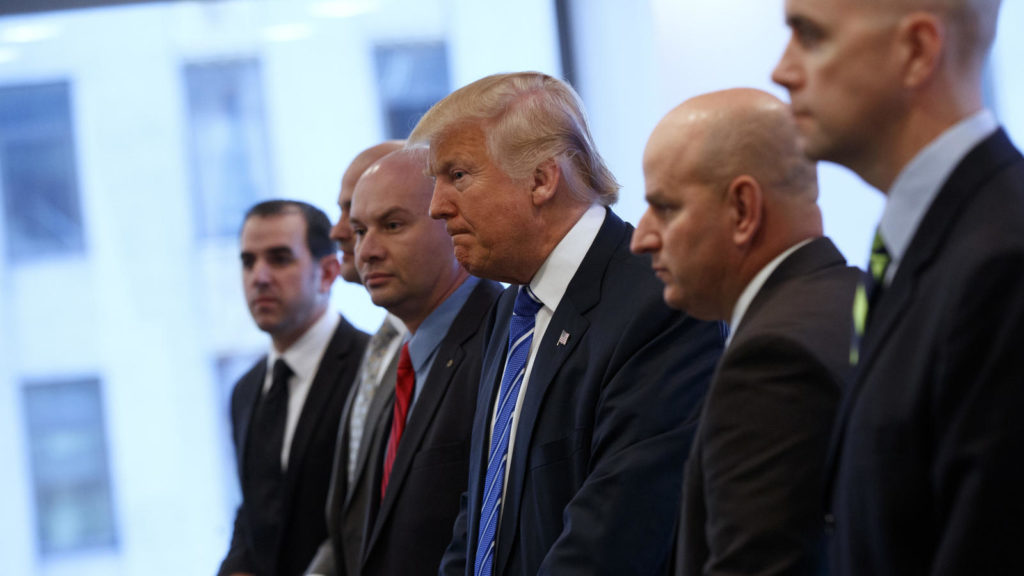
Citing a Border Patrol union leader, Donald Trump said Friday that agents have been told to allow immigrants into the United States illegally “so they can vote in the election.” But he offered no evidence to support his most recent claim that presidential voting may be tainted by fraud. In an immigration roundtable with Trump, Art Del Cueto, a vice president for the National Border Patrol Council, told the candidate Friday officials in the U.S. are being directed to ignore criminal histories of immigrants and speed up citizenship applications. “That’s a massive story,” Trump responded, saying it would be ignored by the media. “They are letting people pour into the country so they can go ahead and vote.” However, union spokesman Shawn Moran, who was in New York with Del Cueto, said later in a telephone interview that several issues were conflated during the roundtable discussion. Border Patrol agents have indeed seen an increase in attempts to cross the U.S.-Mexico border illegally, Moran said. But Moran did not say any border agents had been ordered to let those immigrants in so they could vote in November. The two issues are sometimes linked in a misleading fashion, and the brief exchange between Del Cueto and Trump underscored that. Neither Del Cueto nor Trump offered evidence to back up the idea immigration officials are taking action to allow people who have recently crossed the border to cast ballots on Election Day. Newly admitted immigrants are not permitted to vote, a right that is reserved for citizens. The process of achieving citizenship takes years. Citizenship applications are handled by U.S. Citizenship and Immigration Services, not the Border Patrol. There is no evidence that USCIS officials have been directed to quickly approve citizenship applications, though some lawmakers have asked the agency to address such reports. Trump has repeatedly said he fears the election will be rigged and has made a hard-line stance on immigration a centerpiece of his campaign. His latest provocative claim comes as Trump and Clinton are preparing for their second debate, a town-hall style confrontation Sunday night. It’s a critical moment for Trump, who after a rough performance in last week’s debate, is tasked with showing he can stick to his campaign message and steer clear of comments likely to alienate moderate voters. Trump and Clinton have been treading somewhat lightly on the campaign trail in recent days, as Hurricane Matthew barreled down on swing state Florida. The pause was a reminder of the possibilities and perils of campaigning during a crisis. Plenty of presidents and presidential hopefuls before them have used similar natural disasters to showcase their leadership — or their shortcomings — in ways that can change the trajectory of the race. Both Clinton and Trump appear to be moving carefully, for now. The campaigns spent Thursday moving staff and volunteers, closing offices and canceling events in the path of the storm, as many Floridians heeded calls to evacuate. In Florida, the Clinton campaign pulled its ads from the Weather Channel, amid criticism about insensitivity, and the Trump team pulled its negative TV ads. “Even if you want to do politics, no one is there to listen,” said Steve Schale, a Democratic consultant who directed or advised Barack Obama‘s campaigns in the state in 2008 and 2012. Both the campaigns and state officials were watching closely how the storm might impact Florida votes. The storm arrived five days before the voter registration deadline, prompting the Clinton campaign to ask state officials for an extension. Florida Gov. Rick Scott, Republican who leads a super PAC working to defeat Clinton, refused. “Everyone has had a lot of time to register,” he said. Officials were also eyeing the vote-by-mail operation. Vote-by-mail ballots were due to be sent this week, leaving the potential for ballots to arrive just as voters evacuate their homes. At least half of Florida voters typically cast ballots early, either by mail or in person. Officials said they hope any disruption to voting would be less severe than with Superstorm Sandy, which struck New Jersey and New York just before the 2012 presidential election and kept many voters away from polls. Sandy’s greater political impact, however, may have been the way President Obama used the moment to his advantage. Obama quickly surveyed the aftermath, received a warm welcome from Gov. Chris Christie, a Republican, and promised millions in aid. Trump, who is trying to recapture momentum lost in a rocky first debate, practiced his skills in public Thursday night at a town hall in Sandown, New Hampshire. Although his aides called the event a dry run for Sunday, Trump dismissed the notion. “I said, ‘Forget debate prep.’ I mean, give me a break,” said Trump, who mocked Clinton for spending days preparing. “She’s resting. She wants to build up her energy for Sunday night. And you know what? That’s fine. But the narrative is so foolish.” Republished with permission of the Associated Press.
Campaign stop latest bump in rocky Paul Ryan-Donald Trump relationship
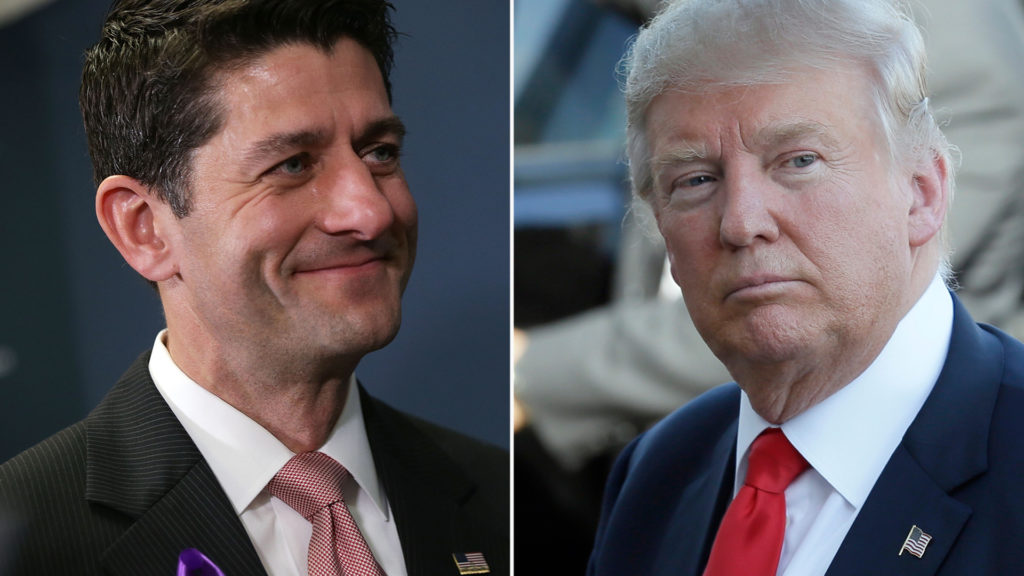
It’s long been clear that House Speaker Paul Ryan is, shall we say, not wholly comfortable with Donald Trump‘s presidential candidacy. The announcement of Ryan’s and Trump’s first joint appearance of the campaign on Saturday in Wisconsin – just four weeks before the election – was simply the latest reminder. The awkwardly worded missive on Thursday said that Ryan would appear with top Wisconsin Republicans, including Gov. Scott Walker and Sen. Ron Johnson. Oh, and by the way, the third paragraph of Ryan’s release says that Trump “will also join Wisconsin Republicans” at the annual party festival in Elkhorn, a small city in Ryan’s congressional district. In the news business, that’s known as “burying the lead.” The announcement also doesn’t say that Ryan is actually campaigning for Trump, just that they are appearing at the same event. Asked Thursday why he hasn’t appeared with Trump, Ryan said: “I’ve been busy doing my job.” “I want to win up and down the ballot, but my primary responsibility is re-election of House Republicans,” Ryan said during a brief interview after appearing at a campaign stop for GOP House candidate Lloyd Smucker, who is expected to win an open GOP seat in a district near Harrisburg, Pennsylvania. — A recap of the greatest hits of the awkward Trump-Ryan relationship: NO ENDORSEMENT (RYAN) Jaws dropped in May when Ryan withheld his endorsement of Trump just days after the billionaire businessman effectively clinched the nomination. “I’m just not ready to do that at this point. I’m not there right now,” the Wisconsin Republican said on CNN. Ryan came on board the Trump train a month later: “It’s no secret that he and I have our differences. I won’t pretend otherwise. … But the reality is, on the issues that make up our agenda, we have more common ground than disagreement.” NO ENDORSEMENT (TRUMP) Even after Ryan endorsed him, Trump declined to return the favor as Ryan faced a tea party primary challenge from Paul Nehlen. Trump even praised Nehlen, saying he was running “a very good campaign” and telling The Washington Post, “I like Paul, but these are horrible times for our country” and “I’m just not quite there yet. I’m not quite there yet.” Days later, Trump endorsed both Ryan and GOP Sen. John McCain of Arizona. MUSLIM BAN Ryan joined a chorus of Republicans last December and again this summer in condemning Trump’s proposed ban on Muslims entering the U.S. “This is not who we are as a party or a country,” Ryan told fellow House Republicans in a December closed-door meeting. When Trump reiterated the call for a ban in June, Ryan said: “I do not think a Muslim ban is in our country’s interest. I don’t think it is reflective of our principles, not just as a party but as a country.” ATTACKING A JUDGE Immediately after endorsing Trump, Ryan weighed in to criticize him for saying a federal judge of Mexican-American heritage was biased against him in a lawsuit involving Trump University. Ryan said Trump’s comments were “the textbook definition of a racist comment.” ATTACKING A GRIEVING FATHER When Khizr Khan, a Muslim-American whose son Humayun Khan died while serving with the U.S. Army in Afghanistan, criticized Trump during the Democratic National Convention in July, Trump went on the attack. Ryan was among those who rebuked Trump and used the occasion to say again that a Muslim ban would be a mistake. “Many Muslim-Americans have served valiantly in our military, and made the ultimate sacrifice. Capt. Khan was one such brave example. His sacrifice – and that of Khizr and (Khan’s wife) Ghazala Khan – should always be honored. Period.” TRUMP’S TAXES As the GOP’s vice presidential nominee in 2012, Ryan released his tax returns. In September, he urged Trump to release his. “I released mine. I think we should release ours,’ Ryan said, referring to GOP nominees. “I’ll leave it to him when to do it.” DAVID DUKE AND THE KLAN When Trump in February declined to condemn the Ku Klux Klan or decline the endorsement of former Klansman David Duke, Ryan joined a chorus of outraged establishment Republicans. “If a person wants to be the nominee of the Republican Party, there can be no evasion and no games,” Ryan said. “They must reject any group or cause that is built on bigotry.” RYAN’S BUDGET In a South Carolina campaign event in February, Trump repeated his opinion that Ryan’s budget plan, which called for sharply curbing benefit programs like Medicare, helped cost Republicans the 2012 election. “That was the end of that campaign, by the way, when they chose Ryan,” Trump said. IF YOU CAN’T SAY SOMETHING NICE… Ryan typically rebukes Trump when he says something especially egregious and over the top. He stays out of smaller controversies like Trump’s proposal for paid maternity leave, a plan that defies GOP orthodoxy. And he declined to weigh in on Trump’s emphasis on police “stop and frisk” tactics as a way to improve race relations. Republished with permission of the Associated Press.
Jeff Sessions, Donald Trump issue stern warning to foreign nationals violating U.S. law
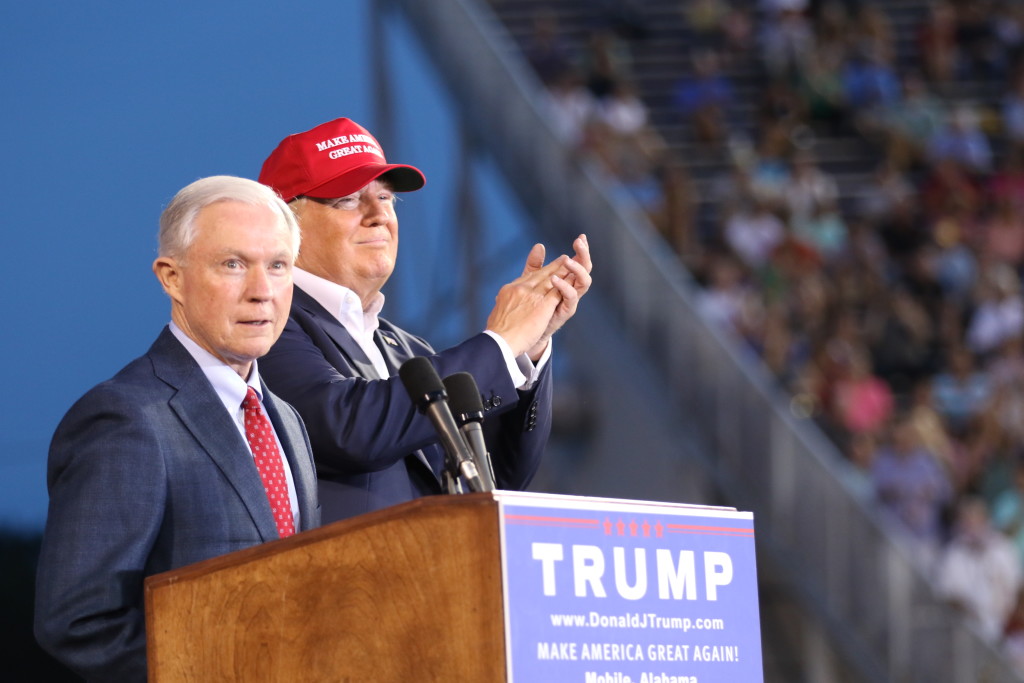
Jeff Sessions, as a surrogate for Donald Trump, has been a vocal supporter for the Republican presidential nominee’s stance on immigration. The Alabama senator also has taken a hard-line stance against foreign nationals who violate U.S. law, offering a firm warning to countries who refuse to take back undocumented immigrants. One such country, The Gambia — officially known as the Islamic Republic of the Gambia — has resisted taking back its nationals, which, according to Sessions, comes at the expense of American taxpayers, with few repercussions by the United States. The Gambia is a small country in West Africa surrounded by Senegal with a small strip accessing the Atlantic Ocean. Previously, Sessions announced Trump was seriously considering a plan to require immigrants to “self-deport” before they can reapply to lawfully return to the U.S. in a campaign email Thursday, Sessions further clarified Trump’s position on “repatriating” those immigration law violators, as well as consequences for countries from which they came. In the statement, Sessions blamed much of this on the “weakness” of the Obama administration, including Trump’s Democratic opponent, former Secretary of State Hillary Clinton. The text of Sessions’ statement: “This past weekend, following intense pressure by several committees in Congress — and the promises of Donald Trump to correct this situation — the Departments of State and Homeland Security have finally taken modest steps against one small offending nation, The Gambia, to take back its nationals who have violated our laws. But other nations have created far larger problems, at great expense to the American taxpayers, and little or no action has been taken against them. “These minor actions against such a small nation will only result in dozens of other countries continuing to disregard their legal obligations to take back their nationals, because of the weakness they have seen in the State Department under the leadership of former Secretary of State Hillary Clinton, and now under John Kerry. And it further highlights the longstanding failure of the Department of Homeland Security and the Department of State to protect the United States from dangerous criminal aliens. “For years, Congress and the American people have rejected the premise that a foreign country can simply refuse to take its people back when we try to deport them from the United States. Yet there are currently dozens of foreign countries that refuse to do so, and/or delay for so long that federal law enforcement officers are forced — as a result of a Supreme Court decision — to release criminals back onto the streets of our communities. “Repatriating immigration law violators is an essential part of any lawful immigration system. Home countries must take back their deported nationals. That is why American law has long given the secretary of state the duty and power to deny future visas to any non-cooperating country — an effective tool to achieve compliance if properly used. A tool that the Obama administration failed to use during Hillary Clinton’s tenure as secretary of state, despite widespread knowledge about these practices. “The willful failure of the Department of State and the Department of Homeland Security to take the simple and effective steps necessary to protect the safety of the American people and the integrity of the immigration system has long been an outrage and a scandal. “Meaningful change can only come through strong leadership and a commitment to firmly and consistently act in the national interest. Hillary Clinton’s record demonstrates that she will not provide that change. “When Donald Trump becomes president, countries that refuse to take back their nationals will face swift, meaningful consequences. The integrity of our immigration system and the safety of our communities demand no less.”
Business leaders call Donald Trump bad for economy in new letter
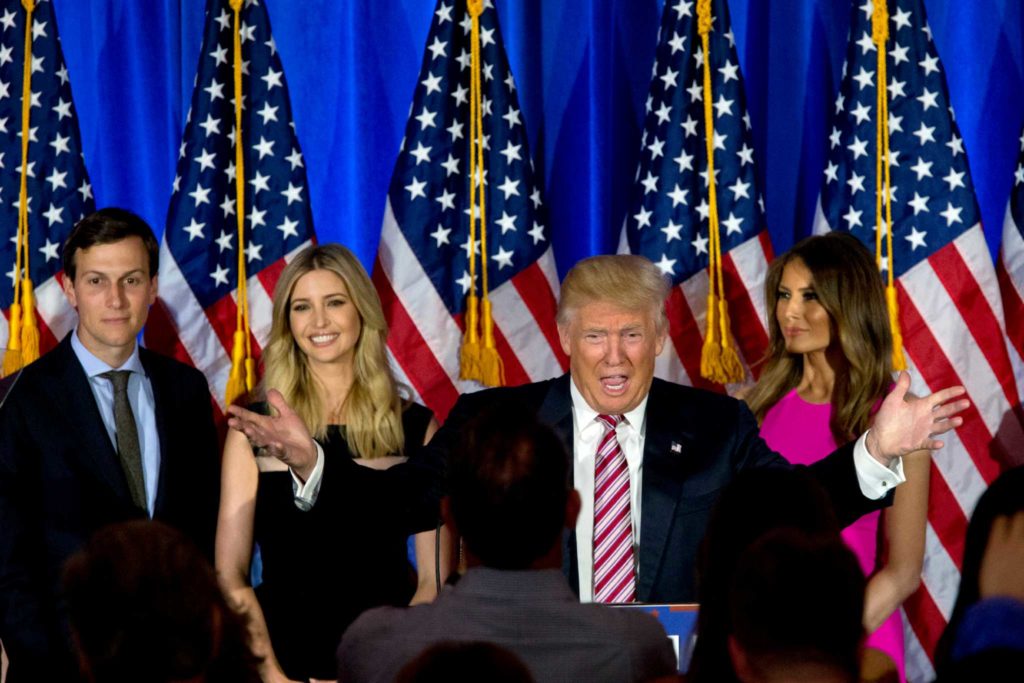
A dozen big-name business leaders, including lifelong Republicans and independents, say they won’t support real estate mogul Donald Trump for president. They say he would be bad for the economy, and they question how successful he’s been as a businessman. “For sustained investment, economic growth and job creation, American business needs as much predictability, reliability and stability in our government as possible,” they write. “Donald Trump is simply too reckless for American business.” A copy of the letter was given to The Associated Press ahead of the group’s push for others to sign on, as well as the release of the group’s new website on Friday. It comes on the heels of an open letter by more than 30 former GOP members of Congress condemning the Republican presidential nominee as “disgraceful.” Signatories of the latest letter include Wikipedia founder Jimmy Wales, famed chef Jose Andres and Carlos Gutierrez, U.S. secretary of Commerce under President George W. Bush and the former chief executive officer of the Kellogg Company. Andres is tussling with Trump over his decision to pull his planned restaurant out of Trump’s new hotel at the Old Post Office in Washington. Jack McGregor said he hopes the effort convinces undecided voters to choose Democrat Hillary Clinton. He’s a Republican former Pennsylvania state senator and founder of the National Hockey League team the Pittsburgh Penguins. “I believe we can reach thinking Republicans like the ones I served with in Pennsylvania,” he said. The group came together as John Stubbs, who has been organizing Republicans who back Clinton, realized that business leaders – of all political persuasions – have particular concerns about a Trump presidency, Stubbs said. A former Republican staffer in Washington, Stubbs said he has not been working with the Clinton campaign. Trump has many business leaders in his corner. Some of his highest profile supporters include investor Carl Icahn, financier T. Boone Pickens and PayPal co-founder Peter Thiel. The anti-Trump letter makes a two-front case against the Republican nominee. They say he has not been particularly successful in his decades in real estate. And they believe he is offensive and dangerously erratic. “Trump’s harmful rhetoric regarding immigrants, women, racial and religious minorities, the disabled and American veterans is not only unacceptable, it creates an atmosphere of vulgarity that poisons the climate, as does his general approach to business and many of his economic ideas,” they write. “And how do you lose nearly a billion dollars in a single year?” The New York Times said it obtained several pages of Trump’s 1995 state income tax filings that showed he took a net loss of $915,729,293 in federal taxable income for the year. The letter cites Trump’s businesses’ six business bankruptcies, several thousand lawsuits and repeated failure to pay subcontractors as evidence that he’s not a successful businessman. “This approach is anathema to Democrats and Republicans alike,” said Bill Cummings, who also signed the letter. Cummings is the founder of a Boston-based commercial real estate company. Sara Sutton Fell, another letter-signer and the Colorado-based founder of the employment search firm FlexJobs, said she wouldn’t be able to sleep at night running her company as Trump runs his. “The fact that he’s running on his business skills is terrifying,” she said. Republished with permission of the Associated Press.
Can’t compete with Matthew: Candidates cut Florida campaigns

Like thousands of other Americans, Donald Trump and Hillary Clinton scrambled their plans Thursday in Florida, where Hurricane Matthew threatened to wreak havoc on efforts to comb the state for votes in the campaign’s final stretch. The ferocious storm barreling toward the coast, the Clinton campaign moved staff and out-of-state volunteers working on the east coast of Florida to hotels and other housing inland and was closing all offices in the affected areas until safe to return, the campaign said. Sensitive to being seen as trying to capitalize on the storm, the campaign temporarily pulled its ads running on local Weather Channel stations in Florida. The Trump campaign scrapped plans to hold a rally farther up the coast in North Carolina, and canceled a Florida event featuring Trump’s daughter, Ivanka. Trump offered prayers for those in the path. “Hoping the hurricane dissipates, but in any event, please be careful,” the Republican tweeted. Far away, both candidates continued to prepare for their second debate, a town hall-style faceoff on Sunday. Trump was to holding his own town hall Thursday in Sandown, New Hampshire, an event that could serve as a dry run. Clinton was to hold fundraisers in New York. Along the Southeast coast, the Category 4 storm, carrying winds up to 125 mph, was likely to bring dangerous conditions to Georgia, South Carolina and, possibly, North Carolina. But its impact on delegate-rich Florida was what had the campaigns on high alert. The state is a must-win for Trump and an intense battleground for get-out-the-vote operations. Vote-by-mail ballots are being sent to voters across the state this week, leaving the potential for ballots to arrive just as voters temporarily abandon their homes. So far, a record 2.5 million people — nearly one-third of those who voted in 2012 — have made requests for the early ballots. The timing of the storm raised questions about how the campaigns will handle problems from mail-in ballots that haven’t been received, as well as whether local officials will seek an extension of the Oct. 11 voter registration deadline. Officials said they were hoping that any disruption to voting, this time, would be less severe than what occurred with Superstorm Sandy, which struck New Jersey and New York in the week before the 2012 presidential election and kept many voters away from polls. At least half of Florida voters typically cast ballots early, either by mail or in person, compared with just a fraction in New York and New Jersey. Early in-person voting in Florida doesn’t begin until Oct. 24, two weeks before Election Day on Nov. 8. Neither New York nor New Jersey comes anywhere close to Florida’s stature when it comes to this year’s presidential campaign. Candidates and outside groups are on track to spend $11 million this week on television advertising in the state — the most in any week of the general election, according to Kantar Media’s political ad tracker. They’re set to continue big spending next week, with $8.4 million on deck. Neither New York nor New Jersey comes anywhere close to Florida’s stature when it comes to this year’s presidential campaign. Candidates and outside groups are on track to spend $11 million this week on television advertising in the state — the most in any week of the general election, according to Kantar Media’s political ad tracker. They’re set to continue big spending next week, with $8.4 million on deck. As of Thursday morning, neither campaign had announced plans to pull down ads because of the storm, although that could change quickly. Florida Power & Light estimates 1.2 million customers could lose power, leaving campaigns little reason to waste money in some markets. In one of the markets expected to take the brunt of the storm, Miami, planned spending is unchanged this week and next, Kantar Media shows. The storm posed unusual challenges and opportunities for the candidates, particularly Trump, who is trying to prove his leadership. The New York businessman has sometimes appeared clumsy in his response to crises — including sending out tweets in which he seemed to pat himself on the back for predicting terror attacks. In the aftermath of the flooding in Louisiana earlier this year, Trump and his running mate, Mike Pence, rushed to the Baton Rouge area to tour the floor damage. During the trip, Trump criticized the president and later Hillary Clinton for failing to do the same, despite a request from local officials to steer clear. Both campaigns canceled events in Florida. President Barack Obama had planned to campaign for Clinton in Tampa on Wednesday. Republished with permission of the Associated Press.
For Hillary Clinton, election likely to be won or lost in October

Each night, Hillary Clinton‘s data experts head to a conference room on the 11th floor of her Brooklyn headquarters, to start counting votes. The sessions in the “early voter boiler room,” as it’s been dubbed by campaign aides, stretch into the early hours of the morning. The team pores over turnout patterns in states where advance voting is already underway, projects how many votes Clinton and Republican Donald Trump have already received, and updates crucial targeting lists of the voters she still needs. For Clinton, October is when she’s likely to win or lose the election, not Nov. 8. By the third week of this month, Clinton’s campaign hopes to have a solid enough sample of the early vote to know whether the Democrat is on track to win the White House. “Many battleground states are already voting so every day is Election Day,” said Matt Dover, Clinton’s voter analytics director. In several competitive states, including North Carolina, Iowa, Colorado, Florida and Nevada, at least 45 percent of the total vote is expected to come in early. Initial metrics show good news for Clinton in North Carolina, a must-win state for Trump. There are modestly positive signs for the Republican in Iowa, but that’s a state the Democrat can likely afford to lose. The Republican National Committee, which oversees early voting and turnout operations for Trump, is also encouraging supporters to take advantage of opportunities to cast ballots before Nov. 8. The party has significantly stepped up its analytics and voter-targeting operations since being outmatched by Democrats in the past two presidential elections, but the 2016 race is the first test of its strength in a national election. Despite improvements, the RNC system was always intended to be a complement to whatever operations the eventual GOP nominee brought to the table. Trump arrived in the general election with intense enthusiasm among his core supporters but few ways to harness it into trackable voter data. Unlike Clinton, whose travel schedule is being built around voter registration deadlines and the start of early voting in key states, Trump’s battleground stops haven’t been pegged to those benchmarks. However, there is a noticeably more robust registration effort at Trump rallies and the candidate himself is making explicit early voting appeals to supporters. “Get those ballots in because the only way this is going to be taken away (is) if we’re foolish or if we let people take it away from us,” Trump said Monday during a rally in Colorado. “I hate to interrupt my speech with these minor details but they’re very important, right?” Republicans traditionally do well initially with mail-in absentee balloting before Democrats surpass them during in-person early voting. That makes the start of in-person voting a key indicator as to whether core Democratic constituencies, such as young people and non-whites, show up. “For me, voting early is a matter of convenience, and if I don’t do it I’m unlikely to vote at all,” said Joseph Wozniak, 23, of Macon, Georgia. A recent college graduate who declined to say who he is supporting in the election, Wozniak is working on early vote efforts for the non-partisan organization Democracy Works. Thirty-seven states allow voting with little restriction before Election Day, either in person or via mail. By the third week in October, 34 of those states will be voting. Iowa was the first of the battlegrounds to start in-person voting last Thursday. Of the 39,435 people who have cast ballots, 58 percent were Democrats and 25 percent were Republicans — but that was much closer than in 2012. In North Carolina, buoyed by strong voter interest, Clinton appears to hold an edge with Democratic ballots submitted so far currently leading Republican ones, 40 to 35 percent. At this point in 2012, Republicans had opened a wide lead over Democrats in ballots, due in part to strong support among older whites. For 2016, Clinton officials pointed in particular to a 13 percent increase in African-American and a 40 percent jump in Latino mail-in ballot requests. To them, it’s a hopeful sign that non-whites and young people will be engaged this election, part of a shift in campaign strategy to more strongly mobilize less reliable, sporadic voters first. Still, the campaign said it will have a much clearer picture once in-person voting begins in the state on Oct. 20. Similarly in Florida, absentee balloting began only Tuesday, but already more than 2.5 million people — nearly one-third of the total number of votes cast in 2012 — have requested ballots. In-person voting doesn’t begin until Oct. 24, so state Democrats are now strongly urging voters to vote by mail — including in a letter from President Barack Obama paid for by the party. “In Florida, voting is easier than ever because now you can vote by mail,” he writes. “It’s the fastest and most convenient way to make your voice heard.” In Obama’s historic 2008 race, he ran up such big early voting advantages in four battlegrounds — Colorado, Florida, Iowa and North Carolina — that his rival, John McCain, couldn’t catch up, despite winning the Election Day vote in those states, according to AP data. If all goes according to the Clinton campaign’s plan, early ballots soon enough will start to unequivocally point in the same direction. Republished with permission of the Associated Press.
After testy VP debate, Donald Trump rebuffs claim he ‘loves’ Putin

Donald Trump pushed back Wednesday on Hillary Clinton‘s accusation that he’s cozying up to Russian President Vladimir Putin after Mike Pence found himself on the defensive over the issue in the vice presidential debate against Tim Kaine. Trump offered effusive praise for his running mate but also claimed credit for Pence’s strong performance even as both campaigns acknowledged that the sole vice presidential debate was unlikely to alter the race’s trajectory. Picking up where Pence left off, he said his relationship with Russia’s leader would be determined by how Moscow responds to strong U.S. leadership under a Trump administration. “They say Donald Trump loves Putin. I don’t love, I don’t hate. We’ll see how it works,” Trump told a rally outside Las Vegas. The billionaire candidate sought to take away an argument that Clinton and her running mate, Tim Kaine, have ramped up in the final weeks of the campaign as they work to portray Trump as dangerous for American interests overseas. While U.S.-Russia relations nosedive over failed diplomacy in Syria, Trump has complimented Putin, calling him a strong leader and even encouraging him to track down Clinton’s missing emails, though Trump later said he was being sarcastic. “You guys love Russia,” Kaine said in Tuesday’s debate. “You both have said Vladimir Putin is a better leader than the president.” In a forceful rebuke, Pence described Putin as a “small and bullying leader,” but blamed Clinton and President Barack Obama for a “weak and feckless” foreign policy that had awakened Moscow’s aggression in Ukraine and meddling in the Middle East. The U.S. and Russia back opposing sides in Syria’s civil war but both are fighting the Islamic State group there. The U.S. cut off talks with Russia about Syria this week after the latest cease-fire collapsed, blaming Russia for failing to fulfill its commitments under the deal. “I can say this: If we get along and Russia went out with us and knocked the hell out of ISIS, that’s OK with me folks,” Trump said, using an acronym for the extremist group. Since last week’s debate, Trump has faced a barrage of questions over a leaked tax return showing he lost more than $900 billion in 1995. In turn, he’s sought to reframe his life story as a comeback tale he hopes to recreate on behalf of a faltering nation. “America needs a turnaround. American needs a comeback. America needs a change. And that’s why I’m running,” Trump said. Taking the stage in Nevada, Trump took his own victory lap for Pence’s performance, which he called “phenomenal.” So phenomenal, in fact, that Trump said it was “the single most decisive victory in the history of VP debates.” Pence’s cool demeanor contrasted with Trump’s bluster during his own, top-of-the-ticket showdown against Clinton. However strong Pence’s performance, Trump made clear he considers it a reflection of himself. “I’m getting a lot of credit, because that’s really my first so-called choice, that was my first hire,” Trump said of Pence. Even Clinton’s team wasn’t claiming that Kaine had come out on top, despite the chest-puffing that usually follows a political debate. Perhaps former President Bill Clinton most concisely summed up Democrats’ takeaway when he said underwhelming that his wife’s running mate “did just fine.” The big moment for their running mates behind them, both Clinton and Trump were shifting focus back to each other – and to Sunday’s debate, the second of three showdowns between the nominees. Clinton was deep in debate prep Wednesday at her Washington home. She was huddling with campaign chairman John Podesta, top policy aid Jake Sullivan and her debate advisers. Though Trump was on the campaign trail, campaign manager Kellyanne Conway said he was preparing “constantly.” Trump planned his own town hall in New Hampshire on Thursday, in an apparent dress rehearsal for the big event. Each campaign argued that Sunday’s format – a town hall debate where voters ask questions – benefits their candidate. Conway cited Trump’s experience engaging throngs of supporters at rallies, while Podesta pointed to Clinton’s long history of holding her own town hall events. With fewer than 5 weeks until Election Day, Sunday’s debate marks one of Trump’s final chances to show the race isn’t slipping out of his grasp. Widely viewed as the loser of the first debate last week, Trump went into a multi-day tailspin over a decades-old tiff with a beauty queen. New public opinion polls show Clinton’s standing on the rise in nearly all battleground states. Republished with permission of The Associated Press.
Mike Pence taking heat for ‘that Mexican thing’ comment during VP debate
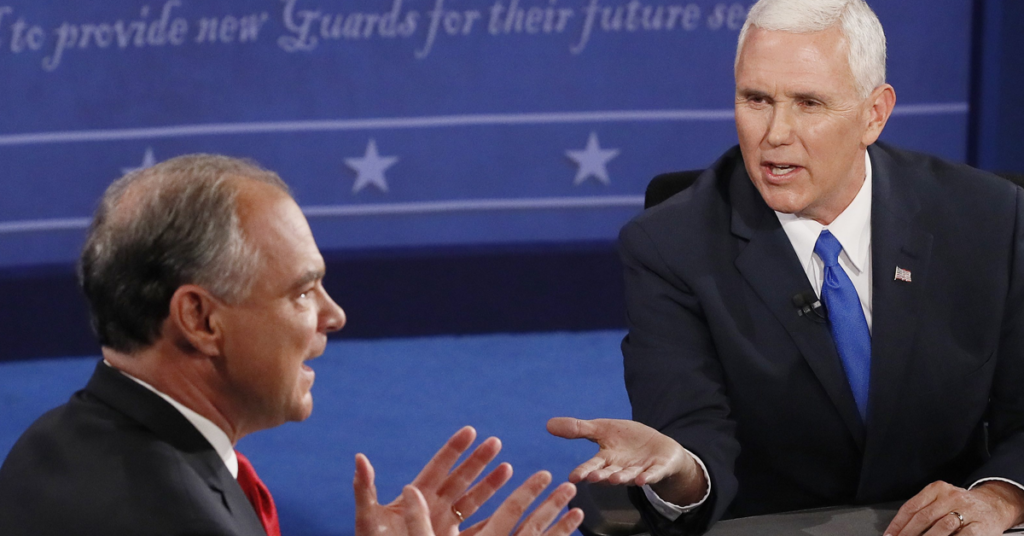
Some Mexican-Americans are taking issue with Republican Mike Pence brushing off GOP presidential nominee Donald Trump‘s comments on Mexican immigrants as “that Mexican thing.” Pence chided Democrat Tim Kaine‘s repeated mention of Trump’s comments on immigrants during Tuesday night’s vice presidential debate, telling him at one point: “Senator, you’ve whipped out that Mexican thing again.” The Indiana governor’s remark has quickly become one of the most talked about moments from the forum, trending online under #ThatMexicanThing . Twitter ranks it as the third-most tweeted about moment of the debate. Democratic nominee Hillary Clinton‘s campaign has apparently taken note of the online attention. Visitors to ThatMexicanThing.com are being redirected to Clinton’s campaign website. Republished with permission of The Associated Press.
Donald Trump as ‘role model’? Kelly Ayotte says she misspoke
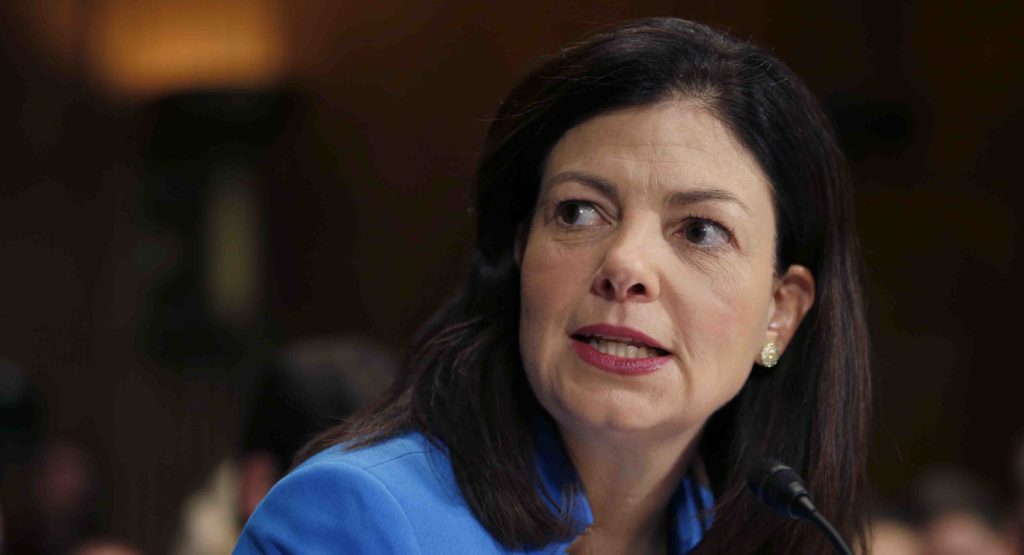
Sen. Kelly Ayotte‘s embrace of Donald Trump as a role model for children – and her abrupt reversal – underscored the risks the Republican presidential candidate poses for purple-state GOP senators who like her are battling for their political lives. Ayotte, seeking a second Senate term from New Hampshire, used a televised debate against Democratic challenger Gov. Maggie Hassan to say she “absolutely” would tell a child to aspire to be like Trump. Her campaign quickly distributed a statement afterward saying she “misspoke,” and Tuesday she told reporters that “neither Donald Trump nor Hillary Clinton have set a good example.” Ayotte’s remark proved irresistible for Sen. Elizabeth Warren, D-Mass., an active campaigner for her party who’s had repeated, sharp exchanges with Trump. “Think about it: @realDonaldTrump calls Latinos rapists, African Americans thugs, & women fat pigs, & Kelly Ayotte thinks he’s a role model,” Warren tweeted. Democrats chortled that Ayotte, considered one of the more vulnerable GOP incumbents, had fumbled with potentially devastating consequences for her re-election bid. They said she wounded herself twice: first by citing as a role model a candidate who’s openly ridiculed women, the handicapped and others and second by a retreat that smacked of insincerity and political repositioning. “I assume this question we’re going to hear a lot more of in Senate debates, and Kelly Ayotte created the textbook on how not to answer,” said Democratic pollster Geoffrey Garin. Democratic pollster Celinda Lake said it was “the unqualified nature of it and her tone” that made Ayotte’s comment truly damaging. “It’s like, ‘What are you talking about, sister?’” she said. With the GOP’s 54-46 Senate control at stake in November, Ayotte is among a half-dozen Republicans in competitive campaigns or running in swing states like Ohio, Florida and North Carolina that will help determine whether Trump or Clinton takes the White House. Asked Tuesday whether Trump was an exemplar for children, several of them avoided the trap. “The simple answer is no” and neither is Clinton, Sen. Pat Toomey, R-Pa., who’s not endorsed Trump, told reporters in Wilkes-Barre, Pennsylvania. “Let’s just say the vulgarity and gratuitous insults of people. This is not exactly the way I encourage my kids to behave.” Sen. Roy Blunt, R-Mo., also facing re-election, stopped short of labeling Trump a role model. Blunt “believes Missourians should choose their own role models,” said campaign spokesman Burson Snyder. And Sen. Richard Burr, R-N.C., said, “I, like many Americans, take issue with some of the rhetoric and actions that have come from both him and Hillary Clinton, and neither are people I’d hold up as exemplary role models.” Trump slightly trails Clinton in the latest national polls after his latest taunts, which have included mimicking how the Democrat staggered to a car after being diagnosed with pneumonia and jeering a former Miss Universe for gaining weight. In a startling departure from most presidential candidates’ efforts to avoid alienating blocs of voters, Trump has denigrated the handicapped, women, Hispanics and others. “The message is run as local a race as possible, and try to stay away from Trump as much as you can,” said Ron Bonjean, a GOP strategist. On Monday night, Ayotte initially answered indirectly when a debate moderator asked if she would point to Trump as a role model for children. When the questioner persisted, she said, “I believe he can serve as president so absolutely I would do that.” The campaign of Hassan, a two-term governor, quickly produced a 60-second internet ad featuring Ayotte’s response and juxtaposing it with Trump comments imitating a handicapped reporter, referring to a woman’s “fat, ugly face” and describing Fox News’ Megyn Kelly as having “blood coming out of her wherever.” Around 39 percent of New Hampshire voters are independents, with Republicans slightly outnumbering Democrats in the remaining group. That makes questions like Monday night’s difficult for Ayotte. Distancing herself from Trump risks upsetting his supporters, but embracing him too tightly could alienate independents and Clinton voters, whom she will need for re-election. Clinton has led Trump by modest margins in recent New Hampshire polls. Ayotte has labored all year to express her views about Trump. She initially said she would support Trump but not endorse him, then in August said would vote for him but not endorse him. Republished with permission of The Associated Press.
Mike Pence, Tim Kaine to make the case for running mates in VP debate
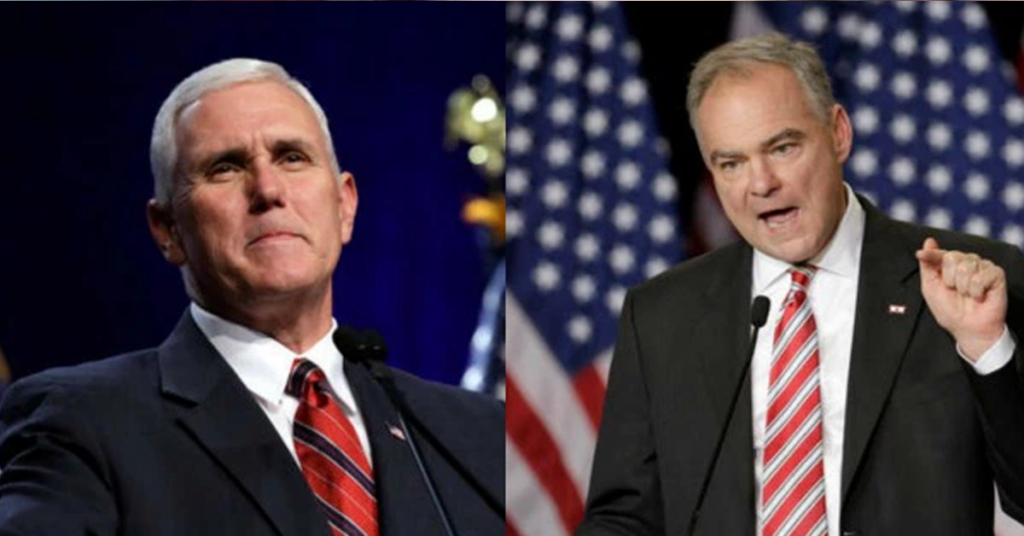
In their only debate faceoff, Virginia Sen. Tim Kaine will try Tuesday night to carry forward a fresh burst of Democratic momentum in the presidential campaign while Indiana Gov. Mike Pence seeks to steady Donald Trump‘s White House bid after one of the Republican’s worst stretches of the race. Pence and Kaine, Hillary Clinton‘s running mate, seem unlikely to dramatically change the way voters view the top two, who are among the most well-known figures in the country. Still, the nationally televised debate will be a spotlight opportunity for the longtime politicians to introduce themselves to Americans, energize party loyalists and potentially sway the shrinking pool of undecided voters. For the earnest and easygoing Kaine, that means defending Clinton’s character and reputation, her Achilles’ heel throughout the campaign. And it means blocking any attempts by Pence – an equally genial politician – to make Trump’s controversial statements and policy proposals seem more palatable. “When it comes to the issues, it’s hard to tell them apart,” Hillary Clinton’s campaign said of Trump and Pence in a video released ahead of the debate. “From the alt-right racists supporting their ticket to women’s health to immigration to LGBT equality to global warming to the minimum wage, it’s no wonder that Donald Trump picked Mike Pence.” The 90-minute showdown at Virginia’s Longwood University will be moderated by Elaine Quijano of CBS News. While last week’s first presidential debate was watched by a record-setting television audience of 84 million people, Tuesday’s contest is expected to have smaller viewership given Pence and Kaine’s lower profiles in the campaign. In a recent Associated Press-GfK poll, more than half of registered voters said they didn’t know enough about Kaine to venture an opinion about him and about 44 percent said the same for Pence. Clinton was widely viewed as the winner of her opening debate with Trump, rattling the real estate mogul with jabs about his business record and demeaning statements about women, and responding to his attacks with calm rejoinders. New public opinion polls have showed her improving her standing in nearly all battleground states. At least some of Clinton’s bounce is likely attributable to Trump’s conduct coming out of the debate. He redoubled his criticism of a beauty queen and her weight, one of the topics Clinton raised in the debate, and went on a pre-dawn Twitter tirade trying to disparage the former Miss Universe. That firestorm was deflected only by revelations that Trump suffered more than $900 million in losses in 1995 that could have allowed him to avoid paying federal income taxes for as many as 18 years, according to records obtained by The New York Times. In Tuesday’s debate, Pence will likely find himself trying to clean up Trump’s controversies, as has often been the case since he joined the GOP ticket this summer. The governor signaled that he would frame the matters as attempts by Clinton to obscure her own record. “The media is so busy parsing every word that Donald Trump said in the past 30 minutes, they’ve been ignoring what the Clintons (have) been up to the last 30 years,” Pence said during a campaign stop Monday night. “Hillary Clinton’s record on foreign affairs alone could take up the whole 90 minutes, and it wouldn’t be a pretty picture.” Pence was picked as Trump’s running mate in part because he has the conservative credentials the businessman lacks. His addition to the ticket was cheered by conservative leaders in Washington, and Trump’s supporters are hoping his debate performance will be similarly appealing for Republican voters who may still be skeptical of Trump’s ideology. “There’s Pence speak and there’s Trump speak – Mike Pence using the language of conservative orthodoxy and Donald Trump using the language of a brash businessman,” said Matt Schlapp, chairman of the American Conservative Union. Kaine, who served as Virginia’s governor before becoming senator, is largely in step with Clinton on key issues. While he voted to give President Barack Obama fast-track authority for the Trans Pacific Partnership, he’s since joined Clinton in opposing the final version of the trade pact. Both Pence and Kaine are deeply religious, which could bring faith to the forefront of the debate, a rarity in this campaign. Pence was raised Catholic, but is now a Protestant evangelical. His signature line is: “I’m a Christian, a conservative and a Republican – in that order.” Kaine speaks frequently about how his Jesuit mission work in Honduras shaped his life. At times, his Catholicism has run up against his governing choices. After opposing gay marriage in his 2005 gubernatorial run, he later broke with the church to support it. He says he’s personally against abortion but has consistently voted in favor of abortion rights. Republished with permission of The Associated Press.
Donald Trump’s down-ballot impact? Democrats, GOP disagree
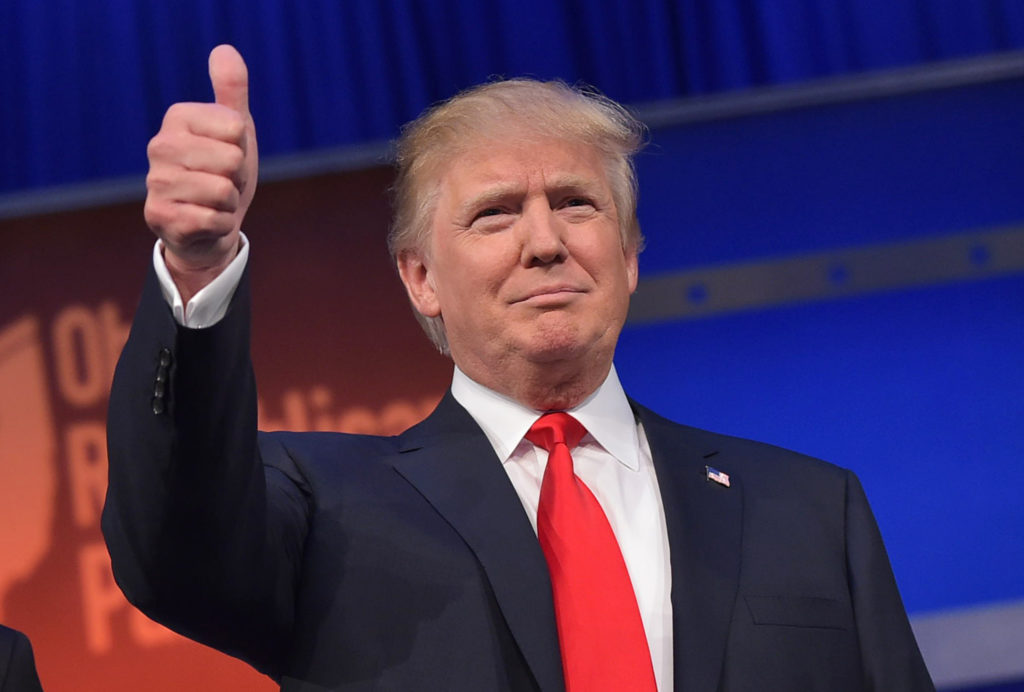
From Minnesota to the San Diego suburbs, Democrats are throwing millions of dollars into TV ads tethering House Republican candidates to Donald Trump. They say the strategy is buoying their quest for big gains in the chamber in this November’s elections. Republicans discount the impact their presidential nominee will have on House races, saying voters distinguish between Trump’s unconventional candidacy and local, familiar congressional hopefuls. And they’re firing back with ads tying Democratic House candidates to Hillary Clinton in Maine, Michigan and elsewhere. There’s no doubt that Trump’s incendiary criticisms of women, Hispanics and others have raised Democrats’ prospects for gains, especially in suburban districts and those with well-educated or minority voters. Their hopes rose further following Trump’s lamentable week in which he performed poorly in a debate against Clinton, repeatedly mocked former Miss Universe Alicia Machado for gaining weight and dealt with the fallout from The New York Times report that he declared enough business losses in 1995 to potentially avoid paying federal taxes for 18 years. The big question is whether Trump can give Democrats enough ammunition for an unlikely gain of 30 House seats, enough for majority control. They say Trump helps them across the nation, but concede that his usefulness to their congressional candidates has limits. “Donald Trump is defining this election,” said Kelly Ward, executive director of the Democratic Congressional Campaign Committee, House Democrats’ political arm. But she said choosing a campaign strategy varies by district, and it “may or may not include Donald Trump.” From this election cycle’s start in January 2015 through last Wednesday, Democrats and their allies spent nearly $7 million on almost 10,000 broadcast TV spots using Trump in 22 House districts, according to Kantar Media’s political ad tracker. Republicans and their supporters spent more than $4.5 million mentioning Clinton in ads that ran almost 10,500 times, also in 22 districts, Kantar Media figures show. The figures include primaries. Among Democrats, the DCCC alone aired nearly 4,000 spots costing around $2.3 million – more money and spots tying House Republicans to Trump than any other Democratic group, ally or candidate. It has run ads featuring Trump in districts including the Philadelphia and Las Vegas suburbs, western Texas and around San Diego, where the party is seeking to oust veteran GOP Rep. Darrell Issa. One Minnesota spot this week shows two DVDs on a store shelf, one featuring Trump and the other Rep. Erik Paulsen, R-Minn., as an actor says, “No one buys these anymore.” The House Majority PAC, which helps House Democrats, has spent nearly $400,000 on 1,300 ads for House races that mention Trump, including along California’s central coast and near Tampa, Florida. But like the DCCC, the Majority PAC is tailoring ads to issues they consider most effective. It released new spots Tuesday in Florida, Michigan, Maine, Minnesota and Nebraska that didn’t feature Trump but focused instead on Social Security and attacks on GOP candidates’ backgrounds and past statements. “You can’t just say, ‘Well, Donald Trump is on the ballot, we’re going to win everything and all we have to do is scream about Donald Trump,’” said Alixandria Lapp, executive director of the House Majority PAC. Historically, the victor of a presidential election in which no incumbent is running has finite coattails. In the six races since World War II in which no sitting president sought re-election, the party winning the White House also gained House seats just three times, and never more than 22 seats. Republicans say Democrats are overrating the damage Trump could do to GOP House candidates. GOP pollster Jon McHenry says Trump has “cultivated his own brand” that voters don’t automatically link to congressional GOP candidates, especially incumbents who can highlight work on local problems. They also note that thanks to redistricting and Democrats’ concentrations in cities and coastlines, only a few dozen of the chamber’s 435 seats are competitive, Trump or not. Republicans have a 247-188 majority, including vacancies in one GOP and two Democratic seats. “I hope they keep this strategy going. I hope they keep wasting their money,” said Mike Shields, president of the Congressional Leadership Fund, which backs House Republicans. Republicans say Trump’s limited down-ballot damage is illustrated by GOP candidates who remain competitive in Republican districts that President Barack Obama carried twice in South Florida, the Chicago suburbs and around Denver. Taking no chances, Rep. Mike Coffman, R-Colo., ran a spot saying of Trump, “Honestly, I don’t care for him much, and I certainly don’t trust Hillary.” Republicans also cite the Democratic effort to defeat Paulsen, who remains strong in his Minnesota district in the Minneapolis and Saint Paul suburbs. Democrats have spent around $1.1 million on ads linking Trump to the four-term congressman, more than in any other House race, according to Kantar Media. While the DCCC says Paulsen remains vulnerable, the House Majority PAC recently canceled around $600,000 worth of ad time it had reserved there. Playing offense, House Republican candidates and their allies have run spots featuring Clinton in states including Maine, Michigan and Arizona. Democrats say that will have little impact because Clinton is doing well in most suburban districts they hope to capture. “She sides with Hillary, not us,” says an ad by the National Republican Congressional Committee aimed at Democrat Emily Cain, who is challenging GOP Rep. Bruce Poliquin in Maine. Republished with permission of The Associated Press.
Attorney general to Trump Foundation: stop fundraising in NY
The New York attorney general’s office has ordered the Trump Foundation to immediately stop fundraising in the state, saying it isn’t registered to do so. James Sheehan, head of the attorney general’s Charities Bureau, wrote in a letter dated Friday that the failure to stop immediately and answer demands for all delinquent financial reports within 15 days “shall be deemed a continuing fraud upon the people of the state of New York.” Democratic Attorney General Eric Schneiderman has been investigating Republican presidential nominee Donald Trump‘s foundation following Washington Post reports that foundation spending personally benefited the candidate. The newspaper, citing tax records, also reported that the charity has been funded entirely from outside donations since 2008, when Trump made his last contribution to it. The attorney general’s office said the foundation had a registration for an organization with assets in New York, but the law requires a different registration for those that solicit more than $25,000 a year from the public. “Based on information received by the Charities Bureau to date, the Trump Foundation was engaged in solicitation or fundraising activities in New York State in 2016 and was not registered with the Charities Bureau pursuant to Article 7-A, and thus was not permitted to engage in such activity during this period,” Sheehan wrote. The Trump campaign said the foundation intends to cooperate with the investigation. The campaign has previously called Schneiderman “a partisan hack who has turned a blind eye to the Clinton Foundation for years and has endorsed Hillary Clinton for president.” Republished with permission of The Associated Press.
