
Rep. Robert Aderholt secures Space Command spending language in House appropriations bill

On Tuesday, Congressman Robert Aderholt (R-AL04) announced that he has been able to secure language halting the development of the U.S. Space Command (SPACECOM) in Colorado until an official basing decision has been made. “Now more than ever, the establishment of a permanent Space Command Headquarters remains vital to our national security,” said Rep. Aderholt. “The language incentivizes the Secretary of the Air Force to determine the permanent headquarters location as quickly as possible.” “In this matter, timeliness remains of the utmost importance,” Aderholt continued. “I urge the Department to move the headquarters to its preferred permanent location as quickly as possible; however, if the Administration continues to delay, I am relieved that General (James H.) Dickinson, the SPACECOM Commander, last week assured the Alabama Delegation that he had no national security concerns about moving the headquarters.” The bipartisan language is included in the House Appropriations Subcommittee on Military Construction and Veterans Affairs fiscal year 2024 spending bill, following a review and approval by the United States Air Force. During the Trump administration, the Air Force held a national search for a permanent home for Space Command. Dozens of sites across the country were considered for a multitude of factors. Two different evaluations found that Redstone Arsenal in Huntsville was the best possible site. Nebraska came in second, followed by San Antonio, Texas. Colorado, where Space Command is presently, came in fourth. A review by the inspector general found that the decision to locate SPACECOM in Huntsville was the correct decision and was not tainted by politics. “The fact is, Air Force already made the correct decision well over two years ago,” said Congressman Mike Rogers (R-AL03). That decision was affirmed by the GAO and the DoD Inspector General over a year ago. This decision was based on multiple factors, and Redstone Arsenal in Huntsville, Alabama, was the clear winner in the Evaluation and Selection phase. I am deeply concerned that the continued delays in making this move final are politically motivated and damaging to our national security.” Over 24 months later, no action has been taken to relocate SPACECOM. A recent report by NBC News claims that the White House may halt plans to move Space Command. The report cites Alabama’s restrictive abortion law. Alabama’s congressional delegation, however, points to the fact that Colorado voted for President Joe Biden while Alabama voted to keep President Donald Trump. The SPACECOM basing decision remains a responsibility of the Secretary of the Air Force, Frank Kendall, a decision delegated by the President of the United States and the Secretary of Defense. “As we take this step, I would like to thank the Alabama delegation for their commitment to this fight,” said Aderholt. “We all know that Space Command belongs in the Rocket City.” According to a June 2022 Government Accountability Office (GAO) report, the decision-making process that the Air Force used to decide to move Space Command headquarters from Colorado Springs to Alabama had “significant shortfalls in its transparency and credibility.” “Over the past year, we’ve repeatedly raised concerns that the previous administration used a flawed, untested, and inconsistent process to select a location for U.S. Space Command. The reports from the Government Accountability Office and the Department of Defense Inspector General both confirm that the basing process lacked integrity and neglected key national security considerations,” Sens. Michael Bennet and John Hickenlooper and Reps. Doug Lamborn and Jason Crow said in a joint statement. Additionally, legislators from Colorado argue that the decision to move Space Command was politically motivated, arguing that former President Trump indicated that he would decide the 2020 election. AL.com reported in 2021 that during an interview on the Rick & Bubba show, Trump stated, “Space force – I sent to Alabama. I hope you know that. (They) said they were looking for a home, and I single-handedly said, ‘Let’s go to Alabama.’ They wanted it. I said let’s go to Alabama. I love Alabama.” Robert Aderholt is in his 14th term representing Alabama’s Fourth Congressional District. He is an attorney and was formerly counsel for Alabama Governor Fob James. He is a native of Haleyville. To connect with the author of this story or to comment, email brandonmreporter@gmail.com.
Robert Aderholt says Texas court decision on abortion pill is “crucial victory for defending life”
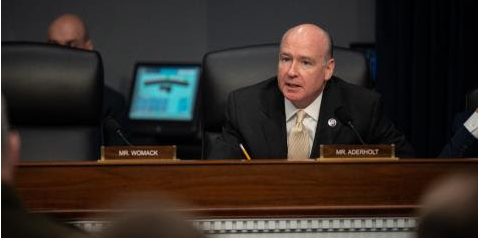
Congressman Robert Aderholt released a statement on Saturday in response to the Northern District of Texas’ ruling in Alliance for Hippocratic Medicine v. U.S. Food and Drug Administration. The Texas Judge ruled that the U.S. Food and Drug Administration improperly approved mifepristone – one of the two most common abortion pills in the United States. “This decision from the Northern District of Texas is a win for protecting women’s health and a crucial victory for defending life,” said Rep. Aderholt. “As long as chemical abortion drugs are available, the lives of women and the unborn are at stake.” The Alliance for Hippocratic Medicine filed a petition against the Food and Drug Administration (FDA)’s actions regarding the chemical abortion drug back in 2002, but the FDA stonewalled judicial review until now. “As a Member of the House Appropriations Committee, the actions of the Food and Drug Administration in misusing its authority and expediting approval of this dangerous drug have been of great concern,” said Aderholt, who Chairs the House Values Action Team. “When this drug was approved over 20 years ago, it relied on flawed and irrelevant studies and failed to adequately study the dangers this drug posed for adolescent girls.” “The Biden administration continues to say that easy abortions are crucial to women’s healthcare, but the FDA pushed abortion pills to market, which have killed mothers and their children,” said Rep. Doug Lamborn, who co-chairs the House Values Action Team. “Yesterday’s ruling in Alliance for Hippocratic Medicine v. FDA brings common sense back to our healthcare process while saving lives. The first rule of the Hippocratic oath is to do no harm, and I am pleased to see numerous recent court decisions upholding this standard for women and babies across the nation.” Aderholt signed an amicus brief asking the court to find in favor of the Alliance for Hippocratic Medicine’s court filing. “I was proud to join 67 Members of Congress in signing on to an amicus brief led by my colleague, Congressman August Pfluger,” added Aderholt. “This amicus identified several key issues, including the failure of the FDA to adhere to the drug approval process in the Federal Food, Drug, and Cosmetic Act (FFDCA); the unlawful waiver of the pediatric study requirement under the Pediatric Research Equity Act; and the violation of federal law by permitting mail-order chemical abortion pills.” “This victory in court brings us one step closer to protecting the sanctity of life and the safety of mothers,” said Rep. Pfluger. “I’m proud to work with other members of Congress, Alliance for Hippocratic Medicine, Americans United for Life, and countless others in being a voice for the voiceless.” The Biden Administration filed a notice of appeal Friday evening. On Monday, the Justice Department filed a 49-page appeal asking for the Fifth Circuit Court of Appeals to hear this decision. The DOJ argued in that filing that the plaintiffs had no standing to file their lawsuit because they were not personally harmed by the abortion pill. The judge’s order goes into effect on Friday unless the order is stayed by the appeals court. The House Values Action Team, led by Rep. Aderholt, will continue to follow this case closely. Aderholt is also the Chairman of the House Labor, Health and Human Services, and Education Appropriations Subcommittee. He is in his 14th term representing Alabama’s Fourth Congressional District. To connect with the author of this story or to comment, email brandonmreporter@gmail.com.
Mike Rogers and colleagues question Department of Defense leadership on China threat
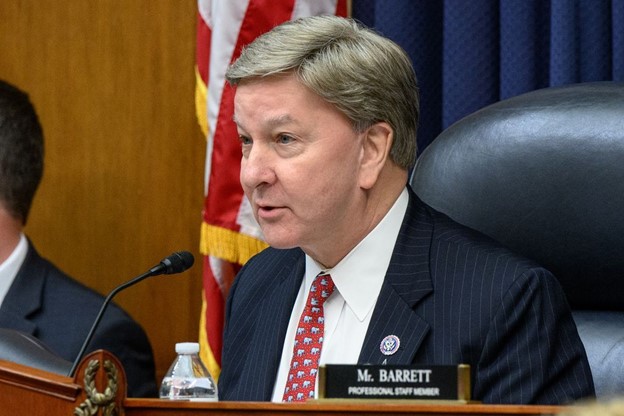
On Wednesday, March 29th, the House Armed Services Committee (HASC) questioned Secretary of Defense Lloyd Austin and Chairman of the Joint Chiefs of Staff General Mark Milley during an oversight hearing. Members pressed Sec. Austin and Gen. Milley on the threat China poses to the United States and what we’re doing to deter China’s growing influence and military capabilities. Congressman Mike Rogers chairs the powerful committee which oversees the Department of Defense. In his opening remarks, Rogers made it clear that we must invest in “the men and women of our armed services and the modernization of our conventional and strategic deterrent” to maintain readiness in the face of China’s aggression. In an exchange with Chairman Rogers, Gen. Milley said, “That’s the reality of it. Our military, capability-wise, can fight in a lot of places with different types of contingencies. But if you’re talking about a serious conflict with a major great power war, realistically putting both China and Russia together is a very, very difficult thing.” “That’s the thing the committee needs to take note of, and the Congress is that for the first 15 years. I was here; we had a strategy that allowed us to fight two wars simultaneously and successfully defend the homeland,” Rogers said. “We have already had to drop that down to just one theatre, which is scary enough, and I worry that if we do have a disruption in our funding, our authorization, it could further erode that capability.” Rep. Doug Lamborn (R-Colorado) questioned Milley on China’s threat to the U.S. “[China has] a national goal to be a global — to be the global — coequal with the United States and superior militarily by mid-century,” Gen. Milley said in response. “They’re on that path to do that, and that’s really disturbing. That’s really bothersome. We’re going to have to not only keep pace, but we have to outpace that, and that will assure the peace.” Rep. Rob Wittman (R-Virginia) delivered his analysis of the threat the U.S. is facing from the Chinese Communist Party. Rep. Wittman showed the alarming growth of China’s capabilities from 1999 to today and projections for 2025. Rep. Wittman said, “Today we face the threat of our lifetime, the CCP is indeed that…we see the expansionist efforts by the Chinese Communist Party.” Rep. Mike Gallagher (R-Wisconsin) emphasized bipartisan support to turn Taiwan into a porcupine and pressed Secretary Austin on whether he is personally engaged in the effort to deliver a deterrence by denial capability. Secretary Austin responded, “Absolutely. There is not a week that goes by that I am not talking to commanders and staff on the problems, the challenges, that we face with China, me personally, and so that is a part of our battle rhythm, for lack of a better term and again, I think that that’s what it’s gonna take to do the kind of things that you just described.” In an exchange with Gallagher, Secretary Austin stated, “We need to make sure that we maintain a combat credible force that can deter any adversary from making a bad decision on any given day.” Mike Rogers is in his eleventh term representing Alabama’s Third Congressional District. To connect with the author of this story or to comment, email brandonmreporter@gmail.com.
Bipartisan congressional caucus forms to address fentanyl crisis
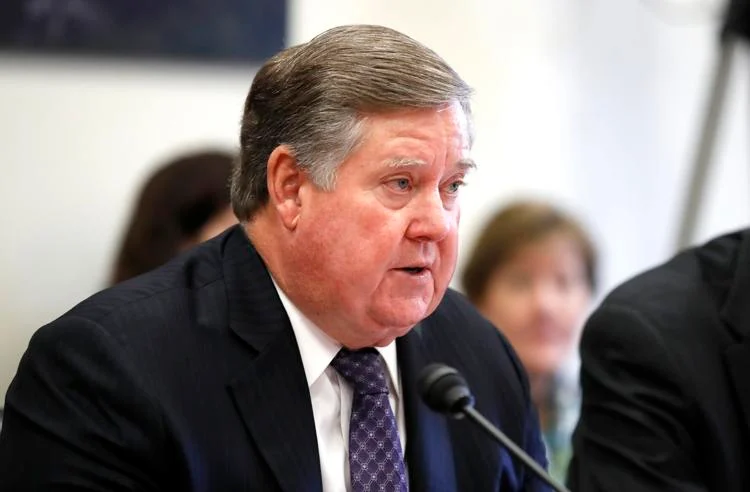
Labeling the smuggling of illicit fentanyl into the U.S. from Mexico “a national crisis,” a group of lawmakers has formed a bipartisan caucus to address the issue. Led by Republican California Reps. Ken Calvert and Darrell Issa and Democratic Reps. Joe Neguse of Colorado and Madeleine Dean of Pennsylvania, the Bipartisan Fentanyl Prevention Caucus was formed to “coordinate with members from both sides of the aisle to combat the nationwide spike in fentanyl-related overdoses and drug poisonings.” The group says it will work with federal and state law enforcement and “to educate the public and the Congress, in cooperation with prevention and awareness groups to better understand the ongoing threat of fentanyl in communities across America.” “Fentanyl is devastating the lives of Americans in every corner of our country. With fentanyl-related deaths climbing every year, we need new solutions to stop this alarming trend,” Calvert said. “This is not a partisan issue – it’s a national crisis.” Rather than pledging to end the fentanyl crisis, Calvert said he hoped the caucus would “educate Americans on the dangers of fentanyl and provide real solutions that will stop the destruction of this deadly drug.” “Fentanyl is not a new danger. But the deadly threat it poses has now reached every corner of our country, and no community is being spared,” Issa said. “The stakes could not be more clear: If we don’t win the fentanyl fight, we’re not going to just lose my community or my neighbor’s. Or any one of my colleagues. We’re going to lose this country. This caucus is needed now as we tell the truth, develop solutions, and save lives.” When announcing its formation, the caucus didn’t call on the president or Secretary of State Antony Blinken to declare Mexican cartels as Foreign Terrorist Organizations, as Texas Gov. Greg Abbott and 21 attorneys general have repeatedly done. Last September, Abbott issued an executive order designating the Sinaloa Cartel, the Jalisco New Generation Cartel, and any similarly situated Mexican drug cartels as foreign terrorist organizations” under Section 219 of the Immigration and Nationality Act. He also requested President Joe Biden do likewise, the second time he’d made the request since April 2021. In his September 21, 2022 letter, Abbott said since then, “There was no action, no response.” He’s still received no response, his office has told The Center Square. Last week, Blinken told Congress he’d consider designating cartels as FTOs. Two weeks prior, the White House said it didn’t have any intention of doing so. Republican U.S. Sens. Rick Scott of Florida and Roger Marshall of Kansas introduced the Drug Cartel Terrorist Designation Act, which Florida Attorney General Ashley Moody said will “do the job Biden refuses to do – protect the American people.” The caucus also hasn’t demanded the president designate fentanyl as a weapon of mass destruction, as 18 attorneys general have done led by Moody. Fentanyl poisoning remains the leading cause of death among adults between the ages of 18 and 45. Two milligrams, the weight of a mosquito, is lethal. In fiscal years 2021 and 2022, CBP agents confiscated enough fentanyl to kill nearly 5 billion people. Since March 2021, Texas Operation Lone Star officers have seized over 373 million lethal doses of fentanyl. Florida law enforcement officers in a few month’s time last year seized enough fentanyl to kill everyone in Florida. The U.S. Drug Enforcement Administration has issued several public alerts warning Americans about the dangers of fentanyl. Most recently it issued another public alert about the “sharp increase in the trafficking of fentanyl mixed with Xylazine,” an animal tranquilizer referred to on the streets as “Tranq.” It did so after the FDA, CDC, and multiple state agencies issued warnings about Xyzaline being detected in an increasing number of illicit drug mixtures and a growing number of overdose deaths nationwide. “Xylazine is making the deadliest drug threat our country has ever faced, fentanyl, even deadlier,” DEA Administrator Anne Milgram said. DEA has so far seized Xylazine and fentanyl mixtures in 48 of 50 states. Caucus members also include Angie Craig (D-MN), Chris Pappas (D-NH), Raja Krishnamoorthi (D-IL), Melanie Stansbury (D-NM), Chrissy Houlahan (D-PA), Ruben Gallego (D-TX), Nikki Budzinski (D-IL), Marc Veasey (D-TX), Sheila Jackson Lee (D-TX), Raúl Grijalva (D-AZ), Doug Lamborn (R-CO), Sharice Davids (D-KS), Don Bacon (R-NE), Claudia Tenney (R-NY), Andre Carson (D-IN), Ralph Norman (R-SC), Chris Smith (R-NJ), Lance Gooden (R-TX), Bob Latta (R-OH), Andy Biggs (R-AZ), Jake LaTurner (R-KS), Barry Moore (R-AL), David Valadao (R-CA), and Robert Aderholt (R-AL). Republished with the permission of The Center Square.
China surpasses the United States in the number of ICBM launchers

The Chinese government has been working for several years to modernize its military and increase the size and potency of its nuclear deterrent. According to a recent letter from the Pentagon’s Strategic Command to Congress, China now has surpassed the United States in intercontinental ballistic missile (ICBM) launchers. Republican Armed Services Committee leaders said this “should serve as a wake-up call for the United States.” Congressman Mike Rogers is the Chairman of the House Armed Services Committee. Rep. Doug Lamborn is the Chairman of the Subcommittee on Strategic Forces. U.S. Senator Roger Wicker is the Ranking Member of the Senate Armed Services Committee. Sen. Deb Fischer is the Ranking Member of the Senate Subcommittee on Strategic Forces. The congressional leaders released a joint statement Tuesday in response to the news that China has surpassed the United States in the number of land-based fixed and mobile ICBM launchers. The FY22 NDAA requires that U.S. Strategic Command notify Congress when the number of ICBMs, nuclear warheads, or ICBM launchers in China surpasses the United States. Strategic Command gave that official notification to Congress just 12 days ago. “The head of U.S. Strategic Command has informed us that China has surpassed the U.S. in the number of ICBM launchers – this should serve as a wake-up call for the United States,” Rogers and the other congressional leaders wrote. “It is not an understatement to say that the Chinese nuclear modernization program is advancing faster than most believed possible. We have no time to waste in adjusting our nuclear force posture to deter both Russia and China. This will have to mean higher numbers and new capabilities.” In response to a December 5th letter from the congressional leaders, U.S. Air Force General Anthony Cotton wrote that the Chinese have surpassed the number of fixed and mobile ICBM launchers. The United States, however, still has more nuclear warheads and more ICBMs in the active inventory. A classified letter that provided more detail was also attached to this letter. Alabama Today and other media sources do not have access to that classified information. Rogers wrote on Twitter, “China is rapidly approaching parity with the United States. We cannot allow that to happen. The time for us to adjust our force posture and increase capabilities to meet this threat is now.” Global tensions have risen with the Russian invasion of Ukraine and American support for the Ukrainians. There are growing fears that Russia or the United States, or both, could break out of the new START arms control treaty limiting the number of ICBMs, launchers, and warheads the two nations can have. Tensions between China and the U.S. have risen over trade, concerns over human rights in China, and Chinese threats against Taiwan. A top U.S. Air Force general wrote recently that officers should expect a war with China in 2025. The Chinese balloon that intruded into American airspace and was shot down by a U.S. Air Force F22 on Saturday has only further raised tensions. Rogers represents Alabama’s Third Congressional District. Rogers is in his eleventh term in Congress following previous services in the Alabama House of Representatives and on the Calhoun County Commission. Rogers is an attorney. He and his family reside in Saks. To connect with the author of this story or to comment, email brandonmreporter@gmail.com.
Jerry Carl co-sponsors legislation to encourage energy production and stop foreign oil dependence

Rep. Jerry Carl has co-sponsored legislation to help American energy production. The Unleashing American Energy Act would require a minimum of two oil and gas lease sales a year in the Gulf of Mexico and in the Alaska Region of the Outer Continental Shelf, and it prohibits future moratoriums or delays on oil and gas leasing. “At a time when fuel prices are at record highs, the Biden administration has not let up on its regulatory assault on American energy producers. As a result, Americans are paying more for fuel and nearly everything else. That’s why I’m proud to introduce the Unleashing American Energy Act, which would reverse Biden’s war on American energy and unleash domestic production. Although this bill won’t solve all our energy problems overnight, it will help lower energy prices and bring much-needed relief to millions of Americans. Under the Trump administration, we had regular oil and gas lease sales in the Gulf of Mexico, and the United States became energy independent. My bill would require two new oil and gas lease sales each year in the Gulf of Mexico and in Alaska, while also prohibiting oil and gas lease sales from being blocked or slowed down again,” said Carl. House Committee on Natural Resources Ranking Member Bruce Westerman argued that this legislation will help stop America’s energy dependence. “Today, we are taking a necessary step to end President Biden’s repeated assaults on American energy. The American people continue bearing the brunt of these disastrous policies. Enough is enough. The bills we introduced today will allow us to tap into the rich stores of resources America already has, and further both our energy independence and our innovation in the energy sector. Together with legislation promoting development of American critical minerals and energy independence that our members introduced earlier this Congress, we are advancing an all-of-the-above energy approach that will strength our nation and allow us to lead the world into the future,” said Westerman. According to Carl’s press release, the U.S. Department of the Interior is required by law to publish regular five-year leasing plans. The current plan expires on June 30, 2022. The Biden administration has not initiated the process to publish a new one. The Unleashing American Energy Act is cosponsored by House Committee on Natural Resources Ranking Member Bruce Westerman (R-AR), House Republican Conference Chair Elise Stefanik (R-NY), and Reps. Troy Balderson (R-OH), Russ Fulcher (R-ID), Garret Graves (R-LA), Yvette Herrell (R-NM), Doug Lamborn (R-CO), Tom McClintock (R-CA), Blake Moore (R-UT), Dan Newhouse (R-WA), Matt Rosendale (R-MT), Pete Stauber (R-MN), Chris Stewart (R-UT), Tom Tiffany (R-WI), Jeff Van Drew (R-NJ), Beth Van Duyne (R-TX), and Robert Wittman (R-VA).
Reps. Barry Moore and Mo Brooks demand DOD halt involuntary discharges for vaccine refusal immediately
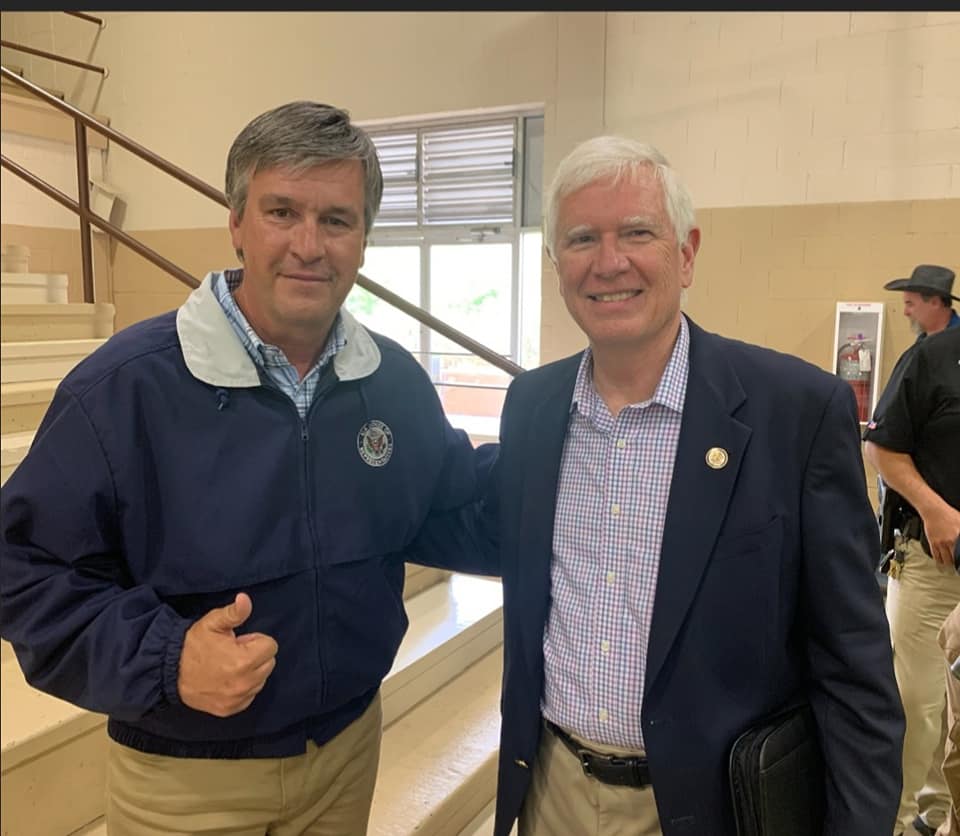
Reps. Barry Moore and Mo Brooks joined 40 of their colleagues in sending a letter to the Department of Defense (DOD) to demand that they halt efforts to involuntarily discharge members of the military who have refused COVID-19 vaccination. The letter requests that they stop until an in-depth review of natural immunity is complete, and the Department has issued uniform procedures for vaccine exemptions. According to Moore’s press release, Section 720 of the National Defense Authorization Act for Fiscal Year 2022 requires the DOD to establish uniform procedures for issuing exemptions and fully consider natural immunity. This includes eligibility timelines for consideration of exemptions for service members nearing separation and retirement in the development of uniform procedures relating to administrative exemptions. According to an NPR report, as of January 26, 96% of active troops had been completely vaccinated, while 3,350 soldiers had refused to get the vaccine. Nearly 5,900 have received temporary exemptions. “The DOD must immediately halt efforts to discharge our active-duty military members who refuse to get the vaccine just because overreaching politicians want to continue intervening in the private lives of the American people,” said Moore. “We must ensure that the DOD completes an in-depth review of natural immunity. I will continue to fight against the tyrannical vaccine mandate on our service members.” The letter states, “We are gravely concerned that the military services are proceeding with involuntary discharges when it is unclear to us whether uniform procedures have been issued by the Department of Defense. If the Department of Defense has not issued uniform procedures or reviewed the inclusion of natural immunity and the military services are moving forward with involuntary discharges, then we believe the Department is ignoring and violating Section 720. Congress included this language to protect our service members, and we expect the Department of Defense to abide by the law.” Additional members of Congress to sign the letter include Vicky Hartzler, Doug Lamborn, Elise Stefanik, Brian Mast, David McKinley, Darrell Issa, Kevin Hern, Rodney Davis, Bill Huizenga, Yvette Herrell, Michael Waltz, Bill Posey, Michael Guest, David Valadao, Thomas Tiffany, Pete Stauber, Mike Kelly, Andy Biggs, Neal Dunn, Gus Bilirakis, Dan Crenshaw, Randy Weber, Sr., Louie Gohmert, Lauren Boebert, Glenn Grothman, Alex Mooney, Joe Wilson, Scott DesJarlais, Jack Bergman, David Schweikert, Jeff Duncan, Ralph Norman, Bruce Westerman, Jim Banks, Rick Crawford, Jodey Arrington, Christopher H. Smith, Victoria Spartz, Ted Budd, and Gregory Steube.
Colorado’s Aerospace Alley prepares for Space Command move
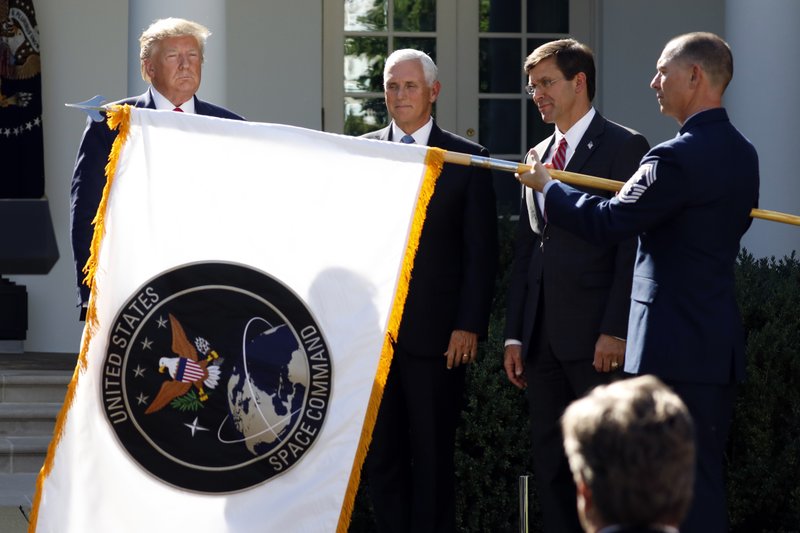
When Kathy Boe heard the news in January that President Donald Trump was moving the headquarters of U.S. Space Command from Colorado Springs to Huntsville, Alabama, she understood why Trump was making the move — even though she expected Colorado Springs to be the frontrunner in the race. “We kind of knew they were our biggest competitor all along,” said Boe, the founder and CEO of Colorado Springs-based aerospace company Boecore. Boe started her company in her Colorado Springs basement 21 years ago. The business, which designs software for military space and missile defense projects, now employs 275 people in the city.Since that time, Boe’s business has also expanded to other locations, including Huntsville. The Boecore office there opened 12 years ago, and Boe said there has been plenty of private and public sector military work going on between the two cities for decades. Boe has even advocated for the Colorado Springs Airport to add a direct flight to Huntsville. The Army’s Redstone Arsenal, near Huntsville, is host to a number of federal military installations, including the Missile Defense Agency, NASA’s Marshall Space Flight Center and Army Space and Missile Defense Command. After Trump’s decision, Alabama Governor Kay Ivey called the region “the most natural choice” for U.S. Space Command. Yet, Colorado’s top elected representatives, including the state’s entire congressional delegation, cried foul. They argued the Defense Department’s space assets in Colorado focused on operating military satellites are a far more logical fit for the work done through the Space Command mission. Plus, they pointed out, Peterson Air Force base has already been effectively hosting the command since it was re-established in 2019 and moving it would lead to a costly duplication of resources. Colorado’s political leaders saw Trump’s move as an overtly partisan one, meant to pacify two Republican senators ahead of a heated vote on whether to convict the former President on impeachment charges. In February, the Defense Department — operating under new President Joe Biden — announced it would investigate the circumstances behind Trump’s Space Command decision. News of the investigation left Colorado politicians cheering. Governor Jared Polis said the investigation could help “restore integrity” to the flawed and “fiscally irresponsible” decision. Senators Michael Bennet And John Hickenlooper put out a joint statement that said moving the command to Alabama would jeopardize national security. Gov. Ivey in Alabama quickly welcomed the official review of the Huntsville selection, saying the location was “chosen based on merit.” Journalist Lee Roop covers Alabama’s aerospace industry for the statewide news service AL.com. He said despite Colorado’s enthusiasm in the wake of the investigation, people in Huntsville are largely convinced the decision will stand. “Our (University of Alabama) football coach down here, Nick Saban, he always says ‘Trust the process and you’ll get where you want to go,’” Roop said. “So, there’s a process and they felt confident about the process.” The earliest Redstone Arsenal would take over hosting Space Command from Colorado Springs would be in 2026. That time would allow Redstone to build the necessary facilities to house the Command. Rep. Doug Lamborn said in a commentary for Defense News that the Department of Defense has spent over $350 million in the last 15 years on “space-specific infrastructure” in Colorado. He said building the infrastructure for a new headquarters in Alabama would be “expensive” and that building similar headquarters around the country have cost the federal government hundreds of millions of dollars. Roop said he expects the newly announced investigation into the decision will delay the timing of Space Command’s move to Alabama even further. More than 18 months ago, the Wings Over The Rockies Air and Space Museum started a campaign to popularize the term “Aerospace Alley” in reference to Colorado’s burgeoning aerospace industry. The campaign touts Colorado’s concentration of a private aerospace workforce, which they say is the highest in the nation: 500 aerospace companies. The majority of those companies employ 10 or fewer people, according to retired Air Force Maj. Gen. John Barry, the President and CEO of Wings Over The Rockies. “It kind of reminds me of what Silicon Valley must have been like when the industry started out back there with small companies and people working in garages and things like that,” Barry said. The Aerospace Alley campaign is largely focused on workforce development — to attract and educate young aerospace talent. Barry said that even if U.S. Space Command does ultimately move to Alabama, much of the command’s operations will still be run from the Centennial State. “Will it hurt? Yeah, it’ll be a little bit of a stigma,” Barry said. “But, will it be able to prevent us from being able to continue with the aspect of trying to put Colorado as maybe the number one aerospace state in the nation? I don’t think so.” That’s also the case for Alabama. Roop said the rest of the country doesn’t often realize how much aerospace work is already done in the state. “People here really want the command to come, and we’re very excited about it. But, you know, it’ll be OK. It’ll be OK any way it turns out,” Roop said. Republished with the permission of the Associated Press.
US Space Command site to be located in Huntsville, Alabama
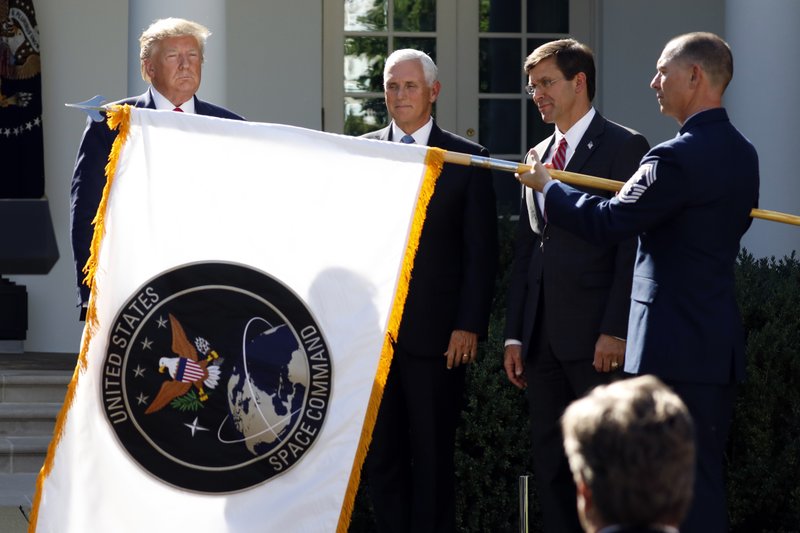
The U.S. Air Force announced Wednesday that the new U.S. Space Command headquarters will be in Huntsville, Alabama, after the state was selected over five others competing for the project, including Colorado, where Space Command is provisionally located. The role of Space Command is to conduct operations such as enabling satellite-based navigation and troop communication and providing warning of missile launches. That is different from the Space Force, which is a distinct military service like the Army, Navy, Air Force, Marine Corps, and Coast Guard. “I couldn’t be more pleased to learn that Alabama will be the new home to the United States Space Command,” Alabama Republican Gov. Kay Ivey said in a statement. “Our state has long provided exceptional support for our military and their families as well as a rich and storied history when it comes to space exploration,” she said. Huntsville’s nickname, Rocket City, is thanks largely to Wernher von Braun and his team of fellow German-born rocketeers who settled there in the 1950s. The city has long been home to the Army’s Redstone Arsenal and NASA’s Marshall Space Flight Center. Air Force Secretary Barbara Barrett, an appointee of President Donald Trump, announced the decision days before leaving office. Colorado officials lambasted the move, saying military officials had recommended to Trump that Space Command remain at the Peterson Air Force Base in Colorado Springs, but they were “overruled for politically motivated reasons.” They did not say what those alleged political reasons were. Trump won Alabama in the November election and President-elect Joe Biden won Colorado. “This move threatens jobs, could cause serious economic damage, and upend the lives of hundreds of military and civilian families that were counting on U.S Space Command staying at home in Colorado Springs as well as harm military readiness,” Democratic Colorado Gov. Jared Polis and Lt. Gov. Dianne Primavera said in a statement. In a letter, U.S. Rep. Doug Lamborn of Colorado urged Biden to reverse the decision upon taking office, saying moving Space Command from Colorado would “damage America’s national security” at a time when Russia and China are actively competing with the U.S.’s space capabilities. U.S. Rep. Mo Brooks of Alabama said Barrett told him the decision was based “solely on merit and the interests of national security.” Brooks suggested politics will be at play if the site gets moved back to Colorado under the new administration. “Partisan politics should not play a role in national security. Time will tell what happens in a red state when the federal government is totally dominated by Democrats,” the Republican congressman said. The Secretary of the Air Force said Redstone Arsenal in Huntsville had been selected for the new headquarters. The city was chosen after site visits to six states that compared factors such as infrastructure capacity, community support, and costs to the Department of Defense. Redstone Arsenal offered a facility to support the headquarters, at no cost, while the permanent facility is being constructed. The Department of the Air Force said the decision to move to Huntsville will become final pending the results from the required environmental impact analysis. That is expected in the spring of 2023. The headquarters will remain in Colorado until then. Other finalists for the site were Kirtland Air Force Base in New Mexico, Offutt Air Force Base in Nebraska, Peterson Air Force Base in Colorado, Port San Antonio in Texas, and Patrick Air Force Base in Brevard County, Florida. Those sites will remain alternative locations until the final announcement. Trump in 2019 authorized the creation of the U.S. Space Command to preserve American dominance on what he called “the ultimate high ground.” Huntsville Mayor Tommy Battle said the city is honored to have been selected. Ivey in a tweet thanked U.S. Sen. Richard Shelby, former U.S. Sen. Doug Jones, and local officials for advocating for the site to be in Alabama. Republished with the permission of the Associated Press.
