
Alabama community health centers receive $4M in critical opioid treatment grants

Community health centers across the state are receiving federal grants to support increased treatment and prevention for opioid and substance abuse. Sen. Richard Shelby made the announcement Thursday that 15 centers would receive a total of $4,038,000 in federal grant funding from the U.S. Department of Health and Human Services (HHS). “It is of the utmost importance that we work to fund the fight against the national opioid crisis,” said Shelby. “Nearly every county in Alabama is affected by this growing problem. These HHS grants will allow community health centers across the state to provide treatment to patients with opioid and substance abuse and support addiction prevention programs, helping our communities tackle this widespread epidemic.” These grants will impact community health centers in the following areas of the state: Bayou La Batre, Birmingham, Centreville, Gadsden, Huntsville, Mobile, Montgomery, Parrish, Selma, Scottsboro, Troy, and Tuscaloosa. On September 19, HHS awarded nearly $352 million to 1,232 community health centers across the nation, including the 15 in Alabama, through the Expanding Access to Quality Substance Use Disorder and Mental Health Services (SUD-MH) awards. The SUD-MH awards support health centers in implementing and advancing evidence-based strategies that best meet the substance use disorder and mental health needs of the populations they serve. The following 15 community health centers in Alabama will receive $4,038,000 in grant funding: Bayou La Batre Area Health Development Board, Inc., Bayou La Batre – $285,000 Christ Health Center, Inc., Birmingham – $285,000 Alabama Regional Medical Services, Birmingham – $285,000 Aletheia House, Inc., Birmingham – $201,750 Cahaba Medical Care Foundation, Centreville – $296,000 Quality of Life Services, Inc., Gadsden – $293,000 Central North Alabama Health, Huntsville – $285,000 Health Services, Inc., Montgomery – $285,000 Franklin Primary Health Center, Inc., Mobile – $285,000 Mobile County Health Department, Mobile – $285,000 Capstone Rural Health Center, Parrish – $287,250 Rural Health Medical Program, Inc., Selma – $285,000 Northeast Alabama Health Services, Inc., Scottsboro – $110,000 S.E. Alabama Rural Health Associates, Troy – $285,000 Whatley Health Services, Inc., Tuscaloosa – $285,000
Donald Trump opioid plan includes death penalty for traffickers
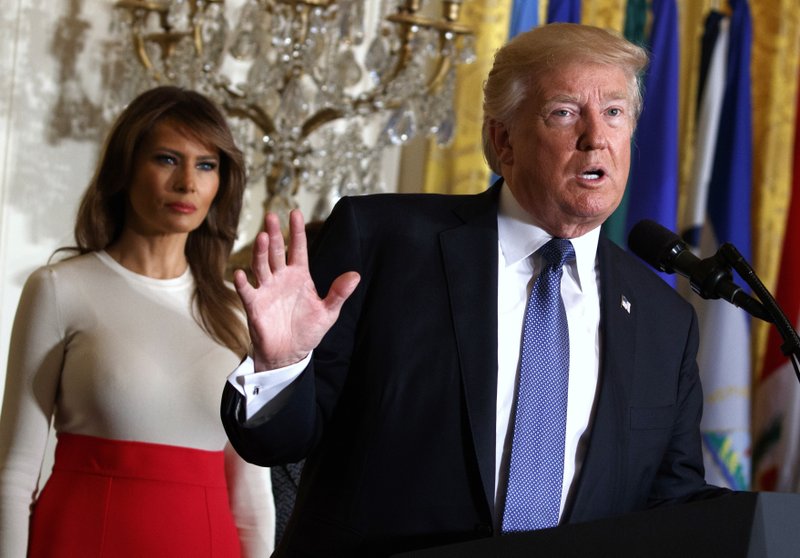
President Donald Trump’s plan to combat opioid drug addiction calls for stiffer penalties for drug traffickers, including the death penalty where appropriate under current law, a top administration official said. It’s a fate for drug dealers that Trump has been highlighting publicly in recent weeks. Trump also wants Congress to pass legislation reducing the amount of drugs needed to trigger mandatory minimum sentences for traffickers who knowingly distribute certain illicit opioids, said Andrew Bremberg, Trump’s domestic policy director, who briefed reporters Sunday on the plan Trump is scheduled to unveil Monday in New Hampshire, a state hard-hit by the crisis and that he once referred to as “drug infested.” The president will be joined by first lady Melania Trump, who has shown an interest in the issue as it pertains to children. Trump drew criticism last year after leaked transcripts of his telephone conversation with Mexico’s president showed he had described New Hampshire as a “drug-infested den.” The Washington Post published the transcripts. Death for drug traffickers and mandatory minimum penalties for distributing certain opioids are just two elements under the part of Trump’s plan that deals with law enforcement and interdiction to break the international and domestic flow of drugs into and across the U.S. Other parts of the plan include broadening education and awareness, and expanding access to proven treatment and recovery efforts. Trump has mused openly in recent weeks about subjecting drug dealers to the “ultimate penalty.” The president told the audience at a Pennsylvania campaign rally this month that countries like Singapore have fewer issues with drug addiction because they harshly punish their dealers. He argued that a person in the U.S. can get the death penalty or life in prison for shooting one person, but that a drug dealer who potentially kills thousands can spend little or no time in jail. “The only way to solve the drug problem is through toughness,” Trump said in Moon Township. He made similar comments at a recent White House summit on opioids. “Some countries have a very, very tough penalty — the ultimate penalty. And, by the way, they have much less of a drug problem than we do,” Trump said. “So we’re going to have to be very strong on penalties.” White House officials referred questions about the death penalty and drug traffickers to the Justice Department, which said the federal death penalty is available for several limited drug-related offenses, including violations of the “drug kingpin” provisions in federal law. Doug Berman, a law professor at Ohio State University, said it was not clear that death sentences for drug dealers, even for those whose product causes multiple deaths, would be constitutional. Berman said the issue would be litigated extensively and would have to be definitively decided by the U.S. Supreme Court. Opioids, including prescription opioids, heroin and synthetic drugs such as fentanyl, killed more than 42,000 people in the U.S. in 2016, more than any year on record, according to the Centers for Disease Control and Prevention. Trump has declared that fighting the epidemic is a priority for the administration but critics say the effort has fallen short. Last October, Trump declared the crisis a national public health emergency, short of the national state of emergency sought by a presidential commission he put together to study the issue. “We call it the crisis next door because everyone knows someone,” said Kellyanne Conway, a Trump senior adviser. “This is no longer somebody else’s community, somebody else’s kid, somebody else’s co-worker.” Trump will also discuss how his plans for a U.S.-Mexico border wall and punishing “sanctuary” cities that refuse to cooperate with federal immigration authorities will help combat the opioid crisis, Conway told reporters traveling with the president. Other elements of the plan Trump call for a nationwide public awareness campaign, which Trump announced last October, and increased research and development through public-private partnerships between the federal National Institutes of Health and pharmaceutical companies. Bremberg said the administration also has a plan to cut the number of filled opioid prescriptions by one-third within three years. The stop in New Hampshire will be Trump’s first as president. He won the state’s 2016 Republican presidential primary but narrowly lost in the general election to Hillary Clinton. It follows a visit to the state last week by retiring Sen. Jeff Flake, R-Ariz., a persistent Trump critic. Flake told New Hampshire Republicans that someone needs to stop Trump — and it could be him if no one else steps up. Republished with permission from the Associated Press.
Five issues to watch Alabama lawmakers tackle in 2018
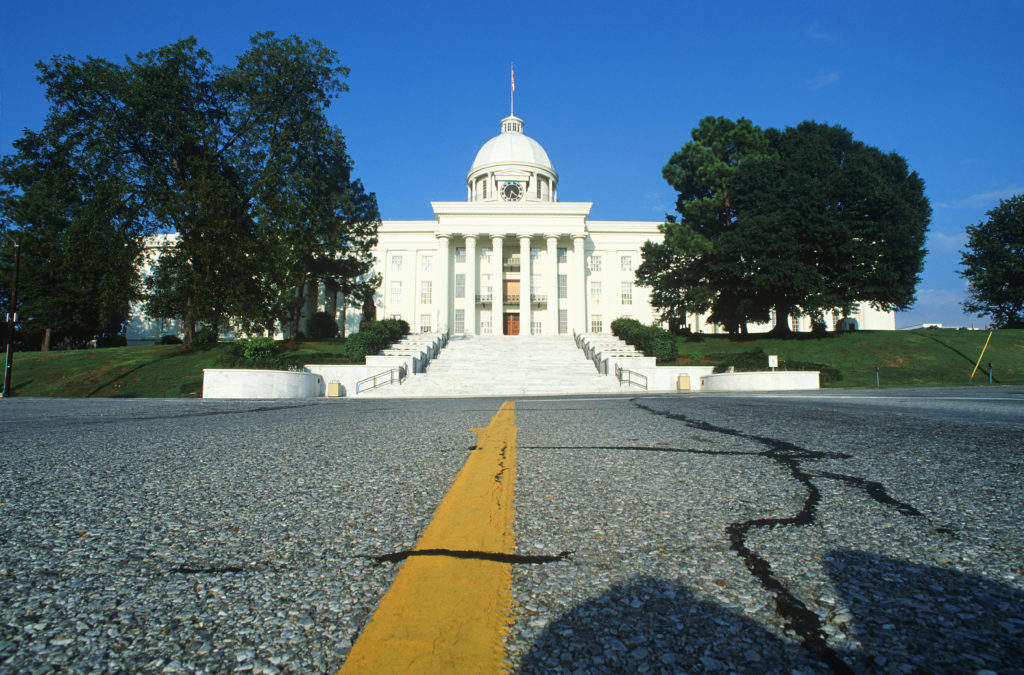
Alabama lawmakers began the 2018 legislative session on Tuesday. Throughout the 30-day session, they’ll endeavor to tackle a hefty list of policy changes on topics ranging from prison reform to opioid treatment — if they can focus on the issues plaguing the state and past their own reelections. Here are five top issues lawmakers will be faced with in 2018: 1. Drug addiction and the opioid epidemic Hundreds of thousands of Americans have lost their lives in recent years due to drug abuse, and the problem only seems to be getting worse. In 2016, more than two million Americans had an addiction to prescription or illicit opioids. In Alabama, a total of 736 people died in 2015 from drug overdoses. Of those, a total of 282 – 38 percent – were caused by opioids, according to a Kaiser Family Foundation review of CDC data. The Alabama Opioid Overdose and Addiction Council, formed by Gov. Kay Ivey, is working on recommendations to present to the state Legislature for strategies to reduce the number of deaths and other effects caused by opioid misuse in Alabama. 2. The federal order to tackle prison reform In June, a federal judge declared the mental health care system in Alabama prisons to be “horrendously inadequate” – an unconstitutional failure that has resulted in a “skyrocketing suicide rate” among prisoners. In an order, U.S. District Judge Myron H. Thompson directed state officials to reform the system and address overcrowding. The Alabama Department of Corrections is seeking a $30 million supplement to its budget this year and a $50 million increase for next year — an additional $80 million over the next two years — to increase the number of corrections officers, potentially up to 1,000, and pay for an expanded medical and mental health care for prisoners. 3. Children’s health insurance Congress has failed to reauthorize funding for the Children’s Health Insurance Program (CHIP), better known as ALL Kids in Alabama, which provides subsidized health insurance for children in low-income families. For the past two years, the state has fully paid for the program through federal funds, if Congress decides not to fund it in 2018, Yellowhammer State legislators would need to appropriate a whopping $53 million in state funds to keep the program afloat. Ozark-Republican and House Ways and Means Chairman Steve Clouse has gone on record saying that if the state has to pick up even a fraction of the cost of program, it will cast a “shadow” over the entire budget. 4. Pay raises for state employees In her State of the State address, Gov. Ivey proposed pay raises for both teachers and state employees. While she did not specify how much of an increase she’d propose, but budget numbers released earlier Tuesday suggest a 2 to 3 percent increase. State employees have not received a cost-of-living increase since 2009, but lawmakers have shied away from a pay raise in recent years due to the perennial budget shortfall in the state General Fund. 5. Juvenile justice reform Alabama’s juvenile justice system may soon see some improvements following a comprehensive review by a group of legislators, judges, law enforcement officials and others. The inter-branch, bipartisan Juvenile Justice Task Force released a set of policy recommendations to Ivey and other state leaders last month that are expected to form the foundation for statutory and budgetary changes that will be considered in the legislative session. The recommendations are intended to decrease crime, lower costs for taxpayers, and create better outcomes for Alabama’s youth and families. Juvenile justice reform is one of Ivey’s top priorities.
