
Donald Trump says new proposal will lower some US drug prices
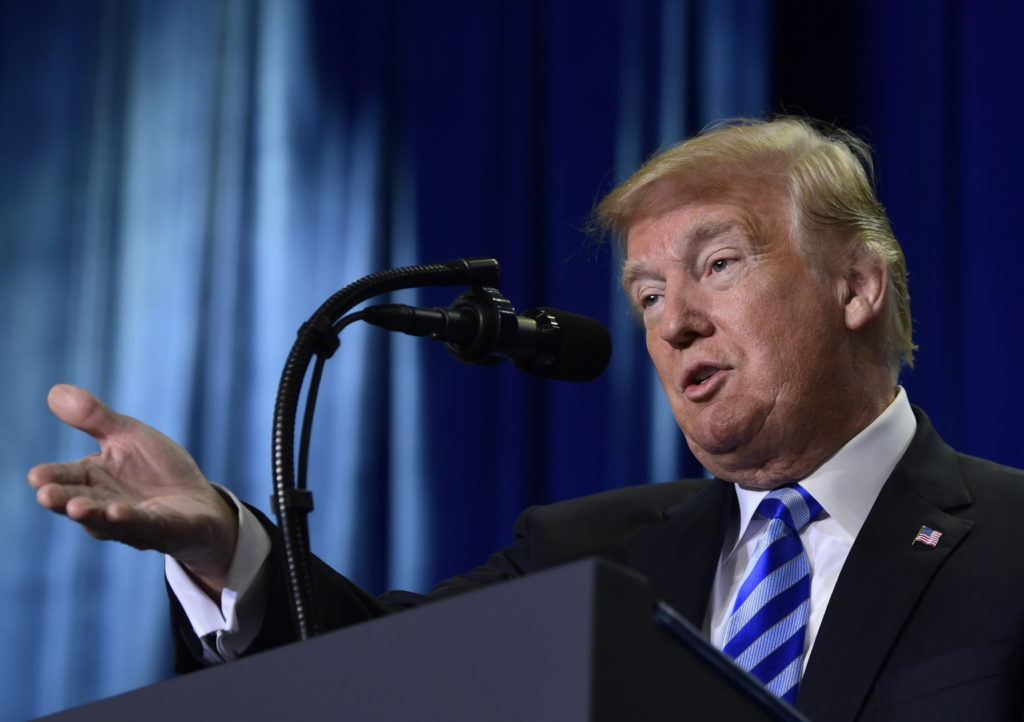
Less than two weeks before the midterm elections, President Donald Trump on Thursday announced a plan to lower prices for some prescription drugs, saying it would stop unfair practices that force Americans to pay much more than people in other countries for the same medications. “We are taking aim at the global freeloading that forces American consumers to subsidize lower prices in foreign countries through higher prices in our country,” Trump said in a speech at the Department of Health and Human Services. “Same company. Same box. Same pill. Made in the exact same location, and you would go to some countries and it would be 20 percent of the cost of what we pay,” said Trump, who predicted the plan will save Americans billions. “We’re fixing it.” But consumers take note: The plan would not apply to medicines people buy at the pharmacy, just ones administered in a doctor’s office, as are many cancer medications and drugs for immune system problems. Physician-administered drugs can be very expensive, but pharmacy drugs account for the vast majority of what consumers buy. Don’t expect immediate rollbacks. Officials said the complex proposal could take more than a year to put into effect. In another twist, the plan is structured as an experiment through a Medicare innovation center empowered to seek savings by the Affordable Care Act. That’s the law also known as “Obamacare,” which Trump is committed to repealing. Trump has long promised sweeping action to attack drug prices, both as president and when he was running for the White House. He made his latest announcement just ahead of the Nov. 6 elections, with health care high among voters’ concerns. Under the plan, Medicare payment for drugs administered in doctors’ offices would gradually shift to a level based on international prices. Prices in other countries are lower because governments directly negotiate with manufacturers. Drugmakers immediately pushed back, arguing the plan amounts to government price-setting. “The administration is imposing foreign price controls from countries with socialized health care systems that deny their citizens access and discourage innovation,” Stephen Ubl, president of the Pharmaceutical Research and Manufacturers of America, said in a statement. “These proposals are to the detriment of American patients.” Trump is linking the prices Americans complain about to one of his longstanding grievances: foreign countries the president says are taking advantage of U.S. research breakthroughs. Drug pricing expert Peter Bach of Memorial Sloan Kettering’s Center for Health Policy and Outcomes called the plan “a pretty substantive proposal” but one that faces “serious political challenges.” “The rhetoric about finally dealing with foreign freeloading suggests that we are going to take steps to get other countries to pay their fair share for innovation,” Bach added. But that’s “quite literally the opposite of what is being proposed. What is being proposed is that we freeload off of other countries’ ability to negotiate more effectively.” Democratic leaders on Capitol Hill were dismissive. House Minority Leader Nancy Pelosi of California said if Trump wants to save seniors money he should seek congressional approval for Medicare to negotiate prices for its main prescription drug program, “Part D.” Senate Democratic Leader Chuck Schumer of New York said “it’s hard to take the Trump administration and Republicans seriously about reducing health care costs for seniors two weeks before the election.” The health insurance industry, at odds with drugmakers over prices, was pleased with the administration’s action. Matt Eyles, president and CEO of America’s Health Insurance Plans, said: “Drug prices are out of control, and we commend the Administration for its continued commitment to reduce drug prices.” As an experiment, the proposal would apply to half the country. Officials said they’re seeking input on how to select the areas that will take part in the new pricing system. HHS Secretary Alex Azar said politics would have nothing to do with it. In advance of Trump’s speech, HHS released a report that found U.S. prices for the top drugs administered in doctors’ offices are nearly twice as high as in foreign countries. The list includes many cancer drugs. Medicare pays directly for them under its “Part B” coverage for outpatient care. Physician-administered drugs cost Medicare $27 billion in 2016. HHS says the plan would save Medicare $17.2 billion over five years. Beneficiaries would save an estimated $3.4 billion through lower cost-sharing. The plan could meet resistance not only from drugmakers but from doctors, now paid a percentage of the cost of the medications they administer. However, HHS officials said the plan is designed so it would not cut into doctors’ reimbursements. Azar said more plans are being developed on drug costs. “This is not the end of the road, the end of the journey,” he said. “There is more coming.” Trump has harshly criticized the pharmaceutical industry, once asserting that the companies were “getting away with murder.” But it’s largely been business as usual for drugmakers even as Trump has predicted “massive” voluntary price cuts. A recent Associated Press analysis of prices for brand-name drugs found far more increases than cuts in the first seven months of this year. The analysis found 96 price hikes for every price cut. The number of increases slowed somewhat and they were not quite as steep as in past years, the AP found. The Trump administration proposal is open for public comment for 60 days. Republished with permission from the Associated Press.
Drug prices don’t budge even after pressure from Congress
Congress’s routine of publicly shaming drug company executives over high prices works no better than a placebo: It may make some people feel better, but it doesn’t treat the problem. In the last two years, House and Senate committees issued more than a dozen subpoenas to price-hiking drugmakers, collecting hundreds of thousands of documents and berating executives for more than 16 hours of public hearings. But a review by The Associated Press of the list prices of nearly 30 brand-name medications and generic versions targeted by congressional investigators shows most haven’t budged since coming under federal scrutiny, according to figures from Truven Health Analytics. “These companies have made clear that they are not going to change course on their own – they will keep bilking the American people for all they can unless Congress acts,” said Rep. Elijah Cummings, D-Maryland, the ranking member on the House Committee on Oversight and Government Reform. Unlike most countries, the U.S. doesn’t regulate drug prices. That means drugmakers, like other businesses, are largely free to set prices as high as the market will bear. Congress has avoided passing laws that would change how drugs are priced, in keeping with the wishes of the powerful pharmaceutical lobby. That leaves lawmakers with few options beyond hauling executives before their committees. Cummings helped kick off Capitol Hill’s latest round of pharmaceutical bashing in the fall of 2014 with a flurry of letters to makers of prescription drugs that had seen dramatic price spikes. Since then, the AP counted 29 drugs that were specifically mentioned either in letters from lawmakers or during congressional hearings. The list prices of 22 of those drugs did not change at all. Five fell, and two went up. Those that fell were generic drugs that received little public attention. Drugmakers say list prices overstate drug costs, since insurers who pay for them negotiate discounts and rebates. But companies don’t disclose those reductions, leaving the actual prices paid unclear. Meanwhile, executives have found ways to defuse some of the public outrage without cutting prices. Under questioning from Cummings and other lawmakers in September, Mylan CEO Heather Bresch pointed to company coupons that can lower the price for EpiPens by up to $300 for some insured patients. While such coupons lower patients’ out-of-pocket expenses, insurers foot the bill for the drug, which still carries of list price of $608 for a two-pack, up more than 500 percent since 2007. Last year, former Turing Pharmaceuticals CEO Martin Shkreli reneged on a pledge to lower the price of the life-saving anti-infection drug Daraprim after raising it 5,000 percent. Instead, his company offered hospitals a sliding discount and the option to buy a 30-pill bottle for $22,500 instead of the original 100-pill bottle, which cost $75,000. The $750 list price per pill didn’t budge. “The industry has cultivated an outrageously complicated and obscure pricing system,” said Robert Weissman, president of consumer advocate Public Citizen. “They can give the illusion of various discounts and rebates that sound on their face like price reductions but without really impacting their bottom line.” Even when corporate leaders seem to promise price cuts while under oath, the decreases don’t materialize. Last April, billionaire investor Bill Ackman testified before a Senate committee about Valeant Pharmaceutical’s much-maligned strategy of buying niche drugs and raising their prices by as much as 3,000 percent. With the Canadian drugmaker’s then-CEO Michael Pearson stepping down, Ackman promised to use his influence on the company’s board to try and revamp its pricing strategy. “A lot is going to change,” said Ackman, whose Pershing Square Capital fund is Valeant’s largest investor. On two heart drugs that Valeant had acquired and hiked, Nitropress and Isuprel, Ackman suggested price cuts were imminent. “You can expect from us within weeks, and hopefully sooner, a response to where we’re going to price these drugs and it will be meaningfully lower than where they are priced now,” Ackman said. Instead, Valeant kept the list prices the same and expanded existing rebates for hospitals to up to 40 percent. “That sounds good, but when you raise prices more than 500 percent a 40 percent discount is still egregious,” said Scott Knoer, chief pharmacy officer at the Cleveland Clinic. Valeant said in a statement the rebates were recommended by its internal drug pricing committee, created in the wake of public outrage over its prices. A spokesman for Ackman declined to comment. Experts who study the pharmaceutical pricing say rebates and discounts allow drugmakers to retain greater control – and revenue – than blanket price cuts. “You can have different prices for different customers depending on who has more market share,” said analyst Richard Evans of Sector and Sovereign Research. “So you can tailor your pricing somewhat stealthily.” Evans says congressional scrutiny of companies like Valeant has discouraged the most extreme price hikes, generally those above 100 percent. But most of the price inflation squeezing patients and hospitals comes from industry-wide price increases that often total more than 10 percent a year, rather than the drastic hikes targeted by Congress. Rep. Cummings and his investigative partner, Senator Bernie Sanders of Vermont, unveiled a new strategy earlier this month that could have more teeth than shaming, at least if companies are doing something illegal. Rather than launching another congressional probe, the lawmakers called on the Department of Justice to investigate possible price collusion among manufacturers of insulin, which they say has seen industrywide price increases of more than 300 percent between 2002 and 2013. There are also some new and long-standing proposals that could stem increases, but they are unlikely to pass Congress, in part because of the pharmaceutical industry’s pervasive influence on Capitol Hill. Drugmakers and related health businesses spent more than $235 million on lobbying last year, more than any other industry, according to the nonprofit Center for Responsive Politics. Investors seem to think the victories of Donald Trump and congressional Republicans have dimmed the prospects for drug price reform even further. Pharmaceutical company shares, which had
