
Huntsville city councilman cleared of driving under influence
The case of an Alabama city councilman accused of driving under the influence (DUI) has been expunged, or cleared from the legal records. News outlets reported that a judge in Huntsville signed an order late last month expunging the charges against City Councilman Will Culver. Culver said he could not talk about the case. He had been arrested April 22 and charged with driving under the influence, driving on the wrong side of the road, failure to signal and improper lane usage. His trial had been scheduled in September before being delayed until Jan. 25. The 58-year-old Culver is a former Huntsville police officer and chief city magistrate. He was elected to Huntsville City Council in 2008 and was council president one year in 2015-2016. Republished with permission from the Associated Press.
Arthur Orr’s ‘drugged driving’ bill stalls in Alabama Senate committee

While Alabama lawmakers debate how to create safer roads, one Alabama state senator believes it can be achieved by taking a stronger stance on “drugged” driving. Decatur-Republican state Senator Arthur Orr filed Senate Bill 180 on Valentine’s Day, which seeks to strengthen DUI law in the Yellowhammer State. The bill would expand the DUI standard to include several additional drugs, involve greater punishment for repeat offenders, and ultimately make it easier for a drivers’ license to be revoked. Through his bill, Orr wants to increase penalties for repeat “drugged driving” offenders and extend a “lookback period” from five years to ten, which would give courts the ability to use past misdemeanor and felony DUI convictions to add severity to future sentencing. On Wednesday, Orr’s bill stalled as his colleagues on the Senate Transportation and Energy Committee questioned whether or not looking back 10 years was looking back too far. They also questioned the list of drugs named in the bill. Orr moved to table his bill. In 2015, the Washington Post reported on a study from the Governors Highway Safety Association, which found that “drugs were found in the systems of almost 40 percent of fatally injured drivers who were tested for them. That rivals the number of drivers who died with alcohol in their system.” And “the number of dead drivers who tested positive for drugs has increased from 29 percent in 2005 to 39.9 percent in 2013, the report said, citing federal crash data.” Below are the drugs and amounts that would qualify for penalty until Orr’s bill: There is a 6 blood concentration of the following substances that is equal 7 to or greater than: 90 ng/mL of Alprazola 200 ng/mL of Amphetamin 10,000 ng/mL of Butalbita 10,000 ng/mL of Carisoprodol or meprobama 70 ng/mL of Clonazepam 20 ng/mL of Cocaine 5 ng/mL of Delta-9-tetrahydrocannabinol (THC) 500 ng/mL of Diazepam or nordiazepam 60 ng/mL of Hydrocodone 100 ng/mL of Lorazepam 250 ng/mL of Methadon 10 ng/mL of Methamphetamine 100 ng/mL of Morphine 100 ng/mL of Oxycodone 800 ng/mL of Tramadol 50 ng/mL of Zolpidem
Alabama is home to some of America’s worst drivers, study says
Cut off on your way to the office this morning? Saw someone get pulled for speeding over the weekend? As you shake your head and fists at other Alabama drivers in disapproval, know you’re not alone. A new study has revealed Alabama is home to some of America’s worst drivers. Recently, New York City financial technology company SmartAsset identified the states with the worst drivers, and Alabama took the sixth spot. Turns out, relatively few people are insured in Alabama. The state ranks seventh-worst in that category with just 80.40 percent insured. And, Alabama had the 12th-highest number of deaths per thousand drivers. There was one bright spot for Alabama, however — the state has the fourth-best score with only 1.42 DUI arrests per thousand drivers. That statistic does not tell the whole story, though, as 33 percent of deaths in Alabama resulted from a driver being over the legal alcohol limit. Here’s how Alabama ranks by the numbers: Percentage of driver’s insured: 80.4 percent DUI arrests per 1,000 drivers: 1.43 Vehicular related deaths per 1,000 drivers: 0.2 Google Trend “driving tickets:” 67.88 Index: 55.57 Check out the country’s top 10 states with the worst drivers below: In order to find out which state had the worst drivers, SmartAsset collected data across four metrics, then indexed each factor for every state giving equal weighting, and then finding the average score per state to create the final index. Percentage insured: data is taken from the Insurance Research Council. DUI per thousand drivers: number of drivers is taken from the Federal Highway Administration. Number of DUIs is taken from the State Justice Department. Deaths per thousand drivers: data is taken from the Fatality Analysis Reporting System, which is part of the National Highway Traffic Safety Administration. Google trends on driving tickets: the average of the scores each state received in Google Trends for the eight phrases: speeding ticket, “speeding ticket,” speeding tickets, “speeding tickets,” traffic ticket, “traffic ticket,” traffic tickets and “traffic tickets.”
Baldwin Commissioner Chris Elliott arrested for drunk driving in Fairhope

Following attendance at a charity event, a Baldwin county commissioner faced a DUI arrest late Monday night. Commissioner Chris Elliott was arrested for driving drunk after failing to stop at a flashing red light at an intersection in Fairhope, AL. Earlier that evening, the 35-year-old Republican pol from Spanish Fort was at a steak cook-off hosted by the local Rotary Club. “I inadvertently ran a flashing red traffic light near the event in downtown Fairhope,” Elliott said in a release that was sent from his office. “On the advice of counsel, I declined the breathalyzer requested which automatically resulted in the issuance of a citation for driving under the influence of alcohol,” continued Elliott. “There are consequences for my decisions and I will face these consequences. I apologize for my actions and regret any embarrassment that this may cause the County that I serve, the law enforcement officers that keep us safe and my family that I love dearly.” Elliott, who represents Baldwin County’s 2nd District, was appointed by Gov. Robert Bentley to the seat in 2014. According to AL.com, he joined fellow commissioners in warning against breaking traffic laws after a wave of headlines stirred concern over deadly traffic accidents. “When you fail to (obey the law), you run the very real risk of killing someone else,” said Elliott back in 2015.
Cam Ward makes statement after DUI arrest
State Sen. Cam Ward was released on $1,000 bail Thursday morning after being arrested for driving under the influence on Wednesday. Ward released this prepared statement: “My failure at dealing with stress led me to make incredibly reckless decisions. I recognize that I used alcohol as a crutch. I was very wrong and deeply apologize to my family, friends and constituents. I plan on seeking professional assistance immediately.” AL.Com reports Ward was arrested by Alabaster police after they received notice of a possible drunken driver at 12:46 p.m. The report quotes Police Chief Curtis Rigney as saying, “As the officer spoke to Mr. Ward, Mr. Ward exhibited signs of intoxication. Mr. Ward was asked to perform several field sobriety tests, which he failed. At that time, Mr. Ward was placed under arrest for suspicion of DUI.” As reported Wednesday night, Ward has received supportive public messages from friends. Those continue to come in. Keep checking back. We will update this post with additional information as it becomes available. Adding to the supportive messages: @brianrell @SenCamWard I echo that — Tom Whatley (@SenTomWhatley) July 2, 2015 @brianrell @SenCamWard We don’t always (or maybe often) see eye to eye but he’s a good person with his heart in the right place. — Lisa Borden (@lisawborden) July 2, 2015
Sen. Cam Ward’s DUI arrest sparks supportive reactions, a few questions
Shelby County Sheriff’s office is confirming that State Senator Cam Ward was arrested Wednesday on a driving under the influence charge. Few details about the incident are known, but Ward’s mugshot is available on the Shelby County Sheriff’s Office inmate listing page under his full legal name Robert Cameron Ward. Ward is among the most active members of the Legislature on social media. His latest tweet was earlier Wednesday: Enjoyed visiting with Bibb Career Academy this afternoon and working with them on tech improvements… https://t.co/xsbKt2mAYW — Cam Ward (@SenCamWard) July 1, 2015 When the news broke, Brian Rell, chief of staff to U.S. Rep. Robert Aderholt’s tweeted: We all make mistakes; it is what we do after making them that counts. @SenCamWard is no different. He has done good things and will do more — brian rell (@brianrell) July 2, 2015 According to WSFA, Senate Majority Leader Greg Reed released a statement Wednesday: “Senator Ward made a mistake. We encourage him to seek help and will be there for emotional and spiritual support.” Beyond the general specifics of the arrest, there are many questions that will clearly be coming as details emerge and others that will take some time to play out: How, if at all, will this affect his Judiciary Committee chairmanship? How, if at all, will this affect all of his efforts on prison reform including his recent appointment by Gov. Robert Bentley. It looks like we will have to wait until Thursday for some basic answers: .@ShelbyCountySO says @SenCamWard will not be released from jail until tomorrow. Still have not heard back from @AlabasterPolice. — Jamie Ostroff (@JamieWIAT) July 2, 2015
Allen Farley: Why judges shouldn’t disregard ignition interlock requirement for DUIs
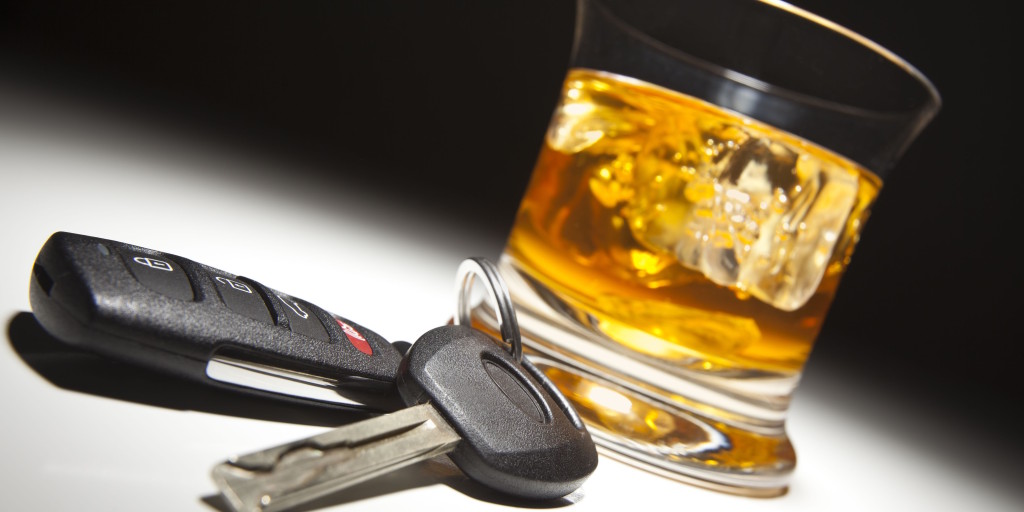
Memorial Day weekend is one of the deadliest because of alcohol-related accidents, behind only the Fourth of July. Alabama has the opportunity to decrease repeat DUIs, but many in the judiciary are not adhering to the state law designed to make our roads safer. Prior to being elected to the Alabama Legislature in 2010, I was a law enforcement officer for 36 years. During those years I saw a glaring hole in how we deal with DUI offenders. The other side of the problem – family-destroying addiction – also became evident as my wife and I volunteered at the Salvation Army Drug and Alcohol Rehabilitation Center. That is why I agreed to be the House sponsor of the Ignition Interlock Bill, which passed overwhelmingly in 2014 and became law in July 2014. For those readers not familiar with ignition interlock, it’s a breathalyzer-controlled lock installed on the vehicle of a convicted DUI offender. If the user blows above a 0.02 percent BAC (blood alcohol content), the car won’t start. The new law we passed was a change to existing law, allowing offenders of different degrees to have an ignition interlock device instead of losing their license. The National Highway Traffic Safety Administration endorses that approach because license suspensions do not change behavior or protect against future drunk driving. This sounds like common sense, right? But there is a big problem with ignition interlock right now: Judges and courts in Alabama are refusing to implement the law, which is their duty. I do not know nor will I speculate why they are doing this, but the simple fact remains that they are. As a result, our roads are more dangerous and DUI recidivism rates continue to rise. You might ask why a former law enforcement officer would be in favor of the policy. The answer is simple. Taking a license away from an offender does not keep them from driving in general, and it certainly does not stop them from driving while drunk. Installing a device that won’t let them start their car, on the other hand, does both, according to study after study. Not only that, it allows the offender to be a contributing member of society because they still can drive to work, church, and the grocery store. Further, when judges properly implement the law, it will make our roads safer, and the numbers bear this out. Since mandating ignition interlock devices in New Mexico in 2005, the state’s drunk driving related fatalities are down 30 percent. Since Arizona’s interlock law went into effect in 2007, drunken driving deaths have dropped by a massive 46 percent. In the event you think not enough time has passed since the law was enacted, Mississippi’s ignition interlock legislation became law in October 2014. Since that time, about 1,200 ignition interlocks have been implemented. By contrast, Alabama’s new law went into effect four months earlier than Mississippi’s, yet roughly half the number of devices are being used. That’s even more shocking when you consider a form of ignition interlock was originally passed in Alabama in 2012, but loopholes were discovered making it necessary to pass a new law. In other words, Alabama actually had a three-year head start on our neighbor to the west. Will you join me in asking our judges to require ignition interlock devices for convicted drunken drivers, as required by law? It is not a sufficient excuse that offenders who broke our laws and endangered lives will have to drive a few miles to get an ignition interlock. It is not an acceptable excuse that the devices will cost lawbreakers a few dollars a day. There really is no excuse to not use ignition interlocks so we can save hundreds of lives each year. A law was passed that will make our roads safer and at the same time help reduce the rate of repeat offenses. Now let’s enforce it and see the positive benefits for the people of Alabama. State Rep. Allen Farley is in his second term in the Alabama House of Representatives where he represents Jefferson and Shelby Counties.
