
Kevin McCarthy preps House GOP debt deal to draw Joe Biden into talks
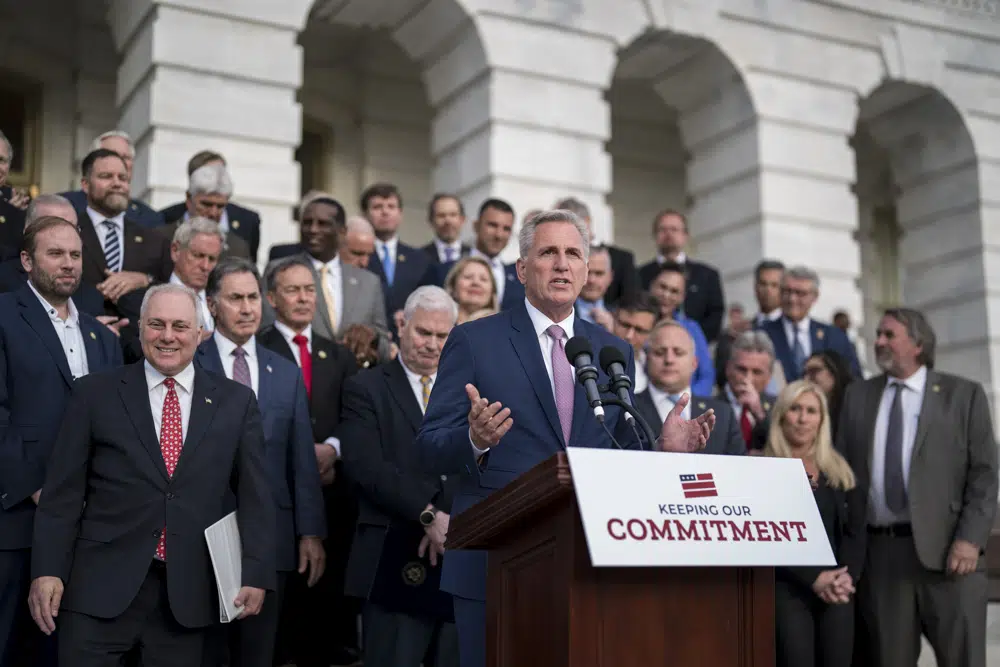
Speaker Kevin McCarthy convened House Republicans behind closed doors Tuesday to build support for his plan to allow the nation’s debt limit to rise in return for strictly limiting future federal spending increases to 1% a year. It’s a bid, including other major policy changes, to draw President Joe Biden into negotiations. The typically fractured House Republican majority has appeared surprisingly open to the plan, which McCarthy outlined in a high-profile speech Monday on Wall Street, but it remains a work in progress. While the proposal has almost no chance of passage in the Democratic Senate, McCarthy wants to pass it in the Republican House to kickstart White House talks. “I’m confident we’ll have it and comfortable we’ll pass it,” said Rep. Tom Cole, R-Okla., the chairman of the Rules Committee, who said a bill could come up for a vote as soon as next week. Even some of McCarthy’s skeptics from the House Freedom Caucus — including those who initially refused to back him to be speaker — seemed ready to give his debt ceiling proposal a look. But others remained deeply skeptical, showing the limits of the embattled speaker’s grip on his majority. Rep. Matt Gaetz, R-Fla., a McCarthy holdout for speaker, said Tuesday he was unsold on the plan and suggested changes. And Rep. Clay Higgins, R-La., said as he exited the session, “There is no ‘this.’ We’re discussing what the ‘this’ will be.” The nation’s legal debt limit must be raised soon to keep the U.S. from defaulting on its fiscal obligations. That high-stakes fight will play out in the weeks ahead as Biden confronts the new era of divided government with Republicans in charge of the House and eager to flex their majority power. If McCarthy succeeds in having the House pass his proposal, he would be able to enter into talks with the White House, showing that he has the backing of his fellow GOP lawmakers. Biden administration officials have privately expressed doubts about the benefits of negotiating with McCarthy out of skepticism that he can rally conservative Republican votes. Democratic Minority Leader Hakeem Jeffries quipped on CNBC that the House Republicans’ budget plan is “in the witness protection program.” The proposal the Republican speaker outlined is far-reaching and expected to be rejected by the White House. It would raise the debt limit into next year — putting it squarely into the 2024 presidential election in exchange for rolling back spending to fiscal 2022 levels, recouping tens of billions of dollars of unspent COVID-19 relief funds, and imposing a 1% cap on future non-defense spending each year for the decade. The 1 percent spending cap would not include mandated Social Security and Medicare money. Additionally, McCarthy’s plan would impose new work requirements on recipients of government aid, cutting billions from the federal safety net. And it would tack on H.R. 1, a sweeping energy package of oil and gas drilling and permit changes that would undo much of Biden’s climate change agenda. The Treasury Department has said the government probably will need to raise the debt ceiling, now at $31 trillion, by summer. For now, Treasury is taking “extraordinary measures” to allow continued borrowing to pay off already accrued bills, but that will eventually run out. Unable to pass an actual Republican budget through the House, as Biden challenges him to do, McCarthy instead has been working furiously behind the scenes with his leadership team to unite the “five families” — the often warring factions of Republican caucuses, including the House Freedom Caucus — to join together on his new plan. He and the leadership team discussed the ideas Tuesday at the House Republicans’ private session in hopes of turning the slides of ideas into a firm legislative package. “I find all indications to be we’re going to put a very serious proposal on the floor and pass it with 218 or more votes,” said Freedom Caucus member Rep. Dan Bishop, R-N.C., as lawmakers arrived at the Capitol late Monday evening, referring to the majority needed for passage. But by Tuesday, no vote was set, according to a person familiar with the private meeting and granted anonymity to discuss it. “I still have more questions than answers at this point,” said Rep. Nancy Mace, R-S.C., complaining there were only a few slides of information. In many ways, this is the easy part for McCarthy: A vote as soon as next week would hardly be binding since the proposal would be dead on arrival in the Senate. That political dynamic may make it easier for McCarthy to rally his ranks behind the plan if Republicans see it as merely a starting point in negotiations designed to push Biden to the table. House Freedom Caucus Chairman Rep. Scott Perry, R-Pa., said late Monday the plan was a step in the right direction, but he still needed details. “Kevin McCarthy is going to get 218 votes on this deal,” said Rep. Dusty Johnson, R-S.D., a chairman of the conservative Main Street Caucus, referring to the majority needed for passage. Said Rep. Kevin Hern of Oklahoma, the chairman of the powerful Republican Study Committee: “There’s still hard work ahead of us, but I believe we can get 218 votes by the end of next week.” Senate Majority Leader Chuck Schumer said if McCarthy continues down this path of negotiating over the need to raise the debt limit, the U.S. would be headed for a default. “No one should confuse this wish list as anything more than a recycling of the same bad ideas we’ve heard about for weeks, and it’s still not clear that Speaker McCarthy has the votes to even pass this,” Schumer said. Republished with the permission of The Associated Press.
Kevin McCarthy’s race for speaker risks upending House on Day One
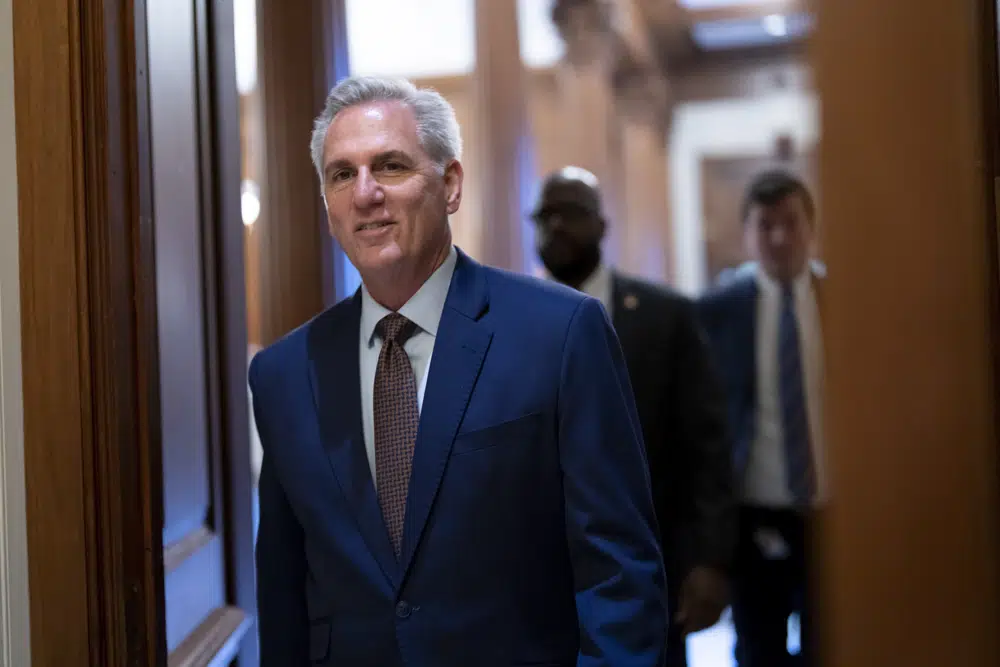
In his quest to rise to House speaker, Kevin McCarthy is charging straight into history — potentially becoming the first nominee in 100 years unable to win the job on a first-round floor vote. The increasingly real prospect of a messy fight over the speaker’s gavel on Day One of the new Congress on Jan. 3 is worrying House Republicans, who are bracing for the spectacle. They have been meeting endlessly in private at the Capitol, trying to resolve the standoff. Taking hold of a perilously slim 222-seat Republican majority in the 435-member House and facing a handful of defectors, McCarthy is working furiously to reach the 218-vote threshold typically needed to become speaker. “The fear is that if we stumble out of the gate,” said Rep. Jim Banks, R-Ind., a McCarthy ally, then the voters who sent the Republicans to Washington “will revolt over that and they will feel let down.” Not since the disputed election of 1923 has a candidate for House speaker faced the public scrutiny of convening a new session of Congress only to have it descend into political chaos, with one vote after another, until a new speaker is chosen. At that time, it eventually took a grueling nine ballots to secure the gavel. McCarthy, a Republican from Bakersfield, California, who was first elected in 2006 and who remains allied with Donald Trump, has signaled he is willing to go as long as it takes in a floor vote to secure the speaker’s job he has wanted for years. The former president has endorsed McCarthy and is said to be making calls on McCarthy’s behalf. McCarthy has given no indication he would step aside, as he did in 2015 when it was clear he did not have the support. But McCarthy also is acknowledging the holdouts won’t budge. “It’s all in jeopardy,” McCarthy said Friday in an interview with conservative Hugh Hewitt. The dilemma reflects not just McCarthy’s uncertain stature among his peers but also the shifting political norms in Congress as party leaders who once wielded immense power — the names of Cannon, Rayburn, and now Pelosi adorn House meeting rooms and office buildings — are seeing it slip away in the 21st century. Rank-and-file lawmakers have become political stars on their own terms, able to shape their brands on social media and raise their own money for campaigns. House members are less reliant than they once were on the party leaders to dole out favors in exchange for support. The test for McCarthy, if he is able to shore up the votes on Jan. 3 or in the days that follow, will be whether he emerges a weakened speaker, forced to pay an enormous price for the gavel, or whether the potentially brutal power struggle emboldens his new leadership. “Does he want to go down as the first speaker candidate in 100 years to go to the floor and have to essentially, you know, give up?” said Jeffrey A. Jenkins, a professor at the University of Southern California and co-author of “Fighting for the Speakership.” “But if he pulls this rabbit out of the hat, you know, maybe he actually has more of the right stuff.” Republicans met in private this past week for another lengthy session as McCarthy’s detractors, largely a handful of conservative stalwarts from the Freedom Caucus, demand changes to House rules that would diminish the power of the speaker’s office. The Freedom Caucus members and others want assurances they will be able to help draft legislation from the ground up and have opportunities to amend bills during the floor debates. They want enforcement of the 72-hour rule that requires bills to be presented for review before voting. Outgoing Speaker Nancy Pelosi, D-Calif., and the past two Republican speakers, John Boehner and Paul Ryan, faced similar challenges, but they were able to rely on the currency of their position to hand out favors, negotiate deals, and otherwise win over opponents to keep them in line — for a time. Boehner and Ryan ended up retiring early. But the central demand by McCarthy’s opponents’ could go too far: They want to reinstate a House rule that allows any single lawmaker to file a motion to “vacate the chair,” essentially allowing a floor vote to boot the speaker from office. The early leaders of the Freedom Caucus, under BC, the former North Carolina congressman turned Trump’s chief of staff, wielded the little-used procedure as a threat over Boehner and later, over Ryan. It wasn’t until Pelosi seized the gavel the second time, in 2019, that House Democrats voted to do away with the rule and require a majority vote of the caucus to mount a floor vote challenge to the speaker. Rep. Chip Roy, R-Texas, said the 200-year-old rule was good enough for Thomas Jefferson, so it’s one he would like to see in place. “We’re still a long way from fixing this institution the way it needs to be fixed,” Roy told reporters Thursday at the Capitol. What’s unclear for McCarthy is even if he gives in to the various demands being made by the conservatives, whether that will be enough for them to drop their opposition to his leadership. Several House Republicans said they do not believe McCarthy will ever be able to overcome the detractors. “I don’t believe he’s going to get to 218 votes,” said Rep. Bob Good, R-Va., among the holdouts. “And so I look forward to when that recognition sets in and, for the good of the country, for the good of the Congress, he steps aside, and we can consider other candidates.” The opposition to McCarthy has promoted a counteroffensive from other groups of House Republicans who are becoming more vocal in their support of the GOP leader — and more concerned about the fallout if the start of the new Congress descends into an internal party fight. Rep. David Joyce, R-Ohio, who leads the Republican Governance Group, was wearing an “O.K.” button on his lapel — meaning, “Only Kevin,” he explained. Some have
Mo Brooks supports bipartisan bill aimed at providing flexibility on spending COVID funds
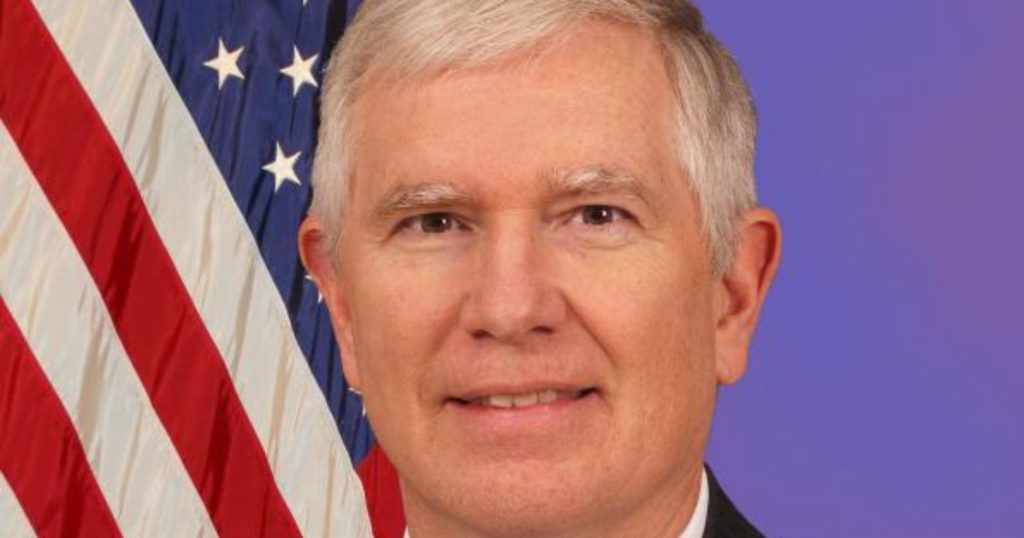
Congressman Mo Brooks announced that he has cosponsored H.R. 5735, a bipartisan bill that aims to make various infrastructure investments eligible for payment with unspent COVID-19 relief funds. The State, Local, Tribal, and Territorial Fiscal Recovery, Infrastructure, and Disaster Relief Flexibility Act, was sponsored by Reps. Dusty Johnson and Carolyn Bourdeaux. The U.S. Senate recently unanimously passed companion legislation. According to the press release, the bill will give state and local officials additional flexibility and time to responsibly spend the remaining Covid-19 money. The American Rescue Plan Act and the original CARES Act relief package, Congress provided some flexibility for how funds could be spent, but most funds were not able to be used for infrastructure projects. The bill also includes a separate program designed to support larger bridges through a competitive grant program. If enacted, this legislation would allow Alabama to use unspent coronavirus relief funds on much-needed infrastructure projects such as the I-10 Bridge. The bill has 144 House cosponsors. Brooks stated, “I support giving states the flexibility to spend coronavirus funds as they see fit. State and local elected officials, not federal government bureaucrats, know what their communities need most. Alabama has several desperately-needed infrastructure projects, such as the I-10 Bridge in the Mobile Bay area, that are stalled due to a lack of funding. This bill could free up funds that would jumpstart those important projects.” Rep. Bourdeaux commented that passing the bill will enhance economic growth for states. “Thanks to our bipartisan infrastructure law, Georgia’s bridges are getting a significant investment over the next five years. This funding will help connect our communities, boost the local economy, and improve safety across Georgia. For growing suburbs like mine, this funding will help us address congestion and improve people’s daily commutes and mobility,” Bourdeaux stated.
Jerry Carl supports bill to allow flexibility in spending COVID-19 funds
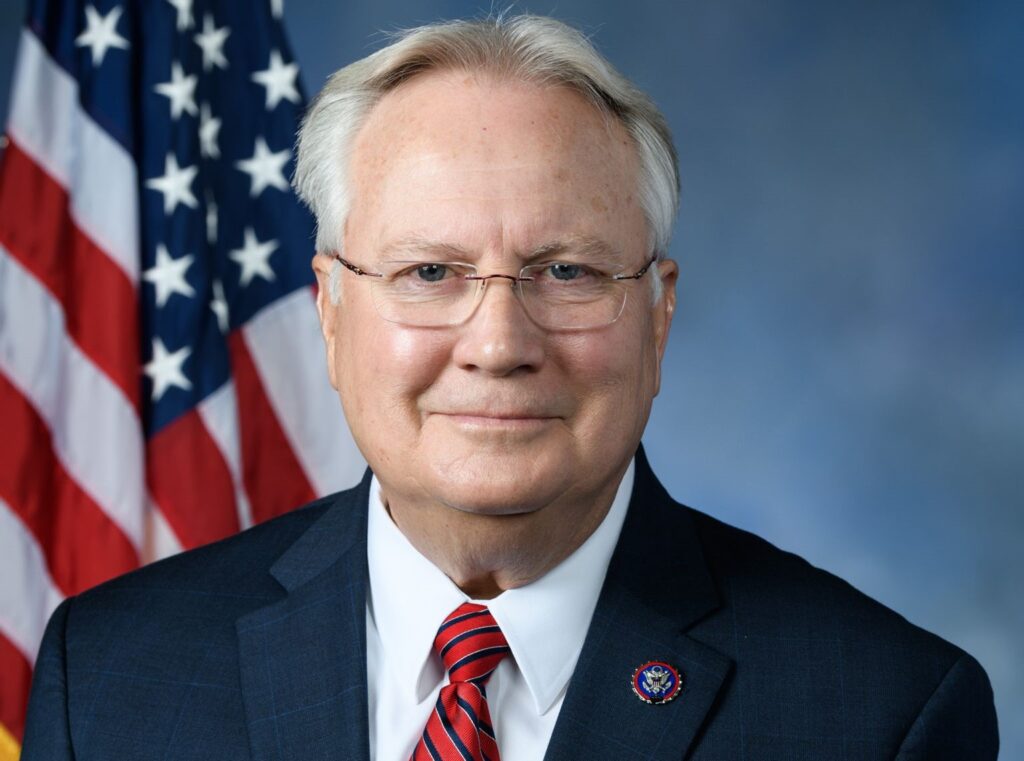
Congressman Jerry Carl announced he has co-sponsored a bipartisan bill to give state and local officials flexibility and time to spend the remainder of COVID-19 relief dollars. The State, Local, Tribal, and Territorial Fiscal Recovery, Infrastructure, and Disaster Relief Flexibility Act, introduced by Reps. Dusty Johnson and Carolyn Bourdeaux, aims to make various infrastructure investments eligible for payment with these funds. The legislation recently passed the U.S. Senate unanimously. Under the CARES Act, Congress did provide some flexibility for how COVID-19 funds could be spent, but the funds were not able to be used for infrastructure projects. This bill will give state and local officials additional flexibility and time to spend the remaining COVID-19 relief dollars responsibly. Carl supports the effort to add infrastructure spending as part of the COVID funding. Carl said in a statement, “South Alabama has a desperate need for investments in true infrastructure such as roads, bridges, ports, waterways, and broadband. As a former county commissioner, investing in our nation’s infrastructure is a top priority for me, so I’m proud to cosponsor this bipartisan bill to give states like Alabama the flexibility they need to spend unused COVID-19 relief dollars on critical investments in our nation’s infrastructure. “Unfortunately, Nancy Pelosi is holding the American people hostage by blocking this bill from being considered on the House floor. Despite passing the U.S. Senate unanimously and being introduced in the House by a large, bipartisan group, Nancy Pelosi is focused on raising our taxes, bankrupting America, and playing political games. It’s time to put the American people first and pass this bipartisan, commonsense bill.” South Dakota congressman Dusty Johnson posted on Twitter, “We need to cut the federal red tape. State governments need flexibility to administer remaining COVID-19 relief funds for critical infrastructure. Our bill would make that a reality & it’s already passed the Senate. Congress can get it done.” This legislation is cosponsored by Reps. Steve Scalise, Henry Cuellar, Rick Allen, Suzan DelBene, David Rouzer, Marilyn Strickland, Randy K. Weber, Jared Huffman, Steven Palazzo, Sanford D. Bishop, Jr., Andy Barr, Joseph Morelle, Dan Meuser, Albio Sires, Carlos A. Gimenez, Antonio Delgado, David B. McKinley, Kim Schrier, Peter Meijer, Darren Soto, Chris Pappas, Rick Crawford, Betty McCollum, William Timmons, Josh Gottheimer, Brad Wenstrup, Derek Kilmer, Don Young, and Tom O’Halleran.
House to stay in session until COVID-19 rescue pact
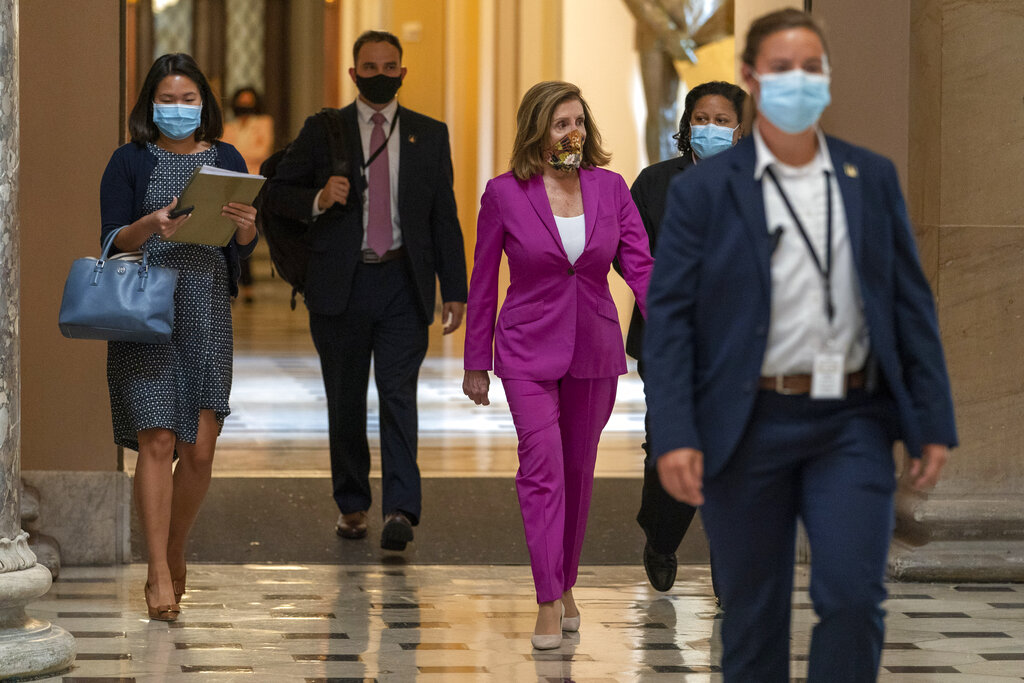
Pelosi told her Democratic colleagues on a morning conference call that “we have to stay here until we have a bill.”
House passes $2.2T rescue package, rushes it to Donald Trump
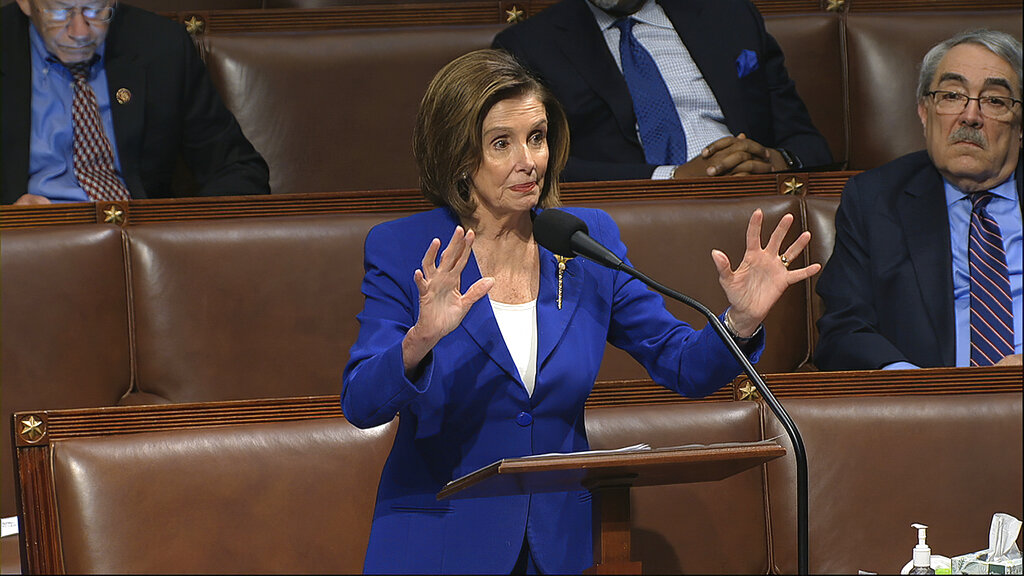
Donald Trump said he would sign the measure immediately.
