
Steve Flowers: Roads vital and political for Alabama
Roads and bridges have been vital to Alabama since its creation. This is probably true of most states; however, it has been especially true for Alabama for several reasons. First of all, we are a large state geographically. Most metropolitan areas are a good many miles from the State Capitol in Montgomery. It is a long journey for folks from Huntsville, Mobile, and even Birmingham metro, and if you go from one end of the state from Scottsboro to Dothan or Huntsville to Mobile, you have been on a really long journey. We also have a lot of water in Alabama, including lakes and creeks, besides the major rivers that traverse our state. Therefore, that is why I included bridges in my opening sentence. Bridges are a necessity in our state more so than in other states. We also have a major Port in Mobile that needs to be sustained along with roads and bridges. It is an acknowledged fact that having adequate roads is a major factor when it comes to economic growth and development in a state. Every economic developer will attest to this road factor. Roads and education are the primary components to economic growth for a state. Therefore, roads have been a primary campaign theme and criteria of accomplishment for every governor as long as I can remember. It is and has been the most important factor in determining whether a governor has a legacy. It is something they can point to and hang their hat on. Going back the last 60 to 70 years, there have been only three or four governors who have what I call a real legacy, and one of the primary benchmarks for creating a legacy is roads. John Patterson had a road legacy by virtue of the fact that he was governor during the Dwight Eisenhower Federal Interstate Act. This Interstate Act, created by President Eisenhower, is one of the most important presidential acts in history. In fact, most of the growth in the state and most of the population lives along I-65, which traverses the state and includes Huntsville, Birmingham, Montgomery, and Mobile. George Wallace has numerous legacies, but if you knew him, roads were his number one priority. Wallace was also the most brilliant, accomplished, successful political governor in state history, and I stress the word political, so Wallace played politics when it came to roads. As the ultimate political animal in Alabama’s political history, you would expect nothing less. Wallace lived by the political adage you reward your friends and punish your enemies. One slow news day, Wallace held a press conference, and a young, liberal, muckraking, Birmingham news reporter asked the Governor, “Why do you give all the road projects in the state to your contributors, friends, and cronies?” Wallace looked at the young boy incredulously and said, “Who do you think I ought to give them to, my enemies?” The two political legends of my lifetime were George Wallace and Big Jim Folsom. They were elected governor by the rural and smaller, midsize cities and counties in the state. They neither ever carried the metropolitan counties of Jefferson, Madison, and Montgomery. Therefore, these metro areas never received their rightful share of road dollars, especially under Wallace. I have been asked over the years is it true the Birmingham area was the last metro area to get interstates completed because Wallace refused to appropriate any state funds to Birmingham to match the federal dollars needed for completion because they voted against him. My answer is short. The answer is yes. Wallace would acknowledge that to close friends and political allies. The Governor who has the greatest legacy for roads in my lifetime and maybe history is the legendary Big Jim Folsom. Most of the rural roads in the state were built by Big Jim Folsom’s “Farm to Market” road program. In Big Jim’s era, the state was agriculturally oriented. Almost everybody farmed and had crops they needed to get to the market. Most of the roads in the rural areas were dirt roads. If the rain came early, the roads would turn to mud and would be impassable. Therefore, the poor Alabama farmer who had toiled all year to make a crop could not get his produce to market. His year’s work was ruined by poor roads. Big Jim, who was the little man’s big friend, knew this and he fixed it by paving most of the rural roads. Big Jim has one of the most endearing legacies of any Alabama governor because of his “Farm to Market” road program. See you next week. Steve Flowers is Alabama’s leading political columnist. His weekly column appears in over 60 Alabama newspapers. Steve served 16 years in the state legislature. Steve may be reached at www.steveflowers.us.
Tommy Tuberville honors veterans
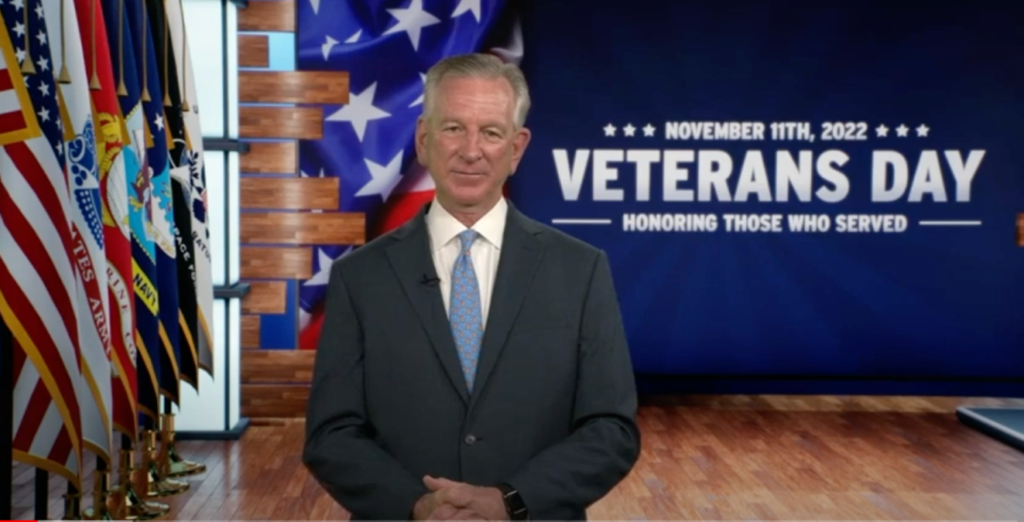
In recognition of Veterans Day, U.S. Senator Tommy Tuberville honored seven veterans from across Alabama that the Senator recognized by telling their stories of service, sacrifice, and contribution to their communities. Tuberville highlighted the service and sacrifice of seven veterans from Alabama. These are Sergeant Chris Amacker from Slapout, Officer Eric Prewitt from Havana, Lieutenant Colonel Jeff Wishik from Madison, Sergeant Janet Pray from Geneva, George Hamilton from Pleasant Grove, Sergeant Lonnie Phillips from Pell City, and Sergeant Dave Jensen from Foley. “In 1945, a World War II veteran named Raymond Weeks from Birmingham, Alabama —recognized the need for a day to honor ALL veterans,” Tuberville said. “He led the petition to then-Army Chief of Staff Dwight Eisenhower for a National Veterans Day and organized the first Veterans Day Parade in Birmingham on November 11, 1947. In 1954, President Dwight D. Eisenhower signed a bill officially establishing ‘Veterans Day.’” Today Veterans Day is a state and national holiday. Banks, government offices, post offices, courthouses, most schools, and many businesses will be closed today. “It is fitting that the ‘Father of Veterans Day’ was an Alabamian – symbolizing a longstanding tradition among our residents to recognize and show appreciation for our veterans and service members,” Tuberville said. “Every year, we continue this tradition of pausing to recognize our veterans—past and present. Veterans Day reminds us that freedom is a sacred gift—and it is not free. Some endured unthinkable battles and hardships so that we can live in peace.” The Veteran’s Day Parade in Birmingham today will begin at 11:00 am. “These veterans—Chris Amacker, Eric Prewitt, Jeff Wishik, Janet Pray, George Hamilton, Lonnie Phillips, and Dave Jensen—are all heroes,” said Tuberville. “Our country is safer because of their efforts, and Alabama’s communities are better off because of their continued service. Their sacrifices— whether loss of mobility, time spent away from family, post-war trauma, or the most vibrant years of their youth— demonstrate America’s strength to the world. President Ronald Reagan summed it up best when he said, ‘Veterans know better than anyone else the price of freedom, for they’ve suffered the scars of war. We can offer them no better tribute than to protect what they have won for us.’ I hope we will remember the price of freedom and those who have paid it. To all of our veterans, thank you for your sacrifice and endeavors to ensure America remains a country of freedom and opportunity for generations to come.” “Like Sergeant Chris Amacker of Slapout, Alabama, a gun truck commander in the Army’s 465th Transportation Unit, where he moved ammo and equipment during the Iraq War,” Tuberville said. “His military service was cut short after suffering brain and spinal injuries following an explosive attack on his unit. Sergeant Amacker spent more than a year in an Arkansas rehabilitation facility, relearning how to walk and talk.” “There is no more commendable action than using skills learned in the military to help others succeed, like Officer Eric Prewitt from Havana, Alabama, does, day in and day out,” Tuberville said. “A graduate of Hale County High School, Officer Prewitt enlisted in the U.S. Navy in 1992, where he served as a Yeoman Second Class. Officer Prewitt felt led to return to West Alabama after his time in the military and use his skills to assist veterans wishing to use their GI Bill benefits. In 2005, he became the Veterans Affairs Officer and Diversity Liaison at Shelton State Community College in Tuscaloosa, Alabama. When speaking about his job, Officer Prewitt shared how the military invested in him and that he wants to continue investing in our service members and veterans. His role is a huge benefit to not just West Alabama but our entire state.” “Some service members were not well-received upon their return to American soil. They fought a thankless war without feeling supported, but still fought out of devotion to their country,” Tuberville stated. “Born in Montgomery, he was commissioned as a second lieutenant in the U.S. Army through Marion Military Institute’s early commissioning program. Wishik deployed to Vietnam with the 101st Airborne Division, directed to find and engage enemy forces.” “While scouting for a landing zone for a helicopter to evacuate them, Lieutenant Wishik was struck by numerous enemy attacks, including one explosion that blew him into the air, knocked him unconscious, and killed all but three in his scouting group,” Tuberville continued. “After he and the two other soldiers realized they were outnumbered and unable to turn back, they spent the night pretending to be dead to avoid being captured by the enemy. Lieutenant Wishik’s wise reminder to Americans based on his experience is that ‘You may not agree with the politics of the country, but you don’t take it out on American service members.’” “The call to serve may run in the family – where, for some veterans, the lessons and values learned in military service are worth passing on generation to generation. This is the case for Sergeant Janet Pray of Geneva, Alabama, who served in the U.S. Army from 1989-2003,” Tuberville continued. “After retiring from the Army, Sergeant Pray continued supporting the Department of Defense in various roles, including as an administrative assistant at Fort Rucker. Her love for education and empowering the next generation prompted her to become a substitute teacher and aide for the Geneva City Schools System. Her encouragement and tenacious spirit has touched the lives of countless students and teachers. Sergeant Pray says the military taught her to lead by example and be responsible for her own actions—lessons she continues to pass on. People like Sergeant Pray keep the American dream alive by inspiring others to take advantage of opportunities our country has to offer and leading by example.” “For veterans like 100-year-old George Hamilton of Pleasant Grove, the idea of ‘service’ has no age limit. The World War II Navy veteran participates in different events around Jefferson County to share his story and is active in his local congregation at Bethel Baptist Church,” Tuberville continued. “Mission work is a huge part of his life. He has been on eleven trips to Nicaragua and is planning to go again soon. Mr. Hamilton says his only regret about his
Jim Zeigler: Veterans Day started in Alabama by an Alabama vet 75 years ago

75 years ago, it all started in Birmingham, Alabama. In 1947, the first Veterans Day was celebrated only in Alabama, but the idea was so good and so needed that it spread nationally. Raymond Weeks was a Birmingham native and veteran of World War II. He came up with the idea to take “Armistice Day” – which commemorated the November 11 end of fighting in World War I – and expand it to “Veterans Day” to honor all Americans who had served their country and their people. He led a national campaign for the idea of Veterans Day with General Dwight Eisenhower, President Harry Truman, and Congress. By November 11, 1982, the idea had become so popular that President Ronald Reagan awarded the Presidential Citizenship Medal to Weeks, who lived in Alabama until his death at age 76 in 1985. The meaning of Veterans Day is sometimes confused with Memorial Day in May. While Memorial Day honors those who died in the service of their county, Veterans Day honors all who served. Many Veterans look back at their years of service as the most meaningful time of their lives. Some people live their entire lifetimes and wonder if they ever made a difference for others. Veterans don’t have that problem. Jim Zeigler has been the State Auditor of Alabama since 2015.
Will Sellers: Saint Hannah and her sinner son
The summer of 1974 in Washington DC was a political bullfight; there was one bull, but a host of matadors, picadors, and spectators galore just waiting to watch President Richard Nixon in his last gasps of political power. Congressional hearings, articles of impeachment, and an administration completely insular and unstable were all coming to a simultaneous head. Secretary of State Henry Kissinger metaphorically described this as the highest pinnacles of success descending into the deepest valleys of distress. Over the course of the prior few years, President Nixon had won the largest landslide election victory to that point in history, successfully concluded American involvement in Vietnam, and achieved the monumental foreign policy objectives of detente with the USSR, stability in the Middle East, and rapprochement with China. But in August 1974, all these achievements were forgotten, and with an atmosphere of political intrigue thick with smiling hatred, the bull in the ring faced the final cut. Almost everyone had deserted him as key members of his staff faced indictment, trials, and prison. The Supreme Court unanimously ruled he had to provide tape-recorded conversations to prosecutors, the House Judiciary Committee passed the first article of impeachment for obstruction of justice, and a group of key legislators informed him that he didn’t have the votes in the Senate to avoid removal from office. Nixon even called Alabama Governor George Wallace to enlist his support, but Wallace refused to intervene on his behalf with members of the Alabama congressional delegation and other Boll Weevil Democrats. After the call with Wallace, Nixon turned to Chief of Staff Alexander Haig and said, “Well, Al, there goes the presidency.” And so the true “man in the arena” faced the final curtain all alone. The day before, on national television, Nixon announced his intention to resign, and now, on the morning of August 9, in an impromptu moment, Nixon addressed the White House staff for the last time as president. In what has been described as rambling, unprepared, and certainly unscripted remarks, Nixon, perhaps for the only time, opened his soul and summed up his life’s work. These off-the-cuff remarks were recorded, and for history’s sake, transcribed for all of see. In the midst of a rambling apology, Nixon reflected on his youth and his parents and then, out of the blue and with no context, said: “Nobody will ever write a book, probably, about my mother. Well, I guess all of you would say this about your mother – my mother was a saint. And, I think of her, two boys dying of tuberculosis, nursing four others in order that she could take care of my older brother for three years in Arizona and seeing each of them die, and when they died, it was like one of her own. Yes, she will have no books written about her. But she was a saint.” An old saying, perhaps, said to comfort women of a different age and justify their sacrifices states: “The hand that rocks the cradle, rules the world.” So, Nixon’s mother, Hannah Milhous, at least for five-and-a-half years, ruled the world. No book has ever been written about her, but the life of Hannah Nixon and the impact she had on her son and his consequential role in American politics and international affairs is worth consideration. Hannah Milhous was born in 1885 in Butlerville, Indiana, into a devout Quaker family of farmers. She was one of nine children; seven girls and two boys. Her father, Franklin, was an orchardist, who, seeing brighter days ahead, moved his entire family to California in 1897 to establish a tree nursery and orange grove with other Quakers in Whittier, California. While a “birthright” Quaker, Hannah’s branch of the faith expressed itself in a more evangelical bent, and at the age of 18, she had a religious experience that made her very devout and committed. Hannah was intelligent, and after completing high school, she attended Whittier College, where, by all accounts, she made good grades and was on the path to becoming a teacher. No stranger to hard work, she helped her mother with various household tasks, assisted with her father’s farm, and stayed up late each night studying. Her life would be forever changed when, at a Quaker Valentine’s Day party, she met Frank Nixon. They feel in love and married four months later. Hannah’s family never really approved of Frank and thought she had married beneath her. The fact that she married before finishing college was also a sore spot with Hannah’s family, who never seemed to warm up to Frank. But Hannah truly loved her husband, and, having completed her sophomore year of college, seemed ready to start her own family. Within a year of their marriage, Harold Nixon was born, followed by Richard in 1913. She had five sons in all, named after the early English kings; Richard, for the Richard the Lion-Hearted. By all accounts, Frank was uncouth, argumentative, and a tough father. Upon his marriage to Hannah, he converted to the Quaker faith but never truly left his Methodist roots. Hannah was the complete opposite – quiet and inclined to see both sides of an issue. She was also compassionate, and one area of disagreement with Frank was Hannah’s willingness to help the destitute. Frank wanted someone to work before receiving assistance, but Hannah would never turn away a tramp from the door and ran the household like a charitable operation. Even when the family had enough money to employ a “hired girl,” Hannah insisted that the servant eat with them at the table. Hannah was religious and committed to her faith, but she was also had a deep sense of privacy and was not a show-off when it came to piety. At night, she went into her closet to say her prayers. As was true of most Quakers, neither she nor Frank smoked, drank, or cursed, and she expected that her children would accept these same restraints. Hannah’s influence was so
Long-running Veterans Day parade resumes after COVID halt
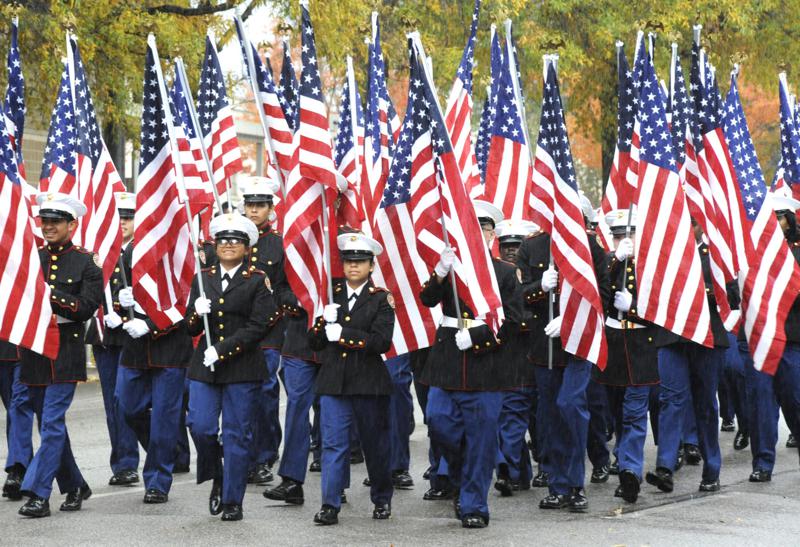
A red, white, and blue procession billed as the nation’s longest-running Veterans Day parade rolled once again Thursday despite dousing rain and gusty winds after taking a year off because of the coronavirus pandemic. Reduced to an online-only event in 2020 because of COVID-19 safety precautions, the National Veterans Day Parade stretched through downtown Birmingham in a traditional format that included military units, ROTC groups, floats, veterans organizations, high school bands, and lots of waving flags. The crowd was not huge, possibly because of the blustery weather, but Clarence Turner brought his two young grandsons and an umbrella. “I’m not a veteran. Actually, I was supposed to be at work today. I just took off to bring them down here so they can learn about the importance of the military and the veterans,” Turner said as the brothers, 8-year-old Terrence Todd and 9-year-old Lamar Todd, waved to marchers. Retired Marine Maj. Donald D. Brooks, who retired in 1977 after 40 years in the service and then taught ROTC, was happy the parade had resumed but concerned about participants. “I’m worried about my Marine color guard. They’re going to get all wet,” said Brooks, who lives in Tuscaloosa County, before the start. “I going to get in the car behind us.” More than 100 groups signed up to participate, down about 20 from most years, but Mark Ryan, president of the National Veterans Day Foundation, said organizers hoped tens of thousands will come out. “Our goal is to show our veterans our special they are to us, not only individually but collectively,” he said. Sgt. Maj. of the Army Michael A. Grinston, an Alabama native, served as grand marshal, riding in a covered vehicle to stay dry. Thousands turned out for a parade in Mobile despite overcast skies, and Huntsville’s parade stepped off earlier than planned because of the chance of storms. Birmingham isn’t the only place to claim its celebration of veterans is the nation’s oldest. Leavenworth County, Kansas, dates its festivities back to the year after World War I ended, 1918, or nearly 30 years before the Birmingham event was established. And Emporia, Kansas, has been recognized as having the first Veterans Day event in 1953. But the Veterans Administration credits Birmingham with having the first celebration to use the term “Veterans Day” in its title after World War II veteran Raymond Weeks organized “National Veterans Day” in 1947. President Dwight D. Eisenhower signed legislation changing the federal holiday from Armistice Day to Veterans Day in 1954. The parade has been held annually, Ryan said, and organizers considered canceling it last year because of public health safety before opting for a virtual event that included video performances, salutes, and video from past parades and was watched thousands watched online, he said. “Smarter minds than mine came together and convinced me we had to have one,” said Ryan. A dinner Wednesday night honored service members who participated in the response to COVID-19, which has killed more than 755,000 people in the United States, or more than the combined number of 673,687 U.S. service members who died from combat or other causes in both world wars, Korea, Vietnam, the two Gulf wars and the global war on terror that followed the attacks of Sept. 11, 2001. Service members helped in the fight against COVID-19 by cleaning nursing homes, setting up testing stations, and administering vaccines. “We’re honoring all of them,” said Ryan. Republished with the permission of the Associated Press.
Jim Zeigler: Veterans Day was started in Alabama by an Alabama veteran

It all started in Birmingham, Alabama, in 1947 – the first Veterans Day. It was celebrated only in Alabama at first, but the idea was so good and so needed that it spread nationally. Raymond Weeks was a Birmingham native and veteran of World War II. He came up with the idea to take “Armistice Day” – which commemorated the November 11 end of fighting in WWI – and expand it to “Veterans Day” to honor all Americans who had served their country and their people. He led a national campaign for the idea of Veterans Day with General Dwight Eisenhower, President Harry Truman, and Congress. By November 11, 1982, the idea had become so popular that President Ronald Reagan awarded the Presidential Citizenship Medal to Weeks, who lived in Alabama until his death at age 76 in 1985. The meaning of Veterans Day is sometimes confused with Memorial Day in May. While Memorial Day honors those who died in the service of their county, Veterans Day honors all who served. Many Veterans look back at their years of service as the most meaningful time of their lives. Some people live their entire lifetimes and wonder if they ever made a difference for others. Veterans don’t have that problem. Jim Zeigler has been the Alabama State Auditor since 2015.
Steve Flowers: Judge Bobby Aderholt
Alabama has a legacy of great men who have served as judges in our state. Recently, revered, retired Circuit Judge Bobby Ray Aderholt of Haleyville passed away at 85. He served the public for more than 50 years. As a judge, he presided over each case with integrity and impartiality. He was the Circuit Judge for the 25th Judicial Circuit for 30-years, 1977-2007. He was first elected Circuit Judge in 1976. He would have continued serving the people of Winston and Marion counties if it were not for an antiquated law in Alabama that judges cannot run for office after age 70. When Judge Aderholt first ran in 1976, he bucked a Democratic tidal wave in the state and was the only Republican elected in North Alabama that year. Our state had been overwhelmingly Democratic from the 1870s through 1964 because of the aftermath of the Civil War and Reconstruction. However, there was one area of the state that never bought into the Southern Secession from the Union. The folks in Northwest Alabama did not own slaves and figured they did not need to fight a war over slavery for the rich planters of the Black Belt. Therefore, when Alabama seceded from the Union, Winston County seceded from Alabama. Thus, Winston County became the Free State of Winston. During the 1884 to 1964, 80-year period, every statewide elected official in Alabama was a Democrat, and also every local and legislative officeholder ran as a Democrat with the exception of one county – Winston had Republican officeholders. In fact, legendary U.S. Federal Judge Frank Johnson Jr. was a Republican from Winston County. When a federal judgeship came open in the Middle District of Alabama in the early 1950s, President Dwight Eisenhower had a hard time finding a Republican to appoint. He chose young Frank Johnson Jr. The Republican party broke the ice in 1964. Alabama voted straight Republican for Barry Goldwater, and the wave carried five Republican congressmen with him. Alabama had become a red Republican state. However, we still elected Democrats to local offices like legislator and circuit judge. 1976 was a blip with Jimmy Carter carrying Alabama and the Deep South due to the post-Watergate fallout. Judge Bobby Aderholt was always a Republican, so he ran as a Republican that year and won. He was on an island with no other Republican winning in North Alabama. He became a pioneer in the Alabama Republican Party and one of the most respected judges in the state. He was known as fair, fiercely independent, and not beholden to anyone. He had a brilliant legal mind, but most importantly, he always had compassion for all individuals and treated everyone in his courtroom with dignity and respect. In conjunction with his judicial duties, he performed countless weddings and funerals in his beloved neck of the woods. Judge Aderholt was born in December of 1935 and grew up in Winston County. He went to undergraduate school at Birmingham Southern and went to Law School at the University of Alabama. He matriculated back home to Haleyville, where he had graduated high school in 1954. He spent his life in Haleyville. He was a dedicated member of the First Baptist Church of Haleyville. However, he pastored Fairview Congregational Church in Hackleburg for 47 years. Judge Bobby Aderholt was a dedicated family man. He is survived by his wife of 63 years, Mary Frances Brown Aderholt, who was his childhood sweetheart. Judge Aderholt is the father of our senior Congressman, Robert Aderholt. Robert is the only child of Judge and Mrs. Mary Frances Aderholt. They raised a good one. Robert was elected to Congress in 1996 at the ripe old age of 31. He is in his 25th year of representing the 4th Congressional District of Alabama and is the Dean of our congressional delegation. Robert and his wife, Caroline McDonald Aderholt, have two children, Mary Elliott and Robert Hayes. Judge Bobby Aderholt was a good man. We will all miss him. I will miss him as a reader of my column. He read it every week, religiously in the Marion County Journal Record and the Northwest Alabamian. Steve Flowers is Alabama’s leading political columnist. His weekly column appears in over 60 Alabama newspapers. He served 16 years in the state legislature. Steve may be reached at:https://www.steveflowers.us.
George Wallace Jr: A tribute to John Patterson and a life well lived
Since his passing last week at age 99, former Alabama Governor John Patterson, his character, and the deep and decades-long relationship he shared with my family have frequently been in my thoughts. I met John Patterson in 1958 when he was Alabama’s nationally-famous state attorney general and a candidate for governor against my late father, a former state representative and sitting circuit judge for Barbour and Bullock counties in the Third Judicial Circuit. As a six-year-old, I would stand on a chair and make political speeches on behalf of my father’s candidacy at political forums across Alabama. The crowds seemed to like the novelty of such a young boy campaigning for his parent, and it proved to be a valuable introduction to Alabama politics that served me well during my own campaigns years later. Gov. Patterson and I first shook hands at one of those forums, and he remained a welcome presence in my life for more than 60 years to follow. He and my father were friends before that campaign, and they maintained their friendship even after Patterson became the only man to defeat him in a gubernatorial campaign and later ran for governor against my mother, Lurleen, in 1966. In fact, their friendship grew and deepened as the years went by, and more and more of their colleagues, contemporaries, and political allies passed away. A World War II veteran who served on General Dwight Eisenhower’s staff, Gov. Patterson also saw action in the Korean Conflict before returning to Phenix City and opening a law practice with his father, Albert. Phenix City was known at the time as the “Wickedest City in America” because of the gambling, prostitution, and other vices that operated openly thanks to a complicit, wink-and-nod agreement with members of local law enforcement. Because so many of his soldiers were returning to base broke, beaten, and robbed after payday, General George Patton, while stationed at Fort Benning, once threatened to cross the Chattahoochee River and flatten Phenix City with his tanks. John’s father, Albert Patterson, a former member of the Alabama Senate who wished to restore law and order to the city, sought help from state officials in Montgomery, but he found that many of them, as well, had been co-opted by the Dixie Mafia when they refused his requests. Taking matters into his own hand, he ran a statewide campaign for attorney general on a platform of cleaning up Phenix City. Despite widespread vote fraud intended to rob him of victory, Albert Patterson won the Democratic primary, which was then tantamount to election, but he was assassinated outside his law office by the same criminal network he was working to destroy. John Patterson ran for attorney general in his father’s place, and he vindicated his murder with zeal. Working with the National Guard that Gov. Gordon Persons had called in after declaring martial law, Patterson secured almost 750 indictments against the local law enforcement officers, elected officials, and organized crime elements that operated the vices. He also successfully prosecuted the chief deputy sheriff for killing his father. Patterson became a national celebrity, and Hollywood even made a movie about the events titled “The Phenix City Story.” As a result, he was propelled into the governor’s office following the 1958 campaign. His term as governor was notable for a $100 million public school building program, increased services for the aged and infirmed, and opposition to loan-sharking operations that preyed on the poor, but most historians remember it for the early events that occurred during the struggle for Civil Rights. Yes, Gov. Patterson was controversial, as was my father early in his career, relative to the issue of segregation, but they were products of their era. As time passed, they saw the light, walked toward it, and embraced it while becoming advocates for brotherhood and understanding. In the end, they both got it right. One of the finest appointments my father ever made was placing John Patterson in an open seat on the Alabama Court of Criminal Appeals, a post he held until retiring in 1997. His work and influence are felt on that court even to this day, and it is notable that he always preferred to be addressed as ‘Judge Patterson” rather than “Governor Patterson” after stepping down from public life. I had the pleasure of serving with Judge Patterson for more than 20 years on the board of Lyman Ward Military Academy, and the keen insight and wisdom he brought to our proceedings were always impressive. Following our board meetings, we would always have lunch in the mess hall with the cadets. Judge Patterson and I would sit across from each other as we reminisced and told behind-the-scenes stories about the political events and larger-than-life personalities of a by-gone era. We were always amused that the other trustees would quietly ease their chairs closer to ours in order to eavesdrop on our conversations and get an insiders’ look at Alabama politics. When our father passed away in 1998 at age 79, my family immediately asked Judge Patterson to deliver his eulogy at the state funeral service held in the Alabama Capitol Building, and it remains a touching memory to this day. After sharing remarks that were all at once reflective, humorous, candid, and emotional, Judge Patterson ended his eulogy about my father by saying: “His passing marks the end of an era in our history. Alabama has lost its greatest son, and I have lost a dear friend.” Those words he spoke in tribute to my father express exactly how I feel about the loss of Judge John Patterson, a kind, decent, and honorable man who loved Alabama fiercely and leaves behind a life well lived. He will be missed. George Wallace Jr. is the son of Alabama Govs. George and Lurleen Wallace. He previously served two terms as Alabama State Treasurer and two terms as a member of the Alabama Public Service Commission.
Segregationist former Alabama Gov. John Patterson dies at 99
Former Alabama Gov. John Patterson, who entered politics as a reformer after his father’s assassination but was criticized for failing to protect the Freedom Riders from angry white mobs, has died. He was 99. He died Friday, his daughter, Barbara Patterson Scholl, confirmed. She said funeral arrangements are pending. “He died very peacefully at home. His family and friends were with him,” she said. Patterson’s involvement with state government spanned a half-century, beginning with his election as attorney general at 33 after violence in Phenix City, and later as a judge. A segregationist as governor, he drew criticism when Freedom Riders were attacked while in Alabama and Patterson did nothing to protect them. He later voiced regret for what happened. He ended his political career more serenely on the Court of Criminal Appeals, where he continued to write opinions into his 80s. Patterson also was involved in the disastrous Bay of Pigs invasion, helping the CIA get Alabama Air National Guard members to train Cuban exiles. Some Alabama pilots died when the 1961 invasion of Cuba failed. Patterson was born on his grandparents’ farm in the tiny Tallapoosa County community of Goldville but finished high school in Phenix City, where his father, Albert Patterson, was a lawyer. After serving on Gen. Dwight Eisenhower’s staff during World War II, Patterson returned home, got his law degree from the University of Alabama, and went into practice with his father, Albert Patterson. Albert Patterson ran for attorney general in 1954 on a platform of cleaning up the vice and illegal gambling that had turned his town into “Sin City, U.S.A.” He won the Democratic nomination to be the state’s top prosecutor but was gunned down in Phenix City on June 18. Democratic Party officials pressured his son to run for attorney general in his place. He did and won. In a 2003 interview, Patterson told The Associated Press he had no interest in politics until his father’s death. “If he hadn’t been killed, I never would have run for public office. Nobody would have ever heard of me outside legal circles,” Patterson said. As attorney general, Patterson kept his father’s campaign promise to clean up Phenix City. He also fought civil rights groups in court. In one case, he got a restraining order to keep the NAACP from operating in Alabama. The restraining order remained until 1964 when it was lifted by the U.S. Supreme Court. Patterson ran for governor in 1958, beating George Wallace in a Democratic primary that focused largely on Patterson’s pro-segregation stand. Patterson was the only person to beat Wallace in an Alabama election. Four years later, Wallace successfully claimed the segregationist banner to begin his dynasty. During Patterson’s term, Alabama launched a $100 million school building program, increased old-age pensions, returned the State Docks to profitability, and enacted a small loan law to curb loan sharks. But his term also saw attacks on the Freedom Riders who were seeking to integrate bus waiting rooms and lunch counters. Patterson said later he mistakenly trusted police in Birmingham and Montgomery to protect the Freedom Riders, but they didn’t. “I regret it, and it was bad for my administration,” Patterson said in 2003. Patterson said he knew segregation couldn’t be maintained under the Constitution, but he wanted to delay its end. He said he felt Alabamians would accept integration without violence if change occurred slowly. Exactly 50 years after the Freedom Riders were beaten by a white mob in Montgomery, Patterson welcomed 10 of them back to Montgomery on May 20, 2011, for the dedication of a museum honoring them. “It took a lot of nerve and guts to do what they did,” Patterson said. In a 2009 interview, Sam Webb, co-editor of the book “Alabama Governors,” said Patterson was “a brave and courageous” governor on many fronts, but those accomplishments were overshadowed by race issues. “Unfortunately what will stand out in John Patterson’s case is his vociferous opposition to civil rights and racial integration,” said Webb, a historian at the University of Alabama at Birmingham. During Patterson’s term as governor, the CIA began planning for Cuban exiles to invade Cuba and try to overthrow Fidel Castro. A CIA agent approached Patterson about getting members of the Alabama Air National Guard to help train the exiles. Patterson agreed after the agent assured him that President Eisenhower had approved the plan. About 300 Alabamians helped train Cuban exiles for the Bay of Pigs invasion, which was not carried out until President John Kennedy replaced Eisenhower in the White House in 1961. On the third day of the invasion, as it was failing, Alabama pilots flew the last bombing mission, and four died. Kennedy initially denied any U.S. involvement in the invasion, which was a shock to Patterson, who knew differently. Years later, Patterson disclosed that he had tipped off Kennedy about the invasion plans shortly before the November 1960 presidential election. Patterson, a Kennedy supporter, flew to New York to tell Kennedy out of concern that the Eisenhower administration would carry out the invasion just before the presidential election to boost Vice President Richard Nixon’s chances of beating Kennedy. Patterson couldn’t seek a second term in 1962 because Alabama law then prohibited consecutive terms. He tried a comeback in 1966, but lost to Wallace’s wife, Lurleen Wallace. He also ran unsuccessfully for chief justice of the Alabama Supreme Court in 1972. Patterson, who had been friends with Wallace before their bitter 1958 race, eventually renewed the friendship and helped Wallace in his later campaigns for president and governor. In 1984, Wallace appointed Patterson to a vacancy on the Alabama Court of Criminal Appeals. He won election to a full six-year term later that year and was reelected in 1990. In January 1997, he had to retire because the state constitution prohibits judges from running for another term after reaching 70. Still, Patterson continued to work for the court by helping write opinions because he said he enjoyed being a judge more
Steve Flowers: Jim Martin father of modern Republican Party in Alabama
Three years ago, Jim Martin passed away in Gadsden at 99 years old. His beloved wife of 60 years, Pat, was by his side. He was a true Christian gentleman. Jim was one of the Fathers of the modern Republican Party in the south. In 1962, John Kennedy was President. Camelot was in full bloom. The Congress was controlled by Democrats only because the south was solidly Democratic. The southern bloc of senators and congressmen were all Democrats. Because of their enormous seniority, they controlled both houses of Congress. The issue of Civil Rights was a tempest set to blow off the Capitol dome. Kennedy was under intense pressure to pass major Civil Rights legislation. However, he was up against a stonewall to get it through the powerful bloc of southern senators. Race was the only issue in the south, especially in Alabama. George Wallace was riding the race issue to the Governor’s office for his first term. The white southern voter was determined to stand firm against integration and was poised to cast their vote for the most ardent segregationists on the ballot. Our Congressional delegation was Democratic, all eight Congressmen, and both Senators. Our tandem of John Sparkman and Lister Hill had a combined 40-years of service. Lister Hill had gone to the U.S. Senate in 1938. He had served four six-year terms and had become a national celebrity in his 24 years in the Senate. He was up for election for his fifth six-year term. It was expected to be a coronation. Senator Hill was reserved, aristocratic, and almost felt as if he was above campaigning. He was also soft on the race issue. He was a progressive who refused race-bait. Out of nowhere a handsome, articulate, young Gadsden businessman, Jim Martin, appeared on the scene. Martin was 42, a decorated World War II officer, who fought with Patton’s 3rd Army in Europe. He entered as a private and became an integral part of Patton’s team, rising to the rank of Major. After the war, Martin went to work for Amoco Oil and married a Miss Alabama – Pat Huddleston from Clanton. They then settled in Gadsden and he bought an oil distributorship and became successful in business. He was a business Republican and became active in the State Chamber of Commerce. When the State Chamber Board went to Washington to visit the Congressional delegation, they were treated rudely by our Democratic delegates, who were still voting their progressive New Deal, pro-union philosophy. Martin left Washington and decided that Alabama at least needed a two-party system and that he would be the sacrificial lamb to take on the venerable Lister Hill as the Republican nominee for the U.S. Senate. Martin got the nomination in a convention and the David vs. Goliath race was on. By late summer the big city newspapers could feel that Martin had some momentum. He was being perceived as the conservative and Hill as the liberal. Every Alabama courthouse was Democratic, all sheriffs, Probate Judges, as well as all statewide elected officials. It was hard to imagine that the tradition of voting Democratic would change, but the winds of segregation were strong. When the votes were counted in November of 1962, Martin had pulled off the biggest upset in the nation. NBC’s team of Chet Huntley and David Brinkley reported the phenomenon on the nightly news. Republican President Dwight Eisenhower called Martin to congratulate him. However, things were happening in rural North Alabama. Martin had won by 6,000 votes but three days later, mysterious boxes appeared with just enough votes to give Hill the belated victory. The entire country and most Alabamians knew that Jim Martin had been counted out. Jim Martin would have been the first Republican Senator from the south in a century. Some people speculate that he would have been the vice-presidential candidate with Richard Nixon in 1968. Regardless, Martin was the John the Baptist of the Southern Republican sweep of 1964, and father of the modern Republican Party in Alabama. That 1962 Senate race was a precursor of what was to come two years later. Jim Martin was one of five Republicans swept into Congress in the 1964 Goldwater landslide. He probably would have won the U.S. Senate seat of John Sparkman in 1966. However, Martin chose to run for governor against Lurleen Wallace. In 1987, Martin became Commissioner of the Alabama Department of Conservation and Natural Resources. As Commissioner, Martin helped create the Forever Wild land preservation program. Jim Martin has a special place in Alabama political history. See you next week. Steve Flowers is Alabama’s leading political columnist. His weekly column appears in over 60 Alabama newspapers. He served 16 years in the state legislature. Steve may be reached at www.steveflowers.us.
Inside the Statehouse: 1960 Presidential race marked beginning of television as premier political medium
“Television is still the medium that drives the vote. It has been rumored and stated as fact that social media has taken over. But, it has not yet.”
Donald Trump: US may rethink decision to exit surveillance treaty
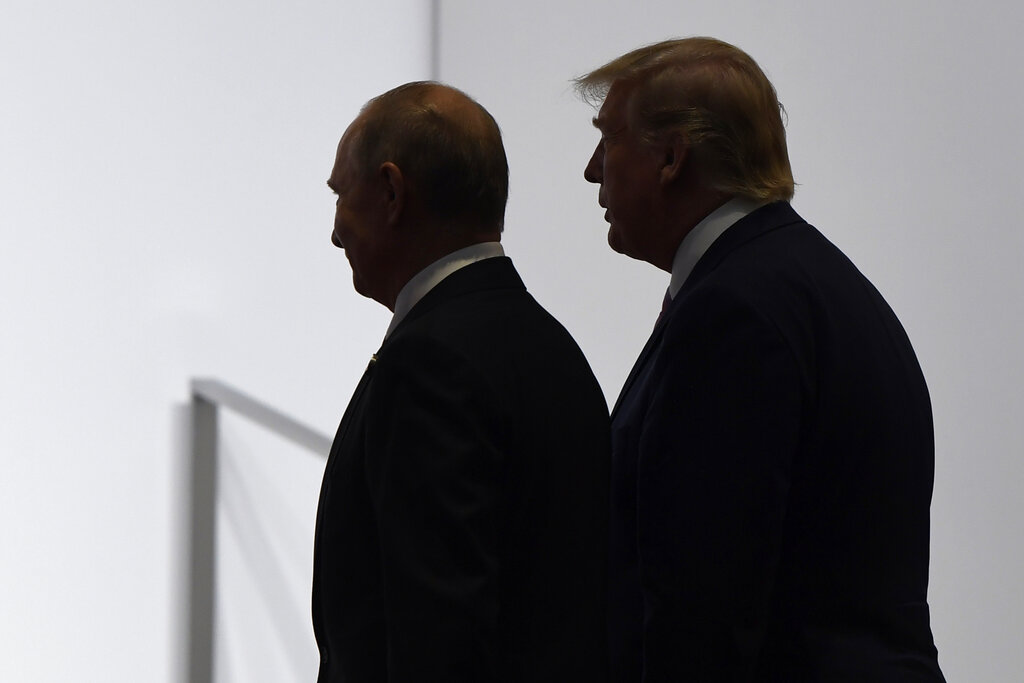
Trump’s announcement comes as the U.S. begins new nuclear arms control talks with the Kremlin.
