
Tommy Tuberville supports allowing cannabis businesses to access the banking system

On Wednesday, U.S. Senator Tommy Tuberville told reporters that he would vote in favor of the Secure and Fair Enforcement Banking Act (SAFE Banking Act) of 2023. The SAFE Banking Act is a bill that would prevent federal banking regulators from prohibiting or penalizing a bank from providing financial services to a state-sanctioned cannabis business. “Yea, I am a supporter of the SAFE Banking Act,” Tuberville said when asked by a reporter during his weekly press call. The legislation creates a safe harbor for financial institutions to provide services to licensed, state-legal cannabis businesses. “We need to get it passed, but the Democrats obviously control the Senate floor, and there is no way we can get it down there,” Tuberville said. “You know, a lot of them want to legalize marijuana entirely, which is a separate issue, but safe banking is about the access to basic banking service for businesses that are legal in the states where they operate. On Monday, the Alabama Medical Cannabis Commission approved 21 applications for entities to open legal medical marijuana businesses in the state of Alabama. None of those businesses will be able to bank with their neighborhood bank. Those businesses likely will not be able to write checks or use a debit or credit card. Alabamians with a legitimate medical need and a recommendation from their doctor for medical cannabis will likely have to withdraw cash from their accounts to take to the legal medical marijuana dispensary in order to buy their medical marijuana. The dispensary cannot legally bank that money. Criminals and street thugs also know that people about to walk into a dispensary will likely have hundreds of dollars on their person and that the dispensary likely has thousands of dollars in untraceable paper currency at the premises. “Under current federal law, banks and credit unions are not allowed to bank for legal cannabis businesses or businesses that provide services to legal cannabis businesses,” Tuberville explained. So we’ve got to protect people’s cash.” Tuberville said that this is a public safety issue. “I have been in contact with people from all over the country that have worked with cannabis over the last few years, and it is a major public issue of people storing cash in their businesses…..underground,” Tuberville said. “We have got to make it safer, and if it is going to be legal in the state of Alabama, which medical marijuana is headed our way, then we have got to make sure people are safe. That is what the Safe Banking Act is all about, but getting it on the floor…Senator [Chuck] Schumer is not very cooperative with Republicans, and so we will see what happens with that.” The bill was reintroduced in the House and Senate on April 26, 2023. Senators Steve Daines (R-Montana) and Jeff Merkley (D-Oregon) sponsored the legislation in the upper chamber, and Representatives Earl Blumenauer (D-Oregon) and David Joyce (R-Ohio) in the House. “Montanans should be able to conduct their small business without fearing for their safety,” Daines said in a statement. “Our bipartisan bill would provide the security and peace of mind that legal Montana cannabis businesses need to freely use banks, credit unions, and other financial products without a fear of punishment. This bill will help keep our Montana communities safe, keep crime off the streets, support Montana law enforcement and small businesses, and bolster local economies.” Tuberville was elected to the Senate in 2020. To connect with the author of this story or to comment, email brandonmreporter@gmail.com.
Rep. Terri Sewell joins bipartisan bill to protect employer-provided worksite health clinics
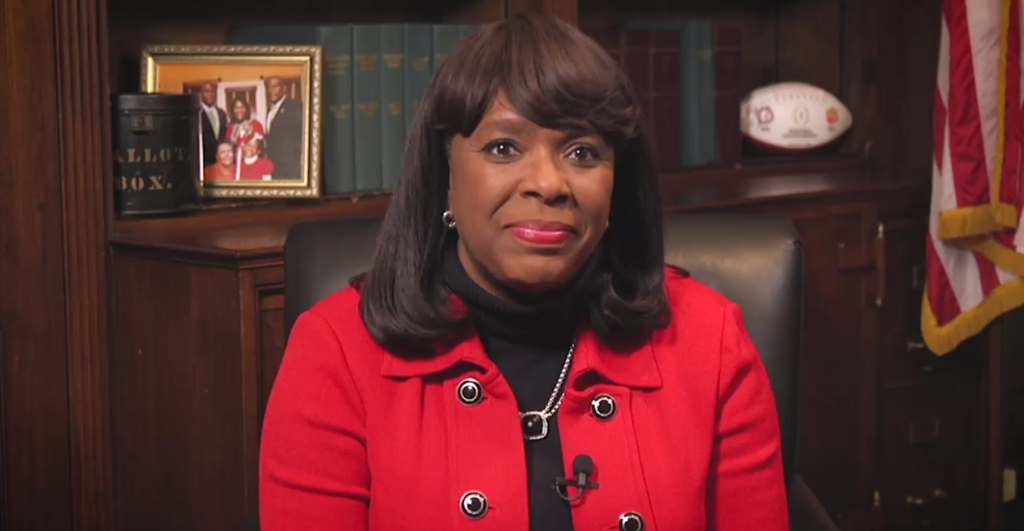
Last week Reps. Terri Sewell and Brad Wenstrup introduced bipartisan bill H.R. 7487, the Employee Access to Worksite Health Services Act. The bill would protect employees’ access to health care at their workplace health center by correcting a provision of the tax code that currently disincentivizes employers from offering worksite health clinics. Worksite health clinics are offered by many large employers and state and local governments. They play a critical role in the health and well-being of employees across the nation. In 2021, more than 60 percent of large companies offered worksite health clinics. “Workers in Alabama and across this nation rely on their employer’s worksite health clinics to access critical health care services. These clinics make our communities healthier and offer countless benefits to companies and the workers they employ,” stated Sewell. “We must ensure that our tax code rewards—not penalizes—employers for making these clinics available at the workplace. The Employee Access to Worksite Health Services Act is a commonsense bill that does just that. I’m proud to partner with Congressman Brad Wenstrup to introduce this bill and urge my colleagues on both sides of the aisle to give it their full support.” Wenstrup, lead Republican sponsor, argued that the bill will correct how the tax system currently disincentivizes employers from offering worksite health clinics. Under Internal Revenue Code Section 223, employees are prohibited from contributing pre-tax dollars to a Health Savings Account (HSA) if they also receive certain supplemental health benefits at no cost or under fair market value. Employers are then forced to limit the scope of services offered to HSA enrollees or deny them access enjoyed by other employees and their family members. Wenstrup stated, “Our communities here in Ohio and across the country rely on worksite health clinics to provide valuable resources which keep people healthier longer by providing interventions and preventative healthcare. Our tax system currently disincentivizes employers from offering worksite health clinics, and this bill corrects that. I’m happy to work with Congresswoman Terri Sewell, Congressman Mike Kelly, and Congressman Earl Blumenauer on this important legislation and I hope my colleagues will do the same; let’s keep America’s employees healthy.” The bill will amend IRC Section 223 to clarify that accessing services provided through a worksite health clinic does not render an individual ineligible to make pretax contributions to their HSA.
House votes to further restrict Russian trade after invasion

The House voted Thursday overwhelmingly to suspend normal trade relations with Russia and Belarus, preparing for President Joe Biden to enact higher tariffs on more products and further weaken the Russian economy in response to its military assault on Ukraine. The U.S. has already taken steps to shut off the importation of Russian oil, liquefied natural gas, seafood, alcohol, and diamonds. The vote on Thursday sets the stage for making it more expensive to import certain steel, aluminum, and plywood items, among other goods. The House vote was 424-8. The Senate is expected to take up the measure soon for final passage. The broad trade action, which would revoke “most favored nation” status for Russia, is being taken in coordination with the European Union and Group of Seven countries. The House vote came one day after Ukrainian President Volodymyr Zelenskyy pleaded with Congress and U.S. allies to do more to deter Russia’. “I’m asking to make sure that the Russians do not receive a single penny that they use to destroy people in Ukraine,” Zelenskyy said in a video address to Congress. In a joint statement introducing the trade bill, Reps. Richard Neal, D-Mass., and Kevin Brady, R-Texas, said Zelenskyy’s remarks “only strengthened our resolve to further isolate and weaken” Russian President Vladimir Putin. “We must do all we can to hold Putin accountable for senselessly attacking the Ukrainian people and undermining global stability,” the two lawmakers said. “The suspension of normal trade relations is an essential part of our effort to restore peace, save lives and defend democracy.” World Trade Organization rules generally require each member to provide its lowest tariff rates to all WTO members. Russia joined the WTO in 2012, and Congress overwhelmingly approved legislation that year, providing the president with the authority to extend normal trade relations status with Russia. But countries can enact exceptions to protect security interests. Still, the revocation would carry mostly symbolic weight. The earlier sanctions on imports of Russian oil, gas, and coal already cut off about 60% of U.S. imports from the country, but certain sectors of the economy could feel an effect. Senate Majority Leader Chuck Schumer, D-N.Y., said, “To date, both parties, Democrat and Republican, remain united in sending Putin a clear message: His inhumane violence against the Ukrainian people will come at a crippling price.” Tariffs make imports less competitive by increasing their costs to U.S. companies. Timothy Brightbill, a partner at Wiley Rein LLP who focuses on international trade law, said the effects on American consumers should be modest in most sectors as companies can generally turn to other suppliers. He said it’s important for U.S. supply chains not to run through Russia anymore and that consumers understand that. “Most American consumers would be happy to pay a bit more to ensure that their products and raw materials don’t support Russia and the Russian government,” Brightbill said. He also said that revoking Russia’s trade status sends a strong signal to China that the United States would not tolerate hostile actions against Taiwan. Eight Republicans voted against the House measure, but speakers from both parties forcefully advocated for its passage during the debate. Democratic Reps. Lloyd Doggett, D-Texas, and Earl Blumenauer, D-Ore., introduced an earlier version. “What Putin is doing in Ukraine, bombing civilians, targeting children, … is outside the circle of civilized human behavior,” said House Speaker Nancy Pelosi. “He is committing war crimes, and he must be held accountable.” Rep. Victoria Spartz, R-Ind., who was born in Ukraine, said the bill sends a message to Putin and his allies that “the West is serious.” “They cannot just go kill a bunch of people, destroy cities, kill women and children and then go back and have business as usual,” Spartz said. Republished with the permission of the Associated Press.
North America trade pact deals rare setback to big pharma
![[Photo Credit: canva.com]](https://altoday.com/wp-content/uploads/2018/10/Canva-Cure-Drug-Cold-Dose-The-Disease-Pharmacy-1024x683.jpg)
A revamped North American trade deal nearing passage in Congress gives both the White House and Democrats a chance to claim victory and offers farmers and businesses clearer rules governing the vast flow of goods among the United States, Canada and Mexico. But the pact leaves at least one surprising loser: the pharmaceutical industry, a near-invincible lobbying powerhouse in Washington. To satisfy House Democrats, the Donald Trump administration removed a provision that would have given the makers of ultra-expensive biologic drugs 10 years of protection from less expensive knockoffs. Democrats opposed what they called a giveaway to the industry that could have locked in inflated prices by stifling competition. Top examples of the injected drugs made from living cells include medications to fight cancer and immune disorders such as rheumatoid arthritis. “This is one of the first times we’ve actually seen pharma lose,” said Rep. Earl Blumenauer, an Oregon Democrat who leads a subcommittee on trade. “They have a remarkable track record because they are a huge political force. They spend lots of money on lobbying, on advertising, on campaign contributions. But we held firm, and we won on all counts.” The removal of the provision also helped illustrate just how potent a political issue sky-high drug prices have become. It was a reminder, too, that President Donald Trump repeatedly pledged to work to lower drug prices. Last week, drug manufacturers absorbed another — though likely only temporary — defeat when House Democrats passed legislation, along party lines, that would authorize Medicare to use its influence in the marketplace to negotiate lower prices from drug companies. The bill is thought to have no chance of passage, though, in the Republican-led Senate. Yet the revamped U.S.-Mexico-Canada Agreement, Trump’s rewrite of the 25-year-old North American Free Trade Act, seems set to clear Congress without the biologics protection that the drug industry had sought. On Tuesday, the House Ways and Means Committee approved the legal text. The full House is expected to approve it Thursday, though the Senate isn’t likely to take it up until January. “It’s not a mystery,’’ said Rep. Jan Schakowsky, an Illinois Democrat who helped negotiate with the administration. “If you poll the American people, the cost of pharmaceuticals is a really big deal. It’s at the top of the list.’’ The trade agreement the administration reached last year with Mexico and Canada gave biologics 10 years of protection from cheaper near-copies known as biosimilars. Among the leading biologics are the anti-cancer drug Rituxan and Humira and Enbrel, which fight immune disorders. The industry — and the Trump administration — had argued that manufacturers of biologics require years of protection to profit from their drugs before biosimilars should be allowed to cut into sales. Otherwise, they contend, brand-name drug companies and biotech startups that rely on money from venture capital firms would have little incentive to invest in developing new medicines. “The announcement made today puts politics over patients,” the leading drug industry trade group, PhRMA, said in a statement last week. “Eliminating the biologics provision in the USMCA removes vital protections for innovators while doing nothing to help U.S. patients afford their medicines or access future treatments and cures.’’ The industry also rejected the notion that the biologics provision would keep drug prices high and hurt consumers. Existing U.S. law, they noted, already gives makers of biologics 12 years’ protection, more than the proposed 10 years in the USMCA. But the provision the Democrats succeeded in removing would have forced Mexico to expand biologics’ monopoly from five years and Canada from eight, potentially hurting U.S. consumers who seek lower drug prices in those countries. What’s more, Democrats argued, if Congress had expanded the biologics’ monopoly in the USMCA, it would have prevented lawmakers from ever scaling back that monopoly to, say, the seven years that the Obama administration had once proposed. “We would have been locked in,’’ Schakowsky said. For Big Pharma, the setback marked a sharp turnabout. Four years ago, the drug industry helped scuttle an Obama administration trade deal with 11 Pacific Rim countries, arguing that a provision establishing eight years of protection for biologics was not sufficient. Now the latest U.S. trade deal contains no biologics protections at all. Back in 2006, the industry scored a major victory when it helped push legislation through Congress that added prescription drug coverage for Medicare recipients but barred the government from negotiating lower prices. That restriction opened a “Pandora’s box” that paved the way for unsustainable price hikes, said Steve Brozak, an analyst at WBB Securities. Drug makers began raising prices of existing drugs several times a year, sometimes totaling more than 20% annually. They also started launching biologics with list prices topping six figures a year. In May, U.S. regulators approved a one-time gene therapy, Zolgensma, with an eye-popping price of $2.1 million per patient. A backlash has been growing, especially after news reports and congressional hearings exposed stories of patients rationing medicine and even dying because they couldn’t afford insulin or other drugs. Drugmakers have “been on defense more than we’ve ever seen,” said David Certner, legal counsel for AARP. Last year, Certner noted, Congress dealt the industry two losses: First, by increasing the discounts that drug makers must give to seniors with high drug costs who have landed in a Medicare coverage gap. Then, months later, lawmakers rejected industry efforts to reverse that change. And in January, the industry lost perhaps its biggest champion in Congress when Sen. Orrin Hatch, Republican-Utah, retired. Trump has long promised to address drug prices. On Wednesday, the administration moved ahead with a plan to allow Americans to safely and legally gain access to lower-priced medicines from abroad. So far, most of Trump’s drug-price initiatives have gone nowhere. His trade team negotiated biologics protections into the USMCA. Facing public anger, Democratic resistance and the fact that Canada and Mexico had no reason to support the protections for biologics, the administration yielded. When it reached a deal with House Democrats
White House uses Twitter account to push back at Democrats
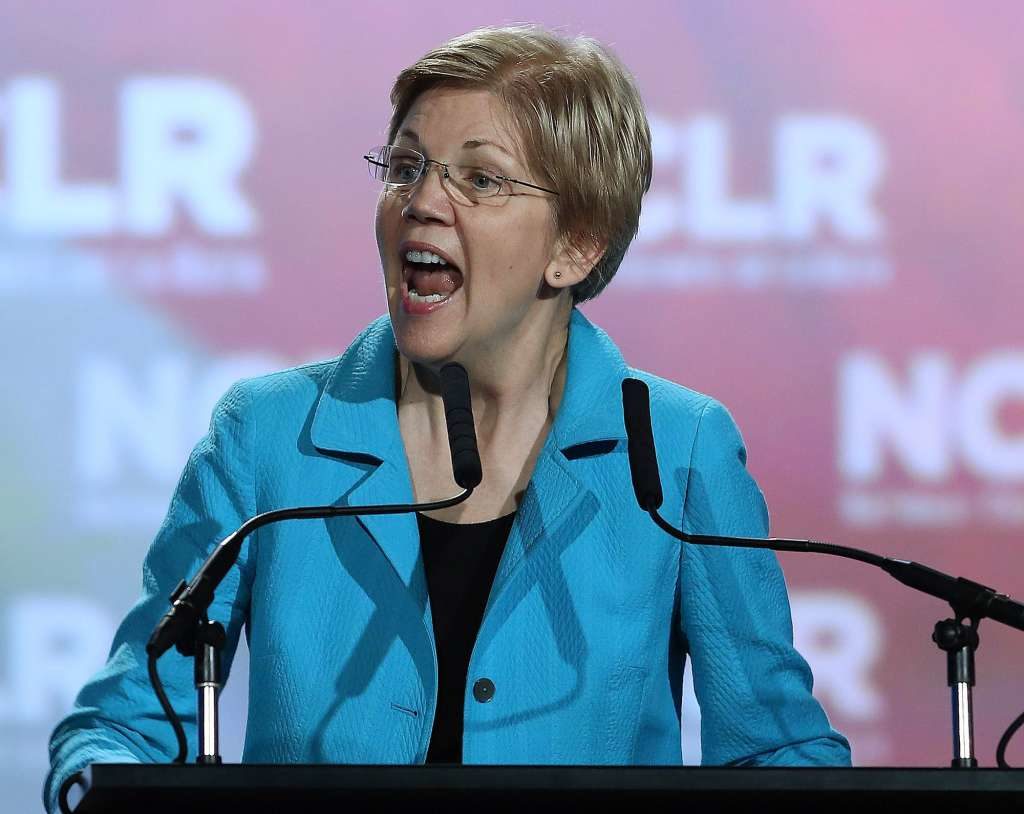
The White House is using its official Twitter handle to target Democratic lawmakers who have criticized President Donald Trump’s immigration policies, drawing complaints that government resources are being used to undercut potential 2020 presidential rivals. The White House Twitter handle, which has more than 17.3 million followers, falsely accused California Sen. Kamala Harris on Monday of “supporting the animals of MS-13,” a violent gang that the president has sought to eradicate. In a separate tweet, the White House account erroneously asserted Massachusetts Sen. Elizabeth Warren was “supporting criminals moving weapons, drugs, and victims” across the border. Watchdog groups said the use of the Twitter handle didn’t appear to violate any government laws but represented a politicization of the social media accounts at a time when Republicans and Democrats are engaged in a vigorous debate over the nation’s immigration laws and the separation of migrant children from their families at the U.S.-Mexican border. Responding on Twitter, Harris pointed to her work as a prosecutor who “went after gangs and transnational criminal organizations. That’s being a leader on public safety. What is not, is ripping babies from their mothers.” Warren assailed Trump’s immigration policies during a rally last Saturday, saying Trump seemed to think “the only way to have immigration rules is to rip parents from their families, is to treat rape victims and refugees like terrorists and to put children in cages. This is ugly. This is wrong.” The White House Twitter account is separate from Trump’s personal account, which has more than 53 million followers and is used daily by the president. The White House account is similar to Trump’s official presidential account, @POTUS, and tweets from the three accounts are preserved under the Presidential Records Act. In separate tweets on Tuesday, the @WhiteHouse account tweeted at Democratic Rep. Mark Pocan of Wisconsin, accusing him of supporting human smuggling, and Democratic Rep. Earl Blumenauer of Oregon, claiming he was protecting drug smugglers. The two lawmakers recently proposed legislation to abolish Immigration and Customs Enforcement, or ICE. Pocan responded that if Trump “truly cared about victims of human trafficking, he would put an end to his ongoing assault on immigrants.” Blumenauer said in a statement, “Before tweeting, they should reunite the families they needlessly tore apart. Even people at ICE understand significant changes need to be made.” The White House did not immediately respond to the lawmakers, but officials pointed to a June 2015 tweet issued by the White House account during President Barack Obama’s second term. The tweet was directed against the Twitter handle of Senate Majority Leader Mitch McConnell, R-Ky., taking issue with his characterization of the “Obamacare” law as a broken promise. Government ethics experts said the White House tweets did not appear to be violations of the Hatch Act, which prohibits federal employees from engaging in political activity on the job. “It may be a violation of ethical norms or civility, but not the Hatch Act,” said Jordan Libowitz, a spokesman for Citizens for Responsibility and Ethics in Washington. Republished with the permission of the Associated Press.
Obama’s trade agenda draws GOP support in U.S. House
Legislation to strengthen President Barack Obama‘s hand for a new round of trade deals advanced Thursday in the U.S. House of Representatives courtesy of Republicans and over the protests of Democrats, a political role reversal that portends a bruising struggle over passage later this spring. The vote was 25-13 in the House Ways and Means Committee as pro-business Republicans outpolled labor-aligned Democrats. It was the second straight day the GOP-controlled Congress voted handed Obama a victory on trade. The Senate Finance Committee approved a nearly identical bill Thursday night that would allow lawmakers to vote yes or no without making changes in trade deals, like the one now taking shape among Pacific Rim trading partners. “They’re waiting for this to put their best offers on the table,” Republican U.S. Rep. Paul Ryan of Wisconsin, the House committee chairman, said of negotiating partners that include Japan, Singapore, Chile and Peru. The president put in a plug for the legislation while speaking dismissively of its critics. “When people say this trade deal is bad for working families, they don’t know what they’re talking about,” Obama told activists and donors with Organizing for Action, a group with roots in his presidential campaigns. Democrats said the legislation didn’t go far enough to assure labor standards and environmental protections strong enough to avoid placing American companies at a disadvantage, and said failure to prohibit currency manipulation abroad would cost U.S. workers their jobs. “Currency manipulation has caused more job loss than anything else connected to trade,” said Rep. Sander Levin of Michigan, the senior Democrat on the panel. But the Democrats’ attempt to substitute their own legislation — weakening Obama’s powers — was ruled out of order by Republicans on grounds that it exceeded the committee’s jurisdiction. As a result, no vote was taken on it. It would have set up a congressional committee with authority to decide if any trade deal had met negotiating objectives, taking the power away from Obama. Unlike the White House-backed measure, it would only have applied to the Trans-Pacific Partnership talks, and not to other possible deals over the next six years. In addition to trade talks involving countries bordering the Pacific, the administration is involved in negotiations toward a TransAtlantic Trade and Investment Partnership with the European Union and a Trade in Services Agreement with dozens of countries. Trade legislation is a perennial political irritant for Democrats, never more than now, given the post-recession political fault lines that have developed on the issue of income disparity. Democratic U.S. Rep. Nancy Pelosi of California, the party’s leader in the House, declined to say whether she supports the legislation. At a news conference, she said: “At the end of the day, you weigh the equities. Is this better than the status quo? How much better? Or is it a wasted opportunity? And right now, I’m disappointed.” She suggested that if the White House and Republicans fail to produce a majority for the measure, it would increase Democratic leverage to seek changes. Former Secretary of State Hillary Rodham Clinton, campaigning for the Democratic presidential nomination this week in New Hampshire, similarly declined to state a position. Some Democrats have been far less reluctant, though. Democratic U.S. Sen. Elizabeth Warren of Massachusetts, a persistent critic of large corporations, has engaged in something of a long-range debate with Obama over the subject in recent days. The House legislation is nearly identical to a bill that cleared the Senate Finance Committee on a bipartisan 20-6 vote. Seven of that panel’s 13 Democrats supported the bill. Sen. Richard Burr of North Carolina was the only Republican to oppose it. In the House committee, all Republicans joined with Democratic Reps. Earl Blumenauer of Oregon and Ron Kind of Wisconsin in supporting the bill. Republished with permission of The Associated Press.
