
Alabama wins “Silver Shovel Award” for economic development
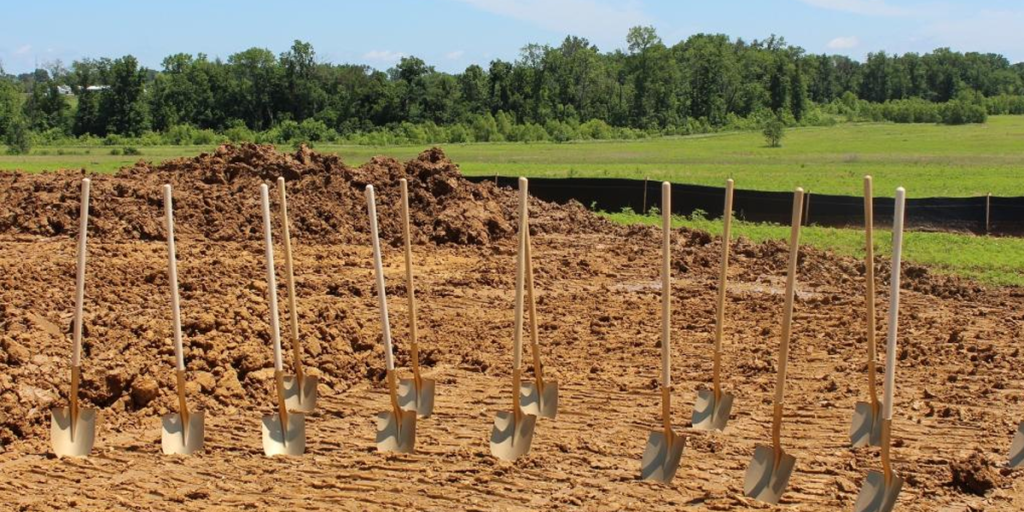
Governor Kay Ivey on Friday announced Area Development, an economic development-focused national publication, selected Alabama for its Silver Shovel Award — a top honor recognizing the state’s economic development successes in 2017 — continuing the state’s decade-old winning streak. In announcing the award, Area Development singled out several large-scale projects, including Mercedes-Benz’s plans to build a Global Logistics Center in Bibb County and Blue Origin’s project to assemble rocket engines at a new facility in Huntsville. “It was a good year for manufacturing in Silver Shovel recipient Alabama, with major investments in a diverse collection of projects, most of them brand-new. Additional jobs are driving in by way of logistics and distribution,” the publication says. Area Development’s Gold and Silver Shovel Awards recognize the overall economic development effectiveness of state economic development efforts. Alabama has won one of the awards each year since 2006, when it won a Gold Shovel. It won another Gold in 2012 and Silver awards in other years, including one for 2016. “The business world has discovered that Alabama is one of the most attractive locations in the U.S. to make new investments, and this Silver Shovel award confirms that,” Ivey said. “I will continue to work to position Alabama for economic growth that creates jobs and opportunities for our hard-working citizens.” Area Development noted that Alabama landed a raft of major projects in 2017: International Paper is investing $552.7 million at its Selma facility Aerojet Rocketdyne is bringing 800 jobs and a new manufacturing facility to Huntsville James Hardie Building Products is opening a $220 million production center in Prattville with 205 jobs Autocar is investing $120 million in a new heavy truck assembly facility in Jefferson County with more than 700 jobs “More manufacturing projects reflect growth in the food and poultry, aluminum, paper, and fiber cement industries, and Walmart has promised delivery of 550 distribution jobs” in Mobile County, Area Development writes. Executing Strategy The state’s 2017 economic development results are outlined in the Alabama Department of Commerce’s “New & Expanding Industry Report,” released earlier this year. The report provides a detailed look at nearly 400 projects recorded in the state during another solid year of business recruitment and support. “The mission of Alabama’s economic development team is to facilitate the creation of high-caliber jobs in strategic industry sectors that will flourish in the future,” said Greg Canfield, secretary of the Alabama Department of Commerce. “Winning a Silver Shovel Award for the fifth consecutive year is another affirmation that our team is consistently executing our strategy and achieving positive results.” Since 2012, economic development activity in Alabama has attracted nearly $29 billion in investment and more than 105,000 jobs, according to Commerce figures. Exact totals for 2017 were $4.4 billion in new capital investment and 15,465 anticipated jobs. Alabama joined Utah and Louisiana in claiming a Silver Shovel award given to states with populations between 3 million and 5 million residents.
Nicole Jones: Our state will benefit from the passage of the Alabama Jobs Enhancement Act

Economic developers in Alabama are community-minded individuals who wake up every morning with a goal – to recruit and retain business and industry within our state and enhance the quality of life for Alabamians. It is a rewarding profession built upon the cultivation of relationships and trust earned by maintaining confidentiality throughout a highly complex and competitive process. The passage of the Alabama Jobs Enhancement Act (HB317) is important to the well-being of all Alabamians because it allows our state to maintain an environment conducive for economic growth. The bill reads correctly as it states, “an economic development professional is not a lobbyist.” The two professions are different. Economic developers are not lobbyists and should not register as such. When companies are in the initial stages of potential project or site selection, most of the time they wish to remain confidential for business reasons, hence the reason for nondisclosure agreements (NDAs). We are under NDAs all of the time. The ability to trust officials in the public and private sector with whom they interact with throughout the process is a factor companies consider when choosing new sites. HB317 is critical to maintaining confidentiality as well as the business-friendly climate established throughout our state. Job creation and retention equals employment opportunities, and continued employment, for Alabamians. As Governor Kay Ivey released in a statement recently, Alabama now has a record 3.7% unemployment rate, the lowest in history. Despite some confusion perpetuated by individuals who do not understand economic development as a profession, HB317 is not an attempt to weaken ethics laws or allow anyone to profit from public office. Rather, it is an attempt to modernize economic development language and statutes, for example, by removing verbiage requiring notification for project incentives that no longer exist. HB317 requires more transparency than current statutes in the following ways: It requires economic developers to notify the Alabama Department of Commerce when they have a project entity that requests tax abatements and/or seeks incentives under the Alabama Jobs Act and other new laws (stipulations not put into place currently). And, it requires the Alabama Department of Commerce to disclose project information no more than two years after a location announcement (which, as of today, does not have to happen, ever). Not passing HB317 could have a devastating effect on economic growth within our state. As stated earlier, economic development is a relationship-building process, and projects oftentimes take years to come to fruition. Almost all economic development projects require confidentiality, so if a site selector working on behalf of a company is required to (incorrectly) register as a lobbyist and disclose the name of his or her client in the initial stages of site selection, Alabama would be marked off of the list of potential sites before the process actually begins. In other words, we (Alabama) would not even get a seat at the table. As part of daily protocol, site selectors will broadcast a general request/criteria needed for a potential location, and chambers of commerce, for example, may not know for months into a project’s life cycle who the company making the request is. This gives company officials the opportunity to weed out areas that will not work for their business goals – or sometimes better understand if pursuing a new location is even worth the investment. Economic development is a team effort. It requires the actions of oftentimes hundreds of people in the public and private sector who present information to potential companies in the areas of labor quantity and availability, transportation systems, school systems and other quality of life issues, housing, state and local incentives, taxes, utilities, education and training resources – just to name a few. Conflict-of-interest issues regarding elected officials and their role with outside employment need to be addressed with a general law that defines conflict-of-interest and employment and need not be confused with HB317. As the Coastal Gateway Regional Economic Development Alliance eloquently pointed out, “HB317 is also notable for what it doesn’t do: It doesn’t change or provide exceptions for Chamber of Commerce employees or others who engage in traditional lobbying activities, and it doesn’t change the prohibition on using public office for personal gain nor the prohibition on corruptly influencing a public official.” The goal of HB317 is to modernize economic development incentive programs, not address ethics issues. Alabama will benefit from HB317. The state of Alabama competes for projects with other states, and other states (as well as out-of-state site selectors) are carefully watching this legislation and are ready to use it to their advantage. Members of the media have already reported to our firm that out-of-state site selectors whom they have never heard of have suddenly contacted them with “interest” in HB317. We, Alabama, currently have an environment conducive for economic growth and have received national recognition for a favorable business climate. Others around the nation know it, all the way up to The White House. Toyota-Mazda, Rex Lumber, Kimber, New Flyer, and Provalus are only a few names of many recent announcements. It is unfortunate that the misuse of power by previous elected officials has created an air of distrust amongst the general public. There is, however, a simple, black-and-white answer that extends far beyond the scope of HB317: Pick who you want to represent (your client or your district). Do not double-dip. Ultimately, then Alabama wins, and isn’t that supposed to truly be the end goal of economic development – to improve the economic well-being and quality of life for Alabamians? That is what hundreds of us do every day throughout our state. I join with the majority of Alabama’s economic development community and respectfully ask legislators to pass the Alabama Jobs Enhancement Act (HB317). ••• Nicole Jones is one of the first in the state of Alabama to hold the Government and Economic Development Institute’s Economic Development Leadership Certification. As an economic developer, Nicole Jones recruits and retains business, industry, and community every day to create a better quality of life
House approves change in ethics law for economic developer
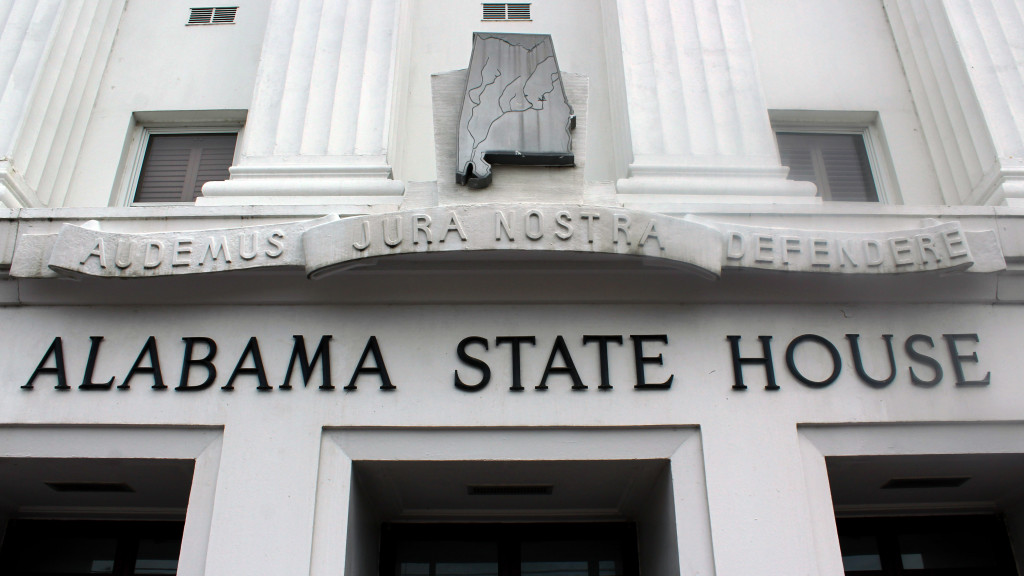
Alabama lawmakers passed a proposed ethics law change that would exempt economic development activity from the rules governing lobbyists. The House of Representatives approved the bill 78-7 after three hours of heated debate on Tuesday. Proponents of the bill said it was necessary for development while its critics argued it rolled back the current ethics law to mitigate corruption. Republican State Rep. Ken Johnson, who sponsored the bill, said companies are getting scared away from Alabama at the prospect of having representatives register as lobbyists when seeking economic incentive packages. He said none have had to register yet, but it is a concern. The bill defines an economic developer as a professional employed part or full time in economic development or trade promotion who would be certified by the state’s ethics commission. Public officials could not get paid as lobbyists or be certified as developers. It also allows information about economic deals to remain confidential for five years. Lobbyists are required to register with the Alabama Ethics Commission and report their activities. Johnson said there were concerns about the gray area between economic development work and lobbying. Democrats who opposed the bill criticized Johnson’s bill as a rollback of the ethics law and potentially a “get out of jail free card” for lawmakers. “Is this just a backdoor way of reinstating the good old boy system?” asked Rep. A.J. Campbell, a Democrat. “If we said all people needed to register because this is the way it needs to be cleaned up, then why is it changed?” In 2016, former House Speaker Mike Hubbard was convicted of ethics violations including using his public office to obtain business and promote clients. In 2017, Rep. Oliver Robinson, a Democrat, pleaded guilty to taking a bribe for using his legislative position to oppose the Environmental Protection Agency’s prioritization and expansion of a north Birmingham Superfund site. “You know we’ve had a history through the years, we’ve had people convicted of selling their vote,” said Rep. Mary Moore, a Democrat from Birmingham. “They’ve been doing a lot of economic development and getting wealthy too. People are getting extremely wealthy off of packages in this house.” Johnson countered that there was an amendment specifying that lawmakers would not be exempt from the ethics law. A comprehensive ethics law reform proposed in the Senate was pushed to next session to be potentially handled by an ethics law task force. Some House members suggested considered all the changes together next year, but Johnson said it couldn’t wait. “Do we want to lose jobs this year?” he said. The bill now moves for consideration in the Senate. Republished with permission of The Associated Press.
Birmingham Business Alliance pursuing ‘all-time high’ economic development projects
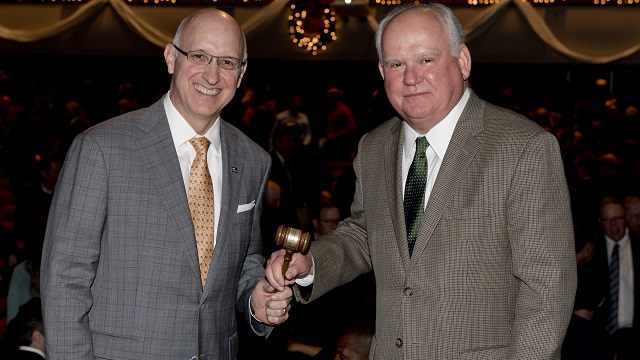
The head of the Birmingham Business Alliance said the metro area is coming off a very successful year for economic development, but the prospects for even more growth in 2018 are “at an all-time high.” BBA CEO Brian Hilson said at the organization’s annual Chairman’s Meeting Tuesday that economic development in the seven-county metro area was very strong in 2017. “So far in 2017, we’ve seen 2,957 jobs and over $560 million in investment announced by 25 different new and expanding companies within our core business sectors,” Hilson said. This year continues a string of successful years for attracting new and expanding industry to the state, Hilson said. “Between 2011 and 2017, we have seen 19,394 jobs and over $3.9 billion in capital investment committed within our seven-county metro area,” he said. That has caused the BBA to be ambitious with its current five-year plan. “At the BBA, we have a goal of 19,000 jobs and $3.5 billion of investment being announced between 2016 and 2020,” Hilson said. “So we’re at the halfway point as we approach the year 2018 and as we continue to execute our five-year strategic plan, which we call Blueprint 2020.” With the current pipeline of potential projects, those numbers could be well within reach. “Our level of project activity is at an all-time high, at least for the six and a half years that I’ve been in Birmingham,” Hilson said in an interview with Alabama NewsCenter. “But probably more important, the quality of those projects and the diversity of skills that they would require of the workforce – it’s not all automotive and it’s not all something else – that’s very encouraging.” Automotive projects dominated the headlines in the metro area in 2017. Commercial truck producer Autocar opened a $120 million plant in Pinson Valley, not far from where auto supplier Kamtek opened a $60 million expansion. Mercedes-Benz announced a $1 billion expansion of its Alabama operations that includes a new $248.2 million campus in Bibb County. Representatives of those three companies as well as Honda’s plant in Lincoln made up a panel discussion of the auto industry and the metro area’s business climate. John Hudson, senior vice president of Marketing and Business Development for Alabama Power, moderated the panel. A shared concern among the panel is that the metro area may become a victim of its own success – namely in a dwindling available workforce. Hilson said the BBA’s Blueprint 2020 calls for at least a 5 percent growth in overall workforce between 2016 and 2020. “What we really want to see, though, is much faster growth than that and for that to happen we will need a higher and better rate of workforce participation, more connectivity between employers and workforces as well as educators and trainers, and, of course, we will need to see our community image continue to get better,” he said. Republished with permission from Alabama NewsCenter.
Four new cities added to Main Street Alabama revitalization program

Mainstreet Alabama, a nonprofit organization that focuses on growing commerce in city districts, has selected four more cities to join its efforts at revitalizing Alabama’s downtowns. After a five-month competitive application process, the group has named four cities it will add to its 16-city roster. Columbiana, Heflin, Montevallo and Wetumpka will all get attention from the nonprofit, which will try to work with other local groups and city agencies to create jobs and grow businesses while retaining local character of the districts they work in. Mainstreet Alabama says it focuses its work on “public-private partnerships, broad community engagement, and strategies that create jobs, spark new investment, attract visitors, and spur growth,” looking to build upon “the authentic history, culture, and attributes of specific places, to bring sustainable change.” The groups toolkit includes local board development, expert market analysis, regular training sessions, and technical assistance. “When a community is ready for Main Street, as these four are, our economic development program works,” said State Coordinator Mary Helmer. “It brings jobs, dollars and people back to historic downtowns and neighborhood commercial districts.” The group claims on its website that its effort has yielded some 239 new businesses and 2,392 additional jobs, and spurred nearly $220 million in private and public investment. The list of cities the group is already working with are as follows: Alexander City, Anniston, Athens, Birmingham, Decatur, Dothan, Elba, Eufaula, Florence, Fort Payne, Gadsden, Monroeville, Jasper, Opelika, Oxford and Selma.
Robert Bentley confirms meeting with Mike Hubbard about jobs

Gov. Robert Bentley has testified under oath in the ethics trial of the Alabama House speaker, saying that he remembers meeting with Mike Hubbard to discuss what he described as economic development projects. Prosecutors are seeking to prove that Hubbard was being paid up to $12,000 a month to illegally lobby the governor on behalf of his business clients – a municipal gas company and a maker of plastic cups. A state prosecutor showed Bentley reports Hubbard sent his clients describing how he met with the governor on projects that could benefit them. The governor said he remembered the meetings. On cross-examination, Bentley told a defense lawyer that he thought the projects were good for the state because they would bring jobs. Bentley faces his own trouble: Eleven lawmakers resolved to impeach him after he acknowledged sending sexually suggestive messages to a female aide. Republished with permission of The Associated Press.
Business group: Birmingham got $1.1 billion in capital investment in 2015
It has become conventional wisdom to take note of Birmingham’s economic resurgence of late. The ongoing construction, growing payrolls, and general sense that there’s more to do all seem to testify, providing their own wordless evidence. The Birmingham Business Alliance added a more concrete contribution to the chorus on Monday, announcing the findings of a new report saying the Magic City has taken nearly $1.1 billion in new capital investment in 2015. According the report, Birmingham added 3,509 current or announced jobs to boot. The BBA, a consortium of Birmingham industry interests, also trumpeted several new developments related to business and job growth, such as a new $34 million Publix distribution center that will add 200 jobs; a $45 million renovation of the Empire Building which will yield a new Empire Hotel; a new $100 million Yorozu Corp. metal stamping facility in Jasper set to create 300 jobs; and a $530 million, 354-job commitment from auto supplier Kamtek to grow their operations in Birmingham. Ninety companies announced jobs overall, according to the report. The BBA will release its full report at the 2016 Economic Growth Summit at the Harbert Center in downtown Birmingham on May 12. “This was a milestone year in terms of economic development and investment in the continued growth of our region,” said the group’s 2016 chairman, University of Alabama at Birmingham President Ray Watts in a prepared statement.
Senate approves bill to give tax breaks to state ports
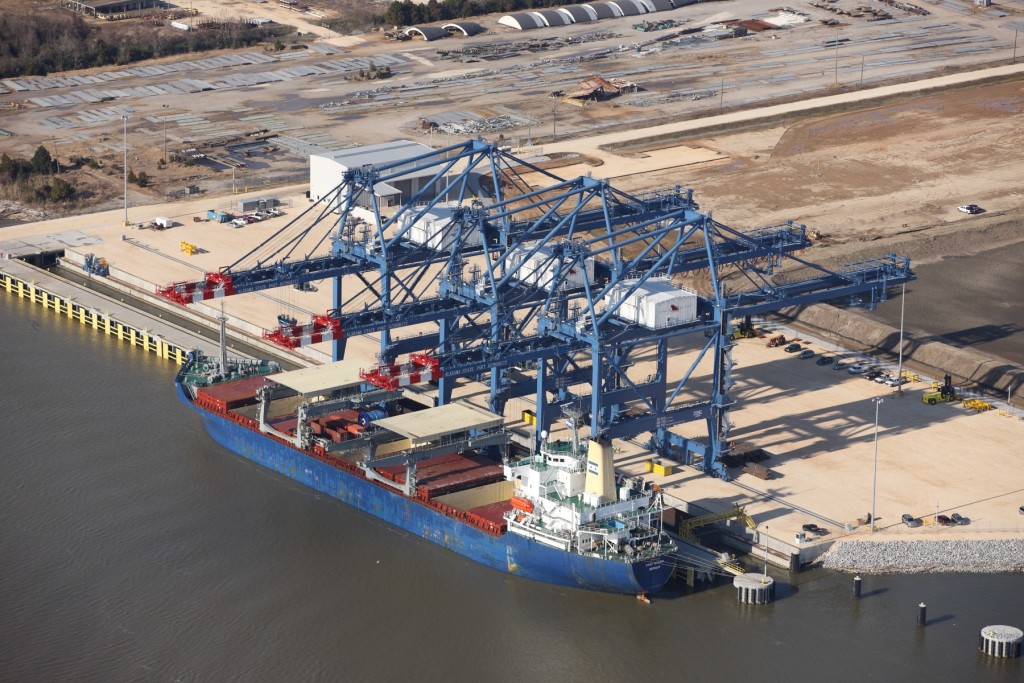
Keeping with their previously announced agenda, Senate Republicans passed a bill Tuesday that will provide tax breaks for Alabama ports with an eye toward increasing state revenue and creating new jobs. HB34 from Rep. Mac McCutcheon (R-Capshaw), which was carried in the Senate by Sen. Greg Reed (R-Jasper), builds upon the “Made in Alabama” legislation passed last year, which provided “additional, pay-as-you-go incentives for existing business expansions and new industrial projects.” Also known as the “Alabama Renewal Act,” the new legislation creates the “Growing Alabama Act” tax credit to address economic development needs in the state and establishes procedures by which tax credits can be applied for and ascertained by relevant parties. According to a statement released Tuesday afternoon, the bill will “increase the availability of shovel-ready land sites for job creation” and “stimulate cargo traffic at the state’s port facilities and connect Alabama businesses to new opportunities around the world via a new Port Credit.” “Our economy is improving and the legislature is committed to doing everything possible to create more jobs, especially in rural Alabama,” Reed said in a press release. “The Alabama Renewal Act will help us achieve this goal while being fiscally responsible to taxpayers.” “Creating jobs by incentivizing companies to invest in Alabama will mean more of our citizens get to take home a respectable paycheck,” McCutcheon noted in the statement. “That is the most important job we have at the Statehouse.” Because most states already offer such incentives, the new legislation will make Alabama more competitive by providing more options for luring in large companies and new jobs. “The Alabama Renewal Act will enhance the competitiveness of our economy,” Greg Canfield, Secretary of the Alabama Department of Commerce, said in the press release. “We are thankful for the legislature giving our state another tool we can use to facilitate growth and expand Alabama’s employment base.” A floor amendment added to the bill will send it back to the House of Representatives before being sent to the governor’s desk for final approval.
U.S. OK’s Alabama-based factory in Cuba; first since revolution

The Obama administration has approved the first U.S. factory in Cuba in more than half a century, allowing a two-man company from Alabama to build a plant assembling as many as 1,000 small tractors a year for sale to private farmers in Cuba. The Treasury Department last week notified partners Horace Clemmons and Saul Berenthal that they can legally build tractors and other heavy equipment in a special economic zone started by the Cuban government to attract foreign investment. Cuban officials already have publicly and enthusiastically endorsed the project. The partners said they expect to be building tractors in Cuba by the first quarter of 2017. “Everybody wants to go to Cuba to sell something and that’s not what we’re trying to do. We’re looking at the problem and how do we help Cuba solve the problems that they consider are the most important problems for them to solve,” Clemmons said. “It’s our belief that in the long run we both win if we do things that are beneficial to both countries.” The $5 million to $10 million plant would be the first significant U.S. business investment on Cuban soil since Fidel Castro took power in 1959 and nationalized billions of dollars of U.S. corporate and private property. That confiscation provoked a U.S. embargo on Cuba that prohibited virtually all forms of commerce and fined non-U.S. companies millions of dollars for doing business with the island. Letting an American tractor company operate inside a Cuban government facility would have been unimaginable before Presidents Barack Obama and Raul Castro declared on Dec. 17, 2014, that they would restore diplomatic relations and move to normalize trade, travel and other aspects of the long-broken bilateral relationship. Since then, Obama has been carving exceptions into the embargo through a series of executive actions, and his administration now says they allow U.S. manufacturing at the Mariel port and special economic zone about 30 miles west of Havana. One exception allows U.S. companies to export products that benefit private and cooperative farmers in Cuba. Berenthal and Clemmons say they will sell only to the private sector. The Obama administration says it is eager to make the opening with Cuba irreversible by any future administration. Since the start of the year, U.S. and Cuba have made a series of announcements that appear designed partly to create a sense of unstoppable momentum in their new relationship. Cuba announced late last month that it would more than double the number of public Wi-Fi access spots to more than 100 across the country this year and bring broadband Internet to a small number of Cuban homes, where it is currently illegal. Obama said in 2014 that Castro had promised to increase Cubans’ access to the Internet as part of detente. On Saturday, Cuba announced that it had returned a U.S. Hellfire missile that it said was mistakenly shipped to Havana from Paris in 2014. On Tuesday, Cuba’s Transport Minister and the U.S. Secretary of Transportation will sign a deal authorizing the first regularly scheduled commercial flights between the U.S. and Cuba since shortly after the 1959 revolution. The Oggun tractor plant, named after a god in Cuba’s syncretic Santeria religion, will assemble commercially available components into a durable and easy-to-maintain 25-horsepower tractor selling for less than $10,000, Clemmons and Berenthal said. The men believe they can sell hundreds of the tractors a year to Cuban farmers with financing from relatives outside the country and to non-government organizations seeking to help improve Cuban agriculture, which suffers from low productivity due mostly to excessive control of both basic supplies and prices by an inefficient, centrally planned state bureaucracy. “I have two countries that for 60 years have been in the worst of terms, anything I can do to bring to the two countries and the two people together is tremendously satisfying,” said Berenthal, a Cuban-born semi-retired software engineer who left the country at age 16. He met Clemmons, who is from Paint Rock, Alabama, when they worked at IBM in the 1970s. They left to form a successful cash-register software company that grew to earn $30 million a year before they sold it in 1995 for a sum that Clemmons says was “enough that I don’t have to work.” Between their own capital and commitments from private investors they say they have enough cash in hand to build the Oggun factory as soon as Cuba lets them proceed. “Everything’s locked in,” Clemmons said. Berenthal said they are optimistic that they will also be able to export Oggun tractors to other Latin American countries, which have low or no tariffs on Cuba products, making them competitive on price. The men expect a 10-20 percent profit on each tractor. For the project’s first three years, Clemmons and Berenthal say they will export components from the United States for assembly in Cuba. They hope to eventually begin manufacturing many of the parts themselves on the island. They said they expect to start with 30 Cuban employees and, if things go as planned, grow within five years to as many as 300. Clemmons and Berenthal will publish all the schematics of their tractors online in order to allow Cubans and other clients to more easily repair their equipment and come up with designs for other heavy equipment based on the same frame and motor that Cleber can then produce at their Mariel factory. The men already have plans to produce excavators, backhoes, trench-diggers and forklifts, equipment that’s badly needed across Cuba, where virtually all the infrastructure is crumbling after years of neglect and mismanagement and a lack of cash that the government blames on the embargo. “I think it’ll have a tremendous impact on their ability not only to help their economy but to set an example across the Caribbean and Latin America,” Berenthal said. Republished with permission of the Associated Press.
Gov. Robert Bentley announces 650 new jobs in in Tuscaloosa County
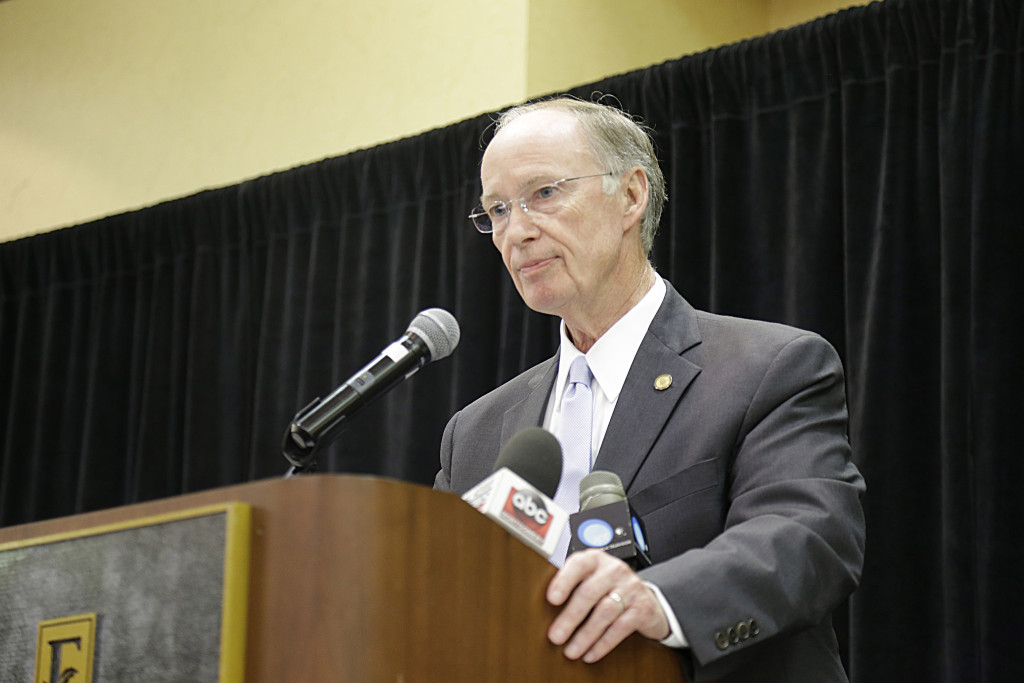
As reported yesterday on Alabama Today, Gov. Robert Bentley announced Thursday morning that auto parts maker Samvardhana Motherson Group will open a new plant in Tuscaloosa County to supply the state’s Mercedes-Benz plant, located in the nearby town of Vance. The announcement came as welcome news as the state’s unemployment rate continues to lag behind national averages, though jobs numbers were up in July. Bentley, speaking in front of the Old Capitol Building in Montgomery, said the decision by SMG to invest in Alabama was no accident – and that more good news might soon follow it. “Alabama has a positive business climate and a skilled workforce that is second to none,” Bentley said Thursday. “We have worked hard to recruit well-paying jobs for the people of this state, and I am honored to see SMG expand to Alabama. In coming years, the company will provide 650 new jobs and produce even more products that are ‘Made in Alabama’.” SMG Managing Director and Head of Corporate Office Europe and Americas Andreas Heuser, who was also on hand for the announcement, responded in kind. “We would like to thank the Tuscaloosa County Industrial Development Authority and Alabama for all the support provided to our Group,” Heuser said. “I can say that we feel very welcome and at home here in Tuscaloosa.” Besides the investment firm’s business relationship with Daimler Mercedes-Benz, the international auto supplier has ties to Audi, VW, Porsche, Renault/Nissan and Ford, connections which could augur more good economic news for Alabama’s burgeoning manufacturing sector. The proposed site of the new auto supplier is located in eastern Tuscaloosa. Construction is slated to begin by the end of 2015.
