
DC BLOX building ‘flagship’ data center in Birmingham
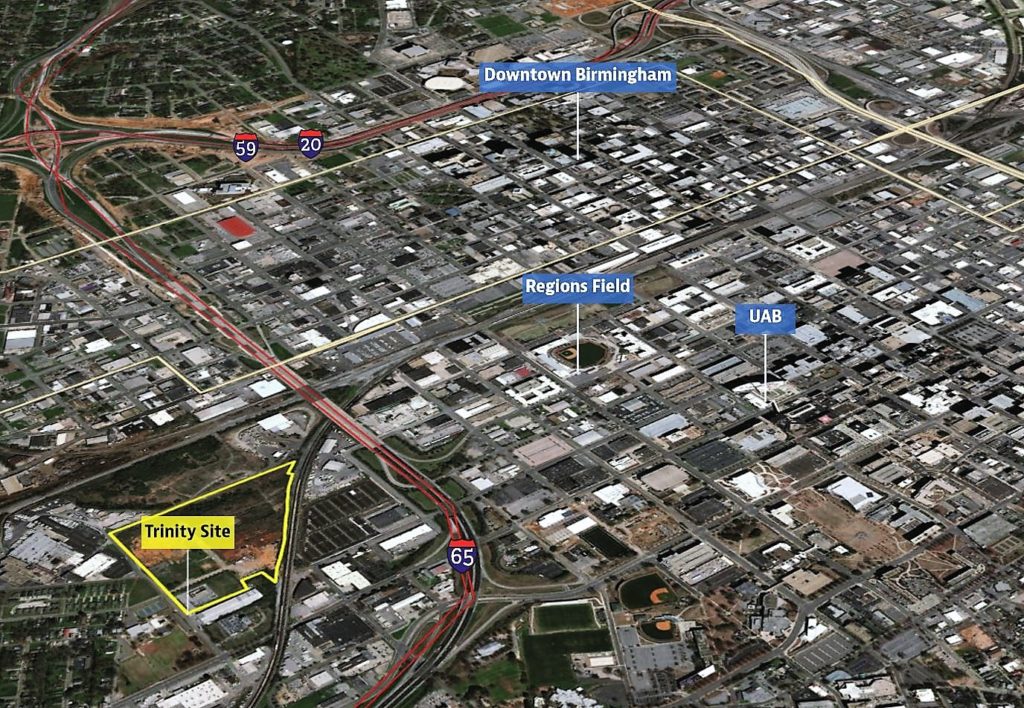
Atlanta-based DC BLOX said today it is building a data center on the former Trinity Steel site in downtown Birmingham, creating 20 jobs initially with the potential to grow up to $785 million in capital investment and add jobs over the next decade. “The significant investment being made by DC BLOX to open this data center in Birmingham will not only create high-paying jobs, but also bring an exciting new chapter to a neighborhood in the city with a long industrial history,” Alabama Gov. Kay Ivey said. “We’re committed to positioning Alabama for a technology-focused future and look forward to working with the company to accelerate that process.” The 31,000-square-foot first phase of the multi-tenant Birmingham data center joins others DC BLOX has built or announced in Huntsville, Atlanta and Chattanooga. DC BLOX plans to break ground in August and have a facility configurable up to 5 megawatts (MW) of customer capacity by early 2019. As customers are added, the facility can grow up to 200,000 square feet and 80 MW. Plans are for the facility to have 13,000 square feet of office space with conference rooms, staging areas and work stations. “The Birmingham data center campus will unquestionably be our flagship property, capable of scaling to over 200,000 square feet of secure, government-grade data center space,” said DC BLOX CEO Jeff Uphues. “We believe this site will be a highly compelling alternative in the Southeast to Atlanta for enterprise, hyperscale cloud, software-as-a-service, government, network and content providers. It’s our focus to create a multi-purpose innovation campus with collaborative workspaces worthy of housing global technology companies and academia dedicated to research and collaboration.” DC BLOX has been scouting sites in Birmingham for nearly a year. “DC BLOX wanted to be in Birmingham because of its strong local economy, geographic location, fiber optic network connectivity and the University of Alabama at Birmingham,” said Mark Masi, COO of DC BLOX. “We are thankful to the city of Birmingham, Jefferson County and the state of Alabama for collaborating with DC BLOX on this project.” During the construction and operational phase, the project is expected to have an economic impact of $94 million on the Birmingham metropolitan area, more than $80 million of which will be in Jefferson County, according to an analysis prepared by the Center for Business and Economic Research at the Culverhouse College of Business at the University of Alabama. The Birmingham Business Alliance commissioned the analysis. Economic impact on the state is estimated to be $99 million. “Because data centers represent the backbone of the technology infrastructure, we see strategic benefits for Alabama to host state-of-the-art centers that keep the world connected,” said Alabama Commerce Secretary Greg Canfield. “DC BLOX is joining an impressive roster of technology companies selecting Alabama for their data centers, and we want to see that list grow.” Jefferson County Commissioner David Carrington predicted DC BLOX’s data center will attract future business. “DC BLOX will be a tremendous asset to the existing companies throughout Jefferson County and a tool to attract new companies here,” Carrington said. “This takes Birmingham’s thriving innovation ecosystem beyond its usual physical boundaries of the city center and extends it into an area that will only strengthen our core.” The new DC BLOX data center brings new life to the former Trinity Steel property, which county and city officials have long sought to bring back to productive use. “The city of Birmingham was proud to work with DC BLOX to bring this significant data center project to Birmingham,” said Mayor Randall Woodfin. “In addition to utilizing a long-vacant property in our city and transforming the surrounding neighborhood, this will serve as the company’s flagship data center and a tool to attract further business to the area.” The team luring DC BLOX to the site included the Alabama Department of Commerce, Jefferson County Commission, Jefferson County Economic and Industrial Development Authority, the city of Birmingham and its Department of Innovation and Economic Opportunity, Titusville Neighborhood Association, Birmingham Industrial Development Board, Alabama Power, Spire, Economic Development Partnership of Alabama and the Birmingham Business Alliance. “The $785 million investment over the next 10 years to build this data center technology campus represents the single largest project investment in Jefferson County in many years,” said Lee Smith, East Region CEO for BBVA Compass and 2018 chairman of the Birmingham Business Alliance. “DC BLOX recognizes the importance of Birmingham’s innovation and technology economy, and they share our vision that having a location near downtown will optimize the company’s growth opportunities. As with any successful economic development project, a great team worked together with the company to ensure its needs are met and that the project is mutually beneficial to the company, community and state.” Republished with the permission of the Alabama Newscenter.
Alabama Launchpad selects 2 innovative Birmingham startups for funding

Two Birmingham firms prevailed in the latest round of the Alabama startup competition that has pumped millions of dollars into innovative ideas across the state. The Alabama Launchpad Startup Competition Finale, at Iron City, featured six teams that made pitches in front of a panel of judges and a live audience. The winner of the seed track, and the top prize of $100,000, was INFLCR, which equips innovative college athletic programs with critical social media tools to empower their student athletes to be brand ambassadors on social media. A $50,000 prize went to the winner of the concept track, Edify Online Corp. It’s an exchange of independent teaching talents from universities and communities that work together to achieve important milestones for higher-education students. A program of the Economic Development Partnership of Alabama that began in 2006, Alabama Launchpad has invested $4 million in companies that have created more than 500 jobs and raised $50 million in capital. Angela Till, deputy secretary of the Alabama Department of Commerce, said the agency supports startups as they transform their ideas into the next generation of companies. “At the same time we continue efforts to attract new investment, new jobs and great companies to the state, we share the same goal as Alabama Launchpad on helping companies start, stay and grow in Alabama,” she said. “Fostering the state’s entrepreneurial community is part of Alabama’s strategic economic development plan that is in place. “We are excited at the Department of Commerce about partnering with EDPA in the Launchpad program to help these companies grow.” All of Alabama benefits from the partnership, which diversifies the economy and creates more jobs, Till added. Expanding Launchpad Alabama Launchpad is the most active early-stage investor in Alabama, according to PitchBook, which tracks the public and private equity markets. The program has recently been updated and is expanding its reach. Upgrades to the original statewide competition include a more efficient application process that now judges entrants along two tracks: concept-stage entrepreneurs launching businesses and seed-stage businesses accelerating growth. The competition also has a shorter, two-month schedule compared to five months in the past. And only the best concept business and seed stage business win cash prizes, although every entrant will receive valuable feedback and exposure to capital providers in the state. Meanwhile, two regional contests have spun off in the Shoals and in Auburn. Like the statewide program, the regional ones offer local entrepreneurs the chance to compete for funding and receive valuable mentoring. EDPA President Steve Spencer said the driver of Alabama Launchpad is key to the state’s economic success. “Innovation is the nucleus of what will move this state forward,” he said. This story originally appeared on the Alabama Department of Commerce’s Made in Alabama website. Republished with permission from the Alabama NewsCenter.
EDPA projects new image with Birmingham HQ, digital wall

For years, the Economic Development Partnership of Alabama had a bird’s-eye view of the state’s largest city. From its home on top of Red Mountain in the august-sounding World Business Center, EDPA projected an image befitting Alabama’s only statewide private economic development entity. In January, EDPA came down from the mountain, planting its new headquarters at ground zero of Birmingham’s modern renaissance. From the former Merita bread bakery (now the Bakers Row development), EDPA neighbors Railroad Park and Regions Field at the corner of First Avenue South and 14th Street. EDPA is now a street-level organization and everything from the new headquarters’ décor to its 34-foot-long video wall speaks to the change. “Moving down here is as much about image as it is anything,” EDPA CEO Steve Spencer said. “This part of town is becoming the hub of activity.” When EDPA or the Alabama Department of Commerce are hosting a prospective company at a meeting in the new EDPA facility, Spencer said the story of what’s happening outside the building is apparent but so are the multiple successes playing continuously on the video screen. “When companies come here and visit, we want them to get an impression that this is what it’s like,” Spencer said. And companies are visiting and leaving impressed. “We’ve got some great companies looking at the state right now,” Spencer said. “We, of course, work in concert, with (the Alabama Department of) Commerce. We don’t compete. We don’t do the same things. We support them, they support us. We work together very well.” From Innovation Depot on the other side of the railroad tracks to UAB two blocks to the south, EDPA’s new location helps paint a picture for the kind of companies the city and state are looking to attract. “We’ve got two or three companies looking at the state right now that are high-tech companies,” Spencer said. “All it will take is one and that opens the door, just like Mercedes opened the door for the automotive industry. We just get one, and it will open the door for that entire industry, that entire segment to come to Alabama.” As impressive as the location is in Birmingham, Spencer said there are similar hubs of activity in a number of states throughout the state and they can tell that story, too. “This is kind of the way you attract people now. Our objective is to get people to move to the state,” he said. “Now, getting companies to move here is great, but getting people to move here is how you get companies to move here.” By literally projecting success on 320 square feet with more than 1 million pixels, the state’s successes are on full display 24 hours per day. “This was our way of being able to project – in a little bit of a dramatic way – what’s going on in the state,” Spencer said. “And it projects out into the street. You don’t have to be in a meeting in the building to see it. In fact, that’s not what it’s for at all.” Spencer said EDPA is seeking additional footage that helps tell the state’s success stories from manufacturing to research to food and culture. Republished with permission of Alabama NewsCenter.
All-new Honda Odyssey rolls off Alabama assembly line

On the same site where it broke ground for its first Alabama auto plant 17 years ago to the day, Honda Manufacturing of Alabama (HMA) rolled out the first of the latest model of the Odyssey minivan produced at the plant. More than 1,500 associates at the plant celebrated the start of mass production of the 2018 Odyssey, slated to go on sale this spring at Honda dealerships nationwide. HMA is the exclusive manufacturer of the popular minivan. “This is a celebration for our entire Honda team of associates who have been committed to bringing an all-new, high-tech, family-friendly Odyssey to our customers,” said Jeff Tomko, president of HMA. “I congratulate all of our associates for their commitment to quality for this new vehicle, which ushers in a new level of features and functionality with the goal of creating new value for our customers.” In addition to the Odyssey, the Alabama plant is the sole producer of the Pilot SUV and Ridgeline pickup truck, which was named 2017 North American Truck of the Year at the North American International Auto Show in Detroit. HMA also builds the Acura MDX luxury SUV and the V-6 engines that power each vehicle. The 2018 Odyssey is the fourth generation to be built in Alabama, and the second generation of Odyssey to be designed and developed in the United States. Honda broke ground on its first Alabama plant on April 25, 2000, and started production in the plant on Nov. 14, 2001. Since then, it has added a second plant on the site and produced more than 4 million vehicles and engines. “With the introduction of the new Odyssey, Honda has achieved yet another milestone in Alabama, demonstrating that the state’s dedicated and skilled workforce can meet the highest standards of the world’s greatest companies,” said Steve Sewell, executive vice president of the Economic Development Partnership of Alabama. “Honda has not only had an enormous impact on Alabama’s economy over the last 15 years, its success has helped the state earn a reputation as a top business location.” Several new technologies and production improvements exist in the new Odyssey, including a new process for installing acoustic spray foam in 14 locations within the vehicle body, making the cabin even quieter. Odyssey has been the most popular minivan in America in every year since 2010 and is leading again this year. Americans have purchased more than 2.5 million Odyssey minivans since its 1994 debut. New features in the 2018 Odyssey include: Magic Slide Seat, a second-row seating system that can be easily configured for passengers or cargo and easy access to third-row seating. CabinWatch, which uses an infrared camera to allow the driver and front passenger to keep tabs on rear passengers both day and night with an 8-inch screen. CabinTalk enables the driver to talk to second- and third-row passengers through the second- and third-row speakers and wireless rear entertainment system headphones. CabinControl App allows passengers to use their smartphone to control the rear entertainment system, rear cabin heat and air conditioning, and send destinations to the embedded Honda navigation system. Republished with permission of Alabama NewsCenter.
Alabama Launchpad expands reach with new regional competitions
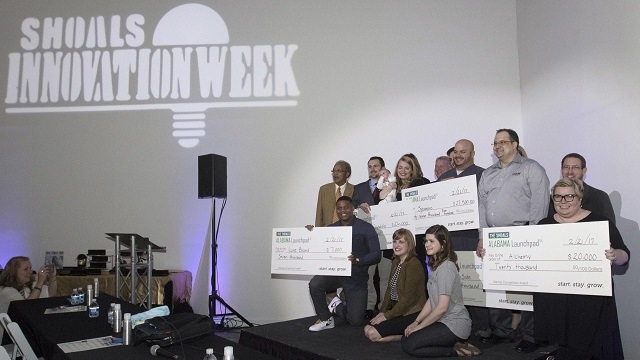
Alabama Launchpad, a program of the Economic Development Partnership of Alabama, is looking for communities that want to replicate the statewide competition on a local level. EDPA is accepting requests for proposals for the Alabama Launchpad Regional Partnership Program through Monday, April 3, and will admit two regions per year over the next five years. The reason behind the move is simple: To help more high-growth-potential companies start, stay and thrive in Alabama. “We want to create more startups, give them a better chance to be successful, connect them to investors and help them create jobs and wealth faster,” EDPA Vice President Angela Wier said. Investing in growth Alabama Launchpad already is a proven success. Since its own launch 10 years ago, the program has invested $4 million in companies that have created more than 500 jobs and gone on to raise $50 million in follow-on funding. “We want to move the statewide event to being more like a big playoff of the winners of the regionals,” Wier said. “Five years out, we’d like to be running a big ‘Shark Tank’-style annual competition and have regions across the state that would run one locally.” The new program also will provide a way for regions focused on innovation-based economic development to map existing programs that help startups and entrepreneurs and to identify gaps in local resources. It’s already been a success in the Shoals, the site of a pilot regional partnership program that recently wrapped up its first competition. Caitlin Holland, vice president of investor relations for the Shoals Chamber of Commerce, said organizers were initially concerned that they might not get many applicants, since the community is smaller than Alabama’s traditional entrepreneurial hubs of Birmingham, Huntsville and Mobile. But they were pleasantly surprised. “We were hoping to have four or five, but we ended up with nine good applicants with nine good ideas,” she said. By the time the final stage of the competition occurred late last month, that pool had been narrowed to five finalists, and they all received a portion of $97,000 in startup funding.The winners were: Alchemy, a jewelry sealer that protects skin from discoloration and irritation and also protects jewelry from tarnishing. Luxe Brand, a maker of luxury leather shoe laces. nSide, a firm that provides interior mapping of schools and other large buildings and also partners with emergency responders. Southern Swaddle, which makes baby swaddles out of fabric that comes from locally sourced products. Sycamore Physician Contracting, a website that links emergency room doctors with available shifts. Support system While the statewide Launchpad competition is typically heavy with tech firms, the Shoals contest offered more entrants in the area of fashion, Holland said. That’s not surprising, since the region is home to designer Billy Reid and clothing company Alabama Chanin, she added. More regional Launchpad competitions also will be more convenient for entrepreneurs, Wier said. For instance, in the decade-long history of the statewide competition, just three participating companies were from the Shoals. But when the region hosted its own program, that number tripled.“We were thrilled with the response. Our community really rallied around the idea of Launchpad, and we were excited to put our footprint on it,” she said. “Even the ones that didn’t win I think would tell you the experience was worth it. They found this network of entrepreneurs and others who will support them.” Ultimately, the regional partnership will deepen the reach of Launchpad, as well as support and mentoring for entrepreneurs and innovators. “The model does work,” Wier said. “It creates jobs, and it creates follow-on funding. We’re just trying to accelerate that, and the regionals should give us a way to grow it faster.” This story originally appeared on the Alabama Department of Commerce’s Made in Alabama website. Republished with permission of Alabama NewsCenter.
Robert Bentley awards over $700K to support Alabama Launchpad program

Designed to help high-growth companies start, stay and grow in Alabama while supporting entrepreneurship statewide, the Alabama Launchpad program is getting a hefty investment from Gov. Robert Bentley to continue its mission. Bentley is awarding the 10-year-old program of the Economic Development Partnership of Alabama a $707,488 grant. “Alabamians benefit when our entrepreneurs can turn innovative ideas into companies that create jobs,” Bentley said. “Alabama Launchpad offers important resources to help startup companies transform from dreams to viable businesses.” According to the Alabama Launchpad’s 2015 Annual Report, the program has created 365 jobs over the past decade. Throughout 2016, Alabama Launchpad is hosting multiple rounds of “Shark Tank”-style business-plan competitions with winners receiving a share of up to $250,000 to further develop their businesses. Since its inception in 2006, Alabama Launchpad has awarded $2.3 million to 51 companies. The next round of the Alabama Launchpad competition begins in mid-October.
