
Donald Trump tax cut: Huge, vague and likely mild boost for economy

President Donald Trump‘s team boasted Wednesday that its tax-cut plan would lighten Americans’ financial burdens, ignite economic growth and vastly simplify tax filing. Yet the proposal so far remains short of vital details, including how it would be paid for. And based on the few specifics spelled out so far, most experts suggest that it would add little to growth while swelling the budget deficit and potentially handing large windfalls to wealthier taxpayers. Trump’s plan would replace the current seven income tax brackets with three, and the top bracket would drop from 39.6 percent to 35 percent. It would also slash the corporate rate from 35 percent all the way to 15 percent, a boon to most companies even though many don’t pay the full tax now. With tax credits and other loopholes, most corporations pay closer to 20 percent, according to calculations by JPMorgan. Perhaps the most contentious plank would enable taxpayers with business income — including those wealthy enough to pay the top tax rate — to instead pay the new 15 percent corporate rate. That’s because Trump would apply the corporate rate to “pass through” businesses. Pass-throughs include partnerships such as law firms and hedge funds as well as most small businesses — from the local florist to the family-owned restaurant on Main Street. What’s more, some privately held large companies — including Trump’s own real estate empire — are structured as pass-throughs and would benefit, too. Here’s a closer look at Trump’s proposal and its likely impact: ___ WHO BENEFITS? It’s hard to say because the administration has released so few details. The three new income tax rates would be 10 percent, 25 percent and 35 percent. But Trump’s top economic adviser, Gary Cohn, and Treasury Secretary Steven Mnuchin, weren’t ready Wednesday to say at what income levels these new rates would kick in. Tax experts said far more details were needed to determine how average Americans would be affected. “The impact on Joe Taxpayer is unknown,” said Marc Gerson, vice chair of the tax department of law firm Miller & Chevalier in Washington. “There’s not enough specificity. It’s hard for taxpayers to determine where they’ll come out.” Cohn asserted that the plan would cut taxes “especially for low and middle income families.” It purports to do so in part by doubling the standard deduction, which is used by taxpayers who don’t itemize their tax deductions. At the same time, the Trump plan would eliminate the estate tax and the alternative minimum tax, thereby benefiting some of the richest taxpayers. And that’s on top of shrinking the corporate tax rate that many affluent individuals could likely capitalize on. ___ WHY CUT CORPORATE TAXES? By making corporations more profitable, the Trump administration hopes to encourage more business spending on equipment — from computers to factories and machinery. Doing so, in turn, could make the economy more efficient and accelerate growth and hiring. Economic growth has been stuck at about 2 percent a year since the recession ended in 2009. Mnuchin says the administration wants to accelerate it above 3 percent, a pace it hasn’t touched since 2005. The corporate tax cuts are also intended to encourage more businesses to stay in the United States, which now has the highest corporate rate among advanced economies. Many large corporations are enthusiastic about lower rates and say they support the elimination of loopholes, which both reduce revenue and make taxes more complicated. ___ WHO’D BENEFIT FROM THE CORPORATE RATE CUT? Aside from most large companies, many partnerships and small businesses would benefit because they’re structured as pass-throughs, which derives from the fact that they pass on their profits to their owners. Those owners now pay individual income tax rates, which top out at 39.6 percent. With the pass-through rate dropped to 15 percent, those taxpayers could enjoy an enormous tax cut. The Trump team stressed the benefits that might flow to small businesses. But the richest windfalls would flow to the wealthy — lawyers, hedge fund managers, consultants and other big earners. Nearly 75 percent of pass-through income flows to the 10 percent wealthiest taxpayers, according to the liberal Center on Budget and Policy Priorities. “It would tremendously help high earners,” says Brian Thompson, a certified public accountant in Chicago. In Kansas, Gov. Sam Brownback eliminated state taxes on pass-throughs, which turned out to be a boon for Bill Self, the coach of the University of Kansas’ men’s basketball team. He had previously set up his own company, according to state media reports. As a result, he paid little state income tax despite earning nearly $3 million a year. Many people, particularly wealthy Americans, could set up companies and reclassify their paychecks as “business income” and have it taxed at 15 percent, experts say. In Kansas, the number of pass-through businesses jumped to more than double the level the state expected, according to the nonpartisan Tax Policy Center. That cost the state revenue without spurring more job creation. Mnuchin said the Treasury would issue rules to prevent wealthy people from capitalizing on the lower rate. But many experts are skeptical. “Good luck with that,” said Mark Mazur, director of the nonpartisan Tax Policy Center and a former Treasury official under President Barack Obama. “The tax agencies tend to be at least a couple of steps behind the businesses.” ___ HOW ELSE WOULD BIG BUSINESSES BENEFIT? The administration is also proposing to tax only corporate income earned in the United States. This is known as a “territorial” system. It would replace the current worldwide system, under which corporations pay tax on income earned in the U.S. and overseas. Yet companies can avoid the tax if they keep their foreign earnings overseas. Many businesses have kept hundreds of billions of dollars outside the United States. Mnuchin said Trump’s plan would encourage corporations to return the money to the United States and invest it in plants and equipment. Some analysts counter that corporations might instead use the money to pay dividends to
Winners and losers in Donald Trump’s first budget plan

Military spending would get the biggest boost in President Donald Trump‘s proposed budget. Environmental programs, medical research, Amtrak and an array of international and cultural programs — from Africa to Appalachia — would take big hits, among the many parts of the government he’d put on a crash diet. The budget proposal out Thursday is a White House wish list; it’ll be up to Congress to decide where money goes. If Trump gets his way, there will be more losers than winners among government departments and programs. Some programs would tread water: WIC grants — money to states for health care and nutrition for low-income women, infants and children — are one example. Monday for states grants for water infrastructure projects would be held level as well. Some others would lose everything: Trump proposes to eliminate money for the Corporation for Public Broadcasting, the national endowments for the arts and the humanities and more than a dozen other independent agencies financed by the government. A sampling: WINNERS —The Pentagon. Trump proposes a 10 percent increase in the massive defense budget, adding $52 billion in military spending in one year top expand personnel, equipment and capability. Another $2 billion would go to nuclear weapons. —Veterans Affairs. Up 5.9 percent. That’s an additional $4.4 billion, driven by ever-growing health care costs. —Homeland Security. Up 6.8 percent. That’s $2.8 billion more. Most of the increase, $2.6 billion, would be to help kick-start Trump’s promised border wall. The president has repeatedly said Mexico would pay for the wall; Mexican officials are adamant that they won’t. Trump also wants an extra $1.5 billion for more immigration jails and deportations, and $314 million to hire 1,500 immigration enforcement and border patrol agents. —The National Nuclear Security Administration, which oversees the maintenance and safety of the nuclear arsenal and its research labs. The agency would grow by 11.3 percent, or $1.4 billion, so that it takes up more than half the Energy Department’s budget, which would shrink overall. —Opioid prevention and treatment: a proposed $500 million increase in the Health and Human Services Department to counter the epidemic and more money for the Justice Department to combat the problem. —School choice: $1.4 billion more to expand school choice programs, bringing spending in that area to $20 billion, even as the Education Department’s overall budget would be cut by $9 billion, or 13 percent. LOSERS: —EPA, facing a 31.4 percent cut, or $2.6 billion. The plan would cut 3,200 jobs at the agency, eliminate a new plan for tighter regulations on power plants, and “zero out” programs to clean up the Great Lakes and the Chesapeake Bay. —Health and Human Services, facing the largest cut in dollar terms: $12.6 billion, or 16.2 percent. The plan would cut $5.8 billion from the nearly $32 billion National Institutes of Health, the nation’s premier medical research agency, bringing its total to $25.9 billion. It’s not clear what research on diseases or disorders would lose the most money, although the budget plan specifically calls for elimination of a division that focuses on global health. Already, the NIH’s budget hasn’t kept pace with inflation over the last decade, making it dramatically harder for scientists around the country to win money for research projects into potential new treatments or better understanding of disease. —State Department and U.S. Agency for International Development. Down 28 percent, or $10 billion. Foreign aid would be reduced, as would money to the U.N. and to multilateral development banks including the World Bank. Some foreign military grants would be shifted to loans. —Labor Department. A more than 20 percent cut, or $2.5 billion. To be eliminated: a $434 million program that has helped more than 1 million people 55 and older find jobs, according to the department. The blueprint says the Senior Community Service Employment Program is inefficient and unproven. —Agriculture Department. A nearly 21 percent cut, or $4.7 billion, achieved in part by cutting land acquisition in the National Forest System, rural water infrastructure and statistical capabilities at the department. Trump also proposes reduced staff in county USDA offices, an idea that fell flat in Congress when President Barack Obama proposed a similar reduction. —Transportation Department. Trump proposes a cut of nearly 13 percent, or $2.4 billion. Amtrak, local transit agencies, and rural communities that depend on federal subsidies to obtain scheduled airline service would take the brunt. Trump would eliminate subsidies for Amtrak long-distance train routes, which would most likely mean the end of those routes since they are generally not profitable. Money for the Federal Transit Administration grant program for new light rail and subway construction would be eliminated except for multi-year projects the government has already committed to help fund. —Internal Revenue Service: After years of cuts, the IRS budget would be cut again — by $239 million from this year’s spending levels. The IRS budget is down about $1 billion from its height in 2010. Since then, the agency has lost more than 17,000 employees. As a result, the chances of getting audited have rarely been so low. —Commerce Department. A 16 percent or $1.5 billion cut. The plan would eliminate more than $250 million in National Oceanic and Atmospheric Administration grants, including a program that helps coastal communities adapt to climate change, deal with invasive species and maintain healthy water and fisheries. Also on the chopping block: the Economic Development Administration, which provides federal dollars to foster job creation and attract private investment; and the Minority Business Development Agency, which is dedicated to helping minority-owned business get off the ground and grow. The Trump administration says the two agencies duplicate work done elsewhere. —School programs: The plan would eliminate a $1.2 billion initiative that supports before- and after-school programs as well as summer programs. —Independent agencies supported by tax dollars. If Trump prevails, a hefty contingent of entities would lose all federal money and be shut. Among them, the public broadcasting corporation, the Appalachian Regional Commission, the Chemical Safety Board, the United States
Barack Obama signs short-term bill to fund government past election
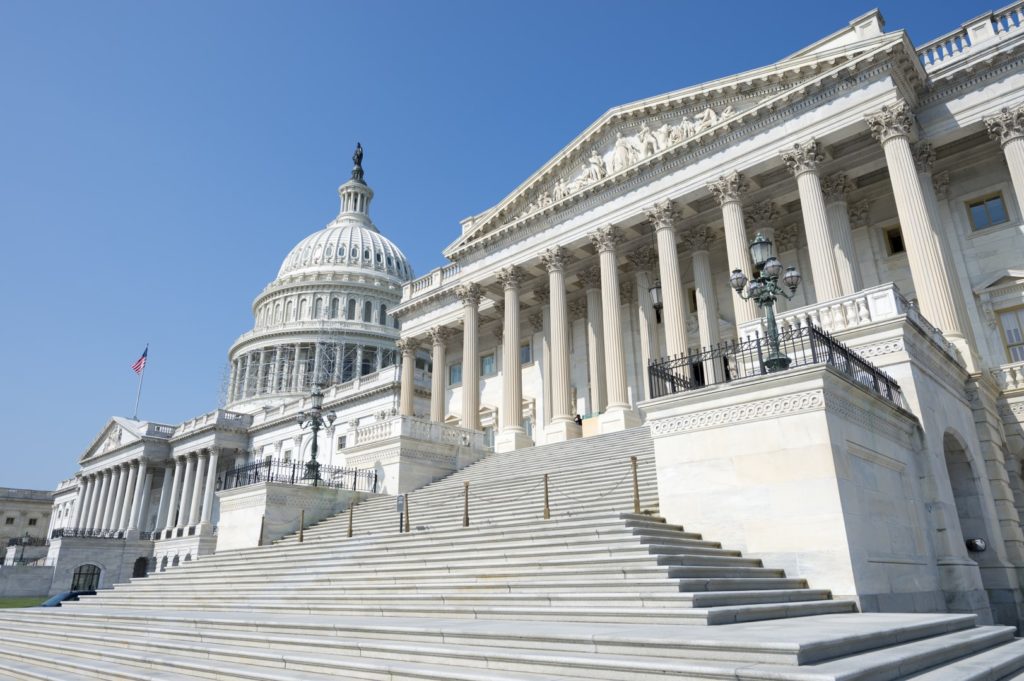
President Barack Obama has signed a short-term funding bill to keep the government from shutting down at the end of the week. Lawmakers eager to leave town to campaign for re-election gave themselves breathing room by voting to continue existing spending levels for another 10 weeks, beyond the Nov. 8 election. Members of Congress will have to reach agreement on funding for the rest of the budget year when they meet in a lame-duck session after the election. The bill Obama signed Thursday also provides $1.1 billion to address the Zika crisis. And it has $500 million to help Louisiana flood victims. Republished with permission of the Associated Press.
Updates from the 1st presidential debate

The Latest on the first of three presidential debates between Democrat Hillary Clinton and Republican Donald Trump (all times EDT): 10:45 p.m. Both candidates concluded the first presidential debate by saying they will accept the outcome if the other wins. Hillary Clinton spoke directly to viewers and said, “It’s not about us, it’s about you.” Donald Trump initially dodged the same question, saying he would make a “seriously troubled” America “great again.” He added: “I’m going to be able to do it. I don’t believe Hillary Clinton will.” But Trump finished his answer by saying that if Clinton wins, “I will absolutely support her.” ___ 10:43 p.m. Hillary Clinton is punching back at Donald Trump’s assertions that she doesn’t have the “stamina” to be president. Trump has questioned whether Clinton has the physical fitness to be president and he repeated the criticism to her directly during the debate. Clinton’s response? Trump shouldn’t talk about stamina until he’s tried out the busy schedule she kept up as secretary of state. Trump didn’t answer moderator Lester Holt’s original question about his past comments that Clinton doesn’t have the “presidential look.” Clinton suggested the remarks were about gender, and she reminded the crowd of Trump’s past comments calling women “pigs” and other derogatory names. ___ 10:42 p.m. Donald Trump says NATO needs to “go into the Middle East with us” to combat the Islamic State group. And he is taking credit for NATO focusing resources on combating terrorism. In fact, the alliance agreed in July to contribute aircraft and conduct training in Iraq and has increased intelligence coordination there. And NATO set up an anti-terrorism program in 2004 — years before Trump criticized them as a presidential candidate. Earlier this year, Trump criticized NATO for not focusing on terrorism. He said that afterward, he saw an article reporting that NATO was opening a new, major anti-terrorism division. He said Tuesday that NATO’s action was “largely because of what I was saying, and my criticism of NATO.” ___ 10:40 p.m. Donald Trump is avoiding a specific declaration on how he would use nuclear weapons if he’s elected president. The Republican nominee said during the first presidential debate that he “would not do first strike” because “once the nuclear alternative happens, it’s over.” That statement suggests he would not authorize a nuclear attack unless the U.S. was struck first. But in the same answer Trump said he “can’t take anything off the table.” He mentioned adversary nations such as North Korea and Iran. President Barack Obama has considered changing existing policy to state clearly that the United States would not deploy nuclear weapons without first being attacked by nuclear weapons. But he met resistance and has elected not to make such a shift. ___ 10:38 p.m. Hillary Clinton is accusing Donald Trump of being too easily provoked to keep the United States from going to war — perhaps even one involving nuclear weapons. Trump says: “I have much better judgment than she does. I have much better temperament.” That drew laughs from some in the debate crowd, and prompted Clinton to exclaim: “Woo! OK!” Clinton then pivoted to policy, defending the U.S.-led war in Afghanistan. Clinton said Iran was “weeks away” from a nuclear bomb when she became secretary of state — and says the Obama administration thwarted that progress. She continued that Trump didn’t have “good judgment or the right temperament” because he could take the country to war over small issues, like being mocked on Twitter. ___ 10:35 p.m. Donald Trump is continuing to insist he opposed the Iraq War before the U.S. invasion despite evidence to the contrary. Trump says during the debate that he “did not support the war in Iraq,” calling that charge “mainstream media nonsense.” But there is no evidence Trump expressed public opposition to the war before the U.S. invaded. Trump was asked in September 2002 whether he supported a potential Iraq invasion in an interview with Howard Stern. Trump briefly hesitated, then responded: “Yeah, I guess so.” Presented with the comment during the debate, Trump responds: “I said very lightly, I don’t know, maybe, who knows.” He’s also telling reporters to call Fox News host Sean Hannity to confirm private conversations he said they had about the war. Hannity is a top Trump supporter. Clinton voted in favor of the invasion in 2002 while she was a New York senator. She has since said it was a mistake. ___ 10:27 p.m. Donald Trump is interrupting the moderator of the first presidential debate to insist he has the best temperament for the office. Trump repeatedly made the assertion after clashing with moderator Lester Holt over his early support for the Iraq War. Then he segued to his temperament. “I think my strongest asset by far is my temperament,” Trump said. “I know how to win.” Clinton and her allies have repeatedly hit Trump over his temper and inability to take criticism. ___ 10:23 p.m. Hillary Clinton says one key to fighting terrorism in the United States is working closely with Muslims living here. Clinton says Donald Trump has “consistently insulted Muslims abroad, Muslims at home.” She says Muslim people can provide information that law enforcement may not be able to obtain anyplace else. Both candidates were asked to explain how they would combat terrorism in the U.S. Clinton says her plan includes an intelligence surge to obtain “every scrap of information” and to “do everything we can to vacuum up intelligence from Europe, from the Middle East.” ___ 10:20 p.m. Hillary Clinton says defeating the Islamic State group and taking out its leaders would be a top priority as president. Clinton says she’s hopeful the Islamic State group would be pushed out of Iraq by the end of the year. She says the U.S. could then help its allies “squeeze” the terrorist group in Syria. Clinton says she would do everything possible to take out the group’s leaders, and make that one of her administration’s organizing principles
Venturing to Mexico, Donald Trump defends right to build huge wall

On Mexican soil for the first time as the Republican presidential nominee, a firm but measured Donald Trump defended the right of the United States to build a massive border wall along its southern flank, standing up for the centerpiece of his immigration plan in a country where he is widely despised. Trump, who previously derided Mexico as a source of rapists and criminals, praised Mexicans Wednesday as “amazing people” following a closed-door meeting at the official residence of the country’s president, Enrique Pena Nieto. Trump and the Mexican president, who has compared the New York billionaire to Adolf Hitler, addressed reporters from adjacent lecterns before a Mexican flag. The trip, 10 weeks before America’s presidential Election Day, came just hours before Trump was to deliver a highly anticipated speech in Arizona about illegal immigration. That has been a defining issue of his presidential campaign, but also one on which he’s appeared to waver in recent days With political risks high for both men, Trump stayed on script, declining to repeat his promise to force Mexico to pay for a wall along the border between the two countries when pressed by reporters. While he and Pena Nieto talked about the wall, Trump said they didn’t discuss who would pay for a cost of construction pegged in the billions. “Having a secure border is a sovereign right and mutually beneficial,” Trump said, reading from prepared remarks. “We recognize and respect the right of any country to build a physical barrier or wall on any of its borders to stop the illegal movement of people, drugs and weapons. Cooperation toward achieving this shared objective — and it will be shared — of safety for all citizens is paramount to both the United States and to Mexico.” Trump’s presence on Wednesday, his first meeting with a head of state abroad as a presidential candidate, sparked anger and protests across Mexico’s capital city. Former Mexican President Vicente Fox bluntly told the celebrity businessman that, despite Pena Nieto’s hospitality, he was not welcome. “We don’t like him. We don’t want him. We reject his visit,” Fox said on CNN, calling the trip a “political stunt.” Pena Nieto was less combative as he addressed reporters alongside Trump. He acknowledged the two men had differences and defended the contribution of Mexicans working in the United States, but he described the conversation as “open and constructive.” He and Trump shook hands as the session ended. Pena Nieto’s performance came in for immediate condemnation from his many critics in Mexico. “Pena ended up forgiving Trump when he didn’t even ask for an apology,” said Esteban Illades, the editor of Nexos magazine. “The lowest point of the most painful day in the history of the Mexican presidency.” After saying during his Republican primary campaign he would use a “deportation force” to expel all of the estimated 11 million people living in the United States illegally, Trump suggested last week he could soften that stance. But he still says he plans to build a huge wall — paid for by Mexico — along the two nations’ border. He is under pressure to clarify just where he stands in the Wednesday night speech, which had been rescheduled several times. Trump’s running mate, Indiana Gov. Mike Pence, told CBS earlier in the day that Trump would make clear “that there will be no path to legalization, no path to citizenship. People will need to leave the country to be able to obtain legal status or obtain citizenship.” The buildup to the speech was abruptly interrupted Tuesday night by the news that Trump would visit Mexico, accepting on short notice an invitation offered last week by Pena Nieto. The newspaper El Universal wrote in an editorial that Trump “caught Mexican diplomats off guard.” Campaigning in Ohio earlier in the day, Democrat Hillary Clinton jabbed at Trump’s Mexican appearance as she promoted her own experience working with foreign leaders as the nation’s chief diplomat. “People have to get to know that they can count on you, that you won’t say one thing one day and something totally different the next,” she told the American Legion in Cincinnati. “And it certainly takes more than trying to make up for a year of insults and insinuations by dropping in on our neighbors for a few hours and then flying home again.” Trump has promised, if elected, to deport millions of immigrants who are in the United States illegally, force Mexico to pay for the construction of a wall to secure the nearly 2,000-mile border and renegotiate the NAFTA trade agreement to make it more favorable to the United States. Pena Nieto suggested there was room to improve the trade deal, which Trump described as unfair to American workers. The New York businessman promised to promote trade deals that would keep jobs in the Western Hemisphere. Pena Nieto made his invitation to both Trump and Clinton, who met with him in Mexico in 2014. The inclusion of Trump puzzled many in Mexico, who said it wasn’t clear why their own unpopular president would agree to meet with someone so widely disliked in his country. Pena Nieto has been sharply critical of Trump’s immigration policies, particularly the Republican’s plans to build a wall and have Mexico pay for it. In a March interview, he said that “there is no scenario” under which Mexico would do so and compared Trump’s language to that of dictators Hitler and Benito Mussolini. Pena Nieto did not repeat such criticism on Wednesday, but acknowledged Trump’s comments had “hurt and affected Mexicans.” “The Mexicans deserve everyone’s respect,” he said. Republished with permission of The Associated Press.
