
Carol Gundlach: 260,000+ Alabamians should claim federal stimulus payments by Oct. 15
Carol Gundlach of Alabama Arise outlines the economic impact of Coronavirus stimulus payments and exactly why Alabamians should make sure they claim their payment as soon as possible.
Rauf Bolden: Ecotourism as economic stimulus in Orange Beach
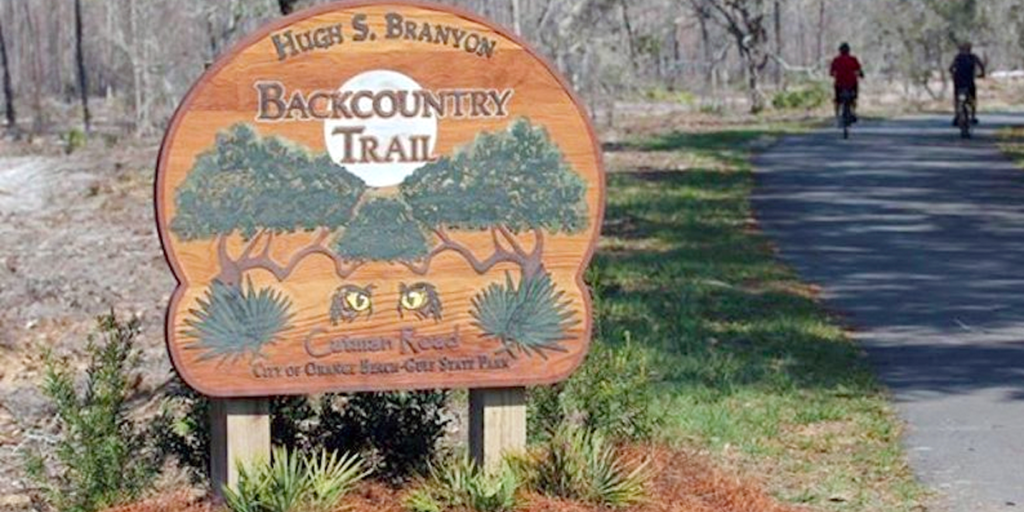
For many years, I have assured people that it is easy to be an expert on Orange Beach because there are really only two answers to any question you could ever be asked about it: “I don’t know” and “It depends.” While glib, this point is strikingly accurate. The public face of Orange Beach’s council system is highly transparent with meetings and work sessions in a public forum. Its inner workings and decision-making processes are shrouded in mystery, wondering about who is really making the decisions, rarely conforming to what any outsider might predict. Perhaps ecotourism’s economic value to this community is the galvanizing exception, making it priceless. “Ecotourism is considered the fastest growing market in the tourism industry,” according to the World Tourism Organization with an annual growth rate of 5% worldwide and representing 6 percent of the world’s gross domestic product, 11.4 percent of all consumer spending, bolstering local economies. Behavioral economists combine economics with insights from psychology to show how heavily economic decisions like ecotourism are influenced by cognitive biases, according to the Economist Magazine’s summary of Richard Thaler’s work. He is the winner of this year’s Nobel Prize in Economics. According to him our economic decisions are influenced by cognitive biases like ecotourism, influencing our decision to choose vacation cities that are eco-friendly. Environmental tourism began in Orange Beach after the Great Depression of 2008, being an inadvertently disguised format for economic stimulus, injecting government funds into the economy, bolstering the recovery, as John Maynard Keynes espoused. The City wrote grants to build the Backcountry Trail System, continually encouraging investment in offshore fisheries with artificial reefs and scuba diving, having ships demolished as underwater attractions, extending the red-snapper fishing season, using cognitive biases, ensuring vacationers understood we are pro-environment, promoting growth in the local economy. A Beach Ambassador Initiative was started. “Leave Only Footprints,” affects all aspects of beach life, erasing tents, chairs and paraphernalia from the beach at night, presenting a fresh canvas each morning for our visitors to enjoy, creating jobs in the economy. These emissaries had a busy season in 2016: Public Interactions: 51,124; Promotional Items Distributed: 20,439; Glass Warnings Issued: 3322; Tent Warnings Issued: 3285; Tents Tagged: 886; Hole Warnings: 1378; Holes Filled: 2170; Trash Warnings: 485; Trash Bags Distributed: 5689; Law Enforcement (Backup) Requests: 46; Fire/EMS/Rescue Requests: 14; Dog Issues/Encounters: 157; Wildlife Related Incidents: 88; Metal Shovel Warnings: 71, according to a representative from Orange Beach Coastal Resources in an email. Investing in ecotourism as a form of economic stimulus has strengthened economic growth in Orange Beach through active participation by our tourism partners: Alabama Department of Environmental Management, The Citizen and Visitors Bureau, The Orange Beach Chamber-of-Commerce, The Backcountry Trail Foundation, The Islands of Perdido Foundation, The Alabama Coastal Foundation and the Fishing Association, providing sustainable-business examples to build on. Perhaps economic stimulus was not the root concept of the initial plan, supporting ecotourism from the beach initiative to turtle nesting, but economic stimulus was certainly the end result. The trails network, beach ambassadorship, turtle nesting, trash pickups on the islands, dredging the pass for offshore-fishing access, increasing the red-snapper season require complex management skills and grant-writing abilities, rewarded when driven from the perspective that infrastructure stimulus creates jobs in the local economy. Businesses profit from ecotourism. Being seen to be caring for and taking care of the environment is behavioral economics, supporting initiatives for Beach Mouse habitat; tag-and-release fishing; rental of bicycles, pontoon boats, and jet skis; or going on Segway tours, is making an environmental statement to our visitors, underlining the council’s commitment to Orange Beach’s eco-friendly image. Finding the funds for these projects is key; writing grants is not a funding source one can depend on year-in-and-year-out. The City of Orange Beach recently increased the Lodging Tax by 2 percent from 11 percent to 13percent, generating $5 Million per year in additional revenue, according to Finance Director Ford Handley. One assumes some of these funds will be allocated to stabilize ecotourism’s infrastructure budget. The Backcountry-Trail Tours yielded: 408 tours and 1869 visitors, divided by the number of years since inception is 208 visitors per year. On tour, visitors learn the inter-dependency between flora and fauna indigenous to the Gulf Coast. This educational approach diversifies the offerings available to visitors in Orange Beach. Turtle nesting is also an important component, watching the beach during the summer months, patrolling at night with teams of volunteers, looking for females coming ashore, burying their eggs in the sand. Volunteers protect the nesting sites with markers, patiently waiting for the hatchlings to surface, escorting them to the sea, ensuring the survival of another generation. Environmental projects like these require funding to continue. The City of Orange Beach has shown no sign of curbing its appetite for allocating resources, presenting a unified face with everyone in step, assuring council remains proud of the city’s eco-friendly image. Some holdouts still exist, citing “disputable findings about climate change”, quoting the new Director of the Environmental Protection Agency, Scott Pruitt. “I would not agree that carbon dioxide is a primary contributor to the global warming that we see,” he told CNBC’s “Squawk Box.” President Trump’s position on environmental protection “has been consistent,” Environmental Defense Fund President Fred Krupp notes in an essay published in the July-August issue of Foreign Affairs, a subscribers-only magazine. “He wants far less of it,” according to their blog. Therefore, the constituents of Orange Beach must follow their own compass, because Federal Grants for environmental projects are diminishing. Orange Beach’s 5,000 residents are a tiny microcosm in the greater scope of the nation, manning their own tiller, implementing their own style of environmental ethics, riding the wave of ecotourism to stimulate the local economy, gladly pulling together with all-hands-on-deck towards a common-ecological goal, because ecotourism’s economic value to this community is priceless. ••• Rauf Bolden is retired IT Director at the City of Orange Beach, working as an IT & Web Consultant on the Beach Road. He can be reached at: publisher@velvetillusion.com.
Donald Trump tax cut: Huge, vague and likely mild boost for economy

President Donald Trump‘s team boasted Wednesday that its tax-cut plan would lighten Americans’ financial burdens, ignite economic growth and vastly simplify tax filing. Yet the proposal so far remains short of vital details, including how it would be paid for. And based on the few specifics spelled out so far, most experts suggest that it would add little to growth while swelling the budget deficit and potentially handing large windfalls to wealthier taxpayers. Trump’s plan would replace the current seven income tax brackets with three, and the top bracket would drop from 39.6 percent to 35 percent. It would also slash the corporate rate from 35 percent all the way to 15 percent, a boon to most companies even though many don’t pay the full tax now. With tax credits and other loopholes, most corporations pay closer to 20 percent, according to calculations by JPMorgan. Perhaps the most contentious plank would enable taxpayers with business income — including those wealthy enough to pay the top tax rate — to instead pay the new 15 percent corporate rate. That’s because Trump would apply the corporate rate to “pass through” businesses. Pass-throughs include partnerships such as law firms and hedge funds as well as most small businesses — from the local florist to the family-owned restaurant on Main Street. What’s more, some privately held large companies — including Trump’s own real estate empire — are structured as pass-throughs and would benefit, too. Here’s a closer look at Trump’s proposal and its likely impact: ___ WHO BENEFITS? It’s hard to say because the administration has released so few details. The three new income tax rates would be 10 percent, 25 percent and 35 percent. But Trump’s top economic adviser, Gary Cohn, and Treasury Secretary Steven Mnuchin, weren’t ready Wednesday to say at what income levels these new rates would kick in. Tax experts said far more details were needed to determine how average Americans would be affected. “The impact on Joe Taxpayer is unknown,” said Marc Gerson, vice chair of the tax department of law firm Miller & Chevalier in Washington. “There’s not enough specificity. It’s hard for taxpayers to determine where they’ll come out.” Cohn asserted that the plan would cut taxes “especially for low and middle income families.” It purports to do so in part by doubling the standard deduction, which is used by taxpayers who don’t itemize their tax deductions. At the same time, the Trump plan would eliminate the estate tax and the alternative minimum tax, thereby benefiting some of the richest taxpayers. And that’s on top of shrinking the corporate tax rate that many affluent individuals could likely capitalize on. ___ WHY CUT CORPORATE TAXES? By making corporations more profitable, the Trump administration hopes to encourage more business spending on equipment — from computers to factories and machinery. Doing so, in turn, could make the economy more efficient and accelerate growth and hiring. Economic growth has been stuck at about 2 percent a year since the recession ended in 2009. Mnuchin says the administration wants to accelerate it above 3 percent, a pace it hasn’t touched since 2005. The corporate tax cuts are also intended to encourage more businesses to stay in the United States, which now has the highest corporate rate among advanced economies. Many large corporations are enthusiastic about lower rates and say they support the elimination of loopholes, which both reduce revenue and make taxes more complicated. ___ WHO’D BENEFIT FROM THE CORPORATE RATE CUT? Aside from most large companies, many partnerships and small businesses would benefit because they’re structured as pass-throughs, which derives from the fact that they pass on their profits to their owners. Those owners now pay individual income tax rates, which top out at 39.6 percent. With the pass-through rate dropped to 15 percent, those taxpayers could enjoy an enormous tax cut. The Trump team stressed the benefits that might flow to small businesses. But the richest windfalls would flow to the wealthy — lawyers, hedge fund managers, consultants and other big earners. Nearly 75 percent of pass-through income flows to the 10 percent wealthiest taxpayers, according to the liberal Center on Budget and Policy Priorities. “It would tremendously help high earners,” says Brian Thompson, a certified public accountant in Chicago. In Kansas, Gov. Sam Brownback eliminated state taxes on pass-throughs, which turned out to be a boon for Bill Self, the coach of the University of Kansas’ men’s basketball team. He had previously set up his own company, according to state media reports. As a result, he paid little state income tax despite earning nearly $3 million a year. Many people, particularly wealthy Americans, could set up companies and reclassify their paychecks as “business income” and have it taxed at 15 percent, experts say. In Kansas, the number of pass-through businesses jumped to more than double the level the state expected, according to the nonpartisan Tax Policy Center. That cost the state revenue without spurring more job creation. Mnuchin said the Treasury would issue rules to prevent wealthy people from capitalizing on the lower rate. But many experts are skeptical. “Good luck with that,” said Mark Mazur, director of the nonpartisan Tax Policy Center and a former Treasury official under President Barack Obama. “The tax agencies tend to be at least a couple of steps behind the businesses.” ___ HOW ELSE WOULD BIG BUSINESSES BENEFIT? The administration is also proposing to tax only corporate income earned in the United States. This is known as a “territorial” system. It would replace the current worldwide system, under which corporations pay tax on income earned in the U.S. and overseas. Yet companies can avoid the tax if they keep their foreign earnings overseas. Many businesses have kept hundreds of billions of dollars outside the United States. Mnuchin said Trump’s plan would encourage corporations to return the money to the United States and invest it in plants and equipment. Some analysts counter that corporations might instead use the money to pay dividends to
Daniel Sutter: On Christmas and economic stimulus
Christmas generates significant economic activity. The American Research Group estimated that Americans would spend an average of $880 on gifts this season, which implies total gift spending of at least $100 billion. We spend almost $10 billion annually on decorations and Christmas trees. Our Christmas economy exceeds the year-round economy of Ecuador. Economics blogger Matt Yglesias reports further that 2 to 3 million Americans lose their jobs each January after the holidays. This job loss does not show up in the unemployment rate due to seasonal adjustment. Although the end of the Christmas season is not responsible for all January job losses, the Christmas economy employs hundreds of thousands of Americans. The jobs and economic activity Christmas currently generates are great, but perhaps we would do even better by making this stimulus larger and deliberate. Mr. Ygelsias has even proposed having a second Christmas with a similar level of spending in the spring as an economic stimulus. Alternatively, the government could just mandate that Americans double their Christmas spending. An intentional Christmas stimulus, however, would make our nation worse off. And the case illustrates why government stimulus efforts offer so much promise and yet fail to improve our well-being. A stimulus promises sales for businesses. Consider the situation of a Christmas tree farm. Trees take years to grow, and any trees cut this year will be lost if they do not sell. The seller must not only decide how many trees to cut this year, but where to send them: too many trees in Troy also results in unsold trees. Poor sales mean no return on the costs, time and effort invested growing the trees, and reduces employment in shipping and selling trees. The Christmas tree seller will consequently be delighted when people buy all of his trees. The seller will still be happy even if a buyer was wavering about getting a real tree this year. And here we see why an economic stimulus appears to be such a wonderful idea. If we can just keep sales from falling, sellers will continue to make profits and won’t have to lay any workers off. But merely spending more money will not increase prosperity. To see why, suppose that the government ordered people to spend $2,000 on Christmas gifts this year. Americans would buy a lot of extra gifts we really didn’t want to give. Many of the gifts might be returned or put in the attic. The mandated, extra gifts will not generate benefits similar to the gifts we willingly buy. Nor would the extra employment from the mandated spending make up for this. We live in a world of scarcity, meaning that our wants and desires exceed our capacity to produce goods and services. Work has never automatically produced prosperity. People have worked hard throughout human history, but prosperity is a recent phenomenon. We become prosperous by using our scarce resources, including labor, more wisely and efficiently. Mandates direct scarce resources to make extra fruitcakes, blenders and sweaters instead of things we value more. The same lesson applies to economic stimulus measures, like the 2009 American Response and Recovery Act. Government can use resources, benefiting certain sellers in the process. But a government stimulus is like a meal that looks great but is neither nutritious nor delicious. We feel cheated somehow, because we did not get what we were promised. Consumer spending is the final step in the market’s process of value creation. Spending divorced from this process ultimately fails to generate prosperity. Christmas illustrates nicely the subtlety of value creation. We spend money to buy gifts for others, not ourselves, and we give gifts for many reasons, including in some instances obligation. Gifts will sometimes get returned, collect dust, or be regifted. But willingly purchased gifts create value because they reflect our values and choices. Christmas is big business. The economic magic of Christmas arises because the trees, decorations, and gifts we choose to buy enrich our lives as well as the experiences we share with family and friends. For the economics of the holidays, it is the thought that matters after all. Merry Christmas, everyone! Daniel Sutter is the Charles G. Koch Professor of Economics with the Manuel H. Johnson Center for Political Economy at Troy University and host of Econversations on TrojanVision.
