
U.S. Senator Katie Britt joins colleagues to support ban on mask mandates

On Thursday, U.S. Senator Katie Britt (R-Alabama) joined her Republican colleagues on the Senate floor in support of legislation authored by Senator J.D. Vance (R-Ohio) that would ban future federal mask mandates. Sen. Britt is a cosponsor of Senator J.D. Vance’s Freedom to Breathe Act. It would prohibit any federal official, including the President, from issuing mask mandates applying to domestic air travel, public transit systems, or primary, secondary, and post-secondary schools. The legislation would also prohibit air carriers, transit authorities, and educational institutions from refusing service to individuals who choose not to wear a mask. “During the COVID-19 pandemic, draconian shutdowns and mask mandates inflicted immense damage across our nation,” said Britt. “Just look at the consequences our children faced, from devastating learning loss that put students years behind to deteriorating mental health in kids and teenagers. Enough is enough. More than three years later, it’s clear we need to embrace individual liberty and facts rather than a society gripped by fear. Democrats have claimed that mask mandates and lockdowns are not coming back – however, their objection to this legislation reveals their true intentions.” “We cannot repeat the anxiety, the stress, and the nonstop panic of the last couple of years,” said Sen. Vance. “That’s what this legislation is about. End the mandates, end the panic, and let’s get back to some common sense.” The Senate considered the legislation on Thursday under unanimous consent, which allows for a measure to be considered passed and sent to the House of Representatives unless another senator raises an objection. During consideration of the Freedom to Breathe Act, Senator Ed Markey (D-Massachusetts) objected to the passage, meaning that the bill would have to go through the regular order to get out of the Senate. COVID-19 is making a small resurgence in some parts of the country. Earlier this week, an elementary school in Montgomery County, Maryland, reimposed a mask mandate for students. In addition to Senators Britt and Vance, this legislation is cosponsored by Senate Republican Conference Chairman John Barrasso (R-Wyoming) and Senators Josh Hawley (R-Missouri), Eric Schmitt (R-Missouri), Mike Braun (R-Indiana), Cynthia Lummis (R-Wyoming), Roger Marshall (R-Kansas), Ted Budd (R-North Carolina), and Marsha Blackburn (R-Tennessee). Mask mandates were widely adopted during the COVID-19 global pandemic at the urging of public health officials. The effectiveness of a piece of cloth stopping an airborne virus has been widely debated. Some see the masks as sensible precautions, while others object to them being required by the government. Over 6.9 million people have died from COVID-19, including 1,174,588 Americans – though that is fewer than some of the projections were showing early in the global pandemic. There have been 52,803 American deaths credited to COVID-19 in 2023. Katie Britt was elected to the U.S. Senate in 2022. She previously worked as an attorney, the President and CEO of the Business Council of Alabama, and as former Senator Richard Shelby’s chief of staff. To connect with the author of this story or to comment, email brandonmreporter@gmail.com.
Senate approves bill to make daylight saving time permanent
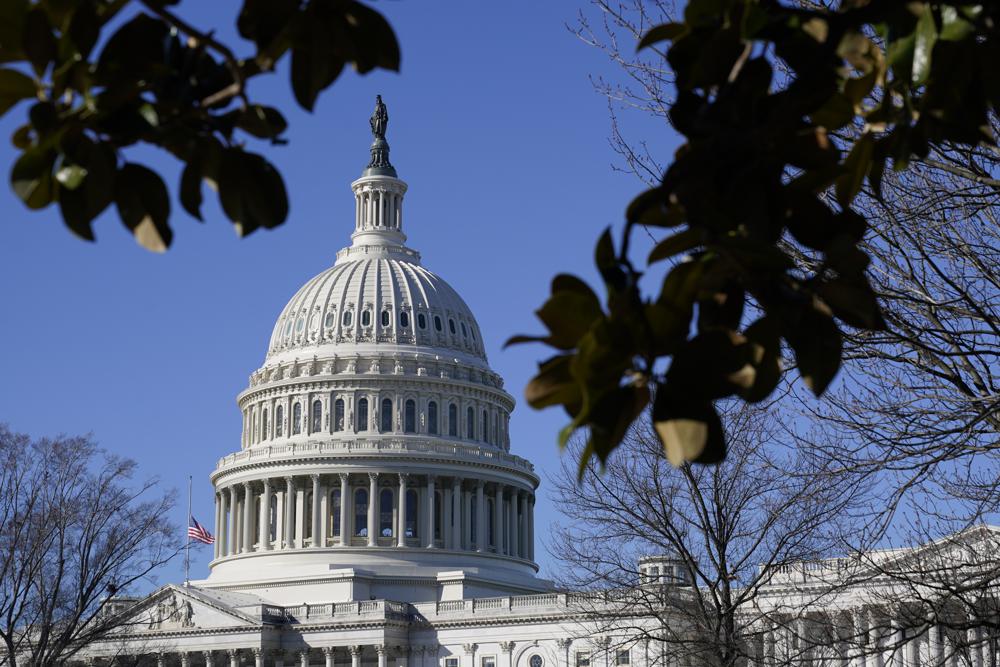
The Senate unanimously approved a measure Tuesday to make daylight saving time permanent across the United States next year. The bipartisan bill, named the Sunshine Protection Act, would ensure Americans would no longer have to change their clocks twice a year. But the bill still needs approval from the House, and the signature of President Joe Biden, to become law. “No more switching clocks, more daylight hours to spend outside after school and after work, and more smiles — that is what we get with permanent Daylight Saving Time,” Sen. Ed Markey of Massachusetts, the original cosponsor of the legislation, said in a statement. Markey was joined on the chamber floor by senators from both parties as they made the case for how making daylight saving time permanent would have positive effects on public health and the economy and even cut energy consumption. “Changing the clock twice a year is outdated and unnecessary,” Republican Sen. Rick Scott of Florida said. “I’ve said it before, and I’ll say it again: Americans want more sunshine and less depression — people in this country, all the way from Seattle to Miami, want the Sunshine Protection Act,” Sen. Patty Murray of Washington added. Nearly a dozen states across the U.S. have already standardized daylight saving time. Daylight saving time is defined as a period between spring and fall when clocks in most parts of the country are set one hour ahead of standard time. Americans last changed their clocks on Sunday. Standard time lasts for roughly four months in most of the country. Members of Congress have long been interested in the potential benefits and costs of daylight saving time since it was first adopted as a wartime measure in 1942. The proposal will now go to the House, where the Energy and Commerce Committee had a hearing to discuss possible legislation last week. Rep. Frank Pallone, the chairman of the committee, agreed in his opening statement at the hearing that it is “time we stop changing our clocks.” But he said he was undecided about whether daylight saving time or standard time is the way to go. Markey said Tuesday, “Now, I call on my colleagues in the House of Representatives to lighten up and swiftly pass the Sunshine Protection Act.” Republished with the permission of the Associated Press.
Democrats seek Green New Deal to address climate change

Democrats including Rep. Alexandria Ocasio-Cortez of New York are calling for a Green New Deal intended to transform the U.S. economy to combat climate change and create thousands of jobs in renewable energy. The freshman lawmaker and veteran Sen. Ed Markey of Massachusetts are teaming up on the plan, which aims to eliminate the U.S. carbon footprint by 2030. A joint resolution drafted by Ocasio-Cortez and Markey sets a goal to meet “100 percent of the power demand in the United States through clean, renewable and zero-emission energy sources,” including dramatic increases in wind and solar power. A news conference at the Capitol is set for later Thursday as the lawmakers introduce the nonbinding resolution. While setting lofty goals, the plan does not explicitly call for eliminating the use of fossil fuels such as oil and natural gas, a nod to pragmatism that may disappoint some of Ocasio-Cortez’s strongest supporters. Even so, their Green New Deal goes far beyond the Clean Power Plan proposed by President Barack Obama. President Donald Trump has scrapped Obama’s plan, which imposed emissions limits on coal-fired power plants, as a job-killer. The Democrats are likely to meet resistance to their proposal in Congress, especially in the Republican-controlled Senate. Trump, who has expressed doubts about climate change, also is likely to oppose it. The announcement of the Green New Deal came as House Speaker Nancy Pelosi tapped eight Democrats to serve on a special committee to address climate change. Ocasio-Cortez was not among those selected for the panel, which is chaired by Rep. Kathy Castor, D-Fla. Ocasio-Cortez declined to answer Thursday when asked about the snub. Pelosi said in a statement that the climate committee will “spearhead Democrats’ work to develop innovative, effective solutions to prevent and reverse the climate crisis.” She made no mention of the Green New Deal. The resolution being introduced Thursday marks the first time Ocasio-Cortez and other lawmakers have attached legislative language to the Green New Deal, a concept that until now has been largely undefined other than as a call for urgent action to head off catastrophic climate change and create jobs. Several Democratic presidential hopefuls have embraced the idea of a Green New Deal without saying exactly what it means. Ocasio-Cortez said in a statement that the plan will create “unprecedented levels of prosperity and wealth for all while ensuring economic and environmental justice and security.” She calls for a “World War II-scale mobilization” that includes high-quality education and health care, clean air and water and safe, affordable housing. Answering critics who call the plan unrealistic, Ocasio-Cortez says that when President John F. Kennedy wanted to go to the moon by the end of the 1960s, “people said it was impossible.” She also cites Franklin D. Roosevelt’s New Deal, Lyndon B. Johnson’s Great Society and the interstate highway system begun under Dwight D. Eisenhower as examples of American know-how and capability. While focusing on renewable energy, Ocasio-Cortez said the plan would include existing nuclear power plants but block new nuclear plants. Nuclear power does not emit greenhouse gases, which contribute to global warming. The resolution does not include a price tag, but some Republicans predict it would cost in the trillions of dollars. They denounced the plan at House hearings on climate change on Wednesday. “If anyone thinks that decarbonizing America is going to save the planet, they’re delusional,” said Rep David McKinley, R-W.Va. The Green New Deal would be paid for “the same way we paid for the original New Deal, World War II, the bank bailouts, tax cuts for the rich and decades of war — with public money appropriated by Congress,” Ocasio-Cortez said. Government can take an equity stake in Green New Deal projects “so the public gets a return on its investment,” she said. Republished with permission from the Associated Press
