
Senate committee approves 4 percent teacher raise for Alabama teachers, education budget

An Alabama Senate committee has approved a 4 percent pay raise for most public school teachers, administrators and employees. The Senate Finance and Taxation Education Trust Fund Committee approved a $6.327 billion Education Trust Fund budget, a 5 percent increase over this year, which funds pay raises for teachers and provides additional money to hire new educators and fund transportation. The House unanimously approved the budget early last month. The budget provides for a wide-array of increases for state education, including $14.5 million to Alabama’s top-ranking Pre-K program — a bump from the House-approved $14 million. Further, the budget will fully fund the Public Education Employees Health Insurance Plan (PEEHIP) and bump the funding for teacher supplies from $373.79 to $405.05 per unit, and technology from $63.79 per unit to $169.34 per unit. The Committee also approved a proposal that dictates teachers and employees making less than $75,000 a year would see a four percent pay raise, while those above would see a two percent raise, making this the first take-home pay increase in years for Alabama public school teachers. The committee adopted an amendment offered by Senate budget chairman Arthur Orr (R-Decatur), that included principals and assistant principals in the pay raise. “Principals are the backbone of the schools, and make the trains run on time and we need to attract good leaders to our individual schools,” Orr said. The budget now moves to the full Alabama Senate, where it is expected to be considered as early as Wednesday.
University of Mobile names Timothy L. Smith new president
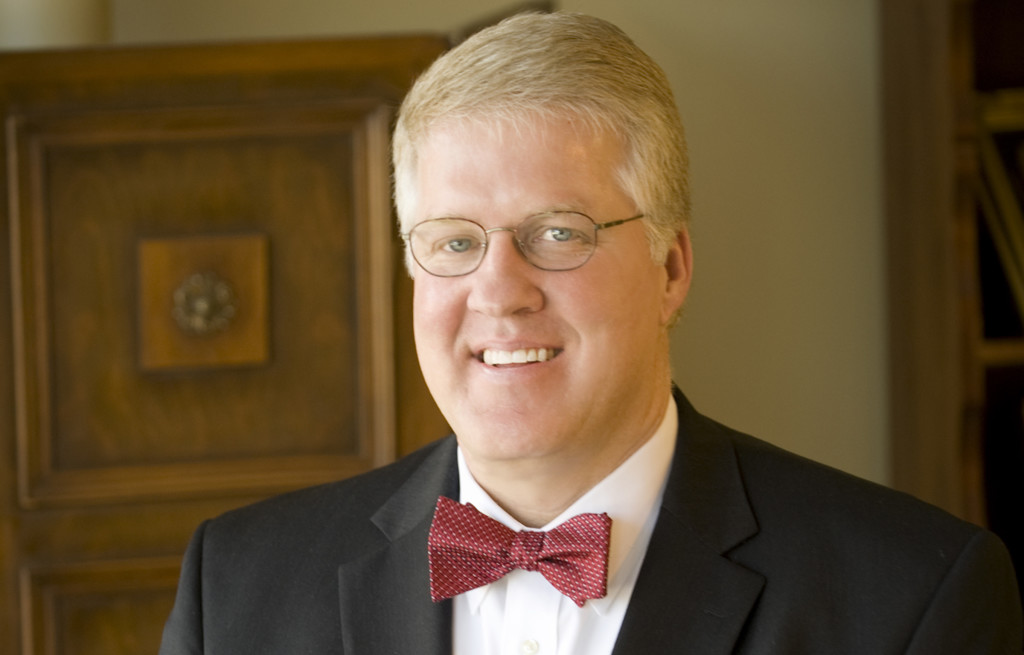
The University of Mobile board of trustees announced Monday it has named a new president for the institution, the fourth in the Baptist university’s 54-year history. Timothy L. Smith holds two doctorates, two master’s degrees and is licensed by the South Carolina Board of Nursing and the American Association of Nurse Anesthetists. Additionally, he has years of experience in higher education. “The University of Mobile has a great foundation, with many building blocks already above the foundation. I believe there are huge opportunities to serve the community and partner with so many organizations. My methodology in leading as president will be a very collaborative approach. I want people inside the institution and externally to know that I’m coming in to listen; I’m coming in to collaborate; and I’m coming in to partner,” said president-elect Smith. After an extensive search, UMobile Board of Trustees Chairman Fred Wilson said Smith was chosen, in part, because of his ability to be a “president for every constituency of the university.” Smith will replace retiring President Mark Foley, who has led the school since 1998. “Since accepting the position of president of the University of Mobile in 1998, it has been my determination that part of my responsibility is, at the appropriate time, to lead the institution carefully and effectively into the hands of my successor,” said Foley when he announced his retirement in October. “Just as in a relay race, the key to winning is an effective hand off. I believe now is the time to begin that hand off.” The University of Mobile’s press team live-Tweeted the press conference making the announcement. Dr. Tim Smith “Top three goals, 1. Continue theological emphasis. 2. Examine academic process. 3. Look and build fiscal resources.” — University of Mobile (@umobilenews) April 11, 2016 Dr. Tim Smith post press conference. #UMobilePrez pic.twitter.com/2InJfVri9f — University of Mobile (@umobilenews) April 11, 2016 Smith will begin his tenure as U of Mobile at the conclusion of this school year. According to the University’s website, the University of Mobile is a Christian university affiliated with the Alabama Baptist State Convention located on an 880-acre campus near Mobile. More than 1,500 students are enrolled in over 40 undergraduate and graduate programs in the College of Arts and Sciences, School of Business, School of Christian Ministries, School of Education, School of Nursing, School of Worship Leadership, The Roger Breland School of Music, adult and professional studies, and graduate programs.
State House to consider creating education savings accounts

HB84, the Education Savings Account act, a school choice bill sponsored by Rep. Ken Johnson (R-Moulton) will be considered by the full Alabama House of Representatives when the legislature returns from spring break Tuesday. While the public charter schools approved in recent years won’t open until fall of 2017, education savings accounts (ESAs) would be able to be used almost immediately by parents of children with learning disabilities, autism, or illnesses preventing them from leaving home who have been issued individual education plans (IEPs). There are currently about 80,000 students with IEPs in the state, but the program institutes a cap of 1,000 students, and will be available for parents beginning in the 2016-2017 school year if it successfully passes through the legislature and is approved by the governor. The bill would allow those parents to use 90 percent of the money that would have otherwise been allocated to their child’s district for programs including tutoring and specialized education. In order to use the savings account, parents must agree to make sure their children receive education in reading, mathematics, grammar, social studies, and science. Further, the child may not enroll in a charter school or in the Alabama Tax Credit Scholarship Program while participating in the ESA. Using the most recent publicly available figures, the plan would allow participating families to put about $4,700 into the savings accounts for their students’ use. If money is left over at the end of the year, up to $2,000 can be transferred from the education savings accounts to a Section 529 or “Coverdell” account for higher education or other approved expenditures. If the legislation is passed, Alabama will be the seventh state to institute an Educational Savings Account program, following in the footsteps of Arizona, Florida, Mississippi, Nevada, Tennessee, and Virginia, whose governor has yet to sign theirs into law. Legislatures in 10 states, including Alabama, are considering ESAs this year. According to the American Federation for Children, a proponent of the legislation, there are several schools, both public and private, who are ready and willing to accept the eligible students in either a fully-enrolled or a-la-carte capacity. The bill is likely to be opposed by many Democrats and the Alabama Education Association.
Kay Ivey: Every meal matters

Hunger is an uncomfortable truth that affects children in our state; even some of our closest neighbors. To most of us, hunger can seem like a foreign term. Unfortunately, we are not talking about children on the other side of the globe, but in our local communities. The startling fact is that in Alabama, 300,000 (1 in 4) children do not know where they will get their next meal and risk hunger every day. Hunger is more than just a missed meal; it is a health problem, education problem, job readiness and workforce problem. Nutritious meals fuel our bodies and minds to function and properly develop. Children facing food insecurity in the first three years of life are more likely to start school behind their peers. According to the USDA, food insecurity occurs when people lack access to sufficient, safe, nutritious food due to lack of money or other resources. When children have access to nutritious meals– graduation rates increase, doctor visits decrease as children are less likely to get sick, and our economy is stimulated. Three years ago, End Child Hunger in Alabama (ECHA) was launched by Auburn University’s Hunger Institute, which I am pleased to serve as the campaign spokesperson. ECHA is a statewide, multisector initiative addressing the critical issues of hunger and food insecurity facing Alabama’s children and youth. ECHA focuses to increase Alabama families’ economic stability, cultivate a strong regional food system, build public will to end childhood hunger, improve the food assistance safety net for Alabama’s children, support community action, and enhance children’s health and prevent obesity. Since 2013, ECHA has made great strides on behalf of childhood hunger due to the collaborative effort of outstanding key leaders serving on the task force. End Child Hunger in Alabama has recently launched the Every Meal Matters campaign. The campaign includes a public service announcement that is being shown on televisions across our State to bring to light the pressing issue of child hunger and the importance of nutritious meals for Alabama’s children. Hunger is preventable in our state, but we must work together. The children of our State deserve our attention. Together we can start a public movement to combat childhood hunger in Alabama. Join me in getting involved with a local feeding organization and share the PSA below. Visit endchildhungeral.org for more information. #EveryMealMatters • • • Kay Ivey is the lieutenant governor of Alabama. Elected in 2010, she was the first Republican woman to hold the office in Alabama’s history.
Larry Lee: Education matters

Once upon a time a young girl in Ohio graduated from a private high school, then got degrees from Cornell and Harvard, neither of them in the field of education. She then joined Teach for America which means she had a five-week crash course before becoming a teacher at a Baltimore elementary school for three years. Her name is Michelle Rhee. In 1997 she became CEO of The New Teacher Project, a nonprofit set up to supply urban school systems with teachers. She was selected by Washington D.C. Mayor Adrian Fenty in 2007 to run his 50,000-student school system, even though her only real experience in education was three years in that Baltimore classroom.. To say the least, her style was “slash and burn.” How else do you explain someone who invites John Merrow of PBS to film you as you fire a principal? She was so controversial that the mayor who hired her lost his re-election in 2010 She resigned shortly afterward. Today the D.C. school system remains one of the worst in the country with scores far below those of Alabama schools, even though they have had charter schools since 1996 which we are told are the salvation for struggling systems. What does Michelle Rhee have to do with Alabama? A good bit actually. After she left the nation’s capital, she started an organization named StudentsFirst, announcing on the “Oprah Winfrey Show” that she would get 1 million members and raise 1 billion dollars to change education across the nation While no one knows how much money this nonprofit has raised since they do not reveal their donors and file no paperwork with the Alabama Secretary of State, we do know that some has been spent in Alabama. At least $200,000 was spent on political campaigns in 2014. Sen. Del Marsh, the author of the Alabama Accountability Act, the charter school bill and the RAISE bill got $20,000. Rep. Terri Collins, who chairs the Education Policy Committee in the House, got $8,000. Charlotte Meadows of Montgomery, who now works for StudentsFirst and ran for the State House in 2013, got $20,000. But the contribution that catches the eye is the $60,000 given to the Foundation for Accountability in Education. It is listed on the IRS 990 form filed by StudentsFirst for 2013-14. This is a group set up by Senator Marsh to promote the benefits of the Alabama Accountability Act. They spent $18,000 on ads supporting AAA. StudentsFirst has six lobbyists registered with the Alabama Ethics Commission. Three are registered out of Sacramento, California, and three are “contract” lobbyists. One of them is Josh Blades, former staffer for governor Bob Riley and former chief of staff for Speaker Mike Hubbard. Blades also lobbies for BCA. (Editor’s note: Supposedly Rhee is no longer involved with StudentsFirst and runs a group of charter schools started by her husband in Sacramento,. However, the organization is still active.) From all indications StudentsFirst has been a major player in the development of the RAISE/Prep Act. I was watching APTV’s Capitol Journal when Senator Marsh said that he had been consulting with them. All of which leaves us to ask: WHY? Why is a group based in California with no recognizable ties to Alabama education even in the picture when it comes to setting policy for our children and our schools? Where is their dog in this fight? What is their goal? Has anyone associated with the organization ever darkened the door of a school in Bayou La Batre or Bridgeport or anywhere in between? Or did they just buy a seat at the table with campaign contributions? • • • Larry Lee led the study Lessons Learned from Rural Schools and is a longtime advocate for public education. larrylee133@gmail.com. Read his blog: larryeducation.com.
Martha Roby: Education secretary must enforce new law

Newly confirmed Secretary of Education John King came to Capitol Hill this week to testify in our Appropriations budget hearing. As a member of the Appropriations Committee, and specifically the subcommittee with jurisdiction over the U.S. Department of Education budget, this hearing provided me a good opportunity to press the secretary to make sure he and his staff adhere to the new education law that forbids federal coercion on state education policy. You may remember that late last year Congress passed and the president signed a new education law to finally replace the problematic “No Child Left Behind.” The nation’s new education law returns the decision-making back to state and local governments where it belongs. The Wall Street Journal calls the new law “the largest devolution of federal control to the states in a quarter-century.” I’m proud to say the nation’s new education law also contains a provision I introduced and championed that strictly prohibits the Secretary of Education or his agents from using funding grants or special regulation waivers to influence state education policy. For too long, the U.S. Department of Education has exercised undue influence over education policy decisions that are made at the state and local level. The department developed the bad habit of making valuable funding grants or coveted regulation waivers contingent on whether or not a state adopted its “pet” policies. Not only did this behavior flout the appropriate role of the federal government, it also worked to corrode trust in public education at the state and local level. Count me among those who believe states should set high standards and adopt a rigorous curriculum designed to help students build the skills they need to succeed. While collaboration can add value in policymaking, heavy-handed coercion from the federal government in the process is unwelcome and inherently dubious. Parents, teachers and administrators are rightfully wary about having state education policy dictated by bureaucrats in Washington, D.C., who have never set foot in an Alabama classroom. Now that kind of federal coercion is against the law, and at this week’s Appropriations hearing, I wanted to make sure Secretary King is committed to following that law. Old habits die hard, I told him. It isn’t hard to imagine federal bureaucrats ignoring the new law and continuing with business as usual. I was pleased to hear Secretary King say and reiterate that he and his staff will do “exactly” what the law requires. Knowing that policymakers often must determine the “intent of Congress,” I made clear to Secretary King that, as the Member of Congress who introduced and championed this provision of law, the intention is to stop once and for all the inappropriate federal coercion in state education decisions. I appreciate Secretary King appearing before our committee and committing to enforcing the new law. It is important that he and others at the Department of Education know that Congress is watching and that we are serious about returning education control back to states and local governments. • • • Martha Roby represents Alabama’s 2nd Congressional District. She lives in Montgomery, Alabama with her husband, Riley, and their two children.
Despite concerns, bill allowing cameras on school buses passes committee

The House Judiciary Committee approved a bill Wednesday which would authorize local school boards to install cameras on school buses to catch people who violate stop signs on the side of buses. The bill makes it optional for school districts to do so. SB215 from Sen. Jimmy Holley (R-Elba) brought forth the bill because he aims to create a “safe environment for our school children to get on and off school buses.” Holley noted that there are multiple accounts each year of children being injured due to a driver’s failure to yield to a school bus’s stop sign and hundreds of related offenses. Rep. Juandalynn Givan (D-Birmingham) voiced multiple concerns over the legislation, specifically how the cameras would be installed and maintained. Holley said that it would the responsibility of local school boards to pay for the cameras, noting that it might require multiple cameras on each school bus. Concerns were also voiced over the constitutionality of such cameras, with lawmakers noting that cameras on street lights and in unmanned police cars are widely unpopular and often unconstitutional. Holley had no real explanation as to what makes these cameras different, only that they would go a long way in curbing the practice of ignoring school bus signals and provide ways to prosecute those who do. Further concern was raised over the fact that law enforcement is not involved in the installation of the cameras, but Holley affirmed that local law enforcement must be brought into the fold when a municipality decides to install such cameras. The cameras will shoot footage of the offender’s license plate, therefore holding accountable the car owner regardless of who is operating the vehicle. The bill has already passed the Senate and its passage through the House committee clears it for a reading before the full House of Representatives.
Andrew A. Yerbey: Diplomas of duplicity

Two weeks ago, Tommy Bice announced his plans to step down as Alabama’s superintendent of education. Reflecting on his tenure, Bice singled out one accomplishment with especial pride: the nearly 90% graduation rate of public-school students in Alabama. This is not, however, an accomplishment that should be celebrated: it will go down as the most pernicious failure of the Bice superintendency. When the high-school diploma has been as devalued as it has, its benefits–economic and otherwise–become a false promise. By way of background, compare the presentation Bice delivered a few months back, emblazoned “Every Child a Graduate,” with a journal article published in 1954, entitled “A High School Diploma for All!” The similarities do not end with semantics. The journal article was penned by the principal of an Alabama school that had undertaken a new approach to graduating its students. The principal encapsulated the “experiment” thus: “It calls for awarding a . . . diploma to any student who has spent three years [grades ten through twelve] in high school. . . . Scholastic achievement is no longer the basis for awarding the diploma.” The mastery of “theoretical” material, such as mathematics and science, was not required for students to graduate. This policy was approved by the Alabama State Department of Education at the time–and has essentially been institutionalized by the Alabama State Department of Education of today. Evidence is provided by the meteoric rise in the graduation rate of public-school students in Alabama. The rate has skyrocketed seventeen points in four years, from 72% in 2011 to 89% in 2015. To put this percentage in perspective, if the graduation rates of the other forty-nine states were to remain unchanged from 2014, then Alabama’s graduation rate would now rank third nationally. The problem, of course, is that Alabama has seen nothing remotely similar occur with regard to scholastic achievement, which remains dismal–among the worst of the worst in the United States. Consider the results of the ACT. The ACT defines college readiness as “about a 75% chance of obtaining a C or higher in the corresponding credit-bearing college courses . . . based on the actual performance of students in college.” In an era of grade inflation, a grade of C in a first-year college course is not a very high benchmark. Yet, the percentage of Alabama students who graduated ready for college-level coursework in English, math, reading, and science was a mere 16% in 2015, down from a mere 18% in 2011; the national average was 28%. It is no wonder, then, that 32% of Alabama public-school graduates who attend college need remediation. Consider the results of the ACT Plan, an assessment (now the ACT Aspire) taken by tenth-graders that predicts success on the ACT. School-level data is available for the ACT Plan, and surveying it shocks the conscience. Assuming that the ACT Plan scores are representative of upperclassmen, more than two dozen high schools in Alabama–with a combined graduation rate of 83%–could have graduated a group of students without a single one of those graduates being college-ready. These schools might be the worst, but they are most certainly not outliers. Consider the results of the National Assessment of Education Progress (NAEP), known as “The Nation’s Report Card” and considered the standard for measuring scholastic achievement. According to the 2015 scores, only 17% and 26% of Alabama eighth-graders are, respectively, proficient in math and reading–with neither score changing significantly since 2011, and both scores remaining significantly below the national average. A recent report by the Urban Institute, which adjusted the 2013 scores to account for student demographics, thereby allowing more accurate state-to-state comparisons, brings it all back home. Ranking forty-eighth in the nation, ahead of only Hawaii and West Virginia, Alabama can “thank God for Mississippi” no longer. Did it not occur to the superintendent that our state having (1) among the worst scholastic achievement in the country and (2) among the highest graduation rate in the country was not a reason for celebration–that it was, in fact, the opposite? It should have, and once did: “We celebrated it–we put up billboards, we gave parties, we put out ice cream, we gave certificates. All we did was lie to our kids and their parents about how successful they were.” That was Bice, back in 2014. He was speaking not about the graduation rate, but about the exit exam, which he lambasted as useless “because . . . 31% of the [students who took the ACT in 2013, the last year of the exit exam] met the college-readiness benchmark in math.” Two years later, in 2015, the same measure was 23%–having plunged eight points, even as the graduation rate soared. “All we did was lie to our kids and their parents about how successful they were,” indeed. The next superintendent will have to rebuild the trust that has been lost in Alabama’s high-school diploma. This means ensuring that it reflects scholastic achievement. This does not mean undue emphasis on standardized tests or a return to the misguided policies of No Child Left Behind. But it will be helpful to glance backward as we go forward, to recall what those policies were meant to combat: “the soft bigotry of low expectations.” How better to describe the act of awarding diplomas without requiring scholastic achievement? • • • Andrew A. Yerbey is Senior Policy Counsel for the Alabama Policy Institute (API). API is an independent, nonpartisan, nonprofit research and educational organization dedicated to the preservation of free markets, limited government, and strong families.
Senate Education Committee approves teacher evaluations, 5-year tenure
On Tuesday, members of the Senate Committee on Education and Youth Affairs approved the landmark education bill from Senate Pro Tem Del Marsh (R-Anniston). With its approval by the committee, the legislation is now slated to go before the full Senate SB316, also known as the Preparing and Rewarding Educational Professionals (PREP) Act, sets up a procedure for evaluating teachers based on student surveys, classroom observation and student achievement. Further, the bill establishes a five-year track for tenure, upending the previous three-year track, and allows for teachers’ tenure to be revoked if satisfactory observations aren’t achieved. The PREP Act is a reworking of the long-rumored RAISE Act, which Marsh has noted was never even introduced but caused quite a stir among teachers and education officials. “Major education reforms are never easy,” Marsh said in a news release. “Those who maintain the status quo will stop at nothing to keep it, but in the end, a majority of members of the Committee agreed that this is the right thing to do. I look forward to seeing this piece of legislation on the floor.”
Retired Alabama educator enjoys life owning dream business in Enterprise
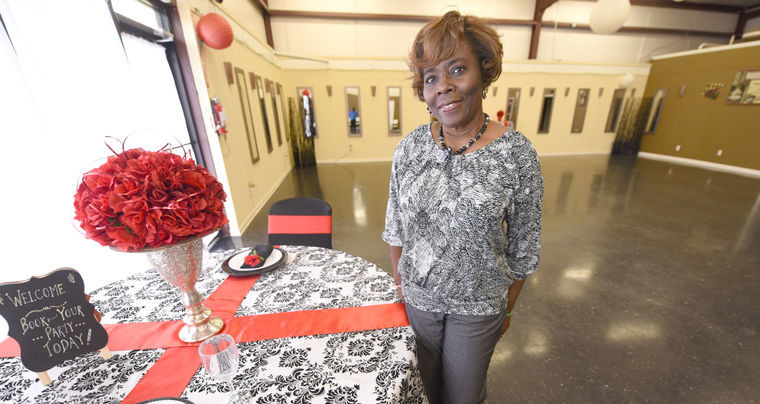
The dream career Helen Nichols said she had tucked inside her heart for more than 40 years while she served as an educator became reality a little more than a year after she retired. Nichols is the owner of Panache Events on Geneva Highway in Enterprise, across from Enterprise City Hall. The event venue, considered one of the larger such venues in the city, opened in November. Nichols is among retirees who spent time working in one occupation before retiring and either starting or working in an industry of their choosing. The Ewing Marion Kauffman Foundation‘s 2015 Kauffman Index for startup activity reported people ages 55 to 64 accounted for 25.8 percent of new entrepreneurs in 2014, up from 14.8 percent in 1996. Nichols, who retired two years ago as director of Enterprise State Community College‘s Fort Rucker campus, said she had always dreamed of having an event venue for stylish and elegant events. She said it was divine intervention after her retirement that prompted her to open Panache once she fulfilled other obligations. “I really started thinking about what it was I wanted to do,” she said. “My pastor at that time gave us a bracelet that read ‘I dare you to trust God,’ and around that same time I visited a friend’s church, where the sermon was to go ahead and do what you wanted.” Nichols’ pursuit of her dream led to the renovations of a vacant building in Enterprise, which she named Panache Events and designed in such a way to accommodate a variety of celebrations and meetings. Birthday and retirement parties, business meetings, line dancing and wine tastings are just some of the events that have been hosted there. Nichols said she derived the name from a nickname her husband gave her years ago. In addition to serving as a director of multiple programs, Nichols was also a guidance counselor, and a teacher in both secondary and postsecondary education. She said Panache Events has gained the attention of several residents near and far whom Nichols encountered throughout her years of service. “I’ve been so very fortunate that my bookings have come through word of mouth. I’m just over the moon ecstatic,” she said. “Doing this has confirmed that I have divine intervention here. God has sent people to me to help, from painting the walls to hanging my mirrors, who wouldn’t take any money for it. My contractor was recommended by someone.” Operating her business is not at all overwhelming or preventative of her plans to enjoy retirement, she said. Nichols said she works with event planner Jackie Johnson to decorate Panache each month with a different theme, and also has others fill in as necessary. “This type of venture is not taxing. I love to travel and I’m still allowed to do that. If I have something to do I just don’t book that particular day,” she said. “I also have some wonderful friends who will pitch hit for me if I’m not here.” Nichols said realizing “it’s never too late” to follow a dream has become her testimony. “If you want something, you go after it,” she said. “I determined that the worst that could happen was that if the business didn’t work, it was real estate that I could sell, but I was going to work so hard that it would be successful.” Republished with permission of the Associated Press.
House OKs bill to fund wireless networks in schools

The Alabama House of Representatives voted unanimously Thursday to approve a bill to provide $12 million in funding to help schools in rural parts of the state gain access to broadband Internet service. HB41, also referred to as the Wired Act, by Rep. Donnie Chesteen (R-Geneva), seeks to tackle a difficult problem that has left many schools behind in regard to technology. In the past, the federal government has assisted schools in purchasing computers through the E-rate program, funded through fees levied on telecommunications companies. To gain access to that money, schools have to match the funds through local dollars. Because of that, many of Alabama’s poorest schools have been unable to come up with the required matches. Currently, about 91 Alabama schools are set to miss out if they are unable to meet a deadline later this month. Chesteen’s bill pulls money from a state education technology fund in order to assist schools in matching E-rate funding. The legislation is built upon an earlier bill from Sen. Gerald Dial (R-Lineville), which failed to pass both houses when its effort to acquire a $100 million bond to fund “pen enabled tablets and mobile computers” was thought to become quickly obsolete. Chesteen’s bill also takes on another of the House GOP’s agenda items, which was to see better technology installed in rural parts of the state. However, the legislation is separate from the proposals from Gov. Robert Bentley and a Senate bill from Sen. Tom Whatley (R-Auburn), which would decrease regulations on telecommunication service providers to enhance access to broadband service in rural parts of the state. With its passage in the House, Chesteen’s bill is set to go before the Senate next week.
State education budget sees widespread support in committee hearing

The House Ways and Means Education Committee heard public remarks Wednesday regarding the Education Trust Fund budget. The budget, which centers on a bill sponsored by Rep. Bill Poole (R-Tuscaloosa), includes a series of bills that together create a package that addresses appropriations, pay raises and more. HB117 calls for, among other things, a $14 million increase in funding for Alabama’s top-ranking Pre-K program. The two-year increase in funding will amount to $24 million, bringing funding to the program to more than $60 million. The most significant increases in the education budget are reserved for K-12 programs, specifically a 4 percent pay raise for all public school employees making less than $75,000 annually. Those making over that threshold would receive a 2 percent salary increase. The bill calls for the full funding of the teachers’ retirement system and an additional $8 million for textbooks, whether hardback or digital. An additional $7 million dollars is being appropriated for transportation and an increase of $5 million for classroom technology, which will accompany the $12 million allocated via the WIRED Ahead Act. Employees with the community college system will see a 4 percent pay raise, as well a funding increase of $2 million for career technology, while university employees will receive a 1 percent pay raise. The committee members then allowed members of public, which nearly filled the meeting room on the main floor of the Statehouse, to speak for or against the measure. In all, more than 10 people spoke in favor of the measure, the majority of whom work in Pre-K and public library programs. Many of those who supported the legislation also rallied for increases to the Alabama Public Library System, noting that the program serves a wide array of students and adults through digital services. Once discussion on the budget completed, two people spoke up against HB121, also sponsored by Poole, which specifies the pay increase for public education employees. Susan Kennedy, Public Policy and Governmental Relations Manager for the Alabama Education Association, made perhaps the finest point on the need for Alabama teachers to receive a significant pay raise. Kennedy cited data showing that the rate of inflation has increased by 10.5 percent since 2009, while teachers have gone without a raise, and noted that a 5 percent raise for teachers would amount to an economic boost of about $22 million in the first year. Kennedy also brought up concerns over line items in the bill, echoed later by Rep. Patricia Todd (D-Birmingham), which have little or nothing to do with education: specifically $109 million allocated for the Supreme Court Library, the Civil Air Patrol, veterans education programs, Alabama Archives and History, and other “pet projects” specific to legislators’ districts. Though the conversation about the two bills continued for nearly two hours, the committee ended up giving a favorable report to both, as well as the accompaniment bills that specify particular items in the budget.
