
10 Alabama schools earn Let’s Move! Active Schools National Awards

Ten Alabama schools have received national awards for their outstanding leadership in creating a healthy and active school environment that promotes physical education and physical activity for students. As part of the national movement to increase physical education and physical activity in schools, the 2017 Let’s Move! Active Schools National Award is the nation’s top physical education and physical activity distinction for K-12 schools. The award celebrates a school’s commitment to providing students with at least 60 minutes of physical education and physical activity before, during, and after school each day. “The administrators, teachers, staff, and parents in these schools understand that physical education and physical activity are a must-have for students to reach their full potential in school and life,” said Charlene Burgeson, Active Schools Executive Director. “They use creativity and determination to overcome challenges and provide students with the movement opportunities they need and deserve. Studies show that active kids do better. Physical activity not only helps kids stay healthy and strong, but it can also contribute to higher test scores, improved attendance, better behavior in class, enhanced leadership skills, and a lifetime of healthy habits.” Four hundred and fifty-two U.S. schools, representing 37 states plus the District of Columbia, were recognized this year for their outstanding efforts to create an active school environment. The Alabama recipients of the 2017 award are: Chilton County School System Jemison Middle School Dothan City School System Heard Magnet School Kelly Springs Elementary School Morris Slingluff Elementary School Selma Street Elementary School Gadsden City School System Litchfield Middle School Hoover City School System Hoover High School Perry County School System Robert C. Hatch High School Sumter County School System North Sumter Junior High School Tuscaloosa County School System Huntington Place Elementary School To earn a Let’s Move! Active Schools National Award, a school must have met significant benchmarks in five areas: physical education; physical activity before and after school; physical activity during school; staff involvement; and family and community engagement. Honorees receive a congratulatory letter, certificate, and large display banner.
State Superintendent Michael Sentance submits his resignation, effective immediately
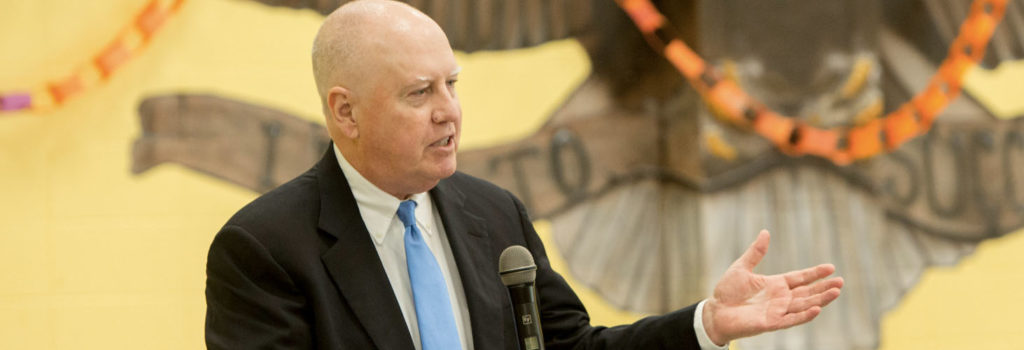
Alabama Governor Kay Ivey’s Office has confirmed that State Superintendent Michael Sentance submitted his resignation to her office Wednesday morning. “Today, I received the resignation of State Superintendent of Education Michael Sentance. I do not take this situation lightly, and as President of the State Board of Education, I will ask the Board to accept his resignation,” said Ivey who serves as President of the Board of Education. “Over the past two years, Alabama has experienced far too many changes in state government. As with previous changes in leadership positions, we will use the pending resignation of the state superintendent as an opportunity to move forward and begin a new chapter in public education.” “I have spoken with Mr. Sentance, thanked him for his commitment to public service and education, and wished him well,” Ivey concluded. Sentance was named to the position last August. With less than a full year under his belt as the State Superintendent, he found himself on the firing line in July as the Alabama Board of Education began to question his performance. Sentance, who oversaw nearly 900 employees at the Alabama State Department of Education (ALSDE), was given a performance review by the state Board of Education in July, where in received low marks. In the months that followed, Sentance has found himself at the center of a debate as to whether or not he should be removed from his position. Many expected his firing to be eminent at an upcoming regular board meeting scheduled for Thursday. Sentance’s resignation is effective immediately. “I am humbled and appreciative of the opportunity to serve as state superintendent in Alabama,” Sentance said following his resignation. “There are many good things happening in public education in this state. My hope is that Alabama makes educating all children the state’s highest priority, allowing the state to make significant educational gains and truly becoming the jewel of the south that it has the ability to become.” The Alabama Policy Institute (API) calls Sentance’s resignation a major setback for education. “At API, we are saddened to hear that Michael Sentance was forced to resign as Alabama State Superintendent of Education. We see this as a massive setback for education in Alabama,” API said in a statement. “This is not about Sentance. This is about many individuals in our state who like their starting position on a last-place team. As a state, we have to change this mentality. If we do not, we will never improve, and we will have nobody to blame but ourselves.” Succession plans have yet to be determined.
Bradley Byrne to host Secretary of Education Betsy DeVos in Mobile
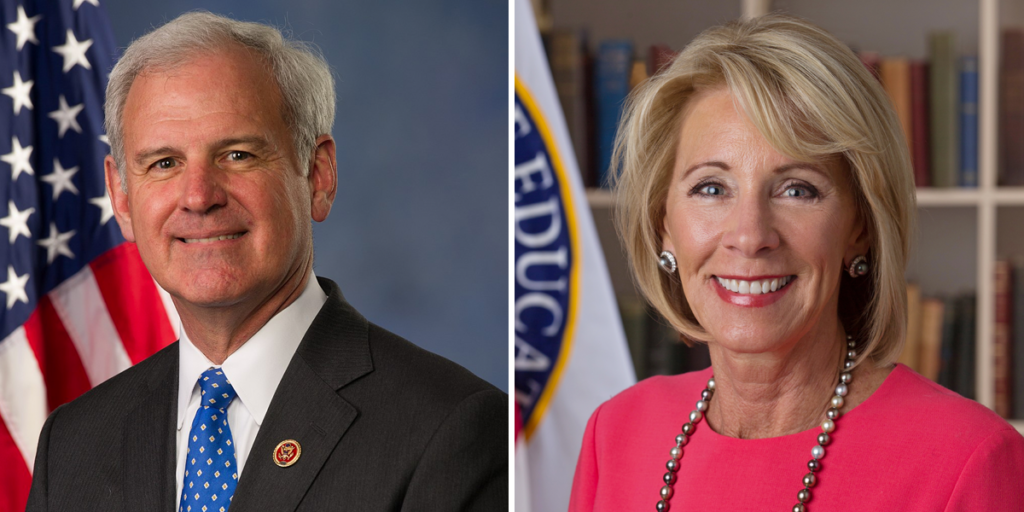
U.S. Secretary of Education Betsy DeVos is making a visit to Mobile, Ala. to visit educational institutions in the area, according to the office of Alabama 1st District U.S. Rep. Bradley Byrne. Byrne announced DeVos will spent a large part of Thursday, August 31, learning more about the range of education opportunities in Southwest Alabama. During her time in Mobile, DeVos will visit ACCEL Day and Evening Academy, Alabama’s first tuition-free public charter school; the AIDT Maritime Training Center, which helps train workers for Austal USA and other shipbuilding jobs; and Council Traditional School, a kindergarten through 5th grade school in the Mobile County School System. DeVos’ Mobile itinerary is as follows: ACCEL Day and Evening Academy: 9:30 a.m. CT Tour of AIDT Maritime Training Center: 11:00 a.m. CT Council Traditional School: 1:15 p.m. CT
Public schools grappling with Confederate names, images
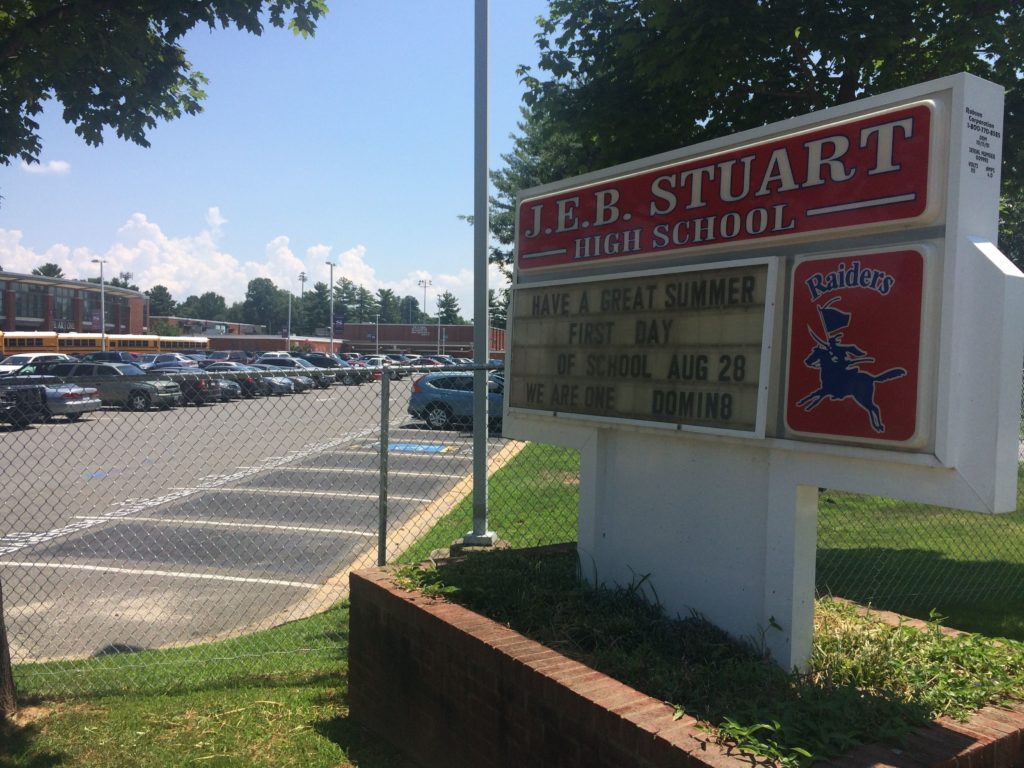
With a new school year dawning, education officials are grappling with whether to remove the names, images and statues of Confederate figures from public schools – especially since some are now filled with students of color. The violence at a white nationalist rally over a Robert E. Lee statue in Charlottesville, Virginia, is giving school officials a new reason to reconsider whether it’s appropriate for more than 100 schools to be named after Confederate generals and politicians from the Old South. “It does not make sense to have schools named after individuals who were directly connected to that dark past, and force kids in Dallas, a majority minority population, to walk into these schools every day and have to face this past every single day,” said Miguel Solis, former board president and current board member of the Dallas Independent School District. Dallas, along with other cities, began moving to change Confederate names and imagery after white nationalist and Confederate enthusiast Dylann Roof murdered nine black churchgoers in Charleston, South Carolina on June 17, 2015. But the review gained momentum after the Aug. 12 protest by white supremacists in Charlottesville, which left one counter-protester dead. “We don’t tolerate hate or discrimination of any form, and we are committed to providing an educational environment where all students can feel safe and welcomed at school,” said Superintendent Aurora Lora in Oklahoma City as she announced plans earlier this month to discuss name changes. Her city has four schools named after Confederate generals, including an elementary school named after Native American Confederate Gen. Stand Watie, who led the Cherokee Regiment of Mounted Rifles. He was the only Native American to achieve the rank of general in the Civil War and was the last Confederate general to surrender, giving up on June 23, 1865. “We want to think about the people our buildings are named after and whether they represent the values we as a district have at this time,” Lora said. According to the Southern Poverty Law Center, there are at least 109 public schools named after Robert E. Lee, Jefferson Davis or other Confederate icons in the United States. Of those, “27 have student populations that are majority African-American, and 10 have African-American populations of over 90 percent,” according to the SPLC’s 2016 report. Several school names were changed, or new schools were built and named after Confederates “during the era of white resistance to equality,” the SPLC report said. Solis said that the Confederate names in Dallas came about because of the local Ku Klux Klan. He said his effort to change school names has had “overwhelming support. That’s not to say that there haven’t been people who have been very upset because they believe either the history needs to be preserved, or they align the philosophy of the Confederacy or neo-Nazis, but for the most part I’ve gotten support.” This all comes as a wave of anti-Confederate imagery rolls across the country. Confederate statues are being taken down on college campuses and in cities around the nation, and others are being vandalized or covered. For example, the University of Texas at Austin removed four Confederate statues and Duke University removed a damaged Confederate Gen. Robert E. Lee statue earlier this month. In Charlottesville, workers draped giant black covers over the towering monument of Gen. Robert E. Lee on horseback and later a statue of Gen. Thomas “Stonewall” Jackson. The South has the majority of Confederate-named public schools in the country. In Falls Church, Virginia, the school board has voted to rename J.E.B. Stuart High School. Stuart was a slaveholding Confederate general who was mortally wounded in an 1864 battle. In Montgomery, Alabama, the school board is looking at moving Lee’s statue from the front of majority-black Robert E. Lee High School. In Arlington, Virginia, Robert E. Lee’s hometown, there is a move now to rename Washington-Lee High School. “It is time to talk about the values these names reflect and the messages we are sending to our children,” Barbara Kanninen, Arlington school board chair, said in a statement. At some schools, the push for change starts with the students. In Greenville, South Carolina, student Asha Marie started a Change.org petition to rename Wade Hampton High School. Hampton was a Confederate cavalry commander during the Civil War and was later elected governor of South Carolina and criticized the Reconstruction era which put black leaders in political office. “Racism, bigotry, and a blatant lack of patriotism,” she wrote in her petition. “These are not values of South Carolinians and should not continue to be enshrined in a place of learning.” But another student, Austin Ritter, started a counterpetition to keep the name. “There is no need to change the school’s name,” Ritter wrote. “Changing the name of this school will also change its history. It will change everything the school has stood for. Everything the school has done.” At others, alumni and outsiders are the ones sounding the call. The debate over the Stuart name change in Falls Church kicked off in earnest in 2015 when actress Julianne Moore, who attended Stuart in the ’70s, and Hollywood producer Bruce Cohen, a Stuart alumnus, launched a petition demanding the name change. In Alabama, it was a community activist who suggested moving the Lee statue out from in front of Robert E. Lee High School. Changing a school’s name is not cheap. In Oklahoma City, Lora said it could be $50,000 or more to change signage, letterhead, business cards and more for each school; Other school officials have quoted higher and lower figures. “You can make any excuse you want to try and stop something like this and dollars are what a lot of people lead with,” said Solis, who called it a “hollow argument.” Instead, people should get creative, he said, for example, in Texas possibly renaming schools currently named after Robert E. Lee after golfer Lee Trevino, allowing them to keep the “Lee” identity. In Arlington, there has been some talk among
Change.org petition calls for removal of State BOE member Ella Bell
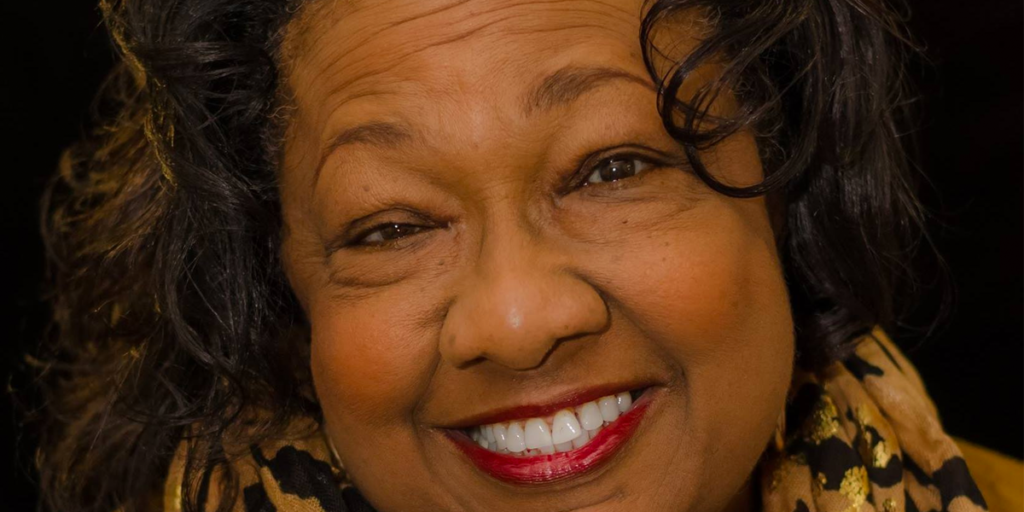
Vice-President of the Alabama Board of Education Ella Bell has found herself under fire following a June 21 board meeting in which she asked whether or not a special academy could be formed for special needs students in order to improve test scores within Alabama’s public schools. “Is it against the law for us to establish perhaps an academy on special education or something on that order,” asked Bell, “so that our scores that already are not that good would not be further cut down by special-ed’s test scores involved?” While her question didn’t draw ire on the spot, it caught the attention of Cameron Smith, a regular columnist for AL.com and vice president for the R Street Institute, a think tank in Washington, D.C. who wrote a column on Thursday saying Bell wants to “force special needs children into an institution.” Now there’s a change.org petition calling for her to immediately be removed from the board of education. Less than 18 hours after it’s creation, the petition started by Mary Catherine Hanson of Bessemer, Ala. has over 30,000 signatures. Bell claims her remarks were taken out of context. “The AL.com article with the headline stating a desire to ‘institutionalize’ special-need students takes my remarks out of context and defies the standards of objective journalism,” Bell released in a statement via the BOE on Thursday. “I never uttered the word nor have I ever considered ‘institutionalizing’ students with special needs. I asked a question about the legality of creating an academy that focuses squarely on the needs of students with intellectual disabilities. I understand how insensitive what I said must have sounded. To individuals who were offended by my remarks, no matter how well intended they were, I sincerely apologize. Watch Bell’s question at the board meeting below: https://youtu.be/q2nHaxJtFLc?t=17m38s
Betsy DeVos undeterred by critics even as agenda remains stalled
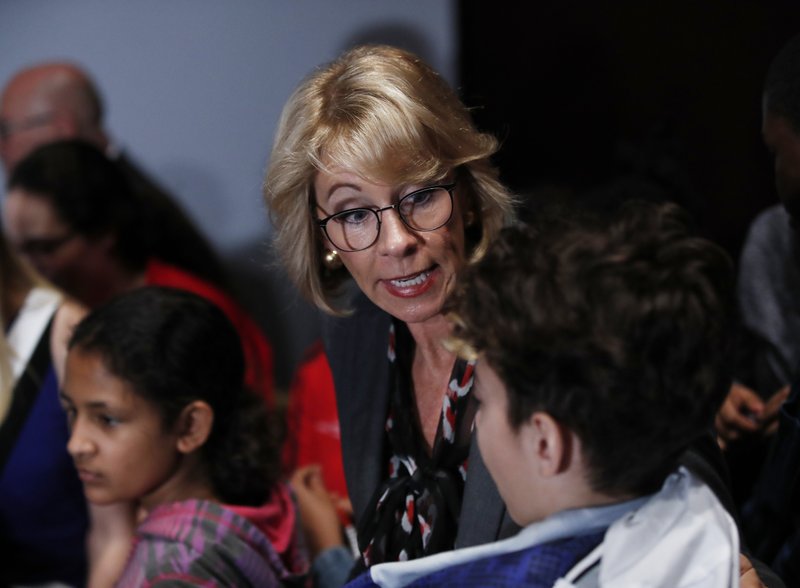
Among the paintings and photographs that decorate Education Secretary Betsy DeVos‘ sunlit, spacious office is the framed roll call from her Senate confirmation. It’s a stark reminder of the bruising process that spurred angry protests, some ridicule and required the vice president’s tie-breaking “yes” vote. Six months on the job, DeVos is no less divisive. Critics see her as hostile to public education and indifferent to civil rights, citing her impassioned push for school choice and her signing off on the repeal of some protections for LGBT students. Conservatives wish she had been less polarizing and more effective in promoting her agenda, noting that the department’s budget requests are stalled in Congress and no tangible school choice plan has emerged. DeVos is undeterred. “We have seen decades of top-down mandated approaches that protect a system at the expense of individual students,” DeVos told The Associated Press. “I am for individual students. I want each of them to have an opportunity to go to a school that works for them.” In her first comprehensive sit-down interview with a national media outlet since taking office, DeVos touched on some of the most pressing issues in K-12 and higher education. She said Washington has a role to “set a tone” and encourage states to adopt choice programs without enacting “a big new federal program that’s going to require a lot of administration.” At the same time, she confirmed that a federal tax-credit voucher program was under consideration as part of a tax overhaul. “It’s certainly part of our discussion,” DeVos said. DeVos, 59, appeared confident, but reserved during the 30-minute interview last week in her office, where photographs of her children and grandchildren and drawings and letters from young students are prominent. Large windows overlook the Capitol. Across the street, visitors lined up outside the National Air and Space Museum, which DeVos toured this year with Ivanka Trump to promote science and engineering among girls. DeVos defended her decision to rewrite Obama-era rules intended to protect students against being deceived by vocational nondegree programs, saying that “the last administration really stepped much more heavily into areas that it should not.” Liberals accuse DeVos of looking out for the interests of for-profit schools, and they point to Trump University, the president’s for-profit school that was sued for fraud. Supporters say the Obama regulations unfairly targeted for-profits and failed to track students’ long-term careers. The decision by the departments of Education and Justice to roll back rules allowing transgender students to use school restrooms of their choice enraged civil rights advocates, who said already vulnerable children could face even more harassment and bullying. Conservatives saw DeVos fulfilling a promise to return control over education issues to states, cities, school districts and parents. “We really believe that states are the best laboratories of democracy on many fronts,” DeVos said. On the issue of school choice, DeVos was resolute. Another major flashpoint: charter schools, which are publicly funded but usually independently operated, and voucher programs that help families cover tuition at private schools. They’re often criticized for a lack of transparency, and studies about their effectiveness have produced mixed results. DeVos disagrees. “I think the first line of accountability is frankly with the parents,” she said. “When parents are choosing school they are proactively making that choice.” For DeVos, who spent more than two decades promoting charter schools in her home state of Michigan, the closure of some low-performing charters was evidence of accountability. “At the same time, there have been zero traditional public schools closed in Michigan for performance and I think that’s a problem,” she said. DeVos got off to a rocky start in the Trump Cabinet. She was satirized for some of her gaffes during the confirmation hearing, such as saying that guns are needed in schools to protect students from grizzly bears. Teacher unions accused her of seeking to privatize public education. Parents and teachers jammed Congress phone lines to oppose her nomination. It took Vice President Mike Pence‘s historic vote – the first by a vice president to break a 50-50 tie on a Cabinet nomination – to secure her position after two Republican senators defected. DeVos is still sometimes met with protesters at public events, and her security detail has been bolstered at an additional cost of $7.8 million. But DeVos isn’t retreating. She actively advocates for school choice, once comparing education to ride-sharing services such as Uber and Lyft, and saying that parents, like riders, need options. Of the 17 K-12 schools that she has visited so far, only seven were traditional public schools. DeVos didn’t attend public school herself or send her children to a public school. Randi Weingarten, president of the American Federation of Teachers, said in a recent speech that DeVos was a “public school denier” and quipped that DeVos can start talking about school choice even in reply to a simple greeting. Conservatives say she may have oversold. “She has made things harder for herself by acting as the secretary for school choice instead of the secretary of education,” said Mike Petrilli, president of the conservative Thomas B. Fordham Institute. “She has missed the opportunity to make it clear that she wants to see all schools succeed.” Moderates are upset. “I have feared that in trying to rush in with a simplified notion of choice – that she will love charters to death,” said Robin Lake, director of the Center on Reinventing Public Education, a pro-charter group. “At this point, six months in, I don’t see any evidence that we are farther along on helping with achievement, equity, with moving the country forward.” Asked to name some of the strengths of public schools that she has observed in her job, DeVos said only that she is “a very strong supporter of public schools.” “But we also need to encourage schools, public schools that are doing a great job to not rest on their laurels but to continue to improve because unless you’re constantly oriented around
An array of different kinds of school voucher programs

More than half the country has a school choice program that enables families to use public money to send their children to private school. The programs vary by name, structure and eligibility requirements, but most are geared toward low-income families. In 2015, less than 1 percent of children in kindergarten through high school used vouchers to attend private schools. A look at some of the different types of school choice programs: — VOUCHERS State money in a per-student amount is reallocated and given to a chosen private school where the child is accepted. That money would have otherwise been given to the public neighborhood school that holds the responsibility to educate the student. The only federal voucher program is in the District of Columbia. — TAX-CREDIT SCHOLARSHIPS The programs generally allow private nonprofit groups to solicit taxpayers, primarily businesses, to contribute to their scholarship fund in exchange for state tax credits. The money is considered a charitable donation and the state deducts the amount, sometimes dollar-for-dollar, from the contributor’s tax bill. Families can then apply for a scholarship and the private nonprofits pay the private schools directly. States’ roles are deliberately limited to get around restrictions on using public money for private schools. — EDUCATION SAVINGS ACCOUNTS Public funds are placed in a government-administered “savings account” that families can use to pay for a wide range of education costs, from tuition and tutoring to transportation and textbooks. Republished with permission of The Associated Press.
Records: Student-loan forgiveness has halted under Donald Trump

The U.S. Education Department has not approved any applications for student-loan forgiveness in cases of possible fraud since President Donald Trump took office, according to records sent to an Illinois senator. Democratic Sen. Richard Durbin released those records Wednesday and blasted the department for its inaction and for a June decision to delay and rewrite Obama-era rules that would have made it easier for students to get loans forgiven if they were deceived by their schools. “This response shows that while the Department of Education has illegally delayed the new borrower defense rule, it has also stopped processing federal student loan relief under current regulations for tens of thousands of defrauded borrowers,” Durbin said in a statement. “The department can’t ignore these borrowers any longer.” Department officials did not immediately respond to a request for comment. Durbin and four other Democratic senators sent a series of questions to the department on May 17 amid concerns that the pipeline to student-loan forgiveness had stalled under the Trump administration. Also signing the letter were Sen. Patty Murray of Washington, Sen. Chuck Schumer of New York, Sen. Sherrod Brown of Ohio, and Sen. Elizabeth Warren of Massachusetts. Under President Barack Obama, the department approved more than 28,000 claims for loan forgiveness from former students of Corinthian Colleges, a chain of for-profit colleges that closed in 2015 amid accusations that it falsified job-placement data and altered student grades. Those claims topped $558 million. But in the letter responding to Durbin’s questions, Acting Under Secretary James Manning wrote that “no borrower defense applications have been approved between Jan. 20, 2017, and today.” The records also revealed that the department has continued to receive new applications from borrowers who say they were victims of fraud. In total, the department said it received nearly 15,000 applications between Jan. 20 and July 5, mostly from Corinthian borrowers and from former students of ITT Technical Institute, a chain that closed last year. The number of new applications is likely to swell even further, experts say, amid a campaign by many state attorneys general to notify students who might be eligible for loan relief. Overall, the department said there are more than 65,000 pending claims for relief. Although most come from Corinthian and ITT students, others are from people who attended schools that are still in operation, including DeVry University and the University of Phoenix. Many advocacy groups and some Democrats in Congress have urged the department to clear the backlog, saying the delay has left thousands of borrowers strapped with debt that’s eligible to be erased under existing federal rules. In June, Education Secretary Betsy DeVos said that “promises made to students under the current rule will be promises kept” and added that her office was working to discharge more than 16,000 loans that were previously approved to be erased under Obama. But in the same announcement, DeVos unveiled plans to rewrite an Obama-era regulation known as the borrower defense to repayment rule, which aimed to quicken the path to loan forgiveness when schools commit fraud, and to hold those schools financially responsible. DeVos called it “a muddled process that’s unfair to students and schools.” Since then, the department has released little information about its progress, and questions sent to a spokeswoman have gone unanswered. Even top officials in the department aren’t being briefed on the progress, according to the records sent to Durbin. The letter from Manning says that while the department “is in the process of establishing reports including borrower defense information, there are currently no regularly produced reports provided to senior officials. Information is provided upon request.” Borrowers who are awaiting a decision from the department have continued to accrue loan interest, which the department revealed amounts to $143 million. And while most borrowers are given a grace period from their loan payments while they wait, the department said it has expired for “fewer than 50 borrowers” and that “these are exceptions.” But over the next six months, the period is set to expire for 31,000 borrowers. Manning wrote that those borrowers “could have their forbearances extended if their applications are still pending.” Republished with permission of The Associated Press.
Shenanigans afoot at State Ed Board?
With less than a full year under his belt as the State Superintendent, Michael Sentance has found himself on the firing line as the Alabama Board of Education decides the fate of his future in the position. Sentance, who oversees nearly 900 employees at the Alabama State Department of Education (ALSDE), will be under review Tuesday in a special-called meeting by the board. There, they will decide whether or not Sentance stays in the position. Ahead of Tuesday’s meeting, board members were asked to submit evaluations of the superintendent months ahead his scheduled December review. The request came as a surprise to many members, who said there was no mention of the early evaluation at their July 11 board meeting. “I believe it is a move to try to unseat him. I believe that this was demanded of us after the last board meeting,” Board member Mary Scott Hunter told WHNT News 19. “If this was so urgent we could have discussed it at the last board meeting, it was not discussed, it was not voted upon.” Despite his lack of time in the position, Sentance has made great strides to turn Alabama’s failing school systems around. Since he beat out five other educators from across the country for the position last August, he’s: Created a new advisory group of educators, which will provide a direct avenue of communication with the state superintendent to discuss important issues regarding education; Taken over the 27 failing public schools in Montgomery; Received permission from the federal government to allow for standardized testing flexibility as the state drops the ACT Aspire test for its students in favor of an alternative test; Currently, Sentance’s contract runs through Dec. 31, 2018, but with a simple majority vote the board may terminate his contract at any time. If he were to be let go, he would receive any remaining salary for the balance of his contract for that specific calendar year. When Yellowhammer News asked Sentance if he believes there’s an effort to get rid of him, he said, “Yes, it is true that some people are working very hard to try to remove me from the position.” Sentance did not respond to Alabama Today’s request for comment.
Tuition to increase for Alabama Community College System students
Students attending Alabama’s 25 two-year colleges will see tuition rise 1.4 percent in the upcoming academic year. The Alabama Community College System‘s board of trustees approved tuition rates per credit hour to increase $2 to $119 for Alabama residents and $234 for nonresidents. Students at Marion Military Institute and the Alabama Technology Network will not be affected by the tuition increase. Trustee chairman Al Thompson called the rate hike “modest” saying it’s part of an annual adjustment first established by the Alabama Board of Education. More than 83,000 students are enrolled within the state’s two-year college system.
Mary Scott Hunter to Betsy DeVos: Keep your promises to the states
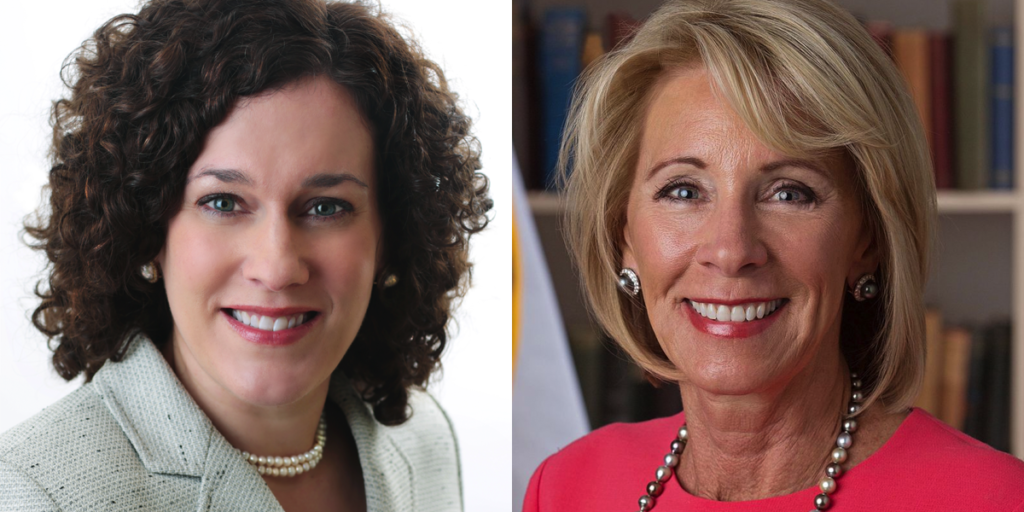
Despite being one of President Donald Trump‘s most controversial nominees, U.S. Department of Education Secretary Betsy DeVos had the “qualified” support of Alabama State Board of Education member Mary Scott Hunter from the jump. Now Hunter is putting her support of DeVos to the test. On Friday, she sent a letter to DeVos asking for standardized testing flexibility as the state seeks to drop the ACT Aspire test for its students in favor of alternative tests. Earlier this year, the DeVos called for states and local school districts to have greater say in education standards and issues, citing the Every Student Succeeds Act (ESSA) as the way to allow more local control. However, when Sentenace followed the ESSA approval process and submitted the state’s education plans to the federal government, the U.S. Department of Education rejected it. But Hunter is not taking “no” for an answer. Earlier this month, Alabama Superintendent of Education Michael Sentance requested flexibility from using ACT Aspire testing while we develop an Alabama test that is right for us. Over the last several years we have worked hard to implement rigorous standards that will best prepare our children and youths for living and working in the 21st century. We have shaped these standards with Alabama’s values in mind while keeping our eyes on what today’s students will need to thrive in the decades to come. At this point our best option is to receive a waiver for next year’s standardized test,” the letter continued. “This would allow us time to develop a test that aligns to our Alabama standards, is rigorous, and properly informs instruction. Alternately, we could use existing formative assessments to determine student growth. If your Department does not grant the waiver there is a strong likelihood we will administer three different summative tests in three years, Aspire this past year, a different test next year, and yet another test the year after next. Obviously this is very undesirable for both our students and teachers. Standardized testing is extraordinarily difficult. Getting it right has implications for Alabama for decades to come. We need time to do that. At the time of publishing, the U.S. Department of Education has yet to grant a waiver to Alabama. Read Hunter’s full letter below:
Alabama receives $100K Farm to School grant to buy more local produce

Alabama students will be seeing more locally grown produce on the school menus next school year thanks to a newly awarded $100,000 grant from the U.S. Department of Agriculture (USDA). Designed to increase the availability of local foods in schools, USDA Farm to School grants can help farm to school programs get started or expand existing efforts. “Increasing the amount of local foods in America’s schools is a win-win for everyone,” said USDA Secretary Sonny Perdue. “Our children benefit from the fresh, local food served in their meals at school, and local economies are nourished, as well, when schools buy the food they provide close to home.” The state’s Farm to School Cooperative — a coalition of state and community partners including the Alabama Department of Education, the Foodbank of North Alabama/Farm Food Collaborative, the Alabama Farmers Federation, Feeding the Gulf-Coast Food Bank, food hubs, Druid City Garden Project, and EAT South — was one of 65 projects recipients from across the country of the USDA’s 2017 Farm to School Grant. The co-op encourages schools to serve fresh, locally grown fruits and vegetables to students, implement hands-on education in school gardens, and provide nutrition and agriculture education. Specifically, the state will use grant funds to assist farmers with GAP certification, revise the Alabama farm to school website, develop a state-wide promotional campaign, and support school garden curriculum development. The Tuscaloosa-based Druid City Garden Project, part of the coalition, will utilize funds to facilitate building mobile cooking units for schools to engage students in cooking demonstrations with produce grown in school gardens. “The Alabama Farm to School Collaborative provides farmers an opportunity to develop relationships with the students in their local schools districts,” commented Alabama Agriculture Commissioner John McMillan. “Not only do the students enjoy locally grown food, but now they can make a connection to the person who grew it for them.”
