
Kay Ivey awards $1.89M to help victims of domestic violence, elder abuse

The Alabama Governor’s Office announced $1.89 million in grants funding to support organizations and programs that help victims of domestic violence and elder abuse throughout the state. Gov. Kay Ivey made the announcement on Friday. “No one should ever have to experience the horrors of domestic violence or elder abuse, but there is hope for those who unfortunately do become victims,” Ivey said. “The programs supported by these grants will help ensure that professional assistance is available and that justice is obtained for the survivors.” The grants breakdown $1.56 million grant: awarded to the Alabama Department of Human Resources to support their Adult Protective Services division that provides emergency in-home services and temporary placement option for victims of abuse, neglect or exploitation. Two grants, totaling $250,781: given to support the Alabama Coalition Against Domestic Violence as they serve their member programs and shelters throughout the state. The organization provides training, education and outreach on domestic violence issues, and their member shelters provide counseling, support groups and other vital services. $80,000 grant: allotted to help the Alabama Office of Prosecution Services to train law enforcement personnel, prosecutors, domestic violence shelter staff and other criminal justice agencies that investigate and prosecute abusers or assist victims of domestic violence. The Alabama Department of Economic and Community Affairs (ADECA) is administering the grants from multiple funding sources, including the U.S. Department of Justice, the state’s General Fund and the Domestic Violence Trust Fund, which was created through the state marriage license fee. Those funds are used to provide shelter for victims and to conduct educational and prevention programs. “Gov. Ivey understands the important roles these agencies play in helping domestic violence and elder abuse victims,” ADECA Director Kenneth Boswell said. “ADECA is pleased to join her in supporting these programs that provide important assistance to victims at a time they need it the most.”
Alabama ranks 2016’s 10th worst state in elder-abuse protections

America has become an increasingly aging nation. The U.S. Census Bureau expects the population aged 65 and older to nearly double from 43.1 million in 2012 to 83.7 million in 2050, much to the credit of aging Baby Boomers who began turning 65 in 2011. That’s bad news for those aging in Alabama — the state is ranked one of the worst in elder-abuse protections in the country, according to a new online report. A new Wallethub study shows out of the 50 states and the District of Columbia, Alabama ranked 10th worst in protections against elder abuse. Alabama ranked poorly when it comes to eldercare organizations and services per resident aged 65+, total long-term care ombudsman-program funding per resident aged 65+, number of certified volunteer ombudsmen per resident aged 65+, among other measures used to gauge the state’s level elder-abuse protection. Here’s how Alabama stands on some key metrics studied by WalletHub: Elder-ebuse protections in Alabama (1=best; 25=avg.) 20th: Elder-abuse, gross-neglect and exploitation complaints per resident aged 65+ 27th: Total expenditures on elder-abuse prevention per resident aged 65+ 35th: Total long-term care ombudsman-program funding per resident aged 65+ 35th: Number of eldercare organizations and services per resident aged 65+ 49th: Number of certified volunteer ombudsmen per resident aged 65+ 20th: Nursing-homes quality Here’s how Alabama compares to the rest of the country: Source: WalletHub
Elder abuse nightmares driving state petition push for visitation reform
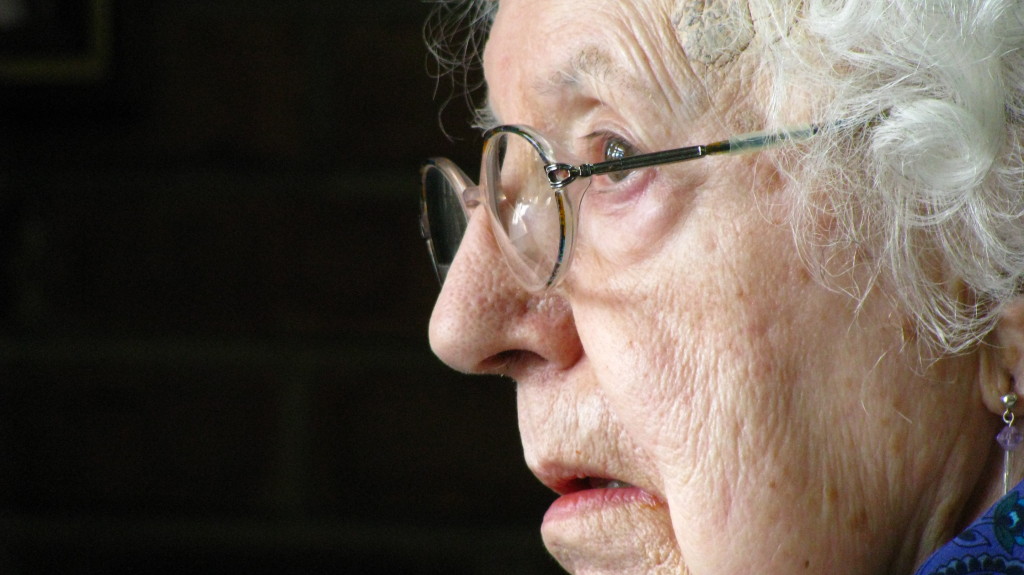
An Alabama woman is calling on state lawmakers to pass a bill to protect the rights of adult children of elders under the guardianship of others to visit their aging parents. Carrie Ford – who started a petition on Change.org Saturday addressed to Sen. J.T Waggoner and Rep. Ronald Johnson – says in her appeal she was prevented under current state law from seeing her father, who as a ward of the state had been left in a bad way and isolated from his family. In recent years, I wasn’t allowed to go through the gates at Liberty Park to visit my father, Robert G. Ford, MD. I was stopped by security,” wrote Ford. “I had not seen my father in over 2 years, until March 9th, when my sister and I became aware that he was left in a 12,000 foot square house alone, and he has Alzheimer’s Disease.” She wrote he was subjected to squalid conditions with no recourse. “My father had no working phone, no food in the pantry or frig, no bed that he could access, no toilet paper, no hot water and no heat. He stayed at a local hospital for 6 weeks,” Ford’s appeal continues. The story is familiar to elder law observers around the nation. Ford invoked the Kasem Cares – founded by the daughter of radio legend Casey Kasem – which advocates for just the kind of reforms Ford is calling for, including guarantees that children of elder patients will have access to their parents. Kasem Cares has gotten results recently, passing versions of their model “Visitation Bill” in Iowa, Texas and California. Ford hopes she can get the same kind of momentum going in Alabama. “You can do your part to end the silent epidemic of elder abuse by taking the pledge to stand up against elder abuse,” Ford wrote. “There are 10,000 people who are turning 65 each and every day (Pew Research Center), and we are rapidly approaching a time where nearly 50% of the population will be 65 or older. Together, we can end the silence of elder abuse by standing united and raising our voices against this growing problem.” As of press time, the petition was 32 percent of the way to its goal of 100 signatures.
