
Trump Returns to Washington to Face a Pair of Challenges
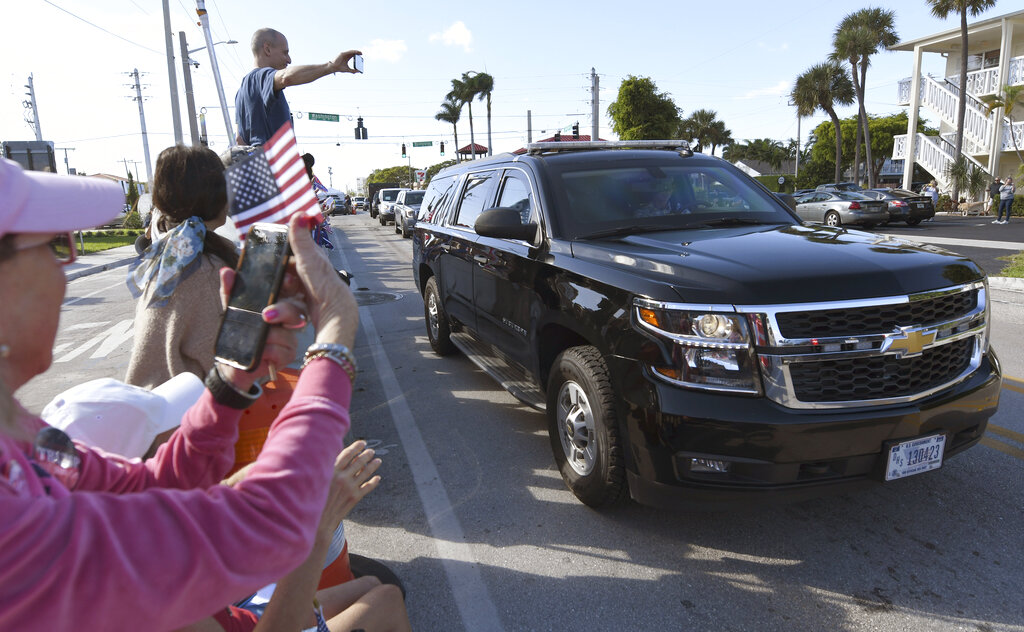
Donald Trump faces a new crisis in the Middle East and an upcoming Impeachment Trial.
Iowa Democrats propose ‘virtual’ caucuses in 2020
The Iowa Democratic Party on Monday proposed the biggest changes to the state’s famed caucuses in nearly 50 years by recommending Iowans be able to participate virtually. If approved, the measure would allow people to caucus using telephones or smart devices during the days leading up to the Feb. 3 caucus night. It’s a dramatic shift from the current system in which caucusgoers have to physically show up at a site — often a school, church or community center— and show their support for presidential candidates by standing in groups. If the group doesn’t meet an established threshold, the participants have to select another candidate. It’s an often chaotic process that plays out before banks of television cameras on an evening that formally ushers in the presidential primary season. But proponents say it will help address criticism that the caucuses are difficult to attend for single parents, people who work at night and the elderly. “Through this additional process we’re going to be able to give more Iowans a chance to participate in this process,” Iowa Democratic Party Chairman Troy Price said. “Whether someone is a shift worker, a single parent, in the military, living overseas or experiencing mobility issues, this process will now give these individuals a voice in selecting the next president of the United States.” And while Price says the proposed changes are the state party’s effort to open the process often described by critics as antiquated, it was also required by the Democratic National Committee. The results are Iowa Democrats’ attempt at threading the needle of complying while maintaining the essence of the caucuses, which are real-time meetings of fellow partisans. Presidential candidates are already beginning to swarm the state — three were here this weekend. They’ll likely try to determine whether a virtual caucus would help them turn out more of their supporters. “I suspect presidential campaigns who we’ve shared this information with are going to be trying to figure out how to get their members to participate in this,” Price added. Party officials said they didn’t know how many people would take advantage of the new format or how campaigns might seek to capitalize on it. A key element of the proposal, which now goes before Iowa Democrats to comment on for 30 days, is that, no matter how many Iowans participate virtually, their contribution will be factored as a flat 10 percent of the total turnout, apportioned by congressional district. Price said officials reached 10 percent as a starting point, uncertain of how many people might join virtually. “This is a new system so we don’t have any data to tell if this number is too high or too low,” Price said. “And so we are starting the conversation at the 10 percent threshold, and if it goes gangbusters this year, then we will have conversations in subsequent years about if we need to make adjustments.” Hillary Clinton, the 2016 Democratic presidential nominee who narrowly beat Vermont Sen. Bernie Sanders in Iowa that year, criticized the caucus process for deterring late-shift workers and others less able to steal away for an evening of political wrangling. “Campaigns must decide how to organize for that 10 percent,” said veteran Iowa Democratic caucus operative Jeff Link, who did not work for Clinton in 2016 and is not affiliated with a candidate heading into 2020. In another noteworthy development, the state party said it would release the raw data of preferences by caucusgoers, information that is typically kept confidential. The caucuses are a series of preference tests in which candidates without a certain level of support are rendered unviable. This data would give a first glimpse of the candidates’ support before caucusgoers abandon their first choices to side with more viable contenders. The Iowa caucuses are scheduled for February 3, 2020. The proposal won’t be finalized until the spring. Republished with permission from the Associated Press
2020 Democratic primary field puts diversity in spotlight
The early days of the Democratic primary campaign are highlighting the party’s diversity as it seeks a nominee who can build a coalition to take on President Donald Trump. Of the more than half dozen Democrats who have either moved toward a campaign or declared their candidacy, four are women: Sens. Kirsten Gillibrand of New York, Kamala Harris of California and Elizabeth Warren of Massachusetts and Rep. Tulsi Gabbard of Hawaii. Harris is also African-American. Former Obama Cabinet member Julian Castro, who is Latino, has also joined the race. And on Wednesday, Democrat Pete Buttigieg, the 37-year-old mayor of South Bend, Indiana, jumped into the campaign. If he wins the Democratic nomination, he would be the first openly gay presidential nominee from a major political party. He would also be the youngest person ever to become president if he wins the general election. The diversity is likely to expand in the coming weeks as other Democrats enter the race. The field that’s taking shape follows a successful midterm election in which Democrats elected a historically diverse class of politicians to Congress, a pattern they’d like to repeat on the presidential scale. Neera Tanden, president of the liberal Center for American Progress Action Fund, hailed the Democrats’ multiple trailblazing candidates for reflecting that “the central opposition to Trump is around a vision of the country that’s inclusive of all Americans.” “A lot of different people are going to see that they can be part of the Democratic Party” thanks to a field that showcases women, candidates of color, and the first potential LGBT nominee, Tanden said. The primary “hopefully will bring a lot of people into the process,” she added, recalling the high number of voters who engaged in a 2008 Democratic primary that featured a possible female nominee, Hillary Clinton, and the man who would become the first black president, Barack Obama. The array of backgrounds was on display Wednesday when Buttigieg spoke in personal terms about his marriage. “The most important thing in my life — my marriage to Chasten — is something that exists by the grace of a single vote on the U.S. Supreme Court,” Buttigieg told reporters. “So I’m somebody who understands — whether it’s through that or whether it’s through the fact that I was sent to war on the orders of the president — I understand politics not in terms of who’s up and who’s down or some of the other things that command the most attention on the news but in terms of everyday impacts on our lives.” Gillibrand has put her identity as a mother at the core of her campaign, and Harris launched her campaign on this week’s Martin Luther King holiday, a nod to her historic bid to become the first black woman elected president. A number of high-profile candidates remain on the sidelines, including two who would further bolster the diversity of the 2020 field: Sens. Cory Booker of New Jersey, who is black, and Amy Klobuchar of Minnesota. Booker, who’s widely expected to join the presidential fray in the coming days, visited the pivotal early-voting state of South Carolina this week for public events honoring King and private meetings with local activists. Klobuchar is set to speak at the University of Pennsylvania on Thursday about her work on the Senate Judiciary Committee, where Booker and Harris also are members. The affable Midwesterner recently told MSNBC that her family “is on board” if she opts to run in 2020, though she’s offered little clarity about her timetable to announce a decision. Though Klobuchar would be the fifth major female candidate in the Democratic primary, female candidates shouldn’t be shoehorned into a “narrative” dominated by their identity that excludes the policies they’re championing, said Virginia Kase, CEO of the League of Women Voters. Kase pushed back at one popular 2018 narrative in a recent interview, noting that that “every year is the year of the woman — the reality is that we’ve always been major contributors” in the electoral process. Rashad Robinson, executive director of the civil rights-focused nonprofit Color of Change, said in an interview that the diversity of the Democratic field is “a great thing and we should celebrate it,” adding that, “Our work is always about changing the rules — changing the rules of who can run and who can rule and who can lead is incredibly important.” But in addition to those “unwritten rules,” Robinson pointed to the urgency of changing the “written rules” of American life, adding that “diversity alone does not mean structures and policies and practices that have held so many back will change” overnight. Meanwhile, three white male candidates who could scramble the race — former Vice President Joe Biden, Sen. Bernie Sanders of Vermont, and former Texas Rep. Beto O’Rourke — are still weighing their own presidential plans. Biden addressed a key vulnerability in his potential candidacy this week by publicly airing regret about his support for a 1994 crime bill that’s had particularly negative effects on African-American communities, while Sanders built his own new connections to black voters during a trip to South Carolina. As Biden mulls a run for president, his allies have been sending supporters a memo that could serve as a rationale for a campaign. The memo hails Biden’s long track record in politics and argues that at a time of “unprecedented political chaos” during Trump’s administration, Biden would offer “trustworthy, compassionate leadership.” O’Rourke, for his part, continues to gauge his own future amid pundits’ criticism about blog posts he published during a recent road trip through multiple states. The 46-year-old Texan acknowledged that he’s been “in and out of a funk” following his departure from Congress after losing a high-profile Senate race in November, sparking questions about the luxury of his indecision given the family wealth and network of passionate backers he can lean on. As the Democratic field is poised to become more diverse, Republicans say Trump will run for re-election based on his
Pete Buttigieg enters race for 2020 Democrat presidential nomination
Democrat Pete Buttigieg, the 37-year-old mayor of South Bend, Indiana, says he’s forming an exploratory committee for a 2020 presidential bid. “The reality is there’s no going back, and there’s no such thing as ‘again’ in the real world. We can’t look for greatness in the past,” Buttigieg says in a video that includes before-and-after footage of South Bend, a Rust Belt city once described as “dying.” “Right now our country needs a fresh start,” he says. Buttigieg has touted his work to improve his city of 100,000 residents as he’s prepared for a jump from local politics to a presidential campaign. He’s also said Democrats could benefit from a new generation of leaders as they try to unseat President Donald Trump in 2020. He’s expected to travel to Iowa next week to meet with voters in the nation’s first caucus state, followed by stops in New Hampshire. Buttigieg is a Rhodes scholar who was first elected mayor of his hometown in 2011 at age 29, making him the youngest mayor of a U.S. city with at least 100,000 residents. A lieutenant in the Navy Reserve, he served a tour in Afghanistan in 2014. Buttigieg raised his national profile with an unsuccessful 2017 run for Democratic National Committee chairman, saying the party needed a new start. He withdrew from the race before a vote when it became clear he didn’t have the support to win. Buttigieg has spent time in Iowa and other battleground states in recent years as he tried to build financial support and name recognition. He cracks that those who do know his name still aren’t sure how to pronounce it. (It’s BOO’-tah-juhj.) Most of the time he goes by “Mayor Pete.” Amid his campaign for a second term, Buttigieg came out as gay in a column in the local newspaper. He went on to win re-election with 80 percent of the vote. In 2018, three years to the day after the column ran, he married his husband, middle school teacher Chasten Glezman. If he were to win the Democratic nomination, Buttigieg would be the first openly gay presidential nominee from a major political party. Buttigieg announced in December that he wouldn’t seek a third term as mayor, stoking speculation he would join a field of roughly two dozen candidates who may seek the Democratic nomination for president — most of them better known and with experience in higher office, and all of them older. “I belong to a generation that is stepping forward right now,” he says in the video released Wednesday. “We’re the generation that lived through school shootings, that served in the wars after 9/11, and we’re the generation that stands to be the first to make less than our parents unless we do something different. We can’t just polish off a system so broken. It is a season for boldness and a focus on the future.” Buttigieg is releasing in February a book about his life and his tenure leading South Bend. Republished with permission from the Associated Press.
Judge dismisses Troy King’s lawsuit against Steve Marshall
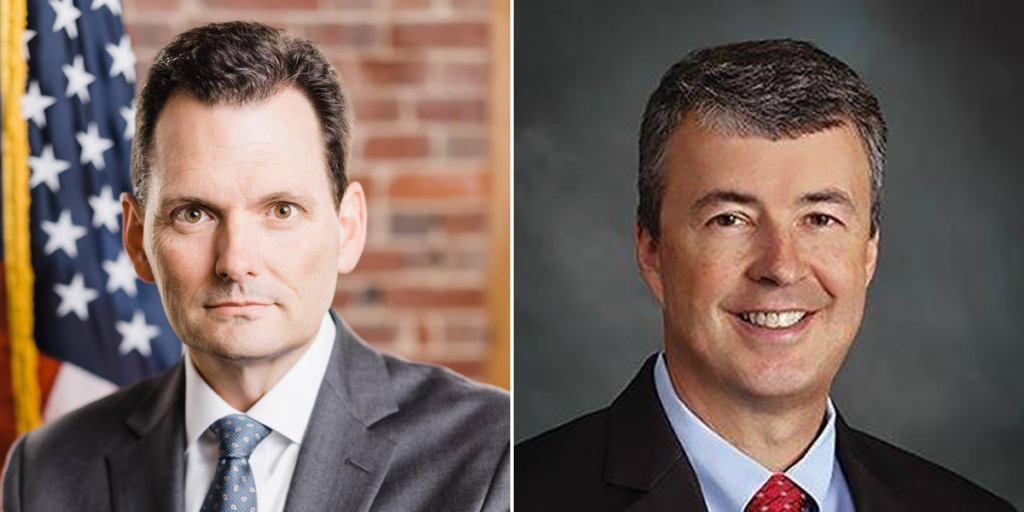
Attorney General candidate Troy King’s efforts to stop his opponent Steve Marshall’s ability to spend questionable campaign donations fell apart on Thursday when a Montgomery judge, Circuit Judge James Anderson, dismissed a lawsuit King filed against Marshall. It all began Monday, when in an eleventh hour effort kit announced a lawsuit he filed against Marshall — just one week before voters hit the polls to cast their ballots in the primary runoff election on July 17. King alleged that Marshall accepted $700,000 from the Republican Attorneys General Association (RAGA) political action committee and that the group uses money from other PAC’s to fund their own PAC; violating Alabama’s PAC to PAC money laws. King then sued Marshall on Wednesday, attempting to deter Marshall from spending the contributions. “Now, during the 2017 election cycle, according to RAGA’s public filings with the Internal Revenue Service, the RAGA’s PAC has again accepted a number of contributions from other PACs, including, earlier this year, nearly $16,000 from the J.P. Morgan PAC plus another $50,000 in PAC contributions in the last quarter of 2017. RAGA’s PAC has now, during the election cycle, made hundreds of thousands of dollars of contributions to Steve Marshall for Alabama, Inc,” said King’s lawsuit, according to WHNT. But Thursday afternoon a Montgomery judge, Circuit Judge James Anderson, dismissed the lawsuit, and denied King’s request for a restraining order against Marshall. “Anderson said the Republican PAC is federally regulated and questioned how he and state law would have jurisdiction over transfers that happened in another state,” the Associated Press reported. After the ruling, Marshall’s campaign released a statement accusing King of abusing the judicial process to stage a political stunt. “He did so routinely as AG and Republicans fired him in 2010 because of it,” the Montgomery Advertiser reported. “We are glad the court has confirmed this and look forward to getting back to the issues Alabama voters actually care about in the final days of this campaign.”
Steve Flowers: Primary runoffs next week

Well folks, if you vote in the Republican primary you may want to go back to the polls next week and finish selecting the GOP nominees for several important state offices. If you are a Democrat the only reason you will need to vote on Tuesday is if you have a runoff in a local race and there are very few of those around. We are still a very red Republican state. There are 29 elected statewide officials in Alabama. All 29 are held by Republicans. When all the votes are counted in November, that 29 out of 29 figures will more than likely be the same in the Heart of Dixie. The Blue wave has not reached here. There were twice as many Republican voters, 590,000 to 283,000, as Democratic voters on June 5. In addition to having all 29 state offices held by Republicans, six out of seven of our members of Congress are members of the GOP. That will also remain the same when the dust settles in the fall. The only contested Congressional race is for the Second District, which encompasses most of the Montgomery River Region, including Elmore and Autauga Counties, coupled with the Wiregrass. It is a very conservative district. Therefore, it is a Republican seat. The winner of the GOP runoff between Martha Roby and Bobby Bright will be the Congressman. Whichever one is elected will vote consistently conservative with the GOP leadership in Congress. Roby is on the ropes because she vowed openly, two years ago, that she would not vote for Donald Trump for President. That unnecessary display of disloyalty has made her very unpopular in the district. Trump has a 90 percent approval rating among Republican primary voters in southeast Alabama. She would have lost two years ago if the primary had been held after her statement. There was an unprecedented number of write in votes against her. She has been considered very vulnerable since that time. National special interests stuck to their script and stayed loyal to the incumbent and loaded her up with Washington money. She was able to outspend her four male opponents by an over 2 to 1 margin. However, she fell short in the primary garnering about 38 percent. Bobby Bright received 27 percent and is well known and liked in the district. However, President Trump’s endorsement of Roby three weeks ago may have wiped the slate clean for Roby and given her a clear path to reelection. Winning the Republican nomination for Attorney General and Lt. Governor in Alabama is still pretty much tantamount to election in Alabama, although the Democrats have a viable candidate for Attorney General in young Joseph Siegelman in November. Don Siegelman’s son Joseph along with youthful Tuscaloosa mayor, Walt Maddox, have viable chances of winning as a Democrat in November. The GOP race for Attorney General has been the best contest in the primary season. Troy King began the race as the favorite and will probably prevail next Tuesday. There were four formidable horses in this race. King has previously served as Attorney General and therefore was perceived as the incumbent. Bentley appointee Steve Marshall had been a Democratic DA for a while. This one will boil down to who votes. In a GOP runoff, only the hardcore Republican base will vote. Those voters will not be excited about Steve Marshall who was appointed by Robert Bentley and as late as a few years ago was expediently a Democrat who was appointed by Don Siegelman. In fact, he voted for and contributed to Barack Obama. My guess is that folks will vote for Troy King, a lifelong Republican. The race for Lt. Governor will be close between Twinkle Cavanaugh and Will Ainsworth. This contest has attracted more attention and money than ever. The odds say that there is a 50-50 chance that whoever wins this contest next Tuesday will ascend to Governor over the next few years. Our current governor moved from Lt. Governor to Governor without being elected. It has happened more than once over the past few decades. If you vote on Tuesday, you will be in a pool of about 10 to 12 percent of voters. Therefore, if you show up, your vote will be enhanced exponentially. See you next week. ••• Steve Flowers is Alabama’s leading political columnist. His weekly column appears in over 60 Alabama newspapers. He served 16 years in the state legislature. Steve may be reached at www.steveflowers.us.
In special election to replace Micky Hammon, single digit turnout expected
A special election is being held in Morgan and Limestone counties Tuesday to replace former Rep. Micky Hammon for the Alabama House District 4 seat. Election officials say they expect voter turnout to be in the single digits. “I think people are just set on June 5 and I think they’ve just forgotten about this one,” chief clerk in the Morgan County Probate Office, Kate Terry told Decatur Daily. Hammon was removed from office last year after pleading guilty to using campaign funds for personal expenses in September. He was then ordered to forfeit nearly $51,000 for reimbursement to those who had donated to his campaign. Hammon was then sentenced to three months in prison, and three years supervised released for felony mail fraud in February of this year. Three candidates, Democrat Juanita Allen Healy, Republican Parker Duncan Moore and independent Polan “Pete” Willis Jr. are seeking to replace hammon. The winner of the special election must immediately begin campaigning again for the November election, to win a full four-year term. Moore will face Tom Fredricks in the June 5 primary, although he defeated Fredricks in the special February Republican runoff. Healy is chairwoman of the “One Decatur” comprehensive plan project, and has been a Decatur resident for 13 years. Lifelong Decatur resident, Moore is also a member of the Development Council with Huntsville Hospital, and is currently the North Alabama Marketing Representative for Encore Rehabilitation. Independant Willis is sending in a petition to get on the ballot. A business owner, Willis has operated an Aerospace Manufacturing firm in Priceville since 1982.
Alabama Senate election results: Roy Moore vs Doug Jones

Democrat Doug Jones has bested Republican Roy Moore in a nail-biter of an Election night in race to fill the U.S. Senate seat previously held by Attorney General Jeff Sessions. As of 9:38 p.m. CT Jones has 0.8 percentage points over Moore with 93 percent of precincts fully reporting. The Associated Press called the race in favor of Jones with 89 percent of precincts reporting. Alabama is a deeply conservative, red state. But Moore has found himself under fire since The Washington Post published an explosive report on Nov. 9 with the accounts of four women who claim he sexually pursued them when he was in his 30s and they were in their teens. Since that time, a total of nine women have levied accusations against Moore. While Moore has vehemently denied the allegations, his campaign has remained mired in controversy, creating an opening for a possible upset by Jones. Polls closed at 7 p.m. CT. Updated at 9:38 p.m. CT.
Blake Dowling: 2018 is coming, time to tighten up voter tech

Only in the world of politics can an election take place with both sides claiming they got the W. In college football, it’s simple; you win or you lose — unless you are a Tennessee fan, then you get to be a “champion of life.” I am sure Tennessee Coach Butch Jones meant well when he muttered those words last year, but come on man. Back to politics. The special election (Karen Handel versus Jon Ossoff) in Georgia’s 6th Congressional District this week had everyone chattering. Democrats say it was a close race in the heart of a deep-red district, meaning great things for 2018. Republicans say they won even though they were outspent 5-1. Regardless of your position, the Republican Party did “Handel” the competition. (Nice name, Karen; campaign slogans are endless.) If I were her campaign manager, we would fire up crowds with the Black Crowes’ “Hard to Handle” blasted before every event. However, one thing unheard (for once) is technology interfering with the election. Apparently, Russia doesn’t care about what goes on in Georgia. A ZDNet headline this week said this: “198 million Americans hit by ‘largest ever’ voter records leak.” Which is interesting because the potential exposure was discovered by a security expert and locked down before the information was leaked or stolen. Was this a fake news headline, pure clickbait? Here’s what went down. A company named Deep Root Analytics tracks voter information — not just names and addresses, but how the voter feels about issues — compiled using specific social engineering software (see my next column in INFLUENCE Magazine for a trip down that rabbit hole). Deep Root had a terabyte of data sitting on an Amazon server that was potentially easy to breach. That was bad. On the bright side, it was good that the breach was discovered by a white-hat hacker before that info spilled. Keep in mind, however, in states like Ohio you can already access every voter (names, addresses, etc.) in the state without needing to hack anything. So, another massive leak was avoided (maybe). Our voter tech is behind, as is everything else we are plugging into the internet without giving it much thought. This is called the “Internet of Things.” For example, on the homefront: “Good news, Mrs. Wife! I can control our air conditioning through my iPhone!” Is it password protected? No? FAIL. You just created another vulnerability making both you and your data a big target. We, as Americans, regardless of political opinion or party affiliation, must band together to put a massive defensive strategy in place to keep the really bad guys out when 2018 rolls around. Old voting machines … exposed servers in the cloud … external hard drives with unencrypted data … using free Wi-Fi without passwords … ransomware … threats are everywhere and we must “Handel” this situation with care. HAHAHA! ___ Blake Dowling is CEO of Aegis Business Technologies. His heroes are Bill Murray and Megan Fox and can be reached at dowlingb@aegisbiztech.com.
Presidential Primary Brief: 182 days until Election Day
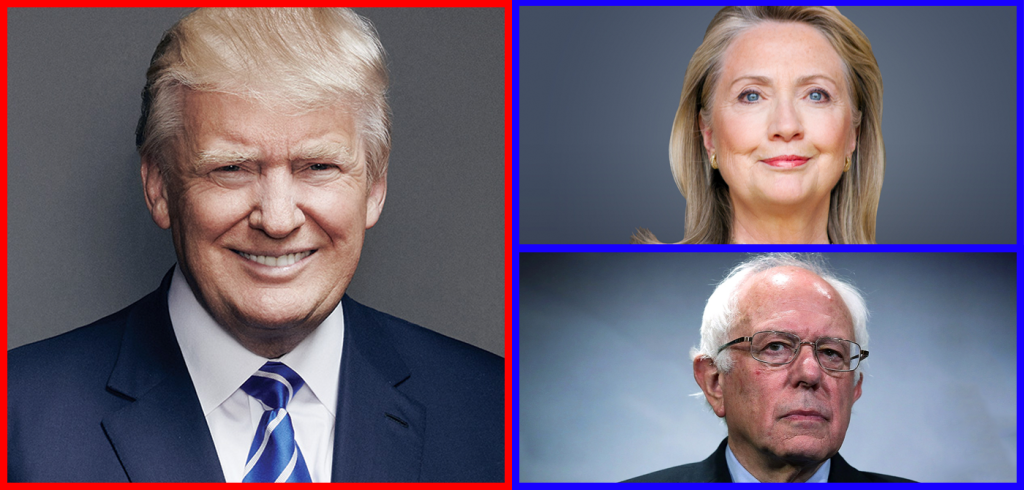
182 days until Election Day Convention Dates: Republican July 18-21 2016, Democratic July 25-28 2016 Weekly Headlines: John Kasich suspends campaign for President Ted Cruz suspends his campaign for President Donald Trump says wealthy may see tax increase Press Clips: The GOP’s 24 hour meltdown (Politico 5/8/16) Donald Trump on Tuesday night assumed the mantle of presumptive nominee and declared: “We want to bring unity to the Republican Party. We have to bring unity.” Three days later, the GOP is tearing itself apart. Friday brought another day of incredible division and revolt with Jeb Bush and Lindsey Graham falling in line not behind Trump, but behind House Speaker Paul Ryan, who said a day earlier that he cannot yet support the brash real estate mogul as his party’s standard-bearer. Trump, instead of trying to make peace, lashed out. He fired off a vicious statement, calling Graham an “embarrassment” with “zero credibility.” Then he laced into both of his former rivals during his rally in Omaha, Nebraska, where he is continuing to campaign ahead of Tuesday’s primary, despite having vanquished the rest of the GOP field. Donald Trump’s latest campaign shifts are not likely to be his last (LA Times 5/8/16) One of the top reasons voters have flocked to Donald Trump’s campaign has been because the tough-talking businessman “tells it like it is,” polls have shown. But what, exactly, Trump stands for has become a shifting picture of policies and proposals that even he acknowledged Sunday may not produce the promised outcomes. It’s not just that the billionaire’s ideas are vague by traditional political standards: bring back jobs, build a “beautiful” wall, “make America great again.” The political newcomer does not appear grounded in an ideology beyond assuring that America is “winning.” Hillary Clinton Says She Is Available for F.B.I. Interviews Over Emails (NY Times 5/8/16) Hillary Clinton said Sunday that the F.B.I. had not asked to interview her as part of its inquiry into her use of a personal email server as secretary of state. But Mrs. Clinton reiterated on CBS’s “Face the Nation” that she would make herself available to law enforcement officials as necessary. The investigation into Mrs. Clinton’s email practices and her handling of classified intelligence has shadowed her presidential campaign, and CNN reported last week that she was likely to be interviewed soon by the F.B.I. Mrs. Clinton said on Sunday that no meeting had been requested or scheduled. Trump: My tax plan is negotiable (Politico 5/8/16) Presumptive GOP presidential nominee Donald Trump said in an interview aired Sunday his tax plan was negotiable, explaining that taxes for the wealthy needed to “go up” — a stance that appears to contradict what’s in his plan. “For the wealthy, I think, frankly, it’s going to go up. And you know what, it really should go up,” Trump said on NBC News’ “Meet the Press.” His said his tax plan, which would lower tax rates for the wealthiest Americans, would be the opening bid of a negotiation with Congress and that his numbers were a “Floor.” Bernie Sanders rides ‘political revolution’ with thousands in N.J. (NJ.com 5/8/16) He’s down but not out, and his supporters are charged up. The math isn’t on U.S. Sen. Bernie Sanders’ side when it comes to securing the Democratic nomination, but thousands of eager supporters welcomed the underdog White House hopeful to New Jersey on Sunday and enthusiastically cheered on to “Light back and make a political revolution.” The cheers that filled the room and echoed off the walls of Rutgers University’s Louis Brown Athletic Center in Piscataway turned into roars of support when Sanders preached Lighting income inequality, the war or drugs and racial discrimination. “We have come a very long way in the past year,” Sanders said. “Real change is coming to America.” Nevada has option to vote ‘none of the above’ in 2016 presidential election (Las Vegas Now 5/4/16) The presidential race has narrowed and the only candidates still vying for the nomination are Hillary Clinton, Bernie Sanders and Donald Trump. Trump’s the only candidate in the race for the GOP, but for a lot of Republicans, he’s not their first choice. “I vehemently oppose our nominee in some of the comments and issues that he brought up during the campaign,” said U.S. Senator Dean Heller, R-NV. “Things he said about Muslims; issues he brought up about women and the Hispanic community — I just cannot agree with some of his positions, but I will tell you that I will not be voting for Hillary Clinton. I stated that early on, I will not be supporting a candidate that is nothing more than a third term of the Obama administration. So I will be looking else where in November.” Trump: I don’t know how people make it on $7.25 an hour (Politico 5/8/16) Donald Trump said in an interview aired Sunday he wants to see the minimum wage increased but would rather it be done by the states than the federal government. The presumptive GOP presidential nominee’s openness to increases in the minimum wage is a reversal from his previous stance that the minimum wage should not be raised, including when he famously pronounced during a debate last year that wages were “too high.”
Early polling results indicate big wins for incumbents
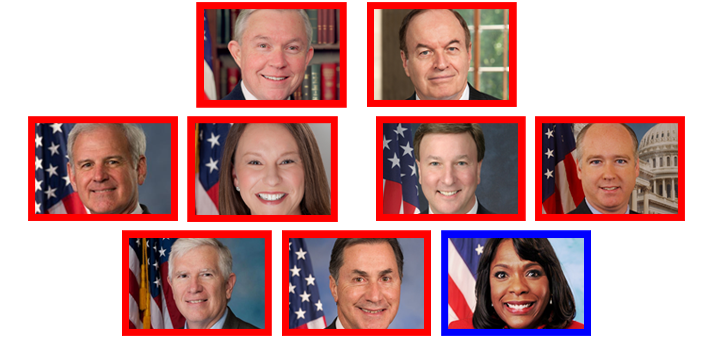
8:15 p.m – With polls having closed just a little over an hour ago, election results from the Secretary of State’s website indicate that incumbents will likely hold on to their seats in the U.S. Senate and House of Representatives. Though only nine of Alabama’s 67 counties are currently reporting, Sen. Richard Shelby is keeping a strangle hold on his seat. Of 6,017 ballots cast thus far, Shelby has collected a dominant 4,248, or 70.6 percent. His closest opposition is newcomer Jonathan McConnell, who has collected 1,294 votes, or 21.5 percent. On the Democratic side, Charles Nana is currently leading Ron Crumpton by more than 14 percentage points. Neither Democrat has made much of a showing leading up to today’s elections, but it had seemed that Crumpton would be leading the race. In much the same fashion, Rep. Martha Roby is leading Wetumpka Tea Party founder Becky Gerritson in the U.S. House District 2 race , with 74.48 percent of the vote compared to Gerritson’s 20.28 percent. Likewise, Reps. Bradley Byrne and Mo Brooks, U.S. House Districts 1 and 3 respectively, are trouncing their opponents by wide margins – in Rogers’ case, nearly 50 percentage points. Rep. Robert Aderholdt is also dominating his opponent with 82 percent of the vote in the U.S. House District 4 race.
Scott Walker’s record as governor takes hits this year
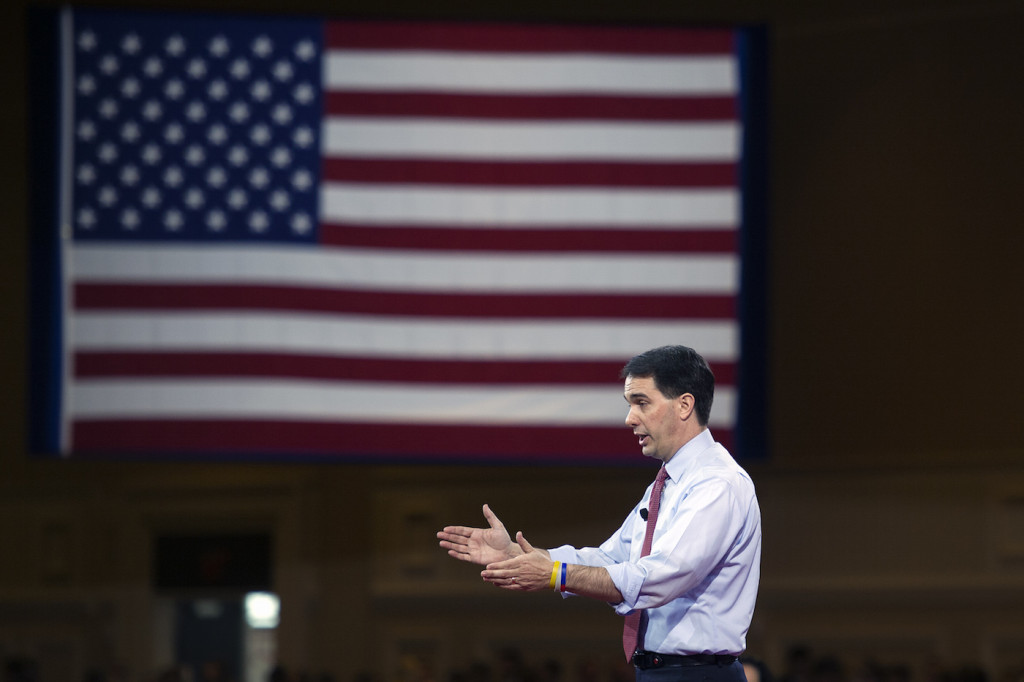
While Scott Walker‘s fellow Republicans groused about his budget plan and part of his proposal to overhaul higher education, the governor was more than 1,000 miles away, gripping the wheel of the Mt. Washington cruise boat on New Hampshire’s Lake Winnipesaukee. When lawmakers met Monday night to reach a final deal on other elements of that budget, the likely presidential candidate was in Canada on his fourth international trip in less than five months. Absentee governors are part of the political landscape when a presidential campaign begins and some want to run. There’s no getting around the need to raise money, make national appearances and organize early in important states. What may distinguish Walker, though, is the grief he’s getting from his own party. One GOP lawmaker has dissed his spending plan as a “crap budget,” and it gets worse than merely a rhetorical slap. While Walker has been courting voters, party activists and donors in advance of his expected announcement that he’s running for the 2016 party nomination, state GOP lawmakers, in concert with Democrats, have crushed some of his biggest ideas this year. That works against one clear advantage governors such as Walker can take to national politics: a record of achievement in public policy that many candidates coming from the Byzantine, often gridlocked chambers of Congress can’t match. Walker played into that theme this past week in addressing a Utah retreat held by 2012 nominee Mitt Romney. Walker said flatly of senators in the presidential race: “They have yet to win anything and accomplish anything.” That was a dig at Sens. Marco Rubio of Florida, Ted Cruz of Texas and Lindsey Graham of South Carolina. In Wisconsin, however, lawmakers voted to restore money the governor wanted to cut for K-12 schools. They rejected his proposed changes to a popular prescription drug program for Medicaid recipients, scrapped a merger of state agencies he wanted, and voted against the governor’s plan to make the University of Wisconsin system independent of state laws and oversight. Walker has benefited from a state Senate and Assembly controlled by Republicans his entire four-plus years as governor. When he won re-election in November, he predicted that decisive action on his budget by the enlarged Republican majorities in the Legislature would serve as a contrast to a dysfunctional Washington. “We’re going to be even more aggressive now because I think we have an even stronger ally in the Legislature,” Walker told the Cabinet. Now it’s a struggle to find agreement on Walker’s proposed $1.3 billion in borrowing for roads, likely to be reduced, and a financing plan for a new $500 million arena to keep the Milwaukee Bucks from leaving the state. “We may have a crap budget, but we’re going to make it better,” freshman Republican state Rep. Rob Brooks told fellow lawmakers in May. Walker says he’s as engaged as ever on the budget, and talks with his chief of staff more than a dozen times a day, no matter where he is. “The budget is a priority for us,” Walker said this month. But it’s clear he will not get as much as he proposed back in February, or have it done faster than usual. None of this has stopped Walker from making the rounds in early voting states such as Iowa, South Carolina and New Hampshire. In late May, he courted party activists aboard a sunset dinner cruise as a legislative committee back home rejected his plan to give the University of Wisconsin more independence or cut state support for it by $300 million. But the panel did agree on $250 million in cuts to the 26 campuses, including the flagship in Madison. “We are bowing to the pressure of a guy on a boat in New Hampshire,” Democratic state Sen. Jon Erpenbach said during that debate. “He’s not out there extolling the virtues of his idea of cutting $300 million from the university system because he’d probably be thrown off the boat. You don’t brag about the cuts.” The committee also kept Walker’s call to remove tenure protections from state law, a proposal that’s garnering attention nationally from academics who fear weakening tenure protections will catch on elsewhere. Even with delays and squabbling, Walker is likely to walk away with some big wins: on lifting an enrollment cap on statewide private school vouchers, on new drug screening for public aid recipients and on lower property taxes. Those are all sure-fire crowd-pleasers on the Republican presidential circuit. At least in Walker’s view, he’s getting enough done so that he could tell his lake cruisers: “If we can do it in a blue state like Wisconsin, we can do it in the Granite State and all across America.” Republished with permission of The Associated Press.
