
Cory Booker launches 2020 bid
U.S. Sen. Cory Booker on Friday declared his bid for the presidency in 2020 with a sweeping call to unite a deeply polarized nation around a “common purpose.” The New Jersey Democrat, who is the second black candidate in a primary field that’s already historically diverse, delivered his message of unity amid an era marked by bitter political division. He announced his run on the first day of Black History Month, underscoring his consequential status as America’s potential second black president after Barack Obama. “I believe that we can build a country where no one is forgotten, no one is left behind; where parents can put food on the table; where there are good-paying jobs with good benefits in every neighborhood; where our criminal justice system keeps us safe, instead of shuffling more children into cages and coffins; where we see the faces of our leaders on television and feel pride, not shame,” Booker said in a video message to supporters, subtly jabbing at President Donald Trump. “It is not a matter of can we, it’s a matter of do we have the collective will, the American will?” he added. “I believe we do.” Booker enters what’s shaping up to be a crowded presidential primary, with three of his fellow Democratic senators — Elizabeth Warren of Massachusetts, Kamala Harris of California and Kirsten Gillibrand of New York — already either declared or exploring a run. But he’s spent months telegraphing his intentions to join the race, visiting the early-voting states of Iowa, New Hampshire and South Carolina to build connections with key powerbrokers. He already has slated trips back to those states later this month. Booker began reaching out to key constituencies Friday, calling in to three radio shows popular with black and Hispanic listeners. He spoke in fluent Spanish during his interview with Univision, vowing to work closely with “the Latino community,” and discussed his support for marijuana legalization in another interview. Later on Friday, Booker will be a guest on “The View,” a TV talk show popular with female viewers, where his mother plans to sit in the audience. A former mayor of Newark, New Jersey’s largest city, Booker won a special Senate election in 2013 to replace Democrat Frank Lautenberg and then won a full Senate term in 2014. He will be able to run for a second full Senate term in 2020 while running for president, thanks to a law that New Jersey’s governor signed in November. But that doesn’t mean the 49-year-old’s path to the nomination will be easy. As many as five more Democratic senators could soon mount their own primary bids, creating a competition for voters’ attention, and several of Booker’s rival presidential hopefuls bring higher name recognition to a race that may also feature popular former Vice President Joe Biden. The affable Booker, known for his fluency in connecting with voters during an age of selfies and social media, also could face some difficulty winning the hearts of the Democratic base due to his past financial ties to banking and pharmaceutical interests. Booker said he would stop taking contributions from pharmaceutical companies in 2017, the year that he partnered with potential presidential rival Sen. Bernie Sanders of Vermont on a bill that would allow importation of prescription drugs from Canada. He also likely will stand alone as an unmarried candidate, though he brings a compelling personal biography that could help elevate his message that “the only way we can make change is when people come together.” Booker’s father grew up in a low-income community in North Carolina, and the senator has recalled his family’s later struggle to settle in suburban New Jersey amid discrimination against black homebuyers. The senator has brought a heartfelt and passionate style to his achievements in the Senate, at times fusing his personal spirituality with policy proposals that focus on social justice. Booker played a key role in the bipartisan criminal justice reform bill that Trump supported last year, for example, helping strike that deal two months after sparring with Republicans during the battle over Supreme Court Justice Brett Kavanaugh’s confirmation. In his announcement video, Booker invoked the fight against slavery and the role of immigration in building the nation’s character. “The history of our nation is defined by collective action; by interwoven destinies of slaves and abolitionists; of those born here and those who chose America as home; of those who took up arms to defend our country and those who linked arms to challenge and change it,” he said. Born in the nation’s capital but raised in New Jersey, Booker made a name for himself as Newark mayor by personally shoveling the snow of residents. He has $4.1 million left in his campaign coffers that could also be used to assist his presidential run. Rather than opening an exploratory committee to test the waters, Booker took the direct step to open a campaign seeking the Democratic nomination. Booker is aligning with many other prominent Democratic White House contenders by forswearing all donations from corporate political action committees and federal lobbyists to his campaign, dubbed Cory 2020. A prominent Booker supporter, San Francisco attorney Steve Phillips, says he is working on millions of dollars in committed donations to a so-called super PAC that would boost the senator’s candidacy, but Booker’s campaign is openly against super PACs playing any role in the presidential race. Booker visited his local congregation at Metropolitan Baptist Church in Newark on Thursday night for prayers ahead of his Friday announcement, a decision that underscores the role his faith will play in his campaign. He has attended service at the church since moving to Newark in 1996. Booker’s campaign manager will be Addisu Demissie, who managed California Democratic Gov. Gavin Newsom’s campaign last year and previously worked on Hillary Clinton’s 2016 presidential bid. His deputy campaign manager, Jenna Lowenstein, is also a veteran of Clinton’s 2016 campaign, while his current Senate chief of staff, Matt Klapper, will serve as a senior campaign adviser.
2020 Democrats building ties to power brokers in key states
Before he cut the $100,000 checks, Los Angeles Mayor Eric Garcetti brought the Democratic Party chairmen from Iowa, New Hampshire, South Carolina and Nevada backstage to meet late night television host Jimmy Kimmel and superstar hip-hop producer DJ Khaled. Garcetti may not be the best-known 2020 presidential prospect, but he will not be forgotten by those who lead Democratic politics in the states most responsible for picking the party’s next presidential nominee. After the star-studded California fundraiser late last month that featured 10 state-party chairmen, followed by a private dinner, Garcetti issued $100,000 checks to each of their state parties. It was the money, more than the celebrity, that impressed New Hampshire Democratic Party Chairman Ray Buckley. “Obviously, to those who are helpful, we are extraordinarily grateful,” Buckley told The Associated Press. “So many of our states are battling epic elections.” Many of the Democratic Party’s most ambitious have begun building relationships on the ground in the states most responsible for picking the next presidential nominee, although few are doing it as brazenly as the Los Angeles mayor. Most are more quietly endearing themselves to local candidates with phone calls, emails and donations up and down the ballot across Iowa, New Hampshire, South Carolina and Nevada, the states expected to host the first four presidential primary contests in roughly 15 months. The early-state relationships require a delicate balance for those who want to stand out in a crowded field next year without neglecting the high-stakes midterm elections this fall. Control of Congress and state houses across the nation is up for grabs in just three weeks. Sen. Cory Booker of New Jersey has raised more than $7 million and campaigned across 21 states for other Democratic candidates this midterm season, according to an aide. He also attended a family reunion with extended relatives in Iowa last week before and after stumping for dozens of down-ballot candidates for offices like secretary of agriculture and state auditor. Booker, who is openly contemplating a 2020 bid, campaigns for South Carolina Democrats on Thursday. Sen. Elizabeth Warren of Massachusetts is in the midst of her own re-election campaign, as well as a midterm blitz to help other Democrats nationwide win their races. While she has not yet campaigned for Democrats in neighboring New Hampshire, she was among the first elected officials to call gubernatorial candidate Molly Kelly on the night of her primary election victory. Warren has also designated staff to help candidates in the early states, including former staffers now working for state parties in New Hampshire and South Carolina. In Iowa, congressional candidates J.D. Scholten and Cindy Axne got a campaign boost from former Housing Secretary Julian Castro last weekend; Sen. Bernie Sanders of Vermont is expected to rally supporters behind Scholten later this month. Iowa Democrat Deidre DeJear, the party’s nominee for secretary of state, has attracted support from several presidential prospects, none more helpful than California Sen. Kamala Harris. They met in Los Angeles at an April event sponsored by The Links, a service organization dedicated to black professional women. Their bond has grown since. On the day of her June primary, DeJear got a phone call of encouragement from Harris before narrowly winning her race, becoming Iowa’s first black nominee for statewide office from a major political party. The California senator attended a fundraiser for DeJear in Washington and later this month plans to make her first trip to Iowa to rally young voters on DeJear’s behalf. “Having big names in Iowa really can drive people to early vote, drive people to volunteer — it’s just an extra level of excitement,” said Cynthia Sebian-Lander, DeJear’s campaign manager. “What we need to do is use these visits as a way to talk about our down-ballot candidates and the importance of voting in every single race.” Beyond Iowa, Harris has raised more than $1 million over the first 15 days of October to help Democratic candidates, according to an aide. She has traveled to 10 states and plans to travel to South Carolina late this week. Sen. Kirsten Gillibrand of New York, who has spent much of the year working to help elect female candidates across the country, has sent out nine emails to raise money for Nevada Senate candidate Jacky Rosen. Gillibrand took 20 minutes during the recent Supreme Court debate to address Nevada Democrats, via teleconference. “What you’re doing in this campaign could flip the Senate,” the New York Democrat said in a video projected on the wall. “I think that Jacky’s seat is one of the most important, if not the most important seat.” While it may seem early, political veterans note that off-year elections can be critical in the multistage process of running for president. While President Donald Trump ignored laying such groundwork and found success, relationships in the early states are expected to matter — particularly in a field that could attract as many as two dozen candidates. In addition to the young senators, the early prospects range from former Vice President Joe Biden to attorney Michael Avenatti to Washington Gov. Jay Inslee to South Bend, Indiana, Mayor Pete Buttigieg. Garcetti is using his southern California connections to try to separate himself from the pack. Already a frequent visitor to early voting states, he got the idea for a glitzy Los Angeles event after raising $100,000 for the South Carolina Democratic Party. Garcetti ultimately helped raise $1.5 million at the late-September fundraiser in Los Angeles with Kimmel and Khaled that also attracted top California moneymen such as LinkedIn co-founder Reid Hoffman, sports and entertainment executive Casey Wasserman and former Disney Chairman and CEO Michael Eisner. Ten state parties received $100,000 checks, a group that included the early states and Midwestern battlegrounds like Michigan, Minnesota, Ohio, Pennsylvania and Wisconsin. Former South Carolina Democratic Party chairman Jaime Harrison said he’s encouraged to see the energy surrounding the early-state action. “I think this going to be a free for all,” he said. Republished with permission from the Associated
Joe Biden not planning on 2020 bid but will ‘never say never’
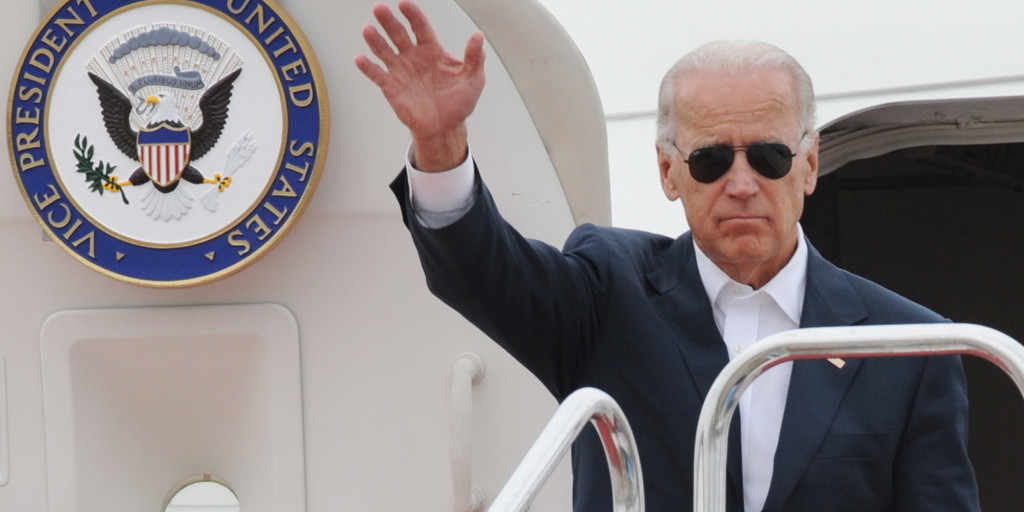
Vice President Joe Biden is continuing his coy approach to a possible 2020 presidential bid. For now, it’s no. The Democrat told Stephen Colbert on CBS’ “Late Show” Tuesday, “I don’t plan on running again, but to say you know what’s going to happen in four years is just not rational.” He added, “I can’t see the circumstance in which I’d run, but what I’ve learned a long, long time ago, Stephen, is to never say never.” The comments came a day after Biden said, with a slight smile to a reporter, “I’m going to run in 2020.” Biden told Colbert his decision not to run in 2016 was right for his family, even though he was “best prepared at this moment to lead the country.” Republished with permission of The Associated Press.
Still reeling, Democrats begin battling for future
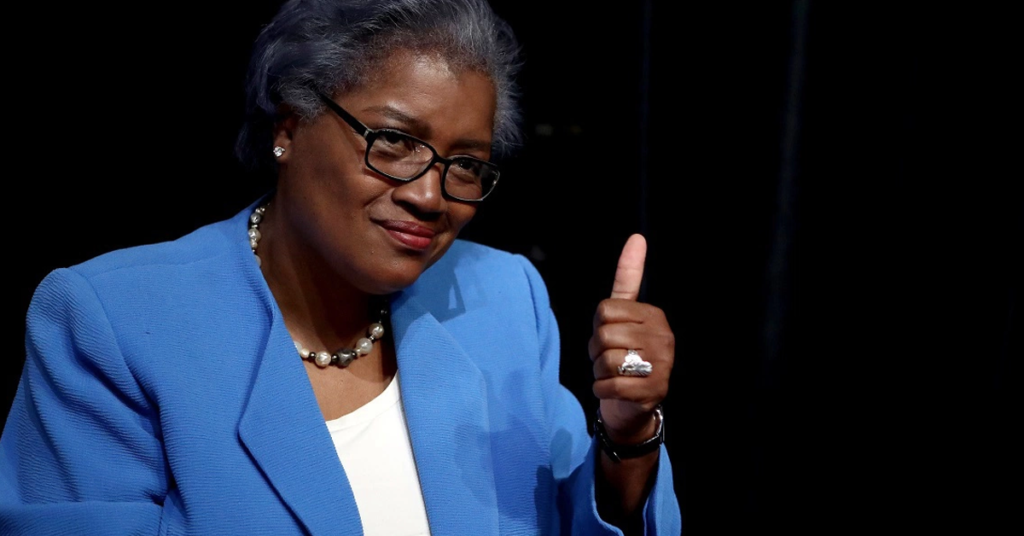
Still reeling from a devastating defeat in last week’s election, Democrats are beginning the process of charting the direction of their party in the Donald Trump era. With Hillary Clinton and her team staying out of the public eye, liberal politicians have begun jockeying for control of the party’s future. While they all backed Clinton, they’re now pushing for a serious shift in the party’s policy positions, financial resources and grassroots organizing to focus more on motivating their base and winning back the white working class voters who went for Trump. “We have to do a lot of rethinking,” said Vermont Sen. Bernie Sanders, who mounted a fierce challenge to Clinton in the primary. “Democrats are focused too much with a liberal elite, which is raising incredible sums of money from wealthy people,” Sanders said on CBS’s “Face the Nation.” The Democratic National Committee, the last bastion of party power in Washington, is quickly emerging as ground zero for the fight. After losing the White House and Congress – and likely the ideological tilt of the Supreme Court – the Democrats’ new chief likely will be one of the party’s most visible faces in politics, making the role a far more influential post than it was during the Obama administration. Already, around a dozen Democrats’ names have been publicly floated to succeed interim chairwoman Donna Brazile, who replaced Florida Rep. Debbie Wasserman Schultz in July after she was caught up in a hacking scandal. Minnesota Rep. Keith Ellison, a prominent progressive and the first Muslim elected to Congress, has emerged as an early contender, backed by much of the party’s liberal wing. He’s also picked up support from several key Democratic leaders, including outgoing Senate Democratic leader Harry Reid and Reid’s likely replacement, New York Sen. Chuck Schumer. Ellison was expected to officially announce his bid on Monday. His supporters argue that Ellison’s faith would send an important signal about the party’s commitment to inclusivity during the Trump administration. “My friend Keith Ellison is a terrific leader and a strong progressive who knows how to get things done. Now is the time for new thinking and a fresh start at the DNC. Now is the time for Keith,” Reid said in a statement on Sunday. In interviews on Sunday talk shows, Ellison pushed back on concerns that he’d be unable to balance party responsibilities with the politics of his day job in Congress – a problem some Democrats believe hampered Wasserman Schultz. “There’re a lot of places that I can serve,” he said, in an interview on NBC’s “Meet the Press.” ”I’m looking for a place to be of use and benefit. And every single Democrat in this country better be thinking the exact same way.” Ellison is far from the only contender for the job. Former Vermont Gov. Howard Dean announced his intention Thursday to reclaim a post he held during the Bush administration. Former Maryland governor Martin O’Malley, DNC National Finance Chairman Henry Muñoz III, and South Carolina Democratic Party Chairman Jaime Harrison have also said they’re considering bids. Others are pushing for a Latino leader, arguing that the growing demographic group is crucial to the party’s future and should be represented at the highest levels of its leadership. Outgoing Labor Secretary Thomas Perez, Arizona Rep. Ruben Gallego and California Rep. Xavier Becerra are said to be weighing a bid. Jason Kander, an Army veteran who lost the Senate race in Missouri to Roy Blunt on Tuesday, is also said to be considering a run. The contest comes at a time of deep unrest for the party – and the country. Anti-Trump protests continued this weekend with thousands of demonstrators turning out in cities across the country. And post-election polls showed a significant minority of Clinton backers question the legitimacy of Trump’s win. Top party leaders are urging Democrats not to despair. “It’s time to brush ourselves off, get back in the arena, and get ready to fight,” President Barack Obama said in an email to supporters inviting them to join a call with him on Monday evening about moving forward. Clinton, meanwhile, has offered little advice to supporters after her concession speech on Wednesday. On a weekend call with top donors, she blamed her loss largely on the FBI’s decision to revive its examination of her email accounts. She made nearly no mention of the other factors driving Trump’s victory, including flaws within her own message, and offered her backers little guidance on moving forward, according to donors on the call. Republished with permission of the Associated Press.
