
Daniel Sutter: Is the system against us?
Many analysts have explored the motives of Trump voters in the wake of last year’s election. A number of thoughtful analyses found that a surprising number of ordinary Americans felt ignored by both parties. Could Americans who play by the rules really reasonably think that our system is rigged against them? I think so, and three observations support such a conclusion. First, people see the rules strictly enforced on them. Second, they see others seemingly to evade the rules. Third, they see rules which would benefit them go unenforced. I will consider an example of each. Before starting though, I want to elaborate on what I mean by playing by the rules. I see two main elements. The first is accepting the need to support oneself and one’s family instead of living off of others. For most of us, this means that we must work for a living. Work is critical because prosperity requires production. The second is accepting that others’ labor might be worth more than yours in the market, which avoids prosperity-destroying redistribution based on envy. Consider first a case of strict rule enforcement, the income tax. Warren Buffet claimed a few years ago that his secretary paid a higher share of her income in taxes than he did, while President Donald Trump may have significantly reduced his taxes using business losses. Most Americans who work as employees, by contrast, have little opportunity to shelter income or avoid paying taxes. Employers withhold taxes, typically in excess of taxes owed, and so many Americans get tax refunds. But this is because employees can’t take income as capital gains or claim business-related deductions. Student loans provide an example of others seemingly evading the rules. Many Americans who work for a living never when to college or if they did, they attended an inexpensive community college or regional state university and did not incur significant student debt. Financing college for all Americans may be a worthwhile goal, but student loans can be used to attend high-priced schools and pursue graduate and professional degrees. Forgiveness of student loans, which has not happened yet, will make working taxpayers foot the bill for a party they didn’t get to attend. Even now some borrowers get out of paying back student loans. Reduced payments and cancellation of the remaining loan balance after ten years are available for various public or non-profit jobs. And universities have found ways to take further advantage. For example, Georgetown law school devised a way for students willing to take low paying non-profit jobs after graduation to fund their education using Federal student loans which they did not have to pay back. Finally, immigration provides a case where the law is ignored when people would benefit from enforcement. As I’ve written about before, we currently strictly limit legal immigration while tolerating millions of undocumented workers. While I think that the case for increase legal immigration is extremely strong, undocumented workers lower the wages of Americans working in manufacturing and construction. We should all understand the anger and frustration when the law is ignored. I could offer additional examples, including healthcare, Medicaid expansion, the growing number of adults on disability, and unfair international trading practices. The law should assist people who want to live in peace, work hard, and prosper. Respect for the law is crucial for freedom and prosperity: voluntary compliance with most laws reduces the need for police enforcement. Erosion of respect for the law will almost certainly reduce our freedom because of a ramping up of costly enforcement. President Trump may deliver on his promise to make America great again. But as an outsider with no political experience, he represents a wild card. Card players know how crazy games with wild cards can be. It is sad that so many Americans saw a wild card in the White House as perhaps the last, best hope for our system. ••• Daniel Sutter is the Charles G. Koch Professor of Economics with the Manuel H. Johnson Center for Political Economy at Troy University and host of Econversations on TrojanVision. The opinions expressed in this column are the author’s and do not necessarily reflect the views of Troy University.
Fueled by Donald Trump opponents, Rachel Maddow’s popularity rises
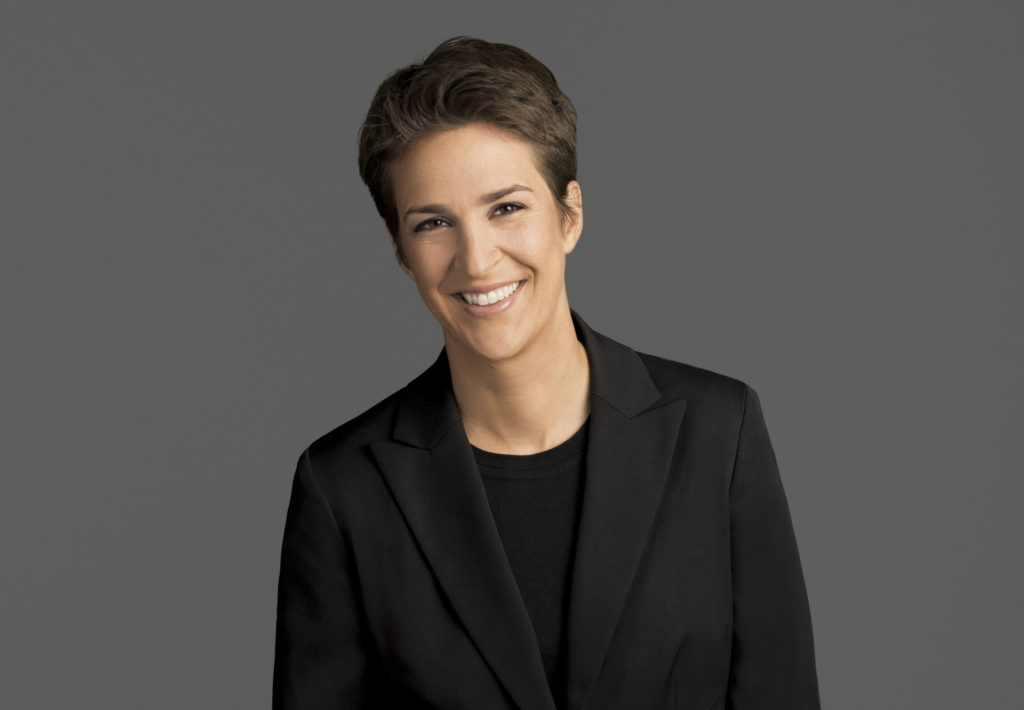
Rachel Maddow can trace the mood of her audience by looking at the ratings. Her MSNBC show’s viewership sank like a stone in the weeks following Donald Trump‘s election, as depressed liberals avoided politics, and bottomed out over the holidays. Slowly, they re-emerged, becoming active and interested again. Maddow’s audience has grown to the point where February was her show’s most-watched month since its 2008 launch. Maddow has emerged as the favorite cable news host for presidential resistors in the opening days of the Trump administration, just as Fox News Channel’s Sean Hannity is one for supporters or Keith Olbermann was the go-to television host for liberals in George W. Bush‘s second term. Trump fascination has helped cable news programs across the political spectrum defy the traditional post-presidential election slump, few as dramatically as Maddow’s. Her show’s average audience of 2.3 million in February doubled its viewership over February 2016, in the midst of the presidential primaries, the Nielsen company said. “I’m grateful for it,” Maddow said one recent afternoon. “It is nice for me that it is happening at a time when I feel we are doing some of our best work.” Those two things — ratings success and Maddow’s pride in the work — don’t always intersect. “We’re making aggressive editorial decisions in terms of how far we’re willing to get off of everyone else’s news cycle,” she said, “but it’s paying off because the news cycle more often than not is catching up with us after we do something.” Maddow has decided to cover the Trump administration like a silent movie, so the show could pay more attention to what is being done rather than what is being said. The central focus is on connect-the-dots reporting about Trump’s business interests and dealings with Russia. Her show is a news cousin to HBO host John Oliver‘s “Last Week Tonight” in its willingness to dive into complex subjects that don’t seem television-friendly, and follow the stories down different alleys. Maddow sounds long-winded when it doesn’t work. When it does, it’s like an absorbing novel stuffed with characters. “It’s not like I am a teacher who is trying to extend the attention span of the American news viewer,” said Maddow, a Rhodes scholar. “I have no goal of trying to privilege complexity. It just so happens that I tend to think in 17-minute bursts.” Maddow said she and her staff try to break news, like reporting on a Department of Homeland Security report on Trump’s immigration policy, and she was aggressive in bringing the Flint, Michigan, water crisis to a national audience. More often than not, she sees her role as explaining how things work. The program spent considerable time last week on a New Yorker magazine piece about foreign investments by Trump’s real estate company. She’s determined not to get lost in the noise, particularly since she believes Trump is skillful at distracting the media with a new story — even an unflattering one — when he doesn’t like the attention being paid to another. “I pray for the day when the most important thing about the Trump administration is that the president said something inappropriate on Twitter,” she said. “There are bigger and more valuable stories to be chasing than that.” When some news organizations were upset at being barred from an informal press briefing held by White House Press Secretary Sean Spicer two weeks ago, Maddow understood why. But the story didn’t really interest her. Since she doesn’t trust much of what the administration says, Maddow wondered what these reporters were really missing by not being there. “Her approach to reality and the president’s couldn’t be further apart,” said Jeff Cohen, an Ithaca University professor and liberal activist. During busy news periods, “certain voices cut through,” said NBC News Chairman Andrew Lack. “And her work is so consistently strong. She doesn’t disappoint, and she’s got a work ethic that is consistently off the charts. … She is a very original and unique voice.” While Maddow delivers opinion pieces instead of straight news, they are well-informed, he said. Lack doesn’t see Maddow as a voice of the resistance. Neither does she. “People want to draft me as an activist all the time, ascribe that role to me,” she said. “I’m not. The reason I know I’m not is that I stopped doing that in order to be the person who explained the news and delivered the news instead. It’s a very clear line to me.” Republished with permission of The Associated Press.
Donald Trump looking to Sarah Huckabee Sanders in tough moments
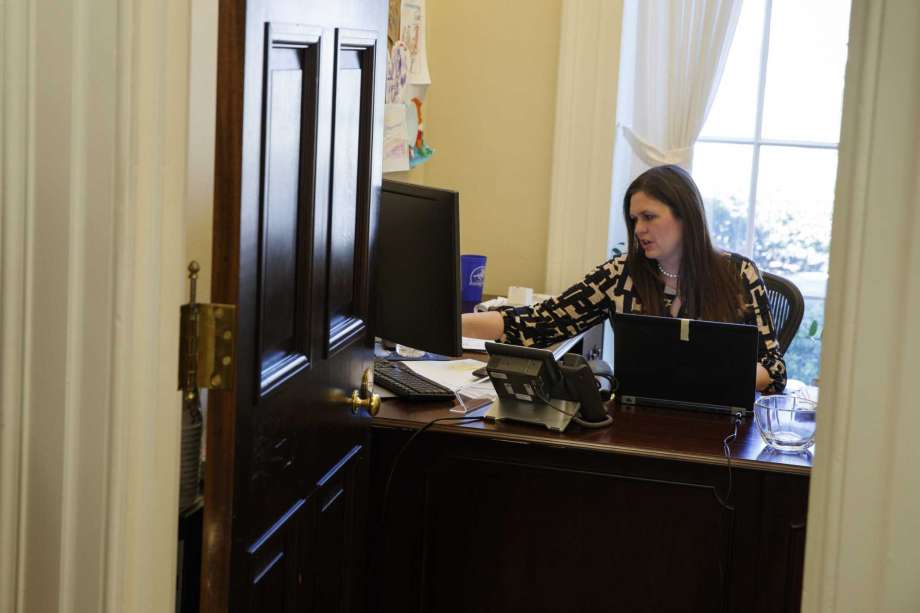
Faced with aggressive on-air questioning about the president’s wiretapping claims, Sarah Huckabee Sanders didn’t flinch, she went folksy. Speaking to George Stephanopoulos on “Good Morning America,” she pulled out a version of an old line from President Lyndon Johnson: “If the president walked across the Potomac, the media would be reporting that he could not swim.” The 34-year-old spokeswoman for President Donald Trump was schooled in hardscrabble politics — and down-home rhetoric — from a young age by her father, former Arkansas Gov. Mike Huckabee. Her way with a zinger — and her unshakable loyalty to an often unpredictable boss — are big reasons why the deputy press secretary is a rising star in Trump’s orbit. In recent weeks, Sanders has taken on a notably more prominent role in selling Trump’s agenda, including on television and at White House press briefings. As White House press secretary Sean Spicer’s public profile has fluctuated in recent weeks amid criticism of his performance, Sanders has increasingly become a chief defender of Trump in some of his toughest moments. Sanders’ rise has fueled speculation that she’s becoming the president’s favored articulator, a notion she disputes. “It’s hard for any one person to maintain a schedule of being the singular face all day every day,” she said. She argued that more than one press aide spoke for President Barack Obama. “When Eric Schultz went on TV did anybody say Josh Earnest is getting fired?” Sanders asked. “Was that story ever written?” Spicer echoed that message: “My goal is to use other key folks in the administration and the White House to do the shows.” Indeed, speaking on behalf of this president is a challenging and consuming job. Trump often presents his own thoughts directly on Twitter in the early hours of the morning and is known to closely follow his surrogates on television, assessing their performances. He has been happy with Sanders’ advocacy, said Kellyanne Conway, a counselor to the president. “She understands America. She understands the president. And she understands how to connect the two,” said Conway, who noted that Sanders had appeared on television throughout the campaign as well. “The president has a great deal of trust in Sarah.” On some days recently Sanders has been the administration’s messenger of choice, even when news outlets aren’t thrilled. Last Sunday, NBC’s Chuck Todd said on-air that “Meet the Press” had sought a “senior administration official or a Cabinet secretary,” but that the “White House offered a deputy press secretary. And so we declined.” Sanders credits her larger-than-life dad with helping her learn how to deliver a message. Huckabee, a frequent political commentator, has long been famed for his pithy rhetoric. The two speak most mornings before 6 a.m. “I’ll call and say, ‘What do you think if I say this?’ He’ll say, ‘That’s really good. You might try to say it a little bit more like X,’” she said. On advocating for the unconventional Trump, Sanders admits that even in the press office, they don’t always get a heads up before Trump tweets. But she says part of Trump’s appeal is that he “directly communicates with the American people on a regular basis.” Arkansas-raised, Sanders moved her young family to Washington to be part of the administration. She is married to a Republican consultant and they have three young children. She joined the Trump campaign not long after her father’s second presidential bid — which she managed — fizzled out in the 2016 Iowa caucuses. She said she was drawn to Trump’s message of economic populism and his outsider attitude. “One of the big things my dad was running on was changing Washington, breaking that cycle,” Sanders said. “I felt like the outsider component was important and I thought he had the ability to actually win and defeat Hillary.” She also said she was drawn to the Trump family’s close involvement in the campaign, “having kind of been in the same scenario for my dad’s campaign.” Being part of an effort to defeat Hillary Clinton had extra significance for Sanders, whose father entered the Arkansas governor’s mansion just a few years after Bill Clinton exited and who shared advisers and friends in the state. Sanders said at times it was difficult to be aggressive, but she “so disagreed” with Hillary Clinton’s policies, that she kept on. Sanders entered politics young, helping with her father’s campaigns as a child and then working her way up the ranks until she had the top job in 2016. In 2007, she moved to Iowa to run her father’s operation in the leadoff caucus state, where he was the surprise winner. She has also served in the Education Department under President George W. Bush and worked on a number of Senate and presidential campaigns. Mike Huckabee said his daughter was always a natural. “When most kids at 7 or 8 are jumping rope, she’s sitting at the kitchen table listening to Dick Morris doing cross tabs on statewide polls,” said Huckabee, referring to the adviser-turned-adversary to President Bill Clinton. Those Arkansas ties continue to hold strong. Sanders has consulted with friends from the state about her new role, including Mack McLarty, the former Clinton chief of staff, who she said counseled her to appreciate the “historic opportunity” to work in the White House. Her rising profile has come with ups and downs. Sanders says she is turning off social media alerts because she has been flooded with criticism. For now, she has not been treated to a portrayal on “Saturday Night Live” — like Spicer and Conway. But her dad says that if that comes next, she should roll with it. “One of the great honors of life is to be parodied,” Huckabee said. “It’s kind of an indication that you’ve arrived at a place of real power.” Republished with permission of The Associated Press.
Donald Trump embraces legacy of Andrew Jackson

It was an ugly, highly personal presidential election. An unvarnished celebrity outsider who pledged to represent the forgotten laborer took on an intellectual member of the Washington establishment looking to extend a political dynasty in the White House. Andrew Jackson‘s triumph in 1828 over President John Quincy Adams bears striking similarities to Donald Trump‘s victory over Hillary Clinton last year, and some of those most eager to point that out are in the Trump White House. Trump’s team has seized upon the parallels between the current president and the long-dead Tennessee war hero. Trump has hung a portrait of Jackson in the Oval Office and Trump’s chief strategist, Stephen Bannon, who has pushed the comparison, told reporters after Trump’s inaugural address that “I don’t think we’ve had a speech like that since Andrew Jackson came to the White House.” Trump himself mused during his first days in Washington that “there hasn’t been anything like this since Andrew Jackson.” It’s a remarkable moment of rehabilitation for a figure whose populist credentials and anti-establishment streak has been tempered by harsher elements of his legacy, chiefly his forced removal of Native Americans that caused disease and the death of thousands. “Both were elected presidents as a national celebrity; Jackson due to prowess on battlefield and Trump from making billions in his business empire,” said Douglas Brinkley, a professor of history at Rice University. “And it’s a conscious move for Trump to embrace Jackson. In American political lore, Jackson represents the forgotten rural America while Trump won by bringing out that rural vote and the blue collar vote.” The seventh president, known as “Old Hickory” for his toughness on the battlefield, gained fame when he led American forces to a victory in the Battle of New Orleans in the final throes of the War of 1812. He did serve a term representing Tennessee in the Senate, but he has long been imagined as a rough and tumble American folk hero, an anti-intellectual who believed in settling scores against political opponents and even killed a man in a duel for insulting the honor of Jackson’s wife. Jackson also raged against what he deemed “a corrupt bargain” that prevented him from winning the 1824 election against Adams when the race was thrown to the House of Representatives after no candidate received a majority in the Electoral College. Even before the vote in November, Trump railed against a “rigged” election and has repeatedly asserted, without evidence, widespread voter fraud prevented his own popular vote triumph. Jackson’s ascension came at a time when the right to vote was expanded to all white men — and not just property-owners — and he fashioned himself into a populist, bringing new groups of voters into the electoral system. Remarkably, the popular vote tripled between Jackson’s loss in 1824 and his victory four years later, and he used the nation’s growing newspaper industry — like Trump on social media — to spread his message. Many of those new voters descended on Washington for Jackson’s 1829 inauguration and the crowd of thousands that mobbed the Capitol and the White House forced Jackson to spend his first night as president in a hotel. Once in office, he continued his crusade as a champion for the common man by opposing the Second Bank of the United States, which he declared to be a symptom of a political system that favored the rich and ignored “the humble members of society — the farmers, mechanics, and laborers — who have neither the time nor the means of securing like favors to themselves.” Jackson, as Trump hopes to do, expanded the powers of the presidency, and a new political party, the new Democratic party, coalesced around him in the 1820s. He was the first non-Virginia wealthy farmer or member of the Adams dynasty in Massachusetts to be elected president. “The American public wanted a different kind of president. And there’s no question Donald Trump is a different kind of president,” Sen. Majority Leader Mitch McConnell, R-Ky., said this past week. “He’s now comparing himself to Andrew Jackson. I think it’s a pretty good, a pretty good comparison. That’s how big a change Jackson was from the Virginia and Massachusetts gentlemen who had been president of the United States for the first 40 years.” But there are also limits to the comparison, historians say. Unlike Jackson, who won in 1828 in a landslide, Trump lost the popular vote by nearly 3 million ballots. Jon Meacham, who wrote a 2008 biography of Jackson, “American Lion,” said Jackson was “an outsider in style but not in substance” and his outlandish public pronouncements would often be followed by hours of deep conversations and letter-writing hashing out political calculations. “He was a wild man during the day but a careful diplomat at night,” said Meacham, who said it was too early to know whether Trump, like Jackson, “had a strategy behind his theatrics,” and whether Trump had the ability to harness the wave of populism that has swept the globe as it did in the 1820s. “The moment is Jacksoninan but do we have a Jackson in the Oval Office?” Meacham asked. Trump’s appropriation of Jackson came after his victory. Trump never mentioned Jackson during the campaign or discussed Jackson during a series of conversations with Meacham last spring But it is hardly unique for a president to adopt a previous one as a historical role model. Barack Obama frequently invoked Abraham Lincoln. Dwight Eisenhower venerated George Washington. Jackson himself had been claimed by Franklin Roosevelt and his successor, Harry Truman, both of whom — unlike Trump — interpreted Jackson’s populism as a call for expanded government, in part to help the working class. There could be other comparisons for Trump. A favorable one would be Eisenhower, also a nonpolitician who governed like a hands-off CEO. A less favorable one would be Andrew Johnson, a tool of his party whose erratic behavior helped bring about his impeachment. Trump’s embrace could signal an
The new civics course in schools: How to avoid fake news

Teachers from elementary school through college are telling students how to distinguish between factual and fictional news — and why they should care that there’s a difference. As Facebook works with The Associated Press, FactCheck.org and other organizations to curb the spread of fake and misleading news on its influential network, teachers say classroom instruction can play a role in deflating the kind of “Pope endorses Trump” headlines that muddied the waters during the 2016 presidential campaign. “I think only education can solve this problem,” said Pat Winters Lauro, a professor at Kean University in New Jersey who began teaching a course on news literacy this semester. Like others, Lauro has found discussions of fake news can lead to politically sensitive territory. Some critics believe fake stories targeting Democratic presidential nominee Hillary Clinton helped Donald Trump overcome a large deficit in public opinion polls, and President Trump himself has attached the label to various media outlets and unfavorable reports and polls in the first weeks of his presidency. “It hasn’t been a difficult topic to teach in terms of material because there’s so much going on out there,” Lauro said, “but it’s difficult in terms of politics because we have such a divided country and the students are divided, too, on their beliefs. I’m afraid sometimes that they think I’m being political when really I’m just talking about journalistic standards for facts and verification, and they look at it like ‘Oh, you’re anti-this or -that.’” Judging what to trust was easier when the sources were clearer — magazines, newspapers or something else, said Kean senior Mike Roche, who is taking Lauro’s class. Now “it all comes through the same medium of your cellphone or your computer, so it’s very easy to blur the lines and not have a clear distinction of what’s real and what’s fake,” he said. A California lawmaker last month introduced a bill to require the state to add lessons on how to distinguish between real and fake news to the grade 7-12 curriculum. High school government and politics teacher Lesley Battaglia added fake news to the usual election-season lessons on primaries and presidential debates, discussing credible sites and sources and running stories through fact-checking sites like Snopes. There were also lessons about anonymous sources and satire. (They got a kick out of China’s dissemination of a 2012 satirical story from The Onion naming Kim Jong Un as the sexiest man alive.) “I’m making you guys do the hard stuff that not everybody always does. They see it in a tweet and that’s enough for them,” Battaglia told her students at Williamsville South High School in suburban Buffalo. “It’s kind of crazy,” 17-year-old student Hannah Mercer said, “to think about how much it’s affecting people and swaying their opinions.” Stony Brook University’s Center for News Literacy pioneered the idea of educating future news consumers, and not just journalists, a decade ago with the rise of online news. About four in 10 Americans often get news online, a 2016 Pew Research Center report found. Stony Brook last month partnered with the University of Hong Kong to launch a free online course. “To me, it’s the new civics course,” said Tom Boll, after wrapping up his own course on real and fake news at the Newhouse School at Syracuse University. With everyone now able to post and share, gone are the days of the network news and newspaper editors serving as the primary gatekeepers of information, Boll, an adjunct professor, said. “The gates are wide open,” he said, “and it’s up to us to figure out what to believe.” That’s not easy, said Raleigh, North Carolina-area teacher Bill Ferriter, who encourages students to first use common sense to question whether a story could be true, to look at web addresses and authors for hints, and to be skeptical of articles that seem aimed at riling them up. He pointed to an authentic-looking site reporting that President Barack Obama signed an order in December banning the Pledge of Allegiance in schools. A “.co” at the end of an impostor news site web address should have been a red flag, he said. “The biggest challenge that I have whenever I try to teach kids about questionable content on the web,” said Ferriter, who teaches sixth grade, “is convincing them that there is such a thing as questionable content on the web.” Some of Battaglia’s students fear fake news will chip away at the trust of even credible news sources and give public figures license to dismiss as fake news anything unfavorable. “When people start to distrust all news sources is when people in power are just allowed to do whatever they want, said Katie Peter, “and that’s very scary.” Republished with permission of The Associated Press.
Promises, pomp and protests as Donald Trump sworn in
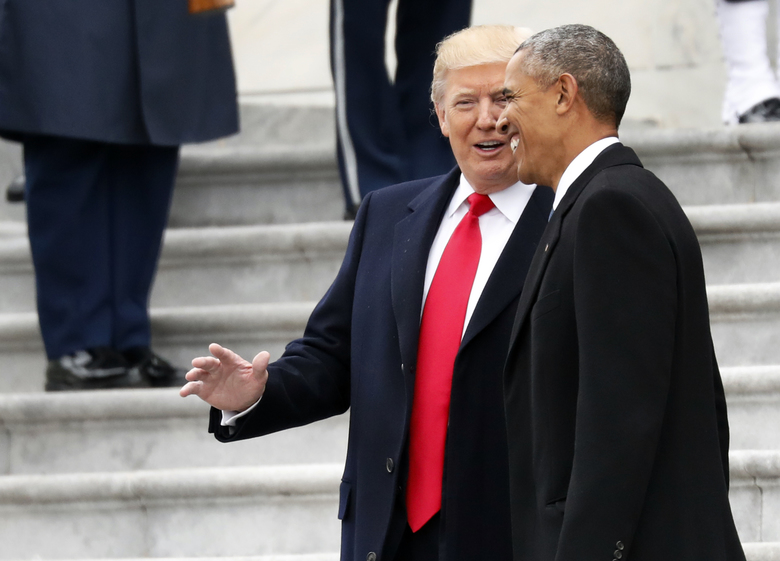
Pledging to empower America’s “forgotten men and women,” Donald Trump was sworn in as the 45th president of the United States Friday, taking command of a deeply divided nation and ushering in an unpredictable era in Washington. His victory gives Republicans control of the White House for the first time in eight years. Looking out over the crowd sprawled across the National Mall, Trump painted a bleak picture of the nation he now leads, lamenting “American carnage,” shuttered factories and depleted U.S. leadership. President Barack Obama, the man he replaced, sat behind him stoically. Trump’s address lasted just 16 minutes. While his inauguration did draw crowds to the nation’s capital, the numbers appeared smaller than for past celebrations. Demonstrations unfolded at various security checkpoints near the Capitol as police helped ticket-holders get through. After the swearing-in, more protesters registered their rage in the streets of Washington. Police in riot gear deployed pepper spray and made numerous arrests after protesters smashed the windows of downtown businesses, denouncing capitalism and Trump. The new president’s first words as commander in chief were an unapologetic reprisal of the economic populism and nationalism that fueled his improbable campaign. He vowed to stir “new national pride,” bring jobs back to the United States, and “eradicate completely” Islamic terrorism. “From this day forward, a new vision will govern our land. From this day forward, it’s going to be only, ‘America First,’” Trump said. His address lasted just 16 minutes. While Trump’s inauguration did draw crowds to the nation’s capital, the numbers appeared smaller than for past celebrations. In a remarkable scene, Trump ripped into Washington’s longtime leaders as he stood among them at the U.S. Capitol. For too long, he said, “a small group in our nation’s capital has reaped the rewards of government while the people have borne the cost.” For Republicans eager to be back in the White House, there was little mention of the party’s bedrock principles: small government, social conservativism and robust American leadership around the world. Trump, who is taking office as one of the most unpopular incoming presidents in modern history, made only oblique references to those who may be infuriated and fearful of his presidency. “To all Americans in every city near and far, small and large from mountain to mountain, from ocean to ocean, hear these words: You will never be ignored again,” he said. The new president was sworn in by Chief Justice John Roberts, reciting the 35-word oath with his hand placed upon two Bibles, one used by his family and another during President Abraham Lincoln’s inauguration. Trump and wife, Melania, bid Obama and outgoing first lady Michelle Obama farewell as they departed the Capitol grounds in a government helicopter. Trump and Obama’s political paths have been linked in remarkable ways. Before running for the White House, the billionaire businessman led efforts to promote falsehoods about the 44th president’s citizenship and claim on the office. Obama addressed a staff gathering at Joint Base Andrews before departing for a vacation in California. “You proved the power of hope,” he said. Trump’s journey to the inauguration was as unlikely as any in recent American history. He defied his party’s establishment, befuddled the media and toppled two political dynasties on his way to victory. His message, calling for a resurgence of white, working-class corners of America, was packaged in defiant stump speeches railing against political correctness. He used social media to dominate the national conversation and challenge conventions about political discourse. After years of Democratic control of the White House and deadlock in Washington, his was a blast of fresh air for millions. But Trump’s call for restrictive immigration measures and his caustic campaign rhetoric about women and minorities angered millions. And Trump’s swearing-in was shadowed by questions about his ties to Russia, which U.S. intelligence agencies have determined worked to tip the 2016 election in his favor. More than 60 House Democrats refused to attend his swearing in ceremony in the shadow of the Capitol dome. One Democrat who did sit among the dignitaries was Hillary Clinton, Trump’s vanquished campaign rival who was widely expected by both parties to be the one taking the oath of office. At a post-ceremony luncheon at the Capitol, Trump asked the Republicans and Democrats present to recognize her, and those in the room rose and applauded. At 70, Trump is the oldest person to be sworn in as president, marking a generational step backward after two terms for Obama, one of the youngest presidents to serve as commander in chief. Trump takes charge of an economy that has recovered from the Great Recession but has nonetheless left millions of Americans feeling left behind. The nation’s longest war is still being waged in Afghanistan and U.S. troops are battling the Islamic State in Iraq and Syria. The American health care system was expanded to reach millions more Americans during Obama’s tenure, but at considerable financial costs. Trump has vowed to dismantle and rebuild it. Trump faces challenges as the first president to take office without ever having held a political position or served in the military. He has stacked his Cabinet with established Washington figures and wealthy business leaders. Though his team’s conservative bent has been cheered by many Republicans, the overwhelmingly white and male Cabinet has been criticized for a lack of diversity. Before attending an inaugural luncheon, Trump signed his first series of orders, including the official nominations for his Cabinet. He joked with lawmakers, including House Democratic leader Nancy Pelosi, and handed out presidential pens. In a show of solidarity, all of the living American presidents attended Trump’s inaugural, except for 92-year-old George H.W. Bush, who was hospitalized this week with pneumonia. His wife, Barbara, was also admitted to the hospital after falling ill. Republished with permission of The Associated Press.
Grand Old Party? Donald Trump remaking GOP in his image

For eight years, a leaderless Republican Party has rallied around its passionate opposition to President Barack Obama and an unceasing devotion to small government, free markets and fiscal discipline. No more. On the eve of his inauguration, Donald Trump is remaking the party in his image, casting aside decades of Republican orthodoxy for a murky populist agenda that sometimes clashes with core conservative beliefs. Yet his stunning election gives the GOP a formal leader for the first time in nearly a decade. The New York real estate mogul becomes the face of the party, the driver of its policies and its chief enforcer. Despite their excitement, Republican loyalists across the country concede that major questions remain about their party’s identity in the age of Trump. The simple answer: The modern-day Republican Party stands for whatever Trump wants it to. “He’s a sometime-Republican,” American Conservative Union Chairman Matt Schlapp said. “Donald Trump was elected without having to really put all the details out on all these questions. We are going to see in the first six months how this plays out. Does government get bigger or does it get smaller?” Trump is eyeing a governing agenda that includes big-ticket items that Schlapp and other conservative leaders would fight against under any other circumstances. Yet some see Trump’s agenda as more in line with the concerns of average Americans, which could help the party’s underwhelming public standing and keep them in power. The president-elect initially promised a massive infrastructure spending bill to update the nation’s roads and bridges, an investment that could dwarf the infrastructure spending Republicans opposed when it appeared in Obama’s 2009 stimulus package. Trump has also vowed to put the federal government in the child care business by allowing parents to offset child care costs with tax breaks. And he has railed against regional trade deals and threatened to impose tariffs on some imports, a sharp break from the free-market approach that has defined Republican policies for decades. “From a policy perspective, he might be one of the more flexible Republican presidents. He’s just not encumbered with 30 years of Republican ideology,” said veteran Republican operative Barry Bennett, a former Trump adviser. “If there’s a win involved, he’s interested,” Bennett said. Republicans in Congress and elsewhere have expressed some hesitation, but most appear to be willing to embrace the incoming president’s priorities — at least at first. There are indications that Trump may initially avoid issues that would divide his party. That’s according to Trump’s incoming chief of staff, Reince Priebus, who said in a recent radio interview that the new administration will focus in its first nine months on conservative priorities like repealing Obama’s health care law and rewriting tax laws. In a postelection interview with The New York Times, Trump acknowledged that he didn’t realize during the campaign that New Deal-style proposals to put people to work building infrastructure might conflict with his party’s small-government philosophy. “That’s not a very Republican thing — I didn’t even know that, frankly,” Trump said. Trump’s confusion can be forgiven, perhaps, given his inexperience in Republican politics. He was a registered Democrat in New York between August 2001 and September 2009. And once he became a Republican, his political views were shaped from his perch in New York City, where the Republican minority is much more liberal — particularly on social issues — than their counterparts in other parts of the country. Trump said he was “fine” with same-sex marriage in a postelection interview in November, for example. And while he opposes abortion rights, he supported Planned Parenthood’s non-abortion-related women’s health services throughout his campaign. It’s unclear how aggressively Trump will fight for his priorities, but there are signs that he’s not expected to have much tolerance for detractors in either party. He has been remarkably thin-skinned, using Twitter to jab critics like former President Bill Clinton, “Saturday Night Live” and a little-known union official from Indiana. “You cross him at your peril,” said Rick Tyler, a Republican strategist who worked for Texas Sen. Ted Cruz‘s GOP presidential bid. Tyler said Trump’s leadership style as he prepares to enter the Oval Office sends a clear message: “Unless you move in my way, I’ll make your life, including Republicans, pretty miserable.” At the same time, the public’s perception of the Republican Party seems to be improving, albeit modestly. A NBC/Wall Street Journal Poll conducted in December found that 37 percent of Americans have a positive rating of the GOP compared to 36 percent who have an unfavorable view. That’s slightly better than the Democratic Party, which earns positive marks from 34 percent and negative from 42 percent. Before Trump’s rise, the Republican Party’s message didn’t necessarily resonate with the needs of “everyday Americans,” said veteran Republican strategist Alex Conant. “The challenge for the party now is to adopt policies that fulfill those needs. And we have a lot of work to do on that front,” Conant said. The uncertainty leaves longtime Republican loyalists with more questions than answers about the future of their party. “The party will be what Trump wants it to be,” said Steve Duprey, a Republican national committeeman from New Hampshire. Republish with permission of The Associated Press.
Donald Trump rewards Michigan party chair with national role
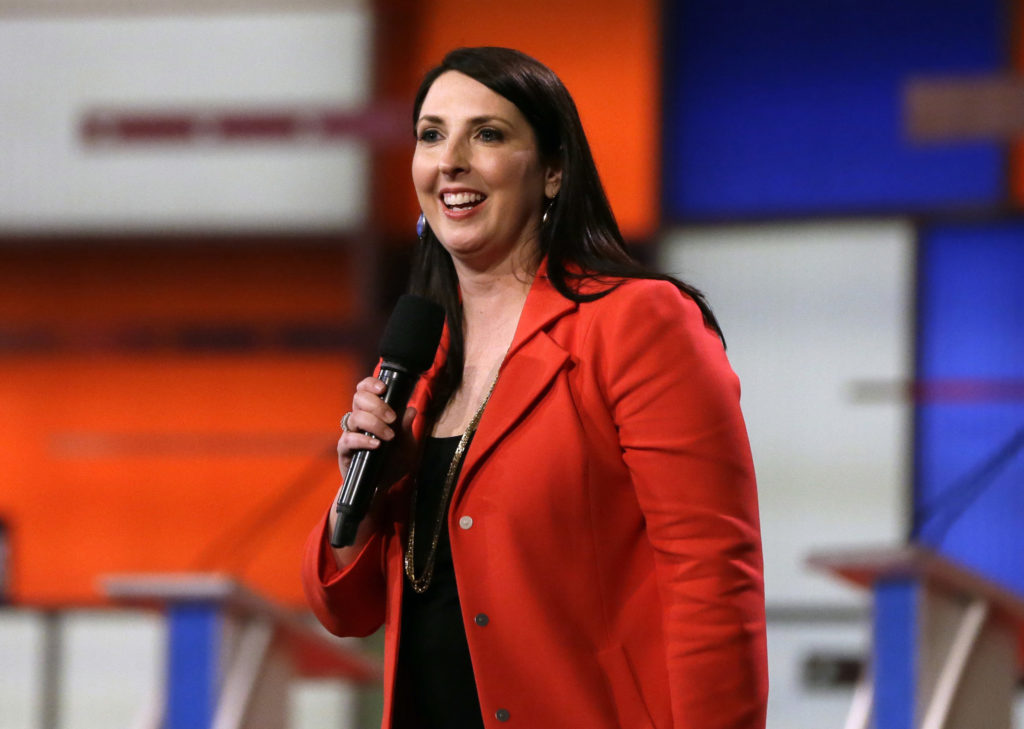
President-elect Donald Trump wants Michigan Republican Party Chairwoman Ronna Romney McDaniel to be national party chairwoman, in part as a reward for the party carrying Michigan for the first time in 28 years. The choice of McDaniel to serve as Republican National Committee chairwoman was confirmed Tuesday night by a person familiar with Trump’s decision. The person asked for anonymity because the announcement has not yet been made. The niece of 2012 GOP presidential nominee Mitt Romney also earned credit with Trump by faithfully supporting him after he won the party’s 2016 nod, despite sharp criticism from her famous uncle. “Ronna McDaniel, what a great job you and your people have done,” Trump told thousands at Deltaplex Arena in Grand Rapids, Michigan, last Friday. “I was very impressed with you. She didn’t sleep for six months!” Trump’s decision also marks a key victory for outgoing RNC Chairman Reince Priebus. As Trump’s incoming White House chief of staff, Priebus, who guided the at times unwieldy Trump through the general election, supported McDaniel as his replacement. Other Trump loyalists were urging him to name Nick Ayers, a close adviser to Vice President-elect Mike Pence. While Trump’s team has said there’s no outright power struggle, Trump’s deliberations over secretary of state were seen as an indicator of influence between Priebus and senior adviser Steve Bannon. Priebus was seen as supporting Mitt Romney to become Trump’s secretary of state. On Tuesday, Trump named Exxon Mobil CEO Rex Tillerson as his choice for the nation’s top diplomat. McDaniel would seem to validate Priebus’ performance as the chairman who turned around the financially strapped committee and ended its presidential losing streak. McDaniel would probably maintain the strategy of early spending in states, digital data and local party infrastructure, RNC insiders said. “They said a Republican could never win Michigan,” McDaniel told the audience in Grand Rapids Friday. “I knew better. You knew better and Donald Trump knew better.” For her work in Michigan, part of a swath of northern states that had eluded Republicans since the 1980s, McDaniel is the right call, said Henry Barbour, a Republican National Committeeman from Mississippi. Trump defied decades of precedent by also carrying Pennsylvania and Wisconsin — once-powerful, working-class Democratic states where manufacturing in smaller cities has declined. McDaniel, 43, would face immediate pressure to hold onto control of Congress in 2018. “I think she can help us hold a lot of these Rust Belt Democrats who voted for Donald Trump with good leadership and execution,” said Barbour. “Plus, she was willing to step out and support our nominee when her very famous uncle was doing the opposite. Now, that’s leadership.” Trump’s choices for RNC chairman and other party leadership positions carry immense sway with its members, who will vote on the team early next year. Should the committee approve Trump’s recommendation, McDaniel would become the second woman to be elected RNC chairman, and the first in 40 years. That’s a good sign for the party and Trump, said Michigan Republican Bob LaBrant, considering the 2005 recordings of Trump making sexually degrading remarks that were released during the campaign. “That sends a signal we need to send right now,” said LaBrant, former political director for the Michigan Chamber of Commerce. “And Ronna is the right one to carry the message.” Republished with permission of The Associated Press.
Top GOP leader: Senate to probe reports of Russia hacking
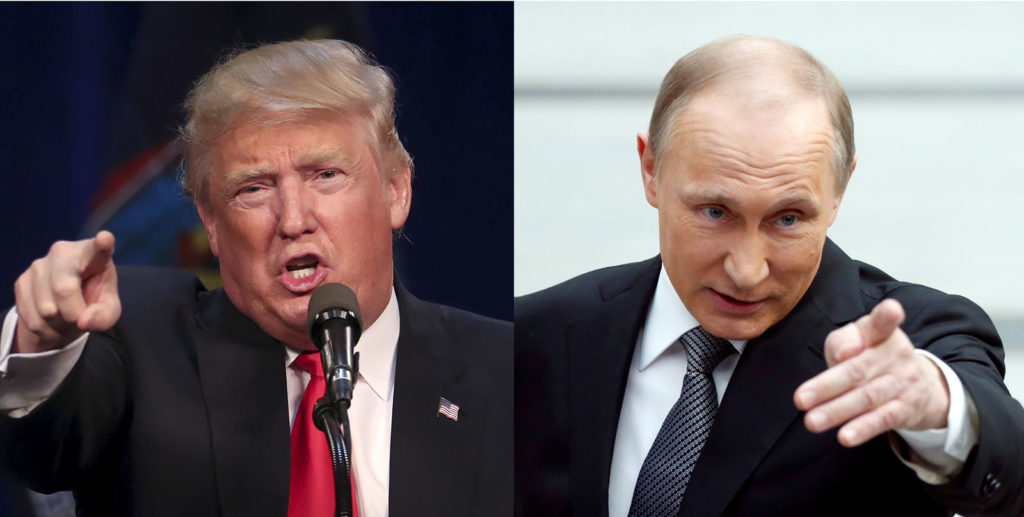
The top Senate Republican said Monday that Congress will investigate a CIA assessment that Russia interfered in the November election on behalf of Donald Trump, an intelligence conclusion that the incoming commander in chief has called “ridiculous.” Majority Leader Mitch McConnell told reporters that an inquiry would be conducted by the Senate intelligence panel. Two key Senate Republicans – John McCain of Arizona and Lindsey Graham of South Carolina, a leading Trump critic – have joined with two Democrats in seeking a bipartisan investigation into the Kremlin’s activities during the election. “Obviously any foreign breach of our cybersecurity measures is disturbing, and I strongly condemn any such efforts,” McConnell said. Unlike Trump, who has expressed admiration for Russian leader Vladimir Putin, McConnell said flatly, “The Russians are not our friends.” The CIA recently concluded with “high confidence” that Russia sought to influence the U.S. election on behalf of Trump, raising red flags among lawmakers concerned about the sanctity of the U.S. voting system and potentially straining relations at the start of Trump’s administration. Trump said Sunday the recent CIA assertion that Russian hacking had sought to help his candidacy was “ridiculous,” and he praised ExxonMobil CEO Rex Tillerson, who has emerged as the leading contender to lead the State Department. Russia expects to figure prominently at the start of a week in which Trump is expected to name more members of his Cabinet, which also has vacancies in the departments of Energy, Agriculture and Veterans Affairs. Trump’s transition team announced Monday that his choice to head the Department of Homeland Security is, as expected, Gen. John Kelly. Kelly is a former commander of U.S. Southern Command with “unique insight into some of the challenges the United States faces at its southern border,” the announcement said. “It’s a matter of concern to me that he has such a close personal relationship with Vladimir Putin,” McCain said of Tillerson. “And obviously they’ve done enormous deals together.” In an interview with CBS’ “Face the Nation,” McCain said, “That would color his approach to Vladimir Putin and the Russian threat.” Russia expects to figure prominently at the start of a week in which Trump is expected to name more members of his Cabinet, which also has vacancies in the departments of Energy, Agriculture and Veterans Affairs. During his campaign, Trump weathered turbulent relations with fellow Republicans but has since forged a more united front with GOP lawmakers since his November victory over Hillary Clinton. In a wide-ranging interview with “Fox News Sunday,” Trump dismissed those concerns as little more than partisan griping. “I think the Democrats are putting it out because they suffered one of the greatest defeats in the history of politics in this country. And frankly, I think they’re putting it out. And it’s ridiculous,” Trump said. The incoming president said he did not necessarily oppose calls from President Barack Obama for an inquiry into the 2016 campaign hacking but said it should not be solely focused on a single culprit. “If you’re gonna to do that, I think you should not just say ‘Russia.’ You should say other countries also, and maybe other individuals,” he said. The White House has said the probe would focus on any breaches by other countries along with hacking committed in previous elections. Trump’s decision-making on whom to select for secretary of state has stretched out over several weeks. He has been considering former Massachusetts Gov. Mitt Romney, a one-time vocal Trump critic, Sen. Bob Corker of Tennessee, who leads the Foreign Relations Committee, and Tillerson, the oil industry executive who met twice with Trump during the past week. In the television interview, Trump pointed to Tillerson’s deep relations with Moscow as a selling point. As ExxonMobil’s head, he maintained close ties with Russia and was awarded by Putin with the Order of Friendship in 2013, an honor for a foreign citizen. “A great advantage is he knows many of the players, and he knows them well. He does massive deals in Russia. He does massive deals for the company,” Trump said, while also citing Corker and Romney. “These are all very different types of people,” he said. “But when you ask me about Rex, I mean, he’s a world-class player. There’s no question about it.” By Sunday afternoon, Tillerson had still not been formally offered the job, according to a person with knowledge of the process who spoke on condition of anonymity. Democrats have warned that plucking Tillerson for State would put the leader of the world’s largest oil company in a pivotal role on issues like climate change and the future of the Keystone XL pipeline. They also question whether he would apply diplomatic pressure on Russia’s conflict with Ukraine. Sen. Bob Casey, D-Pa., said the developments “raise serious questions about whether the incoming administration will adequately stand up to Russia’s aggression.” The prospect of Tillerson also received a cool reception from some Republican members of the Senate Foreign Relations Committee, which would consider his nomination. Sen. Marco Rubio of Florida, who unsuccessfully challenged Trump for the GOP nomination, wrote on Twitter, “Being a ‘friend of Vladimir’ is not an attribute I am hoping for from a (hashtag)SecretaryOfState.” Republished with permission of the Associated Press.
Donald Trump’s hands-on management style to be tested by presidency

President-elect Donald Trump looked at hundreds of marble samples before selecting one for the lobby of Trump Tower. He can recall, in painstaking detail even decades later, how he stood in the cold and oversaw the ice-making process at Central Park’s rink. And, during the campaign, he personally reviewed every single campaign ad, rejecting some over the smallest of perceived flaws. The hands-on, minutiae-obsessed management style that Trump has relied on for decades in the business world will now be tested by the presidency, an overwhelming job in which his predecessor says only the most challenging decisions even make it to the Oval Office. “Somebody noted to me that by the time something reaches my desk, that means it’s really hard,” President Barack Obama has said. “Because if it were easy, somebody else would have made the decision and somebody else would have solved it.” The president-elect, at times, has been reluctant to delegate. But while his multinational business is indeed vast, the scope of the federal government exceeds any of his previous endeavors. Those close to him are gently suggesting that he will have to do some more delegating given the sheer volume of decisions needed to get his administration up and running, according to a person familiar with private discussions but not authorized to speak about them by name. Trump has chafed at that, but he has signaled willingness to relinquish some personal control. Over his career, Trump has been highly involved with the decisions he cares deeply about. When building Trump Tower, the Manhattan skyscraper he calls home, he settled upon a rare marble, Breccia Pernice, for the building’s lobby. But when he inspected the pieces that had been tagged for use, he found some blemishes — prompting a personal trip to Italy. “So we ended up going to the quarry with black tape and marking off the slabs that were the best,” Trump wrote in his 1987 book, “The Art of the Deal.” ”The rest we just scrapped — maybe 60 percent of the total. By the time we finished, we’d taken the whole top of the mountain and used up much of the quarry.” At the New York State Republican Dinner in April, Trump stood in front of a group of tuxedo-clad, moneyed, Manhattan peers, confidently pointing out the details in the Grand Hyatt hotel ballroom’s ceiling, remembering how he oversaw the construction process. He then recalled his push to fix Central Park’s Wollman Rink, going into remarkable detail about the contract negotiations, the depth of the concrete, the need to switch from copper piping to rubber hose to keep the ice frozen, and even the conversation he had with the Montreal Canadiens’ head ice-maker to make sure the process went smoothly. “I hope that’s an interesting story,” Trump told the crowd. “Who the hell wants to talk about politics all the time, right? Politics gets a little boring!” But Trump almost certainly won’t be able to exert that same of control over his new employees: The federal workforce is more than 2 million people. Obama frequently cites an observation by his first defense secretary, Robert Gates: “One thing you should know, Mr. President, is that any given moment, on any given day, somebody in the federal government is screwing up.” While Obama praises federal workers, he adds: “Even if you’re firing at a 99.9 percent success rate, that still leaves a lot of opportunity for things not to go as planned.” Other aspects of Trump’s management style may also not easily translate to the White House. His inner circle is famously small, consisting of longtime allies and his grown children, and his first key West Wing hires — chief of staff Reince Priebus and chief strategist Stephen Bannon — bring no policy experience to their new roles. Trump works long hours and expects those around him to do so as well. He can be quiet and disengaged in discussions about subjects with which he is unfamiliar but is prone to flash his temper and bark at aides. He is also known to go with his gut, is often swayed on positions by the last person he spoke to, and sometimes swoops in late and orders a change in plans, blowing up a travel schedule or policy rollout. Aides also often float suggestions to him through the media, knowing that Trump is a voracious watcher of cable TV and might be persuaded by what he sees and hears. Trump, whose TV catchphrase was “You’re fired,” is prone to pitting staffers against each other in both the business world and during his insurgent campaign. Over the summer, he hired Paul Manafort to prepare for the GOP’s convention and watched as staffers loyal to his campaign manager, Corey Lewandowski, repeatedly clashed with Manafort’s allies. Lewandowski lost the power struggle and was fired. Later, Manafort was dismissed, too, replaced by Bannon and Kellyanne Conway. Trump, in his 2004 book “How to Get Rich,” described his intense, loyalty-driven style. “I rely on a few key people to keep me informed,” he wrote. “They know I trust them, and they do their best to keep that trust intact.” Republished with permission of the Associated Press.
Tim Kaine says he’s not going to run for president in 2020

Virginia Sen. Tim Kaine says he’ll seek re-election in 2018 but is ruling out a presidential bid in 2020. The former Democratic vice presidential nominee said in an interview with The Associated Press on Thursday that his place is in the Senate and his decision not to run in 2020 is final. “Period. Full stop,” Kaine said. With a heightened national profile after campaigning across the country for more than three months as Hillary Clinton‘s running mate, Kaine could have chosen to pursue his own White House ambitions or tried and play a leading role charting a reeling Democratic Party’s direction in the Donald Trump era. But the first-term senator and former governor said he belongs in the upper chamber, where he will be part of a Democratic minority whose ability to filibuster will be “the only emergency brake there is” on Trump and the GOP-controlled Congress. Kaine has already been a vocal critic of Trump’s appointment of Steve Bannon as a senior advisor. Kaine said Bannon’s ties to white nationalism and anti-Semitism disqualify him from a senior role in the White House. Kaine said he would continue to guard against the “normalization” by Trump of what Kaine said were un-American values, but he added that he’s keeping an open mind about the billionaire businessman’s presidency. “I have a lot of concerns, but I don’t think it’s fair to the administration to just assume everything that was said during the campaign will be done,” Kaine said, noting that Trump had already shown some post-Election Day flexibility on issues like gay marriage and the Affordable Care Act. Kaine said there were some issues Democrats could work with Trump on, including increased infrastructure spending and raising the tax rate on carried interest, which is often used by managers for private equity firms and hedge funds to reduce tax payments. Kaine said he plans to use his higher national profile to continue to advocate for issues he’s long cared about, notably on increasing Congress’ role in war-making powers. “I’ve been willing to stand up and do that with a president of my own party and I tell you, I’m sure going to be willing to stand up to President Trump,” Kaine said. Kaine has twice come close to being vice president. He was on President Barack Obama‘s shortlist in 2008 and many expected Clinton to win this year. On the campaign trail this year, the deeply spiritual Kaine often told supporters that the election would work out the way things are supposed to. Kaine said Clinton’s loss was “hard” to take, but didn’t shake his faith that the outcome was for the best. “Maybe the whole reason I’m in the Senate was less being in the Senate when there was President Obama, who was a friend of mine. Maybe the reason I’m in the Senate is for the next four years,” Kaine said. Republished with permission of the Associated Press.
Martha Roby: Turning election energy into results
It has now been just a week since the 2016 election, which will certainly go down as one of the most consequential in modern American history. In the early morning hours when the race was finally called, I offered my sincere congratulations to President-Elect Donald Trump and Vice President-Elect Mike Pence, and expressed how eager I was to get to work putting our country back on track. There’s no question that in electing Donald Trump President and maintaining Republican majorities in the House and Senate, Americans sent a clear message that we must turn away from the top-down, big-government, Washington-knows-best approach of the Obama era to a more conservative, sustainable path. After six years in Congress of playing defense against the Obama Administration, I’m looking forward to playing offense with a Republican-led House, Senate, and White House and hopefully being able to get more done. I am grateful for the opportunity to serve another term and, no matter what, I will continue fighting on behalf of the people of the Second District and maintaining my focus on the issues that matter to you. I have been asked many times lately what I believe are the most important issues facing our country as we move forward. From my perspective, our most pressing issue is stopping the financial squeeze that so many middle class families are facing. One takeaway from this election I want to press with Republican leadership in Congress is how so many working people feel marginalized in a country where the outcomes seem predetermined and the deck is stacked against them. Whether it is on trade or taxes or immigration or health care, we need to be crafting policies that address the real problems facing the American worker and their families. I feel like sometimes we talk a lot about how conservative policies will help the person that owns the factory, but we need to spend more time explaining how they will benefit the men and women working inside it. I’m eager to carry that message back to Washington. On health care, I’m looking forward to being in a position to finally deliver patient-centered reforms that offer more choices, lower costs, and more flexibility. On taxes, I believe perhaps the fastest way to improve economic conditions for all Americans is to deliver a simpler, fairer, flatter tax code. We can jumpstart job growth by lowering taxes for everyone while making the code more competitive for businesses and more workable for American families. It is also critically important that we get our fiscal house in order. We need to pass a budget that puts our country on a path to balance, and we need to set strict spending priorities that are more transparent and accountable to the people we represent. There are so many other priorities to work on: strengthening border security and enhancing immigration laws; continuing improvements to veterans services; reversing cuts to our military and building up readiness; pursuing more sustainable agriculture policies – the list could go on. There’s no doubt the election was consequential. Our task now is to turn that election energy into actual results, making sure the new conservative governing majority delivers meaningful solutions that address real problems Americans are facing. ••• Marta Roby represents Alabama’s 2nd Congressional District. She lives in Montgomery, Alabama with her husband Riley and their two children.
