
Donald Trump takes his own brand of diplomacy to North Korea summit
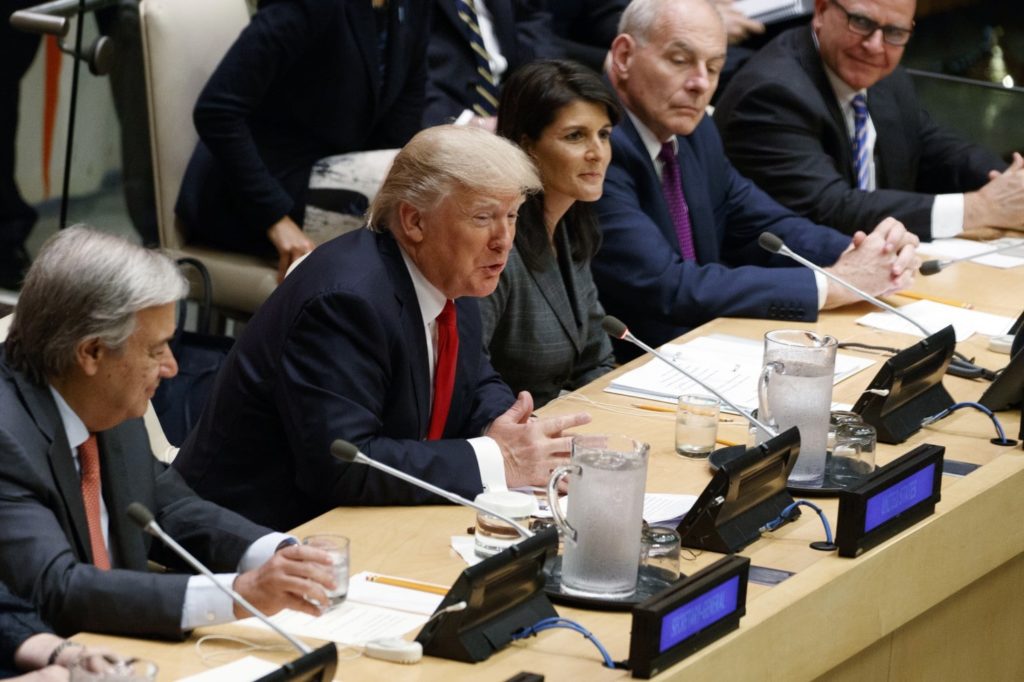
He hectored Mexico’s leader over border wall funding. Lobbed statistics at the Canadian leader without checking his facts. Cajoled the British prime minister to crack down on protesters. Had a tête-à-tête with Russia’s head of state on a whim. Bonded with France’s prime minister over military parades. President Donald Trump rarely conducts business-as-usual diplomacy when he interacts with world leaders. Heading into his expected summit with North Korean leader Kim Jong Un, Trump has a record on the international stage that suggests he’ll seek to charm the dictator and look for an agreement that he can pitch as a win — even if it’s more a triumph of appearance than policy. But never bet against the possibility that he’ll just walk away. Trump’s unpredictable negotiating style has been on full display in the run-up to the historic June 12 summit in Singapore. After months spent deriding Kim as “Little Rocket Man” and boasting about the size of his nuclear button, Trump has shifted tone in recent months, suggesting that a friendship was possible and agreeing to an unprecedented meeting. Even when Trump temporarily backed out of the talks, he spoke of a “wonderful dialogue” building between the two leaders. And now that the talks are back on, Trump is shelving the “maximum pressure” phrase he coined to describe his sanctions against the North. As he approaches the Kim talks, Trump’s avowed “America First” attitude has come increasingly to resemble “America alone.” His eagerness for a deal has unsettled Japan and South Korea. Elsewhere, talk of tearing up trade agreements and his imposition of tariffs to protect the American steel and aluminum industries have angered longtime partners. An overriding theme of the president’s first 18 months of foreign policy has been his willingness to go it alone as he seeks to fulfill his nationalistic campaign promises — even if it unsettles allies. “He just doesn’t care as much,” said Ian Bremmer, a foreign affairs columnist and president of the Eurasia Group. “In terms of postwar American history, no one has done more damage to American alliances than Trump has. All you have to do is talk to American allies.” Critics have labeled Trump an inconsistent force, prone to publicly hectoring friendly partners, embracing foes and resistant to much advice or counsel. His loyal supporters see it all as a mark of Trump’s willingness to hold firm to his promised policies even when the conversations get awkward. After nearly two years spent trying to understand the political novice, many world leaders are still struggling with how to engage Trump, though they have learned he is not easily moved from fulfilling the policies he promised to his most loyal voters during the campaign. Foreign diplomats in the U.S. and leaders overseas have gone to great lengths to charm Trump, a rookie president schooled in New York negotiating who promised a major shift in foreign policy. Those efforts have included getting their messages on to Trump-friendly TV shows like “Fox and Friends” and rolling out the red carpet when Trump visits. In France, Prime Minister Emmanuel Macron invited Trump to view a spectacular military parade on Bastille Day, one that inspired Trump to order up his own parade in Washington. In Japan, Prime Minister Shinzo Abe fêted Trump with golf and American-style hamburgers. But those overtures haven’t always yielded policy results. Macron tried unsuccessfully to keep Trump in the Paris climate accord and the Iran nuclear deal. Abe wanted Trump to stay in the Trans-Pacific Partnership trade deal and has encouraged a more skeptical approach to Kim’s overtures. White House officials privately assess that the world leaders most solicitous toward Trump are rarely the most effective. Germany’s Angela Merkel and Britain’s Theresa May, for instance, have both largely refused to play into Trump’s love for pageantry and have been candid about their disagreements with the president. Indeed, even those who were inclined to buddy up to Trump appear to be changing course. During an April summit at Trump’s Mar-a-Lago, Abe and Trump engaged in what U.S. officials described as a heated economic dialogue over Trump’s tariffs. Just last week, Trump imposed new tariffs on the European Union, Canada and Mexico, despite furious lobbying from those countries. Canadian Prime Minister Justin Trudeau said: “These tariffs are an affront to the long-standing security partnership between Canada and the United States.” Trump, meanwhile, has focused much of his attention on adversaries rather than allies, seeking to sit down with Kim and routinely praising Russian President Vladimir Putin. Fixated on his celebrity and tough-guy image, Trump cares deeply about the pageantry of his interactions with world leaders and also values what he considers respectful treatment. That tone was set on Trump’s first international trip, when Saudi Arabia gave him an opulent welcome. More than a dozen horses flanked the presidential limousine as Trump was slowly driven to the Royal Court in Riyadh. Trumpets played and soldiers stood at attention as the president arrived. Trump declared the spectacle “very impressive.” A key theme in Trump’s calls with foreign leaders has been his need for respect. He badgered Mexico’s president over funding for his border wall, which he views as a face-saving fulfillment of a campaign promise. He nudged the British prime minister to do something about potential protests should he visit the U.K., a potential embarrassment for a diplomatic visit. Trump rarely sweats the small stuff. When it comes to policy meetings and delicate negotiations, Trump is more likely to follow his instincts than stick to a scripted plan. His admission of stretching his information about trade in a call with Trudeau was in keeping with a seat-of-the-pants style that can leave advisers nervous. Advisers say Trump avoids spending extensive time in preparation. He grew frustrated with former national security adviser H.R. McMaster and his briefing style, though he is said to listen more to Secretary of State Mike Pompeo. Still, Trump is not a fan of detailed briefing books, preferring limited preparation and instinct. Those close to
U.S. allies to fight Donald Trump’s tariffs plan, warn of trade war
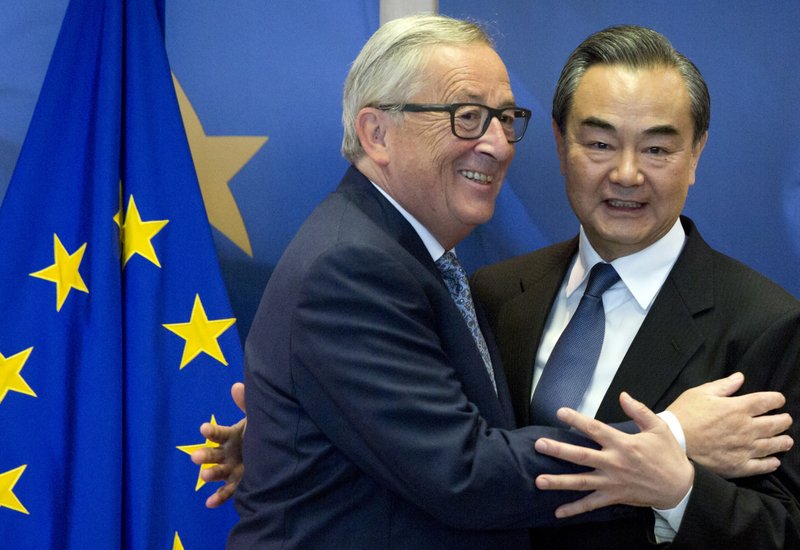
Countries around the world fought back Friday against President Donald Trump’s decision to slap tariffs on steel and aluminum imports, announcing retaliatory countermeasures and warning that the U.S. plan will hurt U.S. consumers. French President Emmanuel Macron said in a statement Friday that he told Trump in a phone call that the new U.S. tariffs on European, Mexican and Canadian goods are illegal and a “mistake.” Macron pledged the riposte would be “firm” and “proportionate” and in line with World Trade Organization rules. Germany’s Volkswagen, Europe’s largest automaker, warned that the decision could start a trade war that no side would win. The European Union and China said they will deepen ties on trade and investment as a result. “This is stupid. It’s counterproductive,” former British trade minister Francis Maude told the BBC. “Any government that embarks on a protectionist path inflicts the most damage on itself,” he added. Macron warned that “economic nationalism leads to war. This is exactly what happened in the 1930s.” Trump’s move makes good on a his campaign promise to crack down on trading partners that he claims exploit poorly negotiated trade agreements to run up big trade surpluses with the United States. Commerce Secretary Wilbur Ross says the tariffs — 25 percent on imported steel, 10 percent on aluminum from Canada, Mexico and the European Union — take effect Friday. The import duties threaten to drive up prices for American consumers and companies and are likely to heighten uncertainty for businesses and investors around the globe. Stock prices slumped amid fears of a trade war, with the Dow Jones industrial average falling nearly 252 points, or 1 percent, to 24,415.84. Mexico complained that the tariffs will “distort international trade” and said it will penalize U.S. imports including pork, apples, grapes, cheeses and flat steel. In Canada, Prime Minister Justin Trudeau said Thursday that the tariffs were “totally unacceptable.” Canada announced plans to slap tariffs on $12.8 billion worth of U.S. products, ranging from steel to yogurt and toilet paper. “Canada is a secure supplier of aluminum and steel to the U.S. defense industry, putting aluminum in American planes and steel in American tanks,” Trudeau said. “That Canada could be considered a national security threat to the United States is inconceivable.” Trump had originally imposed the tariffs in March, saying a reliance on imported metals threatened national security. But he exempted Canada, Mexico and the European Union to buy time for negotiations — a reprieve that expired at midnight Thursday. Other countries, including Japan, America’s closest ally in Asia, are already paying the tariffs. “This is protectionism, pure and simple,” said Jean-Claude Juncker, president of the European Commission. The EU earlier threatened to counterpunch by targeting U.S. products, including Kentucky bourbon, blue jeans and motorcycles. David O’Sullivan, the EU’s ambassador in Washington, said the retaliation will probably be announced in late June. Trump had campaigned for president on a promise to crack down on trading partners that he said exploited poorly negotiated trade agreements to run up big trade surpluses with the U.S. The U.S. tariffs coincide with — and could complicate — the Trump administration’s separate fight over Beijing’s strong-arm tactics to overtake U.S. technological supremacy. Ross is leaving Friday for Beijing for talks aimed at preventing a trade war with China. The world’s two biggest economies have threatened to impose tariffs on up to $200 billion worth of each other’s products. The steel and aluminum tariffs could also complicate the administration’s efforts to renegotiate the North American Free Trade Agreement with Canada and Mexico, a pact that Trump has condemned as a job-killing “disaster.” The White House released a statement from Trump Thursday night saying of NAFTA, “Earlier today, this message was conveyed to Prime Minister Justin Trudeau of Canada: The United State (sic) will agree to a fair deal, or there will be no deal at all.” Trump had offered the two U.S. neighbors a permanent exemption from the steel and aluminum tariffs if they agreed to U.S. demands on NAFTA. But the NAFTA talks stalled. Ross said there was “no longer a very precise date when they may be concluded,” and that as a result, Canada and Mexico were added to the list of countries hit with tariffs. Likewise, the Trump trade team sought to use the tariff threat to pressure Europe into reducing barriers to U.S. products. But the two sides could not reach an agreement. The import duties will give a boost to American makers of steel and aluminum by making foreign metals more expensive. But companies in the U.S. that use imported steel will face higher costs. And the tariffs will allow domestic steel and aluminum producers to raise prices, squeezing companies — from automakers to can producers — that buy those metals. House Speaker Paul Ryan and several leading Republicans in Congress were critical of the administration’s tariff action. Ryan said there are better ways to help American workers and consumers and that he plans to work with Trump on “those better options.” Republished with the permission of the Associated Press.
Donald Trump meeting with Apple’s Tim Cook on trade
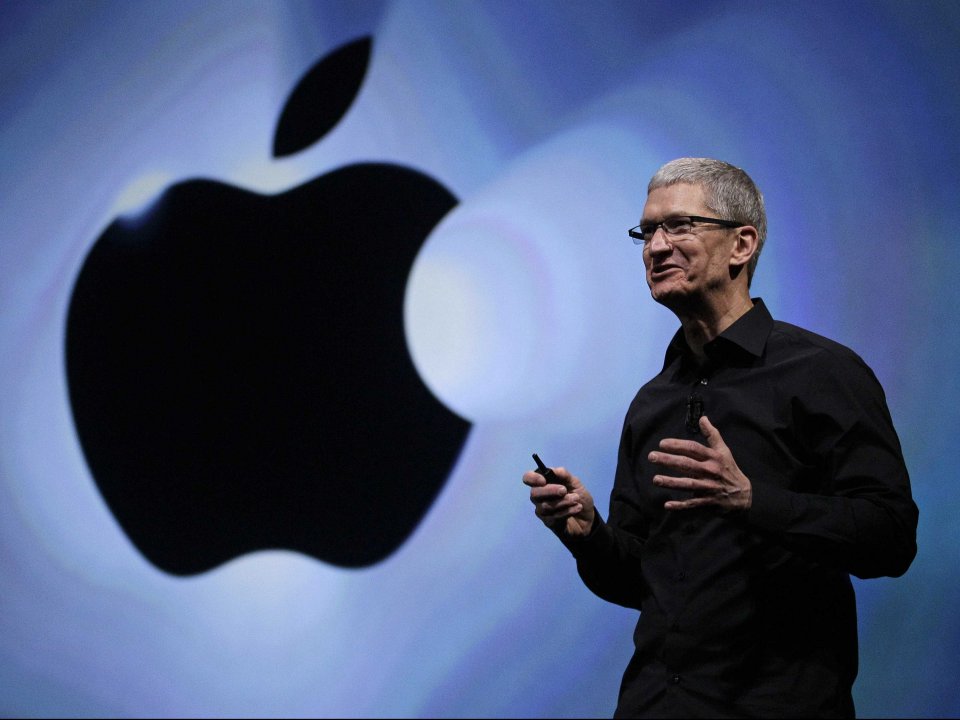
President Donald Trump says he’s “looking forward” to meeting with Apple CEO Tim Cook at the White House Wednesday. Trump says in a tweet that they “will be talking about many things, including how the U.S. has been treated unfairly for many years, by many countries, on trade.” The president is set to host Cook in the Oval Office a day after Cook attended Trump’s state dinner Tuesday night for French President Emmanuel Macron. Trump has had a fraught relationship with the electronics company, criticizing Apple on Twitter over its decision not to cooperate with law enforcement on breaching its phone encryption and the size of the screens on iPhones. But Trump has praised the company’s planned investment in the U.S. after the passage of last year’s tax cuts. Republished with the permission of the Associated Press.
French President Emmanuel Macron urges US to reject isolationism

French President Emmanuel Macron urged the United States to reject fear and isolationism Wednesday and instead embrace the historic bond between the two countries to launch a new era of 21st century leadership and security. Macron told a joint meeting of Congress, “the American and French people have had a rendezvous with freedom.” Speaking almost directly to President Donald Trump, Macron quickly turned to the top issues of Syria, the Iran nuclear deal, free trade and the Paris accord on climate change — topics where he and Trump disagree — as he urged the United States not to retreat from its historic and military role in world affairs. “We are living in a time of anger and fear” because of “global threats,” Macron told lawmakers. “You can play with fears and angers for a time, but they do not construct anything.” With a nod to great American leaders, including former President Franklin Roosevelt, he warned against withdrawing from the world in fear. “We have two possible ways ahead. We can choose isolationism, withdrawal and nationalism. It can be tempting to us as a temporary remedy to our fears,” he said. “But closing the door to the world will not stop the evolution of the world.” He proposed a “new breed of militarism” that was more effective, accountable and results-oriented. “This requires more than ever the United States involvement,” he said. At times during the nearly hour-long speech, delivered in English, he took turns playing into his friendly relationship with Trump, while nudging, forcefully at times, against their differences. He reiterated French support for U.S. sanctions on Pyongyang toward the denuclearization of the Korean peninsula, and said as for Iran, “our objective is clear: Iran shall never possess any nuclear weapons.” But he warned against simply abandoning the multi-nation Iran nuclear deal, as Trump has considered, promoting a “more comprehensive deal” he has been discussing with White House officials during his U.S. visit. In a nod to what Trump calls, “Fake News,” Macron warned that lies disseminated online are threatening freedoms worldwide, and in a play on Trump’s famous campaign slogan, Macron said he was confident the U.S. will re-join the Paris climate agreement. “Let us work together in order to make our planet great again,” he said, “and create new jobs and new opportunities while safeguarding our earth.” If Earth’s climate continues to warm, “there is no Planet B,” he added. The independent centrist president, who does not always receive such a robust welcome at home, was greeted with repeated standing ovations from members of Congress — including Republicans, who have not always aligned with French leaders on policy. In recounting common bonds from the earliest days of the United States, Macron talked about a meeting between Ben Franklin and the French philosopher Voltaire, “kissing each other’s cheeks.” In an apparent reference to his friendly meetings this week with Trump, he said, “It can remind you of something.” Macron was speaking as part of his visit to the United States. It’s the first time a president from France has addressed Congress in more than a decade, but follows a tradition of foreign leaders appearing at the U.S. Capitol. Republished with the permission of the Associated Press.
Trade issues expose the limits of Donald Trump-Shinzo Abe ‘bromance’
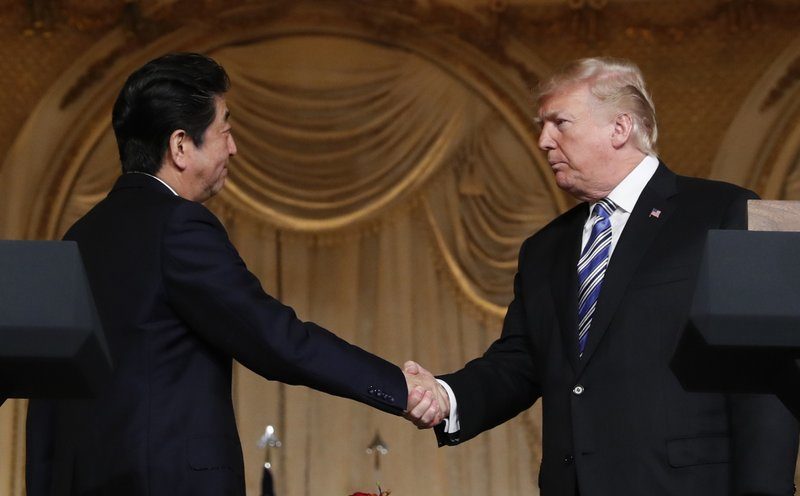
Japanese Prime Minister Shinzo Abe courted the new American president with a golden driver not long after Donald Trump won the White House. He’s met with the billionaire businessman more than any other world leader, and he is Trump’s second-most frequent caller. Yet the “bromance” between Trump and Abe has its limits. Trump appeared to be successful Tuesday in reassuring Abe that he would take Japan’s concerns to heart during his upcoming meeting with North Korea’s Kim Jong Un. But Wednesday brought public disagreements, as Trump spurned his guest’s top economic and trade priorities. Principal among them: allowing Japan an exemption from new U.S. steel and aluminum tariffs and persuading Trump to re-join the Trans-Pacific Partnership trade deal. During a roughly 40-minute joint news conference Wednesday evening, Abe tried to put on a good face, emphasizing their close relationship and their areas of accord on North Korea policy. He effusively thanked Trump for pledging to raise the issue of Japanese abductees held by North Korea in his meeting with Kim. But when pressed on the economic disagreements, Abe repeatedly consulted notes as he tried to sidestep questions on the contentious issues, instead returning to Trump’s favored call for developing a “reciprocal” trade relationship with the U.S. It marked a stark departure from Abe’s pre-summit hopes of coaxing the U.S. back into the TPP. And Japan remains the only major U.S. ally not to be exempted from the tariffs announced last month. World leaders have quickly learned that flattery is an easy way into Trump’s graces, and throughout the two-day summit, Abe appeared keen to praise the president at every opportunity. He applauded Trump’s courage for agreeing to meet with Kim and marveled at Mar-a-Lago, calling Trump’s estate “a gorgeous place.” Abe drew laughs before a dinner with the joint delegations in a baroque dining room when he recounted the strength of their relationship over food, which included a cheeseburger on the golf course and a working luncheon Wednesday. “We already had two lunches in the same day,” he said. “And now we are going to have our dinner.” “Prime Minister Abe and I have spent a lot of time today, and we really spent a lot of time since I got elected. And right from the beginning we hit it off. The relationship is a very good one,” Trump said as the pair sat down for the working lunch on economic issues. That was the session Trump suggested he was most looking forward to. “I love the world of finance and the world of economics, and probably, it’s where I do the best. But we will be able to work things out,” he said. Except it didn’t turn out that way. The session on trade and economic issues quickly turned tense and tough, according to two U.S. officials, as the leaders found themselves at an impasse on the tariffs. And Trump refused to budge on his opposition to the TPP, from which he withdrew the U.S. last year. The officials spoke on condition of anonymity to describe the private talks. Still, several officials said publicly the personal connection between the leaders is robust enough to withstand the tensions. The summit was hastily put together after Trump accepted Kim’s invitation for a meeting in the next two months, and as the president prepared to implement the metals tariffs. Trump said the invitation to his private club was a sign of how much he liked Abe. “Many of the world’s great leaders request to come to Mar-a-Lago and Palm Beach. They like it; I like it. We’re comfortable. We have great relationships,’” the president said, boosting the private club, which collects dues that enrich Trump. Trump’s most frequent caller is the president of France, Emmanuel Macron. Republished with the permission of the Associated Press.
Donald Trump in Paris: The curious case of his friend Jim

For all things Paris, President Donald Trump’s go-to guy is Jim. The way Trump tells it — Jim is a friend who loves Paris and used to visit every year. Yet when Trump travels to the city Thursday for his first time as president, it’s unlikely that Jim will tag along. Jim doesn’t go to Paris anymore. Trump says that’s because the city has been infiltrated by foreign extremists. Whether Jim exists is unclear. Trump has never given his last name. The White House has not responded to a request for comment about who Jim is or whether he will be on the trip. Trump repeatedly talked about the enigmatic Jim while on the campaign trail, but his friend didn’t receive widespread attention until Trump became president. For Trump, Jim’s story serves as a cautionary tale — a warning that even a place as lovely as Paris can be ruined if leaders are complacent about terrorism. Jim’s biggest moment in the spotlight was during a high-profile Trump speech in February at the Conservative Political Action Conference in Maryland. Trump explained that Jim “loves the City of Lights, he loves Paris. For years, every year during the summer, he would go to Paris. It was automatic, with his wife and his family.” Trump one day asked Jim: “How’s Paris doing?” “’Paris?” Jim replied, as relayed by Trump. “‘I don’t go there anymore. Paris is no longer Paris.’” The mayor of Paris, Anne Hidalgo, responded by tweeting a photo of herself with Mickey and Minnie Mouse inviting Trump “and his friend Jim” to France to “celebrate the dynamism and the spirit of openness of #Paris.” France’s then-Foreign Minister Jean-Marc Ayrault also took to Twitter, noting that 3.5 million American tourists had visited France last year. The Jim story highlights differences on immigration between Trump and major European leaders, including Trump’s host in Paris, French President Emmanuel Macron. Trump has put immigration at the core of his anti-terrorism strategy. He proposed a Muslim ban during the campaign and is fighting in the courts to temporarily bar travelers from six Muslim-majority nations as well as refugees. Macron is an outspoken critic of discriminatory policies against France’s Muslim population. He favors strong external European Union borders and he’s also called for a united European policy on immigration so that countries like Greece are not disproportionately affected by the influx of refugees. Trump believes European policies fall short of any credible efforts to protect the public. He has vowed to push forward with a plan to build a wall along America’s southern border with Mexico and he advocates for “extreme vetting” to “keep terrorists out.” Trump never endorsed Macron’s election opponent, far-right candidate Marine Le Pen, but in an interview with The Associated Press, he noted that terrorist attacks in France would “probably help” her win since “she’s the strongest on borders and she’s the strongest on what’s been going on in France.” Trump has criticized several European leaders, accusing them of lax counterterrorism policies. He lashed out at London Mayor Sadiq Khan after an attack on London Bridge last month. In a February speech, Trump denounced Sweden’s policies and talked about “what’s happening last night in Sweden.” Swedish officials sought clarification because there were no known attacks in their country that night. Trump took to Twitter to explain: “My statement as to what’s happening in Sweden was in reference to a story that was broadcast on @FoxNews concerning immigrants & Sweden.” Republished with permission of The Associated Press.
Analysis: Donald Trump remains unpredictable force among U.S. allies
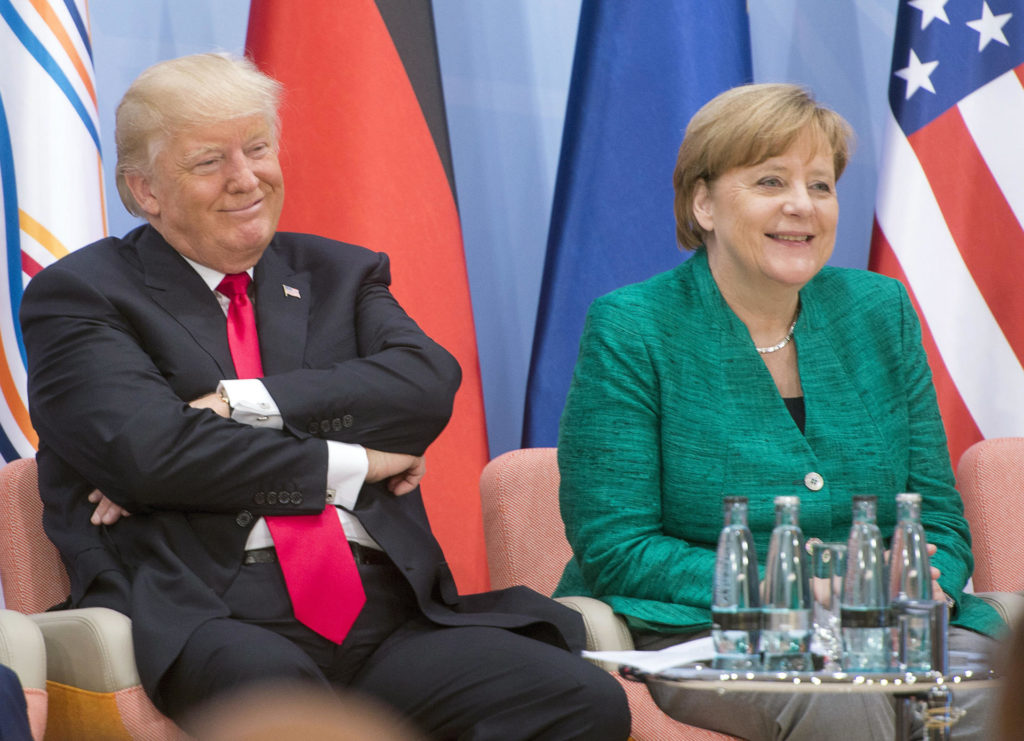
On President Donald Trump’s second trip abroad, there were fewer of the bull-in-a-diplomatic-china-shop moments that had solidified European leaders’ skepticism during his maiden overseas tour. Less public berating of allies, no pushing to the front of photo opportunities. But Trump still departed Europe on Saturday in the same position as he started: an unpredictable force on the world stage and an outlier among longtime American partners. For the president’s backers, his posture is the fulfillment of his campaign promise to bring more opaqueness to American foreign policy and challenge long-standing global agreements, even with the nation’s closest allies. But his detractors say he keeps sending the world dangerously mixed messages. “Our partners and our allies are all looking for meaning and intention in those words and will read into it what they want to, which may or may not be what Trump meant,” said Laura Rosenberger, a former foreign policy adviser to Hillary Clinton and a senior fellow with the German Marshall Fund. Trump’s message on Russia remains the most convoluted, despite his advisers’ efforts to put to rest questions about his views on Moscow’s election meddling. The president refused to publicly give the kind of condemnation that his staff said he delivered to Russian President Vladimir Putin during a private meeting Friday. He let a challenge from Putin, who said Trump accepted his denial of Russian involvement in the 2016 election, go largely unanswered, tweeting Sunday morning that he’d “already given my opinion” on the matter. Trump’s posture toward Putin has left allies both baffled and anxious, particularly against the backdrop of the investigations into whether his campaign coordinated with Russia during last year’s election. But increasingly, it’s Trump’s positions on climate and trade that have catapulted to the top of their list of concerns. The divide over climate was particularly glaring as the Group of 20 summit in Hamburg, Germany, drew to a close. The U.S. was the only member country that did not sign a statement reaffirming the alliance’s support for international efforts to fight global warming. The statement called the Paris climate accord, which Trump withdrew from last month, an “irreversible” global agreement. German Chancellor Angela Merkel said Trump’s refusal to sign on to the statement was “regrettable.” French President Emmanuel Macron, who will host Trump on a quick trip to Paris this week declared: “There are major differences, growing differences between major powers. There is the emergence of authoritarian regimes and even within the Western world there are major divisions, uncertainties, instabilities, that didn’t exist just a few short years ago.” But Trump and his allies appear to relish his volatility and isolation. Nile Gardiner, a foreign-policy analyst for the conservative Heritage Foundation, which has close ties to the Trump White House, praised the president as “the most outspoken and unconventional U.S. president of modern time” and said he is still managing to articulate a “coherent doctrine and vision.” Conservatives in the U.S. were indeed buoyed by Trump’s speech in Warsaw, Poland, which marked perhaps his most comprehensive articulation of how he views America’s role in the world. He praised Polish resilience and called upon Western nations to jointly combat forces that threaten “to erase the bonds of culture, faith and tradition that make us who we are.” The conservative editorial page at The Wall Street Journal called the address “Trump’s defining speech.” Yet even as his Warsaw speech portrayed the world in stark terms, he offered an uneven message on Russia. In a news conference in Poland, the president acknowledged that Russia had interfered in the 2016 election, but he repeated his assertion that “other countries” may have done the same, a reference that appeared to let Putin off the hook. Hours before his meeting with Putin, he tweeted that “everyone” at the G-20 was talking about why John Podesta, a top adviser to Clinton, had “refused to give the DNC server to the FBI and the CIA. Disgraceful!” Intelligence agencies concluded that both the Democratic National Committee and Podesta’s emails were hacked by Russians last year. Trump has argued that Democrats are hyping Russia’s involvement in order to create an excuse for Clinton’s loss. His tweet about Podesta prompted the former top White House aide, who was driving with his wife on a cross-country trip, to respond that the president was a “whack job.” “Dude, get your head in the game. You’re representing the US at the G-20,” Podesta wrote on Twitter. Trump’s advisers hoped to turn the page on the matter following the president’s first meeting with Putin. U.S. Secretary of State Rex Tillerson, the only U.S. official who joined Trump in the meeting, said the president opened the discussion by “raising the concerns of the American people” on Russian interference in the election, describing it as a “very robust and lengthy exchange.” Putin’s takeaway was different. He told reporters Saturday that he believed Trump accepted his denials of Russian meddling, but said it was best to ask the American president himself. White House aides didn’t dispute the account. And the Sunday morning flurry of tweets from Trump did little to clarify. Republished with permission of The Associated Press.
Alabama connections on display at 2017 Paris Air Show

The 2017 Paris Air Show is ground zero for the aerospace industry, a spectacle whose amazing aircraft demonstration flights are eclipsed by the billions of dollars in new deals announced and the behind-the-scenes negotiations that lead to future projects. This year was no different. Boeing and Airbus – global rivals that both have a major presence in Alabama – announced massive aircraft orders. Boeing, in particular, used the air show as a platform to announce more than $30 billion in new orders. In addition, there are plenty of Alabama connections on display at the industry trade event, reflecting the state’s growing stature in the global aerospace business. Airbus, for instance, showed off its A321neo aircraft, a model that will be added to the production lineup at its Mobile manufacturing center. And Raytheon’s exhibition hall displayed SM-3 and SM-6 missiles, which are produced in Huntsville. The fuel-efficient LEAP engine, produced by a partnership that includes GE Aviation, was spotted on Boeing and Airbus aircraft. A 3-D printed fuel nozzle made by GE Aviation in Auburn is an important feature of the engine. In addition, global aerospace and defense company Leonardo displayed its T-100 trainer jet that will be built in Tuskegee if the company wins a U.S. Air Force competition for a next-generation trainer. Massive draw During the Paris Air Show’s three-day trade show phase, an estimated 150,000 visitors were expected. New French president Emmanuel Macron was among them. He visited the European Space Agency Center, where he spoke with astronaut Thomas Pesquet, who has just spent almost 200 days at the International Space Station. As always, the demonstration flights wowed the crowds at Le Bourget. Highlights included flights by the new U.S. F35 fighter jet, the Boeing 737 MAX 9 and Airbus A350-100S, A400M and A380 aircraft. This story originally appeared on the Alabama Department of Commerce’s Made in Alabama website. Republished with permission of Alabama NewsCenter.
Donald Trump’s cellphone diplomacy raises security concerns
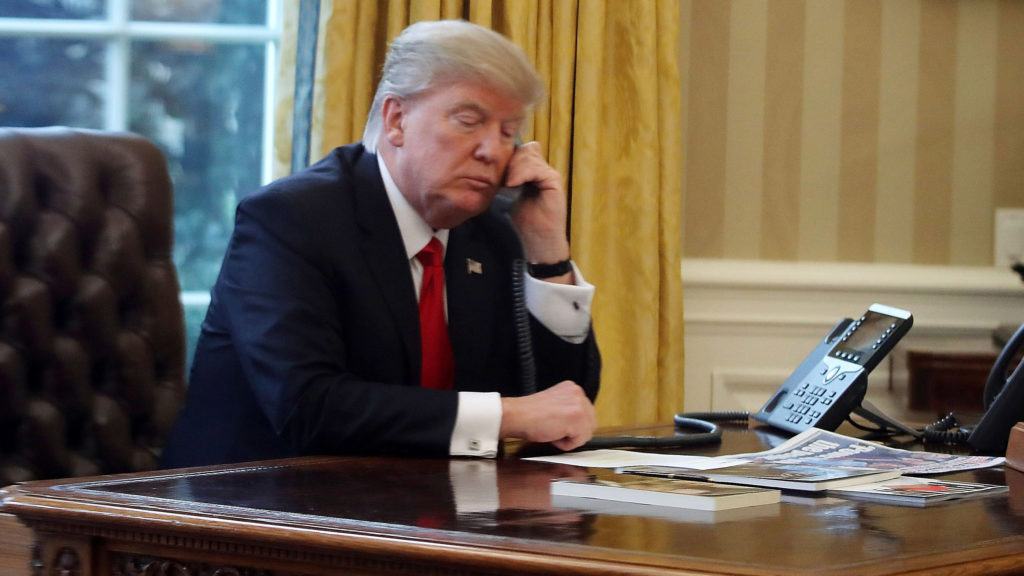
President Donald Trump has been handing out his cellphone number to world leaders and urging them to call him directly, an unusual invitation that breaks diplomatic protocol and is raising concerns about the security and secrecy of the U.S. commander in chief’s communications. Trump has urged leaders of Canada and Mexico to reach him on his cellphone, according to former and current U.S. officials with direct knowledge of the practice. Of the two, only Canadian Prime Minister Justin Trudeau has taken advantage of the offer so far, the officials said. Trump also exchanged numbers with French President Emmanuel Macron when the two spoke immediately following Macron’s victory earlier this month, according to a French official, who would not comment on whether Macron intended to use the line. All the officials demanded anonymity because they were not authorized to reveal the conversations. Neither the White House nor Trudeau’s office responded to requests for comment. The notion of world leaders calling each other up via cellphone may seem unremarkable in the modern, mobile world. But in the diplomatic arena, where leader-to-leader calls are highly orchestrated affairs, it is another notable breach of protocol for a president who has expressed distrust of official channels. The formalities and discipline of diplomacy have been a rough fit for Trump — who, before taking office, was long easily accessible by cellphone and viewed himself as freewheeling, impulsive dealmaker. Presidents generally place calls on one of several secure phone lines, including those in the White House Situation Room, the Oval Office or the presidential limousine. Even if Trump uses his government-issued cellphone, his calls are vulnerable to eavesdropping, particularly from foreign governments, national security experts say. “If you are speaking on an open line, then it’s an open line, meaning those who have the ability to monitor those conversations are doing so,” said Derek Chollet, a former Pentagon adviser and National Security Council official now at the German Marshall Fund of the United States. A president “doesn’t carry with him a secure phone,” Chollet said. “If someone is trying to spy on you, then everything you’re saying, you have to presume that others are listening to it.” The caution is warranted even when dealing with allies. As German Chancellor Angela Merkel‘s learned in 2013, when a dump of American secrets leaked by Edward Snowden revealed the U.S. was monitoring her cellphone, good relations don’t prevent some spycraft between friends. “If you are Macron or the leader of any country and you get the cellphone number of the president of the United States, it’s reasonable to assume that they’d hand it right over to their intel service,” said Ashley Deeks, a law professor at the University of Virginia who formerly served as the assistant legal adviser for political-military affairs in the U.S. State Department. The practice opens Trump up to charges of hypocrisy. Throughout last year’s presidential campaign, he lambasted Democratic rival Hillary Clinton for using a private email server while she was secretary of state, insisting she should not be given access to classified information because she would leave it vulnerable to foreign foes. Presidents’ phone calls with world leaders often involve considerable advance planning. State Department and National Security Council officials typically prepare scripted talking points and background on the leader on the other end of the line. Often an informal transcript of the call is made and circulated among a select group — sometimes a small clutch of aides, sometimes a broader group of foreign policy officials. Those records are preserved and archived. The White House did not respond to questions on whether the president is keeping records of any less-formal calls with world leaders. Trump’s White House is already facing scrutiny for apparent efforts to work outside usual diplomatic channels. The administration has been fending off questions about a senior aide’s alleged attempt to set up a secret back channel of communication with Moscow in the weeks before Trump took office. White House adviser Jared Kushner, Trump’s son-in-law, met in December with Russia’s ambassador to the U.S. and discussed whether a secret line of communication could be used to facilitate sensitive policy discussions about the conflict in Syria, according to a person familiar with the talks. The person demanded anonymity because the person was not authorized to discuss the sensitive conversation by name. The White House has said such back-channel communications are useful and discreet. Trump has struggled more than most recent presidents to keep his conversations with world leaders private. His remarks to Australian Prime Minister Malcolm Turnbull, Mexican President Enrique Pena Nieto and Russian diplomats have all leaked, presumably after notes of the conversations were circulated by national security officials. It was unclear whether an impromptu, informal call with a foreign leader would be logged and archived. The Presidential Records Act of 1981, passed in response to the Watergate scandal, requires that the president and his staff to preserve all records related to the office. In 2014, the act was amended to include personal emails. But the law contains “blind spots” — namely, record-keeping for direct cellphone communications, said Jonathan Turley, a professor at George Washington University Law School, who specializes in public interest and national security law. Under Barack Obama, the first cellphone-toting president, worries about cyber intrusions — particularly by foreign governments — pulled the president’s devices deep into the security bubble. Many of the functions on Obama’s BlackBerry were blocked, and a very small handful of people had his phone number or email address, according to former aides. “Government sometimes looks like a big bureaucracy that has stupid rules, but a lot of these things are in place for very good reasons and they’ve been around for a while and determine the most effective way to do business in the foreign policy sphere,” said Deeks. “Sometimes it takes presidents longer to figure that out.” Republished with permission of The Associated Press.
