
State environmental department at odds with Legislature on budget future

Amid the ongoing budget fiasco has strained almost every relationship in Montgomery, you can add another pair of fiscal foes to the list: the Alabama Department of Environmental Management (ADEM) and the state Legislature, particularly the House. The state governmental institutions are at odds over agency funding and the source and amount of fees collected by ADEM being transferred to the state’s general revenue fund to cover an expanding budget shortfall. As funding from the state general fund has bottomed out to zero in recent years – or even negative levels, like it’s expected to next year – at the request of Lance R. LeFleur the Director of ADEM, it has begun to implement a program that would cut their reliance on the state and be completely reliant upon funding from permitting fees granted to agricultural firms and other industry players who must pass muster with ADEM in order to do business with the state. In other words, the regulators are relying on the regulated for their existence. While ADEM also receives funding from federal EPA grants and fees levied on Alabamians for certain purchases to mitigate environmental damage, permits held by industrial interests provide by far the bulk of the agency’s budget. The Alabama Environmental Management Commission (EMC) must approve fee increases prior to them changing. Alabama Environmental Management Commissioner Terry Richardson sees an inherent conflict there. “We’re being asked to shift the burden of the people to the permit holders, again,” Richardson said earlier this month. “I see an agency whose primary function is to manage the environment for the people of this state, more and more, being funded by the people we’re managing or protecting this environment from. “I don’t see that as a good situation to get into. It almost seems that it makes us more beholden to these industries and these permit holders,” Richardson continued. While the Legislature by and large does not see that state of affairs as compromising the agency, ADEM faces a threat in the wake of the cuts nonetheless. The agency will almost certainly seek permission to raise even more revenue from permit holders when the EMC meets in December, a move that will likely prove unpopular aside from the fact that it may exacerbate ADEM’s dependency on private sector sources. ADEM permitting fees were raised by 19 percent in 2011, just raised by 50 percent back in 2013. Some fear that may damage their already-weakened leverage when it comes to dealing with polluters, easement holders and other actors the state agency regulates. The state’s current budget for FY 2016 – banged out over two contentious Special Sessions in Montgomery which saw Gov. Robert Bentley veto an early version of the plan, and lawmakers nearly overriding the veto right back – contains just $280,000 in appropriations for ADEM. Adding insult to injury, says agency administrators, is a requirement the department pay back into the state’s general fund some $1.2 million the department collected for scrap tire and solid waste disposal. The situation is stoking fears in Montgomery that the EPA will revoke Alabama’s state water permitting authority, a move Director LeFleur says would be catastrophic. “EPA taking over the program would have a devastating impact on both attracting new industry and retaining existing industry,” LeFleur said. LeFleur and Richardson have yet to indicate publicly that such move – called for by environmental activists in years past, who see the state incapable of managing its own land and water – is imminent anytime soon, it is raising what Alabama Environmental Management Vice-Commissioner W. Scott Phillips called “hard questions” about the viability of the agency going forward. Testimony by Terry Richardson earlier this month at a department meeting summed up the budgetary situation best. “Are we a critical state agency? Or aren’t we?” Richardson intoned twice during ADEM’s most recent confab. “It doesn’t seem like our colleagues in the Legislature believe that we are.”
Gary Palmer opposes new EPA methane rule that punishes energy production
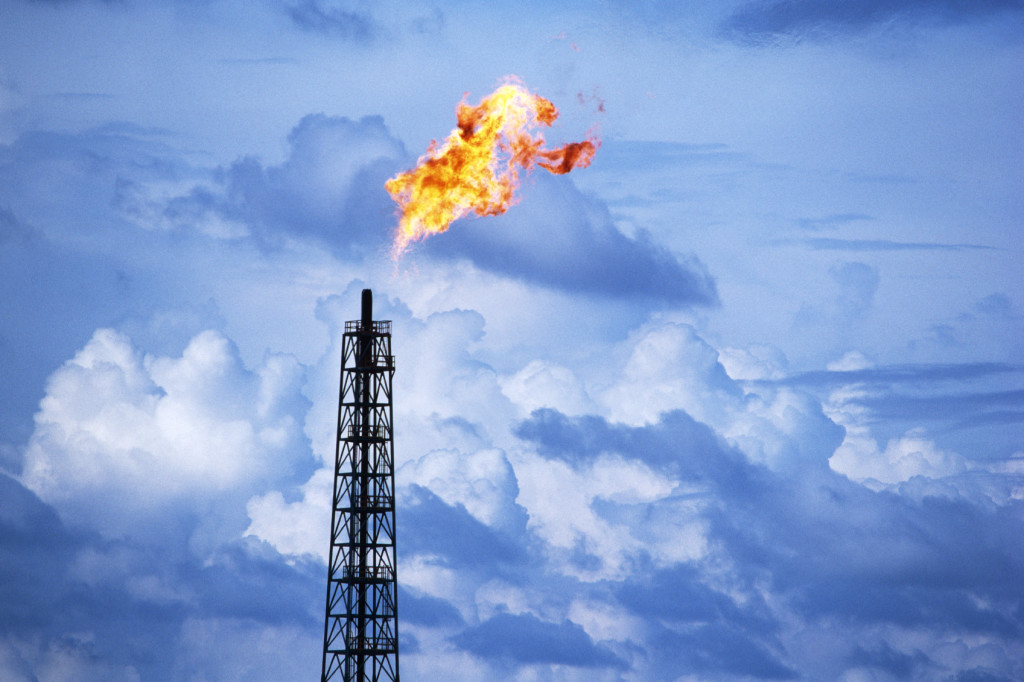
U.S. Rep. Gary Palmer (AL-06) is taking a stand against the Environment Protection Agency‘s newly proposed rule that would apply to new or modified oil or natural gas sources. The proposal aims to cut methane by 40 to 45 percent of the 2012 levels by 2025 and would require drillers to plug leaks and capture lost gas in wells intended to extract only oil. The EPA said the move was a commitment by the Obama administration to take action on climate change and protect public health. However, Palmer believes the rule is designed to discourage the development of America’s vast untapped energy reserves and to increase the cost of energy and will disproportionally hurt the poorest and most vulnerable Americans. “In 2014, the EPA noted that methane emission from fracking has fallen 73 percent since 2011, and overall methane emission from U.S. natural gas emissions has declined by at least 15 percent percent since 1990,’’ said Palmer, a member of the U.S. House Science, Space and Technology Subcommittee on Environment. “The research noted that a small number of sites accounted for the majority of those emissions, suggesting that technology already in use across the industry is effectively managing methane leakage.” Chairman of the U.S. House Science, Space and Technology Committee, U.S. Rep. Lamar Smith (TX-21), shares Palmer’s concerns saying this is another sign of the EPA’s opposition to responsible energy development. “The EPA’s proposed methane rule is yet another example of the Obama administration’s war on American energy jobs,” Smith said. “The EPA’s own data shows that methane emissions in the United States decreased by almost 15 percent between 1990 and 2013, yet EPA is forging ahead with this extraneous and unnecessary regulation. EPA should stop. According to the EPA’s own data, the current leakage rate is only about 1.5 percent, well within the recommended limits of the scientific community’s standard of 2-3 percent of total production. “EPA’s data seems to agree that we’re controlling methane leakage,’’ Palmer said. “And data from a high profile environmental group like the Environmental Defense Fund implies methane emissions are not a problem. So this begs the question, why is the EPA proposing unnecessary regulations?”
Phil Kerpen: Stop Obama’s Clean Power grab

In President Obama’s first big speech to Congress, just a month after he took office, he said: “I ask this Congress to send me legislation that places a market-based cap on carbon.” They didn’t. Indeed, largely because of Obama’s own words on the campaign trail, it became clear that under his plan for a cap-and-trade system, “electricity rates would necessarily skyrocket” and that if “somebody wants to build a coal-powered plant, they can. It’s just that it will bankrupt them.” These facts became well known and contributed directly to the smashing defeat of his proposed cap-and-trade legislation during his first term, when it barely squeaked the through the House and was dead-on-arrival in the Senate even though Nancy Pelosi and Harry Reid were running the places. Yet this week, the president had his EPA issue the Clean Power Grab, a 1,560-page rule coercing states to adopt precisely the cap-and-trade policies he previously admitted required legislation from Congress. They did it with wildly creative lawyering to twist the Clean Air Act of 1970 into a global warming law. Longtime liberal Congressman John Dingell said: “This is not what was intended by the Congress and by those of who wrote that legislation.… So we are beginning to look at a wonderfully complex world which has the potential for shutting down or slowing down virtually all industry and all economic activity and growth.” The failed 2009 cap-and-trade bill called for a 20 percent reduction in greenhouse gas emissions over 11 years and 42 percent reduction over 21 years. The Clean Power Grab splits the difference, requiring a 32 percent reduction over 15 years. Otherwise it is nearly identical. The administration is simply acting as if the law they wanted passed. If they succeed, it would mean steeply higher electric bills and major manufacturing job losses for what, according to conventional climate models, would avert less than 0.02 degrees Celsius of global warming by the year 2100. Can they get away with it? There will certainly be litigation, and President Obama’s own Harvard law professor, liberal legal giant Laurence Tribe, has said of the Clean Power Grab: “Burning the Constitution should not become part of our national energy policy.” But the recent history of a related rule, and the insidious structure of the Clean Power Grab, suggest that President Obama and the EPA may succeed even if they ultimately lose in court. In June, the Supreme Court caught the EPA failing to even consider billions of dollars in costs, and struck down another expensive anti-coal rule. The EPA’s response was a smug press release saying the illegal rule had already accomplished its purpose: “EPA is disappointed that the Court did not uphold the rule, but this rule was issued more than three years ago, investments have been made and most plants are already well on their way to compliance.” In those three years , the value of the country’s three largest publicly traded coal companies was crushed from $25 billion to just $1 billion. That’s 96 percent of the wealth of a vital American industry already wiped out. The Clean Power Grab similarly seeks to lock itself in permanently, even if eventually found illegal, by coercing states to do most of the dirty work of enacting draconian caps on fossil fuel use into state law. Those laws would continue in effect after the EPA rule is struck down, and would create permanent rent-seeking corporate cronies who benefit from emissions trading and renewables mandates that would make the laws almost impossible to repeal. All state leaders should protect their citizens from higher electricity prices and job losses by rejecting the Obama administration’s call to submit a state plan. And they should join the effort to defeat the Clean Power Grab in court, in Congress, and at the ballot box. Phil Kerpen is president of American Commitment and a free-market policy analyst.
Martha Roby: What Obama’s Clean Power Plan really means
This week, President Barack Obama announced his Clean Power Plan and with it a costly national energy tax that will negatively impact American families and jobs. Of course, the administration touts the plan as “the single most important step America has ever taken in the fight against global climate change.” But what you didn’t hear the president say is that despite the significant increase this will cause in energy bills for hardworking middle-class families, this plan actually does little to nothing to alter the impact of future climate change. Under the plan, the Environmental Protection Agency (EPA) will implement stringent regulations limiting carbon dioxide emissions from power plants, hiking rates and shutting down energy plants, especially in the coal industry. And while I think we can all agree that achieving more affordable, reliable and safe energy is a priority, more regulations and burdensome expenses to American families are not solutions. It’s no surprise that the EPA is once again going beyond its authority, pushing for overly burdensome regulations that have the potential to significantly affect our economy, discourage investment and stifle job creation. This agency is one of the most egregious offenders of “backdoor legislating” by frequently attempting to circumvent Congress to set policy. But Congress is responsible for writing the laws of our nation on behalf of the priorities and interests of those we represent. The House of Representatives has passed legislation to push back on the administration’s environmental agenda and to rein in the EPA’s overreach. One such bill recently passed, the Ratepayer Protection Act, allows states to opt out of the EPA’s proposed rule capping carbon emission rates for existing power plants. If a state shows that energy prices would increase under the EPA’s plan, it is not required to participate. Through the appropriations process thus far, we have used the “power of the purse” to prevent the EPA from implementing harmful regulations like the “Waters of the U.S.” rule, which will cost Alabamians greatly. Also included in our Fiscal Year 2016 Interior and Environment Appropriations bill are provisions to prohibit implementation of the Clean Power Plan, to prohibit regulations on the lead content of ammunition and fishing tackle and to prohibit a change in the definition of “fill material.” It’s disappointing, but not surprising, to see the president is once again more focused on his “legacy” than he is on the priorities and needs of the American people. As your representative, I will not let up on the EPA and will continue to support legislation to protect Alabama’s interests. Martha Roby represents Alabama’s 2nd Congressional District. She is in her third term.
Quiet on Keystone, Hillary Clinton faces sharper attacks from rivals
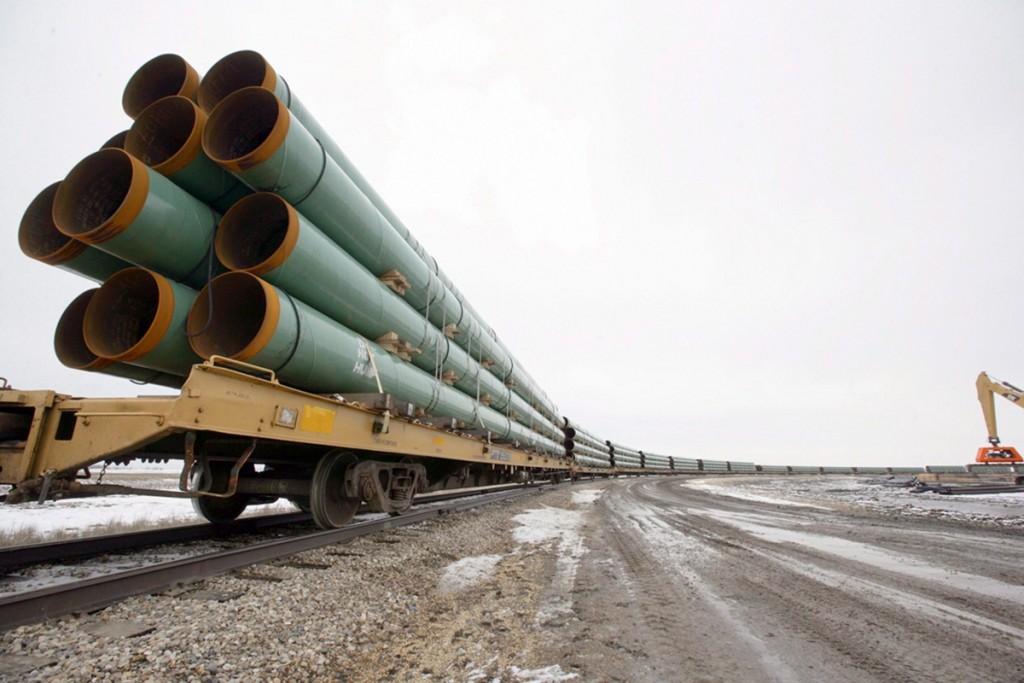
Hillary Rodham Clinton dodged questions Tuesday about her positions on trade and the Keystone XL pipeline, telling a New Hampshire voter that if the future of the project opposed by environmentalists remains “undecided when I become president, I will answer your question.” Sensing an opportunity, Clinton’s rivals for the Democratic presidential nomination escalated their critique of the party’s front-runner. “It is hard for me to imagine how you can be serious about climate change and not oppose the Keystone pipeline,” Vermont Sen. Bernie Sanders told The Associated Press. A day after laying out a sweeping plan to foster renewable energy and combat climate change, Clinton stuck with her refusal to say where she stands on the $8 billion pipeline. Environmental groups vigorously oppose the project, which would transport oil from Canada’s tar sands to refineries on the Gulf of Mexico, arguing it would contribute to global warming. “My assessment is that it is not appropriate or fair for me to prejudge in a public area what Secretary (of State John) Kerry and President (Barack) Obama eventually have to decide,” Clinton said. “I will not do it. I’m sorry if people want me to.” The former secretary of state also declined during a town hall-style meeting in the early voting state to take a firm position on the Trans-Pacific Partnership, noting her early work to lay the groundwork for the trade deal that labor unions and liberals oppose. Clinton’s aides argue her work at the State Department is a major asset for her candidacy, even if it prevents her from taking positions on certain topics – such as Keystone and the Pacific trade deal – that are closely watched by the Democratic base. “Having the experience of being a former Secretary of State distinguishes her and her candidacy, but it comes with responsibilities that at times can limit her,” said Jennifer Palmieri, communications director for the Clinton campaign. “We know that the experience is well worth whatever price she may pay politically.” As Clinton told New Hampshire voters in a steamy elementary school auditorium on Tuesday: “I’m in a very different position than any other candidate. I was there.” But refusal to say definitively where she stands on those two issues has frustrated liberals and fed into Republican attacks on her trustworthiness. The Republican National Committee quickly seized on Clinton’s remarks, blasting out a statement saying her refusal to express a clear view are “making it abundantly clear she’ll say or do anything to get elected.” Clinton’s refusal to take a position has also given rivals such as Sanders and former Maryland Gov. Martin O’Malley an opportunity to sharpen their case against the heavy favorite for the Democratic nomination. O’Malley, who has struggled to gain traction against Clinton and Sanders, offered perhaps his most stinging criticism of Clinton’s economic agenda to date in an interview with New Hampshire television station NH1 that aired late Monday. The former Maryland governor said Clinton’s “closeness to Wall Street is well-known and genuinely held. But it’s a difference of opinion that she and I have. I believe our federal government should protect our common good and Main Street from being worked over by recklessness on Wall Street. She does not.” O’Malley has pressed the Democratic field to support reinstating the law that separated the business of commercial and investment banking, which was repealed during President Bill Clinton‘s administration. Sanders does, but Clinton has yet to take a firm position on doing so and said the issue is more complicated than a single piece of banking legislation. Asked Tuesday by reporters in Washington how he distinguishes himself from Clinton, Sanders pointed to his voting record in Congress and what he described as a “virtually 100 percent voting record for the AFL-CIO.” “To me, politics is not hard. It’s which side are you on,” Sanders said after a speech to the International Association of Sheet Metal, Air, Rail and Transportation Workers. “I don’t sit around debating: `Gee, am I going to take Wall Street money? Am I going to vote for Wall Street? Or am I going to vote with working people?’ “That’s not where I come from,” Sanders said. “I vote with working people. That’s who I am.” Sanders said in an interview with the AP that Clinton’s recent climate change proposal didn’t go far enough to curb global warming, adding that Keystone amounted to a litmus test for any candidate seeking to champion the environment. Bruce Blodgett, a software architect from Amherst, New Hampshire, pressed Clinton to give a “yes” or “no” answer on Keystone at her town hall in Nashua. Clinton, who declined to take a position on Keystone after leaving the State Department in 2013, responded that it wouldn’t “be right” for her to “second guess” the administration, which is currently weighing whether to approve the project. “If it’s undecided, when I become president I will answer your question,” she said, offering a smile. Her remarks were met with silence by the sweaty crowd. Republished with permission of The Associated Press.
U.S. House of Representatives: July 6-10
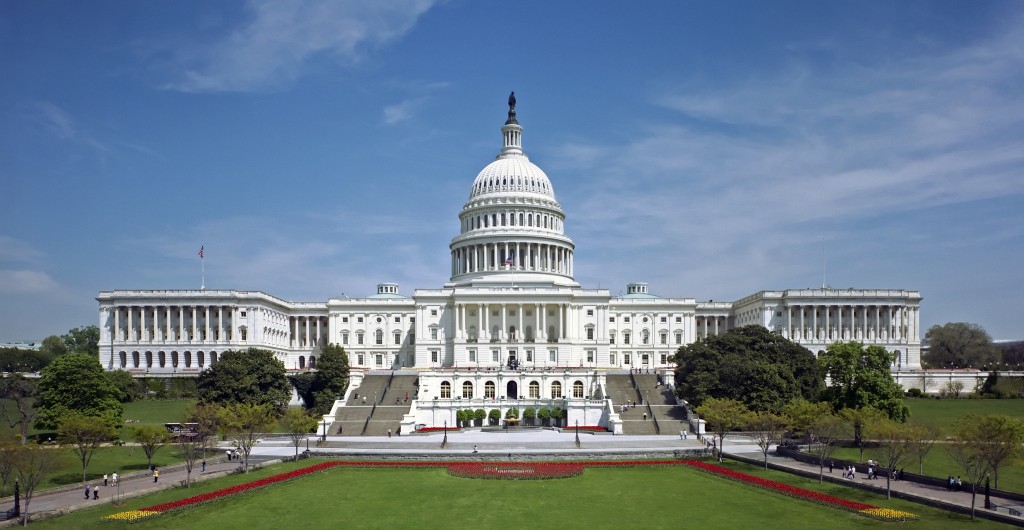
The U.S. House of Representatives returns Tuesday after a weeklong holiday recess ready to tackle a busy July agenda. They’ll begin with a vote on three noncontroversial bills under suspension of the rules. After Tuesday’s suspension votes, members will resume consideration of H.R. 2822: the Interior, Environment, and Related Agencies Appropriations Act for FY 2016. The bill provides a total of $30.2 billion in discretionary spending in FY 2016 for the Interior Department, the EPA, the Forest Service and a variety of other agencies. That total is $246 million (1 percent) less than current funding and $3.1 billion (9 percent) less than requested by the Obama administration. It’s considered a controversial bill because it decreases funding for EPA by 9 percent and limits the EPA’s regulatory authority. It also cuts funding for Forest Service activities and for the Fish and Wildlife Service. Other legislation on the floor for a vote this week includes: H.R. 5: the Student Success Act. The House originally began consideration of H.R. 5 in February, but postponed completing consideration at that time. The bill reauthorizes the Elementary and Secondary Education Act (ESEA, sometimes also referred to No Child Left Behind, NCLB). The bill makes fundamental changes to many ESEA programs. Alabama co-sponsors: Rep. Bradley Byrne (AL-1) H.R. 6: the 21st Century Cures Act. This bill is a bipartisan medical research and innovation bill intended to assure American leadership in biomedical research for the future and to allow drugs to get to patients more quickly, while also ensuring they are safe and effective for use. Alabama co-sponsors: Rep. Mike Rogers (AL-3) H.R. 2647: the Resilient Federal Forests Act of 2015. The bill would modify federal forest management practices by restoring fundamental land management capabilities to the U.S. Forest Service, such as routine thinning practices to improve forest health and reduce wildfire threats. Alabama co-sponsors: Rep. Gary Palmer (AL-6) Aside from the floor activity, the House will continue to work with the Senate through a conference committee to resolve the differences between their two versions of the National Defense Authorization Act. They are hoping to produce a final conference report before the August congressional recess, despite that President Barack Obama has threatened to veto the defense policy bills produced by both of the chambers.
U.S. House of Representatives: June 22-26
With Independence Day recess next week, the U.S. House of Representatives has a busy schedule this week. Members of Congress return tomorrow to consider 14 bills under suspension of the rules including H.R. 805, the DOTCOM Act, which limits the ability of the Commerce Department to relinquish responsibility over the assignment of Internet domain names. The majority of the other bills to be considered under suspension come from the Homeland Security Committee. After consideration of the suspension bills, legislation on the floor for a vote this week includes: H.R. 1190: Protecting Seniors’ Access to Medicare Act of 2015. The bill repeals the provisions of Obamacare that created the Independent Payment Advisory Board (IPAB). Alabama co-sponsors: Rep. Bradley Byrne (AL-1), Rep. Martha Roby (AL-2), Rep. Robert Aderholt (AL-4),Rep. Mo Brooks (AL-5) H.R. 2042: the Ratepayer Protection Act. The bill postpones when states and existing fossil-fuel power plants must comply with current or future EPA rules aimed at reducing carbon emissions until all judicial challenges are exhausted, and it allows state governors to opt out of EPA emission reduction rules for existing power plants if he or she certifies the requirements would have an adverse effect on the state’s electricity ratepayers. Alabama co-sponsors: Rep. Bradley Byrne (AL-1), Rep. Martha Roby (AL-2), Rep. Mike Rogers (AL-3), Rep. Mo Brooks (AL-5), Rep. Terri Sewell (AL-7) H.R. 2822: the Interior, Environment, and Related Agencies Appropriations Act for FY 2016. The bill provides a total of $30.2 billion in discretionary spending in FY 2016 for the Interior Department, the EPA, the Forest Service and a variety of other agencies. It is also possible the House could consider legislation related to Trade Adjustment Assistance (TAA).
