
Joel Gilbert, David Roberson convicted in bribery case

A prominent Alabama attorney and a coal company executive were convicted Friday on federal charges involving bribery of a state lawmaker. The verdict against Joel Gilbert, a partner with Balch & Bingham law firm, and Drummond Co. Vice President David Roberson was announced after a four-week trial. Jurors found them guilty of conspiracy, bribery, three counts of honest services wire fraud and money laundering. Prosecutors said the two men bribed former state Rep. Oliver Robinson to oppose the Environmental Protection Agency’s expansion of a Superfund site and prioritizing the site’s expensive cleanup. Robinson pleaded guilty last year to bribery and tax evasion. He has not yet been sentenced. U.S. Attorney Jay Town said after the verdict that the case was not about the EPA or about pollution. “This was a case about greed at the expense of too many,” he stated in a prepared release. “The findings of guilt for these three individuals, by trial or plea, should forewarn anyone who would be corruptly motivated to act in similar unlawful interest. Voters deserve public officials who seek to represent them honestly and fairly. When elected officials, corporate executives or their lawyers violate our federal laws, they should expect to suffer the fate of these three guilty defendants. We appreciate the dedication of the federal agencies that worked tirelessly on this case.” A third defendant, Balch attorney Steven McKinney, was dismissed from the case one day before closing arguments began. U.S. District Judge Abdul Kallon didn’t elaborate on the dismissal and his attorneys were not immediately available for comment. Drummond Co. issued a statement after the verdict. “We are disappointed by the jury’s decision to convict our employee, David Roberson. While we respect the judicial process, we consider David to be a man of integrity who would not knowingly engage in wrongdoing,” it said. “When an environmentalist group raised allegations regarding our operations in the Birmingham area, Drummond responded by hiring one of Alabama’s most well-respected environmental law firms. As testimony in the trial showed, we were assured the firm’s community outreach efforts on our behalf were legal and proper.” According to prosecutors, the men formed a contract through Balch with Robinson’s nonprofit organization to pressure state officials to oppose the EPA, to meet with EPA representatives, and vote on a joint resolution in the legislature to denounce the expansion and Superfund site being named on the EPA’s National Priorities List. Defense teams for both men said Robinson acted alone, and the contract with his foundation was for legitimate community outreach work. They said Robinson’s allegations about Gilbert and Roberson shouldn’t be trusted. Republished with the permission of the Associated Press.
EPA’s relief and worries after Scott Pruitt’s exit
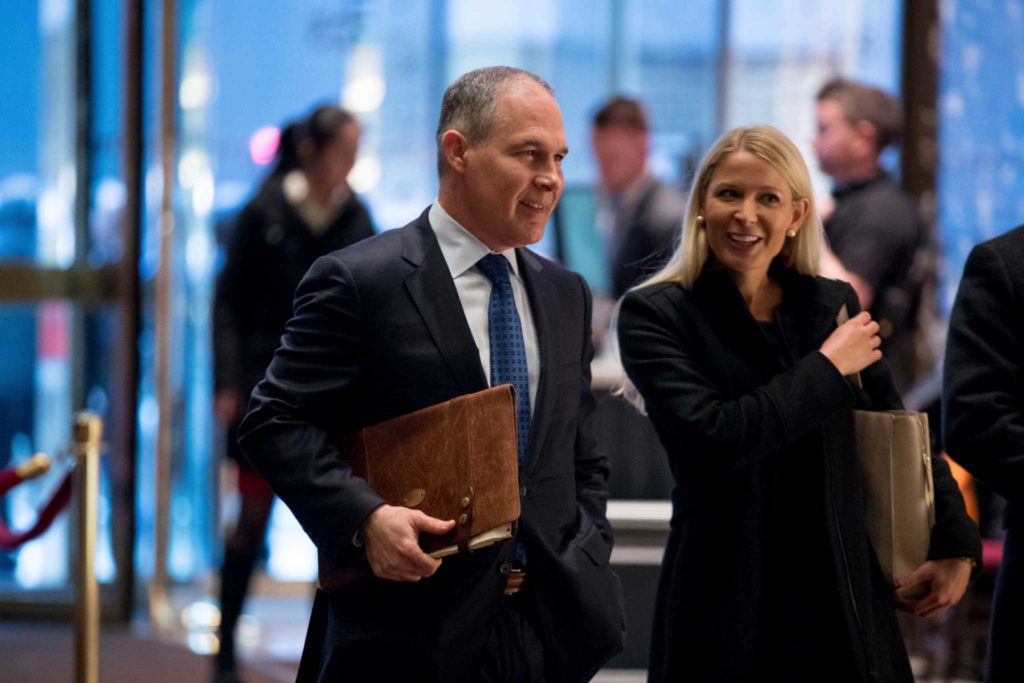
Taking over from an ambitious predecessor known for seeking out the rich, powerful and conservative, the Environmental Protection Agency’s newly named acting chief has promised to reach out to anxious staffers throughout the demoralized agency and to lawmakers of both political parties. By late afternoon Friday, there had been no public comment from either Scott Pruitt, whose resignation President Donald Trump announced Thursday after months of Pruitt’s ethics scandals, or Andrew Wheeler, the Washington veteran and former coal lobbyist who Trump announced as the agency’s acting head. In an email sent out to EPA staffers Thursday night and obtained by the Associated Press, Wheeler said he was honored to take temporary leadership of the agency where he started his Washington career in the early 1990s, as an EPA employee dealing with toxic substances and other matters. “I look forward to working hard alongside all of you,” Wheeler wrote agency employees. Pruitt, Oklahoma’s attorney general at the time of his EPA appointment, had embraced the perks of office in Washington. He instituted unusual and costly round-the-clock protection for himself, flew premium class to Europe and North Africa, and directed agency staffers to help seek housing for his family, high-dollar employment for his wife, and pleasures such as luxury lotion and tickets to top sporting events. Trump had praised Pruitt for his regulation-trimming ways at EPA. On Thursday, however, Trump said Pruitt himself had concluded the EPA chief’s ethics scandals were too much of a distraction and was stepping down. Some EPA staffers linked to Pruitt’s tumultuous 17-month tenure feared for their jobs Friday, former top staffers under Pruitt said. That included the roughly 20 members of a security detail Pruitt’s EPA had created to guard him around the clock. The guards were originally trained for investigating environmental crimes. The agency’s security officials are expected to decide what level of protection Wheeler needs. “There’s definitely that fear” of a shake-up among Pruitt’s remaining political appointees, said Kevin Chmielewski, the former deputy chief of staff who fell out of favor with Pruitt after questioning spending. “This is the follow-up stories, the people’s lives he’s affected, going down to the agents and everyone else.” Some scientists and other career staffers, who learned of Pruitt’s departure through news and social media on Thursday, quietly expressed relief, Elizabeth Southerland, who quit last year as the science director at the agency’s Office of Water, said after hearing Thursday and Friday from many still at the agency. Wheeler’s public statements show him to be a skeptic, like Pruitt, about the extent to which coal, oil and gas emissions drive climate change, something that mainstream science says is indisputable fact. After leaving his four-year stint at the EPA in the 1990s, Wheeler became the top staffer for the Senate’s most ardent challenger of manmade climate-change, Republican Sen. James Inhofe of Oklahoma. Wheeler then went to work as a lobbyist for top coal companies and other businesses and interests. In a hearing on his appointment as the agency’s deputy administrator last November, Wheeler described himself as someone who “always tried to find common ground and work across the aisle” in Washington. Where Pruitt openly criticized the work of EPA employees under the Obama administration, Wheeler at the Senate committee hearing made a point of praising the agency’s career staffers as “some of the most dedicated and hard-working employees” in federal government. Wheeler told the Washington Examiner earlier this year he was focusing on repairing relationships with EPA career staff who bristled at Pruitt’s leadership. At the EPA, staffers expect Wheeler to stick to the agenda set by Pruitt and Trump: Cutting environmental regulations that the Trump administration and industries see as unnecessarily burdensome to business, Southerland, the former water official, said. “There’s not a single person who doesn’t think that will happen,” Southerland said of the current EPA staffers she has talked to. However, “they think at least the contemptuous behavior will stop,” she said. She was referring to allegations that Pruitt ignored all but his own political appointees at the agency, and used his office for personal gain. EPA’s press office sent out biographical information on Wheeler late Friday, but did not respond to interview requests for him. Republished with the permission of the Associated Press.
Scott Pruitt is out, handing EPA reins to former coal lobbyist
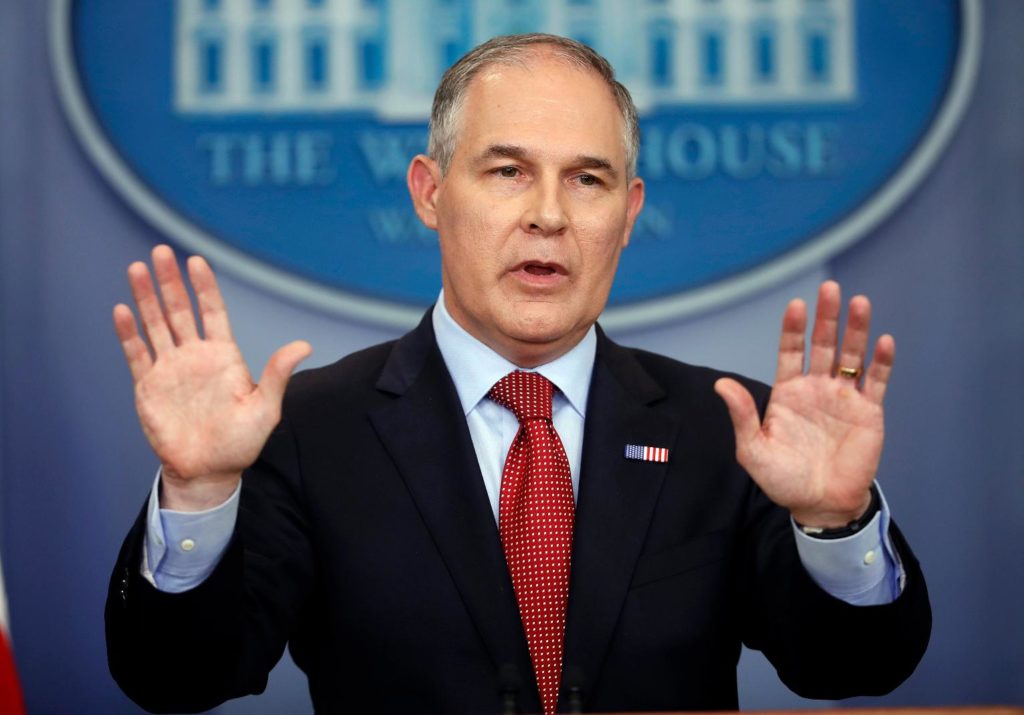
Bowing out after months of scandals, Scott Pruitt is turning the Environmental Protection Agency over to a far less flashy deputy who is expected to continue Pruitt’s rule-cutting, business-friendly ways as steward of the country’s environment. With Pruitt’s departure, President Donald Trump lost an administrator many conservatives regarded as one of the more effective members of his Cabinet. But Pruitt had also been dogged for months by scandals that spawned more than a dozen federal and congressional investigations. EPA Deputy Administrator Andrew Wheeler, a former coal industry lobbyist, will take the helm as acting administrator starting Monday. “I have no doubt that Andy will continue on with our great and lasting EPA agenda,” Trump tweeted Thursday in announcing Pruitt’s resignation. Republicans say Wheeler is well-qualified to lead the EPA, having worked at the agency early in his career. He also was a top aide at the Senate Environment Committee before becoming a lobbyist nine years ago. Democrats and environmental groups decried Wheeler as an apologist for the coal industry. He’s also a former top aide to GOP Sen. James Inhofe of Oklahoma, who rejects mainstream climate science. Sen. Tom Udall of New Mexico, one of the most relentless and vocal of Pruitt’s Democratic critics in Congress, said he expects more of the same with Wheeler as chief. “Somebody that destructive, I think it’s good to have them go, no doubt about it,” Udall said of Pruitt in an interview. “But let’s not forget he was carrying out President Trump’s policies.” The prospect of more EPA rollbacks even after Pruitt is gone is “really, really worrisome to me,” he said. “The head of the agency’s changed, but I don’t think there’s any indication that the acting administrator will do anything any different.” Talking to reporters on Air Force One, Trump continued to praise his scandal-plagued EPA chief, saying there was “no final straw” and he had not asked for Pruitt’s resignation. “Scott is a terrific guy,” Trump said. “He came to me and said I have such great confidence in the administration I don’t want to be a distraction. … He’ll go and do great things and have a wonderful life, I hope.” In his resignation letter to Trump, obtained by The Associated Press, Pruitt expressed no regrets. “It is extremely difficult for me to cease serving you in this role first because I count it a blessing to be serving you in any capacity, but also, because of the transformative work that is occurring,” Pruitt wrote. “However, the unrelenting attacks on me personally, my family, are unprecedented and have taken a sizable toll on all of us.” Pruitt, a Republican, had appeared Wednesday at a White House picnic for Independence Day, wearing a red-checked shirt and loafers with gold trim. Trump gave him and other officials a brief shout-out, offering no sign of any immediate change in his job. Pruitt’s resignation came days after two of his closest advisers spoke to House oversight committee investigators and revealed new, embarrassing details in ethics scandals involving Pruitt. Samantha Dravis, who recently resigned as Pruitt’s policy chief, told investigators last week that Pruitt had made clear to her before and after he became EPA administrator that he would like the attorney general’s job, held then and now by Jeff Sessions. Pruitt “had hinted at that (sic) some sort of conversation had taken place between he and the president,” Dravis told congressional investigators, according to a transcript obtained Thursday by the AP. “That was the position he was originally interested in.” A former Oklahoma attorney general close to the oil and gas industry, Pruitt had filed more than a dozen lawsuits against the agency he was picked to lead. Arriving in Washington, he worked relentlessly to dismantle Obama-era environmental regulations that aimed to reduce toxic pollution and planet-warming carbon emissions. During his less than two-year tenure, Pruitt crisscrossed the country at taxpayer expense to speak with industry groups and hobnob with GOP donors, but he showed little interest in listening to advocates he derided as “the environmental left.” Those groups quickly applauded his departure. “Despite his brief tenure, Pruitt was the worst EPA chief in history,” said Kieran Suckling, executive director of the Center for Biological Diversity. “His corruption was his downfall, but his pro-polluter policies will have our kids breathing dirtier air long after his many scandals are forgotten.” Like Trump, Pruitt voiced skepticism about mainstream climate science and was a fierce critic of the Paris climate agreement. The president cheered his EPA chief’s moves to boost fossil fuel production and roll back regulations opposed by corporate interests. But despite boasts of slashing red tape and promoting job creation, Pruitt had a mixed record of producing real-world results. Many of the EPA regulations Pruitt scraped or delayed had not yet taken effect, and the tens of thousands of lost coal mining jobs the president pledged to bring back never materialized. Pruitt quit following a series of revelations involving pricey trips with first-class airline seats and unusual security spending, including a $43,000 soundproof booth for making private phone calls. He also demanded 24-hour-a-day protection from armed officers, resulting in a swollen 20-member security detail that blew through overtime budgets and racked up expenses of more than $3 million. Pruitt routinely ordered his EPA staff to do personal chores for him, including picking up his dry cleaning and trying to obtain a used Trump hotel mattress for his apartment. He had also enlisted his staff to contact conservative groups and companies to find a lucrative job for his unemployed wife, including emails seeking a Chick-fil-A franchise from a senior executive at the fast-food chain. Pruitt’s job had appeared in jeopardy since the end of March, when ABC News first reported that he leased a Capitol Hill condo last year for just $50 a night. It was co-owned by the wife of a veteran fossil fuels lobbyist whose firm had sought regulatory rollbacks from EPA. The slew of damaging revelations, many of which came to
Scandal-plagued EPA Administrator Scott Pruitt resigns
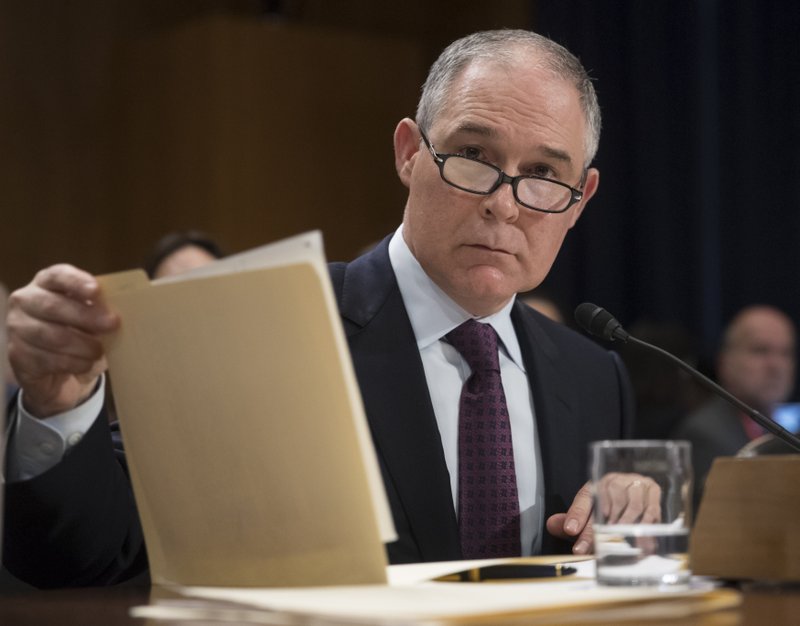
President Donald Trump says he has accepted the resignation of scandal-plagued Environmental Protection Agency Administrator Scott Pruitt. Pruitt had become a constant source of embarrassment to a president who had entered Washington promising to “Drain the Swamp.” Pruitt has faced an array of ethical questions about his travel spending, security costs, dealings with industry lobbyists and misuse of government resources. He had denied wrongdoing in the face of multiple congressional and oversight inquiries. Despite the scandals, Trump has been approving of Pruitt’s efforts to reduce regulations that the administration says curb business growth. Trump writes on Twitter, “Within the Agency Scott has done an outstanding job.” Activists have argued those cuts have endangered the environment. Trump tweets that Deputy Administrator Andrew Wheeler will assume the acting administrator position Monday. Republished with the permission of the Associated Press.
Democratic lawmakers seek criminal corruption probe of EPA’s Scott Pruitt
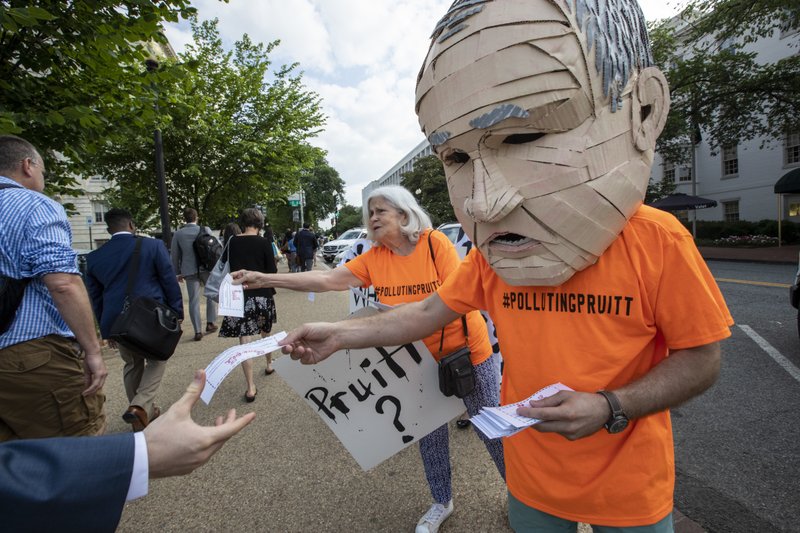
House Democrats on Friday formally requested that the Justice Department investigate Environmental Protection Agency Administrator Scott Pruitt for potential criminal conduct. In a letter to FBI Director Chris Wray and Justice criminal division chief John Cronan, six Democratic lawmakers with oversight of Pruitt’s agency allege he repeatedly violated federal anti-corruption laws by seeking to leverage his government position for personal gain. As evidence, the Democrats cite Pruitt’s $50-a-night lease of a Capitol Hill condo tied to a lobbyist seeking to influence his agency, directing an EPA aide to contact a senior Chick-fil-A executive as part of an effort to land his family a franchise, and a $2,000 payment to his wife from organizers of a conference the administrator then attended at taxpayer expense. A spokesman for Pruitt did not immediately respond to messages seeking comment. The letter was signed by Democratic Reps. Gerald Connolly and Donald Beyer of Virginia, Jamie Raskin of Maryland, Ruben Gallego of Arizona, Pramila Jayapal of Washington and Ted Lieu of California. Connolly is a senior member of the House Committee on Oversight and Government Reform and serves as the ranking Democrat on the Subcommittee on Government Operations. President Donald Trump signaled Friday he is still standing by his embattled EPA chief, even as Pruitt’s support among other Republicans has started to erode. “Scott Pruitt is doing a great job within the walls of the EPA,” Trump told reporters at the White House. “I mean, we’re setting records. Outside he’s being attacked very viciously by the press. And I’m not saying that he’s blameless. But we’ll see what happens.” For his part, Pruitt sought to laugh off the controversy this week over his using government resources to seek a “business opportunity” with the fast-food fried chicken chain whose owners are known for supporting conservative Christian causes, including outspoken opposition to same-sex marriage. “I mean, look, my wife is an entrepreneur herself. I love, she loves, we love Chick-fil-A as a franchise of faith,” Pruitt said in a TV interview on Wednesday. In their letter, the House Democrats make their case that Pruitt’s conduct rises to the level of criminal conduct. “At the very least, we know that federal ethics laws bar public officials from using their position or staff for private gain,” the Democrats wrote to Wray and Cronan. “Administrator Pruitt has certainly done just that. Further, his actions related to his wife’s employment and the quid-pro-quo condo situation with industry lobbyists may have crossed a line into criminal conduct punishable by fines or even by time in prison.” Republished with the permission of the Associated Press.
Scott Pruitt: Dealing with water contaminant a ‘national priority’
Dealing with a slate of toxic chemicals contaminating some drinking water systems around the country is a national priority, Environmental Protection Agency chief Scott Pruitt said Tuesday. Pruitt, who drew scrutiny from lawmakers after EPA emails released this month showed that the agency had intervened in the publication of a new government study on the contaminants, convened what he called a national summit on the chemicals. The chemicals are as perfluoroalkyl and polyfluoroalkyl. Used in some nonstick coatings, in firefighting foam and elsewhere, the chemicals can cause developmental defects and other health problems. Authorities say the contaminants are present in dangerous levels in some water systems, including several near military bases and industries. Pruitt drew questions from Republican and Democratic lawmakers last week after emails obtained under the Freedom of Information Act revealed an unidentified White House official calling a pending federal toxicological report on the chemical a “potential public-relations nightmare.” The emails also revealed EPA officials intervening in the release of the study, which remains unpublished. Politico first reported on the emails. Pruitt, formerly the Republican attorney general of Oklahoma, invited what the EPA said were 200 people to Tuesday’s Washington session on the chemicals. The people attending represented states, tribes, the chemical industry and other sectors, along with some environmental representatives. “It’s clear this issue is a national priority,” Pruitt said, opening the session. He pledged to start work toward establishing a legal maximum limit for the contaminants in drinking water systems. The EPA would reach out to communities with drinking water contaminated by the chemicals over the summer, agency officials said. The EPA is “very focused upon action,” Pruitt said. “We want to hear from all of you as we take the next step.” Environmental groups and some lawmakers have accused Pruitt of meeting more often with industry representatives, conservative political groups and lobbyists than with ordinary people affected by dangers that the EPA regulates. The EPA barred some news organizations, including The Associated Press, from Tuesday’s meeting. EPA spokesman Jahan Wilcox said the session was invitation-only and there was no room for the AP, but did not say what criteria were used in determining which media the agency invited. Republished with the permission of the Associated Press.
EPA chemical review would exclude millions of tons of toxins
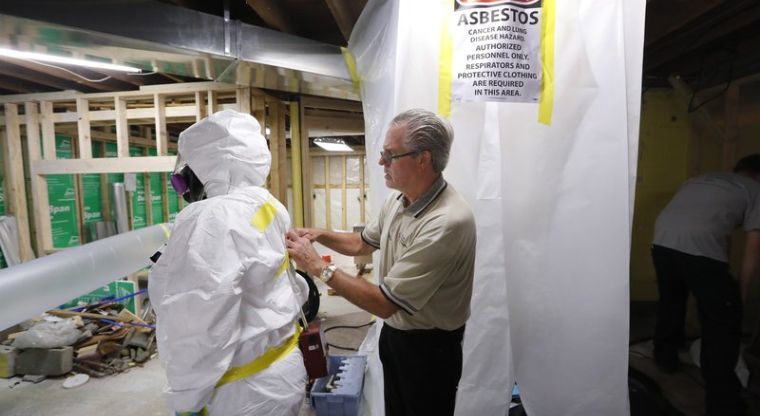
Spurred by the chemical industry, President Donald Trump‘s administration is retreating from a congressionally mandated review of some of the most dangerous chemicals in public use: millions of tons of asbestos, flame retardants and other toxins in homes, offices and industrial plants across the United States. Instead of following President Barack Obama‘s proposal to look at chemicals already in widespread use that result in some of the most common exposures, the new administration wants to limit the review to products still being manufactured and entering the marketplace. For asbestos, that means gauging the risks from just a few hundred tons of the material imported annually while excluding almost all of the estimated 8.9 million tons (8.1 million metric tons) of asbestos-containing products that the U.S. Geological Survey said entered the marketplace between 1970 and 2016. Lawmakers say the review was intended to be the first step toward enacting new regulations needed to protect the public. But critics – including health workers, consumer advocates, members of Congress and environmental groups – contend ignoring products already in use undermines that goal. The administration’s stance is the latest example of Trump siding with industry. In this case, firefighters and construction workers say the move jeopardizes their health. Both groups risk harm from asbestos because of its historical popularity in construction materials ranging from roofing and flooring tiles to insulation used in tens of millions of homes. Most of the insulation came from a mine in a Montana town that’s been declared a U.S. Environmental Protection Agency Superfund site and where hundreds of people have died from asbestos exposure. “Hundreds of thousands of firefighters are going to be affected by this. It is by far the biggest hazard we have out there,” said Patrick Morrison, assistant general president for health and safety at the International Association of Fire Fighters. “My God, these are not just firefighters at risk. There are people that live in these structures and don’t know the danger of asbestos.” Asbestos fibers can become deadly when disturbed in a fire or during remodeling, lodging in the lungs and causing problems including mesothelioma, a form of cancer. The material’s dangers have long been recognized. But a 1989 attempt to ban most asbestos products was overturned by a federal court, and it remains in widespread use. The National Institute for Occupational Safety and Health analyzed cancer-related deaths among 30,000 firefighters from Chicago, Philadelphia and San Francisco. The 2015 study concluded firefighters contract mesothelioma at twice the rate of other U.S. residents. Firefighters also face exposure to flame retardants included in the EPA’s review that are used in furniture and other products. “I believe the chemical industry is killing firefighters,” said Tony Stefani, a former San Francisco fireman who retired in 2003 after 28 years when diagnosed with cancer he believes resulted from exposure to chemicals in the pending review. Stefani said he was one of five in his station to contract cancer in a short period. Three later died, while Stefani had a kidney removed and endured a year of treatment before being declared cancer-free. “When I entered the department in the early 70s, our biggest fear was dying in the line of duty or succumbing to a heart attack,” he said. “Those were the biggest killers, not cancer. But we work in a hazardous-materials situation every time we have a fire now.” Mesothelioma caused or contributed to more than 45,000 deaths nationwide between 1999 and 2015, according to a Centers for Disease Control and Prevention study in March. The number of people dying annually from the disease increased about 5 percent during that time. Congress ordered the EPA review last year to gauge risks of asbestos and nine other highly toxic substances and find better ways to manage them for public safety. In one of its last acts under Obama, the EPA said in January it would judge the chemicals “in a comprehensive way” based on their “known, intended and reasonably foreseen uses.” Under Trump, the agency has aligned with the chemical industry, which sought to narrow the review’s scope. The EPA now says it will focus only on toxins still being manufactured and entering commerce. It won’t consider whether new handling and disposal rules are needed for “legacy,” or previously existing, materials. “EPA considers that such purposes generally fall outside of the circumstances Congress intended EPA to consider,” said EPA spokeswoman Enesta Jones, adding the agency lacks authority to regulate noncommercial uses of the chemicals. One of the law’s co-authors, New Mexico Democratic Sen. Tom Udall, disputes that Congress wanted to limit the review. “It doesn’t matter whether the dangerous substance is no longer being manufactured; if people are still being exposed, then there is still a risk,” Udall told The Associated Press. “Ignoring these circumstances would openly violate the letter and the underlying purpose of the law.” Rep. Frank Pallone of New York, ranking Democrat on the House Energy and Commerce Committee, said the EPA was deferring to the chemical industry’s wishes at the expense of public health. Democrats and public health advocates have criticized EPA Administrator Scott Pruitt for hiring two people – Nancy Beck, the agency’s deputy assistant administrator for chemical safety, and Liz Bowman, its associate administrator for public affairs – who formerly worked for the American Chemistry Council, the industry’s lobbying arm. The council pushed back against the Obama administration’s interpretation of the law, urging the EPA’s new leadership to narrow its review. The Trump administration did that in June. “Did we get everything we wanted? No. But we certainly agree the (Trump) administration put forth a reasonable final rule,” said council vice president Michael Walls. Broadening the review, he added, would send the EPA “down a rabbit hole chasing after illusory risks.” The politically influential National Association of Homebuilders, which represents the residential construction industry, fears broadly interpreting the new law would lead to burdensome regulations that are unnecessary because it says asbestos disposal rules already are adequate. Many of those regulations are based
Federal employees ordered to attend anti-leaking classes
Employees at the Environmental Protection Agency are attending mandatory training sessions this week to reinforce their compliance with laws and rules against leaking classified or sensitive government information. It is part of a broader Trump administration order for anti-leaks training at all executive branch agencies. The Associated Press obtained training materials from the hourlong class. Government employees who hold security clearances undergo background checks and extensive training in safeguarding classified information. Relatively few EPA employees deal with classified files, but the new training also reinforces requirements to keep “Controlled Unclassified Information” from unauthorized disclosure. The EPA occasionally creates, receives, handles and stores classified material because of its homeland security, emergency response and continuity missions. EPA employees also work closely with contractors and other federal agencies that more regularly handle classified information. President Donald Trump has expressed anger repeated leaks of potentially embarrassing information to media organizations in recent months. In a speech last month, Attorney General Jeff Sessions said those responsible for the “staggering number of leaks” coming out of the administration would be investigated and potentially prosecuted. “We share the White House’s concern with the unlawful leaks throughout the government,” Justice Department spokesman Ian Prior said Wednesday. EPA officials did not immediately respond to messages seeking comment Thursday. A three-page fact sheet sent to EPA employees as part of the training warned that leaks of even unclassified information could have serious consequences to national security. “Enemies of the United States are relentless in their pursuit of information which they can exploit to harm US interests,” the document said. The document recounted past circumstances where government secrets had been spilled either through espionage, computer hacks or leaks to reporters. The examples included the 1980s spying case involving CIA counter-intelligence officer Aldrich Ames on behalf of the Soviets and a 1972 leak to columnist Jack Anderson about spying on members of the Soviet Politburo, which he disclosed in The Washington Post. The sheet also cited the 2015 hack of computers at the Office of Personnel Management, a data breach that compromised the names, Social Security numbers, birthdates and home addresses and other sensitive personal information for 18 million people. EPA staff was also reminded of the whistleblower protections afforded to federal employees who expose wrongdoing. The training materials directed them to do so through proper channels for reporting fraud, waste and abuse, including the inspector general’s hotline. Republished with permission from the Associated Press.
EPA Administrator taps former Alabama official Trey Glenn to lead Region 4
The former director of the Alabama Department of Environmental Management (ADEM), Trey Glenn, has been named the U.S. Environmental Protection Agency’s (EPA) Region 4 Administrator. Glenn will oversee environmental protection efforts across Alabama, Florida, Georgia, Kentucky, Mississippi, North Carolina, South Carolina, and Tennessee. As director of ADEM from 2005 – 2009, Glenn managed over 600 employees tasked with ensuring a safe, healthy, and productive environment to all Alabama residents. Prior to that he served as division director for the Alabama Office of Water Resources from 2001- 2005 where he was responsible for leading day-to-day operations on coordinating and managing Alabama’s water resources. Most recently, he’s been working as an independent engineer consultant and business owner, focused on environmental issues. EPA Administrator Scott Pruitt made the announcement of his appointment on Monday. Glenn is Pruitt’s first appointment of a regional administrator since being confirmed in February. “Trey Glenn will bring invaluable experience as regional administrator having spent over two decades working in the field of environmental and regulatory policy,” said Pruitt. “Mr. Glenn will help us carry out President Trump’s vision of creating a more streamlined and efficient EPA that focuses on the Agency’s core mission, while also providing more regulatory certainty to our nation’s businesses.” Alabama Governor Kay Ivey echoed Pruitt’s confidence in Glenn. “We are proud to have a person of Trey Glenn’s caliber leading such an important organization for our area. His experience as Director of the Alabama Department of Environmental Management places him in a unique position to be prepared to work with these southern states,” said Ivey. “We are also especially glad to know someone with in-depth knowledge of Alabama will be overseeing our region. Our state looks forward to working closely with Trey and the EPA team to ensure the needs of the state are met and that we stay environmentally friendly.” Alabama’s Senior U.S. Sen. Richard Shelby said he believes Glenn is well-prepared for his new role. “As an accomplished environmental engineer from Alabama, Trey Glenn is well-prepared for this new role and challenge as the EPA Region 4 Administrator,” added Shelby. “Trey has a proven record of leveraging internal and external operations to advance clearly defined goals. Having served as the director of the Alabama Department of Environmental Management, he understands the value and importance of state authority and control. I am confident that Trey will provide respected leadership across the eight state region, while also promoting and protecting a strong and healthy environment.” Business Council of Alabama President and CEO William J. Canary also issued a statement in support of Glenn. “Trey’s experience as director of the Alabama Department of Environmental Management, at the Alabama Office of Water Resources, and his engineering and management work as a business owner in the private sector gives him valuable knowledge that will serve both citizens, businesses, and the environment,” Canary said. “As a valuable member of the BCA advocacy team, Trey provided important leadership and advice in environmental matters for Alabama’s business community.” Lance LeFleur, Director of Alabama Department of Environmental Management, who has working experience with Glenn said he’s confident Glenn will do an outstanding job in his new role. “I have had the opportunity to work with Trey Glenn as I transitioned into my position as Director of the Alabama Department of Environmental Management – a position he previously occupied – so I have seen his capabilities first hand,” assured LeFleur. “President Trump made a wise choice in selecting Trey. I am confident he will do an outstanding job, especially considering he will have an exceptionally fine career staff in Region 4 at his side. I look forward to working with Trey in assuring for Alabama citizens a safe, healthful, and productive environment.”
Advocates oppose EPA’s delay of coal plant pollution limits
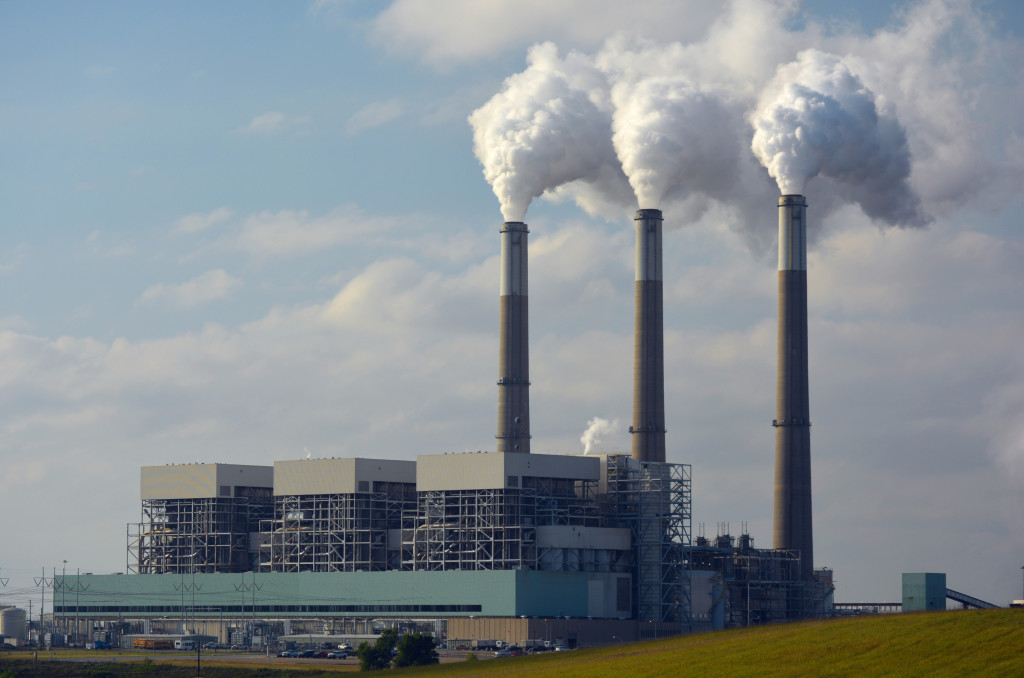
Environmental advocates urged the Trump administration on Monday to reverse course on its move to set aside an Obama-era measure limiting water pollution from coal-fired power plants. About 50 people spoke during a public hearing to voice their strong opposition to Environmental Protection Agency administrator Scott Pruitt‘s decision to delay implementation of a 2015 rule setting tighter guidelines for power plant wastewater piped into rivers and lakes that often serve as sources of public drinking water. The coal waste contains traces amounts of highly toxic heavy metals such as lead, arsenic, mercury and selenium. Pruitt was acting at the behest of electric utilities who petitioned him earlier this year to redraft the rule, which they claim is too costly and burdensome. The decision leaves EPA’s guidelines from 1982 in effect, standards set when far less was known about the detrimental impacts of even tiny levels of heavy metals on human health and aquatic life. Many of those who traveled to EPA headquarters in Washington on Monday said they wanted to speak out, even as they expressed doubt it would do any good. Pruitt, the former attorney general of Oklahoma, has repeatedly moved to kill or delay rules curbing pollution from the fossil-fuel operations since his appointment to lead EPA. Robert F. Kennedy Jr., president of the Waterkeeper Alliance, told the three mid-level EPA officials running the hearing that Pruitt’s actions violated federal law. He accused the EPA chief of engaging in a “sham process” to protect coal-industry profits at the expense of public health. “They have no right to poison our fish,” said Kennedy, an environmental layer who is a son of the former attorney general and senator and a nephew of President John F. Kennedy. “They have no right to poison our children. EPA can’t give them that right. … The waterways of this country belong to the people.” The Waterkeeper Alliance is one about a dozen environmental groups banding together to sue EPA over the move to rewrite the power-plant wastewater standards. EPA estimates the 2015 rule, if implemented, would reduce power plant pollution by about 1.4 billion pounds a year. Only about 12 percent of the nation’s steam electric power plants would have to make new investments to meet the higher standards, according to the agency. Utilities would need to spend about $480 million on new wastewater treatment systems, resulting in about $500 million in estimated public benefits, such as fewer incidents of cancer and childhood developmental defects. Three industry representatives attended Monday’s hearing to speak in favor of the delay, saying Pruitt’s planned rewrite of the 2015 rule created too much uncertainty for them to invest in new equipment. Republished with permission of The Associated Press.
EPA chief pledges to streamline Superfund pollution cleanups
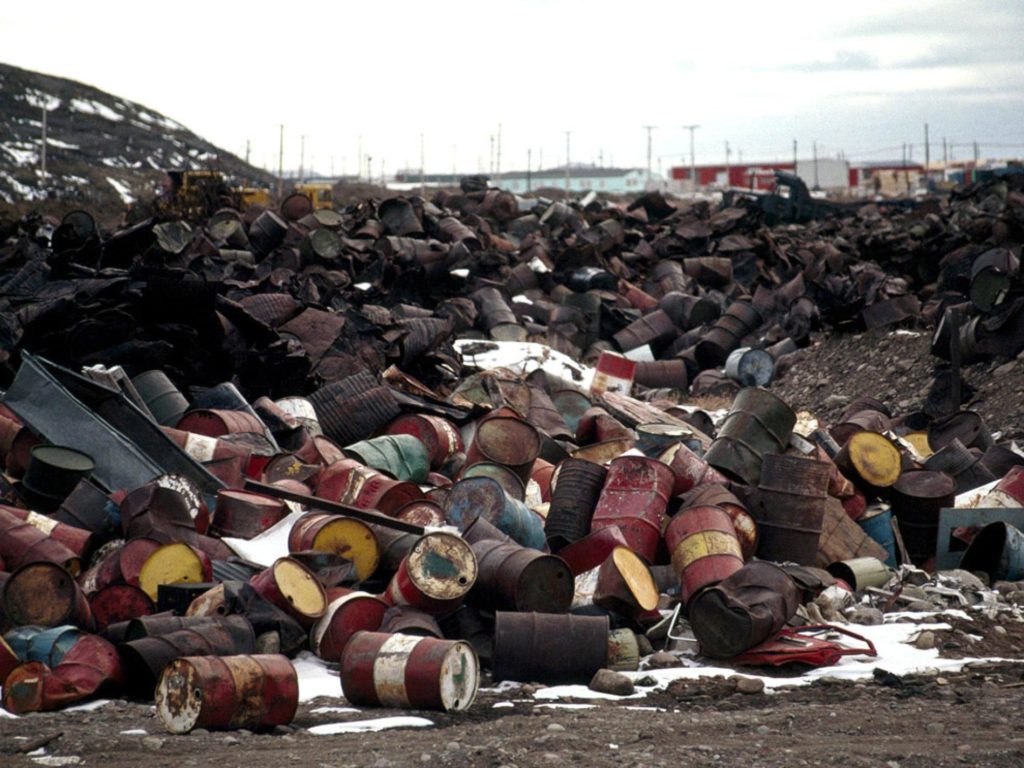
President Donald Trump‘s environmental chief issued a list of directives on Tuesday he says will revitalize the federal program that cleans up hazardous waste sites. Environmental Protection Agency chief Scott Pruitt unveiled 42 recommendations from a Superfund Task Force he appointed in March. Among the steps Pruitt outlined will be prioritizing sites that can be redeveloped or where nearby residents are still under threat from the spread of harmful chemicals. Pruitt has pledged to make mitigating decades-old pollution a top priority for the EPA, even as he has moved to block or delay Obama-era regulations aimed at curbing ongoing contamination from coal-fired power plants and fossil-fuel production. “There is nothing more core to the agency’s mission than revitalizing contaminated land,” Pruitt said, according to a media release. “I commend the team effort of the career and political staff on the Task Force, working together to develop recommendations that are detailed, but also workable – to ensure that we can expedite the protection of human health and the environment around these properties and accelerate the reuse.” There are now more than 1,300 Superfund sites nationally, some of which have languished for years without cleanup plans or funding. President Trump’s proposed 2018 budget seeks to cut money for the program by 30 percent, though Congressional Republicans have indicated they are likely to approve less-severe cuts. Money for Superfund is already about half what it was in the 1990s. The majority of cleanup money has been spent in just seven highly industrialized states, topped by New Jersey. The EPA routinely tries to compel the companies responsible for the pollution to pay, but taxpayers often end up on the hook due to corporate spinoffs and bankruptcies. The work is typically carried out by private contractors. Pruitt has played down the potential impact of the proposed budget cuts, saying the agency will accomplish more with less money under his leadership by improving oversight and efficiency. Republished with permission of The Associated Press.
Daniel Sutter: Forget Paris
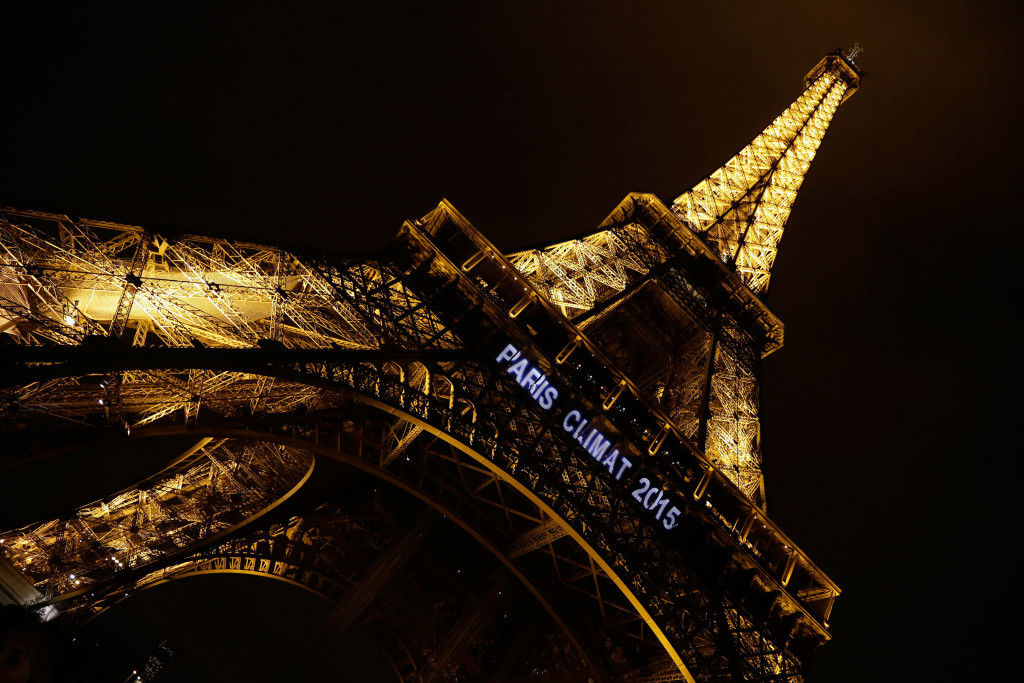
President Donald Trump announced the U.S. withdrawal from the Paris Climate Accord last week, setting off a firestorm of criticism. For instance, a New York Daily News headlined: “Trump to World: Drop Dead.” The withdrawal raises questions about global warming policies and their formulation. President Barack Obama and other world leaders signed the Paris Accord in December 2015. The U.S. and other developed nations promised greenhouse gas emissions cuts in the Accord. The Clean Power Plan, which significant restricts the use of coal, counts towards our promised efforts. Peoples’ responses to the withdrawal seem to depend largely on whether they believe that global warming will prove catastrophic. Warming due to greenhouse gases is not really in doubt; relevant questions involve how much warming will occur, the impacts of warming, and the viability of climate engineering to avoid or reverse warming. Despite the invective hurled at President Trump, the Paris Accord would have done very little to prevent catastrophic global warming. If every nation had delivered as promised (a big if), the Accord would have prevented about 0.2 degrees Celsius warming by 2100 according to leading climate models. The math of atmospheric carbon dioxide concentrations is pretty clear: achieving the recommended targets will take a lot more than driving electric cars. Basically, we would need to stop using fossil fuels by mid-century, bringing almost unimaginable changes to our economy and lives. On the other hand, people who don’t see global warming as a dire threat look forward to Mr. Trump soon voiding the Clean Power Plan. Such a celebration might be premature. The Environmental Protection Agency (EPA) might be committed to the Plan despite the Paris exit. Why? In 2007, the U.S. Supreme Court ruled in Massachusetts v. E.P.A. that the Clean Air Act provided legal authority to regulate carbon dioxide emissions, if the EPA determined that greenhouse gases endangered the environment. In 2009, President Obama’s EPA issued this endangerment finding. As Cato Institute’s Patrick Michaels argued at the recent 12th International Conference on Climate Change, the endangerment finding likely compels implementation of the Clean Power Plan. The process behind imposing these policies is, I think, highly troubling. A lawsuit by environmental groups and sympathetic state attorneys general yielded the 2007 Supreme Court decision. Regulatory actions by the EPA produced the endangerment finding and Clean Power Plan. And finally, we had an international agreement never ratified by the Senate. The process further relied on technicalities and a limitation of the Clean Air Act. The Act requires reduction of pollution to safe levels regardless of cost, and without considering whether we might more easily live with pollution. And yet adaption to a warmer climate is a potential response to global warming. The Clean Air Act gives the EPA authority to regulate “any air pollutant” endangering human well-being. Calling carbon dioxide, which is necessary for life, pollution stretches the plain meaning of the word. Limited government undertakes only those tasks citizens authorize. Meaningful limits require narrowly authorized tasks. Air pollution caused by cars and factories differs markedly from global warming. Action to address global warming should require explicit authorization by citizens. The cap-and-trade proposal of 2010 sought such approval, but failed in the Senate. The Paris Accord was never submitted to the Senate. Enacting the costliest environmental program ever contemplated without approval by our elected representatives is inconsistent with democracy and limited government. Global warming activists interpreted cap-and-trade’s failure as evidence of special interests choking the democratic process. Yet evidence weighs against this interpretation. A 2015 Gallup poll, for instance, found that only 32 percent of Americans worried a great deal about climate change, the same percentage as in 1989. If you doubt such polls, then ask if you or people you know would be willing to give up cars, airplanes, air conditioning and computers over global warming. Our system trusts that Americans have the intelligence and character to determine what is in our best interests. Many Americans are not willing to spend trillions of dollars combatting global warming. We may be wrong, but imposing incredibly costly policies against our wishes is un-American. ••• Daniel Sutter is the Charles G. Koch Professor of Economics with the Manuel H. Johnson Center for Political Economy at Troy University and host of Econversations on TrojanVision. The opinions expressed in this column are the author’s and do not necessarily reflect the views of Troy University.
