
Ohio retailer to pay $5M in Alabama gender bias case
An Ohio-based retailer that was sued in Alabama for sexual discrimination will pay $5 million and provide job opportunities to women to settle the lawsuit, the Equal Employment Opportunity Commission said. The federal agency announced the agreement in a statement Wednesday about American Freight Management Co. The company’s website shows it has more than 300 closeout stores nationwide in 40 states operating as American Freight Furniture and Mattress. The commission claimed in a lawsuit filed in 2019 that American Freight had a nationwide pattern of discriminating against women to work in its warehouse-style stores. Managers refused to hire women claiming they “can’t lift” or would be a “distraction” to men, a statement said, or that females don’t sell furniture as well as males. The money will go to compensate women who were wrongly denied work between 2013 and last year, court documents show. The company, based in Delaware, Ohio, also was barred from discriminating against any job applicant and from retaliating, the agency said. It must recruit women and offer sales and warehouse jobs to qualified applicants who previously were denied positions. The company did not immediately return an email message seeking comment Thursday. Republished with the permission of the Associated Press.
Alabama sues Joe Biden administration over school, work LGBT protections
Attorneys general from 20 states sued President Joe Biden’s administration Monday seeking to halt directives that extend federal sex discrimination protections to LGBTQ people, ranging from transgender girls participating in school sports to the use of school and workplace bathrooms that align with a person’s gender identity. Tennessee Attorney General Herbert Slatery filed the lawsuit in U.S. District Court in Knoxville, arguing that legal interpretations by the U.S. Department of Education and the Equal Employment Opportunity Commission are based on a faulty view of U.S. Supreme Court case law. The Supreme Court ruled in June 2020 that a landmark civil rights law, under a provision called Title VII, protects gay, lesbian, and transgender people from discrimination in employment. This June, the Department of Education said discrimination based on a student’s sexual orientation or gender identity will be treated as a violation of Title IX, the 1972 federal law that protects against sex discrimination in education. A legal analysis by the department concluded there is “no persuasive or well-founded basis” to treat education differently than employment. Also, in June, the Equal Employment Opportunity Commission released guidance about what could constitute discrimination against LGBTQ people and advised the public about how to file a complaint. With its guidance, the Biden administration in part took a stand against laws and proposals in a growing number of states that aim to forbid transgender girls from participating in female sports teams. The state attorneys general contend that the authority over such policies “properly belongs to Congress, the States, and the people.” “The guidance purports to resolve highly controversial and localized issues such as whether employers and schools may maintain sex-separated showers and locker rooms, whether schools must allow biological males to compete on female athletic teams, and whether individuals may be compelled to use another person’s preferred pronouns,” the lawsuit states. “But the agencies have no authority to resolve those sensitive questions, let alone to do so by executive fiat without providing any opportunity for public participation.” Joining Tennessee in the lawsuit are Alabama, Alaska, Arizona, Arkansas, Georgia, Idaho, Indiana, Kansas, Kentucky, Louisiana, Mississippi, Missouri, Montana, Nebraska, Ohio, Oklahoma, South Carolina, South Dakota, and West Virginia. The lawsuit asks a judge for a number of declarations about Title IX in schools and Title VII in the workplace: that they don’t prohibit schools and employers from having showers, locker rooms, bathrooms, and other living facilities separated by “biological sex”; that they do not require employers, school employees or students to use a transgender person’s preferred pronouns; that they do not prohibit having school sports teams separated by “biological sex”; and that they do not prohibit workplace dress codes based on “biological sex.” The education policy carries the possibility of federal sanctions against schools and colleges that fail to protect gay and transgender students. The Department of Justice on Monday did not immediately respond to a request for comment on the lawsuit. The education directive reversed President Donald Trump-era policies that removed civil rights protections for transgender students. In 2017, the Trump administration lifted President Barack Obama-era guidance allowing transgender students to use bathrooms and locker rooms that match their gender identities. At the time, then-Education Secretary Betsy DeVos said the issue was “best solved at the state and local level,” and the earlier guidance led to a spike in lawsuits seeking clarification. The new action does not reinstate the Obama-era policy but instead clarifies that the Education Department’s Office for Civil Rights will investigate complaints of discrimination involving gay or transgender students. If the department finds evidence of discrimination based on sexual orientation or gender identity, it will pursue a resolution to “address the specific compliance concerns or violations.” The federal agencies noted that the workplace and education guidance documents do not carry the force of law. The state attorneys general argued they are at risk of the federal government enforcing the guidance, threatening their states’ sovereign authority, causing significant liability, and putting their federal education funding at risk. In June, the Department of Justice filed statements of interest in lawsuits that seek to overturn new laws in two states. In West Virginia, a law prohibits transgender athletes from competing in female sports. Arkansas became the first state to ban gender-confirming treatments or surgery for transgender youth. Republished with the permission of the Associated Press.
Women of Influence: fair pay champion, Lilly Ledbetter
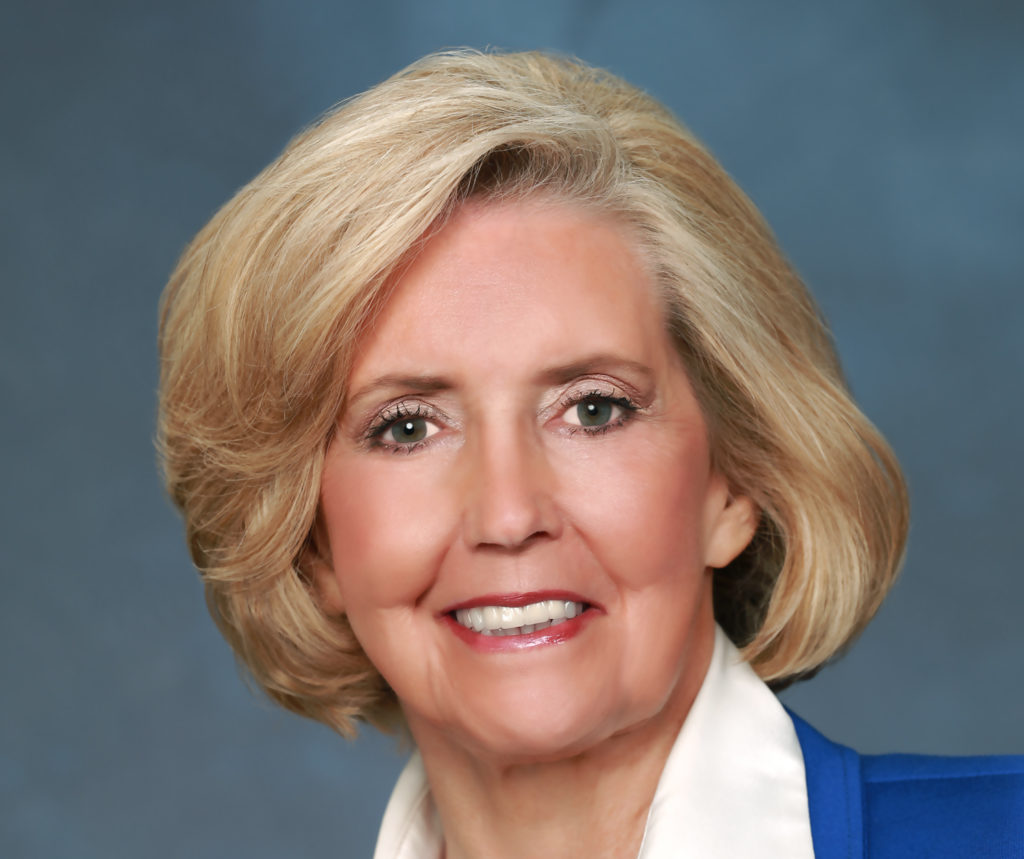
One of the most inspiring stories in Alabama women’s history is Lilly Ledbetter — a fair pay champion since the late 90’s. From her humble beginnings — in a house with no running water or electricity in the small town of Possum Trot, Ala. — Ledbetter became nationally recognized as one of the many faces of gender prejudice and sexual harassment in the workplace by the mid 2000’s. A graduate of Jacksonville High School in Jacksonville, Ala., Ledbetter started working as a district manger for H&R Block in 1969 where she oversaw 14 locations in Jacksonville and the surrounding area. By the time she left the company, she was overseeing 16 locations. While she was working with H&R Block, she also spent three years working at Jacksonville State University as an Assistant Financial aid director. “I would go in to teach classes, and do tax prep at night and on the weekend,” Ledbetter said. In 1979, Ledbetter applied and accepted her dream position as a manager at the Goodyear Tire plant in Gadsden, Ala. where she became one of the first women hired on for a management position. She said she could go toe-to-toe with any man, doing any job at the factory, nevertheless she still experienced sexual harassment and gender prejudice. After 19 years of working with the company, Ledbetter received an anonymous tip that she was receiving thousands less than her male peers in wages. Heartbroken, Ledbetter filed a sexual discrimination complaint with the Equal Employment Opportunity Commission (EEOC) in 1999. Her case went to trial, and the jury awarded her $3.3 million in compensatory and punitive damages for the pay discrimination she had been subjected to. In November of 2006, the Court of Appeals for the Eleventh Circuit Court reversed the jury’s verdict, saying that because the company’s original decision on her pay had been made years earlier, Ledbetter’s case was filed too late, even though she continued to receive discriminatory pay. In a 5-4 decision, the Supreme Court upheld the Eleventh Circuit decision and ruled employees cannot challenge ongoing pay discrimination if the employer’s original discriminatory pay decision occurred more than 180 days earlier, even when the employee continues to receive paychecks that have been discriminatorily reduced. “It was not fair, it wasn’t even close to being fair. We must go to congress, the house and the senate to prevent this from happening in the future to other females and minorities,” Ledbetter said in an interview. And she did. After realizing that the Supreme Court’s decision could undermined the Congressional goal of eliminating discrimination in the workplace, and after being called upon by Supreme Court Justice Ruth Bader Ginsberg. Congress and President Barack Obama‘s Administration acted quickly Less than two years after the Supreme Court’s decision, both the House and Senate passed the Lilly Ledbetter Fair Pay Act of 2009. A crucial piece of legislation, restoring the longstanding laws that ensure individuals who are subjected to unlawful pay discrimination are able to effectively assert their rights under the federal anti-discrimination laws. Ledbetter is still an activist today, spending her time traveling the country and educating women on fair and equal pay. “There’s still so much work to be done for women and their family’s,” Ledbetter said. “In 2020 women will have only been able to vote for 100 years! We haven’t even been able to even vote for 100 years and we still have so few rights that politicians want to do away with.” “We have to pay attention, especially with things like equal pay, where there are laws in place, but no one is enforcing them. Women have to make sure they’re being enforced so they can take care of themselves and their families.” Ledbetter is still fighting for women and equal pay across the nation, but was kind enough to answer some of Alabama Today’s questions about her life, work, and influences: How have other women influenced your success? Marcia D. Greenberger from the National Women’s Law Center, was absolutely instrumental in helping me navigate the legislative and political events I attended. She jokingly told me that she was my “bag carrier” at the Democratic National Convention in 2008. I had never been in a large group of politicians like that, as I’m not from a political background, I had no idea what I was doing and she guided me like a professional. She has inspired me tremendously, and many other women have succeeded because of her. Today Justice Ruth Bader Gingsburg is my hero! She has made a tremendous progress for women/minorities! She was the one who challenged Congress to change the Law after ruling in Ledbetter v Goodyear verdict. Did you know when you began fighting for equal pay that it would gain as much attention as it did? When I began fighting for Equal Pay, it was for myself and then it became a battle for everyone!! I had no idea the fight would gain so much attention, but everyone “got it”— Unequal Pay breaks the Law! Equal Pay is a Family affair— Unequal Pay will affect a person’s retirements also. What has been your favorite area of service, and what is your favorite thing about that position? My favorite area of service are the groups that had never thought about how Equal Pay affects your life while working and retirements! Young college groups also think we have Equal Pay and it will not be a problem when they start work. They know have Equal Pay Law, but do not understand it was enforced. Have you read any books that have shaped your perspective on life? Books on Elenor Roosevelt helped me understand the difference one person could make. First Lady E.R. made much progress and was ahead of her time. What advice would you give to young women who lack the courage to stand up for themselves? Young women need to make sure they get the Pay their work, experience, etc. because what they are short changed will affect their lives forever!! When it is lost—no way to ever get it corrected. How do you spend your free time? I try to stay very involved with my grandchildren and I love to visit them
Alabama is 2018’s third worst state for working moms

Working mothers in the Yellowhammer State deserve the hard-earned break and gifts headed to them this Mother’s Day. But unfortunately, according to a new study from personal finance site WalletHub, 2018’s Best & Worst States for Working Moms, the state ranks as the third worst state in the nation for working moms. That’s up from being the worst state in the nation in 2017. By using data from the U.S. Census Bureau, the Bureau of Labor Statistics, the and the Equal Employment Opportunity Commission, the study found several key methods to determine the scores of each state, including: child care, professional opportunities and work-life balance. The state had very low scores for all three methods, ranking 42nd in child care, 50th in professional opportunities and 43rd in Work-life balance. Alabama also ranked in the bottom five for several categories, worst day care systems, highest gender pay gap, and lowest female executive to male executive ratio. The state ranks 31st in average length of a woman’s workweek, 36.1 hours, 29th for women’s average commute time, 22.8 minutes, and 40th in terms of friendly laws for parental leave. Mobile-Democrat State Rep. Adline Clarke introduced a bill in the 2018 legislative session to close the wage gap in Alabama, but it failed to pass. When asked what else local governments could do to help support working mothers, Elizabeth F. Chapman, Associate Professor of Management at Mercer University said “ensure that there are adequate, quality, affordable child care facilities and excellent public schools. Support can also include efforts to close the wage gap between women and men, while providing development and educational opportunities for women to enter into high-paying positions.” “Governments should have a fair representation of women and men in political positions,” Chapman continued, and with 2018 being called the “Year of the Woman” in Alabama politics, we might actually see some progress for women in the state.
Businesses ask Supreme Court to take gay rights case
Some of America’s most well-known companies are urging the Supreme Court to rule that a federal employment discrimination law prohibits discrimination based on a person’s sexual orientation, a position opposite of the one taken by the Trump administration. The 76 businesses and organizations – including American Airlines, Apple, eBay, Facebook, Google, Starbucks and Microsoft – filed a brief Wednesday encouraging the high court to take up the issue. They want the court to take a case out of Georgia in which a gay woman who worked as a hospital security officer says she was harassed and punished for dressing in a male uniform and wearing her hair short. Jameka Evans, who worked at Georgia Regional Hospital at Savannah from 2012 to 2013, ultimately left her job and sued. The question in her case is whether a federal law barring workplace discrimination “because of…sex” covers discrimination against someone because of their sexual orientation. The Equal Employment Opportunity Commission under President Barack Obama took the view that it does. But President Donald Trump’s administration has argued that Title VII of the Civil Rights Act of 1964 bars discrimination based on gender but doesn’t cover sexual orientation. The businesses’ court filing says they and their employees would benefit if the court agreed to take the case and rule that Title VII covers sexual orientation discrimination. “Businesses’ first-hand experiences – supported by extensive social-science research – confirm the significant costs for employers and employees when sexual orientation discrimination is not forbidden by a uniform law, even where other policies exist against such discrimination,” the businesses wrote in their brief. The organizations that joined the brief also include two sports teams, the Tampa Bay Rays and the Miami Heat. The case out of Georgia is not unique. Most federal appeals courts in the past have ruled that “sex” means biological gender, not sexual orientation. But a federal appeals court in Chicago, the U.S. Court of Appeals for the 7th Circuit, ruled earlier this year that the law covers sexual orientation. In that case, a gay part-time community college instructor sued after she was repeatedly turned down for a full-time job and her part-time contract was not renewed. The New York-based U.S. Court of Appeals for the 2nd Circuit is also weighing the issue. Last month, the full court heard arguments in a case in which a skydiving instructor, Donald Zarda, claimed he was fired from his job after telling a client he was gay. He sued under the Civil Rights Act, but previous rulings have gone against Zarda, who died in an accident in Switzerland three years ago. A ruling in his case isn’t expected for some time. Republished with permission from the Associated Press.
