
Omicron sweeps across nation, now 73% of new U.S. COVID cases
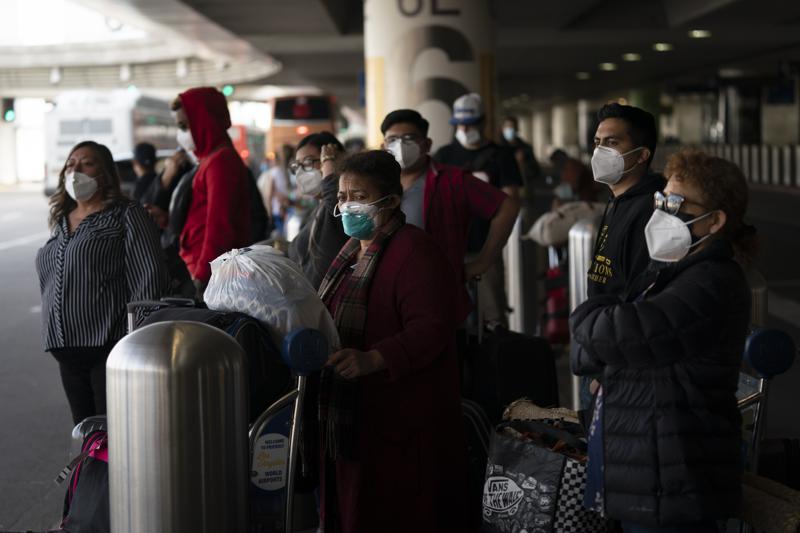
Omicron has raced ahead of other variants and is now the dominant version of the coronavirus in the U.S., accounting for 73% of new infections last week, federal health officials said Monday. The Centers for Disease Control and Prevention numbers showed nearly a six-fold increase in omicron’s share of infections in only one week. In much of the country, it’s even higher. Omicron is responsible for an estimated 90% or more of new infections in the New York area, the Southeast, the industrial Midwest, and the Pacific Northwest. The national rate suggests that more than 650,000 omicron infections occurred in the U.S. last week. Since the end of June, the delta variant had been the main version causing U.S. infections. As recently as the end of November, more than 99.5% of coronaviruses were delta, according to CDC data. CDC Director Dr. Rochelle Walensky said the new numbers reflect the kind of growth seen in other countries. “These numbers are stark, but they’re not surprising,” she said. Scientists in Africa first sounded the alarm about omicron less than a month ago, and on November 26, the World Health Organization designated it as a “variant of concern.” The mutant has since shown up in about 90 countries. Much about the omicron variant remains unknown, including whether it causes more or less severe illness. Early studies suggest the vaccinated will need a booster shot for the best chance at preventing omicron infection, but even without the extra dose, vaccination still should offer strong protection against severe illness and death. “All of us have a date with omicron,” said Dr. Amesh Adalja, a senior scholar at the Johns Hopkins Center for Health Security. “If you’re going to interact with society, if you’re going to have any type of life, omicron will be something you encounter, and the best way you can encounter this is to be fully vaccinated.” Adalja said he was not surprised by the CDC data showing omicron overtaking delta in the U.S., given what was seen in South Africa, the U.K., and Denmark. He predicted spread over the holidays, including breakthrough infections among the vaccinated and serious complications among the unvaccinated that could stress hospitals already burdened by delta. Dr. Eric Topol, head of the Scripps Research Translational Institute, said other countries had seen omicron’s fast growth, but the U.S. data showed “a remarkable jump in such a short time.” Topol also said it’s unclear how much milder omicron really is compared with other variants. “That’s the big uncertainty now,” Topol said. “We have to count on it being a lot of hospitalizations and a lot of severe disease from omicron.” CDC’s estimates are based on thousands of coronavirus specimens collected each week through university and commercial laboratories and state and local health departments. Scientists analyze their genetic sequences to determine which versions of the COVID-19 viruses are most abundant. On Monday, the CDC revised its estimate for omicron cases for the week that ended December 11, after analyzing more samples. About 13% of the cases that week were from omicron, not the 3% previously reported. The week before, omicron accounted for just 0.4% of cases. CDC officials said they do not yet have estimates of how many hospitalizations or deaths are due to omicron. Though there remain a lot of new infections caused by the delta variant, “I anticipate that over time that delta will be crowded out by omicron,” Walensky said. Republished with the permission of the Associated Press.
Vaccines making Thanksgiving easier, but hot spots remain
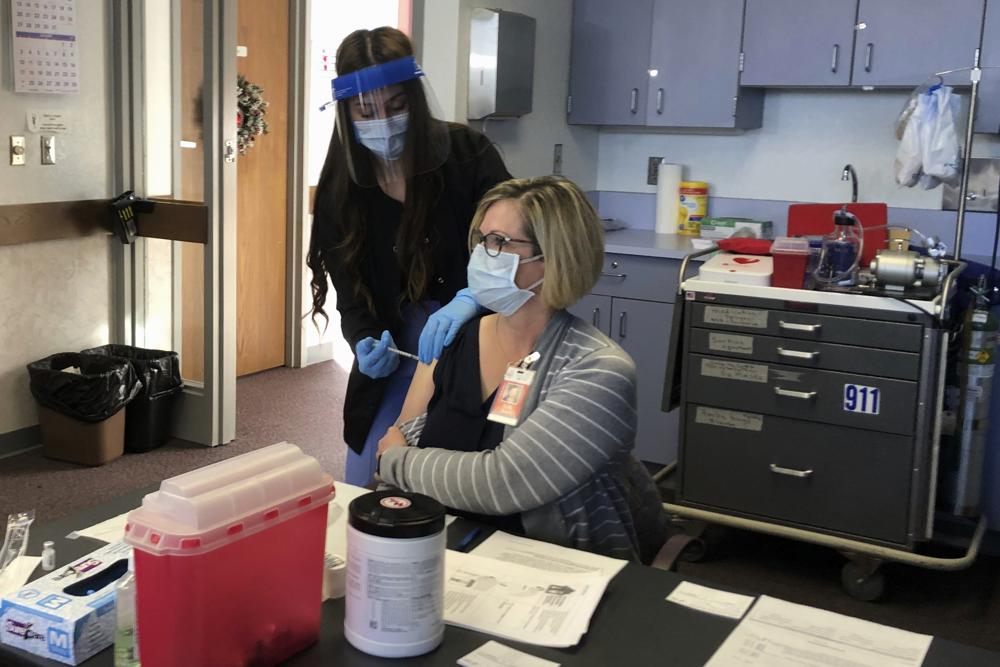
The U.S. is facing its second Thanksgiving of the pandemic in better shape than the first time around, thanks to the vaccine, though some regions are seeing surges of COVID-19 cases that could get worse as families travel the country for gatherings that were impossible a year ago. Nearly 200 million Americans are fully vaccinated. That leaves tens of millions who have yet to get a shot in the arm, some of them out of defiance. Hospitals in the cold Upper Midwest, especially Michigan and Minnesota, are filled with COVID-19 patients who are mostly unvaccinated. Michigan hospitals reported about 3,800 coronavirus patients at the start of the week, with 20% in intensive care units, numbers that approach the bleakest days of the pandemic’s 2020 start. The state had a seven-day new-case rate of 616 per 100,000 people Monday, the highest in the nation. In the West, New Mexico, Arizona, Colorado, Utah and Montana also ranked high. Some Colorado communities, including Denver, are turning to indoor mask orders to reduce risk, a policy that has also been adopted in the Buffalo, New York, area and Santa Cruz County, California. The statistics in Michigan are “horrible,” said Dr. Matthew Trunsky, a respiratory specialist at Beaumont Health in suburban Detroit. “We got cold and moved indoors and have huge pockets of unvaccinated people,” he said. “You can’t have pockets of unvaccinated people who don’t want to be masked and not expect to get outbreaks, not expect to lose parents, not expect to lose teachers.” During a recent office visit, he encouraged a patient who uses oxygen to get vaccinated. The patient declined and now is in the hospital with COVID-19, desperately relying on even more oxygen, Trunsky said. He said he continues to encounter patients and their family members espousing conspiracy theories about the vaccine. “We’ve had several people in their 40s die in the last month — 100% unvaccinated,” Trunsky said. “It’s just so incredibly sad to see a woman die with teenagers. Especially with that age group, it’s nearly 100% preventable.” In Detroit, where less than 40% of eligible residents were fully vaccinated, Mayor Mike Duggan said hospitalizations have doubled since early November. “We have far too many people in this country that we have lost because they believed some nonsense on the internet and decided not to get the vaccine,” said Duggan, a former hospital executive. Despite hot spots, the outlook in the U.S. overall is significantly better than it was at Thanksgiving 2020. Without the vaccine, which became available in mid-December 2020, the U.S. a year ago was averaging 169,000 cases and 1,645 deaths per day, and about 81,000 people were in the hospital with COVID-19. The U.S. now is averaging 95,000 cases, 1,115 deaths, and 40,000 in the hospital. Airports have been jammed. More than 2.2 million people passed through security checkpoints on Friday, the busiest day since the pandemic shut down travel early in 2020. On some recent days, the number was twice as high as Thanksgiving a year ago. Sarene Brown and three children, all vaccinated, were flying to Atlanta from Newark, New Jersey, to see family. People close to them have died from COVID-19. “I’m thankful that I’m here, and I’m not in heaven, and I’m thankful for my family and that God helped me survive,” said Neive Brown, 7, who got her first dose. More than 500,000 Americans have died of COVID-19 since last Thanksgiving, for an overall death toll of over 770,000. “We would encourage people who gather to do so safely after they’ve been fully vaccinated, as we’ve been saying for months now,” said Dr. Rochelle Walensky, director of the Centers for Disease Control and Prevention. “I do think that this is very different because we actually have the tools to prevent the vast majority of cases.” Dr. Eric Topol, head of the Scripps Research Translational Institute, said his optimism is tempered by the delta variant’s ability to jump from person to person, especially among the millions who are unvaccinated or are due for a booster. “That equals very high vulnerability,” Topol said. Denver’s public hospital, Denver Health, is sending people elsewhere because of a lack of beds. Staff members were exhausted from treating COVID-19 patients and others who had postponed other medical needs, chief executive Robin Wittenstein said. “Our system is on the brink of collapse,” she said. Arizona reported at least 2,551 COVID-19 patients in hospitals, far below the peak of last winter but still reason for concern. Officials said beds were limited. Republished with the permission of the Associated Press.
Big gaps in vaccine rates across the US worry health experts
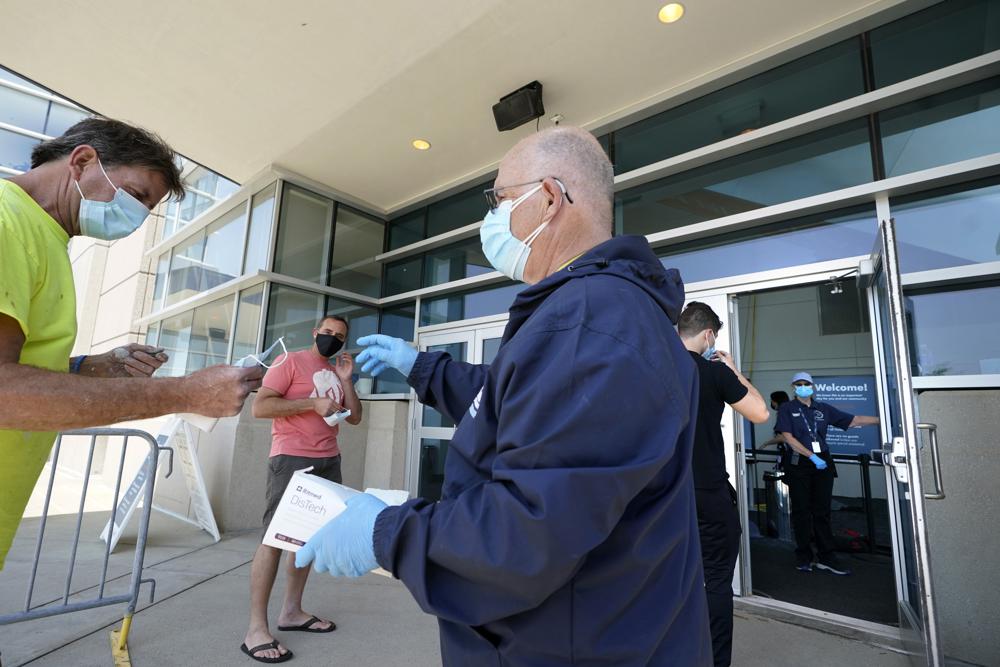
A steady crowd of people flowed into the New England Patriots’ stadium for their second dose of the COVID-19 vaccine this week in Massachusetts, which is nearing its goal of vaccinating more than 4 million and plans to close its biggest clinics in little more than a month. In the Deep South, meanwhile, one of the largest clinics in Alabama shut down Wednesday, and others will follow in the coming weeks because demand for the shot has plunged. “They didn’t have long enough to test it,” said James Martin, 68, explaining why he has no plans to get the vaccine as he stopped for cigarettes at a convenience store in Clanton, Alabama. “They don’t know what the long-term effect is. That’s what makes me skeptical.” A month after every adult in the U.S. became eligible for the vaccine, a distinct geographic pattern has emerged: The highest vaccination rates are concentrated in the Northeast, while the lowest ones are mostly in the South. Experts say the gap reflects a multitude of factors, including political leanings, religious beliefs, and education and income levels. Close to 160 million Americans — 48% of the population — have received at least one dose of a COVID-19 vaccine, and 125 million are fully vaccinated against the virus. New England and Northeastern states account for eight of the top 10 in vaccination rates, with Vermont No. 1 as of last Friday, according to the Centers for Disease Control and Prevention. Nearly 64% of its population has received as least one dose. Following right behind are Massachusetts, Hawaii, New Hampshire, Maine, Connecticut, Rhode Island, New Jersey, Pennsylvania, and New Mexico, all of them at 54% or higher. Eight Southern states are in the bottom 10, all of which are under 40%. Mississippi was dead last at 32%, followed by Louisiana, Alabama, Wyoming, Idaho, Tennessee, Arkansas, Georgia, West Virginia, and South Carolina. Closing the gaps is vital to controlling the virus that has killed 588,000 people in the U.S., health experts say. The vaccination drive has helped drive U.S. cases down to their lowest level since last June, at around 30,000 a day on average, and reduced deaths to about 570 a day, a level not seen since last July. “Low vaccination rates will leave room for the virus to circulate, re-emerge and possibly form new variants,” said Tara Kirk Sell, a senior scholar at the Johns Hopkins Center for Health Security. “High vaccination rates are critical to keeping the disease under control, especially when we get back to the fall and winter.” The divides aren’t just limited to states — there are marked differences between urban and rural places, from county to county and from one neighborhood to another. The disparities are even more glaring when looking at individual places around the U.S.: Vermont has four counties where 75% of the residents have had at least one dose, while there are 11 Mississippi counties with under 25% vaccinated. Roddy Carroll has seen both sides from where he works in technology sales in Atlanta and where he grew up in northern Georgia. “There’s a pretty stark difference,” he said. Back home in rural Murray County, only 1 in 4 residents have rolled up their sleeves for a shot. Carroll blames conservative politicians for sowing doubts that have made people reluctant. “They’re more willing to listen to conspiracy theorists than doctors who know how vaccines work,” he said. “You’re talking about people you’ve known all their life. But you hear them say those things, and you think, `How well did I know them?’” Those anti-vaccine beliefs have led to some uncomfortable conversations with his family, Carroll said. “I don’t know anybody who hasn’t had tense moments like that,” he said. Dr. Eric Topol, head of the Scripps Research Translational Institute, said the gaps in COVID-19 vaccination can be traced directly to political influences, particularly what he called “anti-science” attitudes among Republican leaders, who were skeptical about the value of masks, too. Getting more people vaccinated will take continued education, incentives, and “head-on” confrontation of misinformation, Topol said. He expects U.S. regulators to grant full approval to the vaccines soon, which will give employers, the military, and health systems the green light to require vaccination. “That will make the biggest difference,” Topol said. Gail Borel, of Plymouth, Massachusetts, a nurse who arrived with her husband at Gillette Stadium on Wednesday to get their second doses, said she was initially reluctant. But she said she decided to go through with it after her employer said she could be held liable if she refused the vaccine and got patients sick. Her husband, Tom, didn’t share her concern. “Everybody I know just wants to get it over with. If this is the path to get it over with, then this is what we’re willing to do,” he said. “I just want this to be over. It’s how we stop wearing masks and how people stop getting sick.” In Massachusetts, where 62% have had at least one dose, there has been little resistance to public health orders during the pandemic, and state leaders have kept tight restrictions on gatherings and businesses, drawing praise from officials such Dr. Anthony Fauci, the nation’s top infectious disease expert. Some credit the success to the state’s deep ties to education and health care. The Boston area alone has dozens of universities, including Harvard and MIT, and scores of biotechnology companies, including the vaccine maker Moderna. Nationwide, rural counties are behind urban places in their COVID-19 vaccination efforts — 39% of adults in rural counties had received at least one shot compared with 46% in urban counties as of April 10, according to an analysis released Tuesday by the CDC. The rural-urban gap exists among women, men, and both younger and older adults, the CDC said. In Alabama’s Chilton County, a peach-farming area, the longtime mayor of Clanton died of the virus last year along with 85 others in the county. Yet less than 17% of its population is fully vaccinated, giving it one of the
Brighter outlook for U.S. as vaccinations rise and deaths fall

More than three months into the U.S. vaccination drive, many of the numbers paint an increasingly encouraging picture, with 70% of Americans 65 and older receiving at least one dose of the vaccine and COVID-19 deaths dipping below 1,000 a day on average for the first time since November. Also, dozens of states have thrown open vaccinations to all adults or are planning to do so in a matter of weeks. And the White House said 27 million doses of both the one-shot and two-shot vaccines will be distributed next week, more than three times the number when President Joe Biden took office two months ago. Still, Dr. Anthony Fauci, the government’s top infectious disease expert, said Wednesday he isn’t ready to declare victory. “I’m often asked, are we turning the corner?” Fauci said at a White House briefing. “My response is really more like we are at the corner. Whether or not we’re going to be turning that corner still remains to be seen.” What’s giving Fauci pause, he said, is that new cases remain at a stubbornly high level, at more than 50,000 per day. The U.S. on Wednesday surpassed 30 million confirmed cases, according to data collected by Johns Hopkins University. The number of deaths now stands at more than 545,000. Nonetheless, the outlook in the U.S. stands in stark contrast to the deteriorating situation in places like Brazil, which reported more than 3,000 COVID-19 deaths in a single day for the first time Tuesday, and across Europe, where another wave of infections is leading to new lockdowns. The gloom in Europe is compounded because the vaccine rollout on the continent has been slowed by production delays and questions about the safety and effectiveness of AstraZeneca’s shot. Public health experts in the U.S. are taking every opportunity to warn that relaxing social distancing and other preventive measures could easily lead to another surge. Dr. Eric Topol, head of the Scripps Research Translational Institute, sees red flags in states lifting mask mandates, air travel roaring back and spring break crowds partying out of control in Florida. “We’re getting closer to the exit ramp,” Topol said. “All we’re doing by having reopenings is jeopardizing our shot to get, finally, for the first time in the American pandemic, containment of the virus.” Across the country are unmistakable signs of progress. More than 43% of Americans 65 and older — the most vulnerable age group, accounting for an outsize share of the nation’s more than 540,000 coronavirus deaths — have been fully vaccinated, according to the CDC. The number of older adults showing up in emergency rooms with COVID-19 is down significantly. Vaccinations overall have ramped up to 2.5 million to 3 million shots per day. Deaths per day in the U.S. from COVID-19 have dropped to an average of 940, down from an all-time high of over 3,400 in mid-January. Minnesota health officials on Monday reported no new deaths from COVID-19 for the first time in nearly a year. And in New Orleans, the Touro Infirmary hospital was not treating a single case for the first time since March 2020. And Fauci cited two recent studies that show negligible levels of coronavirus infections among fully vaccinated health care workers in Texas and California. “I emphasize how we need to hang in there for just a little while longer,” Dr. Rochelle Walensky, director of the Centers for Disease Control and Prevention, said Wednesday. That’s because “the early data are really encouraging.” Nationwide, new cases and the number of people hospitalized with COVID-19 have plummeted over the past two months, though Walensky remains concerned that such progress seemed to stall in the past couple of weeks. New cases are running at more than 53,000 a day on average, down from a peak of a quarter-million in early January. That’s uncomfortably close to levels seen during the COVID-19 wave of last summer. Biden has pushed for states to make all adults eligible to be vaccinated by May 1. A least a half-dozen states, including Texas, Arizona, and Georgia, are opening up vaccinations to everyone over 16. At least 20 other states have pledged to do so in the next few weeks. Microsoft, which employs more than 50,000 people at its global headquarters in suburban Seattle, has said it will start bringing back workers on March 29 and reopen installations that have been closed for nearly a year. New York City’s 80,000 municipal employees, who have been working remotely during the pandemic, will return to their offices starting May 3. Still, experts see reason to worry as more Americans start traveling and socializing again. The number of daily travelers at U.S. airports has consistently topped 1 million over the past week and a half amid spring break at many colleges. Also, states such as Michigan and New Jersey are seeing rising cases. National numbers are an imperfect indicator. The favorable downward trend in some states can conceal an increase in case numbers in others, particularly smaller ones, said Ali Mokdad, professor of health metrics sciences at the University of Washington in Seattle. And the more contagious variant that originated in Britain has now been identified in nearly every state, he said. Republished with the permission of the Associated Press.
