
Vaccinations rise in some states with soaring infections
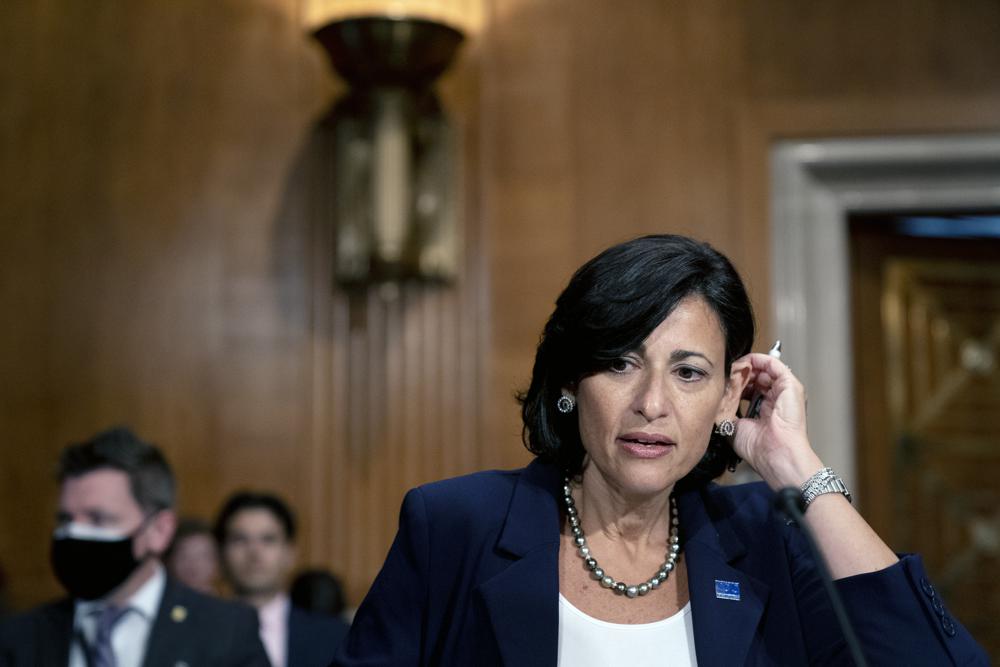
Vaccinations are beginning to rise in some states where COVID-19 cases are soaring, White House officials said Thursday in a sign that the summer surge is getting the attention of vaccine-hesitant Americans as hospitals in the South are being overrun with patients. Coronavirus coordinator Jeff Zients told reporters that several states with the highest proportions of new infections have seen residents get vaccinated at higher rates than the nation as a whole. Officials cited Arkansas, Florida, Louisiana, Missouri, and Nevada as examples. “The fourth surge is real, and the numbers are quite frightening at the moment,” Louisiana Gov. John Bel Edwards said on a New Orleans radio show. Edwards, a Democrat, added: “There’s no doubt that we are going in the wrong direction, and we’re going there in a hurry.” Louisiana reported 2,843 new COVID-19 cases Thursday, a day after reporting 5,388 — the third-highest level since the pandemic began. Hospitalizations are up steeply in the last month, from 242 on June 19 to 913 in the latest report. Fifteen new deaths were reported Thursday. Just 36% of Louisiana’s population is fully vaccinated, state health department data shows. Nationally, 56.3% of Americans have received at least one dose of the vaccine, according to the Centers for Disease Control and Prevention. Aly Neel, a spokesperson for Louisiana’s health department, said the state has seen “a little bump” in vaccinations recently, adding that details would be available Friday. Warner Thomas, president and CEO of the Ochsner Health system serving Louisiana and Mississippi, said the system had seen a 10% to 15% increase in people seeking vaccination over the past week or two. It has administered vaccines at churches, the New Orleans airport, basketball games, and the mall. “We see each person we get vaccinated now as a victory,” said Dr. Katherine Baumgarten, director of infection prevention and control for the 40-hospital system, noting that it has been bringing in traveling nurses and that projections show its ICUs could fill up at the current rate of infection. Dr. Catherine O’Neal, chief medical officer and an infectious disease specialist at Our Lady of the Lake regional medical center, said Thursday that the most shocking aspect of the surge has been its speed. The caseload has roughly tripled in the course of a week, she said. On Sunday, the medical center stopped taking transfers of coronavirus patients from hospitals in other parts of the state because they simply did not have the capacity, she said. In Missouri, which is second only to Arkansas and Louisiana in the number of new cases per capita over the past 14 days, officials have rolled out a vaccine incentive program that includes $10,000 prizes for 900 lottery winners. The state lags about 10 percentage points behind the national average for people who have received at least one shot. Hospitals in the Springfield area are under strain, reaching pandemic high and near pandemic high numbers of patients. “Younger, relatively healthy, and unvaccinated. If this describes you, please consider vaccination,” tweeted Erik Frederick, chief administrative officer of Mercy Hospital Springfield, noting that half of the COVID-19 patients are ages 21 to 59, and just 2% of that group is vaccinated. The surge that began in the southwest part of the state, where some counties have vaccination rates in the teens, has started to spread to the Kansas City area, including at Research Medical Center. “I don’t want to keep putting my life on the line just because people don’t want to get vaccinated or listen to what health care professionals are recommending,” lamented Pascaline Muhindura, a registered nurse who has worked on the hospital’s COVID-19 unit for more than a year. “A lot of them don’t even believe in COVID-19 to begin with. It is incredibly frustrating. You are helping someone that doesn’t even believe that the illness that they have is real,” Muhindura said. Dr. Jason Wilson, an emergency physician with Tampa General Hospital, also has watched the rise in cases with frustration. Unlike earlier in the pandemic, when many patients were in their 70s, he has seen the median patient age fall to the mid-40s. “I spent a lot of time this fall and last summer saying, ’We’ve got to do these things, these social mitigation strategies until we get that vaccine. Just hang in there,” Wilson said. Hospitals initially were hopeful as cases declined. But then, he said, “Things just fell flat.” Conservative Utah reported Wednesday that almost 300 people were hospitalized due to the virus — the highest number in five months. Intensive care units reached 81.5% capacity. Health officials renewed their pleas for residents to get vaccinated. One of Arizona’s biggest hospital systems issued its own call for vaccinations, citing an increase in seriously ill COVID-19 patients in just a few weeks. Dr. Michael White of Valleywise Health said doctors were mostly treating people with moderate symptoms, but that began to change two weeks ago. Now patients arrive acutely ill. “This delta at the moment it is honing in on largely unvaccinated persons,” said Dr. William Schaffner, a professor of infectious diseases in the health policy department at the Vanderbilt University School of Medicine in Nashville. The variant, which originated in India, now accounts for an estimated 83% of coronavirus samples genetically identified in the U.S. It is the predominant strain in every region of the country and continues “spreading with incredible efficiency,” the director of the CDC, Dr. Rochelle Walensky, told reporters at the White House. She said the mutation is more aggressive and much more transmissible, calling it “one of the most infectious respiratory viruses we know of.” “We are yet at another pivotal moment in this pandemic,” she warned. “We need to come together as one nation.” The CDC has not changed its guidance that vaccinated people do not need to wear masks. But in Georgia, Atlanta Public Schools announced Thursday that it will implement a “universal mask-wearing” policy in all of the system’s school buildings when fall classes begin. Just 18%
U.S. COVID-19 cases rising again, doubling over three weeks
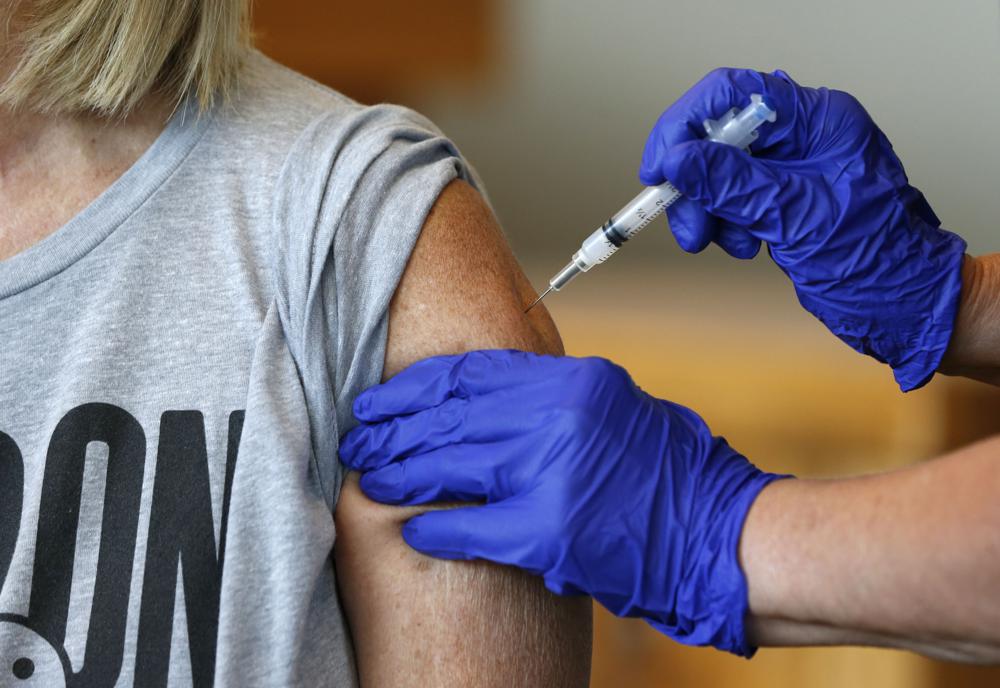
The COVID-19 curve in the U.S. is rising again after months of decline, with the number of new cases per day doubling over the past three weeks, driven by the fast-spreading delta variant, lagging vaccination rates, and Fourth of July gatherings. Confirmed infections climbed to an average of about 23,600 a day on Monday, up from 11,300 on June 23, according to Johns Hopkins University data. And all but two states — Maine and South Dakota — reported that case numbers have gone up over the past two weeks. “It is certainly no coincidence that we are looking at exactly the time that we would expect cases to be occurring after the July Fourth weekend,” said Dr. Bill Powderly, co-director of the infectious-disease division at Washington University’s School of Medicine in St. Louis. At the same time, parts of the country are running up against deep vaccine resistance, while the highly contagious mutant version of the coronavirus that was first detected in India is accounting for an ever-larger share of infection. Nationally, 55.6% of all Americans have received at least one COVID-19 shot, according to the Centers for Disease Control and Prevention. The five states with the biggest two-week jump in cases per capita all had lower vaccination rates: Missouri, 45.9%; Arkansas, 43%; Nevada, 50.9%; Louisiana, 39.2%; and Utah, 49.5%. Even with the latest surge, cases in the U.S. are nowhere near their peak of a quarter-million per day in January. And deaths are running at under 260 per day on average after topping out at more than 3,400 over the winter — a testament to how effectively the vaccine can prevent serious illness and death in those who happen to become infected. Still, amid the rise, health authorities in places such as Los Angeles County and St. Louis are begging even immunized people to resume wearing masks in public. And Chicago officials announced Tuesday that unvaccinated travelers from Missouri and Arkansas must either quarantine for 10 days or have a negative COVID-19 test. Meanwhile, the Health Department in Mississippi, which ranks dead last nationally for vaccinations, began blocking posts about COVID-19 on its Facebook page because of a “rise of misinformation” about the virus and the vaccine. Mississippi officials are also recommending that people 65 and older and those with chronic underlying conditions stay away from large indoor gatherings because of a 150% rise in hospitalizations over the past three weeks. In Louisiana, which also has one of the nation’s lowest vaccination rates, officials in the city of New Orleans said Tuesday that they are likely to extend until fall virus-mitigation efforts currently in place at large sporting and entertainment gatherings, including mask mandates or requirements that attendees be vaccinated or have a negative COVID-19 test. State health officials said cases of the coronavirus are surging, largely among nonvaccinated people. But the political will may not be there in many states fatigued by months of restrictions. In Michigan, Democratic Gov. Gretchen Whitmer is facing a drive to repeal a law that she used to set major restrictions during the early stages of the pandemic. And Republican Gov. Kay Ivey of Alabama pushed back against the idea that the state might need to reimpose preventive measures as vaccinations lag and hospitalizations rise. “Alabama is OPEN for business. Vaccines are readily available, and I encourage folks to get one. The state of emergency and health orders have expired. We are moving forward,” she said on social media. Dr. James Lawler, a leader of the Global Center for Health Security at the University of Nebraska Medical Center in Omaha, said bringing back masks and limiting gatherings would help. But he acknowledged that most of the places seeing higher rates of the virus “are exactly the areas of the country that don’t want to do any of these things.” Lawler warned that what is happening in Britain is a preview of what’s to come in the U.S. “The descriptions from regions of the world where the delta variant has taken hold and become the predominant virus are pictures of ICUs full of 30-year-olds. That’s what the critical care doctors describe, and that’s what’s coming to the U.S.,” he said. He added: “I think people have no clue what’s about to hit us.” President Joe Biden is putting a dose of star power behind the administration’s efforts to get young people vaccinated. Eighteen-year-old actress, singer, and songwriter Olivia Rodrigo will meet with Biden and Dr. Anthony Fauci on Wednesday. While the administration has had success vaccinating older Americans, young adults have shown less urgency to get the shots. Some, at least, are heeding the call in Missouri after weeks of begging, said Erik Frederick, chief administrative officer of Mercy Hospital Springfield. He tweeted that the number of people getting immunized at its vaccine clinic has jumped from 150 to 250 daily. “That gives me hope,” he said. Republished with the permission of the Associated Press.
