
Judge denies new trial for former House Speaker Mike Hubbard
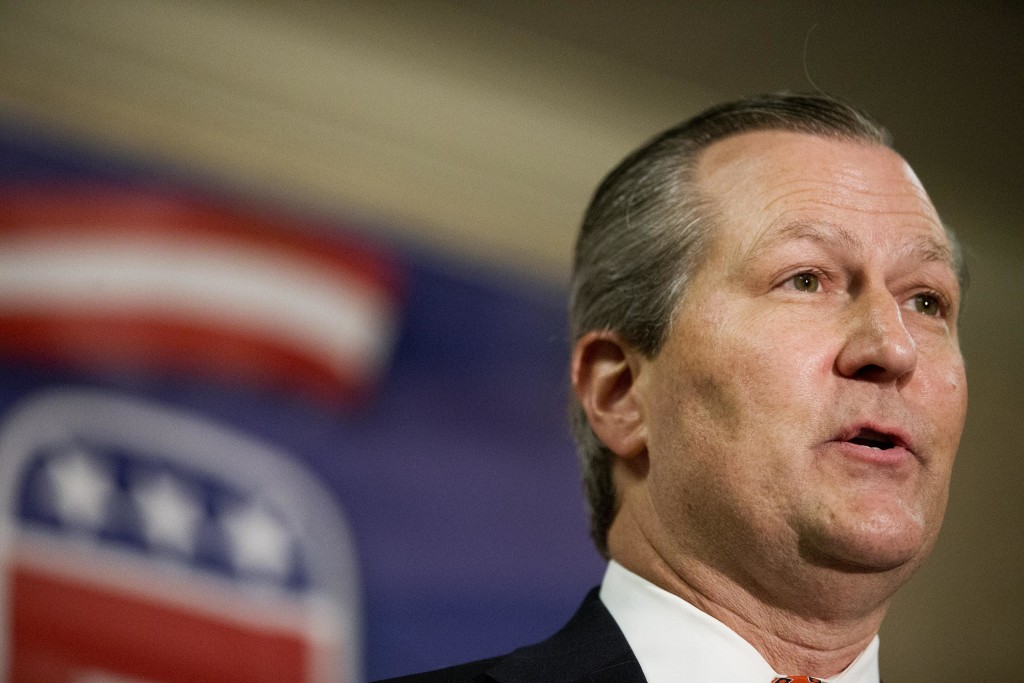
Things aren’t looking any better for ousted House Speaker Mike Hubbard these days. A judge denied him a new trial on the grounds of jury misconduct. Lee County Circuit Judge Jacob Walker on Tuesday said Hubbard failed to prove jurors were prejudiced against him when they convicted him on ethics charges back in June. In his decision, he noted Hubbard was not convicted on all counts brought before the court, suggesting the jurors were, in fact, not prejudiced and they systematically made their decisions count-by-count. “Because the defendant failed to make a showing that he was actually prejudiced, this court would not disturb the verdict of the trial jury,” Walker wrote in his decision. On June 10, Hubbard was convicted on 12 of 23 counts of corruption, which automatically removed the powerful Republican from both the Legislature and the speaker’s office, ending the upward trajectory of the one-time GOP star whose career previously appeared to have no limits. He was later sentenced to a total of four years in prison and eight years on probation, and ordered to pay a $210,000 fine. Hubbard is free on bond while he appeals to the Alabama Court of Criminal Appeals. He continues to maintain his innocence.
Judge refuses investigation of Mike Hubbard’s ethics trial
A judge is refusing a request by former Alabama House Speaker Mike Hubbard to have a sheriff investigate whether there was juror misconduct at his ethics trial. But Judge Jacob Walker said Friday he is open to taking testimony from a juror who says another juror made biased remarks. Hubbard is seeking a new trial after being convicted on 12 felony ethics charges and removed from office. His lawyers submitted an affidavit from a juror who says another made biased remarks. During a hearing, the court administrator testified that one juror complained early in the trial that another was saying things like “now the truth is coming out.” She says the juror was asked to be quiet. Prosecutors say there was no evidence of misconduct or an unfair trial. Republished with permission of The Associated Press.
A count by count breakdown of Mike Hubbard’s sentencing
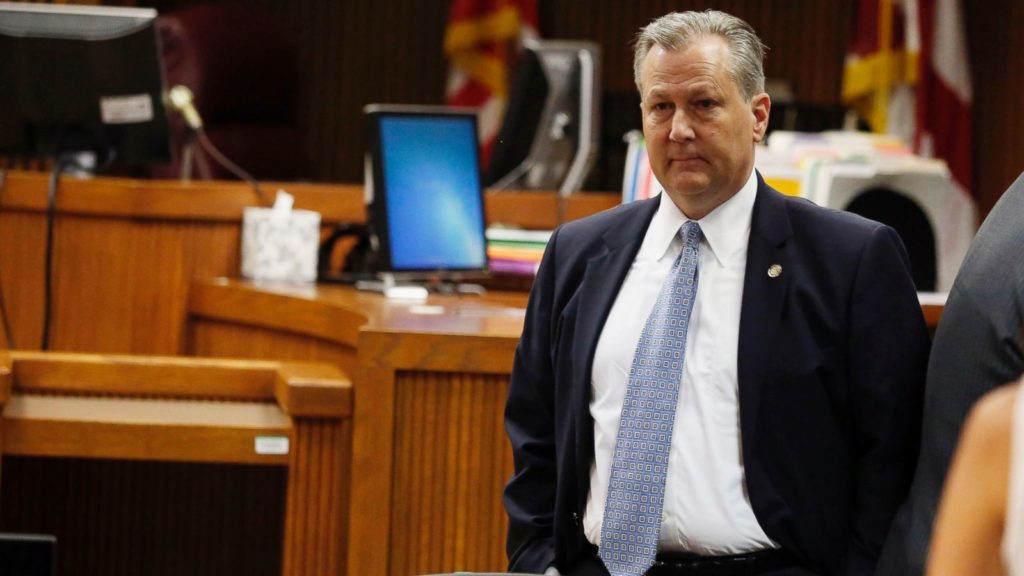
Former Alabama House Speaker Mike Hubbard was sentenced to serve 4 years in jail and 8 years probation by Lee County Circuit Judge Jacob Walker. He also is fined approximately $210,000. Hubbard was convicted on 12 of 23 felony ethics charges on June 10 after being indicted in October 2014. Each count carried a maximum two- to 20-year sentence and a $30,000 fine. Here is a full breakdown of his sentencing: Count 5: 10 years. Split to serve two years and the remaining eight on probation. $30k fine. Count 6: 10 years. Split to serve two concurrently and the remaining eight on probation. $30k fine. Count 10: 6 years. Split to serve 18 months running concurrently with the other charges. $20k fine. Count 11: 10 years. Split to serve two years consecutive. Count 12: 10 years. Split to serve two running concurrently with the other charges. $20k fine. Count 13: 10 years. Serve two running concurrently with the other charges.$30k fine. Count 14: 10 years. Split to serve two running concurrently with the other charges. $30k fine. Count 16: 5 years. 18 months running concurrently with the other charges. No fine. Count 17: 10 years. Split to serve two running concurrently with the other charges. No fine. Count 18: 5 years. Split to serve 18 months running concurrently with the other charges. No fine. Count 19: 5 years. Split to serve 18 months running concurrently with the other charges. No fine. Count 23: 5 years. Serve 18 months running concurrently with the other charges. No fine. Prosecutors had asked that Hubbard be required to pay more than $1.1 million in restitution, the maximum fine of $360,000, the maximum amount to the Crime Victims Compensation fund of $120,000 and other court fees. Hubbard continues to maintain his innocence and he will attempt to appeal his convictions, his attorney Bill Baxley said. As set by Judge Walker, Hubbard has 42 days to file a notice to appeal.
Former Alabama House Speaker Mike Hubbard sentenced to 4 years in prison
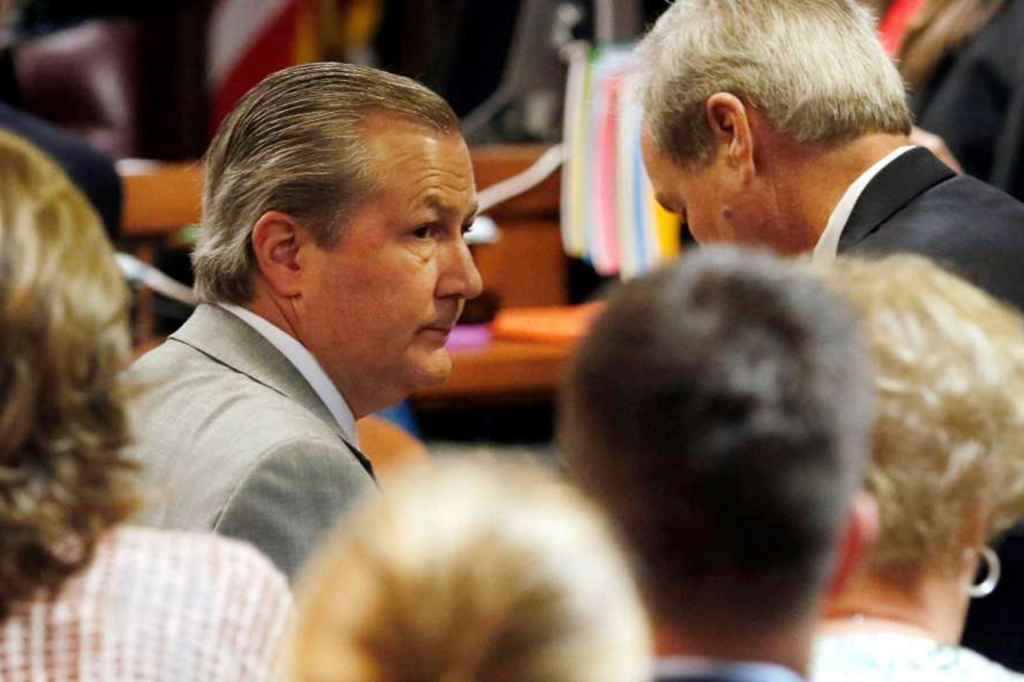
Former Alabama House Speaker Mike Hubbard has been handed his sentence — a total of four years in prison, eight years on probation and ordered to pay a $210,000 fine — for 12 felony ethics violations for abusing his position by using the influence and prestige of his political offices to benefit his companies and clients. Flanked by family and friends who arrived at the courthouse in support, Hubbard received his sentence Friday morning from Lee County Circuit Judge Jacob Walker in the same Opelika courtroom where his long-awaited ethics’ trial took place last month. On June 10, Hubbard was convicted on 12 of 23 counts of corruption, which automatically removed the powerful Republican from both the Legislature and the speaker’s office, ending the upward trajectory of the one-time GOP star whose career previously appeared to have no limits. Throughout Friday’s sentencing Hubbard kept silent, even after the Judge offered him a chance to speak. However, his Defense attorney Bill Baxley declared after the sentencing was handed down, “I’ve seen very few people convicted by a jury that I felt were innocent… I can count on one hand. I believe with all my being, after everything we’ve gone though, Mike Hubbard is absolutely innocent of every charge.” Outside the courtroom Baxley proceeded to call the case a “witch hunt” and vowed to “appeal the case all the way.” Despite his sentence, Hubbard will not immediately be taken to prison, as Judge Walker is allowing an appeal, which Hubbard has 42 days to make.
Judge to sentence Mike Hubbard ethics case Friday morning
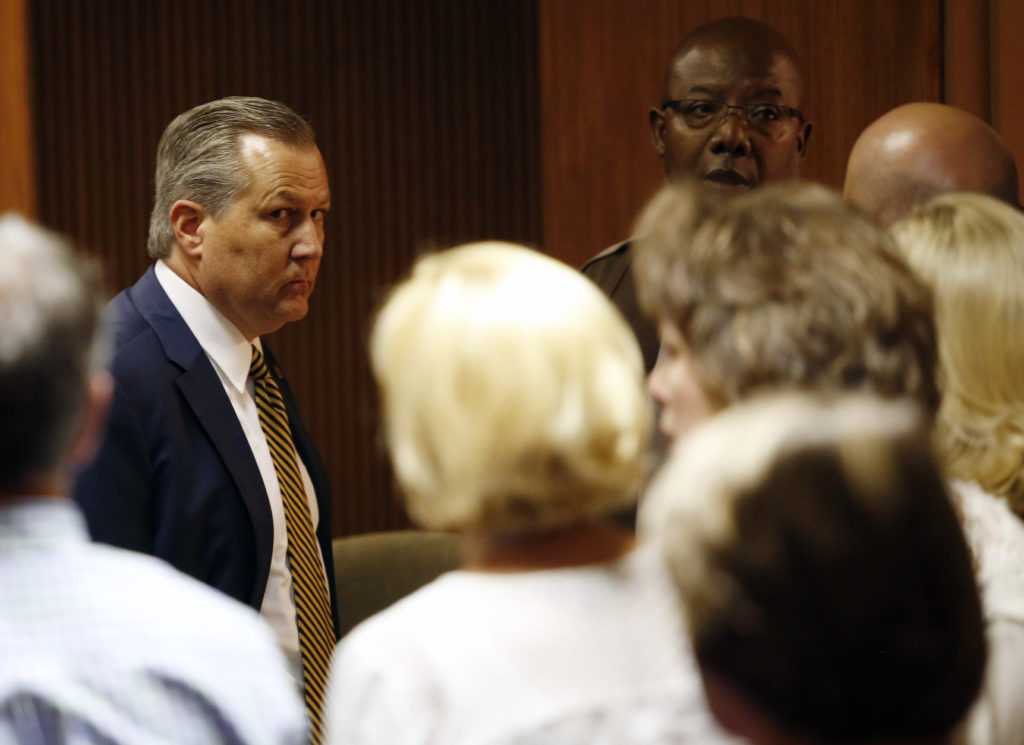
A judge will decide whether former Alabama House Speaker Mike Hubbard, once one of the state’s most powerful politicians, will go to prison and if so, for how long. Hubbard is due in court Friday morning for sentencing on 12 counts of violating the state ethics law. A jury convicted Hubbard on charges that he used his office to make money and improperly solicited lobbyists and company executives for investments and jobs. Prosecutors want Hubbard to spend five years in a state prison and another 13 years on supervised release. Hubbard defense lawyer Bill Baxley called the suggested sentence “ridiculously extreme.” Prosecutors argued in their sentence request that Hubbard betrayed the trust of voters and fellow lawmakers. Prosecutors also want Hubbard to pay $1.6 million in fines and restitution. Republished with permission of the Associated Press.
Mike Hubbard: Working to come to terms with ethics trial verdicts, maintains his innocence
The former speaker of the Alabama House of Representative said he is leaving politics with his head held high and working to come to terms with the ethics conviction that removed him from office. The statement to The Associated Press was Mike Hubbard‘s first public comment since his conviction Friday on ethics charges. He also maintained his innocence. “My family and I are working to come to terms with the disappointing verdicts, and I continue to steadfastly maintain my innocence. We have every confidence that the coming appeals process will be successful,” Hubbard said. A jury found Hubbard guilty on 12 charges that he wrongly solicited consulting contracts and investments and used his office to benefit his businesses and clients. Each count is punishable by up to 20 years in prison. The convictions resulted in Hubbard’s automatic removal from office. The former speaker thanked the people of his Auburn district for allowing him to represent them for the last 18 years. “It has been an honor that I will always remember and hold close to my heart no matter what the future may hold,” Hubbard said. Hubbard’s removal from office adds to ongoing political turmoil in Alabama involving GOP leaders in all three branches of government. A House Judiciary Committee holds its first meeting Wednesday on calls to impeach Gov. Robert Bentley following a sex-tinged scandal involving a former aide. Chief Supreme Court Justice Roy Moore is suspended from office and faces possible ouster over accusations that he violated judicial ethics during the fight about same-sex marriage. Hubbard was elected to the Alabama House of Representatives in 1998. As state GOP chairman, he spearheaded Republicans’ 2010 successful offensive to win control of the Legislature for the first time in 136 years. The Auburn Republican said he hoped the accomplishments of the Alabama Legislature during the six years under his leadership would not be overshadowed. Hubbard said he was proud of the legislature’s record on education, job creation and other issues. Prosecutors in closing arguments to the jury depicted Hubbard as a politician who put a “For Sale” sign on his office and used the power and prestige of his position to make money and benefit his businesses. Defense lawyers argued the transactions involved legitimate business dealings or requests to longtime friends, and members of the Legislature must be able to earn a living. Hubbard in his statement said it is “a scary and dangerous” precedent if it is, “impossible for citizen-legislators to serve in public office.” “I now take leave of the political arena with my head held high and with eternal thanks for the unconditional love of my wife, Susan, and Clayte and Riley, the two fine young men we have raised together,” Hubbard said. Republished with permission of The Associated Press.
Lawyers make final remarks in Mike Hubbard ethics trial
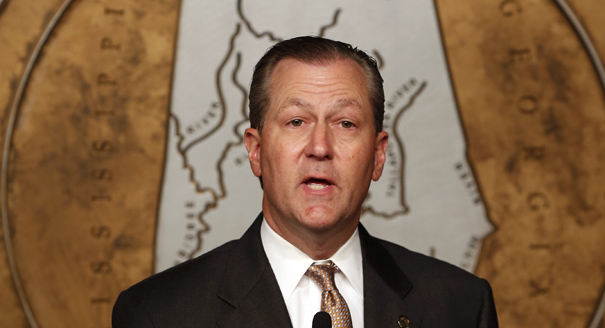
Lawyers will make their final remarks to jurors in the ethics trial of Alabama House Speaker Mike Hubbard. A prosecutor and defense lawyer will finish closing arguments Friday morning. The jury is expected to begin deliberations later in the day. Hubbard faces 23 felony ethics charges accusing him of using his political positions to obtain business and investment for his companies. Hubbard has maintained his innocence. State prosecutor Michael Duffy told jurors Thursday that Hubbard put a “for sale” sign on his public office as he obtained consulting contracts for tens of thousands of dollars. Defense lawyer Lance Bell said in closing arguments Thursday that Hubbard did not break the law and prosecutors presented nothing that proves he did. If convicted, Hubbard will be automatically removed from office. Republished with permission of The Associated Press.
Mike Hubbard trial day 12: Defense rests case, closing arguments begin
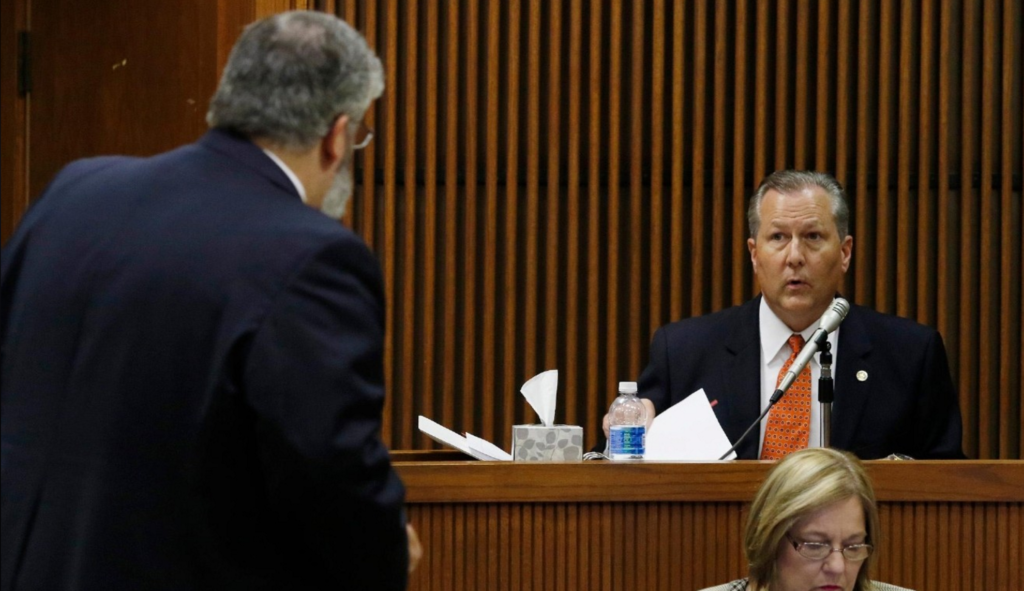
After nearly three weeks of testimony from witnesses including high-profile names such as Gov. Robert Bentley, former Gov. Bob Riley, Senate President Pro Tem Del Marsh, the defense rested its case against Alabama House Speaker Mike Hubbard Thursday morning after calling but one witness — Hubbard himself. Hubbard spent little more than an hour Thursday morning testifying, hoping to prove his innocence. Early Thursday, prosecutor Matt Hart brought up an email Hubbard sent to Michael Mitchell, a Publix representative, asking to set up a meeting about Capitol Cups – a company Hubbard had a consulting contract with that paid $10,000 a month. In the email, Hart told the courtroom that Hubbard called Capital Cups a constituent and even signed the email with his Alabama House Speaker title. The defense argued this was an automatically generated email signature. Hart prodded Hubbard, asking if he mentioned in the email to Mitchell that he was working as a consultant for Capital Cups. “No sir. Didn’t think it was relevant,” Hubbard replied. Hubbard went on to testify that Mitchell was a friend who sadly died a few years ago of an aneurysm. Hart quickly pointed out that Mitchell must not have been that good of a friend, as he just spoke with him a few days ago. “Well I must have him confused with someone else,” Hubbard explained to the courtroom. That was the last thing he was asked on the stand. Closing arguments got underway in Hubbard’s trial shortly before 3 p.m. with the Deputy Attorney General Mike Duffy presenting for the prosecution and finishing in roughly an hour and a half. Duffy’s main argument was Hubbard’s actions clearly violated the Alabama Ethics Law, saying that Hubbard “knew where the line was, and he crossed it.” “The cornerstone of the ethics law is that public officials should not be able to make money off their offices,” said Duffy. Hubbard “diminished the integrity of our government … because he wanted to make some money,” Duffy continued arguing that while chair of the Alabama Republican Party Hubbard intentionally directed business to his companies Craftmaster Printers and the Auburn Network. “What matters is he asked for something he’s not allowed to ask for, and he took things he’s not allowed to take,” Duffy said before he asked the jury to told Hubbard accountable. “I’m going to ask you to find this defendant accountable and find him guilty,” he said. Next attorney Lance Bell began the closing arguments for the defense, where he made it roughly 45 minutes of the allotted two hours. He will wrap-up Friday morning. Hubbard was indicted in October 2013 on 23 felony ethics charges of using his political office for personal gain. If convicted, he faces a maximum penalty of two to 20 years incarceration and fines of up to $30,000 for each count. He would be removed from office if convicted of any of the 23 charges. Hubbard has since maintained his innocence and continued to serve as Speaker of the Alabama House during the 2016 legislative session.
Mike Hubbard finishes testimony in his own ethics trial
The Latest on the ethics trial of Alabama House Speaker Mike Hubbard (all times local): 10:30 a.m. Alabama House Speaker Mike Hubbard has finished testifying in his ethics trial. Prosecutor Matt Hart on Thursday morning showed jurors an email that Hubbard sent to a Publix lobbyist trying to arrange for company executives to meet with a drinking cup manufacturer in his district. The email was signed, “speaker of the house” and did not disclose that a related company was also paying Hubbard $10,000-a-month. Hubbard later explained it was an automatic signature generated by his email at his business, the Auburn Network. However, Hubbard’s defense took a stumble when he described the email as a request for advice to a longtime friend. Hubbard said the man recently died of an aneurysm. However, Hart noted the man was still alive. Hubbard admitted he must have confused him with someone else. ___ 5:24 a.m. Alabama House Speaker Mike Hubbard is returning to the witness stand for the third day in his ethics trial. A state prosecutor will resume his cross-examination of the Republican speaker Thursday morning. Prosecutor Matt Hart on Wednesday quizzed Hubbard on $2.3 million in contracts, party campaign business and investments his companies received. He also questioned Hubbard about an email he sent former Gov. Bob Riley, who is now a lobbyist, seeking employment help. Hubbard faces 23 felony ethics charges accusing him of using his political positions as Speaker and party chair to make money and solicit jobs and financial favors from lobbyists. Hubbard has maintained his innocence and said he took precautions to obey the state ethics law. Republished with permission of The Associated Press.
Mike Hubbard trial: Alabama House speaker continues testimony in own defense
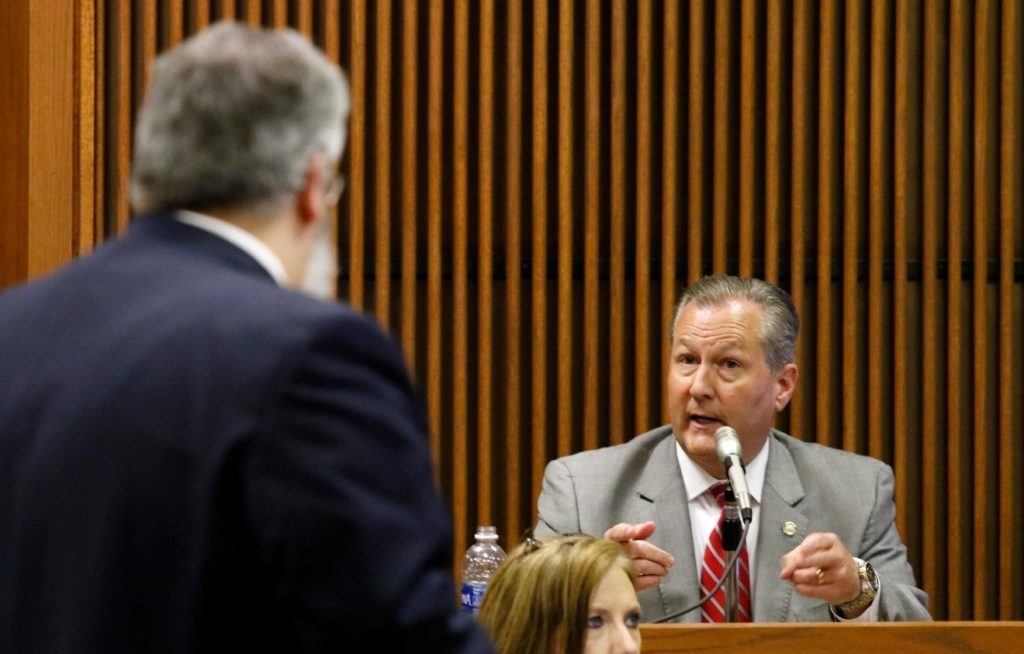
The latest on the public corruption trial of House Speaker Mike Hubbard (all times local): 4:50 p.m. Alabama House Speaker Mike Hubbard squared off with a state prosecutor over consulting contracts and other money the Republican’s companies received. Hubbard and prosecutor Matt Hart exchanged testy remarks Wednesday during the first day of a contentious cross-examination at Hubbard’s ethics trial. Hart questioned Hubbard about $2.3 million his companies received and emails he sent former Gov. Bob Riley, now a lobbyist, seeking help finding a job. Hart referred to Riley as a lobbyist. Hubbard in his responses referenced Riley as “my friend.” Hubbard faces 23 felony ethics charges accusing him of using his political positions to obtain $2.3 million in work and investments for his companies. His defense has argued the transactions fall within exemptions for longstanding friendships and normal business dealings. He returns to the witness stand Thursday. ___ 4:00 p.m. Alabama House Speaker Mike Hubbard returned to the witness stand in his public corruption trial, denying accusations that he used his office to make money and help his business clients. Hubbard on Wednesday said he never knowingly violated the ethics law. Hubbard at several points contradicted testimony from prior witnesses. Hubbard said he had not seen language in a 2013 budget that could have benefited one of his clients until shortly before the House vote. He also denied asking a lobbyist for a $150,000 investment in his printing company. The Republican said calls to a patent office he made on behalf of another client, the owner of a drinking cup company, was because he was a constituent and employer in his district. The company was also paying Hubbard $10,000 a month. Hubbard said the company hired him because of his connections to college sports. ___ 3:35 a.m. Alabama House Speaker Mike Hubbard is testifying in his own defense at his ethics trial. Hubbard will return to the witness stand Wednesday afternoon as he offers jurors his explanation of contracts his companies received and emails he sent seeking work. Hubbard faces 23 felony ethics charges accusing him of using his political positions to obtain $2.3 million in work and investments for his companies. The Republican speaker testified Tuesday that he took precautions to obey the law and sought input from the director of the state ethics commission before accepting contracts. The speaker said he sought advice from friends after being laid off and he vented his financial stress in emails to former Gov. Bob Riley. Prosecutors will get a chance to question Hubbard later. Republished with permission of The Associated Press.
Mike Hubbard trial day 7: Hubbard’s business associates, friends take the stand
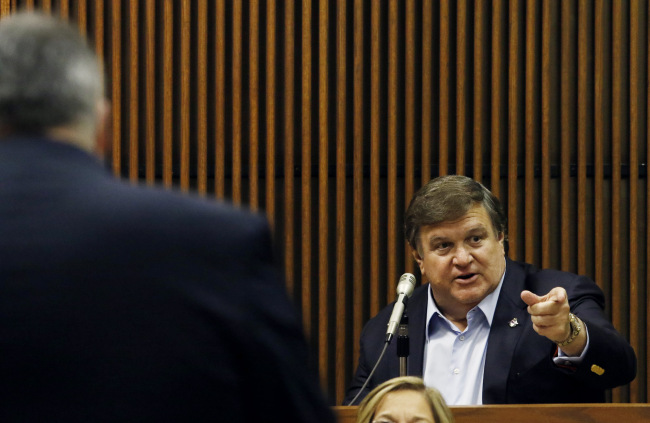
Prosecutors continued to call witnesses Thursday in an effort to prove that Alabama House Speaker Mike Hubbard used his political office for personal profit. Thursday, the jury heard from three witnesses, all of whom were Hubbard’s business associates. Some of whom testified they considered Hubbard a personal friend. Testimony began with Robert Abrams, the former president and owner of Capital Cups, one of Hubbard’s clients. Hubbard held a $10,000 a month contract with Capital Cups, and four of the 23 charges against him are based on his work with the company. Going in to business with Hubbard, Abrams said he asked the speaker if he would be able to work for the business since he served as speaker. According to Abrams testimony, Hubbard then presented him with a letter from the Alabama Ethics Commission giving him permission to work with third-party companies. Abrams went on to testify that Hubbard arranged meetings for him with Governor Robert Bentley and Secretary Greg Canfield. During the cross examination, Abrams explained he hired Hubbard because of his sports network connections, having formerly worked in sports broadcasting and for the Auburn Network, and that it had nothing to do with his political office. “Legislature had nothing to do with it,” Abrams said. “We were calling him based on his connection for sports network.” “We went to him because of the sports network connection is where I thought he might be helpful,” Abrams continued. Rob Burton, president of Hoar construction, also took the witness stand Thursday morning. Burton was one of 10 people who invested $150,000 into Hubbard’s printing company Craftmaster when it was facing financial trouble. “I invested in that because Mike Hubbard was a friend and it had nothing to do with the fact that he was speaker of the House. Even if he were not speaker, I still would have invested because I knew Mike as a friend, I like him and I trusted him,” Burton said before the jury. Last on the stand in day seven of the trial was Jimmy Rane, president of Great Southern Wood. Like Burton, Rane also invested $150,000 into Craftmaster. “I would trust him with my children and my check book,” Rane testified of Hubbard. Rane stressed his friendship with Hubbard throughout his testimony, and explained he has known Hubbard since 1984. “I would trust him with my children and my checkbook,” said Rane. Rane said he would have made the deal even if Hubbard was not speaker because “it’s a good investment.” Court recessed around noon central. Testimony will resume Friday. Hubbard was indicted in October 2013 on 23 felony ethics charges of using his political office for personal gain. If convicted, he faces a maximum penalty of two to 20 years imprisonment and fines of up to $30,000 for each count. He would be removed from office if convicted of any of the 23 charges. Hubbard has since maintained his innocence and continued to serve as Speaker of the Alabama House during the 2016 legislative session.
Robert Bentley confirms meeting with Mike Hubbard about jobs
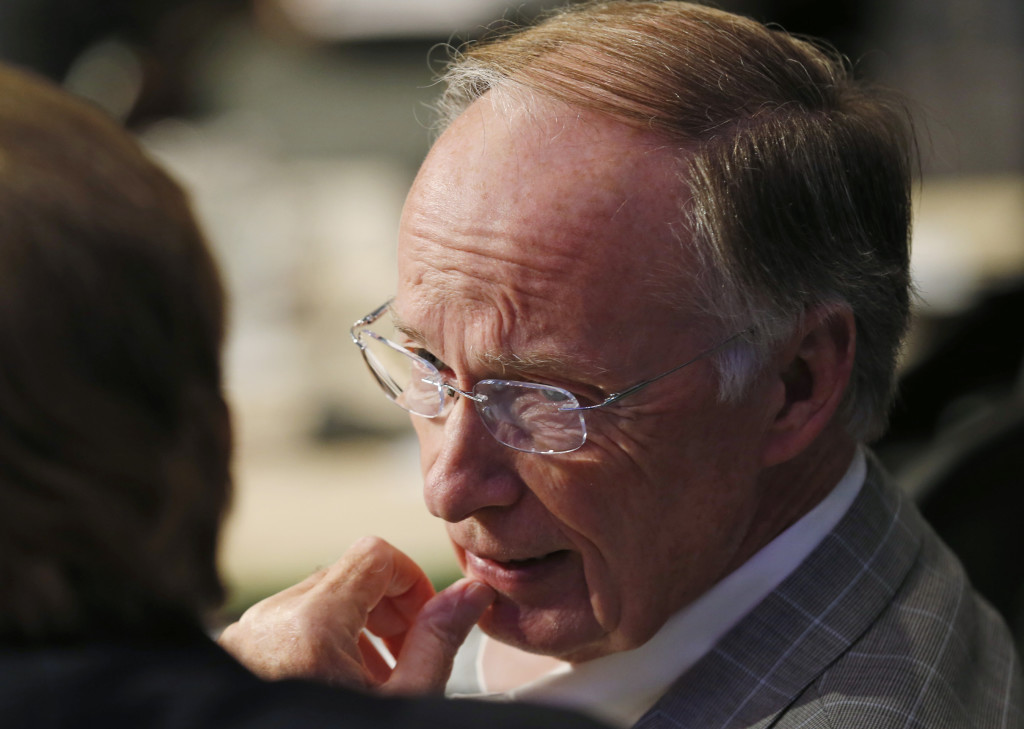
Gov. Robert Bentley has testified under oath in the ethics trial of the Alabama House speaker, saying that he remembers meeting with Mike Hubbard to discuss what he described as economic development projects. Prosecutors are seeking to prove that Hubbard was being paid up to $12,000 a month to illegally lobby the governor on behalf of his business clients – a municipal gas company and a maker of plastic cups. A state prosecutor showed Bentley reports Hubbard sent his clients describing how he met with the governor on projects that could benefit them. The governor said he remembered the meetings. On cross-examination, Bentley told a defense lawyer that he thought the projects were good for the state because they would bring jobs. Bentley faces his own trouble: Eleven lawmakers resolved to impeach him after he acknowledged sending sexually suggestive messages to a female aide. Republished with permission of The Associated Press.
