
Donald Trump stands by ‘culture’ criticism of European immigration
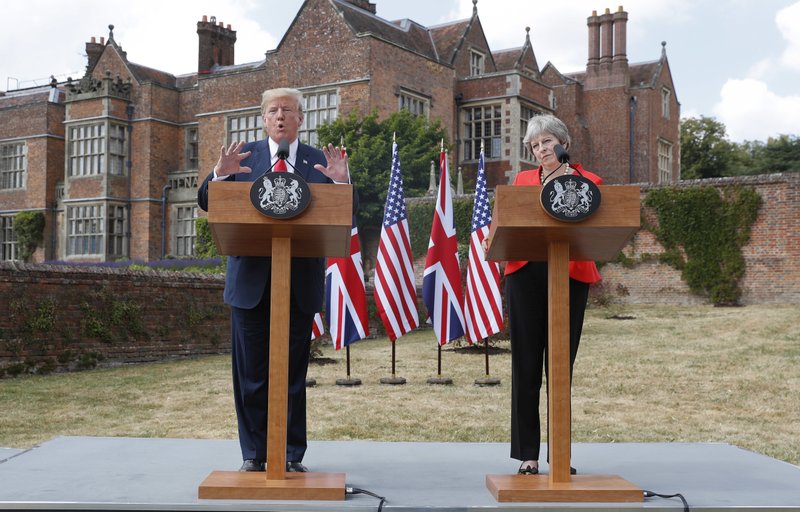
President Donald Trump pressed ahead Friday with his complaints that European immigration policies are changing the “fabric of Europe” and destroying European culture. During a news conference with British Prime Minster Theresa May, Trump backtracked on the criticism of May that he made in an explosive interview released as he began his visit to the country. But he reiterated his belief that Europe’s decision to accept migrants from Middle Eastern and African countries is “a very negative thing for Europe.” Standing next to May at Chequers, the prime minister’s official country estate, Trump acknowledged that his remarks were “politically not necessarily correct.” But he said European countries need to “watch themselves.” “You are changing culture, you are changing a lot of things,” he said, adding, “You see the same terror attacks that I do.” Trump was reiterating a position he articulated in an interview released Thursday by The Sun, in which he also criticized May’s handling of Brexit negotiations and said “I think allowing millions and millions of people to come into Europe is very, very sad.” May quickly rebutted Trump during their joint appearance, saying the U.K. has a “proud history of welcoming people who are fleeing persecution to our country.” “Over the years, overall immigration has been good for the U.K.,” she added. “It’s brought people with different backgrounds, different outlooks here to the U.K. and we’ve seen them contributing to our society and our economy.” Critics have faulted the president for using language that echoes white supremacist laments about the loss of white power. Rep. Adriano Espaillat, D-N.Y., born in the Dominican Republic, said Trump was “trying to throw gasoline on fire and begin a culture war, and it’s unfortunate that he’s divisive in the United States and he’s divisive in Europe as well.” “We all tout our nation as being a nation of immigrants,” Espaillat said. “For him to characterize that as something negative that we should avoid is sort of going against the most important and fundamental tenets of our country.” Rep. Ted Lieu, D-Calif., born in Taipei, Taiwan, said American culture is constantly changing through immigration. “That’s what makes our country amazing and great,” Lieu said. “It is a continual renewal of our American ideals set forth in our Constitution and Declaration of Independence with every new successive generation.” Trump said he believes that the U.K.’s Brexit vote in 2016 was in part a response to lax European immigration laws, and he has frequently tried to use Europe as a cautionary tale for the U.S., where he is seeking to implement more hawkish migration policies. Trump has used tough rhetoric on immigration to motivate his political base at home, at times using racial or ethnic undertones. During the 2016 presidential campaign, he drew global condemnation for a call to ban Muslim immigration to the U.S. Since entering the White House, he has enacted travel restrictions for citizens from some Muslim-majority countries, curtailed refugee admissions to the U.S. and called for “extreme vetting” of those entering the U.S. He drew fire from Democrats earlier this year for describing MS-13 gang members, many of them immigrants to the U.S., as “animals.” Republished with the permission of the Associated Press.
U.S. to push steel, aluminum tariffs on E.U., Canada and Mexico
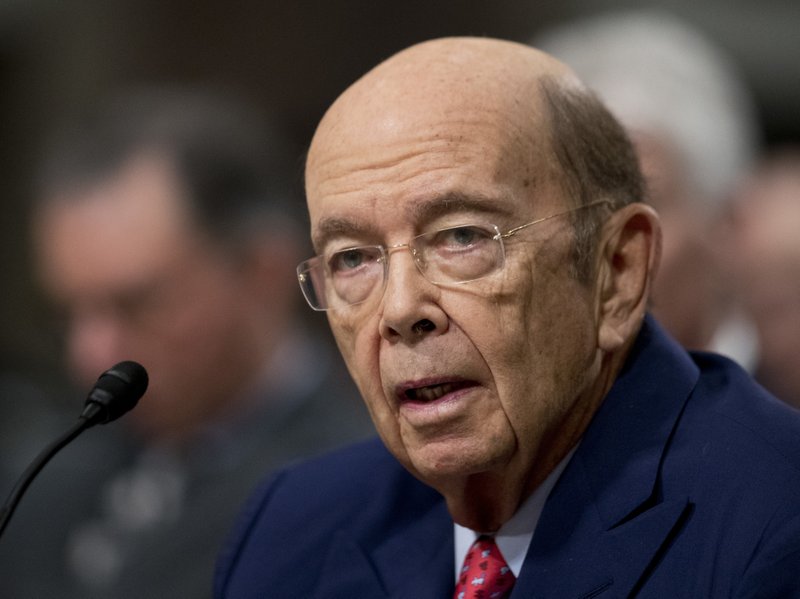
The Trump administration announced Thursday it will impose tariffs on steel and aluminum imports from Europe, Mexico and Canada after failing to win concessions from the American allies. The decision could provoke retaliatory penalties and exacerbate trans-Atlantic and North American trade tensions. Commerce Secretary Wilbur Ross said the tariffs would be 25 percent on steel and 10 percent on aluminum as the administration followed through on the penalties after earlier granting exemptions to buy time for negotiations. Ross told reporters that talks with Canada and Mexico over revising the North American Free Trade Agreement were “taking longer than we had hoped.” Talks with Europe had “made some progress” but not enough for additional exemptions, he said in a conference call from Paris. “We continue to be quite willing and indeed eager to have further discussions,” Ross said. He said he planned to travel to China on Friday for trade talks between the world’s two biggest economies. European officials had braced for the tariffs and the EU has threatened to retaliate against U.S. orange juice, peanut butter and other goods in return. In terms of the NAFTA talks, the tariffs could hinder the negotiations among the North American neighbors. Fears of a global trade war are already weighing on investor confidence and could hinder the global economic upturn. European officials argue that tit-for-tat tariffs will hurt growth on both sides of the Atlantic. Republished with the permission of the Associated Press.
Donald Trump takes a more cautious approach on big trip
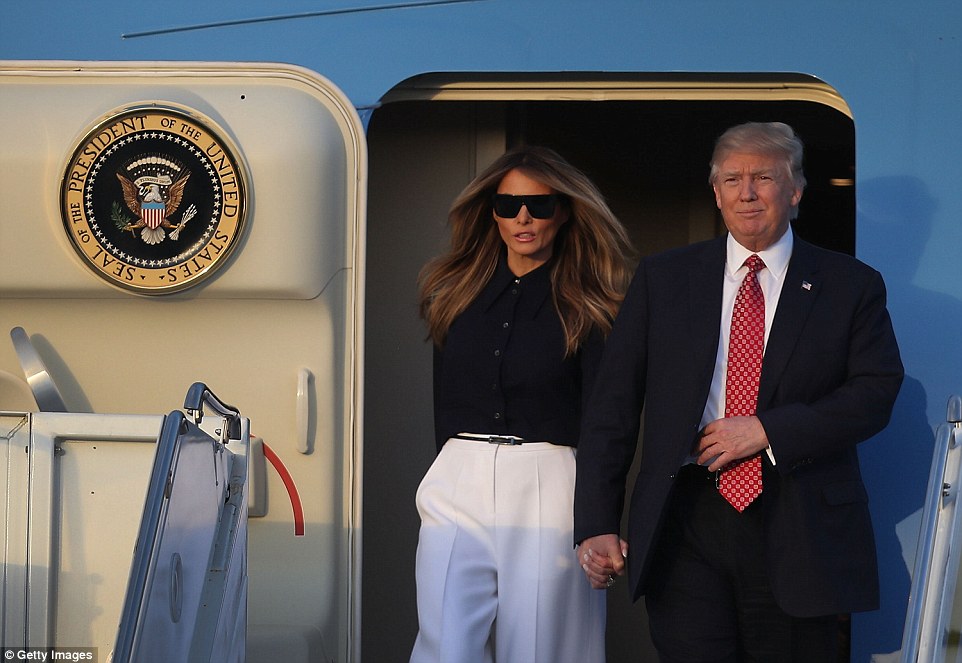
In his first big tour on the world stage, President Donald Trump is choosing caution over his usual brand of chaos. The early morning Twitter rants that so often rattle Washington have disappeared as Trump travels through the Middle East and Europe. The president has traded his free-wheeling speaking style for tightly scripted remarks. And with most of the traveling press corps being kept at a distance, the opportunities for him to be pressed on the controversies engulfing his administration back home are dramatically lessened. Trump did briefly respond to one shouted question about his meeting with Pope Francis on Wednesday, offering this indisputable assessment of the pontiff: “He is something.” The president appears likely to go his entire nine-day trip without holding a full news conference, a break from presidential foreign travel precedent. That’s allowed him to steer clear of the steady stream of new revelations about his dealings with ousted FBI Director James Comey and the federal investigations into his election campaign’s possible ties to Russia. And it’s left no real opportunities to push the president beyond his talking points on some of the trip’s most complex issues, including the prospect of restarting Middle East peace talks and strengthening regional alliances to combat terrorism. The White House has been jubilant over the trip’s results so far, and content to let the images of Trump meeting with world leaders tell the story instead of the president’s own unpredictable words. The White House did not respond to questions Wednesday about whether he might squeeze in a news conference on the final legs of the trip, his meetings with NATO and European leaders in Brussels and the Group of 7 summit in Sicily. Jen Psaki, who served as White House communications director for President Barack Obama, said every White House has to contend with the risks of letting events at home step on a trip’s message. But she said there’s also value in an American president engaging with the press on foreign soil. “We always saw press conferences as part of our objective: to send the message in countries without a free press, or with limitations on freedom of speech that the United States valued these sometimes-unpredictable interactions as a part of democracy,” Psaki said. Not that Trump has gone silent on his five-stop trip abroad. He called on Arab and Muslim leaders to step up in the fight against terrorism during an address in Saudi Arabia, and he called on Israelis and Palestinians to get back to the negotiating table during remarks Tuesday in Jerusalem. In both instances, he hewed closely to his prepared text – a rarity given his normal pattern of veering not only off script but sometimes wildly off topic. There have been some self-inflicted wounds, most notably Trump’s decision to field a journalist’s question to Israeli Prime Minister Benjamin Netanyahu about concerns over the president’s decision to share with Russia some classified intelligence that had been obtained by Israel. The president declared that he “never mentioned the word or the name Israel” in his discussions with the Russian officials. In one short set of off-the-cuff remarks in Jerusalem, Trump told an Israeli delegation that he had just gotten back from the Middle East – despite the fact that Israel is squarely in the region. Ron Dermer, the Israeli ambassador to the U.S., can be seen in the video visibly reacting to the flub. But some leaders Trump was slated to meet with on his trip had been preparing for far worse than the occasional Trump gaffe. At NATO headquarters, where he will visit Thursday, aides have prepped Secretary-General Jens Stoltenberg for the possibility that the president could try to pull off a stunt such as passing around invoices to member countries who have not met the alliance’s financial guidelines, according to a person with knowledge of the planning. Trump has been a sharp critic of NATO countries that don’t spend the agreed-upon 2 percent of their gross domestic product on defense, and Secretary of State Rex Tillerson said the president indeed planned to push allies hard on that issue. The person with knowledge of the NATO planning insisted on anonymity in order to disclose private discussions. Trump advisers vigorously contest the idea that the president’s more measured tenor abroad is the result of significant staff intervention, arguing that the president himself is behind the approach for his first foreign trip. The final leg may be the most challenging. After warm embraces from the leaders of Saudi Arabia and Israel, Trump will be meeting with European leaders who are still skeptical of his untraditional approach to politics and his hard-to-pin-down policy positions. The arrangements for the summits will also put Trump’s patience to the test, requiring him to spend hours locked in rooms listening to his foreign counterparts. Republished with permission of The Associated Press.
FDA approves more drugs, and faster, than Europe, study says

Contrary to some political claims, the U.S. Food and Drug Administration approved more drugs, and two to three months faster on average, than European regulators did in recent years, new research shows. “It’s an urban myth” that the FDA is slower than other countries to clear promising treatments for patients, said the agency’s longtime cancer drugs chief, Dr. Richard Pazdur. He had no role in the approval rate research, which was published Wednesday in the New England Journal of Medicine. The new research compared how new drugs fared before the FDA and the European Medicines Agency between 2011 and 2015. The FDA approved more drugs than the Europeans — 170 versus 144 — with a median review time of 306 days versus 383 days in Europe. Reviews were speedier at the FDA for drugs for cancer and blood diseases, but not other maladies, compared to the Europeans. The FDA also moved quicker on so-called orphan drugs, for relatively rare conditions. The results are similar to a previous analysis that some of the same researchers did for therapies approved between 2001 and 2010. The latest study was done by Dr. Nicholas Downing at Boston’s Brigham and Women’s Hospital, Audrey Zhang at New York University and Dr. Joseph Ross at the Yale School of Medicine. President Donald Trump has called the FDA’s drug approval process “slow and burdensome,” and his nominee to head the agency, Dr. Scott Gottlieb, has criticized what he calls unnecessary regulations. Gottlieb’s confirmation hearings began on Wednesday. Some other doctors defended the FDA’s track record. “We’re the best in the world. Our FDA is great,” said Dr. George Demetri of the Dana-Farber Cancer Institute. He is a board member of the American Association for Cancer Research, and spoke from the group’s annual meeting in Washington, attended by some 20,000 cancer scientists from around the world. Republished with permission of The Associated Press.
Paul Manafort had plan to benefit Vladamir Putin government

President Donald Trump‘s former campaign chairman, Paul Manafort, secretly worked for a Russian billionaire to advance the interests of Russian President Vladimir Putin a decade ago and proposed an ambitious political strategy to undermine anti-Russian opposition across former Soviet republics, The Associated Press has learned. The work appears to contradict assertions by the Trump administration and Manafort himself that he never worked for Russian interests. Manafort proposed in a confidential strategy plan as early as June 2005 that he would influence politics, business dealings and news coverage inside the United States, Europe and the former Soviet republics to benefit the Putin government, even as U.S.-Russia relations under Republican President George W. Bush grew worse. Manafort pitched the plans to Russian aluminum magnate Oleg Deripaska, a close Putin ally with whom Manafort eventually signed a $10 million annual contract beginning in 2006, according to interviews with several people familiar with payments to Manafort and business records obtained by the AP. Manafort and Deripaska maintained a business relationship until at least 2009, according to one person familiar with the work. “We are now of the belief that this model can greatly benefit the Putin Government if employed at the correct levels with the appropriate commitment to success,” Manafort wrote in the 2005 memo to Deripaska. The effort, Manafort wrote, “will be offering a great service that can re-focus, both internally and externally, the policies of the Putin government.” Manafort’s plans were laid out in documents obtained by the AP that included strategy memoranda and records showing international wire transfers for millions of dollars. How much work Manafort performed under the contract was unclear. The disclosure comes as Trump campaign advisers are the subject of an FBI probe and two congressional investigations. Investigators are reviewing whether the Trump campaign and its associates coordinated with Moscow to meddle in the 2016 campaign. Manafort has dismissed the investigations as politically motivated and misguided, and said he never worked for Russian interests. The documents obtained by AP show Manafort’s ties to Russia were closer than previously revealed. In a statement to the AP, Manafort confirmed that he worked for Deripaska in various countries but said the work was being unfairly cast as “inappropriate or nefarious” as part of a “smear campaign.” “I worked with Oleg Deripaska almost a decade ago representing him on business and personal matters in countries where he had investments,” Manafort said. “My work for Mr. Deripaska did not involve representing Russia’s political interests.” Deripaska became one of Russia’s wealthiest men under Putin, buying assets abroad in ways widely perceived to benefit the Kremlin’s interests. U.S. diplomatic cables from 2006 described Deripaska as “among the 2-3 oligarchs Putin turns to on a regular basis” and “a more-or-less permanent fixture on Putin’s trips abroad.” In response to questions about Manafort’s consulting firm, a spokesman for Deripaska in 2008 — at least three years after they began working together — said Deripaska had never hired the firm. Another Deripaska spokesman in Moscow last week declined to answer AP’s questions. Manafort worked as Trump’s unpaid campaign chairman last year from March until August. Trump asked Manafort to resign after AP revealed that Manafort had orchestrated a covert Washington lobbying operation until 2014 on behalf of Ukraine’s ruling pro-Russian political party. The newly obtained business records link Manafort more directly to Putin’s interests in the region. According to those records and people with direct knowledge of Manafort’s work for Deripaska, Manafort made plans to open an office in Moscow, and at least some of Manafort’s work in Ukraine was directed by Deripaska, not local political interests there. The Moscow office never opened. Manafort has been a leading focus of the U.S. intelligence investigation of Trump’s associates and Russia, according to a U.S. official. The person spoke on condition of anonymity because details of the investigation were confidential. Meanwhile, federal criminal prosecutors became interested in Manafort’s activities years ago as part of a broad investigation to recover stolen Ukraine assets after the ouster of pro-Russian President Viktor Yanukovych there in early 2014. No U.S. criminal charges have ever been filed in the case. FBI Director James Comey, in confirming to Congress the federal intelligence investigation this week, declined to say whether Manafort was a target. Manafort’s name was mentioned 28 times during the hearing of the House Intelligence Committee, mostly about his work in Ukraine. No one mentioned Deripaska. White House spokesman Sean Spicer said Monday that Manafort “played a very limited role for a very limited amount of time” in the campaign, even though as Trump’s presidential campaign chairman he led it during the crucial run-up to the Republican National Convention. Manafort and his associates remain in Trump’s orbit. Manafort told a colleague this year that he continues to speak with Trump by telephone. Manafort’s former business partner in eastern Europe, Rick Gates, has been seen inside the White House on a number of occasions. Gates has since helped plan Trump’s inauguration and now runs a nonprofit organization, America First Policies, to back the White House agenda. Gates, whose name does not appear in the documents, told the AP that he joined Manafort’s firm in 2006 and was aware Manafort had a relationship with Deripaska, but he was not aware of the work described in the memos. Gates said his work was focused on domestic U.S. lobbying and political consulting in Ukraine at the time. He said he stopped working for Manafort’s firm in March 2016 when he joined Trump’s presidential campaign. Manafort told Deripaska in 2005 that he was pushing policies as part of his work in Ukraine “at the highest levels of the U.S. government — the White House, Capitol Hill and the State Department,” according to the documents. He also said he had hired a “leading international law firm with close ties to President Bush to support our client’s interests,” but he did not identify the firm. Manafort also said he was employing unidentified legal experts for the effort at leading universities and
No matter the issue, Donald Trump knows a guy
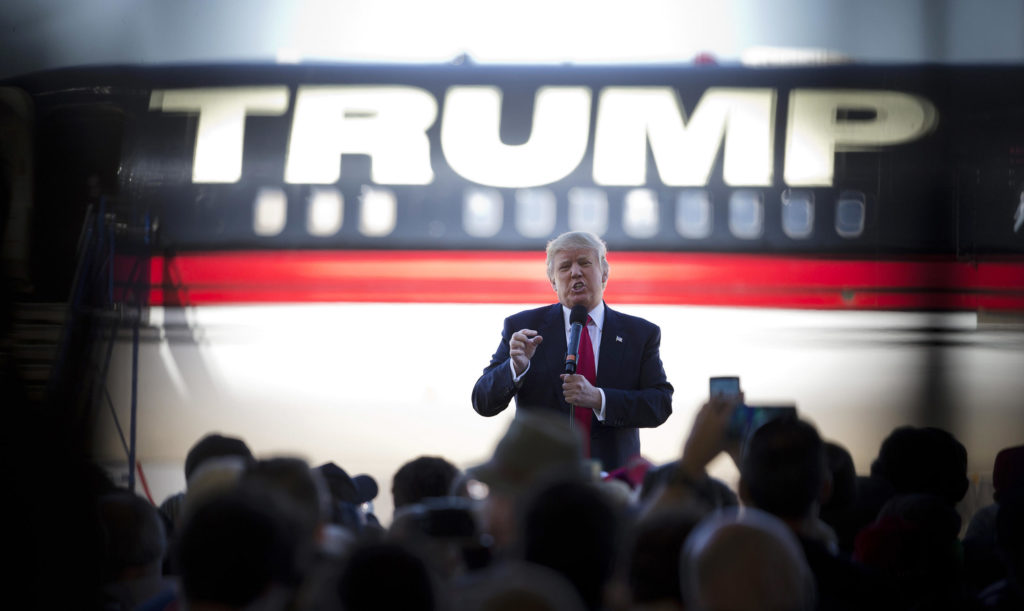
President Donald Trump knows a guy. No matter what issue Trump is addressing, he seems either to know somebody with a relevant personal experience or he’s got a firsthand tale to recount. When he met airline CEOs on Thursday, Trump said his own pilot — “who’s a real expert” — had told him about problems with obsolete equipment. When he met business and economic experts a week earlier, Trump cited the difficulties his friends in business were having borrowing money from banks as he spoke about the need to reduce financial regulations. When he approvingly sized up Britain’s vote to leave the European Union, Trump said last month that he’d had a “very bad experience” in his own businesses when dealing with the EU bureaucracy. “Getting the approvals from Europe,” he said, “was very, very tough.” Call him the anecdotal president: For good or ill, Trump processes policy proposals through his own personal frame of reference. “It’s all about him,” says Jeff Shesol, who wrote speeches for President Bill Clinton. “His frame for Europe, his frame for the airlines, his frame for the banking system … is himself.” It’s not necessarily a bad thing to draw on real-world experiences in developing or justifying policy. Plenty of presidents and politicians have recognized the value of anecdotal storytelling in advancing their agendas. President Barack Obama offered his own improbable life story as a metaphor for the wide-open possibilities available to all Americans. And he frequently drew on the concerns that came up in the 10 letters a day that he read from people who wrote to the White House. Clinton was famous for sketching his encounters with ordinary Americans. President Lyndon Johnson drew on his early experiences teaching disadvantaged Mexican-Americans in stressing the importance of education and economic opportunity for all Americans. “I think it was then that I made up my mind that this nation could never rest while the door to knowledge remained closed to any American,” Johnson said after signing the Higher Education Act of 1965. “Great Communicator” Ronald Reagan related the story of a woman who falsely collected welfare payments — then parlayed it into a stereotype of “welfare queens” cheating the system. Kathleen Hall Jamieson, a University of Pennsylvania professor specializing in political communication, says that in his first three weeks in office, Trump has surpassed even Reagan in his reliance on the use of “argument by anecdote.” “Given the extemporaneous nature of Trump’s presidency,” she says, “we can reasonably assume that these individual moments are playing a more important role for him” in developing policy than they did for presidents past. The risk, she adds, is that an overreliance on personal experiences “can lead to the assumption that something is typical when it’s atypical.” With Trump, it’s hard to tell exactly what goes into his policymaking. But the billionaire businessman-turned-politician cites experiences from his own, very rarefied world that wouldn’t necessarily track those of ordinary Americans. When he complained about onerous EU regulations, Trump appeared to be alluding to his failure to get approval for a sea wall at the Trump Organization’s golf resort in Ireland. When he talked during the campaign about crumbling airport infrastructure, he mentioned the potholes at New York’s LaGuardia Airport — where Trump would have landed in his gilded private jet. When he talked about the dangers of nuclear weaponry during the campaign, he would often invoke the expertise of his “brilliant” late Uncle John, a scientist at MIT. In some cases, Trump may be drawing lessons from somewhat scrambled tales. In calling for an investigation into alleged wide-scale voter fraud, for example, Trump has privately related a story about a pro golfer who either told Trump he had trouble voting himself or who had a friend who wasn’t allowed to vote even as others who somehow looked like they should be eligible to vote cast ballots, according to The New York Times. Golfer Bernard Langer, a German citizen who is not eligible to vote in the U.S., later issued a statement to Golf Digest saying that elements of the story had gotten lost in translation. Langer said he’d told a friend the story of someone who couldn’t vote, and that tale had made its way to someone with ties to the White House and “from there, this was misconstrued.” As for Trump’s difficulties with the EU, he did run into regulatory problems with the proposed sea wall at his Irish golf course, but he also encountered local opposition to that project. In an interview in December, Trump said he’d also sought approval for a “massive, beautiful expansion” of the course but had dropped the idea after getting the OK from Ireland because it would have taken years to get EU clearance. However, there’s no record of him seeking approval for such an expansion. Republished with permission of the Associated Press.
Revelers bid adieu to a year of conflicts, celebrity deaths

As 2016 draws to a close, revelers around the world are bidding a weary adieu to a year filled with political surprises, prolonged conflicts and deaths of legendary celebrities. How people are ushering in the new year: AUSTRALIA Sydney sent up a dazzling tribute to 2016’s fallen icons with a New Year’s Eve fireworks display honoring the late singer David Bowie and late actor Gene Wilder, becoming the first major city to bid a bittersweet adieu to a turbulent year. The glittering display over Sydney’s famed harbor and bridge featured Saturn and star-shaped fireworks set to “Space Oddity,” the classic song by Bowie — one of the seemingly endless parade of beloved entertainers who died in 2016. Wilder was also honored as the bridge lit up in a rainbow of colors while a song from Wilder’s famed film “Willy Wonka and the Chocolate Factory” played. “This year, sadly, we saw the loss of many music and entertainment legends around the world,” fireworks show co-producer Catherine Flanagan said. “So celebrating their music as part of Sydney New Year’s Eve fireworks displays is an opportunity to reflect on the year that has been and what the future may hold.” ___ LAS VEGAS More than 300,000 visitors are expected to descend on Las Vegas for an extravagant New Year’s Eve celebration. Nightclubs are pulling out all the stops with performances from DJ Calvin Harris, rappers T-Pain and Kendrick Lamar and artists Drake and Bruno Mars. The city’s celebrity chefs have crafted elaborate prix fixe menus complete with caviar and champagne toasts. An eight-minute fireworks show will kick off at the stroke of midnight, with rockets launching from the tops of half a dozen casinos. Federal officials have ranked the celebration just below the Super Bowl and on par with the festivities in Times Square. FBI and Secret Service agents will work alongside local police departments that are putting all hands on deck for the big night. ___ GERMANY In Berlin the mood was more somber than celebratory. “I don’t like the way politics is going,” said Daniel Brandt. “Fears are being fanned and people are so angry with each other.” The tone of public debate in Germany has become shriller over the past two years with the influx of hundreds of thousands of migrants. Some Germans blame Chancellor Angela Merkel for attacks such as the recent rampage in Berlin, where a failed asylum-seeker from Tunisia rammed a truck into a crowded Christmas market, killing 12 people and injuring dozens more. As the country heads for a general election in which the anti-immigration Alternative for Germany party is expected to poll strongly, Brandt said he was hoping for “proper solutions to our problems.” Two Israeli tourists, on a visit to the German capital, seemed at a loss when asked about their wishes for 2017. “Peace on Earth. Just happiness, really,” said Nathan and Libat, declining to give their last names. Walking by the Reichstag, Germany’s Parliament building, Hamed Noori said 2016 had been a good year. “I came to Germany from Afghanistan,” he said. “Life is better here.” Birgitta Bergquist, a recent retiree visiting Berlin from Sweden, said she looked forward to spending more time with her 3-year-old granddaughter. “And we hope the family stays healthy.” Nicole Durand-Nusser, originally from France but living in Berlin for almost 50 years, said 2016 had been a difficult year: “Brexit, Trump, Erdogan — it’s all getting worse. “I’m a convinced European and I hope Europe doesn’t collapse in 2017,” she said. ___ TURKEY Neslihan Dogruol, a restaurant owner in a chic Istanbul neighborhood, said she hopes for peace in 2017 following a year filled with “unrest and death.” “2016 affected everyone badly,” she said, referring to major attacks that hit Turkey in the past year. The restaurant, adorned with snowflakes and tiny decorative lights for the evening, will have fewer people for dinner. “There is a serious gap between 2015 and 2016 in terms of business, people are going out less,” Dogruol said, adding that she expects more people to come for drinks. Security measures were heightened in major Turkish cities. Traffic leading up to key squares in Istanbul and the capital, Ankara, will be closed, police said. In Istanbul, 17,000 police officers have been put on duty, some camouflaged as Santa Claus and others as street vendors, Turkey’s state-run Anadolu news agency reported on Friday. Ankara and Istanbul were targeted by bomb attacks in 2016, killing more than 180 people. Turkey has been in the throes of violence, combatting the Islamic State group, Kurdish militants and a coup attempt blamed on the U.S.-based cleric Fethullah Gulen. ___ RUSSIA President Vladimir Putin invoked a bit of seasonal enchantment in his New Year’s Eve remarks to the nation. “Each of us may become something of a magician on the night of the New Year,” Putin said in a short televised address broadcast in the closing minutes of 2016 in each of Russia’s 11 time zones. “To do this we simply need to treat our parents with love and gratitude, take care of our children and families, respect our colleagues at work, nurture our friendships, defend truth and justice, be merciful and help those who are in need of support. This is the whole secret,” he said. New Year’s Eve is Russia’s major gift-giving holiday, and big Russian cities were awash in festive lights and decorations. The Moscow subway offered a special holiday train, festooned with lights and artificial greenery. “I wish for the next year to better than this,” said rider Alexander Pisaryev. “We are waiting for good, for peace and order,” said another, Valentina Daineka. ___ THE VATICAN Pope Francis has called on the faithful to help young people find a place in society, noting the paradox of “a culture that idolizes youth” and yet has made no place for the young. Francis said during vespers marking New Year’s Eve that young people have been “pushed to the margins of public life, forcing them to migrate
U.S. election voted top news story of 2016
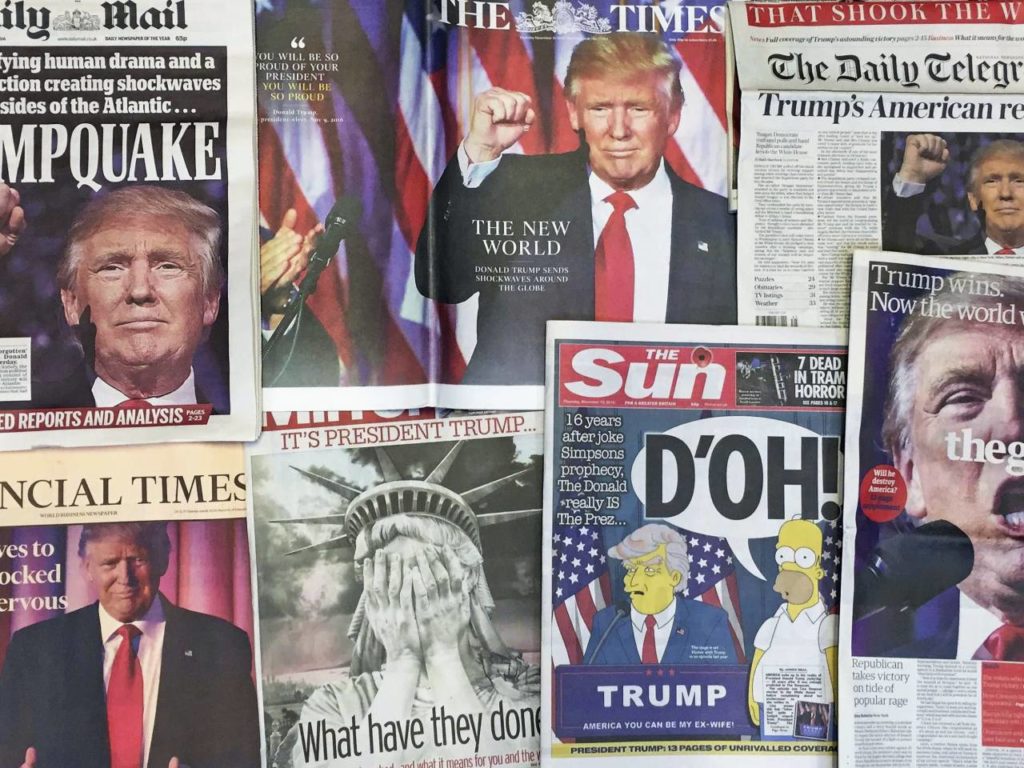
The turbulent U.S. election, featuring Donald Trump‘s unexpected victory over Hillary Clinton in the presidential race, was the overwhelming pick for the top news story of 2016, according to The Associated Press’ annual poll of U.S. editors and news directors. The No. 2 story also was a dramatic upset — Britons’ vote to leave the European Union. Most of the other stories among the Top 10 reflected a year marked by political upheaval, terror attacks and racial divisions. Last year, developments related to the Islamic State group were voted as the top story — the far-flung attacks claimed by the group, and the intensifying global effort to crush it. The first AP top-stories poll was conducted in 1936, when editors chose the abdication of Britain’s King Edward VIII. Here are 2016’s top 10 stories, in order: 1. US ELECTION: This year’s top story traces back to June 2015, when Donald Trump descended an escalator in Trump Tower, his bastion in New York City, to announce he would run for president. Widely viewed as a long shot, with an unconventional campaign featuring raucous rallies and pugnacious tweets, he outlasted 16 Republican rivals. Among the Democrats, Hillary Clinton beat back an unexpectedly strong challenge from Bernie Sanders, and won the popular vote over Trump. But he won key Rust Belt states to get the most electoral votes, and will enter the White House with Republicans maintaining control of both houses of Congress. 2. BREXIT: Confounding pollsters and oddsmakers, Britons voted in June to leave the European Union, triggering financial and political upheaval. David Cameron resigned as prime minister soon after the vote, leaving the task of negotiating an exit to a reshaped Conservative government led by Theresa May. Under a tentative timetable, final details of the withdrawal might not be known until the spring of 2019. 3. BLACKS KILLED BY POLICE: One day apart, police in Baton Rouge, Louisiana, fatally shot Alton Sterling after pinning him to the ground, and a white police officer shot and killed Philando Castile during a traffic stop in a suburb of Minneapolis. Coming after several similar cases in recent years, the killings rekindled debate over policing practices and the Black Lives Matter movement. 4. PULSE NIGHTCLUB MASSACRE: The worst mass shooting in modern U.S. history unfolded on Latin Night at the Pulse, a gay nightclub in Orlando. The gunman, Omar Mateen, killed 49 people over the course of three hours before dying in a shootout with SWAT team members. During the standoff, he pledged allegiance to the Islamic State. 5. WORLDWIDE TERROR ATTACKS: Across the globe, extremist attacks flared at a relentless pace throughout the year. Among the many high-profile attacks were those that targeted airports in Brussels and Istanbul, a park teeming with families and children in Pakistan, and the seafront boulevard in Nice, France, where 86 people were killed when a truck plowed through a Bastille Day celebration. In Iraq alone, many hundreds of civilians were killed in repeated bombings. 6. ATTACKS ON POLICE: Ambushes and targeted attacks on police officers in the U.S. claimed at least 20 lives. The victims included five officers in Dallas working to keep the peace at a protest over the fatal police shootings of black men in Minnesota and Louisiana. Ten days after that attack, a man killed three officers in Baton Rouge, Louisiana. In Iowa, two policemen were fatally shot in separate ambush-style attacks while sitting in their patrol cars. 7. DEMOCRATIC PARTY EMAIL LEAKS: Hacked emails, disclosed by WikiLeaks, revealed at-times embarrassing details from Democratic Party operatives in the run-up to Election Day, leading to the resignation of Democratic National Committee chair Debbie Wasserman Schultz and other DNC officials. The CIA later concluded that Russia was behind the DNC hacking in a bid to boost Donald Trump’s chances of beating Hillary Clinton. 8. SYRIA: Repeated cease-fire negotiations failed to halt relentless warfare among multiple factions. With Russia’s help, the government forces of President Bashar Assad finally seized rebel-held portions of the city of Aleppo, at a huge cost in terms of deaths and destruction. 9. SUPREME COURT: After Justice Antonin Scalia‘s death in February, President Obama nominated Merrick Garland, chief judge of the U.S. Court of Appeals, to fill the vacancy. However, majority Republicans in the Senate refused to consider the nomination, opting to leave the seat vacant so it could be filled by the winner of the presidential election. Donald Trump has promised to appoint a conservative in the mold of Scalia. 10. HILLARY CLINTON’S EMAILS: Amid the presidential campaign, the FBI conducted an investigation into Clinton’s use of a private computer server to handle emails she sent and received as secretary of state. FBI Director James Comey criticized Clinton for carelessness but said the bureau would not recommend criminal charges. Stories that did not make the top 10 included Europe’s migrant crisis, the death of longtime Cuban leader Fidel Castro, and the spread of the Zika virus across Latin America and the Caribbean. Republished with permission of The Associated Press.
Marc Yacht: The voters are angry and unhappy
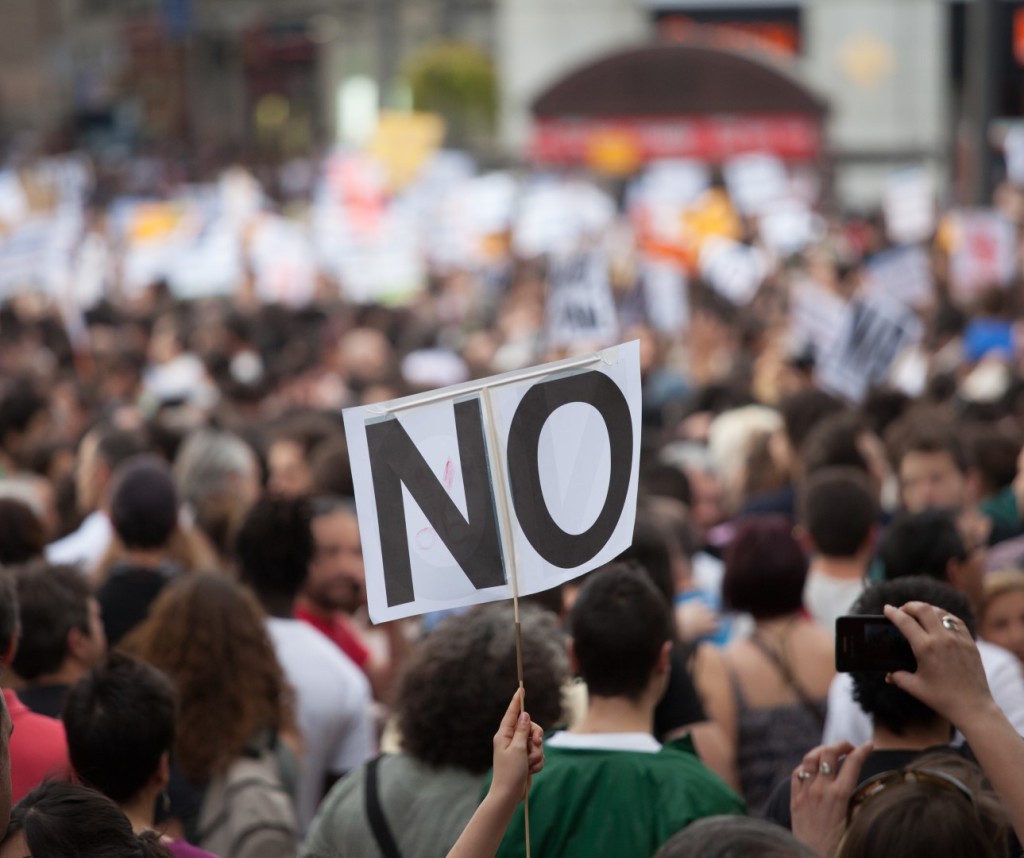
The late singer Ted Lewis in top hat, cane and tuxedo would look straight at the audience and ask, “Is everybody happy?” He would go on to sing, “Me and My Shadow” or any number of songs in his repertoire. The audience laughed then, but there would be little amusement today. Very few are happy. Democrats and Republicans disagree on most issues, but they are kindred spirits in their distaste for political leadership. According to numerous Pew Research Center polls, Americans have lost confidence in traditional politics. Voters feel betrayed. Republican distaste for Democrats and President Barack Obama runs much deeper than suggested racial bias. The Democratic disdain for Republicans has to do with congressional gridlocks and the GOP’s attitudes about the poor and women’s rights. The popularity of Donald Trump and Bernie Sanders shows the parties’ failure to deliver what voters expected. Republicans and Democrats feel abandoned and are convinced that big money drives the political agenda. They have been lied to and deceived for decades and are right. Now, the birds are coming home to roost. At stake is the future of the two-party system. Trump may hold the key to Republican survival. Sanders’ popularity may not destroy the Democrats but should change their direction and focus. Despite arguments by the Obama administration that the economy is better, the middle and working classes are not seeing this in their wages and lifestyle. What they are seeing is an abuse by corporate executives to fatten their wallets while using lobbying influence to undermine wages. The middle class now feels this pinch. Frontline plant workers have suffered stagnant wages for decades. Many of those workers have been staunch Republicans but cannot ignore inadequate incomes. Furthermore, the future appears bleak. The millionaires, billionaires, corporations and Wall Street are the villains. People believe that generous bonuses were paid to executives with money that was supposed to assist people who were losing their homes. Few were helped. Called “corporate welfare,” the abuses continue. Neither Republicans nor Democrats have digested that betrayal, though each side blames the other. Both sides are to blame. There has been no accountability for the flagrant fiscal abuse. All voters are frightened of terrorism. Recent events in Europe and California perpetrated by extremist Muslims have Americans scared. Irresponsible media pundits are whipping up hate but clearly more is needed in the way of policy than Muslim appeasement. A lack of a sound immigration policy angers voters. Political correctness is thwarting needed action. The public needs to know what is being done to identify Muslim extremist groups to avert further tragedies. Congressional gridlock has angered both sides. People expect Congress to function and many voters are abandoning their party leaders because of the dysfunction. A Gallup poll says that Americans believe that government is to blame for the sluggish economy, lack of jobs and immigration chaos. Politicians are seen as abrogating their responsibility to the people who elected them. The U.S. is losing respect internationally. Americans note that other rich nations see a divided America becoming more estranged from its citizens. Trump and Sanders have tapped into the angry American voter. Both parties may have lost the confidence of their constituents. Once trust is lost, it is very difficult to regain. The parties have neglected their voters for too long. If the Republican leaders are successful and derail Trump, how will Republican voters react? If the Democrat leadership marginalizes Sanders, how will Democratic voters respond? Voters on both sides agree that we need politicians who will serve the public. Most voters feel elected officials have failed them. *** Dr. Marc Yacht, MD, MPH is a retired physician living in Hudson Florida.
