
Taylor Dawson: Is the American Dream alive and well in Alabama?

A recent Pew Research study found that over 80% of U.S. citizens believe they’ve achieved the American dream, or at least that they’re on the way to doing so. Only 17% of those surveyed said the American dream is “out of reach” for their family. But what about Alabamians? This high level of satisfaction seems like it might not translate in a relatively poor state like ours. U.S. Census data from 2016 indicates that 17.1% of Alabamians live below the poverty line. Based on that, one could reasonably conclude that because the percentage of those living below the poverty line in Alabama almost matches the percentage of those who believe the American dream is out of reach, affluence—or at least living above the poverty line—is the key to the American dream. But it may not be that simple. As the Pew study revealed, 89% of Americans (and Alabamians are likely no exception) agree that wealth is not central to achieving the American dream. There are two big values, however, that were found to be key to its attainment: enjoying fundamental freedoms and having a strong family life. The Pew research found that a whopping 77% agree that the American dream is tied to “freedom of choice in how to live”, and 70% say having “a good family life” is essential to living the dream. Freedom of religion and freedom of expression, including the freedom of speech and press, are protected by the First Amendment. Their preservation simply requires that the government and fellow citizens allow a person to exercise their faith and speak their mind as they see fit. While the freedoms of religion and speech are paramount, other liberties are also essential to the American dream. A large majority of Alabamians embrace the right of a parent to teach their children as they see fit, the principle of free enterprise to engage in business without overregulation and taxation from the government, and the right of a gun-owner to legally purchase and carry a firearm without being treated like a criminal. Needless to say, the survey’s second most agreed-upon basis for achieving the American dream—having a good family life—is far more personal than the protection of various liberties, but no less important. That’s likely the response of those surveyed because they inherently know what research statistically demonstrates. According to Dr. Pat Fagan of the Family Research Council, adults in intact families are statistically more economically productive, and children from broken families learn less, achieve less academically, and drop out of formal education earlier. While financial freedom can certainly make life easier, the ageless adage that money can’t buy happiness seems to hold sway in the minds of most Americans, as it certainly must in the minds of most Alabamians. When it’s all said and done, affluence takes a back seat to the love and security of family in every estimation, and that reaches far beyond the traditional notion of the American dream. ••• Taylor Dawson is Director of Communications for the Alabama Policy Institute (API). API is an independent, nonpartisan, nonprofit research and educational organization dedicated to strengthening free enterprise, defending limited government, and championing strong families. If you would like to speak with the author, please e-mail communications@alabamapolicy.org or call (205) 870-9900.
Pentagon revokes controversial transgender ban for U.S. military
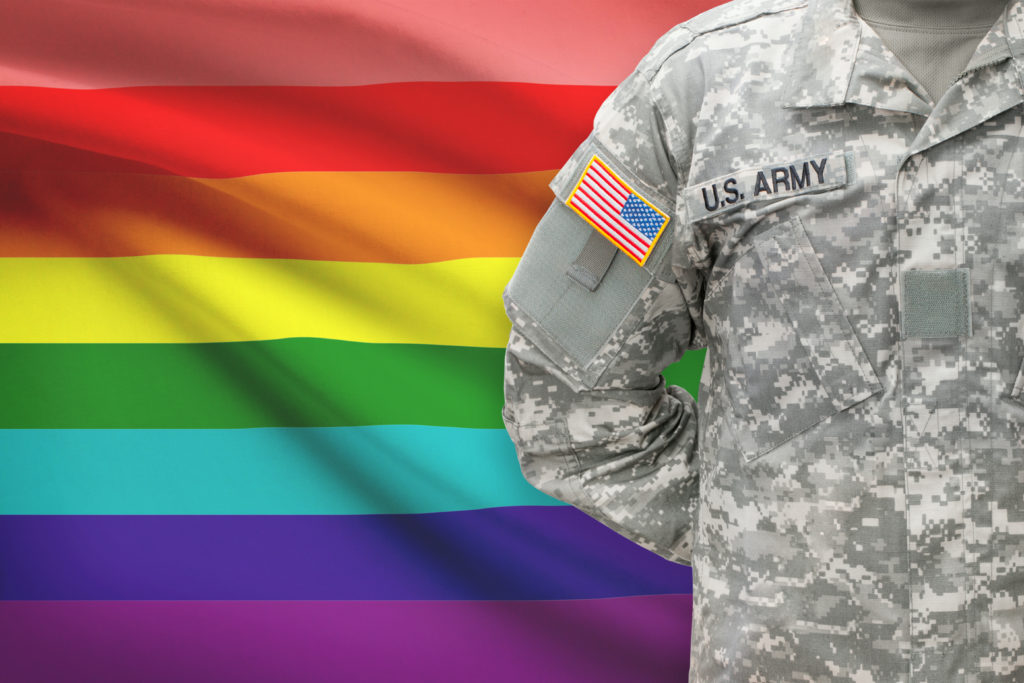
Defense Secretary Ash Carter on Thursday removed one of the final remaining barriers to military service by lifting the Pentagon’s ban on openly transgender people serving in the U.S. military. “Effective immediately, transgender Americans may serve openly,” Carter said at a news conference. “They can no longer be discharged or otherwise separated from the military just for being transgender.” Carter continued, “Our mission is to defend this country, and we don’t want barriers unrelated to a person’s qualification to serve preventing us from recruiting or retaining the soldier, sailor, airman or Marine who can best accomplish the mission. We have to have access to 100 percent of America’s population for our all-volunteer force to be able to recruit from among them the most highly qualified — and to retain them.” Alabama 1st District U.S. Rep. Bradley Byrne, a member of the House Armed Services Committee, was quick to weigh in on the Pentagon’s decision. “It is frustrating the Pentagon now has a strategy for transgender service members, but they still lack an actual strategy for defeating radical Islamic terrorism,” said Byrne in a news release. “Once again it seems the Obama Administration is more interested in advancing a political agenda than they are in proposing sound policy.” According to Carter, within 90 days the Pentagon will create a guidebook for commanders on rules regarding transgender service members as well as medical guidance to doctors. Within one year, transgender individuals will be allowed to join the armed forces, provided they have been “stable” in their preferred gender for 18 months, he continued. Lifting the transgender ban was the latest move in a series of controversial cultural changes in the military in recent years — from the 2011 decision to end the “Don’t Ask, Don’t Tell” policy barring gays and lesbians from serving openly, to Carter’s December 2015 decision lifting restrictions on women serving in combat roles. Many critics have called Wednesday’s decision “social engineering” that risks troop readiness and the ability to fight. Family Research Council President Tony Perkins, a Marine Corps veteran, said President Barack Obama was using the military “to fight culture wars.” “This is yet another example of President Obama using America’s military to fight culture wars instead of to fight real wars against the enemies of our nation,” Perkins said in a prepared statement. “Considering the abysmal condition of our military and a decline in readiness, why is this a top priority for the Obama administration?” Perkins continued. “Before changing any policy, the impact on military readiness has to be the first consideration. Defense Secretary Carter has failed to explain how this new policy makes our military more capable of winning wars.” Rep. Byrne shares Perkins’ concern over troop readiness. “As a member of the House Armed Services Committee, I am committed to holding the Obama Administration accountable and ensuring their political agenda does not directly harm our military readiness,” Byrne concluded.
Conservatives to 2016 GOP field: Defy us at your own peril
The Republican Party’s conservative wing, pumped up by House Speaker John Boehner‘s stepping down, is warning the 2016 presidential candidates that defying its wishes will come at their peril. Religious activists forcefully conveyed this message Saturday: embrace our uncompromising stance against abortion rights and gay marriage, among other priorities, even if doing so risks a federal government shutdown. An emboldened conservative movement signals fresh trouble for White House candidates viewed by the party’s frustrated base as insufficiently committed to their cause. Chief among them is former Florida Gov. Jeb Bush. “Conservatives are on fire at the moment,” said Gary Bauer, a former president of the Family Research Council. He was among the featured speakers at the Values Voter annual conference that brought an estimated 2,000 evangelical activists to Washington this weekend. Boehner’s announcement that he would resign from Congress by the end of October came without warning Friday, nearly four months before voting begins in the presidential primary. His decision revealed a deep divide within the GOP that raises questions about the party’s ability to unite behind one candidate next spring. Hard-line conservatives were deeply disappointed with the last two Republican presidential nominees – former Massachusetts Gov. Mitt Romney and Arizona Sen. John McCain. Boehner was unpopular among conservative activists, and his resignation will give them new hope that the party may choose a candidate who energizes the most passionate voters, even if that nominee is seen as less attractive to a general election crowd. A co-founder of the tea party movement said Boehner was just another of the establishment figures taken down by frustrated conservatives. “Today, the insurgency is more emboldened than ever and looks to even further dominate the presidential elections in 2016,” said Mark Meckler. “Our influence is growing.” In the crowded hallways of the Values Voter conference, 60-year-old Alvin Kaddatz said the turmoil on Capitol Hill sends a clear message to the presidential field. “They need to be listening to what the people are saying,” said Kaddatz, who sells farm equipment in Hillsboro, Texas. “They need to follow through on their promises. And if they don’t, elections have consequences.” It’s unclear whether grass-roots conservatives can back up their tough talk. But in an undeniably anti-establishment climate, the leading presidential contenders appear to be complying, for now. Most support a tea party-backed measure to strip federal dollars from the women’s health care provider Planned Parenthood as part of budget negotiations, even if such a move causes a partial government shutdown as early as this coming week. Polls show a majority of voters oppose such brinkmanship over this issue. Republicans were largely blamed the last time government shutdown over funding for the Affordable Care Act, which lasted 16 days in 2013. Who’s indicated a willingness to take it that far? Businessman Donald Trump; Sens. Marco Rubio of Florida and Ted Cruz of Texas; former technology executive Carly Fiorina; retired neurosurgeon Ben Carson; former Arkansas Gov. Mike Huckabee; Govs. Bobby Jindal of Louisiana and Chris Christie of New Jersey; and former Pennsylvania Sen. Rick Santorum. All those in the race want to strip the money from Planned Parenthood, but only a few want to do that without risking a shutdown. Put Bush and Ohio Gov. John Kasich in this category. That does little to help’s Bush’s standing with conservatives, already skeptical of his commitment to their principles. Bush was a noticeable omission from the Values Voter speaking program. He cited a scheduling conflict. Tony Perkins, president of the Family Research Council, which hosted the weekend conference, was surprised by Bush’s absence. “He needs to do well with this voting bloc,” Perkins said of social conservatives. “Especially where he’s at now in the polls. He needs all the help he can get.” Bush’s team cited 14 public and private meetings with religious conservative leaders since April, suggesting that his absence from the Values Voter summit did not signal a lack of commitment to their priorities. For Arlie Olsen, 64, who raises pigs in Blooming Prairie, Minnesota, Boehner’s departure was “a good omen for where the country may be headed.” Olsen offered a message to his party’s 2016 class: “It is going to be really hard for a candidate to win if they don’t have the backing of this group.” Republished with permission of the Associated Press.
