
Alabama leads nation in eliminating Chinese Communist Party influence in higher education

Lawmakers hailing from both sides of the aisle in Washington are shifting their focus to an increasingly relevant threat towards national security and academic freedom: Confucius Institutes. Funded by the Chinese Communist Party (CCP), these institutes have expanded to over 67 individual university campuses nationwide, with an additional 500 Confucius Classrooms at K-12 schools. Ambiguously labeled as cultural centers, Confucius Institutes have simultaneously proven themselves to be a vehicle of China’s political agenda through propaganda and intelligence gathering. Within these classrooms, historical events are only permitted to be discussed through a rosy lens towards the Chinese government, while documented events such as the 1989 Tiananmen Square protests, or the current human rights abuses against the Uyghurs, are prohibited from the entirety of classroom discourse. During a U.S. Senate Intelligence Committee hearing, Federal Bureau of Investigation (FBI) Director Christopher Wray confirmed that the FBI has observed China use “nontraditional collectors, especially in the academic setting” to engage in espionage and will continue to take “investigative steps” at Confucius Institutes. Additionally, the U.S. Department of State designated Confucius Institutes as “an entity advancing Beijing’s global propaganda and malign influence campaign on U.S. campuses and K-12 classrooms.” The state of Alabama has hosted two Confucius Institutes in its history; with established institutes at Alabama A&M University, Auburn University at Montgomery, and Troy University. Alabama A&M University’s Confucius Institute successfully closed in April 2021 after receiving notification of a potential loss of eligibility for federal funds. Other key actors in the state who advocated for the closure of Confucius Institutes include groups such as the College Republican Federation of Alabama as well as legislators Congressman Mo Brooks and State Representative Tommy Hanes (R-Bryant). Congressman Mo Brooks, a member of Alabama’s congressional delegation, was one of the initial Washington lawmakers to bring attention to the influence of Confucius Institutes. Brooks has served as an original cosponsor for the Higher Education Transparency Act, the Transparency for Confucius Institutes Act, the Foreign Influence Transparency Act, in addition to bipartisan effort, the Concerns Over Nations Funding University Campus Institutes in the United States (CONFUCIUS) Act. While the state of Alabama has made national headway in approaching the closure of Confucius Institutes within its state, not all of Alabama’s leading figures are zealous to join the national movement to limit foreign influence in the U.S. education system. Alabama House Bill 9 and Senate Bill 280, respectively, intended to cease funding of Confucius Institutes and were both opposed by Chair of the House Education Policy Committee, Terri Collins (R-Decatur), and Senator Jim McClendon. It was later revealed that Senator McClendon embarked on a 2015 Confucius Institute-sponsored trip to China. A number of former Alabama legislators, including a Troy University board of trustees member, also participated in the same Confucius Institute-sponsored international trip. Troy University continues to defend its relationship with its Confucius Institutes in a written statement, “Troy University’s association with the Confucius Institute has been positive, and we have seen no evidence of undue political influence from the Chinese government nor has there been any evidence of intellectual theft.” Time will tell if the state of Alabama will continue to lead the nation in defending national security and preserving academic freedom through the closure of the state’s last remaining Confucius Institute at Troy University.
Gun background checks are on pace to break record in 2019

Background checks on gun purchases in the U.S. are climbing toward a record high this year, reflecting what the industry says is a rush by people to buy weapons in reaction to the Democratic presidential candidates’ calls for tighter restrictions. By the end of November, more than 25.4 million background checks — generally seen as a strong indicator of gun sales — had been conducted by the FBI, putting 2019 on pace to break the record of 27.5 million set in 2016, the last full year President Barack Obama was in the White House. On Black Friday alone, the FBI ran 202,465 checks. Some analysts question how accurately the background check figures translate into gun sales, since some states run checks on applications for concealed-carry permits, too, and some purchases involve multiple firearms. But the numbers remain the most reliable method of tracking the industry. In the years since President Donald Trump took office, the industry has struggled through what has been referred to as the Trump Slump, a falloff in sales that reflected little worry among gun owners about gun control efforts. But with the 2020 presidential election less than a year out and virtually every Democratic candidate offering proposals to restrict access to firearms, fears appear to be driving up sales again. “The Trump Slump is real, but the politics of guns has changed a little bit over the last year,” said Adam Winkler, a professor at the University of California, Los Angeles, School of Law and an expert on gun rights and politics. “As we’re coming up upon another presidential election, Donald Trump is vulnerable, and the Democratic presidential contenders are falling all over themselves to propose more aggressive gun reforms than their opponents.” Trump has been viewed as one of the most gun-friendly presidents in modern history and has boasted of strong support from the National Rifle Association. He has addressed every one of its annual conventions since the 2016 campaign, and the powerful gun lobby pumped about $30 million into efforts to elect him. Still, hopes of expanded gun rights under Trump’s watch haven’t materialized. Legislation that would make it easier to buy silencers stalled in Congress. In addition, Trump pushed through a ban on bump stocks, which allow semiautomatic rifles to mimic machine-gun fire. The gunman who killed 58 people in Las Vegas in 2017 in the deadliest mass shooting in modern U.S. history used such a device. The industry has been going through one of its toughest periods, with some gunmakers, such as Remington Arms, filing for bankruptcy. More recently, Smith & Wesson’s parent company, American Outdoor Brands, announced plans to spin off its firearms unit, and Colt said it would suspend production of AR-15 rifles. Amid some high-profile mass shootings in recent years, especially the Parkland school attack in Florida that left 17 people dead, gun control advocates have gained some momentum. The crowded field of Democrats running for the White House has offered a variety of proposals to curtail gun rights. Former Texas Rep. Beto O’Rourke, whose state has seen repeated mass shootings this past year, went so far as to push for a mandatory buyback program for Arizona and Arkansas style rifles before dropping out of the race, stoking gun owners’ fears when he declared during a debate, “Hell, yes, we’re going to take your AR-15, your AK-47.” The gun industry says the figures from the National Instant Criminal Background Check System reflect the Second Amendment politics of the White House race. “Americans are choosing to invest their hard-earned dollars in their ability to exercise their rights and buy the firearms they want before gun control politicians attempt to regulate away that ability,” said Mark Oliva, spokesman for the National Shooting Sports Foundation, which represents the gun industry. Still, some experts took issue with the figures and said it is premature to declare the Trump Slump is over. “These numbers cannot be taken be taken at face value,” said Jurgen Brauer, a retired business professor and now chief economist at Small Arms Analytics, which consults on the firearms industry. Brauer said the numbers are increasingly skewed by states such as Kentucky that also run background checks when they issue or renew a permit to carry a concealed firearm. In October, for example, the state ran more than 280,000 checks through the NICS system for permits. “That number has been rising over time as increasingly states check with some frequency on their existing permits,” Brauer said. The NICS system was created after passage of the Brady Bill, which mandated background checks to buy a firearm. Convicted felons, domestic abusers and people who have been involuntarily committed to a mental institution are among those who cannot legally purchase a weapon. In 1999, the first full year the system was used, just over 9 million background checks were conducted. It was near the end of Democrat Bill Clinton’s second term and in the midst of a 10-year ban on assault rifles that expired in 2004. Background checks declined under President George W. Bush but picked up again in 2006 and have mostly risen since then, except for 2014 and 2017. In 2018, there were 26.18 million background checks. “Gunmakers are promoting the idea that you should buy these guns now because they may be banned in the future,” Winkler said. This story has been corrected to delete the number of seconds per background check on Black Friday. By Lisa Marie Pane Associated Press. Republished with the Permission of the Associated Press.
James Comey violated FBI policies in handling of memos

Former FBI Director James Comey violated FBI policies in his handling of memos documenting private conversations with President Donald Trump, the Justice Department’s inspector general said Thursday. The watchdog office said Comey broke bureau rules by giving one memo containing unclassified information to a friend with instructions to share the contents with a reporter. Comey also failed to return his memos to the FBI after he was dismissed in May 2017, retaining copies of some of them in a safe at home, and shared them with his personal lawyers without permission from the FBI, the report said. “By not safeguarding sensitive information obtained during the course of his FBI employment, and by using it to create public pressure for official action, Comey set a dangerous example for the over 35,000 current FBI employees — and the many thousands more former FBI employees — who similarly have access to or knowledge of non-public information,” the report said. The report is the second in as many years to criticize Comey’s actions as FBI director, following a separate inspector general rebuke for decisions made during the investigation into Hillary Clinton’s use of a private email server. It is one of multiple inspector general investigations undertaken in the last three years into the decisions and actions of Comey and other senior FBI leaders. Trump, who has long regarded Comey as one of his principal antagonists in a law enforcement community he sees as biased against him, cheered the conclusions on Twitter. He wrote: “Perhaps never in the history of our Country has someone been more thoroughly disgraced and excoriated than James Comey in the just released Inspector General’s Report. He should be ashamed of himself!” The White House in a separate statement called Comey a “proven liar and leaker.”But the report denied Trump and his supporters, who have repeatedly accused Comey of leaking classified information, total vindication. It found that none of the information shared by him or his attorneys with anyone in the media was classified. The Justice Department has declined to prosecute Comey. Comey seized on that point in defending himself on Twitter, saying, “I don’t need a public apology from those who defamed me, but a quick message with a ‘sorry we lied about you’ would be nice.” He also added: “And to all those who’ve spent two years talking about me ‘going to jail’ or being a ‘liar and a leaker’ — ask yourselves why you still trust people who gave you bad info for so long, including the president.” At issue in the report are seven memos Comey wrote between January 2017 and April 2017 about conversations with Trump that he found unnerving or unusual. These include a Trump Tower briefing at which Comey advised the president-elect that there was salacious and unverified information about his ties to Moscow circulating in Washington; a dinner at which Comey says Trump asked him for loyalty and an Oval Office meeting weeks later at which Comey says the president asked him to drop an investigation into former national security adviser Michael Flynn. One week after he was fired, Comey provided a copy of the memo about Flynn to Dan Richman, his personal lawyer and a close friend, and instructed him to share the contents with a specific reporter from The New York Times. Comey has said he wanted to make details of that conversation public to prompt the appointment of a special counsel to lead the FBI’s investigation into ties between Russia and the Trump campaign. Former FBI Director Robert Mueller was appointed special counsel one day after the story broke. The inspector general’s office found Comey’s rationale lacking. “In a country built on the rule of law, it is of utmost importance that all FBI employees adhere to Department and FBI policies, particularly when confronted by what appear to be extraordinary circumstances or compelling personal convictions. Comey had several other lawful options available to him to advocate for the appointment of a Special Counsel, which he told us was his goal in making the disclosure,” the report says. “What was not permitted was the unauthorized disclosure of sensitive investigative information, obtained during the course of FBI employment, in order to achieve a personally desired outcome,” it adds. After Comey’s firing, the FBI determined that four of the memos contained information classified at either the “secret” or “confidential” level. The memo about the Flynn interaction that Comey sent to Richman did not contain any classified information, the report said. Comey said he considered his memos to be personal rather than government documents, and that it never would’ve occurred to him to give them back to the FBI after he was fired. The inspector general’s office disagreed, citing policy that FBI employees must give up all documents containing FBI information once they leave the bureau. FBI agents retrieved four of Comey’s memos from his house weeks after he was fired.The office of Inspector General Michael Horowitz also is investigating the FBI’s Russia investigation and expected to wrap up soon. Last year, the watchdog office concluded that former FBI Deputy Director Andrew McCabe had misrepresented under oath his involvement in a news media disclosure, and referred him for possible prosecution. That matter remains open with the U.S. Attorney’s Office in Washington. By Eric Tucker Associated Press Follow Eric Tucker on Twitter at https://www.twitter.com/etuckerAP Republished with the permission of the Associated Press.
Donald Trump says he’d ‘of course’ tell FBI if he gets foreign dirt
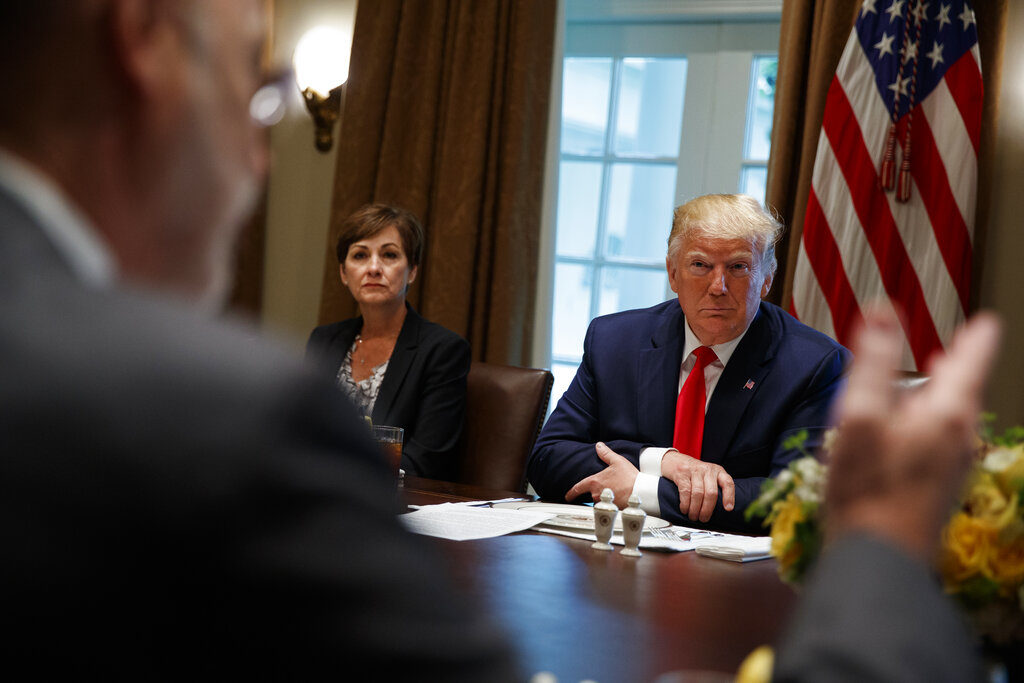
President Donald Trump shifted gears Friday on election interference, saying “of course” he would go to the FBI or the attorney general if a foreign power offered him dirt about an opponent. Trump’s new stance was a walk back — to a degree — after he set off a Washington firestorm earlier in the week by asserting he would not necessarily contact law enforcement if offered damaging material from an overseas source. But in his latest comments, the president still said he would look at the proffered information to see whether it was “incorrect.” “Of course, you have to look at it,” Trump said during a birthday appearance on “Fox and Friends.” He added: “But of course, you give it to the FBI or report it to the attorney general or somebody like that. You couldn’t have that happen with our country, and everybody understands that.” That was a step back from his comments to ABC days earlier. “OK, let’s put yourself in a position: You’re a congressman, somebody comes up and says, ‘Hey I have information on your opponent.’ Do you call the FBI? You don’t,” Trump said in an interview that aired Wednesday. “I’ll tell you what. I’ve seen a lot of things over my life. I don’t think in my whole life I’ve ever called the FBI.” His assertion that he would be open to accepting a foreign power’s help in his 2020 campaign alarmed Democrats, who condemned it as a call for further election interference while Republicans struggled to defend his comments. Asked by ABC News what he would do if Russia or another country offered him dirt on his election opponent, Trump said: “I think I’d want to hear it.” He added that he’d have no obligation to call the FBI. “There’s nothing wrong with listening.” Special counsel Robert Mueller painstakingly documented Russian efforts to boost Trump’s campaign and undermine that of his Democratic rival, Hillary Clinton. In a segment released Friday from the president’s interview earlier this week, Trump told ABC that “it doesn’t matter” what former White House counsel Don McGahn told investigators and that McGahn may have been confused when he told prosecutors he had been instructed to seek Mueller’s removal. McGahn was a crucial witness for Mueller, spending hours with investigators and offering detailed statements about episodes central to the special counsel’s investigation into possible obstruction of justice. McGahn described how Trump directed him to press the Justice Department for Mueller to be fired by insisting that he raise what the president perceived as the special counsel’s conflicts of interest. Trump denied that account, saying, “The story on that very simply, No. 1, I was never going to fire Mueller. I never suggested firing Mueller.” Asked why McGahn would have lied, Trump said, “Because he wanted to make himself look like a good lawyer. Or he believed it because I would constantly tell anybody that would listen — including you, including the media — that Robert Mueller was conflicted. Robert Mueller had a total conflict of interest.” Though Trump tried to cast doubt on McGahn’s credibility, it is clear from the Mueller report that investigators took seriously his statements, which in many instances were accompanied by contemporaneous notes, and relied on his account to paint a portrait of the president’s conduct. It is also doubtful that McGahn, a lawyer, would have had any incentive to make a misstatement given that lying to law enforcement is a crime and Mueller’s team charged multiple Trump aides with making false statements. Though Mueller’s investigation didn’t establish a criminal conspiracy between Russia and the president’s campaign, Trump repeatedly praised WikiLeaks in 2016 and at one point implored hackers to dig up dirt on Hillary Clinton, The role of Trump’s eldest son, Donald Trump Jr., in organizing a 2016 meeting with a Russian lawyer offering negative information on Clinton was a focus of Mueller’s probe of Russian meddling in the last presidential campaign. Trump Jr. spoke with the Senate Intelligence Committee for about three hours Wednesday to clarify an earlier interview with the committee’s staff. By Jonathan Lemire and Zeke Miller Associated Press. Lemire reported from New York. Republished with the permission of the Associated Press.
FBI chief: No evidence of illegal spying on Donald Trump campaign
WASHINGTON (AP) — FBI Director Chris Wray said Tuesday that he does not consider court-approved FBI surveillance to be “spying” and said he has no evidence the FBI illegally monitored President Donald Trump’s campaign during the 2016 election. His comments at a Senate Appropriations subcommittee hearing broke from Attorney General William Barr, who has described as “spying” FBI surveillance during its investigation into potential collusion between the Trump campaign and Russia. Barr has not said such surveillance was necessarily improper, but Trump nonetheless seized on those comments to suggest his campaign was spied on in an illegal and unprecedented act. Asked by Sen. Jeanne Shaheen, Democrat-New Hampshire, if he would say that the FBI is “spying” when it investigates suspected terrorists and mobsters while following “investigative policies and procedures,” Wray replied, “Well, that’s not the term I would use.” He added: “I believe that the FBI is engaged in investigative activity, and part of investigative activity includes surveillance activity of different shapes and sizes. And to me, the key question is making sure that it’s done by the book, consistent with our lawful authorities. That’s the key question. Different people use different colloquial phrases.” Wray declined to discuss in detail the FBI’s investigation into the Trump campaign because of an ongoing Justice Department inspector general probe into the origins of the Russia inquiry. Barr has said he expects the watchdog report to be done in May or June. But asked whether he was aware of evidence that the FBI had illegally spied on the Trump campaign, Wray said, “I don’t think I personally have any evidence of that sort.” Barr is investigating whether there was a proper basis for the FBI to open a counterintelligence investigation into ties between the Trump campaign and Russia. The recently concluded investigation from Special Counsel Robert Mueller did not find a criminal conspiracy between the campaign and the Kremlin to tip the outcome of the 2016 presidential election. “The attorney general is seeking to understand better the circumstances at the department and the FBI relating to how this investigation started, and we’re working to help him get that understanding,” Wray said about the Justice Department’s review. “I think that’s part of his job and part of mine.” Barr didn’t specify what he meant when he said he believed there had been spying on the Trump campaign, though he also said that he did not mean the word in a negative way. At a hearing last week, he described “spying” as a “good English word” encompassing “all forms of covert intelligence operations” and said he wouldn’t back away from using it. The FBI obtained a secret surveillance warrant in 2016 to monitor the communications of former Trump campaign aide Carter Page, whose interactions with Russia had raised law enforcement suspicions even before he joined the campaign. The New York Times reported last week that the FBI used a woman posing as a research assistant to approach ex-Trump campaign adviser George Papadopoulos, who was told by a Maltese professor in the spring of 2016 that Russia had “dirt” on Democrat Hillary Clinton in the form of stolen emails. In his book about his entanglement in the Russia probe, “Deep State Target,” Papadopoulos wrote that the woman, who identified herself as Azra Turk, asked him about his work with the Trump campaign. “She wants to know: Are we working with Russia?” he wrote. He described her question as “creepy” and said he told her he had “nothing to do with Russia.” Papadopoulos later pleaded guilty to lying to the FBI about his interactions with the professor, Joseph Mifsud.
Ex-FBI official: ‘Crime may have been committed’ by Donald Trump
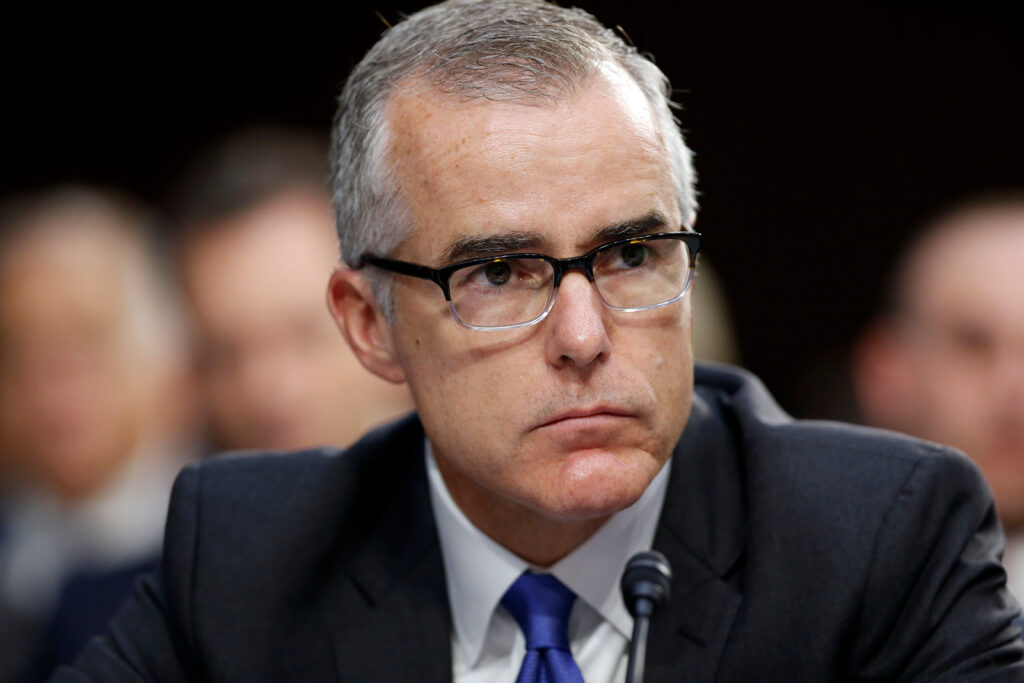
Former FBI Deputy Director Andrew McCabe said in an interview that aired Sunday that a “crime may have been committed” when President Donald Trump fired the head of the FBI and tried to publicly undermine an investigation into his campaign’s ties to Russia. McCabe also said in the interview with “60 Minutes” that the FBI had good reason to open a counterintelligence investigation into whether Trump was in league with Russia, and therefore a possible national security threat, following the May 2017 firing of then-FBI Director James Comey. “And the idea is, if the president committed obstruction of justice, fired the director of the of the FBI to negatively impact or to shut down our investigation of Russia’s malign activity and possibly in support of his campaign, as a counterintelligence investigator you have to ask yourself, “Why would a president of the United States do that?” McCabe said. He added: “So all those same sorts of facts cause us to wonder is there an inappropriate relationship, a connection between this president and our most fearsome enemy, the government of Russia?” Asked whether Deputy Attorney General Rod Rosenstein was onboard with the obstruction and counterintelligence investigations, McCabe replied, “Absolutely.” A Justice Department spokeswoman declined to comment Sunday night. McCabe also revealed that when Trump told Rosenstein to put in writing his concerns with Comey — a document the White House initially held up as justification for his firing — the president explicitly asked the Justice Department official to reference Russia in the memo. Rosenstein did not want to, McCabe said, and the memo that was made public upon Comey’s dismissal did not mention Russia and focused instead on Comey’s handling of the Hillary Clinton email server investigation. “He explained to the president that he did not need Russia in his memo,” McCabe said. “And the president responded, “I understand that, I am asking you to put Russia in the memo anyway.” Trump said in a TV interview days after Comey’s firing that he was thinking of “this Russia thing” when he fired Comey. Those actions, including a separate request by Trump that the FBI end an investigation into his first national adviser, Michael Flynn, made the FBI concerned that the president was illegally trying to obstruct the Russia probe. “Put together, these circumstances were articulable facts that indicated that a crime may have been committed,” McCabe said. “The president may have been engaged in obstruction of justice in the firing of Jim Comey.” McCabe was fired from the Justice Department last year after being accused of misleading investigators during an internal probe into a news media disclosure. The allegation was referred to the U.S. Attorney’s office in Washington for possible prosecution, but no charges have been brought. McCabe has denied having intentionally lied and said Sunday that he believes his firing was politically motivated. “I believe I was fired because I opened a case against the president of the United States,” he said. In the interview Sunday, McCabe also said Rosenstein in the days after Comey’s firing had proposed wearing a wire to secretly record the president. McCabe said he took the remark seriously, though the Justice Department last September — responding last September to a New York Times report that first revealed the conversation — issued a statement from an unnamed official who was in the room and interpreted the remark as sarcastic. McCabe said the remark was made during a conversation about why Trump had fired Comey. “And in the context of that conversation, the deputy attorney general offered to wear a wire into the White House. He said, “‘I never get searched when I go into the White House. I could easily wear a recording device. They wouldn’t know it was there,’” McCabe said. In excerpts released last week by CBS News, McCabe also described a conversation in which Rosenstein had broached the idea of invoking the Constitution’s 25th Amendment to remove Trump from office. The Justice Department said in a statement that Rosenstein, based on his dealings with Trump, does not see cause to seek the removal of the president. Sen. Elizabeth Warren, a Massachusetts Democrat who is seeking her party’s nomination for president, told reporters after a campaign event Sunday in Las Vegas that if the people around Trump believe he cannot fulfill the obligations of his office, then they have a duty to invoke the 25th Amendment. A favorite target of Trump’s ire, Warren said she has no special knowledge on whether there are grounds to remove Trump from office but said that “there are a whole lot of people who do see him every day who evidently were talking about invoking the 25th Amendment.” Republished with permission from the Associated Press.
US says ex-intel official defected to Iran, revealed secrets
A former U.S. Air Force counterintelligence specialist who defected to Iran despite warnings from the FBI has been charged with revealing classified information to the Tehran government, including the code name and secret mission of a Pentagon program, prosecutors said Wednesday. The Justice Department also accused Monica Elfriede Witt, 39, of betraying former colleagues in the U.S. intelligence community by feeding details about their personal and professional lives to Iran. Four hackers linked to the Iranian government, charged in the same indictment, used that information to target the intelligence workers online, prosecutors said. Witt had been on the FBI’s radar at least a year before she defected after she attended an Iranian conference and appeared in anti-American videos. She was warned about her activities, but reassured agents that she would not provide sensitive information about her work if she returned to Iran. She was not arrested. “Once a holder of a top secret security clearance, Monica Witt actively sought opportunities to undermine the United States and support the government of Iran — a country which poses a serious threat to our national security,” said FBI executive assistant director Jay Tabb, the bureau’s top national security official. Tabb said “she provided information that could cause serious damage to national security,” though he did not provide specifics. Witt remains at large in Iran, as do the four hackers, who prosecutors say were acting on behalf of the government-linked Iranian Revolutionary Guard, prosecutors said. That group has been designated by the U.S. government as promoting terrorism. The hackers, using imposter Facebook personas, then targeted those same officials and were even able at one point to join a private Facebook group composed primarily of retired government workers, the indictment says. The hackers sent the targets messages and emails that purported to be legitimate but instead contained malicious software that, if opened, would have given them access to the officials’ computer and network. The Texas native served in the Air Force between 1997 and 2008, where she was trained in Farsi — the predominant language of Iran — and was deployed overseas on classified counterintelligence missions, including to the Middle East. She then found work as a Defense Department contractor. She defected to Iran in 2013 after being invited to two all-expense-paid conferences in the country that the Justice Department says promoted anti-Western propaganda and condemned American moral standards. She was a Defense Department contractor at the time. The Treasury Department on Wednesday sanctioned the New Horizon Organization, which sponsored the conferences Witt attended. American officials say the conferences, which promote Holocaust denial and conspiracy theories, serve as a platform for Iran to recruit and collect intelligence. Witt first traveled to a “Hollywoodism” conference in 2012, when she appeared in Iranian television videos in which she identified herself as a former U.S. service member with. She was warned that May by FBI agents that she was a potential target for recruitment by Iranian intelligence. “She chose not to heed our warning that travel to Iran could potentially make her susceptible to recruitment,” Tabb said. “She continued to travel.” She attended the same conference the following year and was hired by an unnamed individual to assist in the filming of an anti-American propaganda commercial. Given free housing and computer equipment, she went to work for the Iranians, turning over information about a classified Defense Department program and assembling into “target packages” research she conducted into the family lives, locations and missions of former colleagues. The indictment includes snippets of dialogue between Witt and the person who recruited her her, identified only as Individual 1. In 2012, for instance, the person wrote her, “should i thank the sec of defense…u were well trained. Witt replied with a smiley emoticon, “LOL thank the sec of defense? For me? Well, I loved the work, and I am endeavoring to put the training I received to good use instead of evil. ?? Thanks for giving me the opportunity,” according to the indictment. Using a typed smiley-face, she later told the same, unnamed person, “If all else fails, I just may go public with a program and do like Snowden.” That’s a reference to Edward Snowden, a former NSA contractor who leaked classified U.S. information. “Our intelligence professionals swear an oath to protect our country, and we trust them to uphold their oath. With good reason,” said Assistant Attorney General John Demers, the head of the Justice Department’s national security division. “But every great while, one of these trusted people fails us.” Officials would not elaborate on why the indictment was brought six years after her detection, except to say that they had to move classified intelligence into an unclassified format to be used in a pending criminal proceeding. The Justice Department officials would not say whether Witt’s prosecution was connected to an American-born Iranian television anchorwoman who was recently released after being detained by the FBI as a material witness in an undisclosed U.S. case. Marzieh Hashemi works for the Press TV network’s English-language service. She has not been charged with any crimes. Federal law allows judges to order witnesses to be detained if the government can prove that their testimony has extraordinary value for a criminal case and that they would be a flight risk and unlikely to respond to a subpoena. The statute generally requires those witnesses to be promptly released once they are deposed. Republished with permission from the Associated Press
AG Steve Marshall clears Hoover officer in fatal Thanksgiving mall shooting
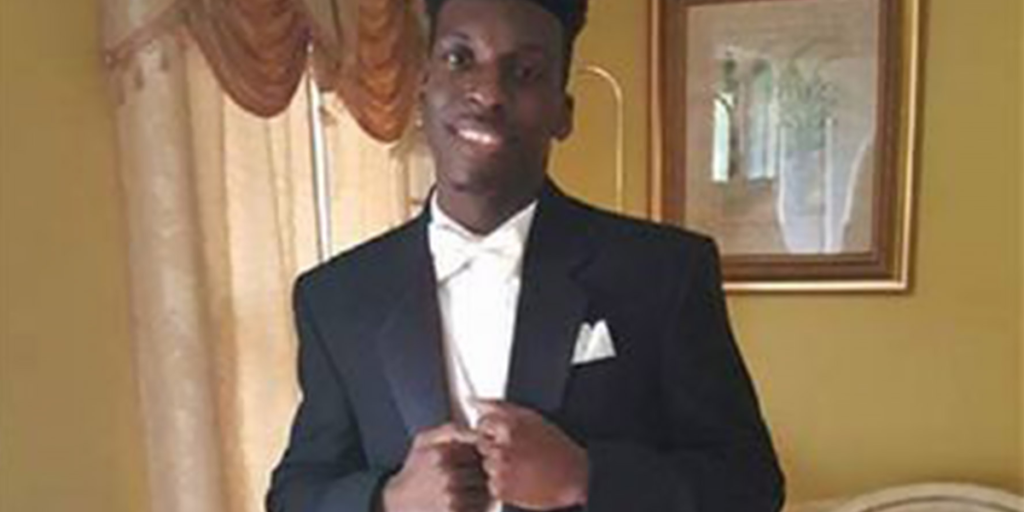
A Hoover police officer was justified in the fatal shooting of Emantic Bradford Jr. at the Riverchase Galleria on Thanksgiving, the Alabama Attorney General’s office announced Tuesday. Alabama Attorney General Steve Marshall said the Alabama State Bureau of Investigation made the conclusion the officer did not commit a crime under Alabama law and thus will not be criminally charged for his actions. Marshall further noted it was his understanding that the Federal Bureau of Investigation (FBI) had also reviewed the matter and found no evidence to initiate a case against the officer for civil rights violation(s). “After an extensive investigation and review, the Attorney General has determined Officer 1 did not commit a crime under Alabama law when he shot and killed E.J. Bradford and thus the Alabama Rules of Professional Conduct preclude presentation of this case to a grand jury,” the report reads. “The facts of this case demonstrate that Officer 1 reasonably exercised his official powers, duties, or functions when he shot E.J. Bradford,” the report continues. “Officer 1’s actions were reasonable under the circumstances and were consistent with his training and nationally-accepted standards for ‘active shooter’ scenarios.” Marshall also released surveillance video of the incident: Read the full report below:
Richard Shelby says FBI investment in Alabama could reach $1 billion
Sen. Richard Shelby- Republican says that the Federal Bureau of Investigation‘s (FBI) investment in northern Alabama could reach $1 billion, the Associated Press reports. This would come from expected FBI construction at the Redstone Arsenal site near Huntsville in the years to come. In fact, Shelby says, he believes Alabama could be second only to Washington, DC for the FBI. In a speech to business leaders at a Huntsville/Madison County Chamber of Commerce breakfast, he said “Huntsville is on fire,” AL.com reports. “You know that. The whole area is on fire economically. You’re attracting everything here. You’ve got the brainpower here.” He continued “Overall, the FBI, the plans we hope to deliver will be probably $1 billion of investment at Redstone because that’s going for the security of the American people. We’ve got to have it.” In 2017, Huntsville mayor Tommy Battle said that he was “cautiously optimistic” that the FBI could bring up to 4,000 jobs to Redstone Arsenal. “The report coming out of Redstone Update was that there could be a capacity of up to 4,400 jobs and it’s over the next eight to 10 years,” Battle said in an interview with AL.com. “It’s a slow but steady buildup of FBI presence here in Huntsville. It’s great news for the arsenal, great news for the city. It just diversifies our portfolio we already have at Redstone Arsenal. “We’re almost a federal campus more than we’re an arsenal. We have NASA, we have Army Materiel Command, we have Army Aviation. We do 85 percent of America’s missile defense agency work. Add to that the FBI presence. It gives us a continuum of service out at Redstone Arsenal and gives us a very broad, diversified group that we pull our federal tax dollars from.” In November of last year, FBI director Robert Hamilton announced that 1,340 contractors and personnel would be moved to Alabama from the Washington, DC. area. These would be added to the 300 already working at the two campuses on site at Redstone Arsenal. “The FBI is extremely excited to announce today that we are moving forward with our first large-scale operations support building,” Hamilton said during a presentation to business and community leaders at the annual Redstone Update. “We expect that to be ready for occupancy in early 2021. This will move approximately 1,350 personnel and contractors from the national capital region. “This building will accommodate a cross-section of FBI employees to include special agents, intelligence analysts and professional staff. And we will house a number of operations support divisions that play a critical role in supporting the FBI mission of protecting the American people.”
FBI bringing 1,350 jobs to Redstone Arsenal in Huntsville
The Federal Bureau of Investigation (FBI) will continue to grow at Redstone Arsenal in Huntsville, Ala. as part of an expansion project. The Redstone Arsenal FBI Director Robert Hamilton announced Thursday the federal agency will move 1,340 personnel and contractors from the Washington, D.C., area to Redstone. During a presentation to local Huntsville business and community leaders Hamilton explained that expects the building to be ready for occupancy in early 2021. “Alabama is on a roll. Each new development spawns two more. If you can’t find a job in Alabama, you are doing something wrong,” State Auditor Jim Zeigler said of the expansion. Currently, the FBI has around 300 employees working on its two Redstone campuses. According to the Associated Press, Huntsville Mayor Tommy Battle anticipates the FBI expansion at Redstone will reach between 4,000 and 5,000 jobs.
FBI interviews accuser; Yale friend remembers heavy drinker
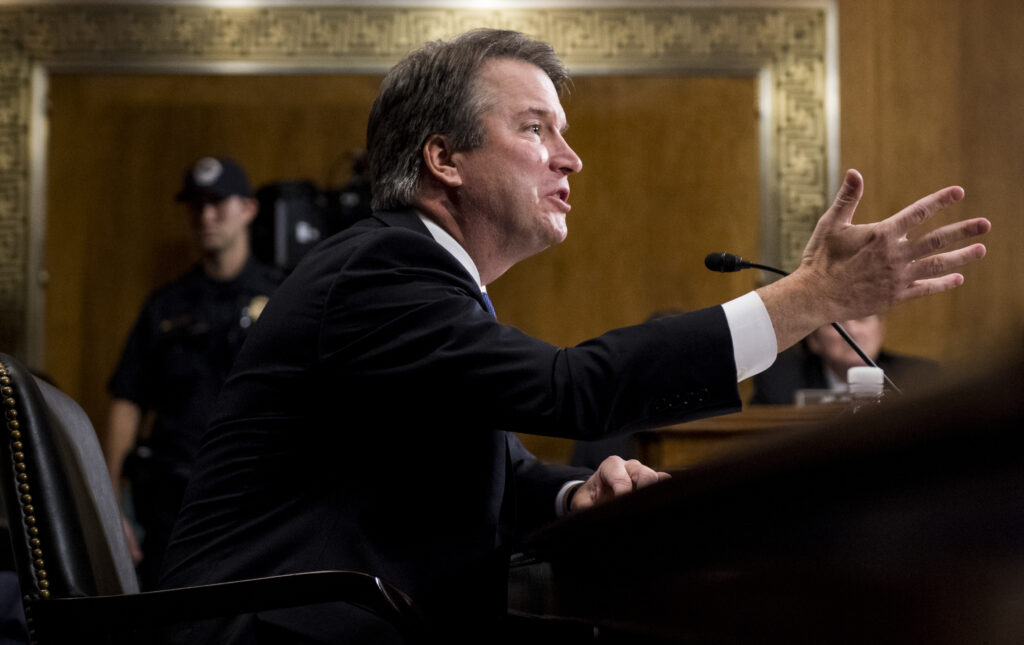
FBI agents on Sunday interviewed one of the three women who have accused Supreme Court nominee Brett Kavanaugh of sexual misconduct as Republicans and Democrats quarreled over whether the bureau would have enough time and freedom to conduct a thorough investigation before a high-stakes vote on his nomination to the nation’s highest court. The White House insisted it was not “micromanaging” the new one-week review of Kavanaugh’s background but some Democratic lawmakers claimed the White House was keeping investigators from interviewing certain witnesses. President Donald Trump, for his part, tweeted that no matter how much time and discretion the FBI was given, “it will never be enough” for Democrats trying to keep Kavanaugh off the bench. And even as the FBI explored the past allegations that have surfaced against Kavanaugh, another Yale classmate came forward to accuse the federal appellate judge of being untruthful in his testimony to the Senate Judiciary Committee about the extent of his drinking in college. In speaking to FBI agents, Deborah Ramirez detailed her allegation that Kavanaugh exposed himself to her at a party in the early 1980s when they were students at Yale University, according to a person familiar with the matter who was not authorized to publicly discuss details of a confidential investigation. Kavanaugh has denied Ramirez’s allegation. The person familiar with Ramirez’s questioning, who spoke to The Associated Press on condition of anonymity, said she also provided investigators with the names of others who she said could corroborate her account. But Christine Blasey Ford, a California professor who says Kavanaugh sexually assaulted her when they were teenagers, has not been contacted by the FBI since Trump on Friday ordered the agency to take another look at the nominee’s background, according to a member of Ford’s team. Kavanaugh has denied assaulting Ford. In a statement released Sunday, a Yale classmate of Kavanaugh’s said he is “deeply troubled by what has been a blatant mischaracterization by Brett himself of his drinking at Yale.” Charles “Chad” Ludington, who now teaches at North Carolina State University, said he was friend of Kavanaugh’s at Yale and that Kavanaugh was “a frequent drinker, and a heavy drinker.” “On many occasions I heard Brett slur his words and saw him staggering from alcohol consumption, not all of which was beer. When Brett got drunk, he was often belligerent and aggressive,” Ludington said. While saying that youthful drinking should not condemn a person for life, Ludington said he was concerned about Kavanaugh’s statements under oath before the Senate Judiciary Committee. Speaking to the issue of the scope of the FBI’s investigation, White House press secretary Sarah Huckabee Sanders said White House counsel Don McGahn, who is managing Kavanaugh’s nomination, “has allowed the Senate to dictate what these terms look like, and what the scope of the investigation is.” “The White House isn’t intervening. We’re not micromanaging this process. It’s a Senate process. It has been from the beginning, and we’re letting the Senate continue to dictate what the terms look like,” Sanders said. White House counselor Kellyanne Conway said the investigation will be “limited in scope” and “will not be a fishing expedition. The FBI is not tasked to do that.” Senate Judiciary Committee member Jeff Flake, R-Ariz., requested an investigation last Friday — after he and other Republicans on the panel voted along strict party lines in favor of Kavanaugh’s confirmation — as a condition for his own subsequent vote to put Kavanaugh on the Supreme Court. Another committee member, Sen. Lindsey Graham, R-S.C., said Sunday that testimony would be taken from Ramirez and Kavanaugh’s high school friend Mark Judge, who has been named by two of three women accusing Kavanaugh of sexual misconduct. “I think that will be the scope of it. And that should be the scope of it,” Graham said. Sen. Dianne Feinstein of California, the top Democrat on the Judiciary Committee, called on the White House and the FBI to provide the written directive regarding the investigation’s scope. In a letter Sunday, she also asked for updates on any expansion of the original directive. Sen. Susan Collins said Sunday she is confident in the investigation and “that the FBI will follow up on any leads that result from the interviews.” The Maine Republican supports the new FBI investigation and is among a few Republican and Democratic senators who have not announced a position on Kavanaugh. Republicans control 51 seats in the closely divided 100-member Senate and cannot afford to lose more than one vote on confirmation. Collins and Flake spoke throughout the weekend. Senate Republicans discussed the contours of the investigation with the White House late Friday, according to a person familiar with the call who was not authorized to discuss it publicly. Senate Majority Leader Mitch McConnell, R-Ky., had gathered Judiciary Committee Republicans in his office earlier. At that time, the scope of the investigation was requested by Flake, Collins and Sen. Lisa Murkowski of Alaska, said McConnell’s spokesman Don Stewart. Murkowski is not on the committee, but also has not announced how she will vote on Kavanaugh’s confirmation. Republicans later called the White House to discuss the scope of the probe, the person said. McConnell’s office declined to elaborate Sunday on which allegations would be investigated, reiterating only that it would focus on “current credible allegations.” Stewart said the investigation’s scope “was set” by the three GOP senators Friday and “has not changed.” But Democratic Sen. Mazie Hirono of Hawaii, a Judiciary Committee member, doubted how credible the investigation will be given the time limit. “That’s bad enough, but then to limit the FBI as to the scope and who they’re going to question, that – that really – I wanted to use the word farce, but that’s not the kind of investigation that all of us are expecting the FBI to conduct,” she said. Trump initially opposed such an investigation as allegations began mounting but relented and ordered one on Friday. He later said the FBI has “free rein.” “They’re going
City of Hoover shines light on benefits of federal cybercrime training center
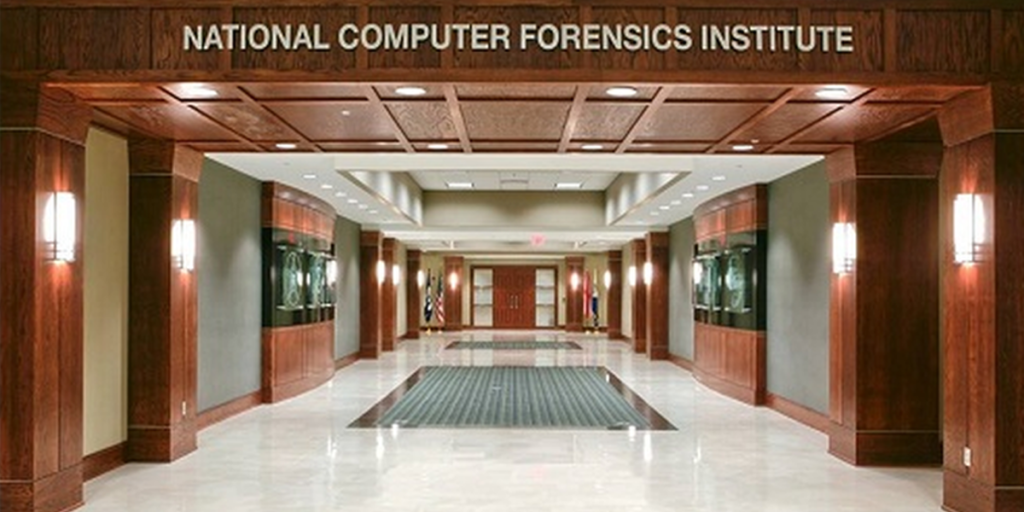
In the City of Hoover, Ala., Birmingham’s largest suburb, you’ll expectantly find the nation’s premiere hi-tech crime training facility, which is proving itself to be an economic boom for the area. First opened in 2008 the National Computer Forensic Institute (NCFI) is a federally funded training center run by the United States Secret Service’s Criminal Investigative Division and the Alabama Office of Prosecution Services. There, state and local officials from across the country are trained on the proper handling of digital evidence, cybercrime investigations, and judicial procedures related to digital crime. Over the past ten years, 7,523 law enforcement officers, prosecutors and judges have been trained from all 50 states, District of Columbia, Guam, Puerto Rico and the U.S. Virgin Islands have come to the NCFI for world-class training. And the City of Hoover is celebrating its success. Friday morning, the city took to Facebook to share that the NCFI has spent a whopping $21,125,260 over the past ten years in the city, including booking 86,406 hotel room nights, which is the largest source of room nights in the metro area. The NCFI has even proven itself beneficial to the local Hoover Police Department as $670,320 in training and equipment has also been provided to them courtesy of the NCFI. “The city of Hoover is proud to host this premiere facility that contributes to a safer nation,” the City wrote in a Facebook graphic.
