Attorney General, coalition of states announce plan to ask federal court to vacate EPA rule
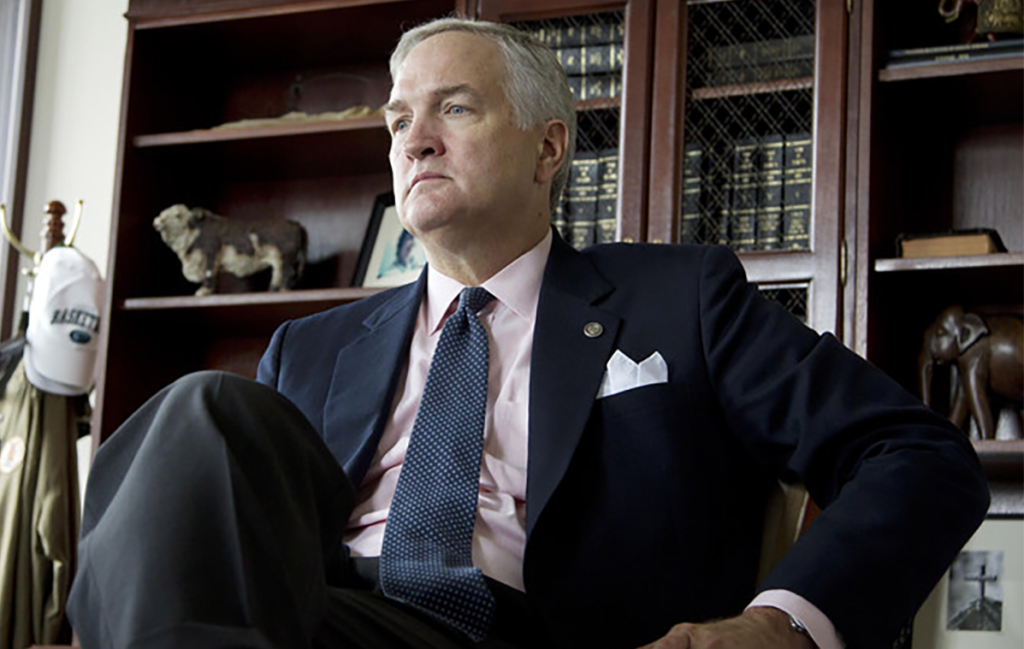
Alabama Attorney General Luther Strange announced over the weekend he would join a group of mostly Republican states to ask a federal court permanently nix Environmental Protection Agency-proposed carbon rules which recently had a setback in the U.S. Supreme Court. The EPA proposal – dubbed the Clean Power Plan – seeks to reduce carbon emissions by reining in or closing many coal-fired power plants that emit carbon pollution. Strange and a coalition of other state attorneys general filed litigation on Friday that would “go ahead and rule against the plan” now that the Supreme Court has issued a stay against it, holding up progress until further review. “Ten days after winning a stay in the United States Supreme Court of President Obama’s so-called Clean Power Plan, Alabama and a majority of U.S. states are asking the U.S. Circuit Court in Washington, D.C. to permanently vacate the Obama administration’s illegal carbon rule, once and for all,” said Strange, who has long opposed the carbon emissions plan. Strange explained his rationale for filing the claim in a statement Sunday afternoon, calling the environmental agency’s proposal a “power grab” by the federal government. “The EPA not only goes too far in seeking to impose arbitrary and overly restrictive limitations on carbon dioxide emissions, but it does so with the goal of changing America’s energy sources. The EPA’s costly carbon rule is little more than a power grab and just the latest in a long list of Obama administration attempts to end-run Congress,” Strange said. The case is now in the hands of the U.S. Court of Appeals for the District of Columbia Circuit, which will issue a ruling on the merits of the case. Oral arguments are set to begin in June after the court reviews the litigation. “Relying on an obscure provision of the Clean Air Act, EPA’s Rule seeks to effect an ‘aggressive transformation’ of the mix of electricity generation in nearly every State by systematically ‘decarbonizing’ power generation and ushering in a new ‘clean energy’ economy,” the case filed Friday reads. “Although Congress has debated a number of bills designed to achieve that very result, it has not yet adopted any such legislation. Frustrated with Congress, EPA now purports to have discovered sweeping authority in Clean Air Act section 111(d)—a provision that has been used only five times in 45 years—to issue a ‘Power Plan’ that forces States to fundamentally reorganize electricity generation throughout the country.” Strange is not alone among Alabama leaders in opposing the plan. U.S. Reps. Martha Roby and Gary Palmer have derided the plan as a job killer that could cause “enormous harm” to the American economy.
Robert Bentley refugee lawsuit unlikely to gain traction
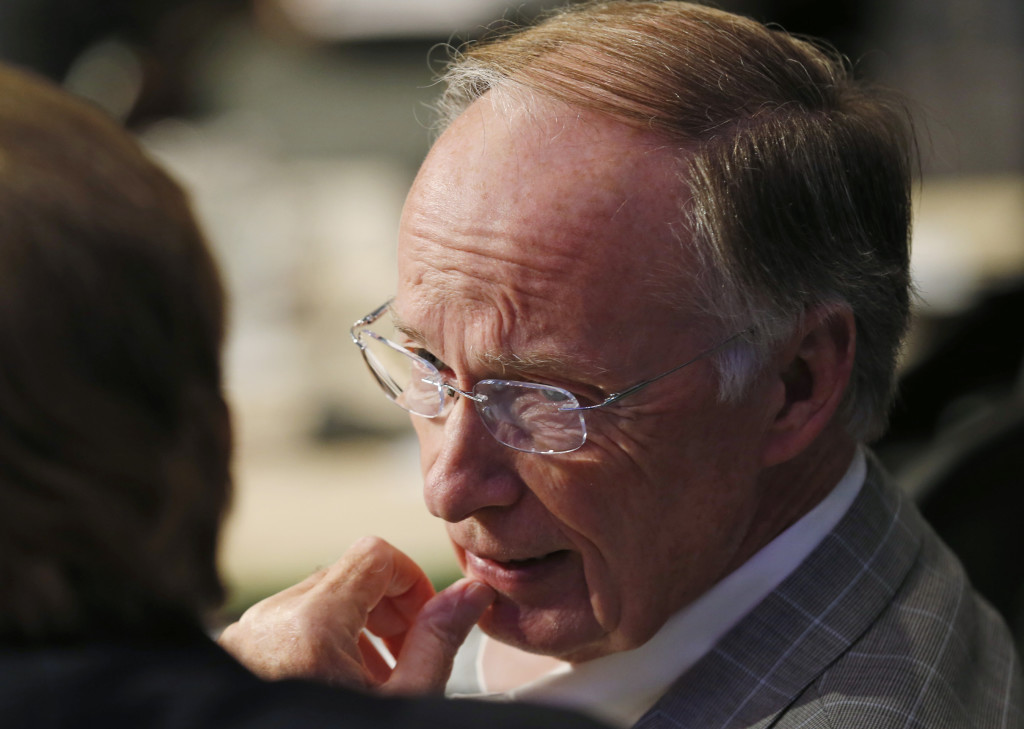
If past is prologue in his legal battles with the feds, the lawsuit filed Thursday by Gov. Robert Bentley alleging the Obama administration’s noncompliance with the Refugee Act of 1980 isn’t likely to bring the president to his knees. Bentley claims, on behalf of the state of Alabama, federal officials are in violation of the law for not consulting with the states on the placement of refugees from war-torn Syria as provided for in the law. U.S. Supreme Court precedent has held repeatedly that matters of immigration and asylum are the responsibility of the federal government. If this sounds familiar, you may have in mind Bentley’s first tussle with the Obama administration on Syrian refugees, where he joined two dozen Republican governors in declaring they would not accept Syrian asylum-seekers within their states’ borders. It soon became clear, however, governors have no authority to nullify presidential actions on immigration or to pick and choose which refugees they will accept. In light of this some state leaders, such as Georgia Gov. Nathan Deal, have rescinded their orders halting refugee resettlement on the advice of legal counsel and in the face of the plain facts of federalism. Not Bentley. His first run-in with the feds was in 2011, when federal judges struck down a bill intended to curb illegal immigration from Mexico. Bentley had vowed to “fight at every turn to defend this law against any and all challenges,” but the law remains off the books. Bentley joins Chief Justice Roy Moore in thumbing his nose at Washington, D.C., from a high perch in Montgomery. Moore ordered 68 probate judges to stop issuing marriage licenses to same-sex couples, citing uncertainty in the law, though the U.S. Supreme Court was unequivocal that such laws shall be issued in its 2015 Obergefell v. Hodges decision. “This complaint has no legal merit, and the state of Alabama has no authority under the Constitution to block the settlement of refugees,” said Southern Poverty Law Center senior supervising attorney Kristi Graunke. Or as Wayne Flynt, a former Auburn University history professor, put it: “We arbitrated these issues between 1861 and 1865.” Information from The Associated Press was used in this report.
Roy Moore denies defying U.S. Supreme Court
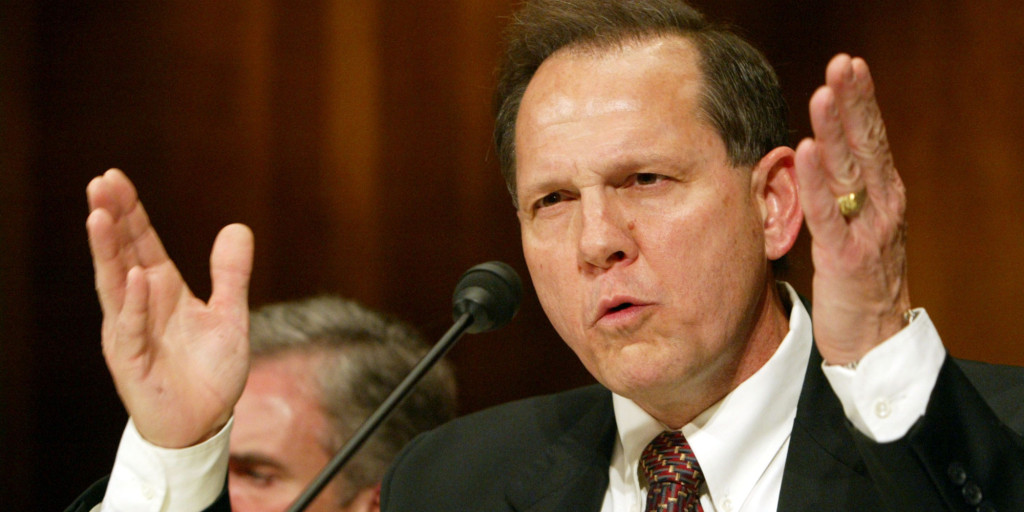
Alabama Chief Justice Roy Moore – ousted from office a decade ago when he refused to remove a Ten Commandments monument from state property – on Thursday stood by his assertion that Alabama probate judges should not issue marriage licenses to gay couples, a seemingly direct challenge to a U.S. Supreme Court ruling that effectively legalized same-sex marriages nationwide. Moore’s stance first appeared on Wednesday in an administrative order; he reiterated his position Thursday in an interview with The Associated Press. “Until further clarification, (the probate judges) are bound by state law,” Moore said. His order on Wednesday and his remarks on Thursday drew immediate condemnation from civil and gay rights organizations and from a legal advocacy group, which filed a complaint against him with a state commission that investigates judicial misconduct. His critics promptly suggested that he should be removed from the bench again for his refusal to accept the U.S. Supreme Court’s decision six months after it was handed down. Some of the judges who stopped issuing licenses Wednesday immediately after Moore’s order, meanwhile, resumed the service Thursday after consulting with attorneys. In his order, Moore noted that the Alabama Supreme Court has not lifted a March 3 ruling prohibiting probate judges from issuing licenses to gay couples. He said it’s up to the state court to decide what to do with that order following the U.S. Supreme Court’s decision. Moore insisted Thursday that he is not defying the high court, but seeking to resolve what he says are lingering questions about the impact of the federal decision. He said he issued the order Wednesday because “there’s a lot of confusion out there among probate judges about what to do.” “Some are issuing same-sex marriage licenses, some are not, some are issuing no marriage licenses at all.” Two federal prosecutors in Alabama, however, said on Wednesday that there should be no confusion, because the U.S. Supreme Court ruling trumps whatever the state court has to say on gay marriage. Other Legal experts interviewed by the AP agreed. Richard Cohen, president of the Montgomery-based legal advocacy group the Southern Poverty Law Center, said Moore should be removed from office – again. “You know back in 2003 he was kicked out of office for violating a federal court order,” Cohen said. “This time he’s urging 68 probate judges to violate the federal court order that was entered by the district court in Mobile. He’s also asking them to ignore the ruling of the United States Supreme Court.” The center – which sued Moore over the Ten Commandment monument – filed an ethics complaint to the state’s judicial inquiry commission last year after Moore publicly criticized a federal judge’s ruling overturning Alabama’s same-sex marriage ban. The advocacy group filed a supplement to that complaint on Wednesday, saying Moore has violated the canons of judicial ethics by refusing to respect the U.S. Supreme Court’s decision. The court has not acted on the earlier complaint filed by the SPLC. Alabama Judicial Inquiry Commission Executive Director Jenny Garrett said she couldn’t comment specifically on Moore, but that any potential sanctions for a judge accused of misconduct would be imposed if the commission filed charges in the court of the judiciary and the court found the judge to have committed ethics violations. All proceedings before the commission are confidential and don’t become public until they move to the court of the judiciary, Garrett said. Sanctions the court could impose on a judge include removal from office, suspension without pay, censure and more, Garrett said. Wayne Flynt, a former Auburn University history professor, said Moore’s tactics echo Southern states’ resistance to federal school desegregation orders long after the segregation had been ruled illegal. “We arbitrated these issues between 1861 and 1865,” Flynt said of the Civil War conflict that determined who has the final say, states or the federal government. Regardless of his stance, Moore’s order did not appear to have widespread impact. Probate judges in Lawrence and Madison counties who had stopped issuing all marriage licenses in response to Moore’s order Wednesday said they had resumed the service Thursday after consulting with attorneys. Mobile County said licensing operations would resume on Friday. Republished with permission of the Associated Press.
Feds say state judges must obey U.S. Supreme Court decision
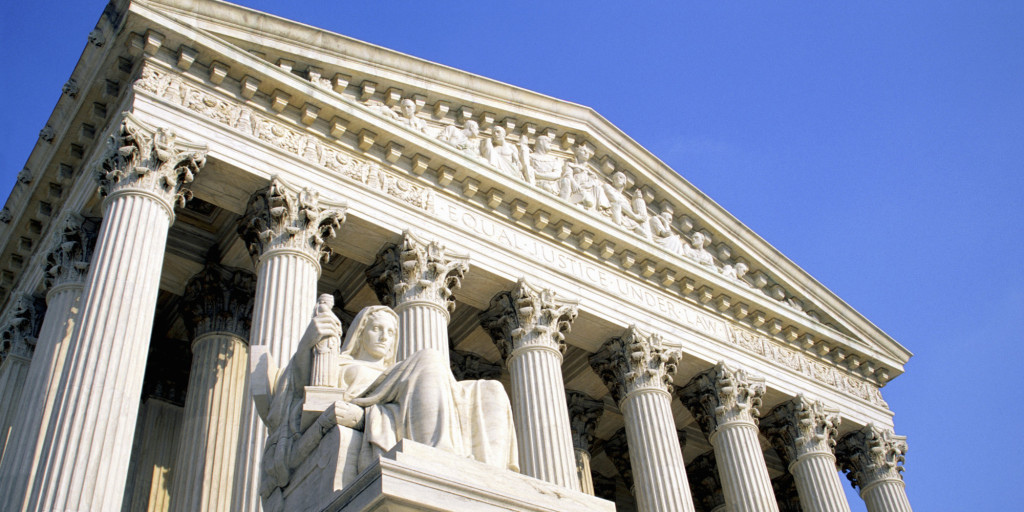
Federal prosecutors in Alabama say the state’s probate judges must obey the U.S. Supreme Court’s decision on gay marriage regardless of an administrative order issued by Alabama Supreme Court Chief Justice Roy Moore. Moore said Wednesday that the Alabama Supreme Court never lifted a March directive to probate judges to refuse licenses to gay couples. He said the order to refuse the licenses remains in “full force.” U.S. Attorneys Joyce White Vance of the Northern District of Alabama and Kenyen Brown of the Southern District of Alabama issued a statement saying they have “grave concerns” about Moore’s administrative order. Vance and Brown say the issue was decided by the U.S. Supreme Court last year and while government officials are free to disagree with the law, they can’t disobey it. Republished with permission of the Associated Press.
AG Luther Strange lauds federal campaign finance ruling
Alabama Attorney General Luther Strange said Monday that a federal court has upheld of a state law that prohibits transfers of political contributions from one PAC to another PAC. The U.S. District Court for the Northern District of Alabama ruled in favor of the state last Friday in the case of Alabama Democratic Conference v. Strange. The court ruled the state has an interest at hand — preventing corruption or the appearance of corruption — so compelling that despite a raft of recent rulings claiming such contributions and transfers are 1st Amendment-protected speech, Alabama did not act improperly in restricting them. The ruling stated that although campaign contributions and transfers thereof should be given the presumption of legality since they are de jure equivalent to political speech, Alabama’s law was crafted carefully enough to avoid encroaching on that speech. The court ruled moreover the law was properly aimed at prohibiting only the kinds of illicit transfers of campaign cash primarily aimed at hiding the original source, thereby evading public scrutiny. Strange applauded the move in a release Monday. “I am pleased that the Court has upheld this important tool in Alabama’s ongoing fight against public corruption,” said Strange, first elected AG in 2010 after ousting incumbent Troy King in a GOP primary. “We will continue to defend the PAC-to-PAC transfer law whenever necessary.” Strange also commended his office’s Will Parker, an assistant AG in the Constitutional Defense Division. The ruling was a coup for Strange, who is an ardent supporter of a strong state role within the nation’s federal system. The plaintiff had sought relief against the state’s head law enforcement officer, saying the law was an unnecessarily onerous burden on political activity.