
Mo Brooks introduces bill to give states power to deny illegal alien resettlement
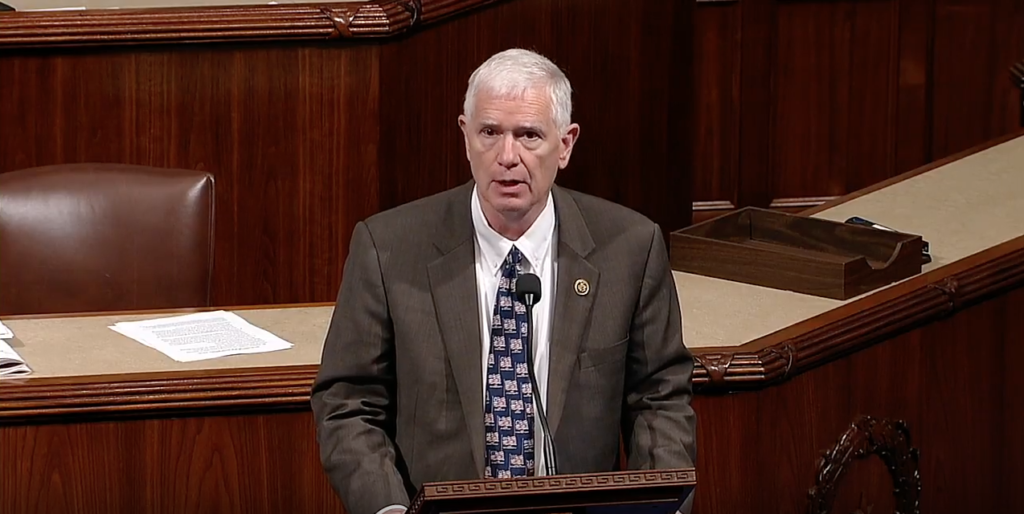
Congressman Mo Brooks introduced a bill called the Local Control Act, a bill that aims to allow state governors and local elected officials to decline when the federal government attempts to settle illegal aliens in their communities. The bill states that the federal government must “require the Secretary of Homeland Security to notify the Governor of a State prior to the date on which any alien without lawful status under the immigration laws is transported to, housed in, or resettled in suchState, and for other purposes.” Specifically, the bill would add a new section to the Immigration and Nationality Act that would state that illegal aliens could not be settled into a state 1) without the approval of the governor and 2) could not be placed into any locality in the state if that locality has a law or policy in effect disapproving of illegal alien resettlement in that area. The “Local Control Act” is endorsed by the Federation for American Immigration Reform (FAIR), a border security advocacy group. Brooks stated, “The first duty of any government is to protect its citizens against invaders. I believe in empowering governors and local elected officials to defend their states and communities since Joe Biden has proven incapable or unwilling to do his duty. Reports indicate that illegal aliens are being driven in unmarked white vans and being flown into communities in the dark of night by the Biden Administration. Recently, unvetted Afghan evacuees were placed in Alabama without any Alabamian’s consent. Americans shouldn’t be put at risk of terrorism, illegal alien crime, job losses, wage suppression, or any other number of things by a lawless presidential administration that is dead set on weakening America.” Brooks has been a staunch critic of President Joe Biden’s handling of the crisis in Afghanistan. He expressed disapproval in September over the resettlement of Afghan nationals in Mobile. Brooks commented, “Recently, unvetted Afghan evacuees were placed in Alabama without any Alabamian’s consent. Americans shouldn’t be put at risk of terrorism, illegal alien crime, job losses, wage suppression, or any other number of things by a lawless presidential administration that is dead set on weakening America.” Dan Stein, President of FAIR, believes the law will help keep Americans. Stein stated, “As the historic crisis on the border continues to worsen, FAIR applauds Representative Mo Brooks’ leadership in assuring that the wishes of the American people are respected by the federal government. The Local Control Act returns power to the American people by requiring state governors to approve any federal plans to house or resettle illegal aliens in their state. It also gives localities the ability to opt out of illegal alien resettlement. Federal funding should not be used to detriment the interests of U.S. citizens and lawful residents, and this bill will ensure that their voices are heard. Remember, the American people are the key stakeholders in when it comes to immigration, and this legislation treats them as such.”
Mo Brooks introduces legislation to reform TPS immigration program
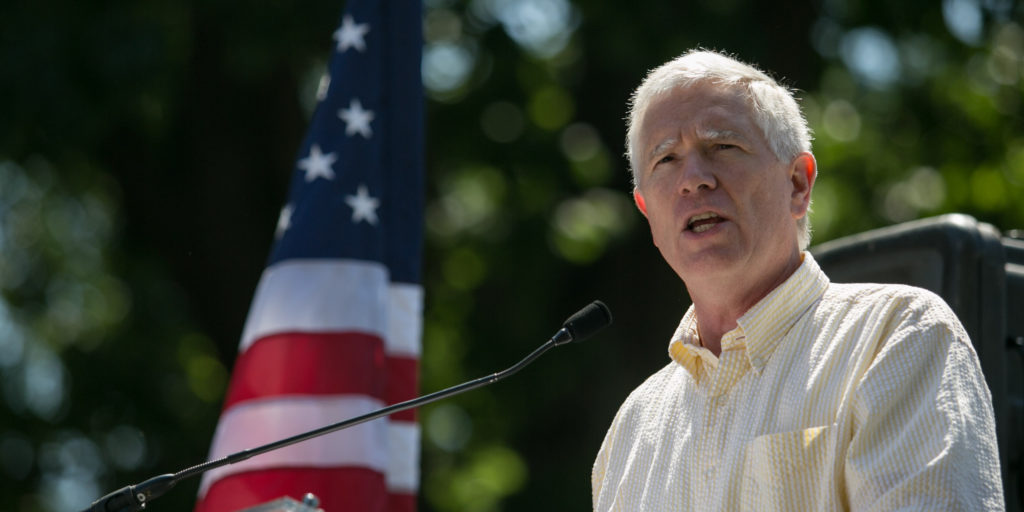
Congressman Mo Brooks this week introduced a bill that would tighten-up an oft “abused” immigration program that lends itself to de facto amnesty. Established in 1990 as a temporary immigration status — granted to eligible nationals of a country as a result of a natural disaster, civil violence, or other extraordinary conditions making the country “unable, temporarily, to adequately handle the return of its nationals” — the Temporary Protected Status (TPS) program is essentially a nascent green-card program of sorts providing recipients a work permit, Social Security number, driver’s license, and access to certain welfare benefits. While it’s not an immediate path to citizenship, under current law “Temporary” Protected Status is de facto permanent and is often renewed time and again, permanently extending the TPS status. Meaning hundreds of thousands of illegal aliens from countries across the globe, who would otherwise be deported, spend years, even decades, enjoying the protections and benefits of the program, even well-past the time the extraordinary conditions which qualified them for it had dissipated due to this never-ending “temporary” measure. Which is why Brooks introduced H.R. 2604: the Temporary Protected Status Reform Act of 2017. The TPS Reform Act would shift authority from the Executive and empower Congress to designate a nation’s participation in the TPS program. Further, it would set strict, clear time limitations for TPS duration, aiming to make the law, which was designed to be inherently temporary, temporary once more. “The United States provides Temporary Protected Status (TPS) to more than 300,000 foreign residents. As the name implies, the TPS statute purports to provide temporary relief to foreign residents for a period of 6 to 18 months. However, the Executive repeatedly renews protected status, effectively providing a free and permanent pass into America – including all the benefits that come with it,” said Brooks. “My bill, the TPS Reform Act would ensure that ‘temporary’ means temporary by establishing clear time limitations and creating statutory tests that must be met to grant the TPS designation. This legislation provides the needed reform for what has become a long-running amnesty program.” Among the supporters of the bill is the Federation for American Immigration Reform (FAIR), a non-profit that advocates for immigration reform based out of Washington, DC, who claim TPS is “misnamed.” “By now, we should have learned from experience that TPS is misnamed—what we offer as ‘temporary’ protection is rarely, if ever, temporary,” Federation for American Immigration Reform Executive Director, Dan Stein noted. “Most often, unfortunately, it’s used by aliens residing in the United States as a foot in the door to permanent residence. They are certainly happy to receive TPS because it apparently never expires. The true test of TPS as a policy tool is if it ever is, truly temporary. Our laws should not reward illegal immigrants to the United States regardless of the political or natural upheavals in their homelands. Otherwise, experience shows that we will encourage further illegal immigration.” The Executive Director of the Center for Immigration Studies, Mark Krikorian, agreed. “It’s long past time to fix the TPS statute so that ‘temporary’ no longer means permanent,” said Krikorian. “Past administrations have been abusing this temporary, humanitarian program for 27 years, using it as a de facto amnesty program,” Rosemary Jenks, Director of Government Relations at NumbersUSA added. “This bill would restore critical oversight by Congress.” Original cosponsors of the TPS Reform Act include: Texas-Republicans Louie Gohmert and Michael McCaul, and Iowa-Republican Steve King. NumbersUSA and FAIR both endorsed the bill.
Mike Rogers: Protecting our sovereignty, borders and the taxpayer

Great nations throughout history are those that control their own sovereignty. Sovereignty can be defined in different ways, but starts with the freedom to act in the nation’s best interest and controlling who crosses their borders. President Donald Trump has made putting America first a priority for his Administration. I fully support him in this effort and am working hard in Congress to make it a reality. President Trump promised to build a wall on our southern border. I recently introduced legislation that will help make the wall a reality without any additional costs to America’s taxpayer. Each year the countries south of our border benefit from an estimated $50 billion windfall from the U.S. in the form of remittances. In 2015, Mexico received over $24 billion in remittances sent from the United States. My bill, H.R. 1813: the Border Wall Funding Act of 2017, would impose a fee on remittance transactions to South and Central America. The fee revenue would go to an account dedicated to building the wall. The legislation is endorsed by FAIR (Federation for American Immigration Reform) and NumbersUSA. It is time to finally have some real action on securing our borders. I have also introduced the American Sovereignty Restoration Act of 2017, which would end the United States’ involvement in the United Nations (UN). The American taxpayer should not have to bankroll an organization that tries to infringe on our Constitutional rights and supports terrorists over our great ally Israel. The United States does not need the permission of the UN to defend our values and freedoms. I believe we should put America first and get out of the UN. I stand with President Trump on these issues and will continue to push these bills forward. I want to hear from you on this or any issue. Please sign up for my e-Newsletter by visiting mikerogers.house.gov. To stay up to date, you can also like me on Facebook at Congressman Mike D. Rogers, follow me on Twitter, Pinterest and Instagram at RepMikeRogersAL, on Tumblr at repmikerogersal.tumblr.com and you can also subscribe to my YouTube page at MikeRogersAL03. ••• Mike Rogers is a member of U.S. Congress representing Alabama’s 3rd Congressional District.
Congressional bill moves to end “loophole” in effort to put American citizens ahead of illegal immigrants for in-state college tuition

Two Alabama congressmen joined an effort to prevent illegal aliens from taking advantage of in-state college tuition rates as original cosponsors of newly filed legislation. U.S. Congressman Mo Brooks and Congressman Mike Rogers joined Paul Gosar (R-AZ), a steadfast champion against illegal immigration on his bill. Gosar issued a statement Friday afternoon after introducing the House companion to Louisiana Senator David Vitter‘s (R-LA) legislation that would prevent illegal aliens, not in lawful immigration status, from receiving in-state college tuition benefits. Despite federal policy prohibiting states from awarding post-secondary education benefits to illegal immigrants on the basis of residency, currently, at least 19 states have exploited a loophole in the law by allowing children who were illegally brought to the country by their parents — also called Dreamers — to have access to in-state tuition and grants. States are sidestepping the law by offering alternative criteria — such as graduation from an in-state high school — as the prohibition only applies if the state uses residency as the eligibility requirement. Eight states have taken a step further by allowing undocumented students to qualify for state-based financial aid. “It is unthinkable that some states are circumventing federal law to allow illegal immigrants to receive in-state tuition, while other legal American citizens, playing by the rules, have to pay out-of-state tuition to attend public universities,” Gosar said of the growing problem. “With a stagnant economy, American students are facing enough challenges upon graduating from college and shouldn’t bear more financial burdens as a result of loopholes crafted by attorneys that put illegal aliens not in lawful immigration status ahead of U.S. citizens.” Endorsed by the Federation for American Immigration Reform (FAIR) and NumbersUSA, Gosar’s bill H.R. 3566 and Vitter’s bill S.60, would close the “loophole” in question. The legislation states “an alien who is not lawfully present in the United States shall not be eligible for any postsecondary education benefit unless every citizen and national of the United States is eligible to receive such a benefit (in no less an amount, duration, and scope).” This legislation is an answer to America’s sluggish employment numbers, especially those of millennials. “If you look at the numbers starting in 2009, we’ve been in the longest sustained period of unemployment since the Bureau of Labor Statistics began collecting their data following World War II,” says David Pasch, a spokesman for Generation Opportunity to Newsweek in June. Senator Vitter agrees. “Some of our nation’s highest unemployment rates are among recent college graduates, which is certainly why we should be supporting policies that provide American students with the opportunity to go to college and compete for good jobs,” Vitter said. “American students should always come first, and it’s unfortunate that so many states are blatantly disregarding the spirit of existing immigration law, which could end up putting illegal immigrants ahead of American citizens.”
