
A swing state no more? GOP confidence grows in Florida
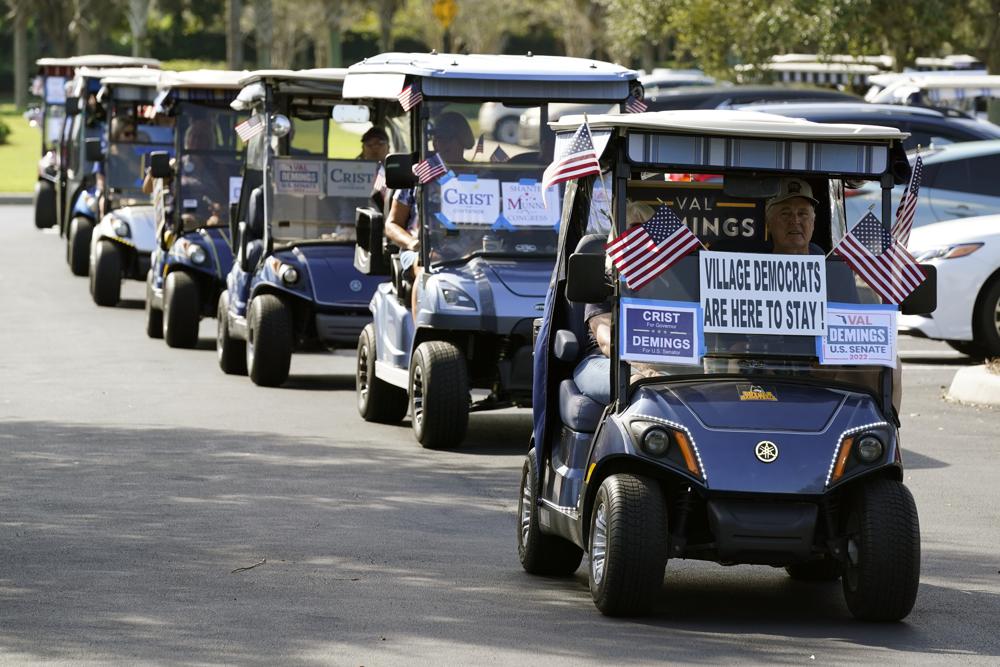
Democrats are increasingly concerned that Florida, once the nation’s premier swing state, may slip away this fall and beyond as emboldened Republicans capitalize on divisive cultural issues and population shifts in crucial contests for governor and the U.S. Senate. The anxiety was apparent last week during a golf cart parade of Democrats featuring Senate candidate Val Demings at The Villages, a retirement community just north of the Interstate 4 corridor. It was once a politically mixed part of the state where elections were often decided, but now some Democrats now say they feel increasingly isolated. “I am terrified,” said 77-year-old Sue Sullivan, lamenting the state’s rightward shift. “There are very few Democrats around here.” In an interview, Demings, a congresswoman and former Orlando police chief challenging Republican Sen. Marco Rubio, conceded that her party’s midterm message isn’t resonating as she had hoped. “We have to do a better job of telling our stories and clearly demonstrating who’s truly on the side of people who have to go to work every day,” she said. The frustration is the culmination of nearly a decade of Republican inroads in Florida, where candidates have honed deeply conservative social and economic messages to build something of a coalition that includes rural voters and Latinos, particularly Cuban Americans. Donald Trump’s win here in 2016 signaled the evolution after the state twice backed Barack Obama. And while he lost the White House in 2020, Trump carried Florida by more than 3 percentage points, a remarkable margin in a state where elections were regularly decided by less than a percentage point. President Joe Biden will visit the state on November 1, exactly one week before Election Day, to rally Democrats. Demings said she’s had two conversations with the president about campaigning together, but she could not confirm any joint appearances. And Charlie Crist, the Democratic nominee for governor, said he would attend a private fundraiser with Biden on the day of the rally, but he wasn’t sure whether they would appear together in public. “If we could squeeze in a little public airtime, that’d be a wonderful thing I would welcome,” Crist said in an interview. Still, the GOP is bullish that it can keep notching victories, even in longtime Democratic strongholds. Some Republicans are optimistic the party could carry Miami-Dade County, a once unthinkable prospect that would virtually eliminate the Democrats’ path to victory in statewide contests, including presidential elections. And in southwest Florida’s Lee County, a major Republican stronghold, not even a devastating hurricane appears to have dented the GOP’s momentum. In fact, Republicans and Democrats privately agree that Hurricane Ian, which left more than 100 dead, may have helped Republican Gov. Ron DeSantis broaden his appeal. On Monday, he’ll participate in a debate against Crist in which he’ll likely highlight his stewardship of the state during a searing crisis. But the 44-year-old Republican governor has spent much of his first term focused on sensitive social issues. He’s signed new laws banning abortions at 15 weeks of pregnancy with no exceptions for rape or incest, along with blocking critical race theory and LGBTQ issues from many Florida schools. He has also stripped millions of dollars from a major league baseball team that spoke out against gun violence and led efforts to eliminate Disney’s special tax status for condemning his so-called “Don’t Say Gay” bill. On the eve of the hurricane, DeSantis shipped dozens of Venezuelan immigrants from Texas to Martha’s Vineyard to call attention to illegal immigration at the U.S.-Mexico border. Crist, a former congressman and onetime governor himself, acknowledged some voters “dig” DeSantis’ focus on cultural issues, “but most Floridians are good, decent people.” He noted that at least one Hispanic radio host has compared DeSantis to former Cuban dictator Fidel Castro. “Customarily, when you come out of a primary, people will move to the middle. He’s clearly not doing that, to say the least,” Crist said of his Republican rival. But to the horror of many Democrats, DeSantis could become the first Floridian to win a governor’s race by more than 1 point since 2006. That kind of showing might lift Rubio in the U.S. Senate election while helping the GOP win as many as 20 of the state’s 28 U.S. House seats. Should DeSantis win big as expected, his allies believe he would have the political capital to launch a successful presidential campaign in 2024 — whether Trump runs or not. “It’s shocking, and it’s scary,” state Democratic Party Chair Manny Diaz said about DeSantis’ repeated willingness to use the power of his office to attack political rivals, whether individual opponents or iconic corporations like Disney. DeSantis, who declined an interview request, has found success by bucking the conventional wisdom before. He beat Democrat Andrew Gillum four years ago by 32,436 votes out of more than 8.2 million cast, a margin so narrow that it required a recount. But in the four years since then, Republicans have erased a voter registration advantage that Florida Democrats had guarded for decades. When registration closed for the 2018 election, Democrats enjoyed a 263,269-vote advantage. As of September 30, Republicans had a lead of 292,533 voters — a swing of nearly 556,000 registered voters over DeSantis’ first term. “We’re no longer a swing state. We’re actually annihilating the Democrats,” said Florida GOP Chairman Joe Gruters, a leading DeSantis ally. And while he says his party has focused on traditional kitchen-table issues, such as gas prices and inflation, Gruters leaned into cultural fights — especially the Florida GOP’s opposition to sexual education and LGBTQ issues in elementary schools — that have defined DeSantis’ tenure. “I don’t want anyone else teaching my kids about the birds and the bees and gender fluidity issues,” Gruters said. Strategists in both parties believe Florida’s political shift is due to multiple factors, but there is general agreement that Republicans have benefited from an influx of new voters since DeSantis emerged as the leader of the GOP resistance to the pandemic-related public health measures. Every day on average over the year between 2020 and 2021, 667 more people
Cuban leaders beef up police patrols after rare protests
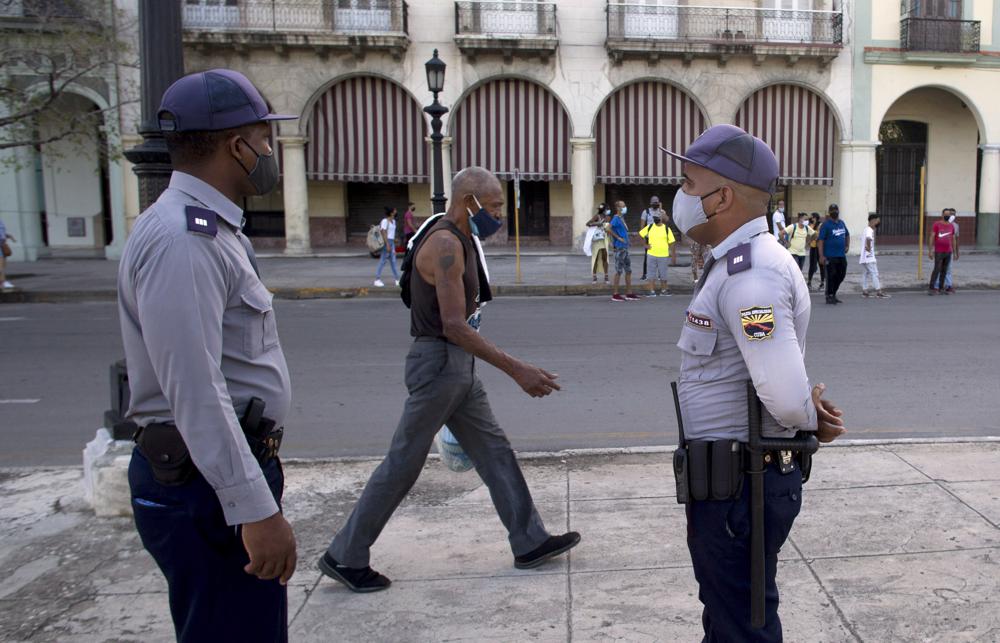
Cuban police are out in force on the country’s streets as the president is accusing Cuban Americans of using social media to spur a rare outpouring of weekend protests over high prices and food shortages. The demonstrations in several cities and towns were some of the biggest displays of antigovernment sentiment seen in years in tightly controlled Cuba, which is facing a surge of coronavirus cases as it struggles with its worst economic crisis in decades as a consequence of U.S. sanctions imposed by President Donald Trump’s administration. Many young people took part in Sunday’s demonstrations in Havana. Protests were also held elsewhere on the island, including in the small town of San Antonio de los Baños, where people objected to power outages and were visited by President Miguel Díaz-Canel. He entered a few homes, where he took questions from residents. Authorities appeared determined to put a stop to the demonstrations. More than a dozen protesters were detained, including a leading Cuban dissident who was arrested trying to attend a march in the city of Santiago, 559 miles (900 kilometers) east. The demonstrators disrupted traffic in the capital for several hours until some threw rocks, and police moved in and broke them up. Internet service was spotty, possibly indicating an effort to prevent protesters from communicating with each other. “We’ve seen how the campaign against Cuba was growing on social media in the past few weeks,″ Díaz-Canel said Monday in a nationally televised appearance in which his entire Cabinet was present. “That’s the way it’s done: Try to create inconformity, dissatisfaction by manipulating emotions and feelings.” In a statement Monday, U.S. President Joe Biden said Cuban protesters were asserting their basic rights. “We stand with the Cuban people and their clarion call for freedom and relief from the tragic grip of the pandemic and from the decades of repression and economic suffering to which they have been subjected by Cuba’s authoritarian regime,″ Biden said. The U.S. urges the Cuban government to serve their people ’’rather than enriching themselves,″ Biden added. U.N. deputy spokesman Farhan Haq on Monday stressed the U.N. position “on the need for freedom of expression and peaceful assembly to be respected fully, and we expect that that will be the case.” The demonstrations were extremely unusual on an island where little dissent against the government is tolerated. The last major public demonstration of discontent over economic hardship took place nearly 30 years in 1994. Last year, there were small demonstrations by artists and other groups, but nothing as big or widespread as what erupted this past weekend. In the Havana protest on Sunday, police initially trailed behind as protesters chanted, “Freedom!” “Enough!” and “Unite!” One motorcyclist pulled out a U.S. flag, but it was snatched from him by others. “We are fed up with the queues, the shortages. That’s why I’m here,” one middle-aged protester told The Associated Press. He declined to identify himself for fear of being arrested later. Later, about 300 pro-government protesters arrived with a large Cuban flag, shouting slogans in favor of the late President Fidel Castro and the Cuban revolution. Some assaulted an AP videojournalist, smashing his camera. AP photojournalist Ramón Espinosa was then beaten by a group of police officers in uniforms and civilian clothes; he suffered a broken nose and an eye injury. The demonstration grew to a few thousand in the vicinity of Galeano Avenue, and the marchers pressed on despite a few charges by police officers and tear gas barrages. People standing on many balconies along the central artery in the Centro Habana neighborhood applauded the protesters passing by. Others joined in the march. About 2 1/2 hours into the march, some protesters pulled up cobblestones and threw them at police, at which point officers began arresting people, and the marchers dispersed. AP journalists counted at least 20 people who were taken away in police cars or by individuals in civilian clothes. Although many people tried to take out their cellphones and broadcast the protest live, Cuban authorities shut down internet service throughout the afternoon Sunday. On Monday, Cuban authorities were blocking Facebook, WhatsApp, Instagram, and Telegram said Alp Toker, director of Netblocks, a London-based internet monitoring firm. “This does seem to be a response to social media-fueled protest,” he said. Twitter did not appear to be blocked, though Toker noted Cuba has the ability to cut it off if it wants to. Republished with the permission of the Associated Press.
Segregationist former Alabama Gov. John Patterson dies at 99
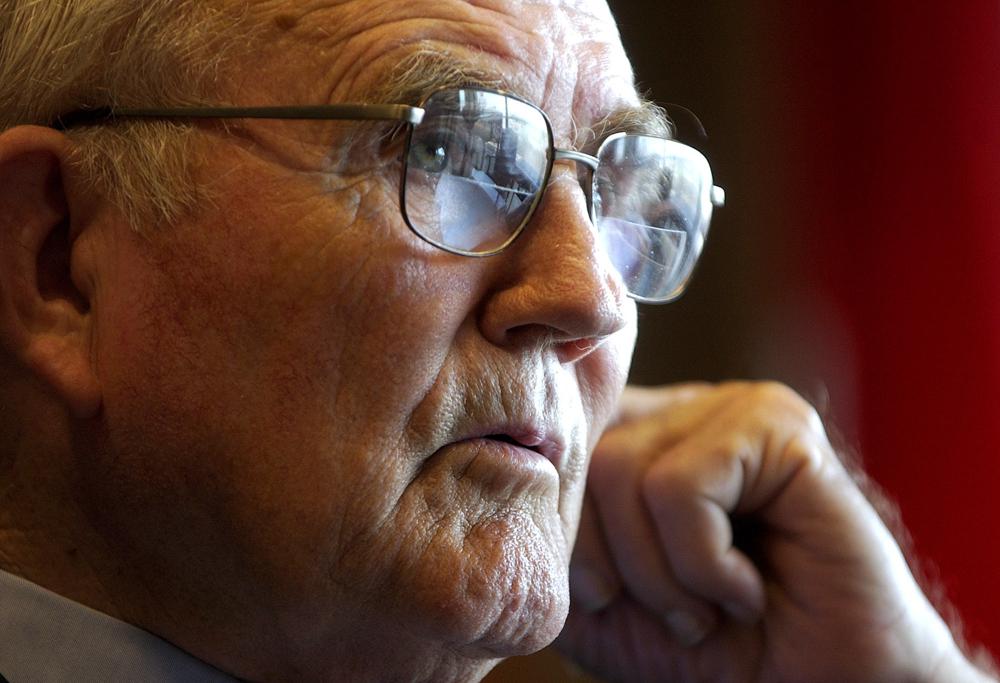
Former Alabama Gov. John Patterson, who entered politics as a reformer after his father’s assassination but was criticized for failing to protect the Freedom Riders from angry white mobs, has died. He was 99. He died Friday, his daughter, Barbara Patterson Scholl, confirmed. She said funeral arrangements are pending. “He died very peacefully at home. His family and friends were with him,” she said. Patterson’s involvement with state government spanned a half-century, beginning with his election as attorney general at 33 after violence in Phenix City, and later as a judge. A segregationist as governor, he drew criticism when Freedom Riders were attacked while in Alabama and Patterson did nothing to protect them. He later voiced regret for what happened. He ended his political career more serenely on the Court of Criminal Appeals, where he continued to write opinions into his 80s. Patterson also was involved in the disastrous Bay of Pigs invasion, helping the CIA get Alabama Air National Guard members to train Cuban exiles. Some Alabama pilots died when the 1961 invasion of Cuba failed. Patterson was born on his grandparents’ farm in the tiny Tallapoosa County community of Goldville but finished high school in Phenix City, where his father, Albert Patterson, was a lawyer. After serving on Gen. Dwight Eisenhower’s staff during World War II, Patterson returned home, got his law degree from the University of Alabama, and went into practice with his father, Albert Patterson. Albert Patterson ran for attorney general in 1954 on a platform of cleaning up the vice and illegal gambling that had turned his town into “Sin City, U.S.A.” He won the Democratic nomination to be the state’s top prosecutor but was gunned down in Phenix City on June 18. Democratic Party officials pressured his son to run for attorney general in his place. He did and won. In a 2003 interview, Patterson told The Associated Press he had no interest in politics until his father’s death. “If he hadn’t been killed, I never would have run for public office. Nobody would have ever heard of me outside legal circles,” Patterson said. As attorney general, Patterson kept his father’s campaign promise to clean up Phenix City. He also fought civil rights groups in court. In one case, he got a restraining order to keep the NAACP from operating in Alabama. The restraining order remained until 1964 when it was lifted by the U.S. Supreme Court. Patterson ran for governor in 1958, beating George Wallace in a Democratic primary that focused largely on Patterson’s pro-segregation stand. Patterson was the only person to beat Wallace in an Alabama election. Four years later, Wallace successfully claimed the segregationist banner to begin his dynasty. During Patterson’s term, Alabama launched a $100 million school building program, increased old-age pensions, returned the State Docks to profitability, and enacted a small loan law to curb loan sharks. But his term also saw attacks on the Freedom Riders who were seeking to integrate bus waiting rooms and lunch counters. Patterson said later he mistakenly trusted police in Birmingham and Montgomery to protect the Freedom Riders, but they didn’t. “I regret it, and it was bad for my administration,” Patterson said in 2003. Patterson said he knew segregation couldn’t be maintained under the Constitution, but he wanted to delay its end. He said he felt Alabamians would accept integration without violence if change occurred slowly. Exactly 50 years after the Freedom Riders were beaten by a white mob in Montgomery, Patterson welcomed 10 of them back to Montgomery on May 20, 2011, for the dedication of a museum honoring them. “It took a lot of nerve and guts to do what they did,” Patterson said. In a 2009 interview, Sam Webb, co-editor of the book “Alabama Governors,” said Patterson was “a brave and courageous” governor on many fronts, but those accomplishments were overshadowed by race issues. “Unfortunately what will stand out in John Patterson’s case is his vociferous opposition to civil rights and racial integration,” said Webb, a historian at the University of Alabama at Birmingham. During Patterson’s term as governor, the CIA began planning for Cuban exiles to invade Cuba and try to overthrow Fidel Castro. A CIA agent approached Patterson about getting members of the Alabama Air National Guard to help train the exiles. Patterson agreed after the agent assured him that President Eisenhower had approved the plan. About 300 Alabamians helped train Cuban exiles for the Bay of Pigs invasion, which was not carried out until President John Kennedy replaced Eisenhower in the White House in 1961. On the third day of the invasion, as it was failing, Alabama pilots flew the last bombing mission, and four died. Kennedy initially denied any U.S. involvement in the invasion, which was a shock to Patterson, who knew differently. Years later, Patterson disclosed that he had tipped off Kennedy about the invasion plans shortly before the November 1960 presidential election. Patterson, a Kennedy supporter, flew to New York to tell Kennedy out of concern that the Eisenhower administration would carry out the invasion just before the presidential election to boost Vice President Richard Nixon’s chances of beating Kennedy. Patterson couldn’t seek a second term in 1962 because Alabama law then prohibited consecutive terms. He tried a comeback in 1966, but lost to Wallace’s wife, Lurleen Wallace. He also ran unsuccessfully for chief justice of the Alabama Supreme Court in 1972. Patterson, who had been friends with Wallace before their bitter 1958 race, eventually renewed the friendship and helped Wallace in his later campaigns for president and governor. In 1984, Wallace appointed Patterson to a vacancy on the Alabama Court of Criminal Appeals. He won election to a full six-year term later that year and was reelected in 1990. In January 1997, he had to retire because the state constitution prohibits judges from running for another term after reaching 70. Still, Patterson continued to work for the court by helping write opinions because he said he enjoyed being a judge more
Will Sellers: Remembering the Bay of Pigs and its aftermath
When great powers stump their toe on foreign policy, the initial pain, though slight, often causes loss of focus, a stumble, and sometimes a more serious accident. Sixty years ago, the United States sponsored an unsuccessful invasion of Cuba. The colossal failure ultimately damaged our nation’s reputation, emboldened our enemies, worried our allies, and clouded our vision of proper objectives for foreign relations. President John Kennedy’s inauguration was a cause for much optimism as a young, vibrant breath of fresh air would lead America in a new direction. His inaugural address was an inspiring call to a new nationalism of service to the world at large, and he promised that the United States would do all in its power to protect freedom around the globe. The naivety of his rhetoric was not apparent, however, until he was challenged by an energized Russian bear ready to test the mettle of the young president. At the beginning of the new administration, America had every reason to be hopeful that the world was moving towards greater freedom. The Eisenhower administration had successfully used covert action to change the governments of Iran and Guatemala, some hotspots of the communist insurgency had been stopped, and there was stability in the Philippines and Vietnam. When the torch was passed to the Kennedy administration, the world appeared stable and controllable. During his transition from electoral success to governing, Kennedy reached out to some of the smartest and most capable individuals in business and academia. These whiz kids promoted a theory that the machinery of government was a science, and if the formulas were correct, the results would be both predictable and successful. But, while genius in government is great, practical simplicity is always better. Understanding and assessing people and personalities often primes academic articulation. Within a matter of months, President Kennedy was to learn this the hard way. By failing to understand the difference between ideology and interests in diplomacy, the Kennedy administration embarked on a path that reflected an impractical view of the world as they wanted it to be and failed to appreciate that an effective foreign policy must reflect a national self-interest to deal with the world as it is. Even before the Bay of Pigs, members of Kennedy’s foreign policy team decided on a covert coup to oust Portugal’s Dictator. This plan made little sense. There was no overarching U.S. interest at stake, any local opposition to the regime was minimal, and, to make matters worse, Portugal was a NATO ally. Thankfully, the coup never got off the ground, the covert action was scrapped, and the instigators departed before any real damage was done. But the thought process, or lack thereof, was troubling. And any further ideas about forced regime change should have been put on hold until a comprehensive foreign policy was developed and measured objectives approved. But rather than seriously considering American interests, the excitement of covert action and the thrill of cloak and dagger operations distracted the young administration and set in motion one of the biggest disasters that was as open to ridicule as it was notorious for ineptness. When U.S.-sponsored Cuban exiles landed at the Bay of Pigs, nothing went according to plan. There was no expected popular uprising, and, more importantly, Kennedy had canceled any air support. With limited engagement from the Navy, the landing party hardly got off the beach. The conflict was a total rout, with almost the entire invasion force killed, wounded, or captured. In retrospect, any casual observer would question the need to invade Cuba, our national interest there, and any thoughtful steps to take to achieve our goals short of force. The after-action report was devastating and served as a proof text for Murphy’s law. The Bay of Pigs served as a shakedown cruise for the new administration, and the evaluations of its first 4 months were resoundingly negative. Allowing a small country like Cuba to thwart an American-sponsored coup fueled our enemies to take full advantage of the geniuses who attempted to advance the national policy of a new administration. After the Bay of Pigs, the stature of the United States was substantially reduced in the eyes of the world; perhaps for the first time, we were vulnerable, and our enemies probed and tested our resolve. Indeed, for the rest of his presidency, Kennedy’s foreign policy exploits would be an attempt to overcome this defeat in Cuba. Sensing distraction, our enemies took full advantage of us. In Europe, the Soviets approved building a barrier between East and West Berlin, and when Kennedy signaled that he would take no actions to stop construction, the barrier became the solid, fortress-like wall, which was improved and secured to provocatively divide the people of Berlin. In Southeast Asia, Russia ramped up its support of the Pathet Lao in a proxy war for control of Laos. Nikita Khrushchev rhetorically decimated Kennedy at the Vienna Summit some months later. Atoning for the loss of prestige at the Bay of Pigs, Bobby Kennedy became obsessed with Cuba, diverting resources in any number of attempts to topple the Castro regime. In fact, some of the most preposterous assassination plans cooked up by the CIA were aimed at Castro. Rather than destabilizing Cuba, Kennedy’s singular focus forced Fidel Castro into a strong alliance with Russia, resulting in a Soviet base 90 miles from Florida. The obsession with Cuba led to the Cuban Missile Crisis, which was the closest the world has yet come to a nuclear war. But perhaps the most significant legacy from Kennedy’s bruised ego was his desire to reveal his machismo and show he could draw a line in the sand against communism. The place he chose to show resolve was Vietnam. The Bay of Pigs represented not only a defeat of U.S. interests but a disaster in creating a foreign
Bernie Sanders isn’t dropping out, but where does he go from here?
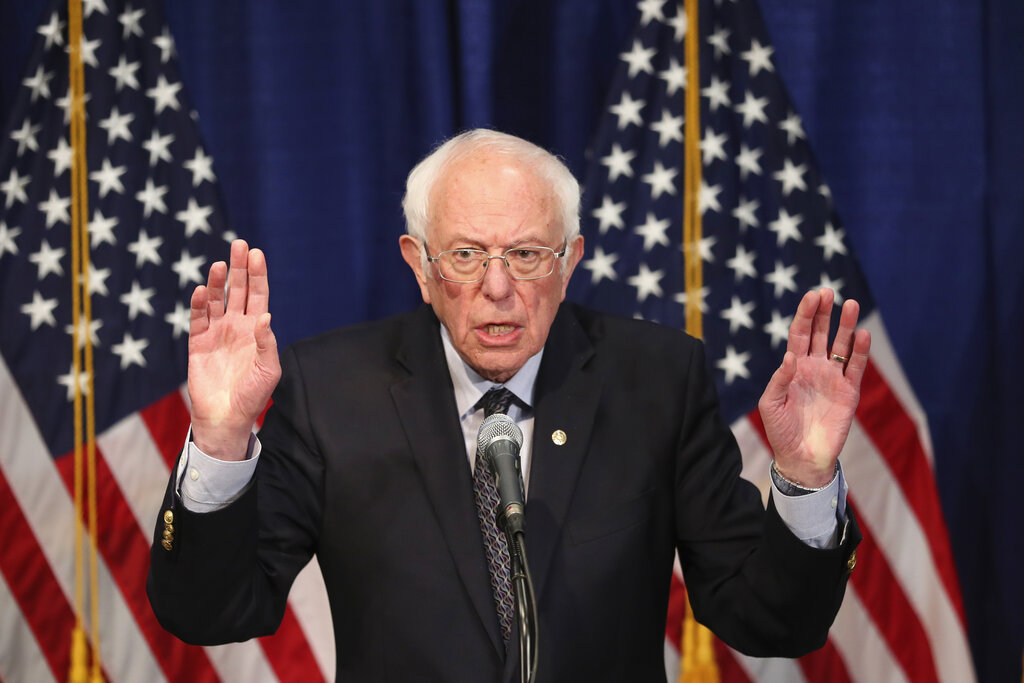
The Vermont senator on Wednesday offered no further details on what his campaign may look like before or after he and Biden spar Sunday night on stage in Arizona.
Stakes rise for Bernie Sanders heading into Michigan primary
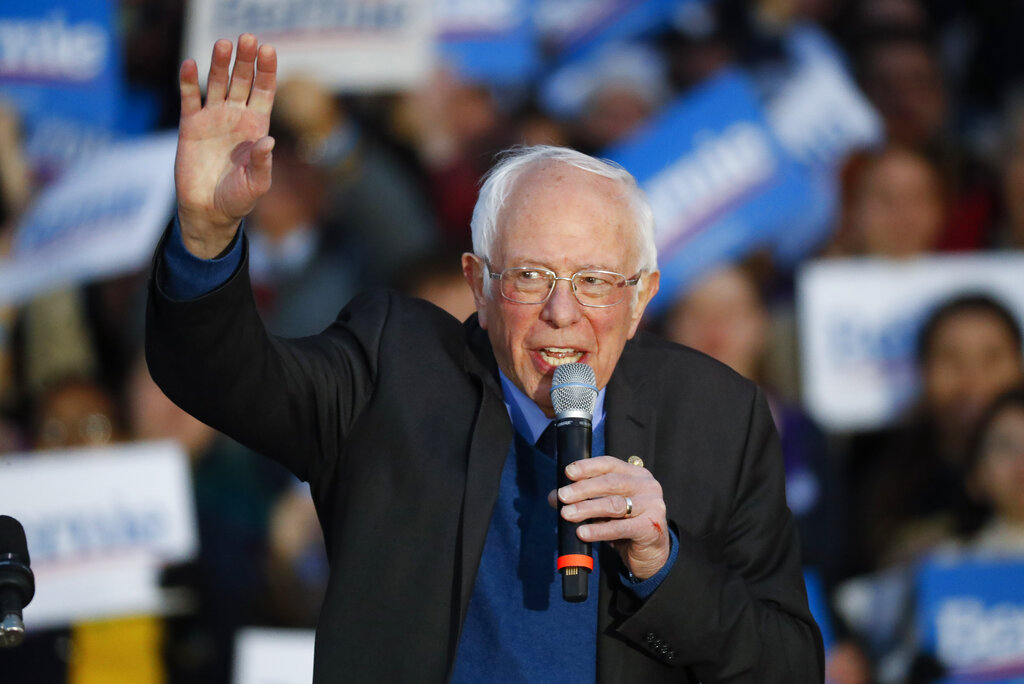
Michigan and five other states hold presidential contests on Tuesday at a critical point in the Democratic race.
Bernie Sanders faces attacks in Democrats’ debate-stage clash

Bernie Sanders faced the brunt of attacks during the debate.
Worried Democrats rush to slow front-runner Bernie Sanders
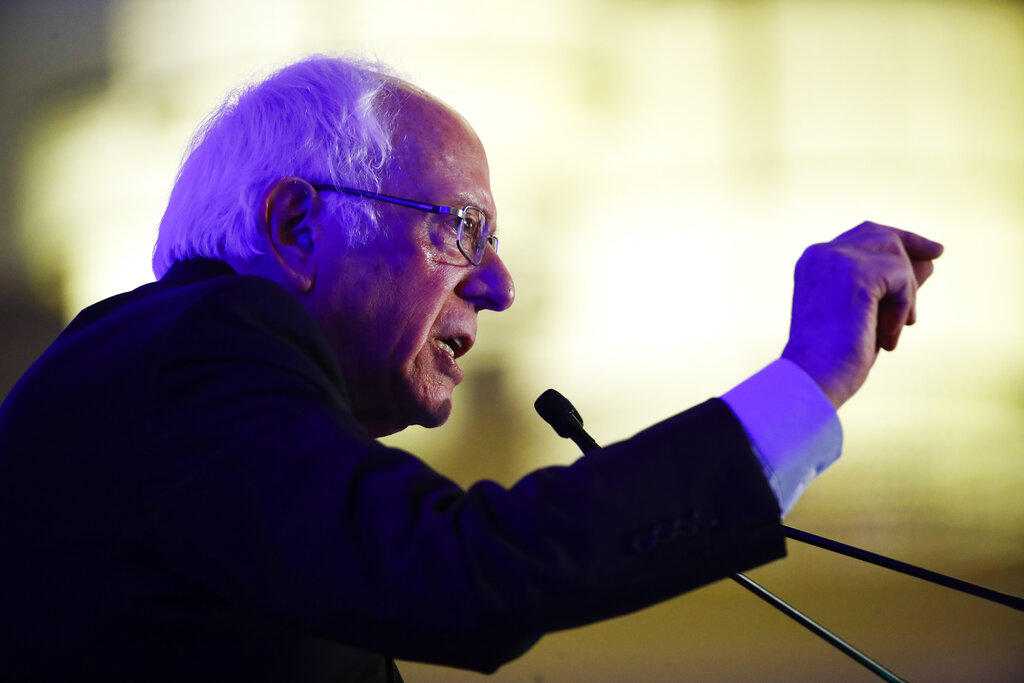
A new political group was spending big to undermine Sanders’ standing with African American voters.
Donald Trump restores some Cuba penalties, rejecting ‘oppressors’
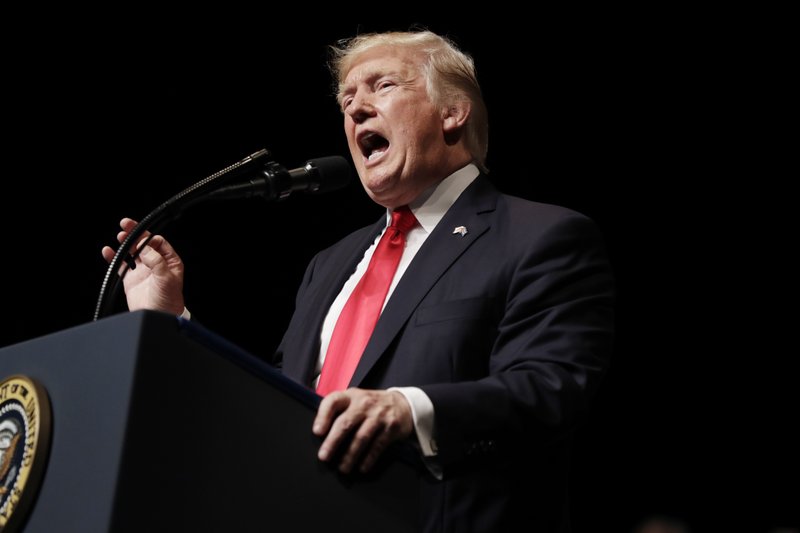
President Donald Trump declared Friday he was restoring some travel and economic restrictions on Cuba that were lifted as part of the Obama administration’s historic easing. He challenged the communist government of Raul Castro to negotiate a better deal for Cubans and Cuban-Americans. Announcing the rollback of President Barack Obama’s diplomatic opening during a speech in Miami, Trump said Cuba had secured far too many concessions from the U.S. in the “misguided” deal but “now those days are over.” He said penalties on Cuba would remain in place until its government releases political prisoners, stops abusing dissidents and respects freedom of expression. “America has rejected the Cuban people’s oppressors,” Trump said in a crowded, sweltering auditorium. “They are rejected officially today — rejected.” Though Trump’s announcement stops short of a full reversal of the Cuba rapprochement, it targets the travel and economic engagement between the countries that has blossomed in the short time since relations were restored. The goal is to halt the flow of U.S. cash to the country’s military and security services in a bid to increase pressure on Cuba’s government. Embassies in Havana and Washington will remain open. U.S. airlines and cruise ships will still be allowed to serve the island 90 miles south of Florida. The “wet foot, dry foot” policy, which once let most Cuban migrants stay if they made it to U.S. soil but was terminated under Obama, will remain terminated. Remittances to Cuba won’t be cut off. But individual “people-to-people” trips by Americans to Cuba, allowed by Obama for the first time in decades, will again be prohibited. And the U.S. government will police other such trips to ensure there’s a tour group representative along making sure travelers are pursuing a “full-time schedule of educational exchange activities.” Trump described his move as an effort to ramp up pressure to create a “free Cuba” after more than half a century of communism. “I do believe that end is in the very near future,” he said. Trump’s move was a direct rebuke to Obama, for whom the diplomatic opening with Cuba was a central accomplishment of his presidency. The new president’s action is broadly opposed by American business groups. “U.S. private sector engagement can be a positive force for the kind of change we all wish to see in Cuba,” said Myron Brilliant, the U.S. Chamber of Commerce executive vice president and head of international affairs. “Unfortunately, today’s moves actually limit the possibility for positive change on the island and risk ceding growth opportunities to other countries that, frankly, may not share America’s interest in a free and democratic Cuba that respects human rights.” In Cuba, Granma, the official organ of the nation’s Communist Party, covered Friday’s speech in a real-time blog, saying “Trump’s declarations are a return to imperialist rhetoric and unilateral demands, sending relations between Havana and Washington back into the freezer.” On the stage in Miami, Rep. Mario Diaz-Balart, R-Fla., said the U.S. would no longer have to witness the “embarrassing spectacle” of an American president glad-handing with a dictator. “President Trump will treat the Castro regime as a malevolent dictatorship that it is,” Diaz-Balart said. “Thank you, President Trump, for keeping your commitments. You have not betrayed us — you kept your promise.” Obama announced in December 2014 that he and Cuban leader Raul Castro were restoring diplomatic ties between their countries, arguing that a new approach was needed because the policy the U.S. had pursued for decades had failed to democratize the island. Less than a year later, the U.S. Embassy in Havana re-opened. The U.S. severed ties with Cuba in 1961 after Fidel Castro’s revolution, and spent subsequent decades trying to either overthrow the Cuban government or isolate the island, including by toughening an economic embargo first imposed by President Dwight D. Eisenhower. The trade embargo remains in place under Trump. Only the U.S. Congress can lift it, and lawmakers, especially those of Cuban heritage, like Sen. Marco Rubio, another Florida Republican, have shown no interest in doing so. Rubio staunchly opposed Obama’s re-engagement with Cuba, and he lauded Trump as he took the stage. “Today, a new president lands in Miami to reach out his hand to the people of Cuba,” Rubio said. Republished with permission of The Associated Press.
Year’s top news filled with division — and no middle ground
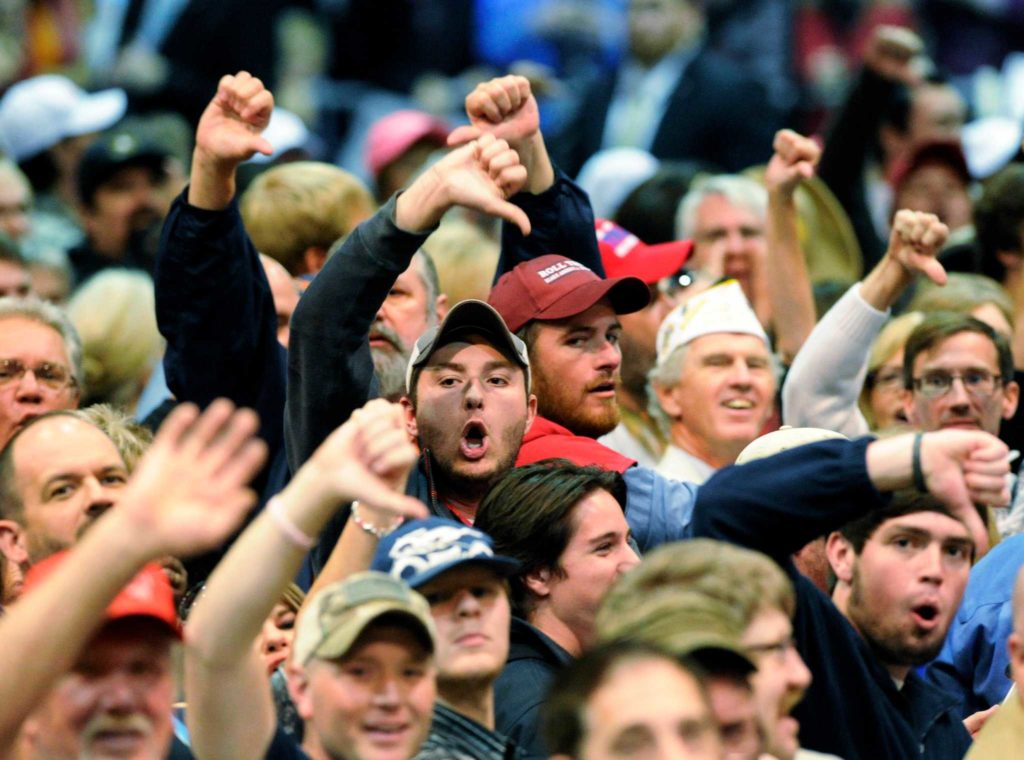
Fed up with Europe’s union across borders? Reject it. Disgusted with the U.S. political establishment? Can it. The news in 2016 was filled with battles over culture and territory that exposed divisions far deeper than many realized. But people confronting those divides repeatedly rejected the prospect of middle-ground solutions and the institutions put in place to deliver them. While the headlines told many different stories, the thread connecting much of the news was a decisive torching of moderation, no matter how uncertain the consequences. “You’re not laughing now, are you?” Nigel Farage, a leader of the Brexit campaign, told the European Parliament after voters in Great Britain spurned membership in the continental union. “What the little people did … was they rejected the multinationals, they rejected the merchant banks, they rejected big politics and they said, ‘Actually, we want our country back.’” Farage was speaking only about the United Kingdom. But his observation that many people well beyond Britain shared that disdain for working within the system was borne out repeatedly in the year’s biggest headlines. In a U.S. presidential campaign fueled by anger and insults, in Syria’s brutal war and Venezuela’s massive protests, in fights over gay rights and migration, opposing sides rejected not just compromise but also the politics of trying to forge it. That was clear from the year’s first days, when armed activists took over a national wildlife refuge in Oregon’s high desert, opposing the federal government’s control of public lands. “It needs to be very clear that these buildings will never, ever return to the federal government,” LaVoy Finicum, an Arizona rancher among the activists, told reporters. Weeks later, federal agents stopped vehicles outside the refuge, arresting eight of the activists and fatally shooting Finicum when he reached into a jacket that held a loaded gun. Even in the rare cases when compromise prevailed, it was viewed with suspicion. When a deal took effect in January limiting Iran’s nuclear program in exchange for relief on sanctions, it marked the culmination of prolonged negotiation by President Barack Obama‘s administration. But the pact was repeatedly attacked by critics in both countries, including Donald Trump, saying it gave the other side too much. “The wisest plan of crazy Trump is tearing up the nuclear deal,” a leading Iranian hard-liner, Hossein Shariatmadari, told his country’s news agency. In mid-February, U.S. Supreme Court Justice Antonin Scalia died in his sleep, leaving a vacuum on a court where he had long been the leading conservative voice. Barely an hour after Scalia’s death was confirmed, Senate Majority Leader Mitch McConnell staked out an uncompromising position on what lay ahead. “The American people should have a voice in the selection of their next Supreme Court justice,” McConnell said, disregarding the fact that U.S. voters had twice elected Obama. “Therefore, this vacancy should not be filled until we have a new president.” North Carolina lawmakers prompted protests and counterprotests when they rushed through House Bill 2, voiding local gay-rights ordinances and limiting bathroom access for transgender people. Companies, the NBA and others followed through on threats to move jobs, games and performances out of the state, amplifying the division. Tensions over U.S. policing bled into a third year. In July, a sniper killed five Dallas police officers during a protest over shootings of black men by police in Louisiana and Minnesota. A South Carolina jury failed to reach a verdict in the trial of a white officer caught on video fatally shooting a black man fleeing a traffic stop. Division, though, was hardly limited to the U.S. In Venezuela, triple-digit inflation and shortages of food and medicine fueled 6,000 protests throughout the year that brought millions into the streets. But the government of President Nicolas Maduro, blamed by many voters for the chaos, blocked a recall campaign. “If you’re going to shoot me because I’m hungry, shoot me!” a young man shouted at a soldier during one protest in Caracas. In Colombia, voters narrowly rejected a deal between the government and a guerrilla group to end a 52-year civil war. Even when lawmakers approved a renegotiated deal, the peace remained fragile. In Brazil, senators impeached President Dilma Rousseff for manipulating budget figures, though many of the lawmakers were, themselves, tarred by accusations of corruption. South Korean President Park Geun-hye was stripped of power in December amid allegations she let a close friend use the government for financial gain. Meanwhile, Syria’s war entered its sixth year. But despite pressure by the U.S. and its allies, Russia and the government of President Bashar Assad unleashed an assault on Aleppo to wipe out rebels, driving up the toll in a conflict that has already claimed as many as 500,000 lives. “This is a targeted strategy to terrorize civilians and to kill anybody and everybody who is in the way of their military objectives,” U.S. Secretary of State John Kerry said, accusing Syria and Russia of war crimes. “As long as war crimes are at question,” a Russian government spokeswoman said, “the Americans should start with Iraq.” In Yemen, cease-fires broke down, extending a nearly two-year civil war. But with Syria capturing most international attention, a famine resulting from the turmoil was mostly overlooked. As the fighting continued, terrorist strikes spread fear well beyond the Middle East. A bombing at a Brussels airport in March and another attack in June at Istanbul’s airport by gunmen with explosives killed a total of nearly 80 people. More than 70 died when a bomb went off in a park in Pakistan, with a faction of the Pakistani Taliban claiming responsibility. In July, a terrorist drove a truck into a Bastille Day crowd in Nice, France, killing 86 and injuring more than 400 others. The Islamic State group claimed responsibility. In June, security guard Omar Mateen opened fire inside a gay nightclub in Orlando, Florida, in the deadliest mass shooting ever in the U.S. In a call to police during the attack, which killed 49, Mateen — a U.S. citizen born
New Year’s poll: Americans hopeful for a better 2017
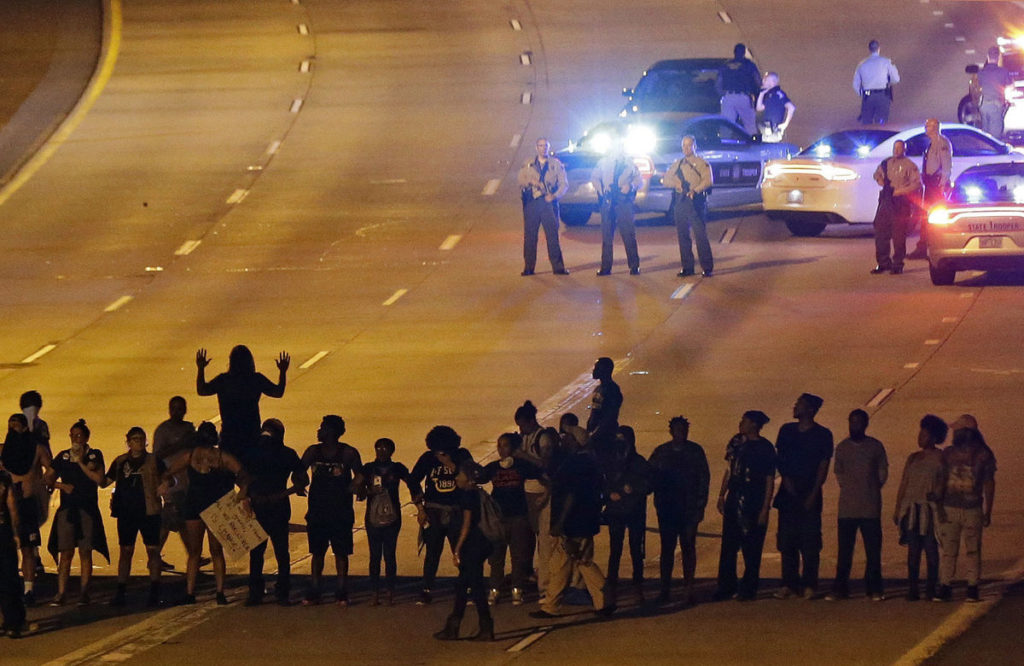
Emotionally wrenching politics, foreign conflicts and shootings at home took a toll on Americans in 2016, but they are entering 2017 on an optimistic note, according to a new poll that found that a majority believes things are going to get better for the country next year. A look at the key findings of the Associated Press-Times Square Alliance poll: ___ SO HOW WAS 2016? Americans weren’t thrilled with the year. Only 18 percent said things for the country got better, 33 percent said things got worse, and 47 percent said it was unchanged from 2015. On a personal level, they were optimistic about 2017. Fifty-five percent said they believe things will be better for them in the coming year than in the year that just concluded. That’s a 12-point improvement from last year’s poll. Americans interviewed about the poll’s results expressed some of that optimism. “Next year will be better than this year, because people will have more jobs and they’ll have more money to spend,” said Bourema Tamboura, a Harlem resident behind the wheel of a New York car service. “I’m hoping 2017 will be better,” added Elizabeth Flynn, 62, an elementary schoolteacher from Peabody, Massachusetts. “You’ve got to be optimistic, and I’m going to try.” Democrats are more likely than Republicans to say 2016 was worse for the country than 2015. And Republicans are especially likely to feel that 2017 will be even better for them personally. University of Miami professor Benjamin Alsup said he needed only three words to explain why 2016 felt worse for him: “Trump, Trump, Trump!” Robert Greenstone, a New York commercial real estate broker, said the political discourse leading up to Republican Donald Trump‘s election as president played havoc with people’s emotions. “The amount of disinformation made people suspect of everything and everyone, even their neighbors,” he said. ____ U.S. ELECTION LEADS TOP NEWS EVENTS The U.S. elections top Americans’ list of 10 top news events in 2016. Three-quarters called the presidential election and Trump’s victory very or extremely important. Sixty-three percent ranked mass shootings and bombings in Orlando, Florida, and in Belgium, Turkey, Pakistan and France as personally important news stories of the year. Fifty-one percent said they found news stories about the deaths of people at the hands of police officers, or news about ambush attacks on police in three states, to be among the year’s most important news events. Fourth on the list are 43 percent who described the spread of the Zika virus as important. The three events described by the largest percentages of Americans as not too important included the death of Muhammad Ali (50 percent), approval of recreational marijuana use in four states (43 percent), and the death of Fidel Castro (40 percent). ____ TOP MOMENTS IN POP CULTURE AND SPORTS A majority of Americans, including 7 in 10 Midwesterners, called November’s World Series win for the Chicago Cubs to end their 108-year drought memorable. Of nine other pop-culture items tested, two were called memorable by about half of Americans: the death of Prince, David Bowie and Leonard Cohen; and the Olympic victories of the U.S. women’s gymnastics team. The two least-notable events for Americans, of the 10 possible choices in the poll, were the Angelina Jolie–Brad Pitt divorce filing and the “Pokemon Go” app game phenomenon, each described by most as forgettable. ____ RINGING IN THE NEW YEAR About half of Americans plan to celebrate the New Year at home. About 2 in 10 plan to go out to a friend or family member’s home, and 1 in 10 to a bar or restaurant. About a quarter don’t plan to celebrate at all. About 6 in 10 plan to watch the Times Square ball drop, nearly all of whom will watch on TV. ___ The AP-Times Square Alliance Poll of 1,007 adults was conducted online Dec. 9-11, using a sample drawn from GfK’s probability-based KnowledgePanel, which is designed to be representative of the U.S. population. The margin of sampling error for all respondents is plus or minus 3 percentage points. The poll is a cooperative effort between AP and the organizers of the Times Square New Year’s Eve Celebration, the Times Square Alliance and Countdown Entertainment. The Alliance is a nonprofit group that seeks to promote Times Square, and Countdown Entertainment represents the owners of One Times Square and the New Year’s Eve Ball Drop. Republished with permission of the Associated Press.
U.S. election voted top news story of 2016
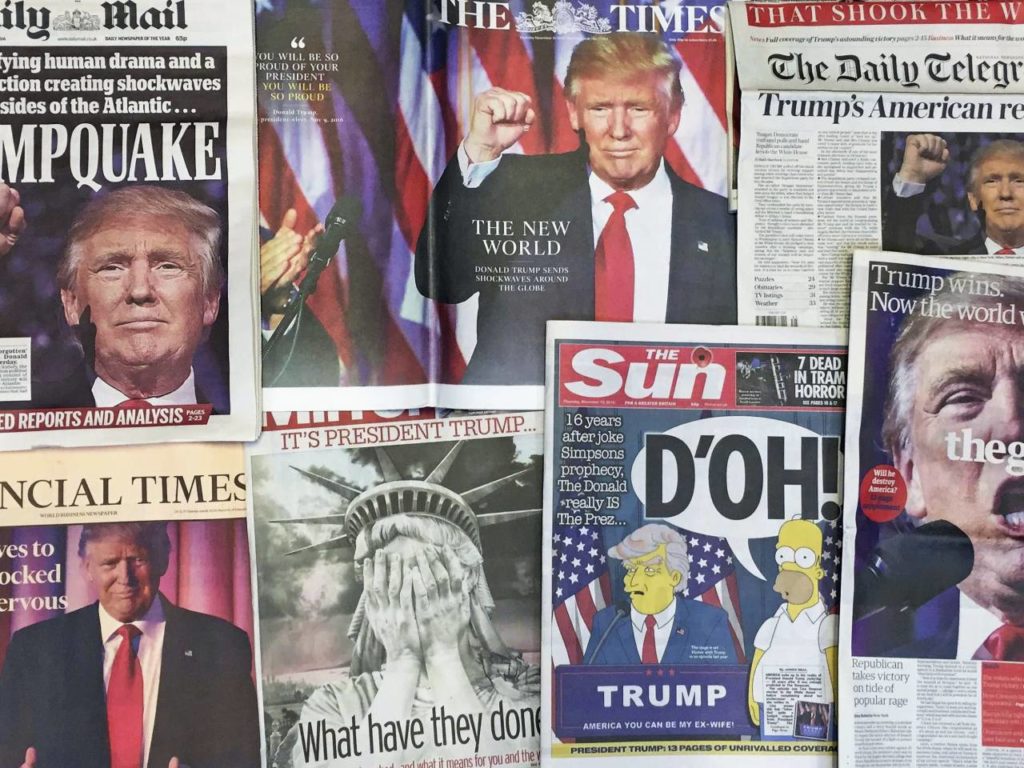
The turbulent U.S. election, featuring Donald Trump‘s unexpected victory over Hillary Clinton in the presidential race, was the overwhelming pick for the top news story of 2016, according to The Associated Press’ annual poll of U.S. editors and news directors. The No. 2 story also was a dramatic upset — Britons’ vote to leave the European Union. Most of the other stories among the Top 10 reflected a year marked by political upheaval, terror attacks and racial divisions. Last year, developments related to the Islamic State group were voted as the top story — the far-flung attacks claimed by the group, and the intensifying global effort to crush it. The first AP top-stories poll was conducted in 1936, when editors chose the abdication of Britain’s King Edward VIII. Here are 2016’s top 10 stories, in order: 1. US ELECTION: This year’s top story traces back to June 2015, when Donald Trump descended an escalator in Trump Tower, his bastion in New York City, to announce he would run for president. Widely viewed as a long shot, with an unconventional campaign featuring raucous rallies and pugnacious tweets, he outlasted 16 Republican rivals. Among the Democrats, Hillary Clinton beat back an unexpectedly strong challenge from Bernie Sanders, and won the popular vote over Trump. But he won key Rust Belt states to get the most electoral votes, and will enter the White House with Republicans maintaining control of both houses of Congress. 2. BREXIT: Confounding pollsters and oddsmakers, Britons voted in June to leave the European Union, triggering financial and political upheaval. David Cameron resigned as prime minister soon after the vote, leaving the task of negotiating an exit to a reshaped Conservative government led by Theresa May. Under a tentative timetable, final details of the withdrawal might not be known until the spring of 2019. 3. BLACKS KILLED BY POLICE: One day apart, police in Baton Rouge, Louisiana, fatally shot Alton Sterling after pinning him to the ground, and a white police officer shot and killed Philando Castile during a traffic stop in a suburb of Minneapolis. Coming after several similar cases in recent years, the killings rekindled debate over policing practices and the Black Lives Matter movement. 4. PULSE NIGHTCLUB MASSACRE: The worst mass shooting in modern U.S. history unfolded on Latin Night at the Pulse, a gay nightclub in Orlando. The gunman, Omar Mateen, killed 49 people over the course of three hours before dying in a shootout with SWAT team members. During the standoff, he pledged allegiance to the Islamic State. 5. WORLDWIDE TERROR ATTACKS: Across the globe, extremist attacks flared at a relentless pace throughout the year. Among the many high-profile attacks were those that targeted airports in Brussels and Istanbul, a park teeming with families and children in Pakistan, and the seafront boulevard in Nice, France, where 86 people were killed when a truck plowed through a Bastille Day celebration. In Iraq alone, many hundreds of civilians were killed in repeated bombings. 6. ATTACKS ON POLICE: Ambushes and targeted attacks on police officers in the U.S. claimed at least 20 lives. The victims included five officers in Dallas working to keep the peace at a protest over the fatal police shootings of black men in Minnesota and Louisiana. Ten days after that attack, a man killed three officers in Baton Rouge, Louisiana. In Iowa, two policemen were fatally shot in separate ambush-style attacks while sitting in their patrol cars. 7. DEMOCRATIC PARTY EMAIL LEAKS: Hacked emails, disclosed by WikiLeaks, revealed at-times embarrassing details from Democratic Party operatives in the run-up to Election Day, leading to the resignation of Democratic National Committee chair Debbie Wasserman Schultz and other DNC officials. The CIA later concluded that Russia was behind the DNC hacking in a bid to boost Donald Trump’s chances of beating Hillary Clinton. 8. SYRIA: Repeated cease-fire negotiations failed to halt relentless warfare among multiple factions. With Russia’s help, the government forces of President Bashar Assad finally seized rebel-held portions of the city of Aleppo, at a huge cost in terms of deaths and destruction. 9. SUPREME COURT: After Justice Antonin Scalia‘s death in February, President Obama nominated Merrick Garland, chief judge of the U.S. Court of Appeals, to fill the vacancy. However, majority Republicans in the Senate refused to consider the nomination, opting to leave the seat vacant so it could be filled by the winner of the presidential election. Donald Trump has promised to appoint a conservative in the mold of Scalia. 10. HILLARY CLINTON’S EMAILS: Amid the presidential campaign, the FBI conducted an investigation into Clinton’s use of a private computer server to handle emails she sent and received as secretary of state. FBI Director James Comey criticized Clinton for carelessness but said the bureau would not recommend criminal charges. Stories that did not make the top 10 included Europe’s migrant crisis, the death of longtime Cuban leader Fidel Castro, and the spread of the Zika virus across Latin America and the Caribbean. Republished with permission of The Associated Press.
