
State Rep. Mary Moore proposes ban on semiautomatic gun sales
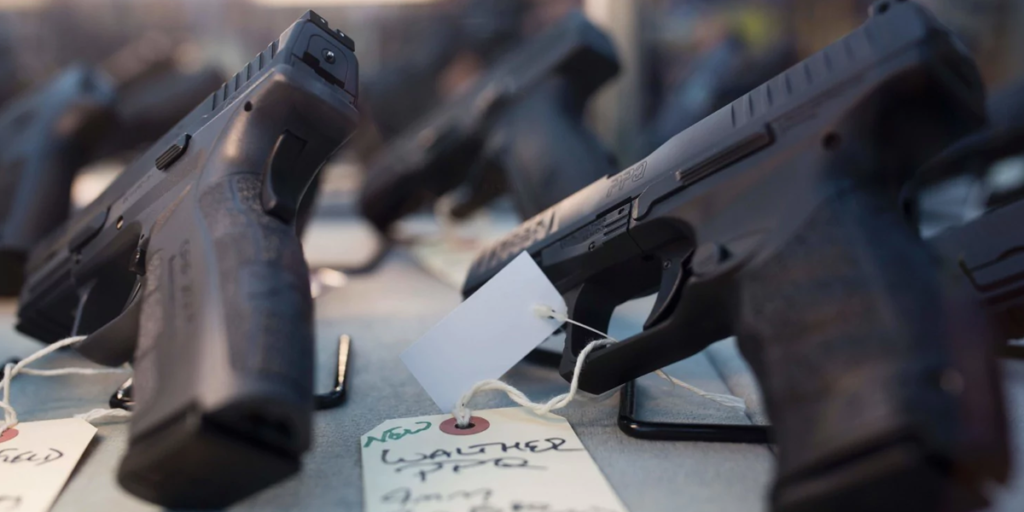
One Alabama lawmaker has introduced a bill banning semiautomatic firearms sales in the wake of the Feb. 14 shooting at a high school in Parkland, Fla. Birmingham-Democrat state Rep. Mary Moore introduced HB472 on Thursday which would prohibit the possession, sale, or transfer of assault weapons and large-capacity ammunition within the state. This bill defines assault weapons as “any selective-fire firearm capable of fully automatic, semiautomatic, or burst fire at the option of the user or any of the following specified semiautomatic firearms. Included in her ban are: All AK series, including, but not limited to, the following: AK, AKM, AKS, AK-47, AK-74, ARM, MAK90, MISR, NHM90, NHM91, SA 85, SA 93, VEPR, WASR-10, WUM, Rock River Arms LAR-47, and Vector Arms AK-47. All AR series, including, but not limited to, the following: AR-10, AR-15, Bushmaster XM15, Armalite AR-180 and M15, Olympic Arms, AR70, DPMS Tactical Rifles, Smith and Wesson M and P15 Rifles, Colt AR-15, Rock River Arms LAR-15, and DoubleStar AR rifles. Algimec AGM1. Barrett 82A1 and REC7. Beretta AR-70 and Beretta Storm. Bushmaster Auto Rifle. Calico Liberty series. Chartered Industries of Singapore SR-88. Colt Sporter. Daewoo K-1, K-2, Max-1, and Max FAMAS MAS 223. Federal XC-900 and SC-450. Fabrique National FN/FAL, FN/LAR, or FNC. FNH PS90, SCAR, and FS2000. Goncz High Tech Carbine. Hi-Point Carbine. HK-91, HK-93, HK-94, SP-89, or HK-PSG-1. Kel-Tec Sub-2000, SU series, RFB. M1 Carbine. SAR-8, SAR-4800, SR9. SIG 57 AMT and 500 Series. Sig Sauer MCX Rifle. SKS capable of accepting a detachable magazine. SLG 95. SLR 95 or 96. Spectre Auto Carbine. Springfield Armory BM59, SAR-48, and G-3. Sterling MK-6 and MK-7. Steyr AUG. Sturm Ruger Mini-14 with folding stock. TNW M230, M2HB. Thompson types, including Thompson T5. UZI, Galil and UZI Sporter, Galil Sporter, Galil Sniper Rifle (Galatz), or Vector Arms UZI. Weaver Arms Nighthawk. A full list of additional guns listed on the ban can be found here. Moore said her bill would allow those Alabamians who already own semi-automatic weapons to keep them.
Twinkle Cavanaugh asks Alabama Legislature to train teachers as Reserve Deputy Sheriffs

In the wake of Wednesday’s school shooting in Parkland, Fla. people across the country are looking for solutions to prevent similar massacres in the future. One such solution-seeker is the president of the Alabama Public Service Commission (PSC) and Lt. Governor candidate Twinkle Andress Cavanaugh. She’s asking the Alabama Legislature to consider a 2013 school safety law, which was passed for Franklin County, to be considered statewide. Spearheaded by Red Bay-Democrat State Rep. Johnny Mack Morrow, the Alabama legislature passed HB404 in 2013, which allows suitable teachers, school personnel, and locals to volunteer to be trained as Reserve Deputy Sheriffs and carry firearms on school grounds in Franklin County. Cavanaugh says the law has has given the state a model to study for almost five years when it comes to the subject of school safety “I find it shameful when people, on both sides of the aisle, play politics with tragedies. This is an exploitation tactic used almost exclusively by liberals, hotheads, and children,” Cavanaugh said in a press release. “Yesterday there was a knee-jerk reaction to try to capture the headlines of every news story in Alabama for political gain. I believe we need strong, measured leadership that puts our children and teachers first- not political pandering.” Cavanaugh added, “Yesterday, I spoke with Franklin County Sheriff Shannon Oliver, along with the bill’s sponsor, and the bill seems to be working in Franklin County. I would ask that the legislature look at this bill and look how well it has worked for Franklin County. This bill could be expanded to a statewide level on a bipartisan basis, as the 2013 bill passed without a single ‘nay’ vote in both the House and the Senate.” This bill would allow local control of school safety, giving decision-making power to a county’s sheriff, principals, and school board. According to Cavanaugh, many Alabama counties do not have the funding for resource officers, leaving law enforcement with a long response time to schools in an active shooter situation. Which is precisely why HB404 was introduced and passed in the first place — following the Sandy Hook school shooting, the Franklin County Sheriff’s Office realized that their response time in a similar situation would be over thirty minutes to East Franklin.
Lawmaker to introduce bill to Alabama teachers to carry firearms
Guntersville-Republican, State Rep. Will Ainsworth on Thursday said he will introduce legislation to allow some public school teachers and administrators to undergo firearms training and arm themselves during school hours, in order to help prevent school shoots like the one that occurred Wednesday at Marjory Stoneman Douglas High School in Parkland, Fla. “Our children are sitting ducks in gun-free schools. As the parent of three public school students, I believe we must act now in order to prevent another tragedy,” Ainsworth posted on Facebook. Ainsworth, who is not seeking re-election in to the State House but is running for Lt. Governor, said he still has research to do before introducing a bill. Once introduced, Ainsworth’s bill would join a handful several others across the nation endeavoring to put more guns in schools for the defense of teachers and students. Similar bills have been filed in Florida, Indiana, Pennsylvania, Mississippi, South Carolina and West Virginia this year alone. If successful, Ainsworth’s bill would just at least nine, which already allow some form of concealed carry in schools.
Alabama has 2nd highest gun death rate in America

Gun deaths in the U.S. have jumped by 17 percent during the past decade. During the same period of time, gun deaths in Alabama have increased by 22 percent, making it the second worst state for gun deaths in America. That’s according to information released Wednesday by the Violence Policy Center (VPC), a national education organization working to end gun violence, using just-released 2016 data from the federal Centers for Disease Control and Prevention’s National Center for Injury Prevention. Alabama’s firearm death rate was 17.63 in 2009. It escalated to 21.51 by 2016 — a 22 percent increase. The only state worse, and much worse at that, was Alaska, which saw a 60.2 percent increase. According to data VPC compiled, Alaska and Alabama have “extremely lax gun violence prevention laws as well as a higher rate of gun ownership,” which translates into more gun deaths. VPC also claims that those states with the lowest gun ownership accordingly have substantially lower death frequencies. What VPC doesn’t explain is what was the cause of the gun deaths. According to gunpolicy.org gun deaths in Alabama are overwhelmingly comprised by firearm suicide. 2013 is the most recent year they have specific data from the CDC, but in 2012 there were 831 gun deaths in Alabama — 305 of which were homicides, while 500 suicides. The remaining deaths where unintentional or by undetermined causes. Total number of gun deaths: 2013: 860 2012: 831 2011: 785 2010: 782 2009: 830 Firearm homicides: 2013: 317 2012: 305 2011: 292 2010: 283 2009: 317 Firearm suicides: 2013: 504 2012: 500 2011: 452 2010: 454 2009: 479 Unintentional gun deaths: 2013: 25 2012: 14 2011: 25 2010: 35 2009: 28 Gun deaths by undetermined cause: 2013: 0 (suppressed) 2012: 0 (suppressed) 2011: 15 2010: 0 (suppressed) 2009: 0 (suppressed) State gun death rates were calculated by dividing the number of gun deaths by the total state population and multiplying the result by 100,000 to obtain the rate per 100,000, which is the standard and accepted method for comparing fatal levels of gun violence. According to the VPC study: States with the five highest gun death rates Rank State Household gun ownership Gun death rate per 100,000 1 Alaska 56.4 percent 23.86 2 Alabama 49.5 percent 21.51 3 Louisiana 49.0 percent 21.08 4 Mississippi 54.3 percent 19.64 5 Oklahoma 46.7 percent 19.52 States with the five lowest gun death rates Rank State Household gun ownership Gun death rate per 100,000 50 Massachusetts 14.3 percent 3.55 49 New York 22.2 percent 4.56 48 Hawaii 12.5 percent 4.62 47 Rhode Island 15.9 percent 4.64 46 Connecticut 22.2 percent 4.81
Kimber to open Alabama firearms manufacturing facility with 366 jobs
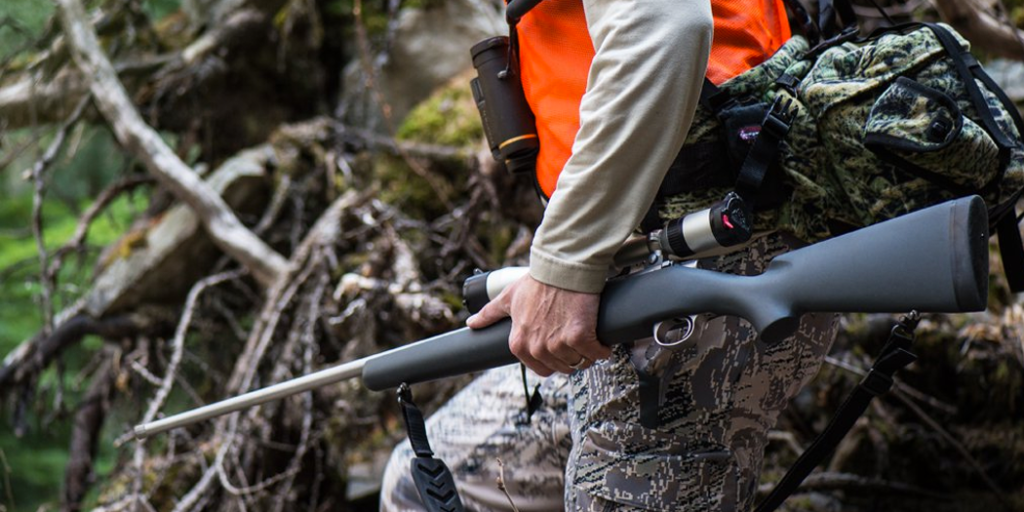
American firearms manufacturer Kimber Manufacturing, said Tuesday that it’s opening a new manufacturing plant in Troy, Ala., where it expects to employ 366 workers. The company said it will invest $38 million in the production facility over the next five years. “Due to an unprecedented year-over-year growth in demand, every time the company has embarked upon a planned expansion, the newly created capacity is exhausted before the expansion is complete,” said James Cox, Kimber’s chief financial officer. “As we continue to move into uncharted waters in regards to Kimber product demand, it was important to us to build a facility that will allow us to secure a significant new plateau of capacity.” Alabama Gov. Kay Ivey says Kimber’s investment in Troy will create a significant number of high-paying design engineering and manufacturing jobs. “With talented Alabamians already manufacturing a wide range of high-quality products that are in demand around the globe, the state can offer Kimber an ideal business environment and a skilled workforce for its expansion project,” Ivey said. “Kimber’s investment in Troy will create a significant number of high-paying design engineering and manufacturing jobs, and we are committed to helping the company find long-lasting success in Alabama.” Once a small manufacturing company based in Yonkers, N.Y, Kimber has grown rapidly over the past 21 years. The new manufacturing facility in Troy will be Kimber’s sixth U.S. location. “We are pleased with the impressive track record that Alabama has with attracting and retaining world-class manufacturing companies,” said Leslie Edelman, Kimber’s president and chief executive officer. “Growing our company intelligently depends significantly on being in the right manufacturing environment, and in Troy, we have a community dedicated to our long-term success. Working with the Alabama Department of Commerce as well as Mayor Jason Reeves and his team has been a pleasurable and rewarding experience.” Greg Grogan, Kimber’s chief operating officer, said the company will build a large, automated, state-of-the-art design engineering and manufacturing facility in Troy to support Kimber’s strategic growth plans. It should be operational by early 2019. “We will be building a large, automated, state-of-the-art design engineering and manufacturing facility in Troy to support Kimber’s growth plan and strategy,” said Grogan. “Troy offers us expansion with a passionate workforce, affordable utility costs, a pro-business environment, experienced local training support, and long-term incentives from the State of Alabama and the City of Troy alike. This expansion, in conjunction with our existing manufacturing facilities, talented and experienced employees, and best-in-class products provides for exciting times here at Kimber.” “This is a dream come true for the City of Troy and for me personally; a firearms manufacturing company with such a stellar brand as Kimber, creating jobs and capital investment for the community,” City of Troy Mayor Jason Reeves added. “Troy has a strong manufacturing base and Kimber will certainly, positively add to that.”
20 percent of Alabamians have concealed carry permit — highest in the country
The national gun debate continues to divide the nation leaving many Americans feeling as though their 2nd Amendments rights may soon be on the chopping block. In response to the uncertainty, more Americans across the country have been going out and getting guns. According to a July 2017 study by the Crime Prevention Research Center (CPRC), nearly two million Americans obtained concealed carry permits in 2016, meaning one in every 20 citizens now has a concealed carry permit (CCP). “All states now allow concealed carry,” CPRC President John Lott Jr. said. “And they are all issuing more permits. Not surprisingly, concealed carry is much more popular in states where permits are relatively inexpensive and easy to obtain.” Which is perhaps one of the reasons why Alabama, a known red-state, has the highest number of permit owners, 20 percent, of any state. Conceal carry permits in Alabama Alabama issues concealed handgun licenses only to residents of Alabama, through the sheriff of their county of residence. While permit fees vary by county, they range from $7.50 to $30 per year. WKRG reports, “According to [NRA] data, a vast majority of counties charge $100 for a five-year permit. At least, 46 out of 67 counties do.” The state does not issue carry conceal permits to out of state residents. Alabama reciprocity maps
Alabama ranks 2017’s 10th most dependent state on the gun industry
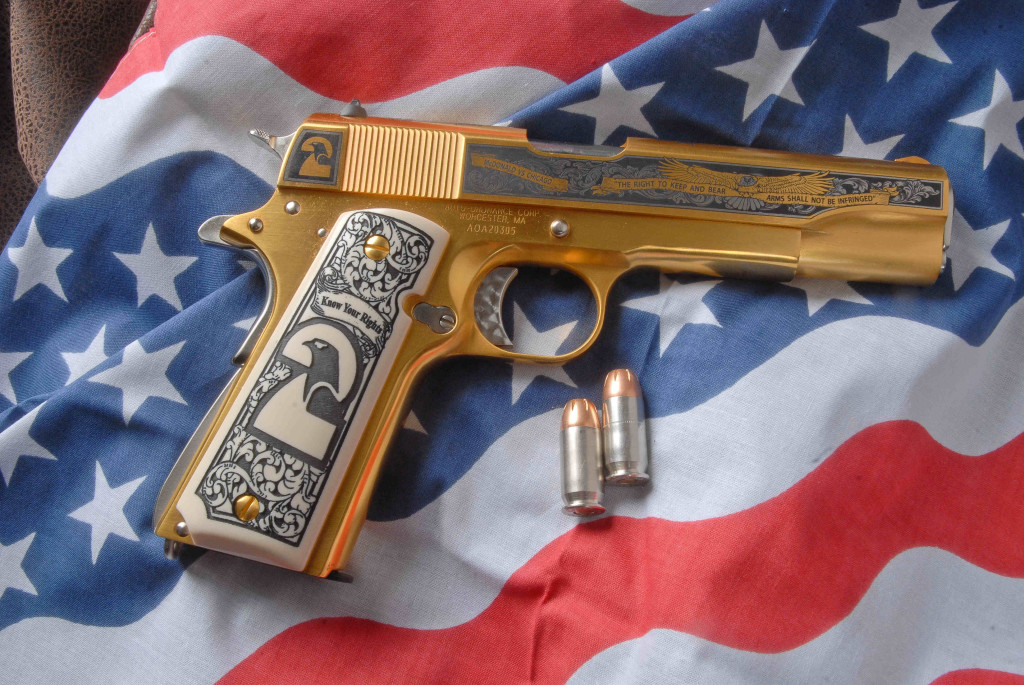
Gun sales have been on the decline since President Donald Trump took office. While some may welcome the news, it’s a bad sign for the Yellowhammer State’s economy as the personal-finance website WalletHub just determined the state is the the 10th most dependent in the U.S. on the firearms industry. In an in-depth analysis of 2017’s States Most Dependent on the Gun Industry, WalletHub’s analysts compared the economic impact of guns on each of the 50 states and the District of Columbia to determine which among them leans most heavily on the gun business both directly for jobs and political contributions and indirectly through ownership. They examined states on a number of gun-related factors, including firearms industry activity in the state, gun ownership and overall prevalence, and contributions by gun control and gun rights groups to elected officials. WalletHub found Alabama has a very strong relationship with the gun industry. Many jobs are tied to the industry and not so surprisingly the state ranks #1 in terms of making the most political donations to Members of Congress where gun-control is concerned. Alabama’s dependence on the gun industry (1=most dependent; 25=avg.) 8th: Gun ownership rate 19th: Firearms-industry jobs per capita 19th: Total firearms-industry output per capita 12th: Total taxes paid by firearms industry per capita 7th: NICS background checks per capita 1st: Gun-control contributions to Congressional members per capita 16th: Gun-rights contributions to Congressional members per capita Here’s a look how Alabama compares to the of the country (roll over states to see their ranks): Source: WalletHub Alaska is the state that depends most on the gun industry with Wyoming, Montana, South Dakota and Idaho rounding out the top five.
A divided Senate answers Orlando with gridlock on gun curbs
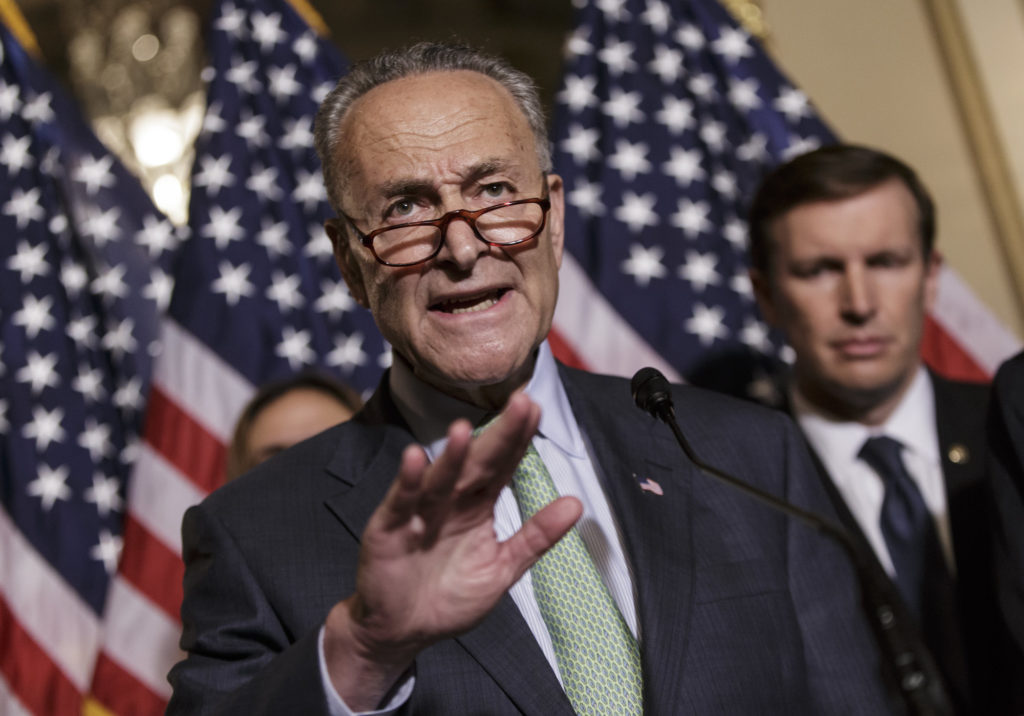
A divided Senate blocked rival election-year plans to curb guns on Monday, eight days after the horror of Orlando’s mass shooting intensified pressure on lawmakers to act but knotted them in gridlock anyway — even over restricting firearms for terrorists. In largely party-line votes, rejected were one proposal from each side to keep extremists from acquiring guns and another shoring up the government’s existing system of required background checks for many firearms purchases. With the chamber’s visitors’ galleries unusually crowded for a Monday evening — including people wearing orange T-shirts saying #ENOUGH gun violence — each measure fell short of the 60 votes needed to progress. Democrats called the GOP proposals unacceptably weak while Republicans said the Democratic plans were overly restrictive. The stalemate underscored the pressure on each party to give little ground on the emotional gun issue going into November’s presidential and congressional elections. It also highlighted the potency of the National Rifle Association, which urged its huge and fiercely loyal membership to lobby senators to oppose the Democratic bills. “Republicans say, ‘Hey look, we tried,’” said Senate Minority Leader Harry Reid, of Nevada. “And all the time, their cheerleaders, the bosses at the NRA, are cheering them.” Senate Majority Leader Mitch McConnell, R-Ky., said the Orlando shootings — in which the FBI says the American-born gunman swore allegiance to a leader of the Islamic State group — show the best way to prevent attacks by extremists is to defeat such groups overseas. “Look, no one wants terrorists to be able to buy guns or explosives,” McConnell said. He suggested that Democrats were using the day’s votes “as an opportunity to push a partisan agenda or craft the next 30-second campaign ad,” while Republicans wanted “real solutions.” That Monday’s four roll-call votes occurred at all was testament to the political currents buffeting lawmakers after gunman Omar Mateen‘s June 12 attack on a gay nightclub. The 49 victims who died made it the largest mass shooting in recent U.S. history, topping the string of such incidents that have punctuated recent years. The FBI said Mateen — a focus of two terror investigations that were dropped — described himself as an Islamic soldier in a 911 call during the shootings. That let gun control advocates add national security and the specter of terrorism to their arguments for firearms curbs, while relatives of victims of past mass shootings and others visiting lawmakers and watching the debate from the visitors’ galleries. GOP senators facing re-election this fall from swing states were under extraordinary pressure. One, Sen. Kelly Ayotte of New Hampshire, voted Monday for the Democratic measure to block gun sales to terrorists, a switch from when she joined most Republicans in killing a similar plan last December. She said that vote — plus her support for a rival GOP measure — would help move lawmakers toward approving a narrower bipartisan plan, like one being crafted by Sen. Susan Collins of Maine. Monday’s votes came after Sen. Chris Murphy, D-Conn., led a near 15-hour filibuster last week demanding a Senate response to the Orlando killings. Murphy entered the Senate shortly after the December 2012 massacre of 20 first-graders and six educators in Newtown, Connecticut, but that slaughter and others have failed to spur Congress to tighten gun curbs. The last were enacted in 2007, when the background check system was strengthened after that year’s mass shooting at Virginia Tech. With Mateen’s self-professed loyalty to extremist groups and his 10-month inclusion on a federal terrorism watch list, Sen. Dianne Feinstein, D-Calif., proposed letting the government block many gun sales to known or suspected terrorists. People buying firearms from federally licensed gun dealers can currently be denied for several reasons, chiefly for serious crimes or mental problems, but there is no specific prohibition for those on the terrorist watch list. That list currently contains around 1 million people — including fewer than 5,000 Americans or legal permanent residents, according to the latest government figures. No background checks are required for anyone buying guns privately online or at gun shows. The GOP response to Feinstein was an NRA-backed plan by Sen. John Cornyn, R-Texas. It would let the government deny a sale to a known or suspected terrorist — but only if prosecutors could convince a judge within three days that the would-be buyer was involved in terrorism. The Feinstein and Cornyn amendments would require notification of law enforcement officials if people, like Mateen, who’d been under a terrorism investigation within the past five years were seeking to buy firearms. Republicans said Feinstein’s proposal gave the government too much unfettered power to deny people’s constitutional right to own a gun. They also noted that the terrorist watch list has historically mistakenly included people. Democrats said the three-day window that Cornyn’s measure gave prosecutors to prove their case made his plan ineffective. The Senate rejected similar plans Feinstein and Cornyn proposed last December, a day after an attack in San Bernardino, California, killed 14 people. Murphy’s rejected proposal would widely expand the requirement for background checks, even to many private gun transactions, leaving few loopholes. Senate Judiciary Committee Chairman Charles Grassley of Iowa, defeated plan increased money for the background check system. Like Murphy’s measure, it prodded states to send more records to the FBI, which operates the background check system, of felons and others barred from buying guns. Grassley’s proposal also revamped language prohibiting some people with mental health issues from buying a gun. Democrats claimed that language would roll back current protections. Monday’s votes were 53-47 for Grassley’s plan, 44-56 for Murphy’s, 53-47 for Cornyn’s and 47-53 for Feinstein’s — all short of the 60 needed. Separately, Collins was laboring to fashion a bipartisan bill that would prevent people on the no-fly list — with just 81,000 names— from getting guns. There were no signs Monday that it was getting wide support or would receive a vote. Republished with permission of The Associated Press.
