
Alabama’s unemployment rate climbed slightly in October

By Steve Wilson | The Center Square Data from the Alabama Department of Labor shows that the state’s unemployment rate increased slightly to 2.3% in October, while the state’s labor force participation rate remained constant at 57%. October’s rate was four-tenths of a percent below October 2022, which was 2.6%. According to the DOL, there were 52,196 unemployed people, compared to 50,166 in September (2.2% rate) and 60,443 in October 2022. The state agency also said that the number of employed increased by 38,038 to a record high of 2.26 million. The civilian labor force also increased to a new record high of 2.3 million, with 29,791 more people joining over the year. “We are continuing to see positive growth in our prime-age worker labor force participation rate, with more than three out of every four prime-age Alabamians holding down a job,” said Alabama Department of Labor Secretary Fitzgerald Washington in a release. “One of the main components of the labor force participation rate is the state’s total population, and Alabama has a larger portion of retired workers. “We will continue to work to bring in other, more traditionally underutilized segments of the population to ensure that we are maximizing our workforce.” The counties with the lowest unemployment rates are: • Shelby County at 1.8%. • Morgan, Limestone, Cullman, and Chilton counties at 1.9%. • St. Clair, Marshall, Madison, Elmore, Cleburne, Cherokee, Bullock, and Blount counties at 2%. All of the counties with the highest unemployment rates are located in the Black Belt in central Alabama, led by Wilcox County (7.8%), Dallas County (5.6%), and Clarke and Perry counties (4.6%). The three cities tied at the state’s lowest unemployment rate at 1.6% are all in the Birmingham suburbs: Alabaster, Homewood, and Vestavia Hills. Next was two other Birmingham suburbs – Hoover and Trussville – along with Madison, a suburb of Huntsville at 1.7%. Athens was third at 1.8%. Selma had the state’s highest unemployment rate for major cities at 6.6%, followed by Prichard at 4.8% and Bessemer at 4%. Republished with the permission of The Center Square.
Alabama’s Labor Force Participation Rate shows no improvement: unemployment increases slightly

On Friday, Alabama Department of Labor Secretary Fitzgerald Washington reported that Alabama’s labor force participation rate remained steady at 57.0% in October, with no improvement from September. The percentage of prime-age workers increased by one-tenth of a percentage point to 78.1% over the month. Prime-age workers is defined as those aged 25-54 years. “We are continuing to see positive growth in our prime-age worker labor force participation rate, with more than three out of every four prime-age Alabamians holding down a job,” said Washington. “One of the main components of the labor force participation rate is the state’s total population, and Alabama has a larger portion of retired workers. We will continue to work to bring in other, more traditionally underutilized segments of the population to ensure that we are maximizing our workforce.” Alabama’s preliminary, seasonally adjusted October unemployment rate is 2.3%. That is up slightly from September’s rate of 2.2%, which was up from August’s record low rate of 2.1%. October’s rate is still well below October 2022’s rate of 2.6%. There were 2,030 more unemployed workers in October than in September. The rate represents 52,196 unemployed persons, compared to 50,166 in September, That is still well below the 60,443 in October 2022. On the bright side, however, the number of people counted as employed increased by 38,038 over the year to a new record high of 2,260,806. The civilian labor force also increased to a new record high of 2,313,002, with 29,791 more people joining the labor force over the year. “Our labor force is growing, and more and more people are working,” continued Washington. It is unclear how many of those new workers represent people moving to Alabama to take open positions rather than Alabamians on the sidelines choosing to reenter the labor force. Businesses are paying more to attract and retain workers than ever before. “Additionally, Alabamians are earning more money – this month, we saw our average weekly wages rise to a new record high of $1,027.76,” Washington said. The total private average weekly wage increased in October by $8.10 over the year to a new record high of $1,027.76. Average weekly wages in both the construction and financial activities sectors reached new record highs, with construction wages increasing by $71.63 per week and financial activities wages increasing by $104.68 weekly. Over the year, wage and salary employment increased by 24,700, reaching a new record high of 2,163,400, with gains in the private education and health services sector (+8,700), the government sector (+7,400), and the trade, transportation, and utilities sector (+5,900), among others. Wage and salary employment increased in October by 5,700. Monthly gains were seen in the professional and business services sector (+3,300), the government sector (+3,100), and the trade, transportation, and utilities sector (+1,600), among others. The counties with the lowest unemployment rates are Shelby County at 1.8%, Morgan, Limestone, Cullman, and Chilton Counties at 1.9%, and St. Clair, Marshall, Madison, Elmore, Cleburne, Cherokee, Bullock, and Blount Counties at 2.0%. The counties with the highest unemployment rates are Wilcox County at 7.8%, Dallas County at 5.6%, and Clarke and Perry Counties at 4.6%. The major cities with the lowest unemployment rates are Alabaster, Homewood, and Vestavia Hills at 1.6%, Hoover, Madison, and Trussville at 1.7%, and Athens at 1.8%. The major cities with the highest unemployment rates are Selma at 6.6%, Prichard at 4.8%, and Bessemer at 4.0%. On Thursday, a Legislative committee met to consider what the state can do to improve the workforce participation rate and the skill level of the labor force. Alabama has one of the worst labor force participation rates in the country. To connect with the author of this story or to comment, email brandonmreporter@gmail.com.
Alabama’s Labor Force Participation rate shows no improvement; still at 57%
Alabama Department of Labor Secretary Fitzgerald Washington announced on Friday that Alabama’s labor force participation rate remained steady at 57.0%. The percentage of prime-age workers did show some improvement, with a slight increase of two-tenths of a percentage point to 78.0% over the month. Prime-age workers are those aged 25 to 54 years. “In Alabama, more than three-quarters of our prime-age working population is working,” said Washington. “We’re happy to see this monthly increase and are hopeful that continuing efforts to increase the labor force participation rate will help to bring these numbers up even higher.” Alabama’s preliminary, seasonally adjusted September unemployment rate increased slightly from August’s rate of 2.1% to 2.2%. September’s rate is well below September 2022’s rate of 2.6%. The rate represents 50,179 unemployed people. This is up from August’s 48,590 and still below the 60,488 in September 2022. The number of people counted as employed increased by 35,931 over the year to a new record high of 2,259,784. The civilian labor force also reached a new record high of 2,309,963, with 25,622 more people joining over the last twelve months. Wages are also rising across the state, improving household incomes and helping raise people out of poverty. “Additionally, we’re seeing increases in Alabamians’ wages,” said Sec. Washington. “Over the year, total weekly private wages increased by $20.44, putting more money in workers’ pockets.” Over the year, average weekly wages for total private industry increased to $1,022.58. That is up over $20 per worker per year, September 2022’s $1,002.14. The construction industry saw a new record weekly wage amount, increasing by $87.53 over the year to $1,251.05. 2,158,300 Alabamians are now employed – an increase of 36,400 over the year. The most significant gains were in the private education and health services sector (+8,400), the government sector (+8,000), and the trade, transportation, and utilities sector (+7,700), among others. Wage and salary employment increased in September by 7,700. Monthly gains were seen in the government sector (+6,800), the private education and health services sector (+3,900), and the financial activities sector (+1,900), among others. The Alabama counties with the lowest unemployment rates are Shelby County at 1.9%, Morgan, Marshall, Madison, and Limestone Counties at 2.0%, and Elmore, Cullman, and Chilton Counties at 2.1%. The counties with the highest unemployment rates are Wilcox County at 7.4%, Dallas County at 5.1%, and Perry County at 4.6%. The Alabama major cities with the lowest unemployment rates are Vestavia Hills at 1.7%, Alabaster, Homewood, Hoover, and Madison at 1.8%, and Trussville at 1.9%. The major cities with the highest unemployment rates are Selma at 6.0%, Prichard at 4.7%, and Bessemer at 3.9%. Selma’s economy was impacted by the tornado destruction earlier this year. The national unemployment rate dropped to 3.6% in September from 3.9% in August. That is still higher than the Alabama rate of 2.2%. The national labor force participation rate is 62.7%, down slightly from 62.9% in August. Alabama’s labor participation rate of 57% is one of the worst in the nation. Gov. Kay Ivey is seeking to improve the state’s dreadful labor force participation rate. To connect with the author of this story or to comment, email brandonmreporter@gmail.com.
Nathaniel Ledbetter announces House members who will serve on labor force participation study
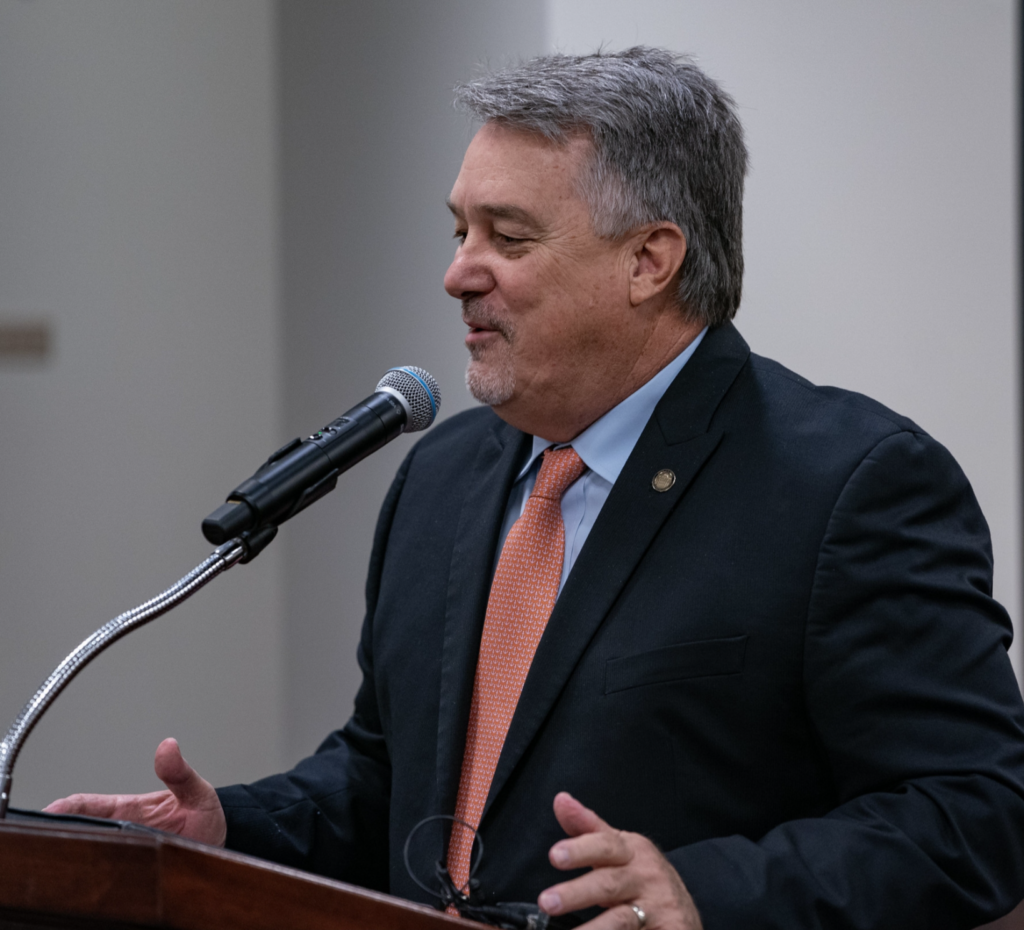
With unemployment still sitting at a record low of 2.1%, the state is looking for ways to increase the number of Alabamians in the workforce. Speaker of the House Nathaniel Ledbetter announced on Monday key House members that will serve on an ad hoc committee studying Alabama’s labor force participation rates and identifying barriers to workforce entry. In July, Gov. Kay Ivey said labor force participation was a top priority. “Despite having one of the lowest unemployment rates in the country and a record number of Alabamians working, the percentage of Alabamians participating in the labor force is lower than almost any other state,” Gov. Ivey wrote in an op-ed. “While we are increasing that by the tens of thousands, we have to change this statistic. Getting folks off the sidelines and into the labor force is my next priority.” In September, Alabama Department of Labor Secretary Fitzgerald Washington announced that Alabama’s Labor Force Participation Rate (LFPR) rose only slightly in August to 57.0%. This is up from last August’s rate of 56.9%. “Alabama is witnessing record-breaking economic growth and historically low unemployment rates,” Ledbetter said in a press release. “Despite these numbers, in Alabama, there are roughly 140,000 job openings and, at the same time, 48,834 unemployed workers across our state. That means we are lacking nearly 100,000 workers over 16 years old, which puts our labor force participation rate at a mere 57 percent—one of the lowest rates in the entire country.” “Yet again, we are announcing record-breaking economic statistics this month,” said Secretary Washington. “While our labor force participation rate remained unchanged, we are continuing to work with marginalized groups to get them into our labor force.” The House Members serving on the study commission will be Rep. Reed Ingram (R–Pike Road) – Chairman; Rep. Danny Garrett (R–Trussville); Rep. Donna Givens (R–Robersdale); Rep. Anthony Daniels (D–Huntsville); Rep. James Lomax (R–Huntsville); Rep. Barbara Drummond (D–Mobile); Rep. Mike Kirkland (R–Scottsboro); Rep. Bill Lamb (R–Tuscaloosa); Rep. Kelvin Lawrence (D–Hayneville); Rep. Curtis Travis (D–Tuscaloosa); Rep. Chris Pringle (R–Mobile); Rep. Matt Woods (R–Jasper); Rep. Wes Kitchens (R–Guntersville); Rep. Jim Carns (R–Birmingham); Rep. Scott Stadthagen (R–Hartselle). “Over the coming months, it will be imperative for this group to build on the progress of, and collaborate with, existing entities such as the Lt. Governor’s Commission on 21st Century Workforce, the Alabama Community College System, Alabama higher-education institutions, and essential stakeholders across the private sector,” stated Ledbetter. Some specific areas the study commission will address are extending adequate childcare to families, examining the correlation between productivity growth and labor output, ensuring wages and salaries are competitive, addressing workforce housing concerns, and offering improved and more expansive mental health programs and services. “An insufficiency of resources such as these creates barriers to workforce entry as much as an absence of quality education,” Ledbetter concluded.
Alabama unemployment still at record low rate of 2.1 percent
Alabama is at full employment, and businesses and governments are struggling to fill vacancies. Unemployment remains at its all-time record low, while state officials remain perplexed that the labor participation rate continues to trail the rest of the nation. On Friday, Alabama Department of Labor Secretary Fitzgerald Washington announced that Alabama’s Labor Force Participation Rate (LFPR) rose only slightly in August to 57.0%. This is up from last August’s rate of 56.9%. The “prime-age” participation rate, which measures the labor force participation rate for individuals aged 25-54, remains at 77.8% in Alabama. The regular labor force participation rate measures individuals aged 16 and up. Washington also announced that Alabama’s preliminary, seasonally adjusted August unemployment rate held steady at its record low of 2.1%. August’s rate is well below August 2022’s rate of 2.6%. The August 2023 rate represents just 48,605 unemployed persons, a new record low, compared to 48,789 in July and 60,200 in August 2022. The number of people counted as employed increased by 32,631 over the year to a new all-time record high of 2,259,025. The civilian labor force also reached a new record high of 2,307,630, with 21,036 more people joining the labor force over the year. “Yet again, we are announcing record-breaking economic statistics this month,” said Secretary Washington. “While our labor force participation rate remained unchanged, we are continuing to work with marginalized groups to get them into our labor force.” “Despite having one of the lowest unemployment rates in the country and a record number of Alabamians working, the percentage of Alabamians participating in the labor force is lower than almost any other state,” Governor Kay Ivey wrote recently. “While we are increasing that by the tens of thousands, we have to change this statistic. Getting folks off the sidelines and into the labor force is my next priority.” Over the year, wage and salary employment increased by 38,100 to 2,149,800, with gains in the leisure and hospitality sector (+4,900), the private education and health services sector (+7,100), the government sector (+5,900), the trade, transportation, and utilities sector (+8,100), and the professional and business services sector (+6,000), among others. Over the month, wage and salary employment increased by 1,900 to 2,149,800, with gains in the government sector (+2,800), the professional and business services sector (+2,400), and the private education and health services sector (+2,100), among others. The counties with the lowest unemployment rates are Shelby County at 1.8%, Morgan, Marshall, Madison, and Cullman Counties at 2.0%, and St. Clair, Limestone, Elmore, and Blount Counties at 2.1%. The counties with the highest unemployment rates are Wilcox County at 7.3%, Dallas County at 5.5%, and Perry County at 5.0%. The major Alabama cities with the lowest unemployment rates are Vestavia Hills at 1.6%, Alabaster, Homewood, Madison, and Trussville at 1.7%, and Hoover at 1.8%. The major cities with the highest unemployment rates are Selma at 6.5%, Prichard at 4.9%, and Bessemer at 4.0%. The establishment survey, conducted by the Bureau of Labor Statistics (BLS), a division of the U.S. Department of Labor, surveys employers to measure how many jobs are in the economy. This is also referred to as wage and salary employment. To connect with the author of this story or to comment, email brandonmreporter@gmail.com.
State unemployment drops to a record low of 2.1%
Alabama Department of Labor Secretary Fitzgerald Washington announced on Friday that state unemployment set a new all-time record low of just 2.1% in July. More troubling for state leaders is that Alabama’s Labor Force Participation Rate (LFPR) remained unchanged in July 2023 at 57.0%. This rate is also unchanged from July 2022. There has been no improvement in the labor force participation rate in the last year. “Alabama continues to set economic records,” said Alabama Department of Labor Secretary Fitzgerald Washington. “Not only did we maintain our streak of setting new employment records, we also saw yet another decrease in our unemployment rate, bringing us to a new record low of 2.1%.” The “prime-age” participation rate, which measures the labor force participation for individuals aged 25-54, is 77.8% in Alabama. By age 25, most college education should be complete. 54 is really too young to be retired. Some of that 22.2% of prime-age non-workers are mothers staying at home to take care of their children or a chronically ill parent. A few are disabled and can’t work, and a few are independently wealthy and living off of their investments. A large number, however, are apparently making the decision to not participate in the economy. The White House Council of Economic Advisers (CEA) released a report examining the declining workforce participation rate. The CEA reported several possible explanations, including “increasing rates of women in the workforce, rising disability insurance claims, falling demand for less-skilled workers, and barriers to employment for those with criminal records.” Governor Kay Ivey and state officials are concerned because businesses can’t recruit workers if they come to the state or try to expand unless they get into a bidding war with existing workers. The state’s unemployment rate keeps dropping, but businesses are increasingly troubled by the lack of prime-age workers in the state, and the state’s inability to raise that labor participation rate (which trails the national average) means that employers who the state would like to recruit here can’t find workers – even with competitive pay. There were only 48,834 unemployed people, a new record low, compared to 50,377 in June and 59,409 in July 2022. The number of people counted as employed increased by 28,382 over the year to a new record high of 2,258,166. The civilian labor force also reached a new record high of 2,307,000, with 17,807 more people joining the labor force over the year. Over the year, wage and salary employment increased by 38,600 to 2,151,200, with gains in the leisure and hospitality sector (+9,800), the private education and health services sector (+7,800), and the government sector (+6,700), among others. “Another bright spot to note this month is the recovery of the leisure and hospitality sector, which was hit especially hard by the pandemic,” continued Washington. “In July, this sector came within 300 workers of reaching its previous (and pre-pandemic) record high of 213,700 workers. That’s certainly an amazing turnaround in that industry!” The leisure and hospitality industry recorded 213,400 workers in July 2023, which is very near its all-time record high was 213,700 in June 2019 – before the global pandemic. All 67 counties experienced a stable or decrease in their unemployment rate both over the month and over the year. The Counties with the lowest unemployment rates are Shelby County at 1.7%, Morgan County at 1.8%, and Madison, Limestone, and Cullman Counties at 1.9%. The Alabama Counties with the highest unemployment rates are Wilcox County at 6.7%, Dallas County at 5.5%, and Perry County at 5.4%. The major cities with the lowest unemployment rates are Trussville and Vestavia Hills at 1.5%, Homewood and Madison at 1.6%, and Alabaster and Hoover at 1.7%. The major cities with the highest unemployment rates are Selma at 6.4%, Prichard at 4.6%, and Bessemer at 3.5%. To connect with the author of this story or to comment, email brandonmreporter@gmail.com.
The Opelika Career Center wins national award
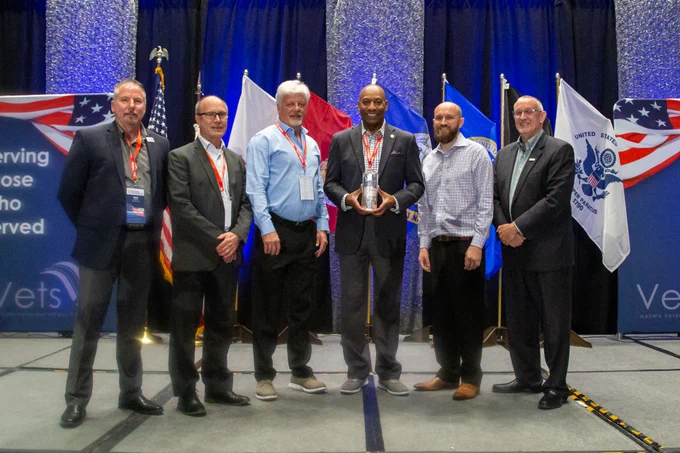
The Opelika Career Center in Alabama received the prestigious Mark Sanders Award at the National Association of State Workforce Agencies (NASWA) 10th Annual Veterans Conference in Washington, D.C. NASWA’s Mark Sanders Award is bestowed each year upon one individual or group in the U.S. that provides exceptional workforce and job market assistance to veterans, especially those with significant barriers to obtaining and retaining employment. Scott B. Sanders is the President and CEO of NASWA “The Opelika Career Center has worked tirelessly to help assist veterans and military spouses transition back to civilian life,” said President Sanders. “I applaud the Opelika Career Center staff on the exemplary service they provide to the men and women protecting our country and congratulate them on earning the 2023 Mark Sanders Award!” The Opelika Career Center was nominated by the Alabama Department of Labor. In 2022, the Opelika Career Center established the Citywide Careers Skills Program (CSP) in conjunction with Opelika Mayor Gary Fuller and the Opelika Workforce Council. To date, 25 businesses have enrolled in the program and are instrumental in offering internships and career opportunities for transitioning service members, veterans, and military spouses. The Citywide CSP also provides employers with a conduit of quality applicants for internship and apprenticeship positions in the community. Fitzgerald Washington is the Alabama Secretary of State. “Veterans are such an integral part of our workforce,” said Sec. Washington. “The skills that our veterans bring to any job are valuable, and we are working hard to ensure that while veterans transition from military service to the private sector, they are as prepared as they can be, and that they have easy access to any programs that can ease that transition. I’m proud of the staff at the Opelika Career Center for this program and the partnerships it represents.” The Opelika Career Center focuses on developing relationships with military bases, support networks, workforce boards, and businesses to enhance job opportunities for veterans. In addition to its work with the Citywide CSP, the Opelika Career Center has organized and hosted veteran hiring events for 31 businesses. It has also partnered with the county on a Second Chance Job Fair and has hosted resume and mock interview workshops. Through its numerous program and service partnerships, the Opelika Career Center has gone above and beyond to serve its Veterans. The award is named in honor of Mark Sanders, who, during his career with the California Employment Development Department and in leadership positions with NASWA, was untiring in his efforts to promote excellence in services to disabled veterans. The National Association of State Workforce Agencies is the national organization representing all 50 state workforce agencies, the District of Columbia, and U.S. territories. These agencies deliver training, employment, career, business, and wage and hour services. They also administer unemployment insurance, veteran reemployment, and labor market information programs. NASWA provides policy expertise, shares promising state practices, and promotes state innovation and leadership in workforce development. To connect with the author of this story or to comment, email brandonmreporter@gmail.com.
Alabama unemployment rates remain at record low 2.2%
The State of Alabama has never in its history enjoyed a period of such widespread sustained prosperity for more of its population than it is now enjoying. On Friday. Alabama Department of Labor Secretary Fitzgerald Washington announced that Alabama’s preliminary, seasonally adjusted June unemployment rate held steady at a record low of just 2.2 percent. “I am proud to continue to celebrate the gains we are making month after month with our economic metrics,” said Secretary Washington. “The number of jobs our economy is supporting also rose to its highest level ever. This is certainly great news. Employers are continuing to add jobs, and more and more people are joining the labor force each month.” June’s rate is well below June 2022’s rate of 2.6%. The rate represents 50,427 unemployed persons. This is down from 51.427 in May and represents a new record low. The number of unemployed Alabamians is down from 58,505 in June 2022. Alabama’s total employment has increased by 20,928 over the past year to a new record high of 2,253,490. Alabama’s civilian labor force also reached a new record high of 2,303,917, with 12,850 more people joining the work force over the past year. Over the year, wage and salary employment increased by 55,700, to set a new record high of 2,163,600. The state experienced gains in the leisure and hospitality sector (+11,400), the private education and health services sector (+10,000), and the trade, transportation, and utilities sector (+8,400), among others. Over the month, wage and salary employment grew by 16,900. The state experienced monthly gains in the leisure and hospitality sector (+8,300), the trade, transportation, and utilities sector (+2,800), and the manufacturing sector (+2,700), among others. The counties with the lowest unemployment rates are Shelby County at 2.0%, Morgan County at 2.1%, and Madison and Cullman Counties at 2.2%. The counties with the highest unemployment rates are Wilcox County at 7.5%, Perry County at 6.2%, and Dallas County at 5.7%. The major cities with the lowest unemployment rates are Trussville and Vestavia Hills at 1.8%, Madison at 1.9%, and Alabaster, Homewood, and Hoover at 2.0%. The major cities that experienced the highest unemployment rates are Selma at 6.7%, Prichard at 5.6%, and Bessemer at 3.9%. To connect with the author of this story or to comment, email brandonmreporter@gmail.com
Alabama’s May unemployment remains at a record low 2.2%
On Friday, Governor Kay Ivey announced that Alabama’s preliminary, seasonally adjusted May unemployment rate was just 2.2%. This is unchanged from April’s all-time record low rate and below May 2022’s rate of 2.5%. May’s rate of just 2.2% represents 51,445 unemployed persons. This is a new record low, compared to 51,448 in April and 57,866 in May 2022. “I’m proud to announce that not only has our state’s unemployment rate remained strong and steady but is accompanied by a total jobs count that has once again reached a record high,” said Gov. Ivey. “Despite facing a challenging national economy, Alabama has pressed onward to deliver strong and stable economic results. With a highly skilled workforce, economic incentives curated for success and red tape being cut where necessary, Alabama remains as the Southeast’s hub for economic growth and opportunity for all.” The number of people in Alabama’s civilian labor force also increased to a new record high, with 7,713 more people counted this year over last year. Additionally, the number of people counted as employed rose to a new record high, gaining 14,134 over the year to 2,247,581. “Since last year, our employers have added more than 40,000 jobs, creating an excellent economic climate for Alabama,” said Alabama Labor Secretary Fitzgerald Washington. “We are holding steady with a record low unemployment rate, more and more people are working, and people are joining the labor force in record numbers, which indicates confidence in the economy.” Over the year, wage and salary employment increased by 40,500 people, with gains in the private education and health sector (+8,600), the government sector (+6,600), and the professional and business services sector (+6,300), among others. Total wage and salary employment increased in May by 2,100 over the month. Monthly gains were seen in the other services sector (+1,100), the leisure and hospitality sector (+900), and the government sector (+500), among others. The counties with the lowest unemployment rates are Shelby County at 1.6%, Morgan and Cullman Counties at 1.7%, and Limestone, Madison, Marshall, and St. Clair Counties at 1.8%. The counties with the highest unemployment rates are Wilcox County at 6.8%, Dallas County at 4.5%, and Clarke County at 4.3%. The major cities with the lowest unemployment rates are Vestavia Hills at 1.4%, Alabaster, Homewood, Madison, and Trussville at 1.5%, and Hoover at 1.6%. The major cities with the highest unemployment rates are Selma at 5.5%, Prichard at 4.3%, and Bessemer at 3.3%. The national unemployment rate in May was 3.7%, up .3% from April. Alabama’s labor force participation rate of just 56.9% continues to trail the national average of 62.8% To connect with the author of this story or to comment, email brandonmreporter@gmail.com.
Fitzgerald Washington: Economic Op-Ed 2023
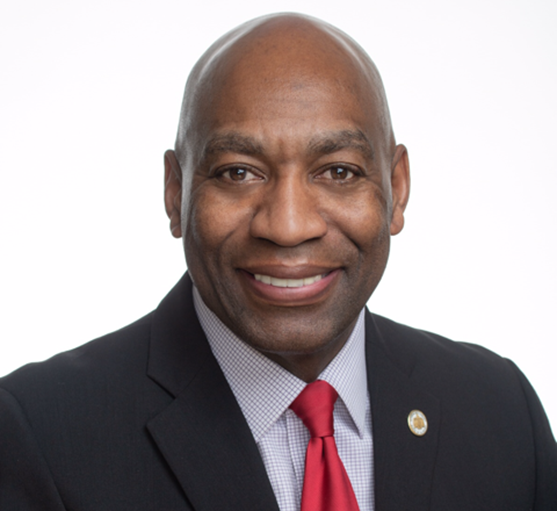
If you followed state news in 2022, you would have seen dozens of stories about Alabama’s successful economy. Nearly every month, we at the Alabama Department of Labor were announcing some sort of economic record. In fact, the amount of positive economic news may have also been a record. While I am extremely proud of the progress our state has made on the job front, I also know that our gains are the result of a world-class workforce in Alabama and a steady focus on attracting and keeping employers. I’d like to congratulate every state leader, agency, official, and worker who played a role. Governor Kay Ivey and her administration are committed to continuous improvement and economic growth, and we are happy to deliver. Looking back, it’s worth noting another 2022 milestone: Alabama broke all six major economic records. This is a truly remarkable feat following the economic uncertainty that still plagues this country following the COVID-19 pandemic. More people than ever before – 2.29 million, to be exact – were in Alabama’s labor force last year. That means that a record number of Alabamians are either working or wanting to work, and they believe that the economy is strong enough for them to find a job. Of those, 97.5 percent were employed – also a new record high! That works out to a record-low unemployment rate of 2.5 percent (in March, April, and May 2022, following annual revisions). Comparatively, Alabama had the lowest jobless rate in the southeast for all 12 months in 2022, further evidence that our state is a wonderful place to live, to work, and to succeed. And nationally, we ranked an impressive 7th lowest unemployment rate with a 2.6 percent annual average, compared to the 3.6 percent for the nation. That’s really quite a feat and definitely something to be proud of. Employers in Alabama supported a record-high number of jobs, surpassing our previous pre-pandemic record and surging to more than 2.1 million in November. From January 2022 to December 2022, Alabama gained an amazing 81,100 jobs! And those jobs were backed up by record-high wages, as well. Workers in Alabama brought home nearly $68 more per week in 2022 than in 2021. Weekly wages hit a record high of $1,019.66 in October. Several industries saw record-high wages as well. Construction, trade, transportation and utilities, leisure and hospitality, and other services all experienced significant gains. The leisure and hospitality industry, which, as we all know, was hit the hardest during the pandemic, continued its historical surge, with weekly wages increasing by $56. Additionally, for the first time since 1997, our state Unemployment Insurance Trust Fund moved into the lowest tax schedule, Schedule A, in 2022. This means employers are paying less unemployment insurance taxes than ever before – equating to a 54 percent tax cut for most employers. Lower taxes give our employers more freedom to hire more people and create more jobs. Our Career Centers, which now touch all 67 counties in the state, helped more than 90,000 new jobseekers last year, logging nearly a quarter of a million customer visits. Of those that we helped place in a new job, 71 percent were still employed a year later. Our Career Centers offer a variety of free services to both jobseekers and employers alike, and in today’s job market, they are more valuable than ever. Employers who are struggling to find employees need to visit their local Career Center and take advantage of the services. Not only do we offer recruiting assistance, but we have programs that can even help pay new employees’ salaries – up to 50 percent! Jobseekers looking to train for new opportunities, earn a degree or certification, or simply need help updating their résumé should visit too! We can help with tuition assistance, on-the-job training, or apprenticeship programs. Alabama has rebounded, and things are looking great for the future. It’s my fervent hope that we can continue to sustain this amazing progress and make this state an even better place to live and work. Our workforce is truly one of a kind – dedicated and hard-working, resilient and innovative. I applaud all of our workers and employers on a truly remarkable year. Fitzgerald Washington has been the Alabama Department of Labor Secretary since 2014.
Unemployment in three of Alabama’s metro areas lowest in the country
Alabama Governor Kay Ivey announced Wednesday that three Alabama metropolitan areas have the lowest unemployment rates in the country for March 2023. Statewide unemployment in March was at a record low of 2.3%. The Birmingham – Hoover metro area led all large cities with an unemployment rate of just 1.8%. This is for cities with a metropolitan area of one million or more. Two other state metro areas, Decatur and Huntsville, were ranked as the lowest in the country of any size at 1.6% and tied with Rapid City, South Dakota. “Alabamians have been finding jobs in record numbers for many months now,” said Governor Ivey. “Therefore, it is not surprising that we are home to the lowest unemployment rates among major metropolitan areas in the nation. Alabama workers are not only trailblazers in aerospace, automotive, and agriculture industries – among others – but we are eager to enhance our quality of life. For some time, we’ve been saying ‘Sweet Home Alabama’ is open for business, and the job numbers continue to bear that out.” The rankings are compiled by the U.S. Department of Labor’s Bureau of Labor Statistics. “These rankings are just more proof of how well Alabama’s economy has recovered since the pandemic and demonstrates the dedication in our communities to offer our families good jobs,” said Labor Secretary Fitzgerald Washington. “To think that three Alabama metros beat out all the other metros in the nation is something to be really proud of, and I certainly hope that we continue this streak of achievements.” Economic developer Dr. Nicole Jones told Alabama Today, “Alabama has available jobs and continues to break unemployment records because the public and private sectors communicate to create an environment conducive for economic growth. Workforce development initiatives created through partnerships between businesses, the Alabama Department of Labor (ADOL), and AIDT help ensure Alabamians are trained well and can fill positions available in a variety of areas.” Alabama’s preliminary seasonally adjusted March unemployment rate of just 2.3% is a new record low, down from February’s rate of 2.5%. “We’re almost a quarter into 2023, and we are already seeing record-breaking success when it comes to Alabama’s economy,” said Gov. Ivey. “We have been enjoying a period of low unemployment, high wages, and high jobs count for some time now, and I believe that even greater economic achievements are on their way. We will not back down on our commitment to continue bringing quality, high-paying jobs to Alabama.” “ADOL Secretary Fitzgerald Washington and his team deserve much credit for this because of their willingness to meet communities where they are at and partner with industry to design education and training programs aimed to increase skills needed to attain employment. When Alabamians are working, we all benefit,” Dr. Jones said. The state experienced growth of 54,100 jobs in the past 12 months, with the most significant gains occurring in the manufacturing sector (+10,400), the professional and business services sector (+8,700), and the private education and health services sector (+7,500), among others. To connect with the author of this story or to comment, email brandonmreporter@gmail.com.
Alabama’s unemployment plummets to 2.3%
Of those Alabamians formally in the workforce – i.e., they have a job or are looking for work – just 2.3% meet the government definition of being unemployed. Alabama Governor Kay Ivey announced Friday that the state had set a new all-time record low unemployment last month. Alabama’s preliminary seasonally adjusted March unemployment rate of just 2.3% is a new record low, down from February’s rate of 2.5%. It is also below March 2022’s rate of 2.5%. Just 53,053 people in the state met the official definition of unemployed in March. This is down considerably from the 56,166 unemployed in February and the 58,074 counted as unemployed in March 2022. That is the lowest number of people counted as unemployed in state history. “We’re almost a quarter into 2023, and we are already seeing record-breaking success when it comes to Alabama’s economy,” said Governor Ivey. “We have been enjoying a period of low unemployment, high wages, and high jobs count for some time now, and I believe that even greater economic achievements are on their way. We will not back down on our commitment to continue bringing quality, high-paying jobs to Alabama.” Gov. Ivey has credited her administration’s aggressive recruiting of new industries to the state by offering economic incentives. On Thursday, Gov. Ivey doubled down on this strategy by signing legislation extending the Alabama Jobs Act, the Growing Alabama Jobs Act, and adding additional incentives to the state economic planner toolbox. “I am proud the Alabama Legislature has officially passed all four bills in The Game Plan package – my plan for our state’s continued economic success,” Ivey said in a statement. “I commend both the Senate and House for their incredible work on this timely legislation that will, no doubt, be transformative for our state and, more importantly, for our families. We are creating stability for our economy and are going to keep Alabama winning for many years to come.” The state experienced growth of 54,100 jobs in the past 12 months, with the most significant gains occurring in the manufacturing sector (+10,400), the professional and business services sector (+8,700), and the private education and health services sector (+7,500), among others. Extremely low unemployment and a growing economy pressures employers to pay more wages to recruit and retain workers. Classical economists cite full employment as being between 4 and 5%. At that level, most competent people can find a job, and employers are not under pressure to bid up the cost of labor to get workers leading to inflation across the economy. “Additionally, we’re continuing to see positive increases in our wages, meaning more money in Alabamians’ pockets,” said Alabama Department of Labor Secretary Fitzgerald Washington. “This month, we reached one of our highest average weekly wages in history.” Total private wages increased by $30.12/weekly over the year to $1,008.61 in January, marking the third-highest weekly wages in state history. The counties with the lowest unemployment rates are Shelby County at 1.8%, Morgan County at 2.0%, and Marshall, Madison, Limestone, and Cullman Counties at 2.1%. The counties with the highest unemployment rates are Wilcox County at 8.8%, Clarke County at 5.9%, and Dallas County at 5.4%. The major cities with the lowest unemployment rates are Homewood at 1.6%, Madison at 1.7%, and Alabaster, Trussville, and Vestavia Hills at 1.8%. The major cities with the highest unemployment rates are Selma at 6.4%, Prichard at 5.2%, and Bessemer at 4.2%. The size of the workforce in March increased to 2,289,759 persons. That is up from 2,287,334 in February and up from 2,286,491 in March of 2022. There were some negatives in the report, though. Even though wages have risen, Alabama’s labor force participation rate has dropped over the last 12 months. The seasonally adjusted labor force participation rate of Alabamians 16 years old and older in March was just 56.7%. That is unchanged from February and down from 57.1% just 12 months ago. The state’s 2.3% unemployment rate is well below the national average of 3.5%, but the state’s labor force participation rate of 56.7% trails the national average of 62.6%. How to lure more able-bodied but not working Alabamians off the sidelines and back into the workforce has perplexed employers and state leaders alike. To connect with the author of this story or to comment, email brandonmreporter@gmail.com.
