
Bill Hightower runs for governor on flat tax, term limits
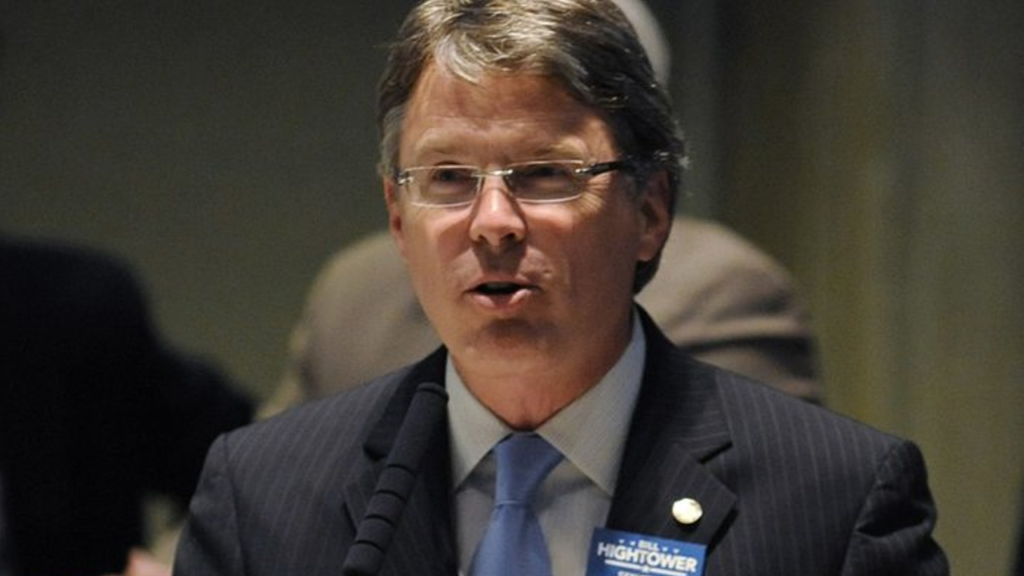
State Sen. Bill Hightower is stressing his background as a businessman as he runs for governor on a sweeping platform of proposed government overhauls that include term limits for legislators and replacing the state income tax code with a flat tax. “I think Alabama needs a businessman. I think Alabama needs something different than they ever had before,” Hightower said in an interview with The Associated Press. Hightower is challenging Alabama Gov. Kay Ivey in the June 5 Republican primary along with evangelist Scott Dawson and Huntsville Mayor Tommy Battle. A relative newcomer in state politics, Hightower was first elected to the Alabama Senate in a 2013 special election and won a full term in 2014. Hightower said he didn’t feel as strongly about term limits when he first was elected to the Alabama Legislature, but believes that lawmakers should be limited to three consecutive terms. “It seems like the enemy of improvement became the professional politician, the people who are trying to keep the status quo. Term limits will change Montgomery in a way which I think will enable us to make the reforms,” Hightower said. A graduate of the University of South Alabama who earned an MBA at Vanderbilt University, Hightower worked for large manufacturing companies, living overseas. He moved back to Mobile in 2002, saying he and his wife wanted to raise their children “at home” in Alabama. “My background in corporate was a lot of strategic planning. I want to develop that plan that’s going to serve Alabama well,” Hightower said. As a member of the Legislature, Hightower proposed to change Alabama’s income tax to a flat tax, and said he will propose that again if elected governor. “You just go online, or go on a post card and pay your taxes.” He said he would also like to end budgetary earmarks and “reprioritize” spending, noting that Alabama earmarks more revenue than any other state. “Nobody else in the nation is saying Alabama does it right and I’m convinced waste and fraud is in the budget,” Hightower said. Alabama lawmakers have previously rejected those proposals — un-earmarking, a flat tax and term limits — as bills on those topics failed to win approval. However, Hightower said believes the ideas are popular with voters and will gather momentum. The Republican senator said he is against tax increases until the state enacts budgetary reforms. On infrastructure, Hightower said he wants to create an Alabama Road and Bridge Commission, sell unneeded state property holdings to fund construction and commission a study to determine the feasibility of connecting major Alabama cities by high-speed rail. He said he would also like to increase partnerships between the two-year college system, businesses and high schools to improve vocational education. Hightower has been critical of Ivey’s decision to skip two debates, saying it’s important for the public and press to get a chance to “vet the candidates.” “She’s not being properly vetted,” Hightower said. Hightower was also the first candidate to raise the issue of health, releasing his own medical records and challenging candidates to do the same. Ivey, who became Alabama’s governor last year when her predecessor resigned in a sex-tinged scandal, has both a fundraising and name recognition advantage over her lesser-known primary challengers. However, Hightower believes Ivey will be forced into a July runoff with one of her competitors. Hightower said he believes voters largely make up their minds in the final two weeks of the campaign, and are interested in the policies and proposals of candidates. “You can’t accuse me of being light on policy,” Hightower said. Republished with permission from the Associated Press.
Richard Shelby introduces legislation to establish flat tax
Filing your taxes getting you down? A simplified tax code may soon be a reality if flat tax legislation sponsored by Alabama’s senior senator can pass in Washington. As a few hundred thousand Americans file their last-minute tax returns on Tuesday, Alabama U.S. Senator Richard Shelby has introduced S.893, which would repeal the current tax code and replace it with a17 percent flat tax on all income, both personal and business. Known as the Simplified, Manageable, and Responsible Tax (SMART) Act, the bill also repeals estate taxes, gift taxes, and the Alternative Minimum Tax (ATM). The only exemptions would be personal exemptions of: $14,590 for a single person $18,630 for a head of household $29,190 for a married couple filing jointly $6,290 for each dependent These allowances would also be indexed to the consumer price index in order to prevent inflation from raising the tax burden. Additionally, as a way to prevent the double-taxation of income, earnings from savings would not be included as taxable income – resulting in an immediate tax cut for virtually all taxpayers. “On Tax Day, the American people are reminded that our nation’s tax code is unnecessarily complex, confusing, and inefficient,” said Shelby. “The SMART Act is a straightforward solution that would require taxpayers to only file a simple postcard size return, which would save Americans time and money. The SMART Act would also allow businesses to redirect resources away from tax compliance and instead focus on expanding their businesses and creating jobs.” By closing loopholes for individuals and businesses, the SMART Act endeavors to create broad-based lower tax rates that would give American individuals and businesses a competitive edge, create and retain jobs in the United States, and curb offshoring.
Ted Cruz adds to GOP divide on how best to overhaul tax system
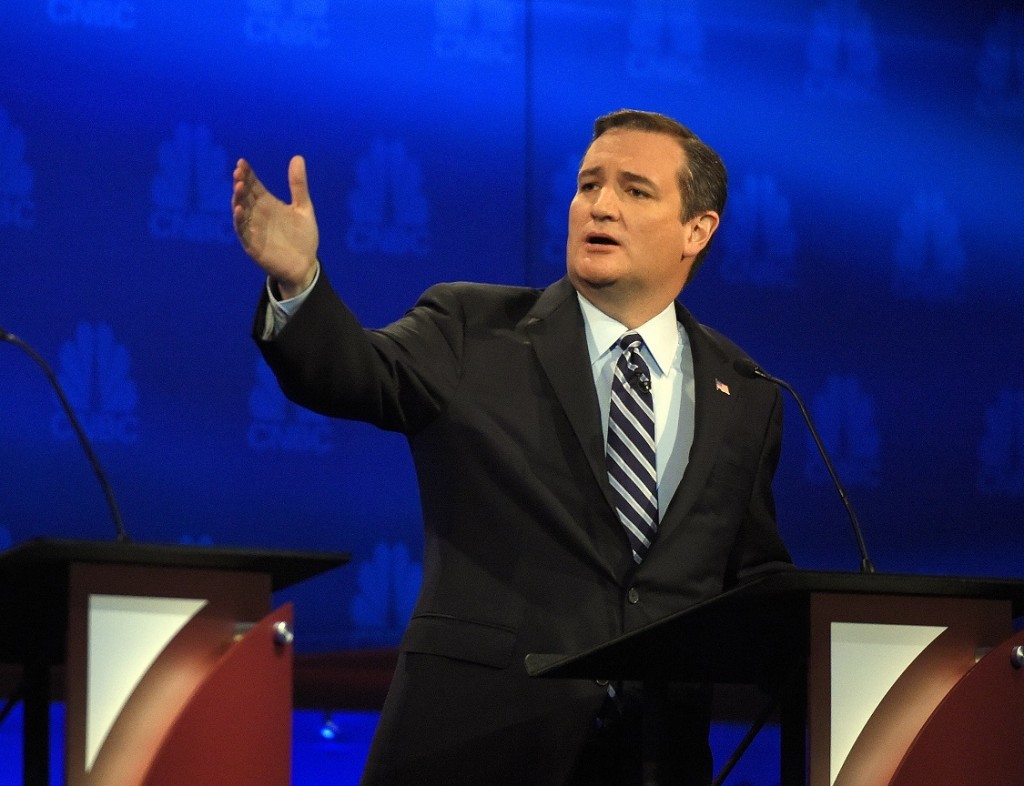
In proposing the U.S. adopt a flat tax coupled with a levy similar to a European-style value added tax, Texas Sen. Ted Cruz is contributing to a division in the Republican presidential field. Some simply want to cut existing rates. But others — Cruz among them — suggest scrapping the nation’s tax code entirely and starting over from scratch. All the tax plans released by the Republican candidates to date would starkly reduce the amount of money Americans and U.S. businesses pay in taxes, with experts — including those who support them — predicting they would balloon the nation’s debt by trillions of dollars over the next decade. While all people of all incomes would generally pay less in federal taxes in every plan, the benefits skew largely toward the wealthy. But the candidates, who say the proposals would jump-start economic growth, get there in very different ways. Donald Trump, Marco Rubio and Jeb Bush have all proposed cuts and consolidation of existing tax rates, maintaining a tax code that collects a larger share of income from taxpayers as it rises. Cruz has joined Kentucky Sen. Rand Paul in combining a flat tax, or a single rate paid by all regardless of their income, along with a tax on business activity that would take the place of the current payroll and corporate income tax. That business activity tax is essentially what’s known as a value-added tax. It’s akin to a sales tax, since it’s assumed that businesses will pass the cost of paying it onto consumers. Many tax experts like the value-added tax since it is simpler and less likely to include loopholes for special interest groups. “Nearly every economist would tell you it’s a more efficient tax,” said Howard Gleckman of the Tax Policy Center, a joint project of the nonpartisan Brookings Institute and Urban Institute. Cruz’s plan, released shortly before Wednesday’s Republican presidential debate, calls for a flat income tax rate of 10 percent, as well as a tax of 16 percent on all aspects of business — from sales to expenses to salaries paid. “You pay 10 percent of the flat tax going up,” Cruz said during Wednesday night’s debate. “The billionaire and the working man. No hedge fund manager pays less than his secretary.” An analysis by the Tax Foundation, a group that supports lower tax rates, found that about half the benefits from a switch to Cruz’s plan would go to the top 10 percent of all income earners. In part, that’s because wealthy people paying higher rates benefit more from the drop to 10 percent. It’s also because they spend a smaller percentage of their money on daily necessities and would therefore pay less via the value-added tax. The Tax Foundation’s analysis of Cruz’s plan says that it would increase the deficit by as much as $3.6 trillion over the next decade. When factoring in the possible economic growth triggered by the tax cuts, that number drops to $768 billion. Daniel Mitchell, an economist at the libertarian Cato Institute, said combining a flat tax and value-added tax has the benefits of low rates and a simpler tax code. But there’s a political risk in a Republican primary, too. “A Republican could score some very serious punches if he says, well, my opponent wants a European-style value-added tax,” Mitchell said. Cruz spokesman Rick Tyler argued the tax is not really European-style since it replaces existing taxes rather than adding onto them. “The result should be the opposite of Euro-stagnation: A re-ignition of the U.S. economy.” Value-added taxes are also criticized by some for placing a heavier burden on low-income taypayers. Higher standard deductions can mitigate that issue, Gleckman said, but he said Cruz’s deduction of $36,000 for a family of four is too low. To encourage savings, Cruz would also allow taypayers to save $25,000 a year in an IRA-style account in which no tax would be paid until the money is spent. But poorer households, Gleckman said, don’t tend to make enough money to take advantage of such a benefit. Cruz’s plan would also lower the tax on capital gains to 10 percent, a windfall for those who make most of their money from investments. Still, by eliminating the payroll tax he gets rid of an existing regressive levy on salaried workers, especially middle-class ones. Mitchell said the Cruz proposal is sound and could help boost economic growth, but he has reservations about how a future president could try to raise the flat income tax from Cruz’s low levels while enjoying the large revenues supplied by the value-added tax. “I worry that if you are putting in a VAT without getting rid of all income taxation, then you’re just setting the stage for President Chelsea Clinton to make America into France,” Mitchell said. Republished with permission of the Associated Press.
Lawmakers announce flat income tax proposal
With the frustration of doing taxes still fresh on the minds of the American people, two Alabama state lawmakers have unveiled a plan that would restructure Alabama’s individual and corporate income tax to permanently change the way taxes are done in the state. Republicans Sen. Bill Hightower of Mobile and Rep. Lynn Greer of Rogersville announced a “radical new approach” to simplify the state’s income tax structure at press conference Tuesday afternoon, according to AL.com. The senator’s plan will serve to remedy what the Times Daily describes as an “unbalanced tax code has posed revenue problems [in Alabama] for decades,” by implementing a flat tax. Defined as “one tax rate that is applied to all income with no exceptions” by the Alabama Policy Institute, a flat tax essentially means that everyone in the state of Alabama would pay the same share of their income, no matter how much or how little they make. Further, a flat tax would not tax savings and investment, promoting job creation and capital formation, in order to help bolster Alabama’s economy. “Every year, [the] state government gives away over $2 billion in incentives, credits, and exemptions,” Hightower said. His plan would solve that problem by reducing the individual income tax rate from 5 percent to 2.75 percent; the corporate rate would drop from 6.5 percent to 4.59 percent, according to details obtained by the Decatur Daily. Designed to be revenue neutral, no official legislation has been filed or made public, should the Alabama Legislature pass the plan, it would still require a constitutional amendment and the endorsement of Alabama voters through a statewide vote before becoming permanent law. That could only happen in a special election, next year’s presidential primary or the general election.
