
Broad support, big challenge for Donald Trump’s foreign aid nominee
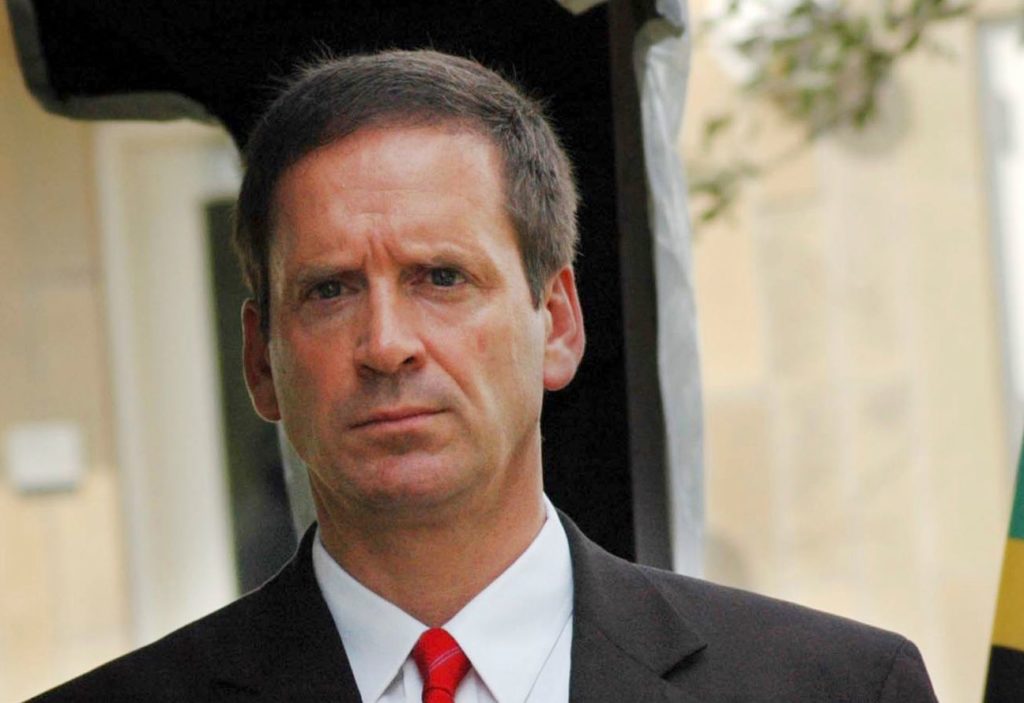
Mark Green is a rare bird in Washington these days – a Donald Trump nominee with broad bipartisan support. But there’s a catch to his potential posting as administrator of the U.S. Agency for International Development. The agency faces a starkly uncertain future, including potentially big budget cuts and the possibility of being folded entirely into a restructured State Department. Within hours of the White House’s announcement of his nomination this past week, the former Republican congressman from Wisconsin and U.S. ambassador to Tanzania under President George W. Bush had collected an impressive array of endorsements from lawmakers in both parties, and from development groups that had up to then largely opposed other Trump nominees and policies. That bodes well for Green’s confirmation, even if it may not be enough to stave off what some see as the Trump administration’s intent to dismantle USAID. “There’s no way Ambassador Green, or anyone for that matter, could effectively execute the mission of USAID under the proposed cuts and changes that President Trump is proposing for this critical agency,” said Democratic Sen. Chris Coons of Delaware, a member of the Senate Foreign Relations Committee that will evaluate the nomination. The cuts “would devastate the United States’ ability to conduct diplomacy and development and harm our national interests.” Created in 1961 by President John F. Kennedy, USAID oversees American civilian assistance abroad, including health, education, environment, democracy and economic programs, and provides emergency humanitarian aid in response to natural disasters. It administers more than $20 billion in foreign assistance each year. Although it takes direction from the State Department, USAID is an independent agency. The administration’s initial proposal for the 2018 budget called for slashing State Department and USAID funding by 31 percent. Secretary of State Rex Tillerson has countered by proposing a 26 percent cut and creating a committee to study USAID’s full integration into his department. The effect on specific programs won’t be known until later this month when the entire spending plan is submitted to Congress. The panel considering USAID’s future is to start meeting this summer and deliver findings several months later. Rep. Nita Lowey of New York, who as the House Appropriations Committee’s top Democrat will play a major role in determining the dollars for diplomacy and development, welcomed Green’s nomination. She said he “understands just how important effective foreign assistance is to U.S. national security.” Green, through a spokeswoman for the International Republican Institute he now leads, declined to comment about his plans for USAID, citing protocol that nominees avoid speaking publicly before their confirmation hearings. The institute promotes democracy, multi-party political systems and electoral processes and civic development around the world. It is not affiliated with the Republican Party but does have loose connections to the GOP. Green was a Republican congressman from Wisconsin and the organization’s board includes other former and current Republican lawmakers. In addition to serving in Congress and as ambassador, Green was involved in creating President George W. Bush’s PEPFAR program, which combats AIDS, and was on the board of the Millennium Challenge Corporation, another Bush-era initiative that awards grants to foreign countries that commit to good governance and anti-corruption policies. “Mark is familiar to many of us,” said Wade Warren, USAID’s acting director. He praised Green for his work on democracy, human rights, and governance programs, and overseeing “some of the U.S. government’s largest development programs.” Warren also credited Green for championing legislation as a congressman to promote global health. Tillerson has made clear changing were coming to USAID, even with Green at the helm. He said this past week that Green would “help us prioritize where America’s future development investments will be spent so that we can ensure every tax dollar advances our country’s security and prosperity.” Republican lawmakers, including some opposed to drastic cuts in foreign assistance, echoed calls for Green to streamline the agency. Green is “uniquely qualified to lead a modernized USAID,” said GOP Rep. Ed Royce of California, chairman of the House Foreign Relations Committee. He said he would work with Green to make the agency “more efficient and effective so that it can continue the critical missions of promoting economic growth, saving lives, and promoting democracy and human rights.” Nongovernmental development organizations hope Green staves off major changes The Modernizing Foreign Assistance Network, a bipartisan advocacy group that has called Trump’s proposed budget cuts “reckless,” said it looked forward to Green “maintaining the elevated role of USAID, which has been transformed during the last two administrations into a modern and accountable institution.” The anti-poverty One Campaign, which has said the aid cuts would be “disastrous,” cited Green’s “long history of thoughtful leadership on America’s development assistance strategy.” Saying he would make a strong USAID leader, the group said Green’s “leadership will be particularly important and tested as he grapples with the unprecedented cuts proposed to USAID in the president’s budget.” Republished with permission of The Associated Press.
Billionaire Bill Gates meets with Donald Trump to talk foreign aid
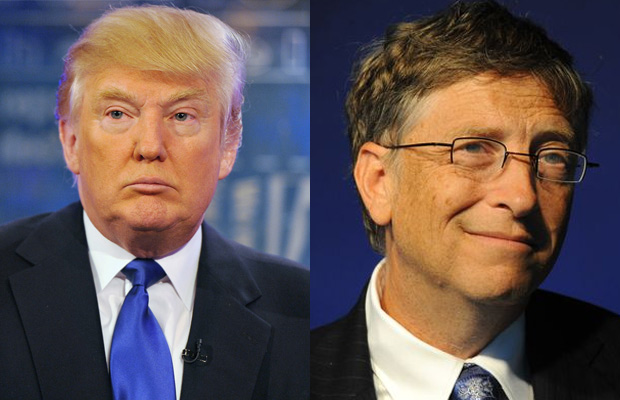
Tech billionaire Bill Gates is meeting with President Donald Trump to discuss progress in programs for global health and development as well as domestic education. Gates, who as the co-founder of Microsoft is the world’s wealthiest man, will highlight the “indispensable role that the United States has played in achieving these gains,” his foundation said in a statement. Monday’s meeting comes just days after the administration submitted a budget blueprint that cuts foreign aid. The Trump administration’s budget message said it was time “to prioritize the security and well-being of Americans” and “ask the rest of the world to step up and pay its fair share.” Republished with permission of The Associated Press.
Pew Research: Republicans, Democrats have starkly different foreign affairs priorities

A new comprehensive study on American views on foreign affairs finds to no surprise that Republicans are from Mars and Democrats from Venus, but also finds Republican presidential candidate Donald Trump‘s supporters more isolationist than anyone. The survey, released Thursday by the Pew Research Center, finds that Democrats consider the nation’s biggest global fears to be climate change, ISIS, cyberattacks and disease pandemics, and few lose much sleep over threats to the United States from Syrian refugees, China or Russia. Republicans, on the other hand, worry about just about every global menace except climate change, and their biggest concerns are ISIS, cyberattacks, Syrian refugees, and global economic instability. The same survey breaks out foreign affairs issues by candidate supporter, and finds Trump’s supporters far less likely than other candidates’ to want to see the United States intervene militarily or economically in other countries. Trump supporters are most likely to want to see the United States spend more on the war on terror and more on the U.S. military, while also saying America is already too involved overseas. Trump supporters mainly want to see America provide foreign aide. Overall, the survey found a relatively broad isolationist viewpoint. “The public views America’s role in the world with considerable apprehension and concern. In fact, most Americans say it would be better if the U.S. just dealt with its own problems and let other countries deal with their own problems as best they can,” Pew reports in its survey, “Public Uncertain, Divided Over America’s Place in the World,” posted Thursday. Among the lengthy report’s findings: Overall, 45 percent of Americans think military spending should stay about as it is, while 35 percent believe that it should be increased and 24 percent think it should be decreased. There is a dramatic split by party, however; 61 percent of Republicans think military spending needs to be increased, compared with 31 percent of independents and 20 percent of Democrats. Overall, 57 percent of Americans think the U.S. should deal with its own problems for now, and 37 percent believe that it should help other countries with their problems. Similarly, 41 percent of Americans think the country is doing too much to support other countries, 28 percent think the current programs are just about right, and 27 percent think they’re not enough. 65 percent of Trump supporters believe U.S. foreign aid is a bad thing, while 55 percent of Democrat Hillary Clinton supporters think it’s a good thing. Supporters of Democrat Bernie Sanders and now ex-candidates Republicans U.S. Sen. Ted Cruz and Ohio Gov. John Kasich are all pretty evenly split on the question. Overall, 54 percent of Americans think the United States is the world’s leading economic power; followed by 34 percent who believe it is China; 6 percent, Japan; and 2 percent the European Union. Overall, 72 percent of Americans think the United States is the world’s leading military power; followed by 12 percent who believe it is China, 10 percent, Russia; and 2 percent the European Union. 91 percent of Republicans think that ISIS and similar groups are a major threat to U.S. security, while 76 percent of both Democrats and independents think that. 77 percent of Democrats believe climate change is a major threat to U.S. security, compared with 52 percent of independents and 26 percent of Republicans. 77 percent of Trump supporters sympathize with Israel and 10 percent with Palestinians. For Clinton supporters the split is 47 to 27 percent; For Sanders supporters it’s 33 to 39 percent. Trump and Clinton supporters generally agree on the balance between homeland protection measures and civil liberties, while Sanders supporters disagree: 66 percent of Trump’s supporters think the country’s anti-terrorism policies have not gone far enough, and 20 percent think too far, threatening civil liberties. For Clinton’s supporters the split is 51 to 35 percent, while for Sanders’ its 33 to 51 percent. 54 percent of Trump’s supporters think the U.S. does too much to try to solve the world’s problems. For Clinton’s supporters, it’s 34 percent and for Sanders’, 42 percent. Overall, 41 percent of Americans think so. Overall, 49 percent of Americans think that U.S. involvement in the global economy is a bad thing, and 44 percent a good thing. The opposition was more pronounced among Republicans, older people and people with limited educations. People ages 18 to 29, college graduates and liberals were the only groups that mostly thought involvement in the global economy is a good thing. Landslide majorities of Trump’s supporters oppose the U.S. importing more goods, increasing investment in developing countries and increasing foreign aid. Strong majorities, sometimes over 60 percent, of both Clinton’s and Sanders supporters support those policies. 85 percent of Trump’s supporters think the Syrian/Iraqi refugee crisis is a significant threat to America, while only 40 percent of Clinton’s supporters think so, and only 34 percent of Sanders’. Strong majorities of every party and candidate constituency support the current U.S. military campaign against ISIS, ranging from 56 percent of Sanders’ supporters to 66 percent of Trump’s supporters. But almost no group majority believes that the anti-ISIS campaign is actually going well, except for Clinton’s supporters (57 percent.) The biggest difference by party is on the question of whether overwhelming use of military force against global terrorism is a good thing or bad thing. Republicans think it is the best way to defeat terrorism, by 70 percent to 24 percent. Democrats think it would only inspire more worldwide hatred of the U.S., leading to more terrorism, by 65 percent to 31 percent. Independents were pretty split, leaning slightly toward worrying about fostering worldwide hatred (49 percent to 45 percent.) Most of the analysis in the Pew report is based on telephone interviews conducted April 12-19 among a national sample of 2,008 adults, 18 years of age or older, living in all 50 U.S. states and the District of Columbia (505 respondents were interviewed on a landline telephone, and 1,503 were interviewed on a cellphone, including 914 who had no landline telephone). Some
