
Joe Biden awards Medal of Freedom to Fred Gray, John McCain, Gabby Giffords

President Joe Biden on Thursday presented the nation’s highest civilian honor, the Presidential Medal of Freedom, to 17 people, including gymnast Simone Biles, the late John McCain, the Arizona Republican whom Biden served with in the Senate, and gun-control advocate Gabby Giffords. “Today, she adds to her medal count,” Biden said as he introduced Biles, a former foster child whose 32 Olympic and World Championship medals make her the most decorated U.S. gymnast in history. “I don’t know how you’re going to find room,” for another medal, Biden joked. The 25-year-old is an advocate for athletes’ mental health, foster care children, and sexual assault victims. She’s also the youngest person to ever receive the medal, Biden said. The Democratic president, who took office at a critical point during the coronavirus pandemic, also honored Sandra Lindsay, the Queens, New York, nurse who was the first person to be vaccinated against COVID-19 outside of clinical trials during a live television appearance in December 2020. It was the first time Biden had awarded the Presidential Medal of Freedom. His recipient list included both living and deceased honorees, some of them representing various stages of the president’s life, from the Catholic nuns who taught him as a boy growing up in Claymont, Delaware, to Republican lawmakers he served with in the Senate to a college professor like his wife, Jill, to advocates of tightening access to firearms. Biden introduced Giffords as “one of the most courageous people I have ever known.” The former Arizona congresswoman founded the organization named Giffords to campaign for an end to gun violence and restrictions on access to guns. The Democrat almost died after she was shot in the head in January 2011 during a constituent event in Tucson. Biden noted that he recently signed the most sweeping gun-control legislation in decades — though he and others would like even more restrictions — and credited Giffords and families like her own whose lives have been altered by gun violence for helping to make it happen. “She’s the embodiment of a single signature American trait: never, ever give up,” Biden said. Biden also recognized former Republican Sens. Alan Simpson of Wyoming and John McCain of Arizona, recalling a less partisan era of Washington in which members of different parties would argue over issues during the day and then meet over dinner at night. McCain died of brain cancer in 2018. He spent more than five years in captivity in Vietnam while serving in the U.S. Navy. He later represented Arizona in the House and Senate and was the 2008 Republican presidential nominee, competing against Democrats Barack Obama and Biden. Biden said he didn’t appreciate the political competition, but “I never stopped admiring John … I knew his honor, his courage, and commitment.” The 17 people receiving honors “have overcome significant obstacles to achieve impressive accomplishments in the arts and sciences, dedicated their lives to advocating for the most vulnerable among us, and acted with bravery to drive change in their communities, and across the world, while blazing trails for generations to come,” the White House said. Biden himself knows what it’s like to receive the medal. Then-President Obama honored Biden’s decades of public service by awarding him a Presidential Medal of Freedom “with distinction” during a ceremony shortly before they left office in January 2017. Biden closed the ceremony by declaring, “This is America.” The other 13 medal recipients are: — Sister Simone Campbell, a member of the Sister of Social Service and a former executive director of NETWORK, a Catholic social justice organization. — Julieta Garcia, a former president of the University of Texas at Brownsville. Garcia was the first Latina to become a college president, the White House said. — Fred Gray, one of the first Black members of the Alabama Legislature after Reconstruction. He was a prominent civil rights attorney who represented Rosa Parks, the NAACP, and Martin Luther King Jr. and, at age 91, continues to practice law. — Steve Jobs, the co-founder, chief executive and chair of Apple Inc. He died in 2011. — Father Alexander Karloutsos, the assistant to Archbishop Demetrios of America. Karloutsos has counseled several U.S. presidents, the White House said. Biden said he is “one of my dear friends.”ADVERTISEMENT — Khizr Khan, an immigrant from Pakistan, Khan’s Army officer son was killed in Iraq. Khan gained national prominence, and became a target of Donald Trump’s wrath, after speaking at the 2016 Democratic National Convention. — Diane Nash, a founding member of the Student Nonviolent Coordinating Committee who organized some of the most important 20th-century civil rights campaigns and worked with King. — Megan Rapinoe. The Olympic gold medalist and two-time Women’s World Cup soccer champion captains the OL Reign in the National Women’s Soccer League. She is a prominent advocate for gender pay equality, racial justice, and LGBTQI+ rights. Biden said she is the first soccer player to receive the Presidential Medal of Freedom. — Alan Simpson, who served in the Senate with Biden and has been a prominent advocate for campaign finance reform, responsible governance, and marriage equality. Biden called Simpson the “real deal” and joked that “he never takes himself too seriously nor takes me seriously.” — Richard Trumka, who had been president of the 12.5 million-member AFL-CIO for more than a decade at the time of his August 2021 death. He was a past president of the United Mine Workers. — Wilma Vaught. A brigadier general, Vaught is one of the most decorated women in U.S. military history, breaking gender barriers as she has risen through the ranks. When Vaught retired in 1985, she was one of only seven female generals in the Armed Forces. — Denzel Washington, a double Oscar-winning actor, director, and producer. He also has a Tony award, two Golden Globes, and the Cecil B. DeMille Lifetime Achievement Award. He is a longtime spokesperson for the Boys & Girls Clubs of America. Washington could not attend Thursday’s ceremony after testing positive for COVID-19, the White House said. Biden said Washington
Alabama law awarding honorary degree to civil rights lawyer Fred Gray
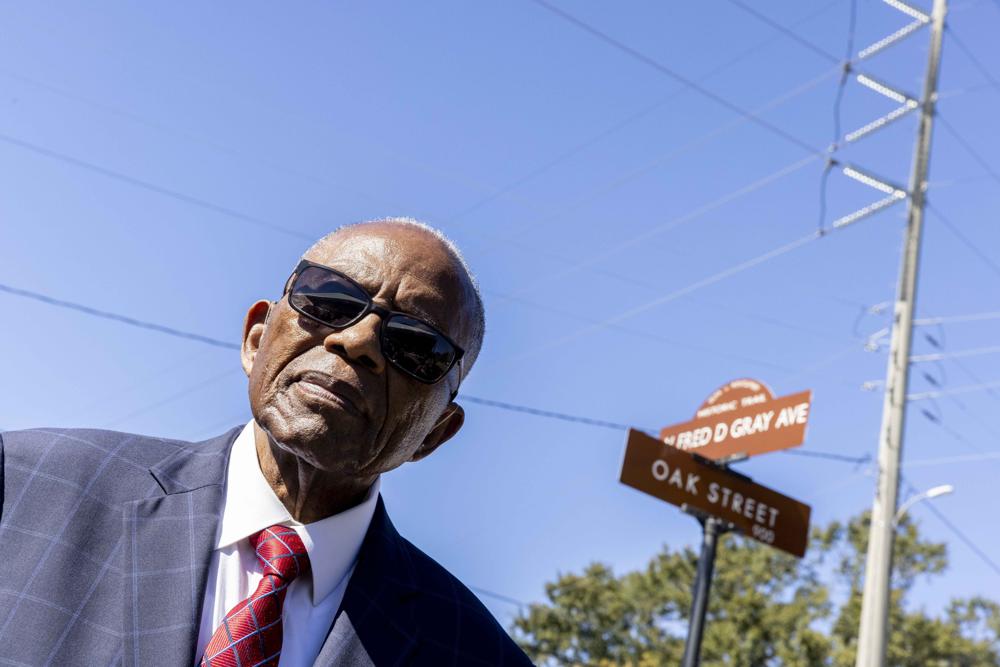
A civil rights lawyer who once fought to desegregate the University of Alabama is now receiving an honorary degree from the school. Attorney Fred Gray of Tuskegee will be awarded an honorary doctor of laws degree during the law school’s graduation ceremony on Sunday afternoon, the university said in a statement. The commencement marks the 50th anniversary since three students became the first Black people to graduate from the law school. Gray, 91, once helped represent Vivian Malone Jones and James Hood in their attempt to desegregate the university, where they enrolled as the first Black students in 1963 after then-Gov. George C. Wallace staged his “stand in the schoolhouse door” against integration. Gray also represented Rev. Martin Luther King Jr. and Black seamstress Rosa Parks, whose arrest for refusing to give up her seat on a bus to a white man prompted the Montgomery bus boycott. Later, he represented Black men who filed suit after the government let their illness go untreated in the infamous Tuskegee syphilis study. Currently, Gray is involved in a lawsuit seeking to remove a Confederate monument from a square at the center of mostly black Tuskegee. Republished with the permission of the Associated Press.
Alabama State University renames residence hall for civil rights leader Jo Ann Robinson
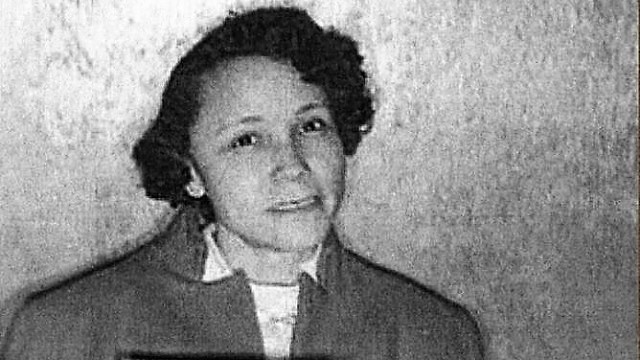
Alabama State University is naming a residence hall after civil rights pioneer Jo Ann Robinson. Robinson played a key role in the historic 13-month Montgomery Bus Boycott in the mid-1950s, The Montgomery Advertiser reported. University officials named the building after her this week in Montgomery. The hall was previously named for Bibb Graves, former Alabama state governor and a member of the Ku Klux Klan. The Board of Trustees had voted to change the name in September. “She’s finally being brought to the forefront,” said Dr. Sheree Finley, one of Robinson’s relatives. At a ceremony this week on the campus, civil rights attorney Fred Gray recalled the times that he planned the bus boycott in Robinson’s living room. “Little did many know that (many of the) activities that (had an) impact on the civil rights movement in Alabama occurred at Jo Ann Robinson’s house,” Gray said. “She was the person who was interested in having mass participation,” Gray said after the ceremony. “We could have desegregated the buses without a protest, but she was interested in getting something done with the community.” Republished with the permission of the Associated Press.
Bill seeks higher fines for taking down Confederate statues
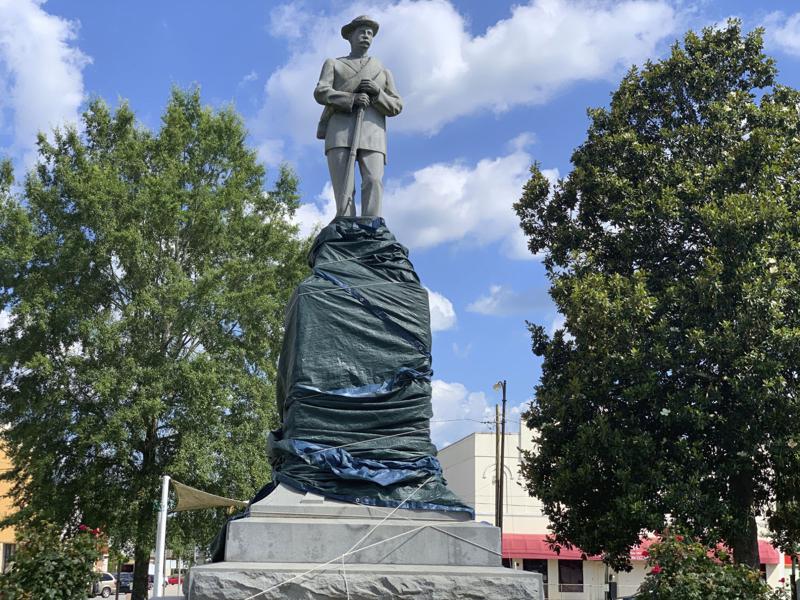
A legislative committee advanced a proposal Tuesday to increase the fines on cities that take down Confederate monuments in Alabama. The Senate Governmental Affairs Committee advanced a bill by Republican Sen. Gerald Allen of Tuscaloosa that would increase the fine for violating the Alabama Memorial Preservation Act, which prohibits the removal and renaming of monuments and memorials that have stood for at least 40 years. The bill would increase the fine from a $25,000 one-time fee to a $5,000 per day fine that would accumulate until the monument is replaced. Allen said he believed the heftier fine would serve as a deterrent. Some Alabama cities have opted to pay the current $25,000 fine as part of the cost of taking down a Confederate monument “The fine will stay there until the monument, statue, street sign — whatever it may be — is replaced,” Allen told the committee. Sen. Linda Coleman-Madison, a Democrat from Birmingham, said she believed the $5,000 daily fine was excessive, particularly for smaller cities. “You are going up and up and up and up, and now you are in the punitive stage,” Coleman-Madison said of the total fines a city could face. While the Alabama Memorial Preservation Act does not mention Confederate monuments, it was enacted as some Southern states and cities began removing monuments and emblems of the Confederacy. Birmingham and several other cities have been fined under the law for taking down Confederate monuments. Most recently, the Alabama attorney general’s office told Montgomery officials that the city faces a $25,000 fine for renaming Jeff Davis Avenue for Fred Gray, a famed civil rights attorney who represented Rosa Parks and the Rev. Martin Luther King Jr. The bill also calls for the Alabama Historical Commission to design, construct and place a statue of the late civil rights leader John Lewis by the Edmund Pettus Bridge in Selma. Lewis, a native of Alabama who became a long-serving Georgia congressman, was beaten by state troopers on the bridge in a melee known as Bloody Sunday. The committee also advanced a bill that would make it a felony offense, punishable by up to 20 years in prison, to damage a historic monument while “participating in a riot, aggravated riot, or unlawful assembly.” Both bills now move to the full Alabama Senate. Republished with the permission of the Associated Press.
Montgomery faces fine, lawsuit for dropping Confederate name
Alabama’s capital city last month removed the Confederate president’s name from an avenue and renamed it after a lawyer known for his work during the civil rights movement. Now the state attorney general says the city must pay a fine or face a lawsuit for violating a state law protecting Confederate monuments and other longstanding memorials. Montgomery last month changed the name of Jeff Davis Avenue to Fred D. Gray Avenue. Gray, who grew up on that same street, represented Rosa Parks and others in cases that fought Deep South segregation practices and was dubbed by Martin Luther King Jr. as “the chief counsel for the protest movement.” The Alabama attorney general’s office sent a Nov. 5 letter to Montgomery officials saying the city must pay a $25,000 fine by Dec. 8, “otherwise, the attorney general will file suit on behalf of the state.” Montgomery Mayor Steven Reed said changing the name was the right thing to do. “It was important that we show, not only our residents here, but people from afar that this is a new Montgomery,” Reed, the city’s first Black mayor said in a telephone interview. It was Reed’s suggestion to rename the street after Gray. “We want to honor those heroes that have fought to make this union as perfect as it can be. When I see a lot of the Confederate symbols that we have in the city, it sends a message that we are focused on the lost cause as opposed to those things that bring us together under the Stars and Stripes.” The Alabama Memorial Preservation Act forbids the removal or alteration of monuments and memorials — including a memorial street or memorial building — that have stood for more than 40 years. While the law does not specifically mention memorials to the Confederacy, lawmakers approved the measure in 2017 as some cities began taking down Confederate monuments. Violations carry a $25,000 fine. Mike Lewis, a spokesman for Alabama Attorney General Steve Marshall, declined to comment on the letter to the city. This is the first time the law is being used regarding a street name change, he said. The all-Republican Alabama Supreme Court in 2019 reversed a circuit judge’s ruling that declared the law an unconstitutional violation of the free speech rights of local communities. Reed said they knew this was a possibility when the city renamed the street. Donors from across the country have offered to pay the fine for the city. He said they are also considering taking the matter to court. “The other question we have to answer is: Should we pay the fine when we see it as an unjust law?” Reed said. “We’re certainly considering taking the matter to court because it takes away home rule for municipalities.” Alabama’s capital city is sometimes referred to as the “Cradle of the Confederacy” because it is where representatives of states met in 1861 to form the Confederacy, and the city served as the first Confederate capital. The city also played a key role in the civil rights movement — including the Montgomery Bus Boycott. The Montgomery County school system has voted to rename high schools named for Davis and Confederate General Robert E. Lee — although the names have not yet been changed. Several cities have just opted to take down Confederate monuments and pay the $25,000 fine. The state recently collected a $25,000 fine after suing officials in Huntsville, where the county removed a Confederate memorial outside the county courthouse last year. Marshall last year issued a video message chiding local officials that they are breaking the law with monument removals. Republished with the permission of the Associated Press.
Montgomery Mayor Steven Reed wants to honor Civil Rights lawyer Fred Gray
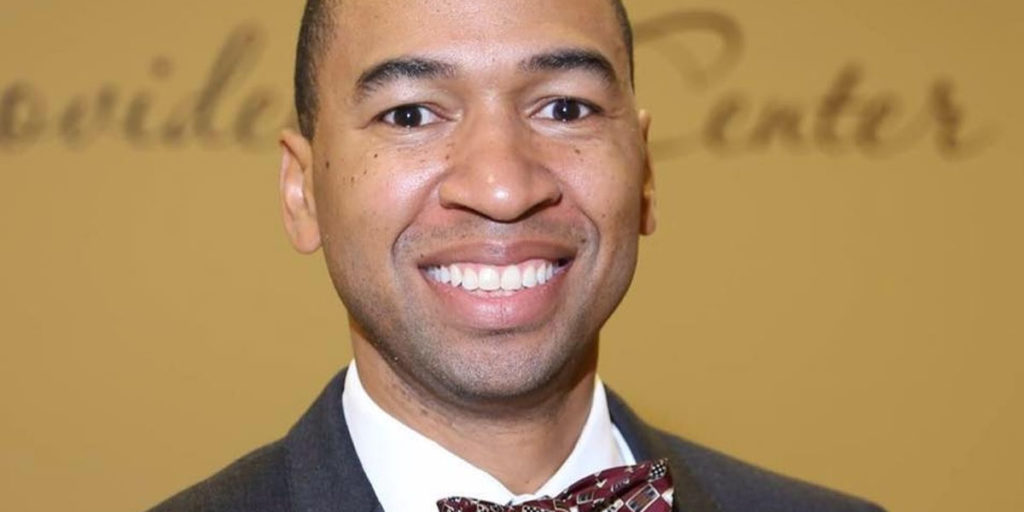
Fred Gray has long been a part of the Civil Rights movement. At just 24 years old, he helped defend Rosa Parks after her refusal to give up her seat on a Montgomery bus sparked the bus boycott and the beginning of the Civil Rights movement. He also is known for his work with school desegregation after Brown v. Board of Education in 1954 and for the Gomillion v. Lightfoot ruling that declared gerrymandering as a means of disenfranchising African Americans unconstitutional. Mayor Steven L. Reed of Montgomery now wants to find ways to commemorate the 65th anniversary of the city’s bus boycott, and he wants one of those to be to rename the street Gray grew up on. Gray grew up in Montgomery and moved to Jeff Davis Avenue, a street named for the president of the Confederacy, at 6 years old. As a boy, the significance of the name was lost on him. “I never thought about who Jeff Davis was, probably didn’t know anything about him until I got in high school,” he stated in a New York Times article. But as a young man, he became determined “to destroy everything segregated.” Mayor Reed’s call to change the street name has a caveat. A law Governor Kay Ivey signed into law in 2017 prohibits a change to the street. The Alabama Memorial Preservation Act states, “No architecturally significant building, memorial building, memorial street, or monument which is located on public property and has been so situated for 40 or more years may be relocated, removed, altered, renamed, or otherwise disturbed.” Those between 20 and 40 years old may only be disturbed in certain circumstances. In 2019, the law was ruled an unconstitutional violation of the right to free speech, and the Alabama Supreme Court ruled that it couldn’t be enforced. The penalty for violating the law was fixed at a $25,000 fine. Cities have been paying the $25,000 fine and have been taking down statues at a record pace since the controversial killing of George Floyd in May. Birmingham Mayor Randall Woodfin ordered the removal of a monument in Linn Park, stating the fine was less costly than continued civil unrest. A confederate monument in Huntsville was also removed in October and was reassembled in the Confederate burial section of a city-owned cemetery. Alabama Attorney General Steve Marshall has pledged to uphold the Alabama Memorial Preservation Act, stating in a video, “I urge my fellow Alabamians to take note of those casting votes and spending their tax dollars to violate a law of this state. It is now a question of when not if these same leaders will cast aside yet another law—being guided only by the political winds of the moment.” Despite the threat of a $25,000 fine, Mayor Reed is moving forward with the plan. He wants Gray to be present to see name change. “I don’t believe you should wait for people to die before you give them their flowers,” Reed stated. At 90 years old, the name change would help solidify Gray’s name in history and honor his life’s work. “This is about honoring those people who deserve to be honored,” Reed said in an interview. “And maybe confronting some of those who were honored at a previous time who never should have been.”
