
Kevin McCarthy’s race for speaker risks upending House on Day One
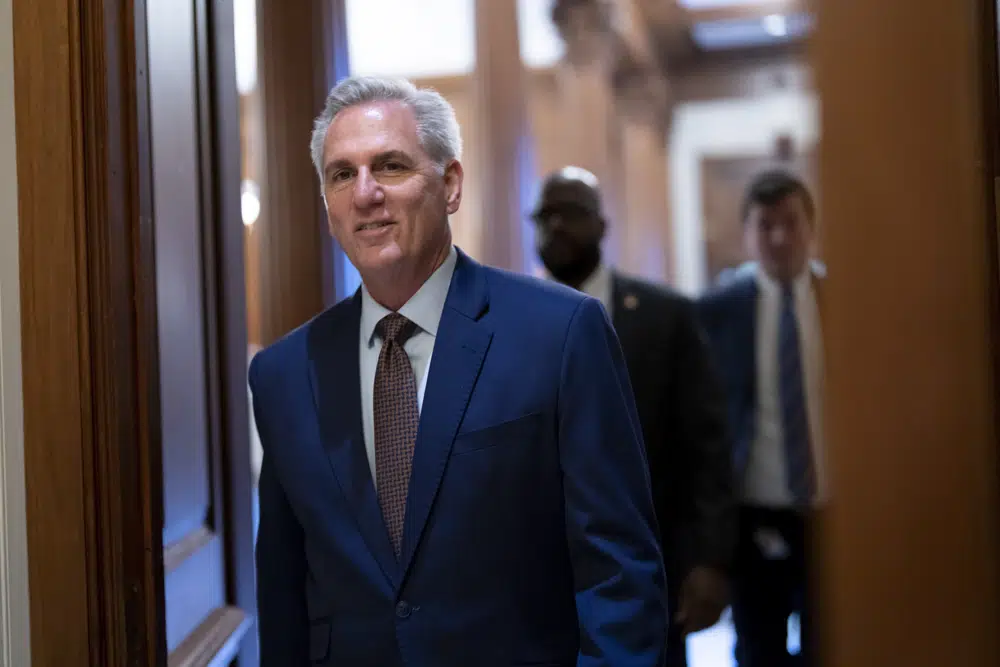
In his quest to rise to House speaker, Kevin McCarthy is charging straight into history — potentially becoming the first nominee in 100 years unable to win the job on a first-round floor vote. The increasingly real prospect of a messy fight over the speaker’s gavel on Day One of the new Congress on Jan. 3 is worrying House Republicans, who are bracing for the spectacle. They have been meeting endlessly in private at the Capitol, trying to resolve the standoff. Taking hold of a perilously slim 222-seat Republican majority in the 435-member House and facing a handful of defectors, McCarthy is working furiously to reach the 218-vote threshold typically needed to become speaker. “The fear is that if we stumble out of the gate,” said Rep. Jim Banks, R-Ind., a McCarthy ally, then the voters who sent the Republicans to Washington “will revolt over that and they will feel let down.” Not since the disputed election of 1923 has a candidate for House speaker faced the public scrutiny of convening a new session of Congress only to have it descend into political chaos, with one vote after another, until a new speaker is chosen. At that time, it eventually took a grueling nine ballots to secure the gavel. McCarthy, a Republican from Bakersfield, California, who was first elected in 2006 and who remains allied with Donald Trump, has signaled he is willing to go as long as it takes in a floor vote to secure the speaker’s job he has wanted for years. The former president has endorsed McCarthy and is said to be making calls on McCarthy’s behalf. McCarthy has given no indication he would step aside, as he did in 2015 when it was clear he did not have the support. But McCarthy also is acknowledging the holdouts won’t budge. “It’s all in jeopardy,” McCarthy said Friday in an interview with conservative Hugh Hewitt. The dilemma reflects not just McCarthy’s uncertain stature among his peers but also the shifting political norms in Congress as party leaders who once wielded immense power — the names of Cannon, Rayburn, and now Pelosi adorn House meeting rooms and office buildings — are seeing it slip away in the 21st century. Rank-and-file lawmakers have become political stars on their own terms, able to shape their brands on social media and raise their own money for campaigns. House members are less reliant than they once were on the party leaders to dole out favors in exchange for support. The test for McCarthy, if he is able to shore up the votes on Jan. 3 or in the days that follow, will be whether he emerges a weakened speaker, forced to pay an enormous price for the gavel, or whether the potentially brutal power struggle emboldens his new leadership. “Does he want to go down as the first speaker candidate in 100 years to go to the floor and have to essentially, you know, give up?” said Jeffrey A. Jenkins, a professor at the University of Southern California and co-author of “Fighting for the Speakership.” “But if he pulls this rabbit out of the hat, you know, maybe he actually has more of the right stuff.” Republicans met in private this past week for another lengthy session as McCarthy’s detractors, largely a handful of conservative stalwarts from the Freedom Caucus, demand changes to House rules that would diminish the power of the speaker’s office. The Freedom Caucus members and others want assurances they will be able to help draft legislation from the ground up and have opportunities to amend bills during the floor debates. They want enforcement of the 72-hour rule that requires bills to be presented for review before voting. Outgoing Speaker Nancy Pelosi, D-Calif., and the past two Republican speakers, John Boehner and Paul Ryan, faced similar challenges, but they were able to rely on the currency of their position to hand out favors, negotiate deals, and otherwise win over opponents to keep them in line — for a time. Boehner and Ryan ended up retiring early. But the central demand by McCarthy’s opponents’ could go too far: They want to reinstate a House rule that allows any single lawmaker to file a motion to “vacate the chair,” essentially allowing a floor vote to boot the speaker from office. The early leaders of the Freedom Caucus, under BC, the former North Carolina congressman turned Trump’s chief of staff, wielded the little-used procedure as a threat over Boehner and later, over Ryan. It wasn’t until Pelosi seized the gavel the second time, in 2019, that House Democrats voted to do away with the rule and require a majority vote of the caucus to mount a floor vote challenge to the speaker. Rep. Chip Roy, R-Texas, said the 200-year-old rule was good enough for Thomas Jefferson, so it’s one he would like to see in place. “We’re still a long way from fixing this institution the way it needs to be fixed,” Roy told reporters Thursday at the Capitol. What’s unclear for McCarthy is even if he gives in to the various demands being made by the conservatives, whether that will be enough for them to drop their opposition to his leadership. Several House Republicans said they do not believe McCarthy will ever be able to overcome the detractors. “I don’t believe he’s going to get to 218 votes,” said Rep. Bob Good, R-Va., among the holdouts. “And so I look forward to when that recognition sets in and, for the good of the country, for the good of the Congress, he steps aside, and we can consider other candidates.” The opposition to McCarthy has promoted a counteroffensive from other groups of House Republicans who are becoming more vocal in their support of the GOP leader — and more concerned about the fallout if the start of the new Congress descends into an internal party fight. Rep. David Joyce, R-Ohio, who leads the Republican Governance Group, was wearing an “O.K.” button on his lapel — meaning, “Only Kevin,” he explained. Some have
House approves ‘red flag’ gun bill unlikely to pass Senate

The House approved a “red flag” bill Thursday that would allow families, police, and others to ask federal courts to order the removal of firearms from people at extreme risk of harming themselves or others. It’s the Democratic-controlled chamber’s latest response to U.S. mass shootings and likely stands little chance in the Senate. Nineteen states and the District of Columbia currently have such “red flag” laws. Under the House bill, a judge could issue an order to temporarily remove and store the firearms until a hearing can be held, up to two weeks later, to determine whether the firearms should be returned or kept for a specific period. The bill passed on a mostly party-line vote of 224-202. “We are painfully aware that we cannot do enough to save every life, and there is no one answer that will solve this problem,” said Rep. Jerrold Nadler, the Democratic chairman of the House Judiciary Committee. “But we do know that taking guns out of the hands of people who pose a danger to themselves, or others, would save countless lives.” The vote came after an emotional week that saw congressional testimony from victims of recent mass shootings in Uvalde, Texas, and Buffalo, New York, and came ahead of a planned march Saturday in Washington by groups advocating stronger gun controls. On Wednesday, the House passed a wide-ranging gun control bill that would raise the age limit for purchasing a semi-automatic rifle and prohibit the sale of ammunition magazines with a capacity of more than 15 rounds. It, too has virtually no chance in the Senate. House Republicans criticized the “red flag” bill as giving the federal government the ability to take a law-abiding person’s guns without them having the ability to contest it beforehand. “It would allow the courts to take guns away from people without notice and without even the right to appear in the hearing to defend themselves in court,” said Rep. Mike Johnson, R-La. The Congressional Budget Office projects that the bill would lead to roughly 10,000 emergency petitions being filed annually with the courts. The bill would also create a grant program at the U.S. Department of Justice to encourage states to adopt “red flag” laws and support the 19 states that have already implemented them. Five Republican lawmakers voted for the bill: Reps. Brian Fitzpatrick of Pennsylvania, Anthony Gonzalez of Ohio, Chris Jacobs of New York, Adam Kinzinger of Illinois, and Fred Upton of Michigan. Only Fitzpatrick is seeking reelection. Rep. Jared Golden of Maine was the only Democratic member to vote no. The lead sponsors of the bill were Democratic Reps. Salud Carbajal of California and Lucy McBath of Georgia, whose son, Jordan Davis, was slain at a Jacksonville, Florida gas station in 2012 by a white man angry over the loud music the Black teenager and his friends had been playing in their car. President Joe Biden strongly supports the bill. The White House said it would “make significant progress toward keeping guns out of dangerous hands.” However, the legislation is unlikely to advance in the Senate, where at least 10 Republican senators would be needed. Instead, senators are focusing on incremental policy changes through a system that would send funds and other incentives to states to bolster security at school campuses, provide more mental health services to young people, and possibly encourage states to pursue red-flag laws of their own. Sen. John Cornyn of Texas, who is leading negotiations on the Republican side, said one focus is on enhancing the background check system known as NICS to include young buyers’ criminal records before they turn 18. “Adding juvenile records to the NICS system is a common-sense way to ensure we have a complete picture of the buyer’s history,” Cornyn said. He voiced optimism that senators will be able to reach an agreement. “Around here, if there’s a will, there is a way, and I believe we do have the will, and we will find the way,” Cornyn said. House Speaker Nancy Pelosi, D-Calif., said the House stands ready to consider a gun bill from the Senate “if it’s life-saving and can make a difference.” But she cautioned: “We cannot have subterfuge. We can’t have them say well, it’s about this, and it’s about that. No, it’s about guns.” Republished with the permission of The Associated Press.
Death threats, tweets jolt GOP infrastructure supporters
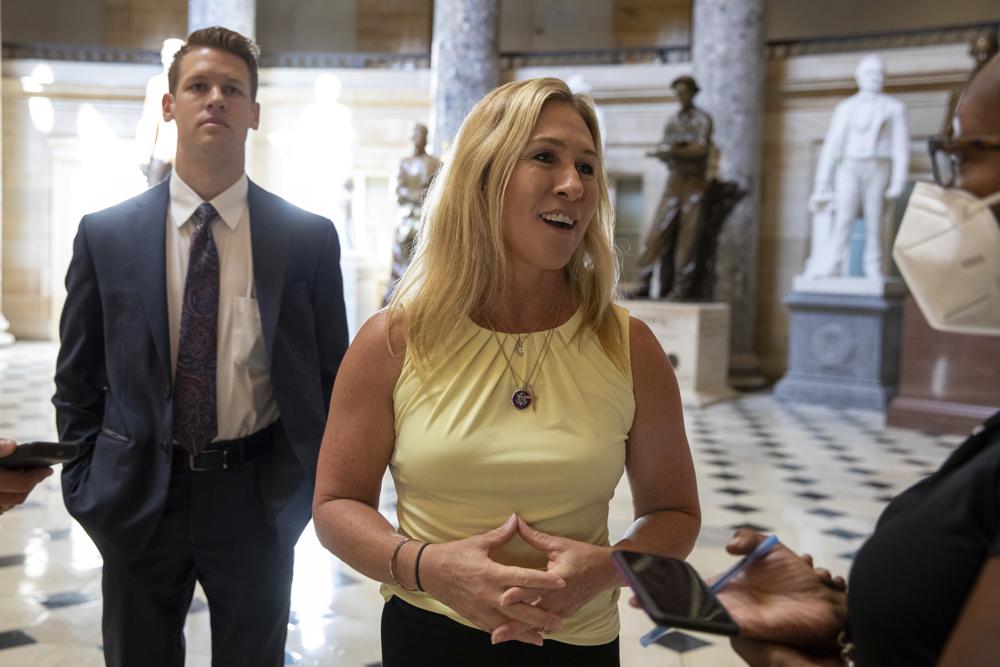
The last time Congress approved a major renewal of federal highway and other transportation programs, the votes were 359-65 in the House and 83-16 in the Senate. It was backed by nearly every Democrat and robust majorities of Republicans. This year’s $1 trillion infrastructure bill easily cleared the Senate 69-13 with GOP support but crawled through the House last week by 228-206 with just 13 Republican votes. Those defectors were savaged afterward by former President Donald Trump, hard-right Rep. Marjorie Taylor Greene, R-Ga., called them “traitors” while tweeting their names and office telephone numbers, and one of the 13 says he received a death threat. The votes, six years apart, and the harsh blowback against Republican mavericks illustrate a GOP in which conservative voices have grown louder and more militant, fanned by Trump’s bellicose four years in office. Growing numbers of progressives have made Democrats more liberal, too, with both shifts fueling a sharpening of partisanship in Washington. “This madness has to stop,” said Rep. Fred Upton, R-Mich., an 18-term moderate, who said his offices received dozens of threatening calls following his yes vote. That included one obscenity-laced rant that aides provided in which the caller repeatedly called Upton a “traitor” and expressed hope that the lawmaker, his family, and aides would die. Upton closed his two Michigan offices for a day and reopened them after increasing their security. This year’s bill, triple the size of the 2015 measure, is a keystone of President Joe Biden’s push to create jobs and build out the nation’s roads, water systems, broadband coverage, and other projects. A compromise between Senate Democrats and Republicans, it will send money into every state and is the kind of bill that politicians have loved promoting back home for decades. Biden plans to sign it Monday. Democrats say GOP opposition to the bill is indefensible on policy and political grounds. “It’s a sad statement of how the other party has lost its way,” said Rep. Sean Patrick Maloney, D-N.Y., who’s leading the House Democratic political arm into a 2022 campaign in which Republicans have solid chances of capturing congressional control. ”If you want our country to fail so you can say things are bad and win power for yourself, you act like the House Republicans are.” But for many Republicans, infrastructure projects — once an issue the two parties would reflexively work together on for mutual and national benefit — now offer a complex political calculation. “When it comes to policy these days, we’re basically divided into two tribes. And you stick with your tribe, and you don’t try to help the other tribe,” said Glen Bolger, a GOP pollster, and strategist. As president, Trump repeatedly promised his own massive infrastructure plan but never produced one, making the phrase “infrastructure week” a Washington synonym for “pipe dream.” But he opposes the current package, and his ability to rally his conservative supporters against those who cross him was a factor as GOP lawmakers decided how to vote. Even so, hard-right cries for retaliation against the 13 pro-infrastructure Republicans, largely moderates from the Northeast and Midwest, have prompted their own pushback. “This notion that we’re going to have people that are on the fringe, in terms of the Marjorie Taylor Greenes of the world and others, imposing some kind of a purity test on substance is lunacy,” said Rep. Liz Cheney, R-Wyo. Cheney has been at war with Trump and the party’s far-right ever since backing his impeachment early this year. Cheney opposed the bill, saying it contained clean energy and other provisions that would hurt Wyoming. She said the 13 Republicans who backed it are “among some of our very best members” who did it “because it was the right thing for their districts.” Senate Minority Leader Mitch McConnell, R-Ky., an unabashed partisan warrior, was among 19 Senate Republicans who voted for the bill in August. McConnell, who doesn’t have to worry about being re-elected until 2026, said this week he was “delighted” the measure was heading to Biden. A day earlier, McConnell had already drawn Trump’s wrath. Trump issued a statement denigrating GOP senators who’d backed the bill for “thinking that helping the Democrats is such a wonderful thing to do.” Those Republicans “should be ashamed of themselves, in particular Mitch McConnell,” Trump wrote. That was just the tip of the iceberg for the attacks. In an interview, the leader of the conservative House Freedom Caucus said GOP lawmakers should consider removing from their posts the 10 of the 13 defectors who are the senior Republicans on committees and subcommittees. “I respect their right to vote, their districts, and their conscience. But that doesn’t mean that they should get the privilege of leading” House Republicans, said Rep. Andy Biggs, R-Ariz. At a private Florida dinner Monday to bolster House GOP campaign prospects, Trump said he loves House Republicans but not the 13 who voted for the bill, according to an attendee who described Trump’s remarks on condition of anonymity. Earlier, House GOP leaders tweeted, and then deleted, that “Americans won’t forget” a vote for the “socialist” infrastructure bill. “Time to name names and hold these fake republicans accountable,” tweeted Rep. Lauren Boebert, R-Colo. Before last week’s vote, House Minority Leader Kevin McCarthy, R-Calif., said it would be “very difficult” for Republicans to promote backing the infrastructure bill during their campaigns because it is so closely linked to Democrats’ accompanying $1.85 trillion social and climate measure, which the GOP has solidly opposed. Rep. Jeff Van Drew, R-N.J., who switched parties in 2019, said he supported the infrastructure bill because his state would receive over $20 billion “we desperately need.” Van Drew, who said he had heard “some cranky things” from some people, scoffed at the notion that the bill would “catapult the president” politically. “If Marjorie Taylor Greene wants to be mean to me, that’s fine,” he said of the colleague who labeled him and 12 others traitors. “I love America very much. I would never ever do anything to hurt this country.” Republished
Terri Sewell introduces bipartisan bill to ensure patients have access to home infusion services
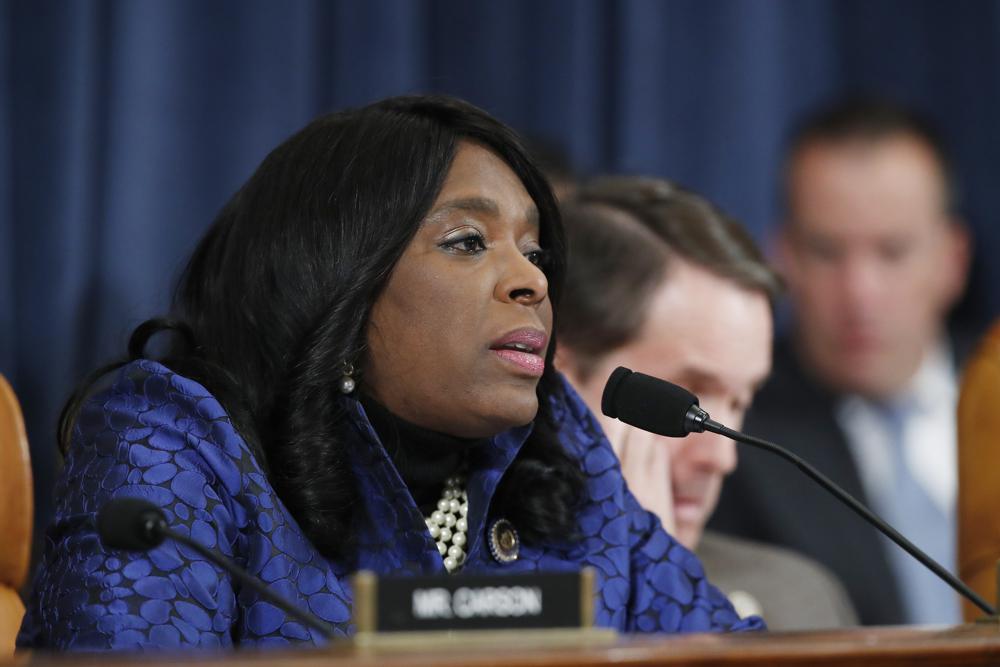
Rep. Terri Sewell joined legislators Fred Upton, Debbie Dingell, and Vern Buchanan to introduce H.R. 5067, the Preserving Patient Access to Home Infusion Act. This bipartisan bill would ensure patients with serious viral and fungal infections, heart failure, immune diseases, cancer, and other conditions receive IV medications they need while at home. Companion legislation was introduced in the U.S. Senate by Mark Warner and Tim Scott. Sewell stated, “Countless Alabamians, especially those in rural communities, rely on home infusion services for life-saving care. With the risks posed by the COVID-19 pandemic, it has never been more critical to ensure that patients continue to receive this care safely in their homes. I’m so proud to introduce this bipartisan bill and urge my colleagues on both sides of the aisle to give it their full support.” Rep. Upton commented, “While the COVID-19 pandemic certainly took so much from so many, it also gave us the opportunity to rethink the way that we care for the most vulnerable among us. Home infusion, in particular, is a perfect example of how we can bring healthcare services into folks’ homes while keeping both patients, their families, and medical professionals safe and healthy. I am proud to co-sponsor this important legislation and will continue to work with my colleagues on both sides of the aisle to expand access to quality, affordable healthcare.” “As we have learned from the coronavirus pandemic, home health services have proven to be invaluable for seniors in my district and across the country,” said Rep. Buchanan. “The aptly-named Preserving Patient Access to Home Infusion Act will ensure that Medicare recipients are able to continue to receive life-saving drugs in a safe and effective way from the comfort of their own home.” Patients with serious infections, cancer, heart failure, immune system diseases, and other conditions who need medications such as IV therapies can receive these medications in their homes rather than hospitals or nursing homes. Research shows that up to 95% of patients would prefer receiving their infusions at home. Congress included provisions for this in the 21st Century Cures Act and the Bipartisan Budget Act of 2018. However, the Centers for Medicare and Medicaid Services (CMS) didn’t implement the benefit properly. They required a nurse to be physically present in the patient’s home for providers to be reimbursed. As a result, provider participation has dropped sharply, and beneficiaries have experienced reduced access to home infusion over the last several years. The act provides technical clarifications that will remove the physical presence requirement, ensuring payment regardless of whether a health care professional is present in the patient’s home. The bill will save $93 million over 10 years. “Home-based infusion services stand out as high-value resources that improve patient quality of life and add capacity to the health care system while providing cost-savings for the Medicare program,” said NHIA President and CEO Connie Sullivan. “Passage of the Preserving Patient Access to Home Infusion Act is critical to ensuring the Medicare program maintains access to home infusion, allowing beneficiaries to safely receive treatment in the setting they overwhelmingly prefer: their homes.” “Providing IV medications in patients’ homes allows individuals to receive their treatments without major sacrifices in their quality of life and without having to rely on transportation to travel to a facility for their treatments,” said Logan Davis, MBA of Vital Care InfusionServices. “This legislation will ensure that the Medicare home infusion therapy benefit is accessible to patients, including many who are located in Alabama’s rural or historically underserved communities.”
Additional GOP leader backs Donald Trump impeachment as tide grows
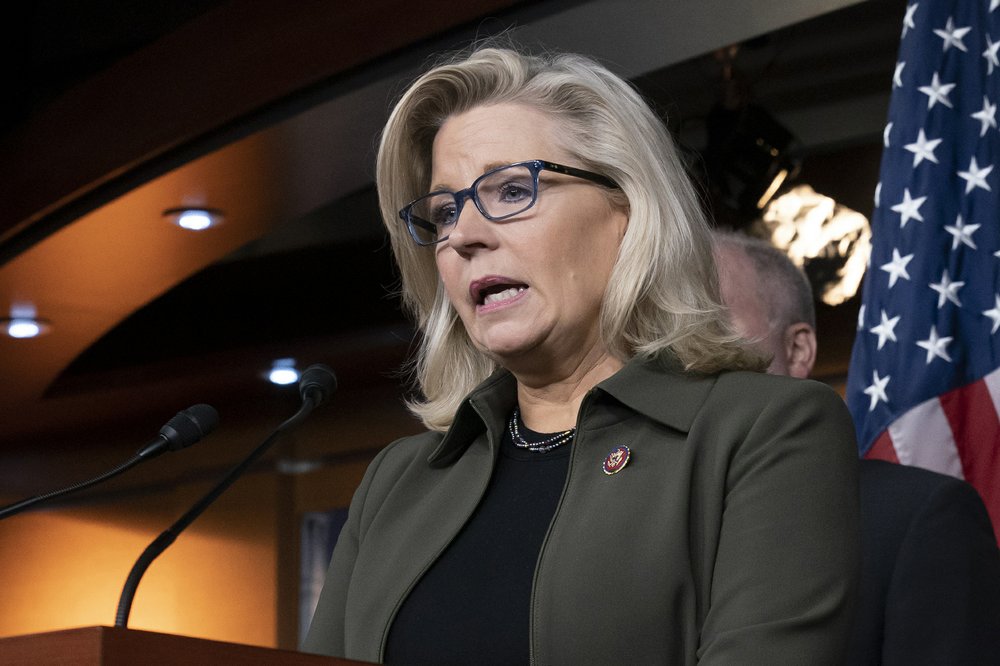
Republican opposition to impeaching President Donald Trump began crumbling at the party’s upper echelons on Tuesday as the No. 3 House GOP leader said she would vote to impeach Trump. “There has never been a greater betrayal by a President of the United States of his office and his oath to the Constitution,” Rep. Liz Cheney, R-Wyo., said in a statement that, while not unexpected, shook Congress as lawmakers prepared for a Wednesday House vote. With Democrats commanding that chamber, a vote impeaching Trump for an unprecedented second time seemed certain. More ominously for a president clinging to his final week in office, The New York Times reported that influential Senate Majority Leader Mitch McConnell thinks Trump committed an impeachable offense and is glad Democrats are moving against him. Citing unidentified people familiar with the influential Kentucky Republican’s thinking, the Times reported McConnell believes moving against Trump will help the GOP forge a future independent of the divisive, chaotic president. McConnell thinks Trump’s behavior before last week’s assault on the Capitol by fuming Trump supporters cost Republicans their Senate majority in two Georgia runoff elections, the newspaper reported. That’s a sentiment shared by many Republicans about Trump, who rather than focusing on bolstering Georgia’s two sitting GOP senators spent the last weeks of their campaign reciting his false narrative that his own reelection was ruined by Democratic election fraud. McConnell is said to be angry at the president over the insurrection at the Capitol and the twin defeats in Georgia that cost the party its Senate majority, according to a Republican granted anonymity to discuss the situation. Cheney, daughter of former Vice President Dick Cheney, has run afoul of Trump and far-right Republicans over the years on issues like wearing a facemask and withdrawing troops from Syria. She’s respected by mainstream conservatives and is one of the GOP’s few House female stars. “Good for her for honoring her oath of office,” House Speaker Nancy Pelosi, D-Calif., told reporters when asked about Cheney’s decision. “Would that more Republicans would honor their oaths of office.” Lawmakers’ oath includes a vow to defend the Constitution “against all enemies, foreign and domestic.” Reps. Adam Kinzinger, R-Ill., an Air Force veteran, and John Katko, R-N.Y., a former federal prosecutor, became the first rank-and-file GOP lawmakers to say they would vote to impeach Trump. Later joining the GOP faction was Rep. Fred Upton, R-Mich. The House will vote on an impeachment article charging Trump with incitement of insurrection over his goading of a pro-Trump crowd that poured past police lines into the Capitol last Wednesday, disrupting lawmakers’ ceremonial counting of the electoral votes that sealed Trump’s defeat, leaving five dead and widespread damage. “There is no doubt in my mind that the President of the United States broke his oath of office and incited this insurrection,” Kinzinger said in a statement about Trump, whom he’s repeatedly criticized over the years. In a statement, Upton said: “Congress must hold President Trump to account and send a clear message that our country cannot and will not tolerate any effort by any President to impede the peaceful transfer of power from one President to the next.” “To allow the president of the United States to incite this attack without consequence is a direct threat to the future of our democracy,” Katko said in a statement. “For that reason, I cannot sit by without taking action” and backing impeachment. In remarks to his supporters outside the White House before they streamed to the Capitol, Trump told them “this is the time for strength,” adding, “We got to get rid of the weak Congress people,” describing them as “the Liz Cheneys of the world.” Republicans have said they expected perhaps 10 House GOP lawmakers to break ranks and vote with Democrats to impeach Trump, and a clear majority of Republicans seem likely to stand by him. But Trump may not have helped himself Tuesday. In his first public appearance since the attack on the Capitol, he took no responsibility for his role in egging on his supporters and added falsely, “People thought that what I said was totally appropriate.” House Minority Leader Kevin McCarthy, R-Calif., has told his colleagues that he believes impeaching Trump would be wrong but has not ruled out censuring him or taking other steps. House GOP leaders say they won’t press their colleagues on how they will vote Wednesday. In its story, the Times did not say how McConnell would vote in a Senate trial to convict Trump. Such a finding would usually result in a president’s removal from office, but in this case it seems unlikely a trial could be held and concluded before Jan. 20, when Democrat Joe Biden will be inaugurated to replace him. McConnell has been the engine that has driven Trump’s Supreme Court appointees and scores of other federal judicial nominees through the chamber. While seldom criticizing Trump, he often resorts to silence when pressed by reporters on some of Trump’s more outrageous statements and their relationship has never seemed warm. One White House official said McConnell and Trump last spoke in in mid-December. Republished with the permission of the Associated Press.
